Different ski gloves can feel completely different on the mountain. Some feel warm and cozy on a cold lift ride, while others feel clammy or cold the moment the wind hits. Most skiers notice this within their first few days and wonder why similar-looking gloves behave so differently.
It comes down to materials. Leather, synthetic shells, membranes, insulation, and liners all manage heat and moisture in their own way. From my experience, even a small change in the outer fabric or insulation can swing comfort in either direction.
In this post, we’ll break down how material choice affects ski glove comfort and warmth, why certain combinations work better in specific conditions, and how to pick the right materials for the way you ski. By the end, you’ll understand what matters, what doesn’t, and how to avoid cold hands without overthinking gear.
Why Glove Material Matters More Than Most Skiers Think
Most skiers assume warmth comes from “thicker gloves.”
But out on the mountain, material choice ends up doing most of the work.
From my experience, this is why some gloves stay warm and comfy while others feel soggy and useless by lunch.
Warmth = Insulation + Wind Protection
Warm hands don’t just come from insulation.
You also need materials that block wind and slow heat loss.
This is where fabrics like leather shells or softshells with windproof membranes make a huge difference.
On cold, windy ridgelines, fleece alone won’t cut it.
I learned that the hard way the first time I skied Vermont in January.
The insulation was there, but wind was stealing heat through the gloves.
Comfort = Breathability + Softness + Mobility
Comfort is its own battle.
If a glove feels stiff or traps sweat, you stop enjoying the run fast.
Breathable materials like softshell fabrics help moisture escape so your hands don’t get clammy mid-day.
Mobility matters too.
Leather typically breaks in and moves naturally with your hands, which feels better when grabbing poles or adjusting buckles.
Soft liners add softness against the skin so nothing feels scratchy or bulky.
Moisture Management Is the Dealbreaker
Here’s the part almost every beginner underestimates: water.
Once gloves get wet, they stop insulating and your hands get cold no matter how much insulation they had at 8 AM.
From my experience, wet-heavy spring days expose weak materials fast.
Membranes like Gore-Tex help keep outside snow out while letting sweat escape from the inside.
Without that balance, gloves either get soaked or get sweaty, and both equal cold hands.
Most outdoor testers point to moisture control as the top factor for all-day glove performance.
It’s not hype — it’s just how insulation works.
Dry materials hold heat; wet materials lose it.
The 3 Material Layers That Affect Warmth & Comfort
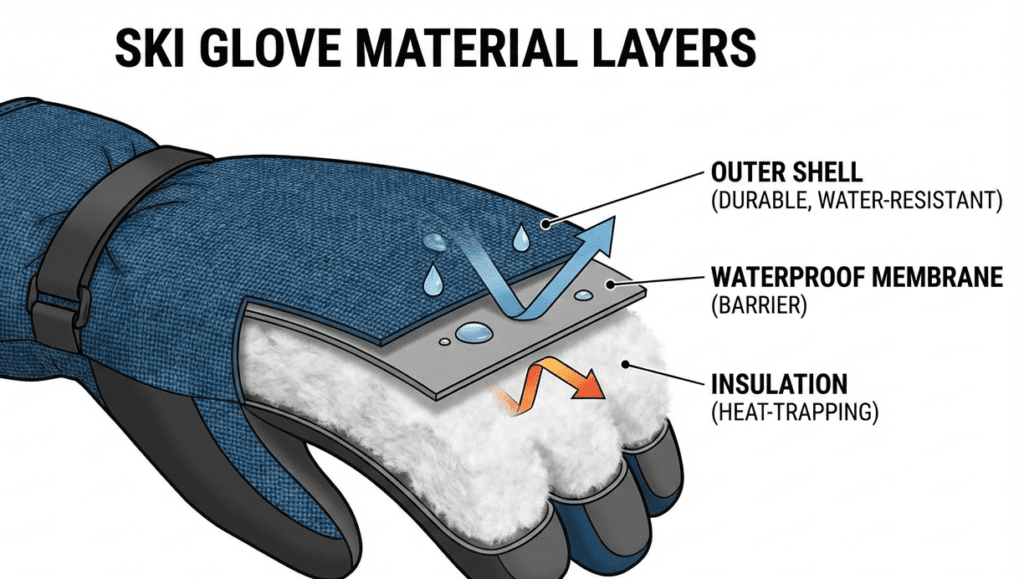
Every ski glove is basically three layers working together.
Each layer handles a different job, and if one layer fails, your hands feel it.
This is where material choice ends up affecting warmth and comfort way more than most people expect on the mountain
Outer Shell Materials
The shell deals with the outside world — snow, wind, chairlift rails, ski poles, tree branches, and all the abrasion that comes with them.
Leather (cowhide & goat leather)
Leather shells are warm, durable, and grip poles really well. Goat leather especially holds up against chairlifts and season-long abuse.
From my experience, leather shines in mid-winter because it blocks wind and stays flexible once it breaks in.
The tradeoff is it needs conditioning and care, or it can dry out and absorb water.
Synthetic Nylon / Polyester Shells
These are lighter and cheaper, and you see them on a lot of all-mountain gloves. They shed snow decently when temps stay cold and dry. But on wet coastal snow or spring days, these fabrics get overwhelmed faster unless paired with a strong membrane.
Softshell Hybrids
Softshell gloves are super comfortable and move naturally with your hands. They breathe well on warmer days and make buckle adjustments easy. But once the snow turns wet, softshell fabrics get soaked and lose warmth, so they’re better for spring laps or sunny groomers, not deep winter storms.
Insulation Materials
Insulation is what actually traps heated air around your hands.
More air trapped = more warmth, as long as the insulation stays dry.
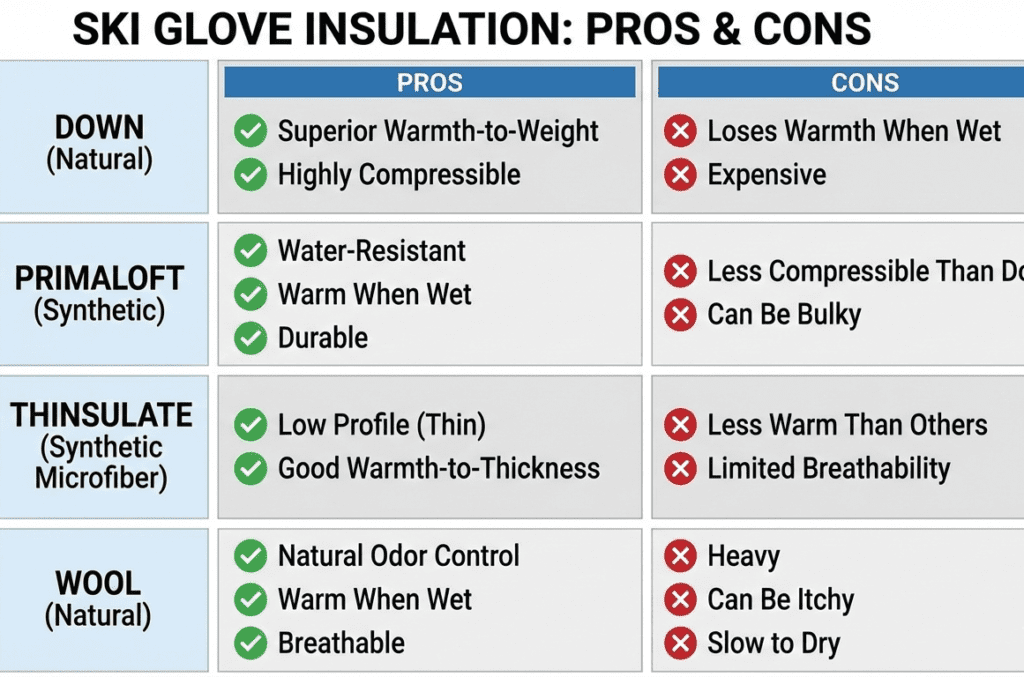
Primaloft
Synthetic insulation that keeps heat even when damp.
A lot of backcountry and resort gloves use it because it balances warmth and dexterity without feeling bulky.
Thinsulate
Thin, lightweight insulation you see in many mid-range ski gloves.
Works well for groomers and average winter days where you need warmth without sacrificing mobility.
Down
Down is incredibly warm for its weight, but it hates moisture.
If it gets wet, it loses loft fast, so down gloves are niche unless conditions are very cold and dry.
Wool (less common)
Wool insulates even when wet and regulates temperature well.
It shows up more in liners or minimalist touring gloves than in full resort gloves.
No Insulation (Touring/Climbing Use)
Ski touring gloves often skip insulation completely.
You generate enough heat on the ascent that insulation becomes a problem, not a feature.
On cold chairlifts, insulation is your best friend. On skin tracks, insulation turns your hands into mini saunas.
Waterproof / Breathable Membranes
This layer decides if insulation stays dry, and dry insulation is the only insulation that actually works.
Gore-Tex
Gore-Tex is popular for a reason — it blocks outside moisture while letting sweat escape.
This keeps insulation dry during wet snow days and long lift rides.
Proprietary Membranes
Brands have their own membranes that range from solid to pretty mediocre.
The main thing that matters is whether the membrane actually breathes, not just whether it’s “waterproof” on a spec sheet.
No Membrane (Fleece-Only)
Fleece-only gloves feel great for a few runs, but once snow melts into them they hit thermal failure mode fast.
From my experience, this happens a lot in spring conditions when snow turns to slush and you’re touching everything.
On dry January groomers, membrane choice barely registers. On wet Sierra or PNW snow, the membrane makes or breaks your day.
How Material Choices Change Comfort on the Mountain
Comfort isn’t just “warm vs cold.”
Different glove materials change how your hands actually work on snow.
You feel it when gripping poles, buckling boots, texting, or waiting on a windy chair.
Dexterity (Pole Grip, Buckles, Zippers)
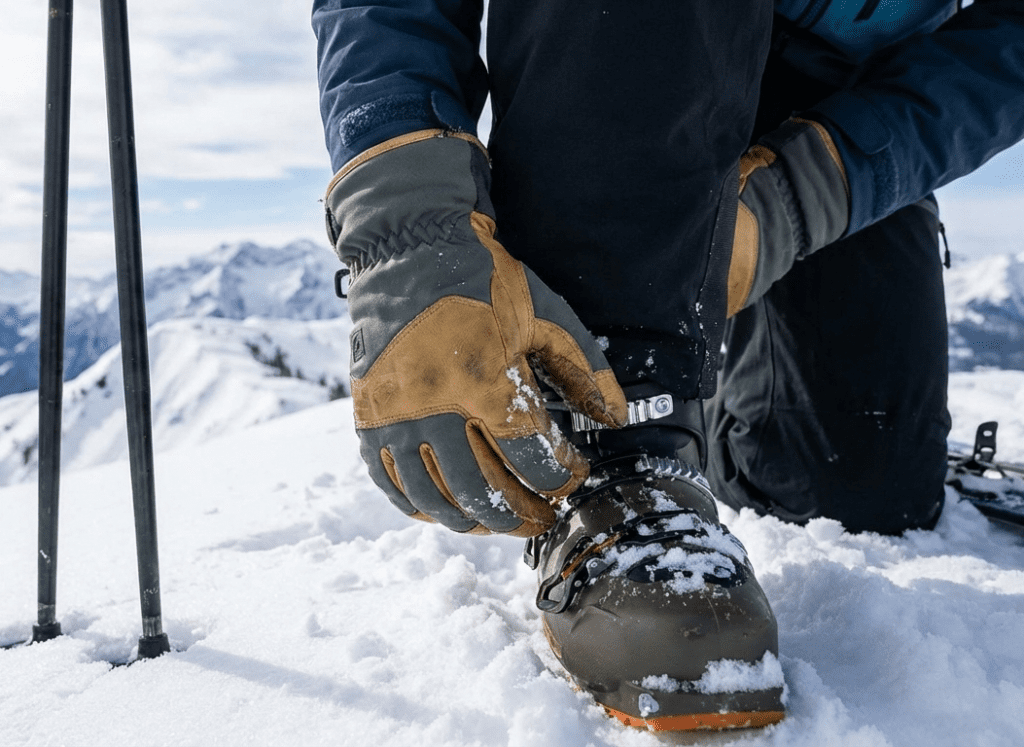
Softshells and lighter synthetics usually move easier right out of the box, so you can adjust buckles without taking gloves off.
Leather can feel a bit stiffer at first, but once it breaks in, the grip and pole feel are solid and natural.
If you’ve ever tried to zip a jacket with bulky insulation, you already know how material thickness changes finesse.
Break-In Time (Leather vs Synthetic)
Leather needs a few days of skiing to soften and mold to your hand.
It feels awkward on day one but noticeably better by day three.
Synthetic shells don’t require break-in, but they never really “form” to your hand the same way.
From my experience, leather feels best over a long season, while synthetics feel best on sale day.
Moisture Control (Sweat vs Snowmelt)
Moisture is what ruins comfort fastest.
If sweat can’t escape, liners get damp and your hands chill on the lift ride.
If snowmelt gets in, insulation collapses and loses heat.
Membranes help, but shell fabrics and liner choices matter too because wet fleece feels great for five minutes and terrible for the next five hours.
Liners Slipping or Bunching
Some liner fabrics glide smoothly and stay put when you pull gloves off mid-day.
Others stick to your fingers and turn inside-out, which drives skiers nuts on cold mornings.
Wool or brushed liners tend to stay in place, while slick nylons can shift if the glove fit isn’t dialed.
This is one of those small comfort issues that skiers feel instantly but rarely connect to materials.
Stiffness in Cold Temperatures
Certain synthetics get noticeably rigid when temps drop below freezing.
That stiffness makes pole grip and hand movement feel robotic until the glove warms up.
Leather stays more flexible in the cold once it’s conditioned, which is why many ski patrollers and instructors favor it for long winter days.
On warm spring days, the opposite happens — soft shells feel dreamy while insulated leather can feel overkill.
Common Mistakes Skiers Make With Materials
Most of these mistakes happen because skiers buy gloves for the wrong conditions.
The material feels fine in the shop, then falls apart on the mountain.
From my experience, it’s almost always a mismatch between climate, sweat, and insulation.
Buying leather and never treating it
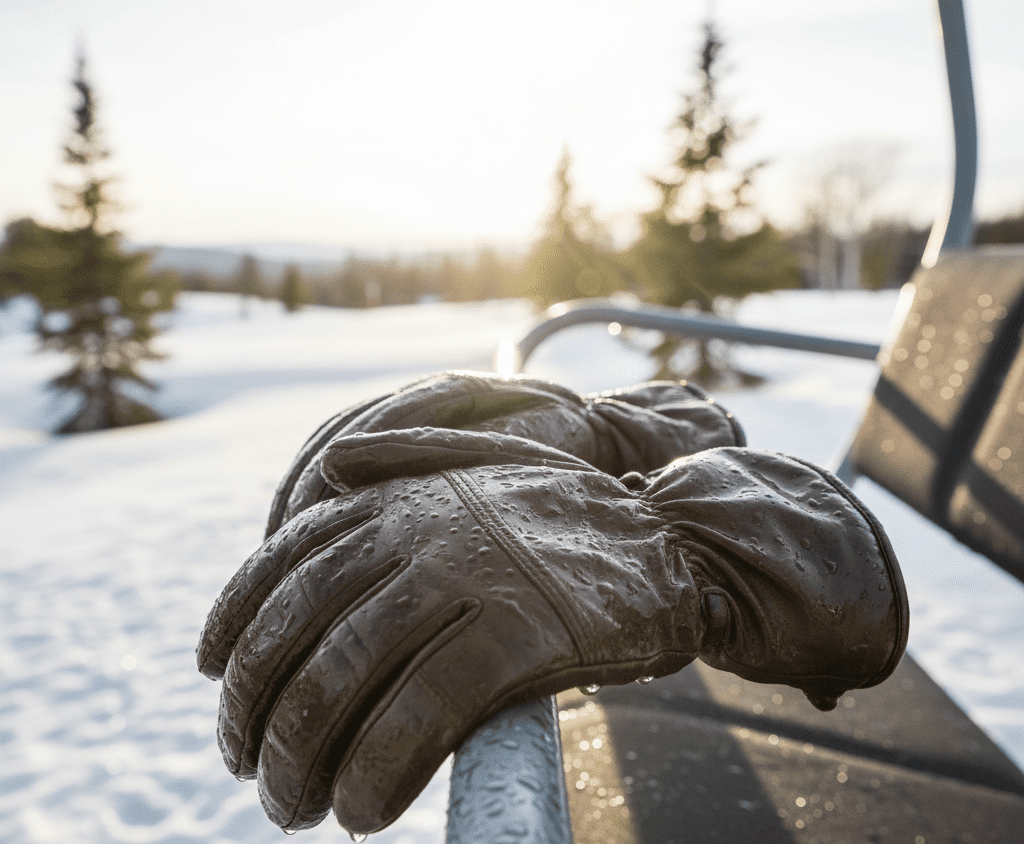
Leather dries out, cracks, and absorbs water.
Once wet, insulation collapses and warmth disappears.
I’ve seen these ruined mid-season gloves in coastal snow.
Choosing down insulation in wet coastal climates
Down is warm until it gets damp, then it turns into cold mush.
Works on dry powder days, terrible in heavy maritime snow.
Synthetic performs better when moisture is unavoidable.
Ignoring membrane breathability ratings
Some gloves trap sweat faster than they block snowmelt.
Hands get clammy on climbs, then freeze on chairlifts.
Breathability matters just as much as waterproofing.
Using touring gloves for cold groomer days
Touring gloves are built to breathe while climbing.
They are not built for sitting still on windy lifts.
That mismatch leads to cold fingers by run three.
Assuming thicker = warmer
Bulk traps heat, but only if it stays dry and breathable.
Too much insulation makes hands sweat, then chill.
Warmth comes from balance, not just thickness.
Choosing shiny synthetic shells for spring skiing
They look waterproof but often trap heat and sweat.
Spring days need ventilation more than insulation.
A lighter softshell handles heat swings better.
Buying fleece liners without checking friction
Some liners cling and invert when you pull gloves off.
This becomes a nightmare on chairlifts and in cold wind.
Low-friction liners stay put and feel smoother.
Skipping break-in expectations
Leather and heavier synthetics often need a few days.
Stiff gloves feel awkward when buckling boots or grabbing poles.
Once softened, they move naturally and feel connected.
Ignoring local snow climate
Dry inland snow behaves differently than wet coastal snow.
Material that shines in Utah may fail in Oregon.
Matching climate to materials is half the battle.
When Material Choice Becomes a Real Problem
This is where the wrong glove material stops being a minor annoyance and starts affecting circulation, comfort, and safety.
Most skiers don’t realize it until their hands are cold halfway up a chairlift.
From my experience, it usually shows up as a pattern, not a single bad day.
1. Numb or Burning Fingers on Chairlifts
If fingers go numb or start burning after 10–15 minutes on a lift, that’s a sign the insulation or membrane isn’t working for the condition.
Cold air hits hard when you’re sitting still, and poor material choice can’t keep blood flow warm.
This gets worse on windy ridges and exposed chairs.
2. Gloves Stay Wet All Day
When gloves soak early and never dry out, the issue is usually moisture management.
This can come from snow melt outside or sweat vapor inside.
Either way, wet insulation loses warmth fast and your hands pay for it.
3. Liners Packing Out
Liners that pack out start feeling thin and uneven.
You’ll notice pressure points on fingertips and knuckles, and it gets harder to grip poles.
I’ve seen this happen mid-season with gloves that weren’t built for high friction or frequent chairlift grabs.
4. Leather Cracking or Splitting
Dry, untreated leather stiffens and eventually cracks.
Once that happens, it loses water resistance and flexibility.
You’ll see splits around knuckles or thumb joints first because that’s where bending force is highest.
5. Insulation Clumping or Shifting
If you feel cold spots instead of steady warmth, the insulation has likely shifted.
Clumping creates air gaps where heat escapes and snow melt can freeze.
This is common after repeated freeze-thaw cycles or compression from ski poles.
When It’s Time to Replace Gloves
There’s no calendar schedule for replacement — it depends on how often you ski and how hard you are on gear.
But there are clear signals that gloves are done working for you:
• warmth lasts fewer runs than it used to
• gloves take longer to dry than they used to
• the membrane leaks during normal snow contact
• palm material is thinning around pole grip zones
• stitching is opening on fingers or thumb
• liner pulls out every time you take gloves off
• wet insulation stays cold instead of warming back up
When these show up together, the gloves aren’t protecting circulation or heat anymore.
At that point, replacing isn’t about performance — it’s about keeping hands functional in cold environments.
Why This Matters for Safety (Not Just Comfort)
Cold hands make it harder to hold poles, buckle boots, or clip bindings.
They also encourage micro-fidgeting and rushed decisions on chairlifts.
Every ski instructor I know pays close attention to hand warmth because it affects control and focus more than most people expect.
FAQs — How Material Choice Affects Ski Glove Comfort
Skiers ask these questions all the time because cold hands are miserable and the causes aren’t always obvious.
From my experience, most issues trace back to material behavior in real conditions, not just insulation thickness or price tag.
1. Why do some gloves feel warm while moving but cold on chairlifts?
Motion creates heat through blood flow and friction.
When you stop moving on a lift, cold air strips heat from the glove surface.
Material choice matters here — dense shells and effective membranes slow heat loss and keep fingers alive through the ride up.
2. Does leather need extra care to stay warm and water-resistant?
Yes. Leather stays comfortable longer when it’s treated and conditioned.
Untreated leather absorbs moisture and stiffens in the cold, which hurts dexterity.
I’ve had leather gloves feel amazing in dry cold, then go soggy fast during spring skiing without upkeep.
3. Why do liners sometimes twist or bunch inside gloves?
It happens when the shell is stiffer than the liner or when sweat builds up.
Moisture increases friction and the liner shifts as you grip poles.
This is why material pairing (shell + liner + membrane) matters more than any single layer.
4. Do thicker gloves always mean warmer gloves?
Not always. Thickness traps more air, but if moisture can’t escape, the insulation collapses and warmth drops.
Breathability is just as important for comfort as insulation weight, especially for skiers who sweat easily or ski in wet coastal climates.
5. When should gloves be replaced due to material failure?
If the membrane leaks, insulation clumps, leather cracks, or warmth drops significantly, the gloves aren’t doing their job anymore.
It’s not about age — it’s about whether the materials still manage heat and moisture well on the mountain.
Final Verdict
Comfort isn’t random — it’s material science on your hands.
Shell fabrics, liners, and membranes all change how warm, dry, and nimble you feel on the mountain.
Choosing the right material matters more than the brand name or the marketing.
Match the glove materials to your snow conditions, your sweat rate, and how much you move.
Better material fit = better comfort = better day on snow.
If you’re new to this and want help choosing the right setup, you can check our beginner-friendly guide on how to choose ski gloves.
We also have more deep-dive glove guides if you want to understand why gloves get wet, fail, or lose heat.
Your hands will thank you later.
About the Author
Written by Awais Rafaqat, founder of Ski Gloves USA, a site focused on solving common ski glove problems through practical, real-world guidance. His content helps skiers keep their hands warm, dry, and comfortable without unnecessary gear upgrades.