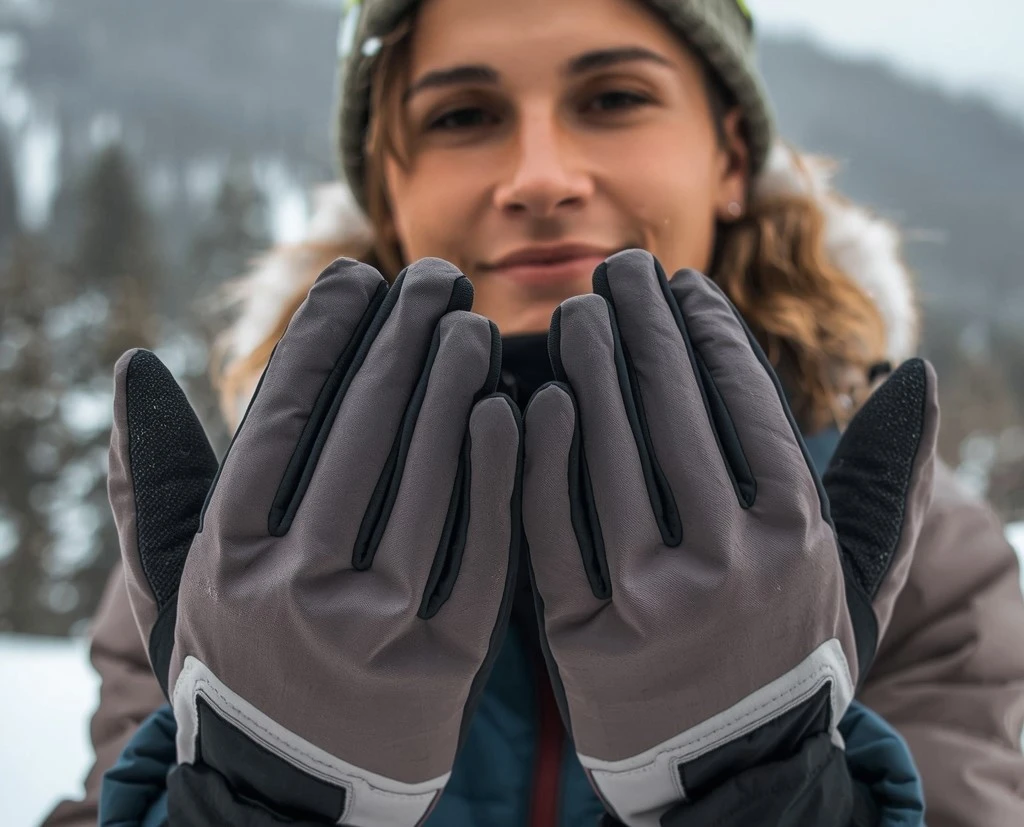
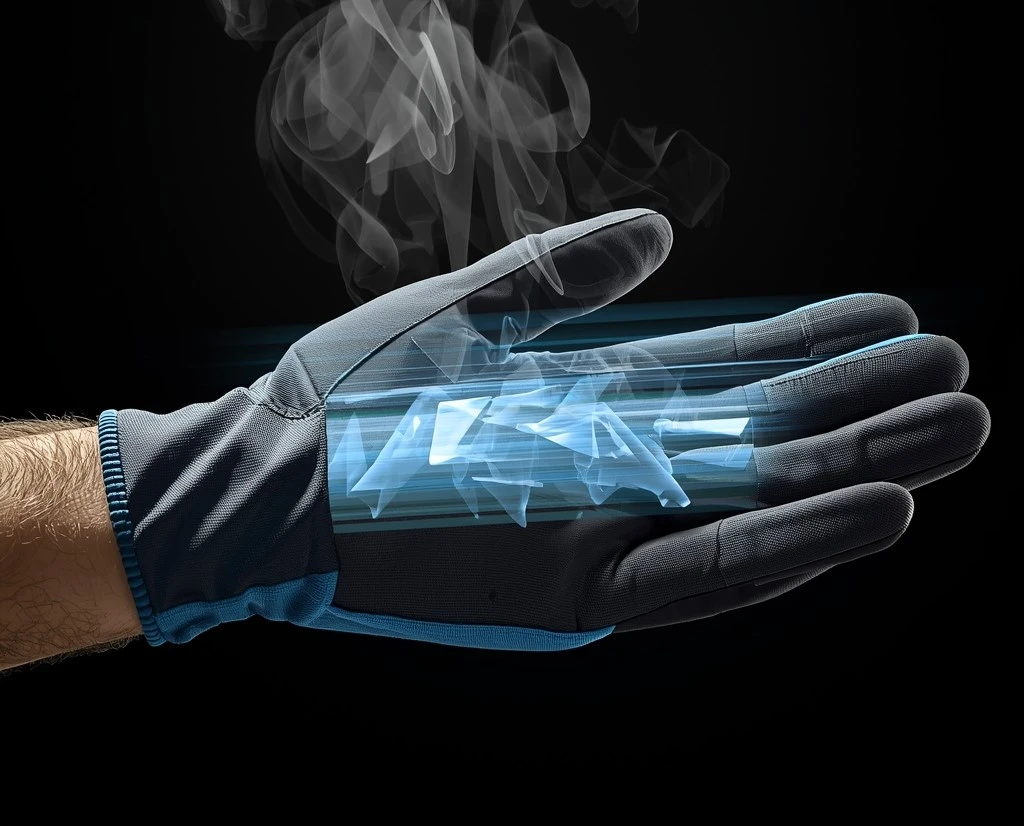
If you’ve ever pulled your hands out of your gloves only to find them clammy and cold, you’ve experienced a failure in “breathability.” Most skiers think their gloves are leaking, but the real secret to how Gore-Tex gloves keep hands dry inside isn’t just about blocking snow—it’s about mastering Vapor Pressure.
From my experience, this usually shows up on long days. You ski hard, hands sweat on the run, then you sit on a windy chairlift. The moisture cools down. Suddenly your gloves feel cold and wet from the inside. Many skiers assume the glove is leaking. Most of the time, it isn’t.
The real issue is moisture management, not just waterproofing. And that’s where membrane gloves behave differently.
This post explains what actually happens inside the glove, why some gloves fail, and when this type of construction really helps — and when it doesn’t.
Why Hands Get Wet Inside Ski Gloves
Most skiers think wet hands mean snow got inside. In reality, the moisture usually starts from your own hands. Understanding this changes how you choose gloves and why some feel cold even when they are technically waterproof.
Sweat, Not Snow, Is Usually the Cause
Hands sweat more than people expect, even in freezing weather. During carving, skiing bumps, or hiking short sections, body heat rises fast. Your hands react the same way as during any physical activity — they sweat.
That moisture has to go somewhere. In basic gloves, it stays trapped inside insulation layers. Once insulation becomes damp, it loses warmth and dries very slowly. By afternoon, gloves often feel heavier and colder even without visible wetness.
From experience, this shows up clearly on long resort days. Morning runs feel warm and comfortable. Around midday, hands heat up during active skiing. Later on chairlifts, wind cools the trapped moisture, and the glove suddenly feels cold from inside.
This cycle repeats all day. Sweat builds during movement, then cools during rest. Many skiers think the glove failed, but the problem is moisture staying inside.
In simple field testing, wearing the same insulation with and without a breathable membrane shows the difference clearly. After several hours, non-breathable gloves feel damp near fingertips and palm areas, while breathable constructions stay noticeably drier even though both stayed waterproof outside.
The Science: Vapor Pressure Gradients
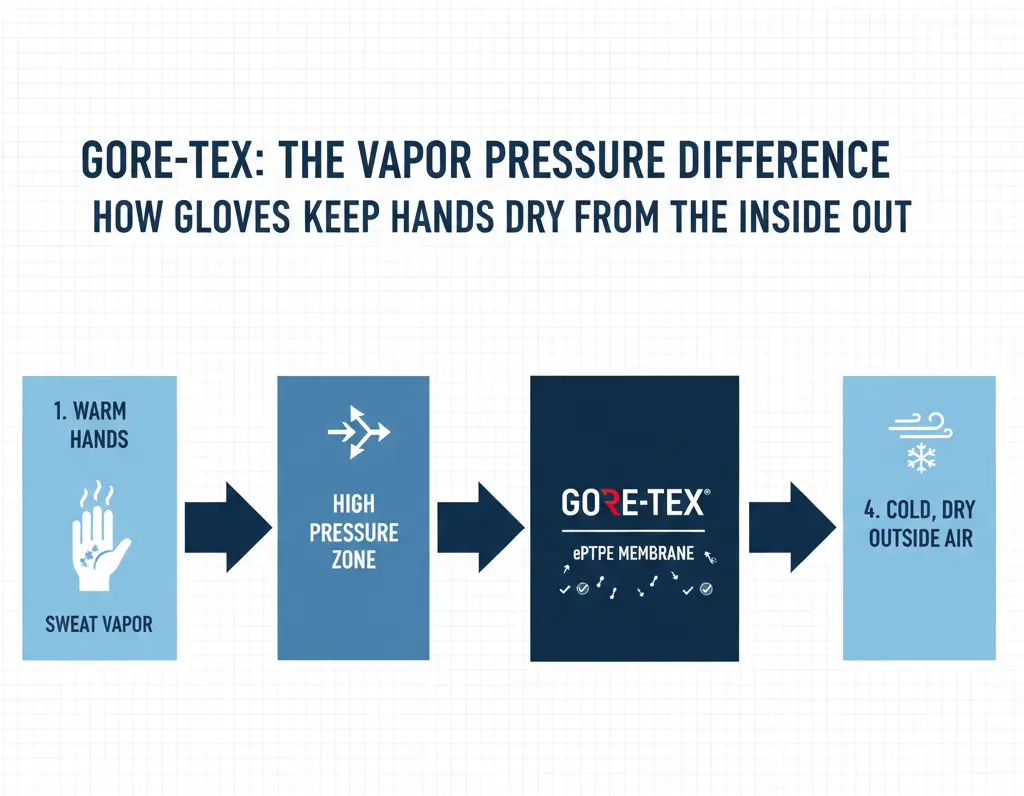
To understand how moisture leaves your glove, you have to understand the Vapor Pressure Gradient. Inside your glove, your hand is warm (approx. 90°F) and humid. Outside, the air is cold and dry.
Nature wants to balance this. The heat from your hand creates “pressure” that pushes water vapor molecules through the insulation and out through the membrane. This is why Gore-Tex gloves feel colder if you aren’t moving; without the heat from your hand to create that pressure, the moisture stays trapped, and the “breathability” stops.
External Moisture Still Matters
Outside moisture still plays a role. Wet snow, grabbing icy lift bars, wiping goggles, or dragging hands through powder adds water to the shell. If the outer fabric absorbs water, it slowly reduces breathability and pushes moisture inward.
This is why gloves sometimes feel wetter later in the day even without falling in snow. The shell becomes saturated, and sweat can no longer escape easily.
So the glove is solving two problems at the same time:
- Keep outside water out
- Let inside moisture escape
Most basic gloves only do the first part well.
What Skiers Should Look For in Real Use
If your hands run warm or you ski aggressively, moisture management matters more than extra insulation. Breathable membranes, quick-dry liners, and shells that resist water absorption help more than simply adding thickness.
For colder, slower skiing, heavier insulation works because sweat production stays lower. But for active skiing, slightly lighter insulation with better moisture movement often keeps hands warmer over a full day.
From my experience, the best indicator is how gloves feel after lunch, not during the first run. If they still feel dry and light, moisture is escaping properly. If they feel damp or cold during lift rides, sweat is being trapped inside.
Understanding this difference helps skiers choose materials based on how they actually ski, not just how warm a glove feels in the shop.
How Gore-Tex Gloves Keep Hands Dry Inside
The idea sounds simple — keep water out and let sweat escape.
But on the mountain, hands get wet from inside more often than outside. That’s where confusion starts.
Skiers don’t usually have a waterproof problem. They have a moisture management problem. And Gore-Tex works only when the whole glove system supports it.
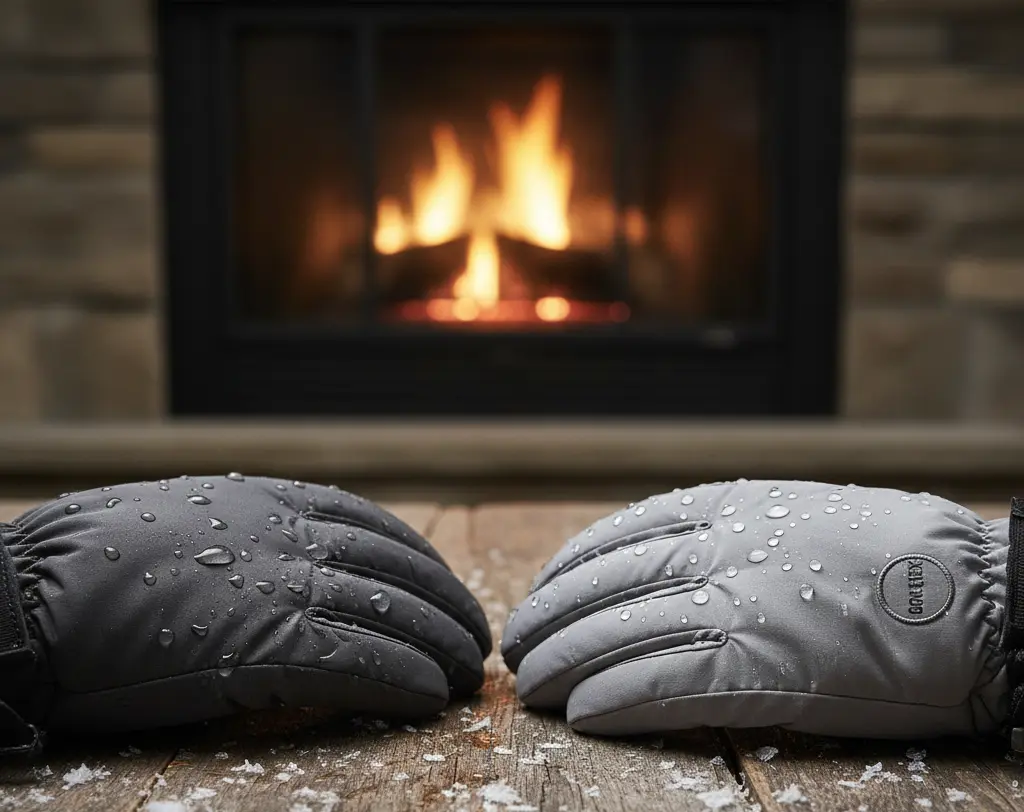
What a Gore-Tex Membrane Actually Does
A Gore-Tex layer sits between the outer fabric and the insulation.
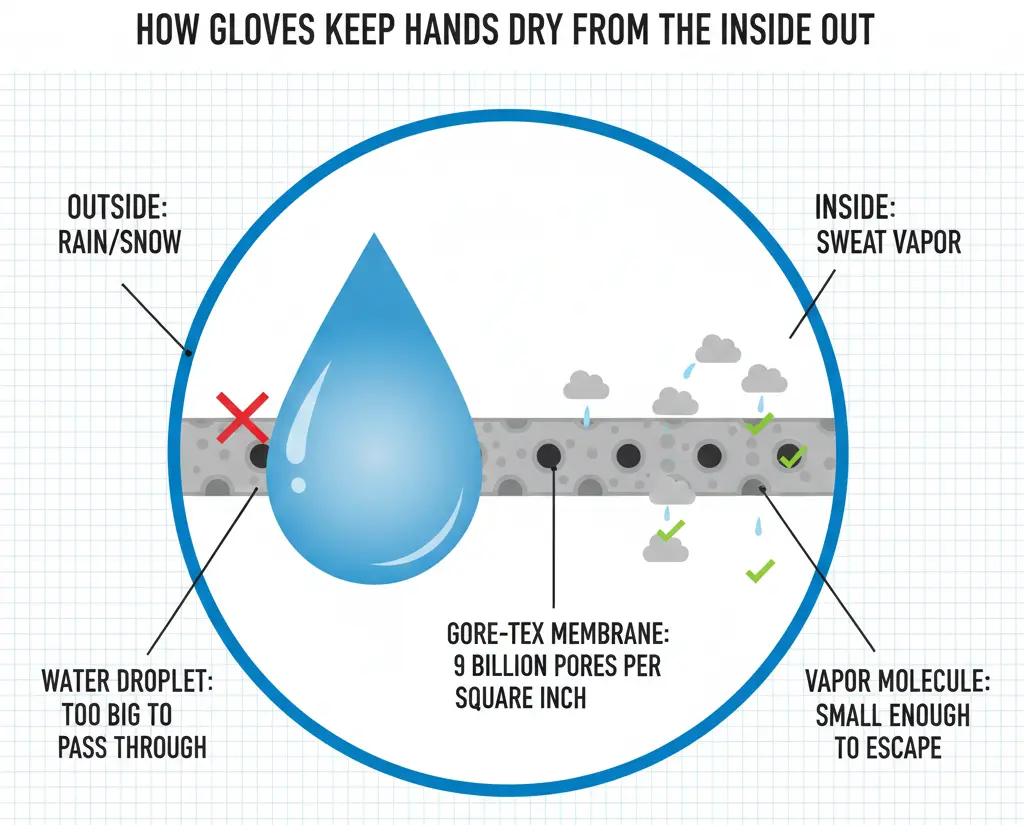
It contains microscopic pores that block liquid water but allow water vapor to pass through.
In real skiing conditions this means:
- Snow and meltwater stay outside
- Sweat vapor moves outward when hands are warm
- Hands cool slower because moisture is not trapped
At the core of this system is ePTFE (expanded Polytetrafluoroethylene). This material contains 9 billion pores per square inch. Each pore is 20,000 times smaller than a liquid water droplet (keeping snow out) but 700 times larger than a water vapor molecule. This size ratio is the physical gateway that allows your sweat to evaporate while you’re submerged in snow.
But this only works when moisture can move away from the glove. If the outer fabric gets soaked, or insulation fills with sweat, breathability slows down. So it’s not magic — it’s a system working together.
Material Matters More Than the Logo
A Gore-Tex membrane works differently depending on the outer material.
Leather shells
- More durable
- Better wind resistance
- Slower drying if soaked
Synthetic shells
- Lighter
- Dry faster
- Usually better for high activity skiing
What matters most is balance. Too much insulation traps sweat. Too little causes cold hands that stop moisture movement entirely.
Pro Tip: Even the best Gore-Tex membrane will fail if the outer shell “wets out.” To understand how to choose the right outer layer to protect your membrane, see our deep dive on the Best Ski Glove Shell Materials.
Real Mountain Test — Wet Snow vs Cold Dry Days
Conditions change everything.
The same glove can feel perfect one day and uncomfortable the next. Most confusion about waterproof gloves comes from this difference between wet snow and cold dry weather.
From experience, this becomes obvious after a full day skiing in mixed conditions.
Wet Snow (Spring Skiing)
Spring snow sticks to everything. Gloves touch snow more often — during falls, when adjusting boots, or pushing on flat sections.
Gloves without a membrane start feeling damp after repeated contact. The outer fabric absorbs water, and moisture slowly moves inward.
Membrane gloves stay dry longer inside. But aggressive skiing still creates sweat, especially in the palms where pole friction generates heat.
Real observation: after several runs in wet snow, insulation stays warmer when it remains dry, even if the glove feels slightly warm inside.
Cold Dry Days
On cold dry days, the difference between waterproof and non-waterproof gloves becomes smaller.
Snow is dry and doesn’t melt easily. Moisture inside mostly comes from sweat, not snow exposure.
In these conditions, breathability matters more than waterproof rating. Gloves that release heat faster often feel more comfortable over time.
Many instructors mention this during training — overheating hands early usually leads to cold hands later.
Long Lift Exposure — Where Dryness Matters Most
Lift rides expose the real difference between dry and damp gloves.
When insulation is dry, warmth stays stable even in wind. When insulation is damp, heat disappears quickly once movement stops.
This is why thick gloves sometimes feel colder than thinner ones. Moisture removes heat faster than air.
Ski schools often explain it simply: dry insulation is warmer than thick insulation.
Real Condition Comparison
| Condition | Main Moisture Source | What Works Best | Common Problem |
| Wet spring snow | External moisture + sweat | Membrane + moderate insulation | Outer fabric soaking |
| Cold dry weather | Sweat | Breathable materials | Overheating palms |
| Long lift rides | Stored moisture | Dry insulation | Rapid heat loss |
What Skiers Should Choose Based on Conditions
If you ski mostly in wet coastal or spring conditions, a waterproof membrane matters more. Look for materials that resist soaking and dry overnight.
If you ski in cold continental climates, focus more on breathability and fit. Too much insulation traps sweat and creates moisture from inside.
For aggressive skiing or teaching all day, balance matters most — moderate insulation with good moisture movement.
Real Tip From Mountain Use
Pay attention to where your gloves feel wet first.
If palms get damp first, it’s usually sweat and pole friction.
If fingertips feel wet after snow contact, outer fabric protection may be weak.
Understanding this helps you choose materials better than any temperature rating on a label.
The Direct Answer
Wet snow tests waterproofing.
Cold dry days test breathability.
The best glove is not the warmest or the most waterproof. It’s the one that keeps insulation dry in the conditions you actually ski.
Comparison — Membrane vs Non-Membrane Gloves
Both glove types solve different problems.
One focuses on keeping water out. The other focuses on simplicity and airflow.
Understanding how they behave on snow helps you choose correctly.
Membrane vs Non-Membrane — Real Behavior Comparison
| Feature | Membrane Gloves | Non-Membrane Gloves |
| External water protection | High | Medium |
| Sweat management | Medium–High | Low |
| Warmth consistency | Stable over time | Drops when damp |
| Dexterity | Slightly reduced | Usually better |
| Drying speed overnight | Slower | Faster |
| Cost | Higher | Lower |
What This Means on the Mountain
Membrane gloves handle repeated snow contact better. Grabbing lift bars, brushing snow off skis, or adjusting bindings doesn’t push moisture inside quickly.
Non-membrane gloves feel softer and more flexible. Many park riders and instructors like the hand feel, especially during dry winter days.
The trade-off shows later in the day. Once insulation becomes damp, warmth drops fast during lift rides or windy exposure.
Where Each Type Works Best
Membrane gloves make more sense when skiing wet snow, storms, or mixed weather. They help maintain stable warmth over long hours outside.
Non-membrane gloves work well in very cold, dry climates or short sessions where gloves can dry between runs.
Ski patrol and instructors often rotate gloves for this reason — breathable gloves for active periods, waterproof ones for long exposure.
Real Causes of Moisture Problems (Area by Area)
Palms usually get wet first. Pole grip friction creates heat, which increases sweating.
Back of the hand collects moisture from snow contact, especially when getting up after a fall.
Fingertips often feel cold first because damp insulation compresses there during gripping and zipper use.
Understanding where moisture starts helps identify whether you need better waterproofing or better breathability.
Quick Pros and Cons Based on Conditions
Membrane Gloves
- Better for wet snow and changing weather
- Keep insulation dry longer
- Slightly less flexible
- Take longer to dry overnight
Non-Membrane Gloves
- Better dexterity and airflow
- Dry faster after washing or sweating
- Less protection in wet conditions
- Warmth drops if insulation gets damp
What To Choose (Simple Decision Guide)
Choose membrane gloves if you ski in spring snow, coastal resorts, or long storm days.
Choose non-membrane gloves if temperatures stay cold and dry and you value hand movement more than weather protection.
If hands usually get sweaty, avoid heavy insulation first. Material choice matters more than thickness.
One Important Thing Skiers Miss
This comparison is not about better or worse gear.
It’s about how gloves behave after four or five hours outside — when sweat, snow contact, and cold exposure all combine. The right choice is simply the one that keeps insulation dry in your normal skiing conditions.
Warmth, Waterproofing, Dexterity — The Real Trade-Off
Every ski glove balances three things.
Keeping water out. Keeping heat in. Letting hands move naturally.
Improving one usually affects the others.
Waterproofing — Protection From Outside Moisture
Gloves with a membrane block melting snow and wet chairlifts very well. This matters during spring skiing, storms, or repeated falls.
When the outer shell stays dry, insulation keeps working longer. That is why waterproof gloves often feel warmer later in the day, even without thicker padding.
The key point is simple — waterproofing protects warmth indirectly by preventing moisture buildup.
Warmth — More About Dryness Than Thickness
Many skiers assume warmth comes from more insulation. In reality, dry insulation matters more than thick insulation.
A damp glove loses heat quickly during lift rides because moisture pulls warmth away from skin. Guides and instructors often mention this when teaching beginners who complain about cold hands despite bulky gloves.
In cold and dry weather, both membrane and non-membrane gloves can feel equally warm at first. The difference appears after hours of skiing.
Dexterity — Where Simpler Gloves Win
Extra layers slightly reduce feel around poles, zippers, and buckles. That’s why racers and park riders often choose lighter gloves.
Less material between hand and grip improves control. Adjusting bindings or opening pockets feels easier.
Some skiers describe membrane gloves as bulky even when sizing is correct. Usually this comes from the added layers, not poor fit.
What To Choose Based on Conditions
The right glove depends more on where and how you ski than on brand or price. Weather, activity level, and drying time between ski days all change how a glove behaves. Understanding this helps avoid buying something that feels good in the shop but fails halfway through the day.
Cold and Wet Resorts
In places where snow is heavy or temperatures hover near freezing, outside moisture becomes the main problem. Gloves regularly touch wet chairs, slushy snow, and melting surfaces.
Membrane gloves make sense here because they slow water from reaching insulation. Skiers who fall often or ski during storms usually notice their hands stay comfortable longer through the afternoon.
Cold and Dry Climate
In colder regions with dry snow, outside water is less of an issue. Moisture mostly comes from sweat during skiing.
Some riders prefer lighter gloves in these conditions because they release heat faster and dry overnight more easily in a lodge or hotel room. Breathable liners and less bulky insulation often matter more than maximum waterproofing.
High Activity Skiing
If you ski fast, hike terrain, or spend time in bumps or trees, hands warm up quickly. Sweat builds even on very cold days.
Here, ventilation, liner material, and overall glove fit become just as important as the membrane itself. A well-ventilated glove with moderate insulation often feels drier than a very warm glove that traps heat.
Budget Consideration
Membrane construction adds cost because of extra materials and manufacturing steps. For occasional skiers or short resort sessions, the difference may not always justify the price.
But for full-day skiing, multi-day trips, or changing weather, the added moisture control becomes easier to notice. Many instructors and regular skiers choose membrane gloves simply because performance stays consistent across conditions.
The main idea is simple. Match the glove to the environment and your skiing style, not just the temperature written on the weather app.
Common Mistakes Skiers Make
Many wet-glove problems come from small habits, not bad gear. Gloves are often blamed when the real issue is moisture trapped inside.
A common misunderstanding is thinking waterproof also means sweat-proof. Waterproofing stops outside water, but sweat still needs space and airflow to escape.
Another mistake is choosing the warmest glove available. Heavy insulation feels safe at first, but overheated hands sweat quickly. Once insulation gets damp, warmth drops fast.
Some skiers also pack gloves straight into a bag after skiing. Moisture stays trapped overnight, and the next morning starts with damp insulation already inside.
Liners can cause problems too. Thick or non-breathable liners hold sweat close to skin, which makes hands feel wet even when the glove itself is working correctly.
And dampness does not always mean a leak. In many cases, moisture came from inside during active skiing, not from snow entering the glove.
Real Tips From Mountain Use
A slightly relaxed fit helps air move inside the glove. Tight gloves trap heat and increase sweating during long runs.
During breaks, opening cuffs or loosening straps lets warm air escape. Even a few minutes helps reduce moisture buildup before the next lift.
Always dry gloves fully after skiing. Leave them open in a warm room with airflow instead of sealing them inside bags.
Avoid placing gloves directly on heaters or radiators. High heat can weaken adhesives and membranes over time, something many repair technicians point out when inspecting failed gloves.
Small habits like these usually make a bigger difference than switching to a more expensive glove.
When It Stops Working Properly
Even the best gloves show signs of wear over time. Recognizing what’s normal versus what signals a real problem helps prevent cold hands and wasted money.
Normal:
- Slight dampness after heavy activity
- Gradual moisture buildup late in the day
- Insulation still feels springy and warm, though a bit heavier
This is typical when skiing aggressively or on long lift rides. Hands may feel a little clammy near the end of the day, but gloves still keep most moisture out.
Possible Problem:
- Water soaking through quickly
- Cold spots forming early in the day
- Outer fabric permanently wetting out
Often, the issue isn’t the Gore-Tex membrane itself but wear on the outer shell. Pole friction, snow scraping, and repeated contact with wet surfaces can break down the water-repellent coating.
A practical check: squeeze the gloves gently after a short run. If moisture appears instantly or insulation feels cold, that indicates a shell failure. Many ski techs will also inspect high-wear areas like the thumb, fingertips, and palm seams.
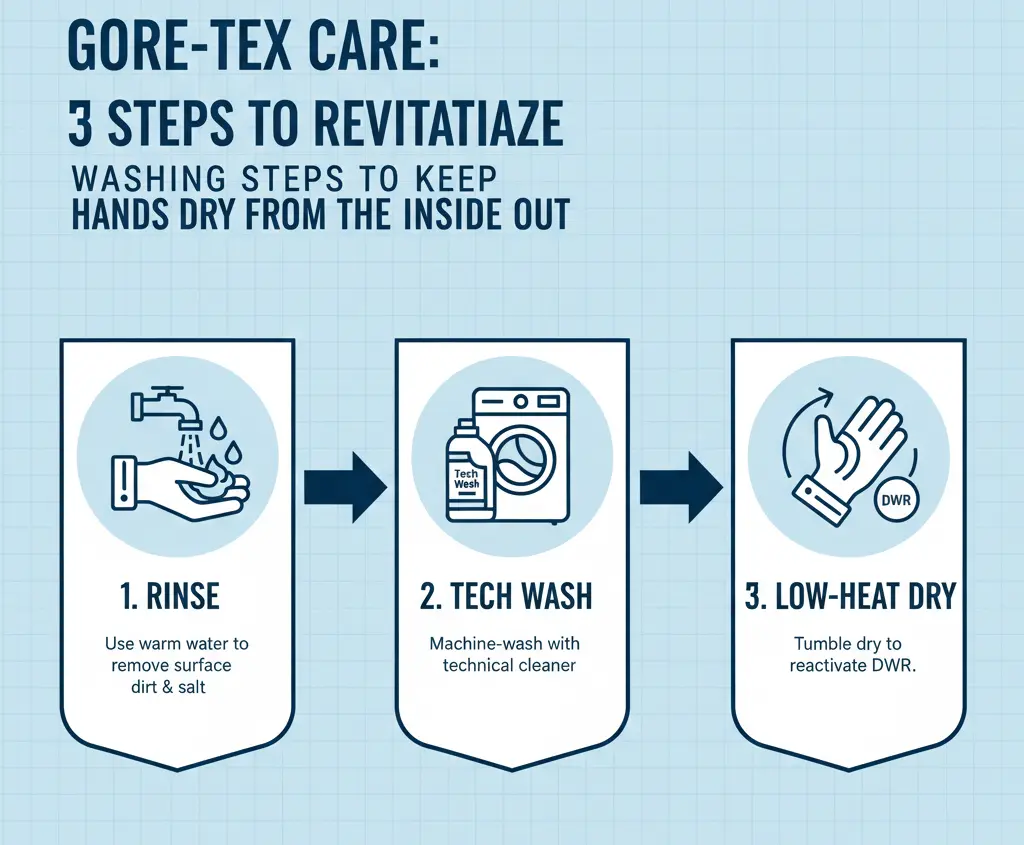
Regular care—cleaning dirt off, reproofing the outer fabric, and drying gloves slowly at room temperature—can extend life. But once water penetrates the insulation quickly, replacement is usually the safest option.
This approach helps skiers know when gloves are still performing and when they’ve reached the point of diminishing protection, avoiding unnecessary cold hands and wasted energy on the slopes.
FAQs – How Gore-Tex Gloves Keep Hands Dry Inside
Gore-Tex gloves are designed to manage moisture, not eliminate it entirely. Even the best membranes can’t stop heavy sweating if your hands generate a lot of heat.
Do Gore-Tex gloves stop sweat completely?
No. They allow sweat vapor to escape, but intense activity can still create dampness inside.
Why do my hands still feel damp sometimes?
Most of the time it’s sweat trapped in the insulation or liner, not a leak through the membrane. Ventilation and glove fit also affect this.
Are they warmer than normal gloves?
Indirectly, yes. By keeping insulation dry, Gore-Tex gloves maintain warmth longer than damp gloves, even if the membrane itself doesn’t add heat.
Do they need special care?
Yes, and here is why: Sweat contains body oils and salt. As sweat vapor passes through the membrane, microscopic salt crystals can get left behind inside the pores. Over time, these crystals act like “plugs,” killing the breathability. This is why you must gently wash your Gore-Tex gloves with a technical cleaner like Nikwax Tech Wash to flush those salt deposits out and restore the vapor flow.
Adding these simple care steps and understanding their limits ensures your gloves perform reliably in real mountain conditions, keeping hands warmer and more comfortable for longer.
Final Thoughts — What Actually Keeps Hands Dry
Keeping hands dry isn’t about a single feature. It’s the balance of waterproofing, breathability, insulation, and proper fit that really matters.
The real test comes after hours on the mountain. While most gloves feel fine on the first run, moisture buildup starts to weigh in after several hours, making dry insulation the real game-changer.
Understanding that sweat, not snow, is usually the main culprit helps you pick gloves smarter. Once you focus on moisture management, glove performance becomes much clearer.
For more tips on keeping your gloves in top shape, you can check our guide on how to dry ski gloves — it’s packed with practical steps to maintain warmth and performance all season long.
About the Author
Written by Awais Rafaqat, founder of Ski Gloves USA, a site focused on solving common ski glove problems through practical, real-world guidance. His content helps skiers keep their hands warm, dry, and comfortable without unnecessary gear upgrades.