Wet glove liners are one of the fastest ways to lose warmth on the mountain. They soak up moisture from sweat, melting snow, and even small amounts of ice when adjusting boots or bindings. It’s not just annoying — it’s a real comfort killer on long days.
This problem shows up a lot during wet snow days, warm spring skiing, and whenever you’re taking gloves on and off between lifts. From my experience, even premium gloves can fail early if the liner starts absorbing water from the inside. That’s why many skiers start looking for ways to prevent water absorption in ski glove liners before the season really ramps up.
The good news is liners get wet for predictable reasons, and you can stop it. In this post we’ll break down why liners take on moisture, how it affects warmth, and the steps that actually work to keep your hands dry longer on the hill.
Why Ski Glove Liners Absorb Water
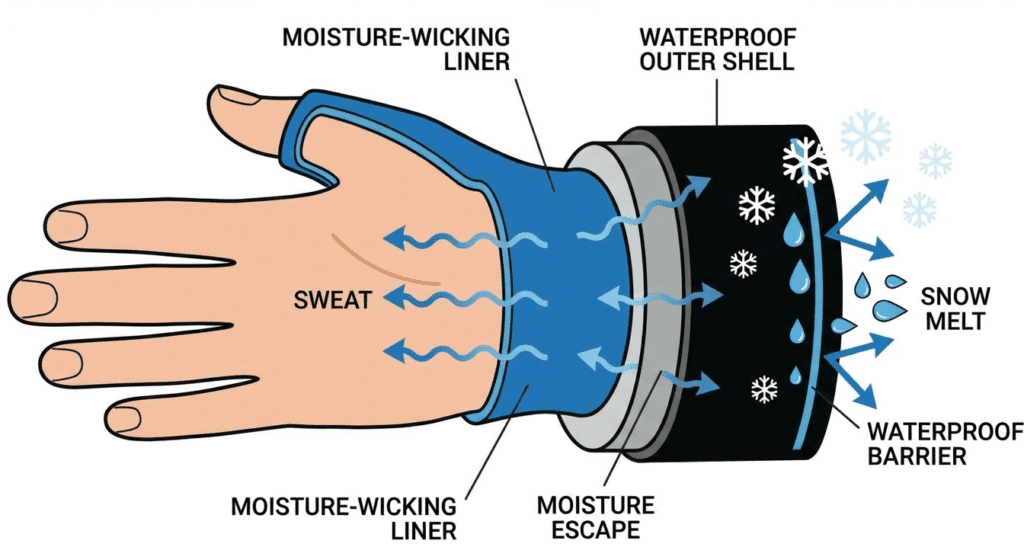
Even when the outer shell stays dry, the liner can quietly soak up moisture. Most skiers notice it halfway through the day when fingers start to feel clammy and insulation loses warmth. From my experience, once liners get wet, the warmth drops fast and is hard to recover until you’re off the mountain.
Below are the real reasons liners take on water during skiing:
Sweat Moisture from Hands
Your hands don’t stop sweating just because it’s cold. Moisture vapor builds up inside the glove and the liner absorbs it like a sponge.
This is more noticeable on warmer days, spring slush, or when skiing aggressively because your body is producing more heat. Ski instructors deal with this constantly because they’re moving non-stop but spending time standing around between runs, so humidity doesn’t escape.
Snow and Melt Seeping Inside
Water doesn’t only come from the inside. Snow can sneak into cuffs when you adjust boots, grab poles without gloves, or brush snow off your clothing.
Once inside the glove, that snow melts from body heat and the liner sucks it up. Kids’ gloves get destroyed by this for the same reason — constant taking on and off combined with wet snow days.
Materials That Hold Moisture
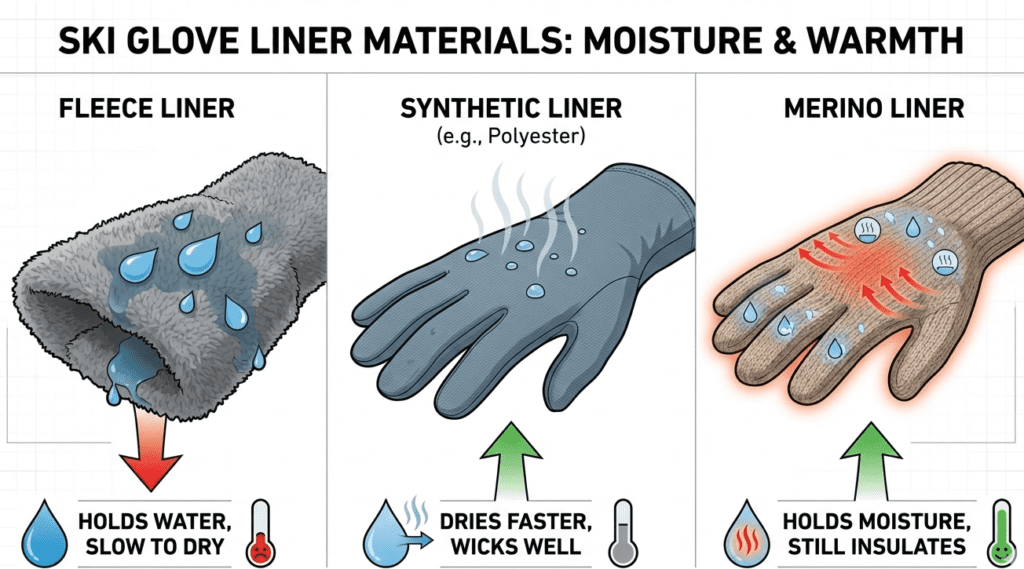
Most glove liners are made from fabrics like fleece, brushed polyester, or wool blends. These materials are warm and soft, but they absorb and hold water easily.
Synthetic insulation such as Thinsulate absorbs less water than fleece, but it still retains moisture once it’s inside. Outdoor gear testing has shown that the real issue isn’t how fast these fabrics get wet, but how long they take to dry once they are.
Membrane Limitation
The waterproof-breathable technology (Gore-Tex, BDry, etc.) is almost always in the outer glove — not the liner. That means the liner has no dedicated membrane to move moisture out.
So if water gets in, either from sweat or snow, it has nowhere to escape. The result is a slow saturation that continues through the day, especially on a cold chairlift where evaporation stalls.
Practical Fixes That Actually Work
Most skiers don’t need new gloves — they just need liners that manage moisture better, dry faster, and avoid taking on snow melt in the first place.
These are the fixes you actually see working in real ski schools, rental shops, and parent groups on the mountain.
Choose Hydrophobic Liners
Liners made with hydrophobic fibers don’t soak up sweat or meltwater as easily.
Polypropylene and treated merino blends wick moisture off the skin so it can move out toward the shell.
From experience, this alone keeps hands noticeably drier on warm or high-output days.
It’s the same reason Nordic ski gloves favor synthetics — they breathe and shed moisture instead of holding it.
Keep Snow Out at the Cuff
Most “mystery wet” liners are simply snow sneaking in at the wrist.
Every time you adjust boots, grab skis, or load kids, the glove cuff opens up.
Tighten wrist closures so the cuff seals when the hand is flexed.
With gauntlet gloves, run the cuff over the jacket sleeve and cinch it down.
This one tiny detail makes a big difference in storms or deep snow days.
Add a Thin Vapor Barrier Layer (Experienced Skiers Only)
A vapor barrier (VB) liner stops sweat before it enters the insulation.
Mountaineers and winter guides use this trick in very cold conditions to keep insulation dry for multi-day outings.
Thin plastic VB liners or coated nylon gloves work, but they feel clammy until you get used to it.
This is a cold-weather tool, not for spring skiing when heat becomes the bigger issue.
Use Quick-Dry Liners Between Runs
If you ski in wet coastal climates, swapping liners midday is a game changer.
A dry pair after lunch keeps the insulation from saturating and restores warmth quickly.
Ski instructors, patrollers, and parents running kids between lessons do this constantly because it just works.
Thin synthetics dry fastest and pack small in a pocket.
Dry Liners Properly
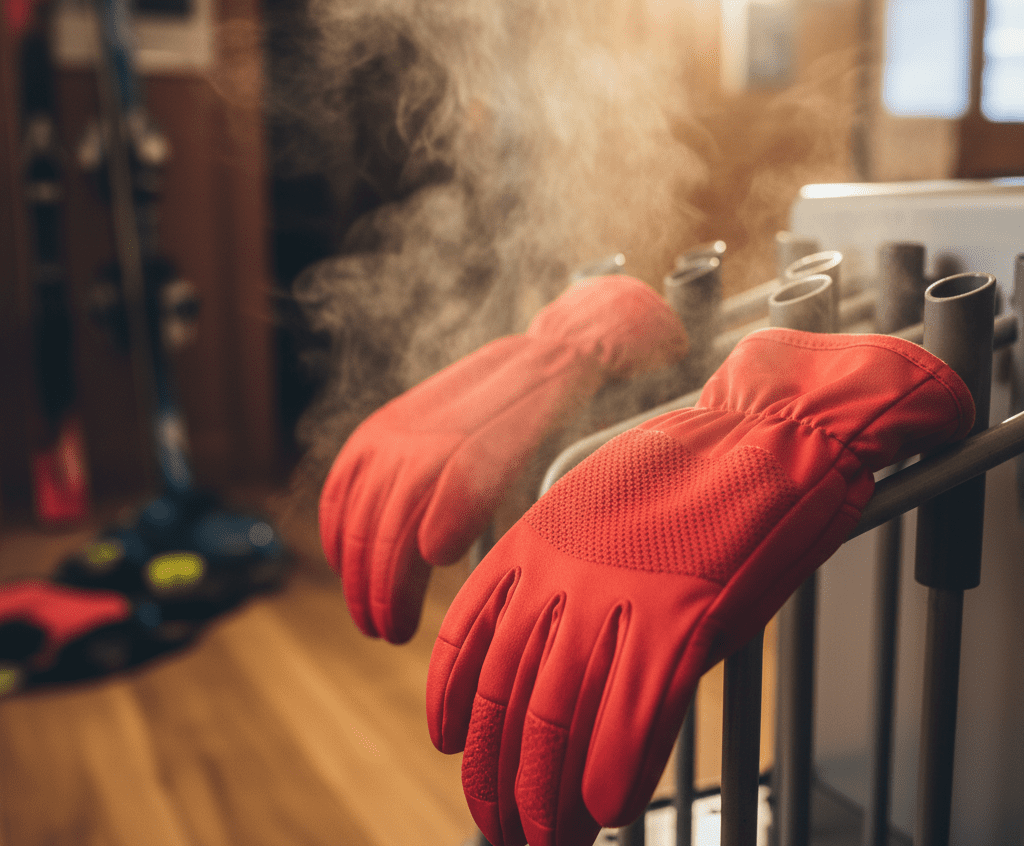
Drying isn’t about heat — it’s about airflow.
Use low heat or ambient warmth and give liners room to vent moisture out.
High heat from radiators, stoves, or hair dryers can shrink fabrics, melt synthetic fibers, or damage membranes.
This is why gear shops favor forced-air boot and glove dryers: warm air + circulation = faster drying without damage.
Mistakes Skiers Should Avoid
These are the habits that quietly destroy liner performance and make moisture problems way worse — especially on storm days or during high-output skiing.
Most of them are easy to fix once you know what’s going on.
Using Cotton Liners
Cotton absorbs moisture almost instantly and holds it.
Once it’s wet, it stops insulating and never dries on the mountain.
This is why outdoor education programs and ski schools ban cotton layers — it’s the fastest path to cold hands on any winter trip.
Washing Liners Without Re-Wicking Treatment
Laundry strips wicking finishes from synthetics over time.
Without that finish, liners stop moving sweat away and start feeling damp against the skin.
Most performance brands recommend re-wicking sprays or soaps designed for technical fabrics, the same way we treat base layers.
Trying to Waterproof Liners with Wax
Wax does seal fibers, but it also clogs them.
Once the surface is blocked, the liner can’t wick sweat outward, so moisture builds up inside the glove instead.
Waterproofing belongs on the shell, not the liner.
Outdoor gear testers warn about this for jackets too — waterproofing the wrong layer traps humidity where your skin is.
Drying Liners on Radiators or by Fire
Direct heat can shrink synthetics, melt fibers, deform foams, and weaken elastic.
I’ve seen liners go crusty near lodge fireplaces because the heat literally cooked the knit.
Low heat and airflow dry gear faster anyway, which is why ski shops use forced-air dryers instead of heat plates.
Storing Damp Liners in Boot Bags Overnight
A wet liner sealed in a boot bag turns into a soggy brick by morning.
Moisture gets trapped, mildew starts to develop, and insulation loses loft.
If you ski multiple days in a row, this is one of the worst silent killers of liner performance.
When Moisture in Liners Becomes a Real Issue
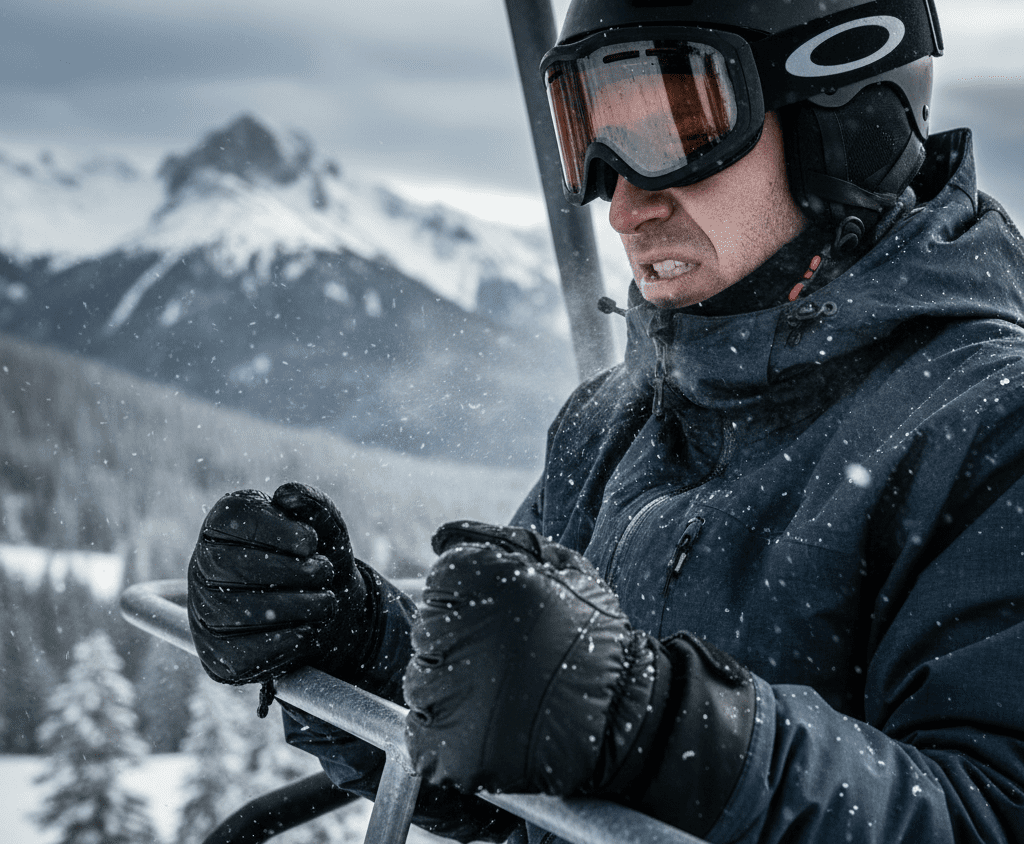
A little dampness is normal by the end of a long ski day.
But once liners start staying wet, performance and warmth drop quickly.
Wet liners bleed heat faster because water conducts heat away from skin.
You feel it the most on the chairlift, where wind strips warmth from wet fabric in seconds.
Heat Loss on the Lift
Wind + wet fabric = cold hands fast.
Mountain safety teams see this every season, especially during storm cycles with wet snow.
Frostnip isn’t rare when liners are soaked and wind is strong.
The skin doesn’t need to freeze solid — sustained cooling is enough to cause damage.
Dry Time Beyond 12–24 Hours
If liners need a full day (or longer) to dry in a warm lodge or condo, insulation is likely saturated.
Once insulation holds moisture, it loses loft and airflow, which is how winter fabrics trap heat.
From my own experience on multi-day trips, saturated liners are almost impossible to recover without forced air dryers or overnight boot dryers.
Persistent Odor = Bacteria Growth
When liners never fully dry, bacteria and mildew settle into the knit.
This is the same reason base layers start smelling when they don’t dry between uses.
It’s not only a hygiene issue — bacteria can slowly break down fibers and padding.
Parents with kids in ski programs notice this fast because kids sweat hard and gear stays crammed in bags.
When It Signs Gear Is Done
If liners stay wet, lose loft, and smell even after proper drying, the insulation is likely fatigued.
At that point, liners stop doing their job and cold hands become the norm, not the exception.
How Often You Need to Deal With This
This is one of those glove problems that depends a lot on climate and snow type. Some skiers fight moisture every single day, others only notice it in spring.
From my experience teaching in different regions, the pattern is very consistent.
Wet climates → daily moisture management
On the West Coast or anywhere with maritime snow, gloves soak quickly. Even with Gore-Tex or eVent membranes, the shell absorbs external water and the liner catches the rest.
If you ride back-to-back days in these conditions, liners rarely dry fully overnight unless you pull them out and use warm air drying.
Spring skiing → liners get saturated fast
Warm corn snow is basically slush. It melts on contact, runs into seams and cuffs, and soaks padding faster than people expect.
This is when I see the most “why are my gloves wet again?” questions from skiers and patrollers. It’s normal, but it means liners need more aggressive drying.
Cold & dry climates → sweat becomes the main source
In places like Colorado, Utah, or interior Canada, external moisture is low. The problem shifts to sweat load.
On longer runs or during higher effort (moguls, touring, or chasing kids down groomers), sweat pools in the insulation. Most gloves can’t evaporate that moisture fast enough because the membrane limits vapor escape.
Outdoor gear testers have shown that even breathable membranes like Gore-Tex vent vapor slower when temperatures drop well below freezing, which matches what I’ve seen on chairlifts.
Multi-day trips amplify the problem
If you ski two or more days without proper drying, liners compound moisture. That’s usually when the insulation feels cold and clumpy on day three.
This is also when odor shows up — not because the glove is dirty, but because trapped moisture gives bacteria time to grow.
Realistic Frequency Breakdown
Most skiers fall into these rough buckets:
- Wet snow regions: everyday issue
- Spring conditions: every session
- Dry/cold snow: once liners saturate from sweat, usually after longer days
- Travel weeks: day 2–3 is when discomfort starts
These timelines are consistent with what instructors, ski techs, and patrollers deal with on the mountain.
If this matches what your liners are doing, you’re not alone — and it’s very solvable. The key is matching drying and prevention to your climate and skiing style, not just hoping the glove “dries by morning.”
FAQs — Prevent Water Absorption in Ski Glove Liners
These are the questions skiers actually ask on the mountain and in tuning shops. No filler, just the things that matter when liners keep getting damp.
Q: Should I waterproof my glove liners?
No. Liners are designed to move sweat away from your skin, not block moisture. Coating them with waterproofing chemicals makes them clammy and slows evaporation, which leads to faster wetting from the inside.
Q: Are vapor-barrier liners worth it?
They can be in cold, dry climates where evaporative cooling is the main enemy. Mountaineers have used vapor barriers for decades to keep insulation dry on long days. On warm spring days they feel swampy, so most resort skiers skip them until temperatures are well below freezing.
Q: Do merino liners absorb too much water?
Merino does hold moisture, but it keeps insulating when damp. That’s why many instructors and touring skiers use it for mid-winter days. In wetter regions synthetic liners dry faster, especially if you ski multiple days without access to boot-room dryers.
Q: Why do my liners smell after two or three days?
That smell is sweat, moisture, and slow drying. Warm insulation is a good environment for bacteria. Rotating liners or choosing synthetics with faster dry times helps a lot on week-long trips.
Q: Can I ski with just the liners?
Not recommended. Liners absorb snow instantly and lose heat fast once saturated. For short tasks around the car or lodge they’re fine, but on the hill they become cold sponges in minutes.
Final Verdict
Most skiers don’t need to “waterproof” glove liners.
They need better moisture control.
Liners are built to move sweat, not block snow.
So the winning strategy isn’t chemicals — it’s materials, barriers, and a good drying routine.
From my experience, once those three things are dialed, 90% of wet-liner issues disappear, even on multi-day trips.
A lot of beginners overthink gear, but this is one of those cases where knowledge beats spending. Pick the right liner material, keep snow out of the cuffs, and actually dry them between days.
If you want to go deeper, you can check our guide on how to waterproof ski gloves with a simple wax method — it pairs well with this topic and helps you keep your outer gloves from soaking through on heavy snow days.
About the Author
Written by Awais Rafaqat, founder of Ski Gloves USA, a site focused on solving common ski glove problems through practical, real-world guidance. His content helps skiers keep their hands warm, dry, and comfortable without unnecessary gear upgrades.