QUICK ANSWER: No — and treating a liner like a shell is the single most common mistake here. Liners are built to move moisture away from your skin, not block it. Coating one in wax or a waterproofing spray clogs the fiber structure that makes it work, trapping sweat against your hand instead of letting it move outward. The real fix is choosing a liner material that resists absorbing moisture in the first place — hydrophobic synthetics or treated wool — not waterproofing the one you already have.
Not sure if your specific liner material is even the right choice for your conditions? The Ski Glove Finder matches you to gloves and liner types based on your actual hand sensitivity and conditions, rather than a generic recommendation.
- Why "Waterproofing" a Liner Is the Wrong Question
- What Actually Happens When You Wax or Spray a Liner
- The Fiber Science That Actually Solves This
- Choosing Between Hydrophobic Synthetic and Treated Wool
- Where a Vapor Barrier Actually Fits — and Where It Doesn't
- Common Mistakes With Liner Moisture Management
- Decision Checklist
- Frequently Asked Questions
- Final Thoughts
Why “Waterproofing” a Liner Is the Wrong Question
The instinct makes sense — if the outer shell has a waterproof treatment, why not the liner too? But a liner and a shell do fundamentally different jobs, and treating them the same way breaks the one that’s supposed to move moisture.
A shell’s job is keeping outside water out. A liner’s job is moving your own sweat away from your skin, outward through the glove system. Waterproofing a liner blocks the second job while doing nothing useful for the first, since external water was never supposed to reach the liner in a properly built glove anyway.
What Actually Happens When You Wax or Spray a Liner
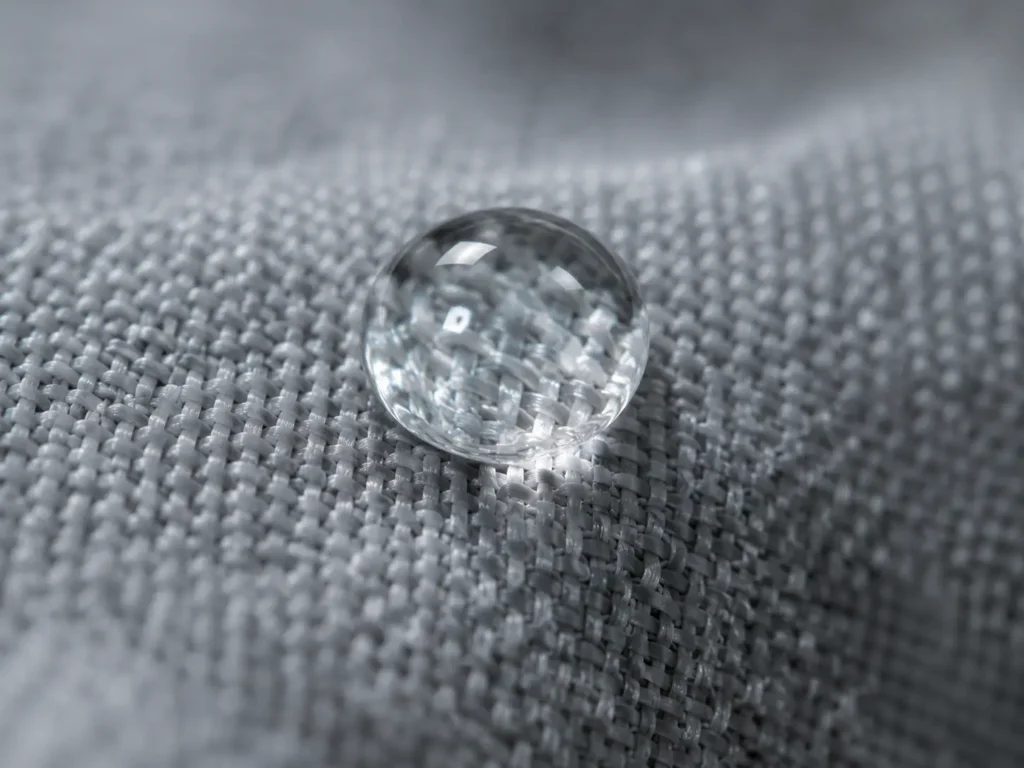
Wax and most waterproofing sprays work by coating individual fibers, filling the microscopic gaps that would otherwise let moisture pass through or evaporate.
On a shell, that’s exactly the point — you want water to bead and roll off rather than soak in. On a liner, that same coating blocks the fiber’s ability to wick sweat away from your skin, since wicking depends on exactly those gaps and capillary spaces the coating fills in.
The result is a liner that traps moisture against your hand instead of moving it outward — which is the opposite of what anyone waterproofing a liner is actually trying to achieve.
The Fiber Science That Actually Solves This
Some fibers are naturally hydrophobic — they resist absorbing water into their internal structure even while still allowing moisture vapor to move across their surface and outward. This is a completely different mechanism than a waterproof coating, and it’s the one that actually belongs on a liner.
Polypropylene is a common hydrophobic synthetic used in liner construction specifically because it doesn’t hold water internally the way cotton or untreated wool does — moisture stays on the surface, where airflow and vapor pressure can move it along rather than letting it soak in and stay trapped.
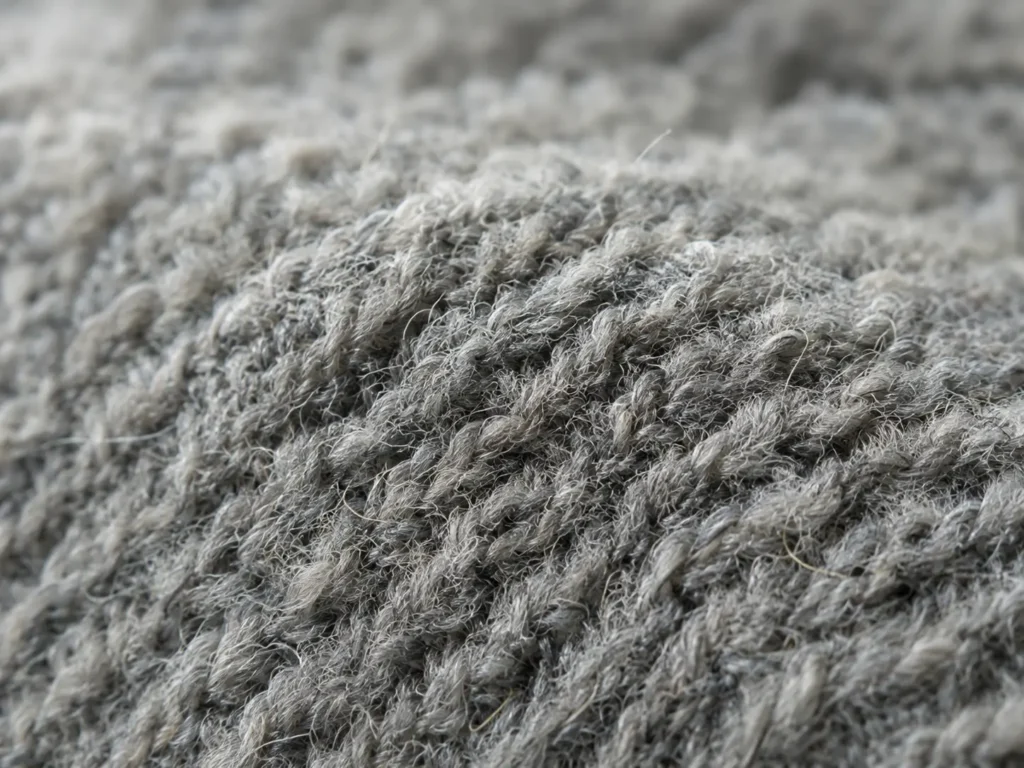
Treated merino wool takes a different approach. Wool fiber has a natural ability to absorb some moisture internally while still retaining a meaningful portion of its insulating capacity — a property synthetic fibers don’t share, which is why merino remains a common recommendation for liners specifically, despite not being purely hydrophobic the way polypropylene is.
Untreated cotton is the material to actively avoid in this category. Cotton absorbs water readily and holds it, without the wicking or insulating-while-wet properties either polypropylene or wool offer — once a cotton liner is damp, it stays that way and stops contributing any real insulation.
Choosing Between Hydrophobic Synthetic and Treated Wool
Neither material is universally correct — the right choice depends on your specific moisture source and conditions.
For sweat-dominant conditions — high-output skiing, warmer days, aggressive terrain — a hydrophobic synthetic liner generally performs better, since it moves moisture outward faster than wool does, keeping your hand feeling drier throughout an active day.
For genuinely cold, dry conditions where insulation matters more than moisture speed, treated merino wool’s ability to keep some insulating value even with a bit of dampness gives it a real edge, particularly on long, cold, low-output days like extended lift-served touring.
| Liner Material | Moisture Handling | Best For |
| Polypropylene (hydrophobic synthetic) | Resists absorption, wicks fast | High-output skiing, warmer days |
| Treated merino wool | Absorbs some moisture, still insulates | Cold, dry conditions, lower activity |
| Untreated cotton | Absorbs and holds water | Avoid entirely for ski use |
Where a Vapor Barrier Actually Fits — and Where It Doesn’t
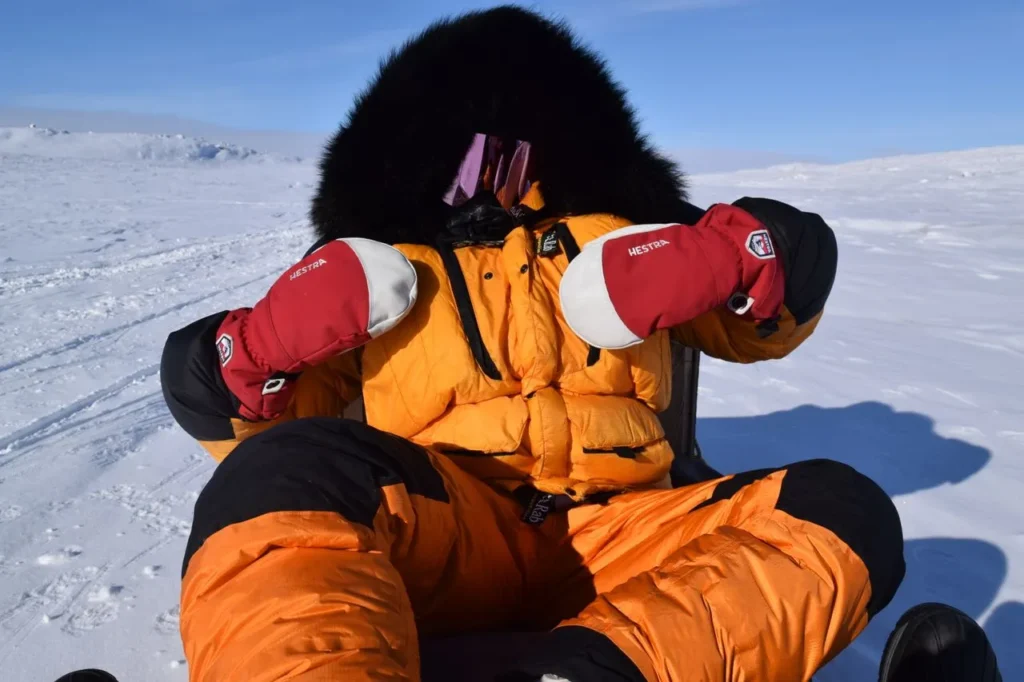
A vapor barrier liner is a different approach entirely — a thin, non-breathable layer worn directly against skin that stops sweat before it ever reaches the insulation.
Research on cold-weather extremity protection supports the underlying logic: in genuinely extreme, sustained cold, keeping insulation completely dry matters more than the discomfort of trapped surface moisture against skin, which is the actual tradeoff a vapor barrier makes.
This only makes sense in specific conditions — extended cold-weather use where insulation staying dry across multiple days outweighs the clammy feeling of a non-breathable layer. It’s a poor fit for typical resort skiing or anything approaching mild temperatures, where the discomfort outweighs any real benefit.
Common Mistakes With Liner Moisture Management
Applying wax or DWR spray meant for shells directly to a liner. This is the core mistake this post exists to correct — it actively defeats the liner’s actual job rather than improving it.
Choosing a liner material based on softness alone. Fleece and brushed synthetics feel great in a store but often hold moisture longer than a slightly less plush hydrophobic option that manages sweat better across a full ski day.
Washing synthetic liners with regular detergent repeatedly. Standard detergent residue can degrade the factory wicking treatment on synthetic liners over time — a technical wash made for performance fabrics preserves that treatment instead of stripping it.
Assuming any synthetic liner is automatically hydrophobic. Not all synthetic fabrics behave the same way — check whether a liner is specifically built with moisture-wicking or hydrophobic fiber, rather than assuming “synthetic” alone guarantees that property.
Decision Checklist
- High-output skiing, warmer days, sweat is the main issue: hydrophobic synthetic (polypropylene) liner
- Cold, dry conditions, lower activity level: treated merino wool liner
- Currently using cotton liners: switch — this is the one material with no real advantage for ski use
- Considering waterproofing your liner: don’t — address material choice instead, since coating a liner works against its actual function
- Extended, multi-day extreme cold exposure: a vapor barrier system is worth considering specifically for that use case, not general resort skiing
Frequently Asked Questions
Is there any situation where waterproofing a liner makes sense?
Essentially no for typical use — the coating blocks the wicking function that makes a liner useful in the first place. The closer alternative for genuinely extreme, sustained cold is a vapor barrier system, which works through a completely different mechanism than a waterproofing coating.
What’s the actual difference between a liner absorbing moisture and a liner wicking moisture?
Absorption means the fiber takes water into its internal structure and holds it there. Wicking means moisture moves along or across the fiber surface and gets carried outward, without saturating the fiber itself. Hydrophobic fibers are built to wick rather than absorb.
Does merino wool actually work well if it gets wet, or is that overstated?
It’s a genuine property, not marketing — wool retains a meaningful portion of its insulating capacity even with some moisture present, unlike cotton, which loses insulating value almost entirely once wet. It’s not immune to moisture the way polypropylene is, but it handles dampness better than most natural fiber alternatives.
Why do my synthetic liners feel damp even though they’re supposed to wick moisture?
Repeated washing with standard detergent can strip the factory wicking finish over time, leaving a fabric that looks the same but no longer manages moisture the way it did new. A technical wash formulated for performance fabrics helps restore that function rather than degrading it further.
Should I just buy a liner labeled “waterproof” instead of dealing with all this?
Be cautious with that label specifically for liners — a genuinely waterproof-coated liner faces the same wicking problem described throughout this post. What you actually want on a liner is described as moisture-wicking or hydrophobic, not waterproof, since those terms point to fundamentally different material properties.
Final Thoughts
The instinct to waterproof a liner comes from a reasonable place — you want dry hands, and waterproofing sounds like the obvious fix. But a liner and a shell solve opposite problems, and a treatment that helps one actively hurts the other. The real fix is choosing a liner built with hydrophobic or wicking fiber in the first place, matched to whether sweat or sustained cold is your actual bigger problem, and treating any waterproofing entirely as the shell’s job, not the liner’s.