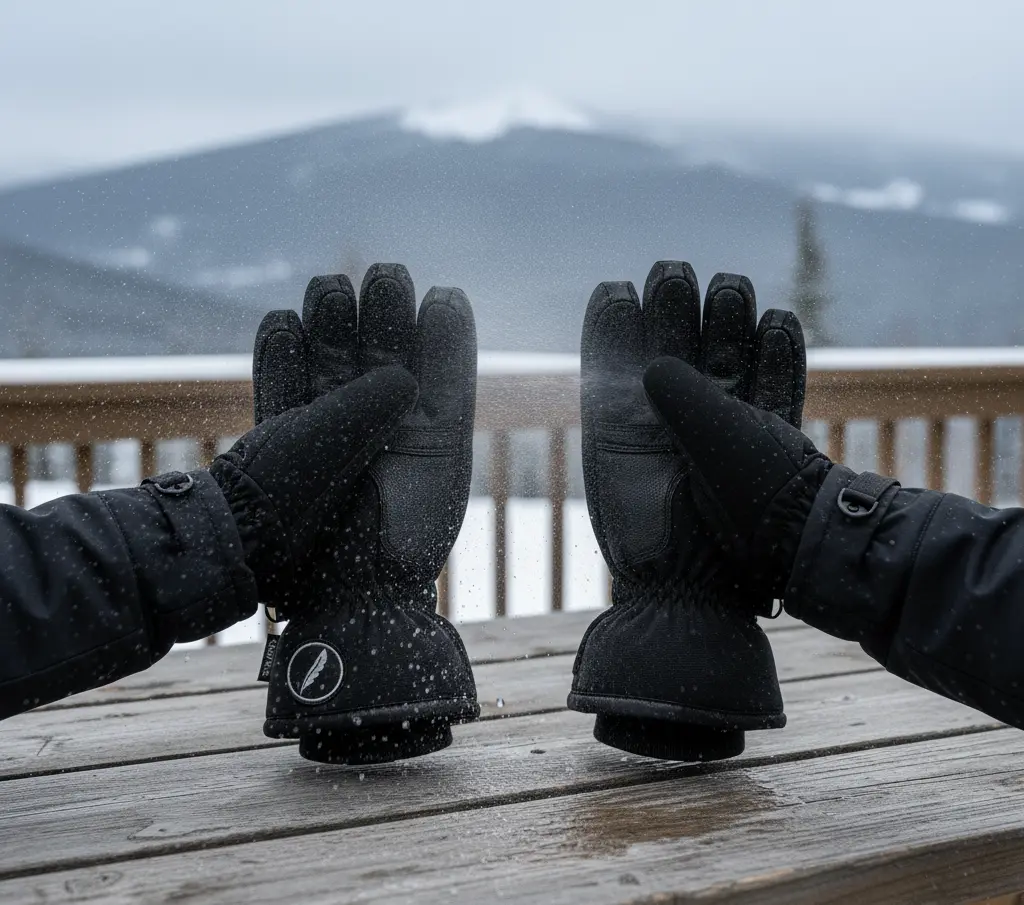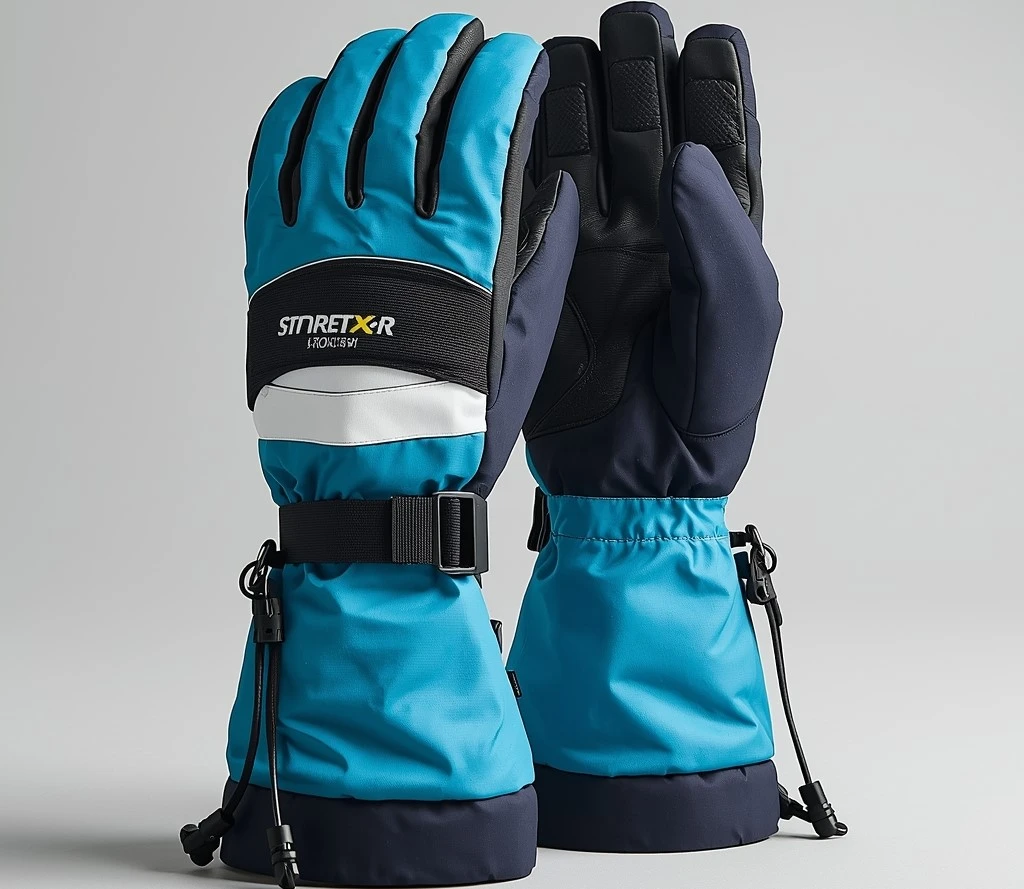
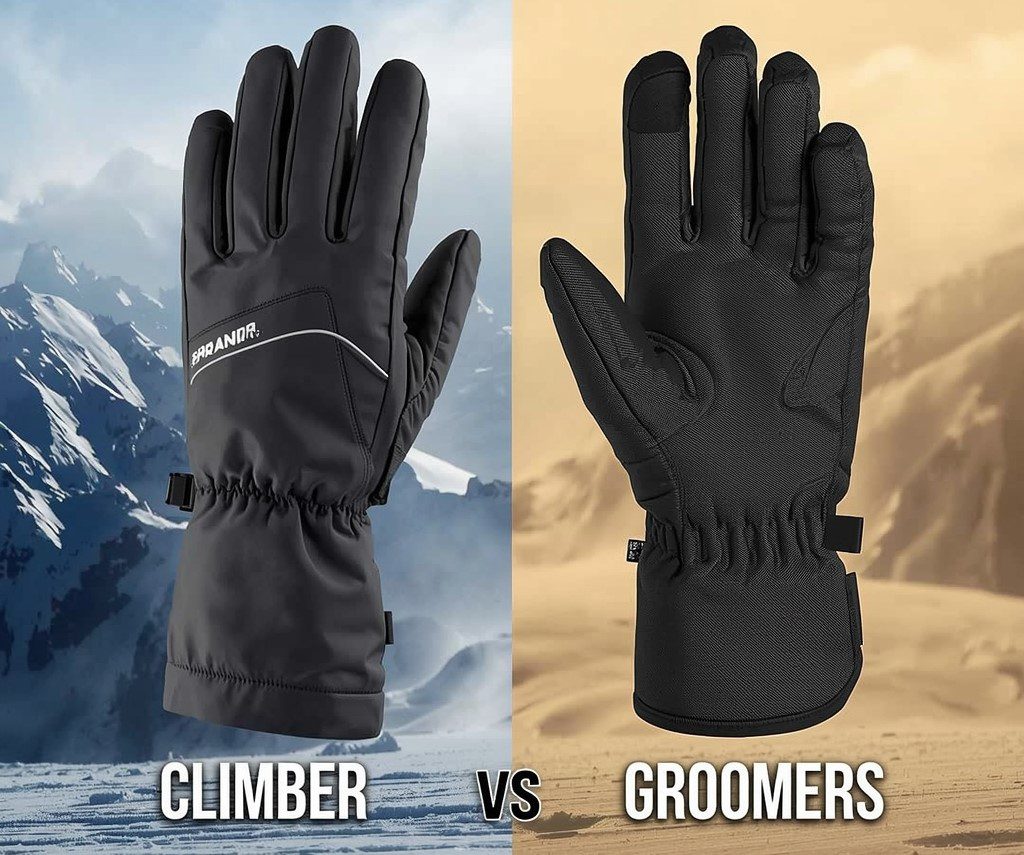
Most skiers don’t realize that climbers and groomers don’t abuse their gloves the same way. One group sweats and scrambles uphill. The other sits on lifts in the wind and waits for the next run.
That’s why ski gloves for climbers vs groomers can’t follow a one-style-fits-all approach. Different activities = different glove needs, and choosing wrong can mean sweaty hands, frozen fingers, or ruined leather by noon.
This post breaks down the difference clearly, explains why it matters, and helps you pick the right glove for the way you actually ski — not the way brands advertise.
Climbers need lightweight, breathable gloves that manage sweat and allow dexterity.
Groomers need insulated, windproof, waterproof gloves that retain heat during lift rides.
Using the wrong glove leads to sweat freeze-back on climbs or numb fingers on chairlifts.
Climbers Generate Heat — Groomers Lose Heat
Many skiers don’t realize how different the body behaves on climbs vs resort laps. One group overheats and sweats through gloves, while the other gets cold on lifts without even moving. This difference is the core reason their glove needs to split apart.
I’ve climbed routes where my hands were dripping sweat halfway up, then froze instantly once I stopped to transition. On the other hand, groomers can ski hard, feel warm, then go completely numb during one slow lift ride in the wind.
Below is what actually happens on the mountain:
Climbers Run Hot and Sweat Into Gloves
Climbers are constantly moving uphill — skinning, bootpacking, or scrambling over technical terrain. That workload pushes heat into the hands and makes sweat build inside the glove liner.
Sweat is a big deal because moisture kills insulation. Even a Gore-Tex membrane can’t stop sweat from saturating the inside if you don’t manage heat early. Once insulation gets wet, it chills the hands fast during rest stops or transitions.
High-output days also force glove swaps. Ski mountaineers often carry a light “climb glove” for uphill and a warmer “descent glove” for the ski down. That system exists for a reason — you can’t climb in a heavy insulated glove without soaking it.
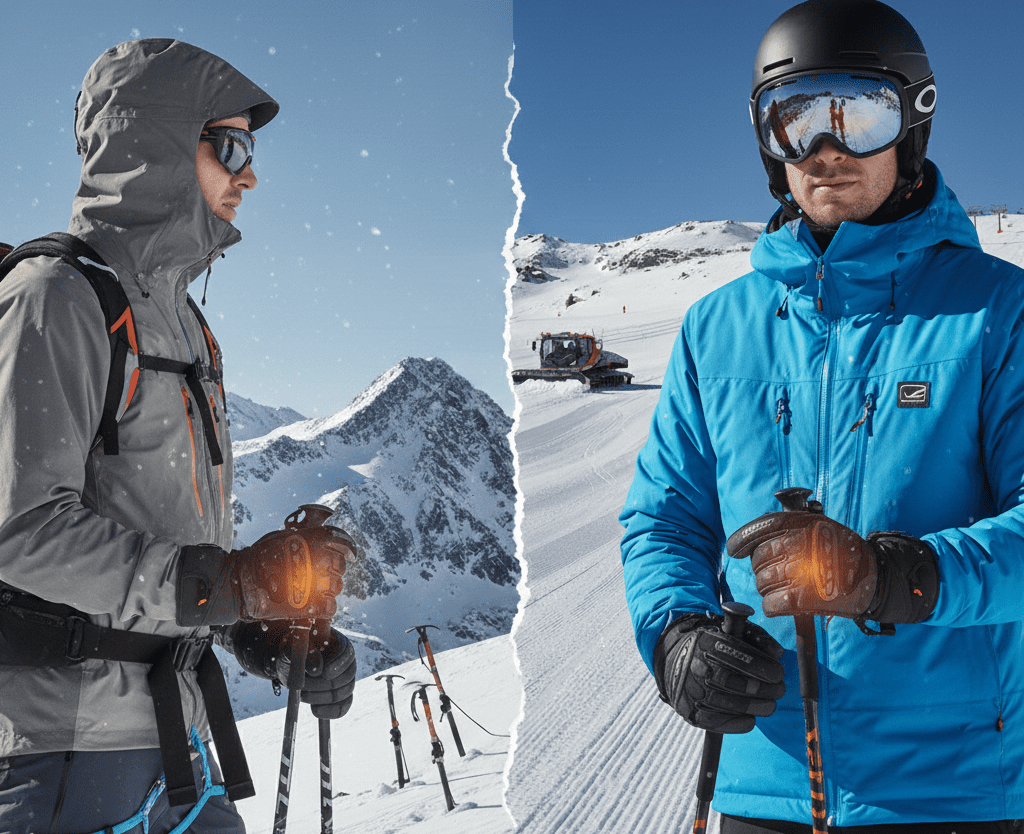
Groomers Cool Down and Get Hit by Wind Chill
Resort skiers don’t produce consistent heat. They ski in bursts, then sit still on lifts surrounded by wind and cold air. That passive exposure strips warmth faster than people expect.
Chairlifts are where most groomers lose feeling in their fingers. You’re not working, you’re not gripping, and your hands aren’t near your core — they’re just hanging out in the wind waiting to get numb. Instructors deal with this constantly, especially with kids on cold mornings.
Because groomers lose heat instead of producing it, their glove priorities flip: insulation, wind resistance, and reliable waterproofing matter more than venting sweat.
Glove Needs for Climbers (Mountaineers, Tourers, Bootpackers)
Climbers work uphill, sweat fast, and touch a lot of gear. Their gloves get wet from the inside, scraped on rock, and frozen during transitions. The wrong glove here isn’t just annoying — it can get dangerous at elevation.
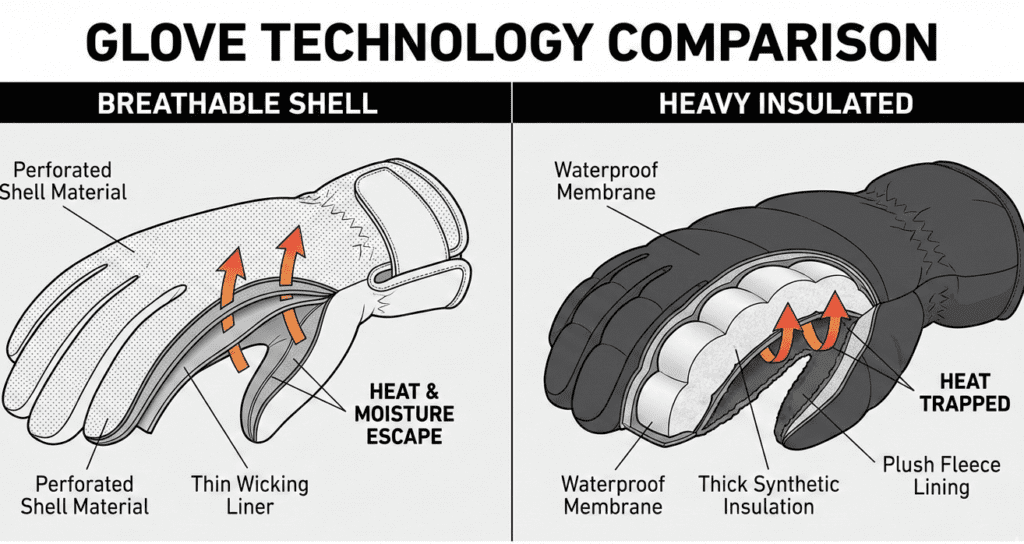
Breathability Matters More Than Insulation
Most climbers run hot on the ascent. Sweat builds up inside the glove, and if it can’t escape, it later freezes when you stop moving. I learned this the hard way on a late-season tour when my damp liners turned stiff during a ridge transition.
Softshell fabrics, fleece liners, and membranes like Gore-Infinium are popular because they dump heat better than big resort gloves. These gloves aren’t about maximum warmth — they’re about moisture management during effort.
High Dexterity for Rope, Skins, and Buckles
Climbers need to peel skins, fix crampons, adjust buckles, and clip rope systems without removing their gloves every two minutes. Thin palms and articulated fingers make that possible.
From my experience, bulky gloves get ripped off constantly, and that’s when fingers get cold or wet. Good dexterity keeps gloves on your hands longer, which keeps your hands safer.
Moisture Control to Avoid Freeze-Back
Sweat is the silent enemy. On the climb, it’s just damp. But during a transition, that moisture freezes and turns your glove into a cold, crunchy brick.
This is where breathable liners, glove changes, and fabrics that wick instead of trap make a huge difference. Managing sweat is one of the most overlooked safety factors in ski mountaineering.
Outdoor gear testing consistently shows that moisture trapped inside gloves leads to faster heat loss than dry cold air.
Durable Palm Material
Climbers touch things groomers rarely do: rock, rope, ski edges, bootpacks, metal ladders, belay devices, ice-crusted fences. These surfaces chew through cheap synthetic palms fast.
Leather palms or reinforced synthetic panels hold up much better. I’ve shredded budget gloves just from scrambling up one rocky bootpack — lesson learned.
Layering System
Most climbers don’t rely on one glove. They run a system. A typical combo looks like:
Liner (for climb + dexterity)
Softshell glove (for mixed movement)
Insulated shell or mitt (for transitions + long stops)
This lets you stay warm when you pause and cool when you move. It also lets you swap pieces before moisture becomes a problem.
Glove Needs for Groomers (Resort + Lift Skiers)
Groomers don’t climb — they ride lifts, stand in lines, and ski downhill in bursts. That means long cold periods with very little movement. From my experience, the coldest part of a resort day is never the ski run — it’s sitting still on a windy lift for 7 minutes at a time. That changes what glove works best.
Higher Insulation for Low Activity + Wind
Resort skiing doesn’t generate much heat. Your body isn’t working hard enough to warm your hands during lift rides, so insulation becomes the main priority.
On storm days, I’ve felt my fingers go numb halfway up the lift even after skiing hard. Wind chill just steals heat faster than your body can make it.
Waterproofing Over Breathability
Resort gloves deal with melt and slush more than sweat. Snow from chairlift seats, wet rails, and spring conditions can soak gloves fast if the waterproofing isn’t there.
A waterproof membrane like Gore-Tex keeps melt out and maintains insulation, which is more important than venting moisture on groomers.
Grip for Poles and Chairlift Bars
Good grip helps you hold poles but also helps with chairlift safety bars and grab handles.
There’s also an abrasion angle here: chairlift metal can scrape or scuff palm material over time. I’ve seen leather palms hold up much longer than cheap synthetics at the resort.
Bulk Is Less of an Issue
Bulky gloves are a pain for climbers, but they’re fine for groomers. You’re not handling ropes or crampons.
Big warm mitts are common at resorts for a reason — they trap heat well and you don’t need precision for most resort tasks.
One-Glove System Works Fine
Most resort skiers don’t need glove swaps or layering. A single insulated glove or mitt handles the whole day.
That simplicity is part of why groomer gloves are often thicker, warmer, and more waterproof than touring gloves.
Feature Comparison: Climbers vs Groomers
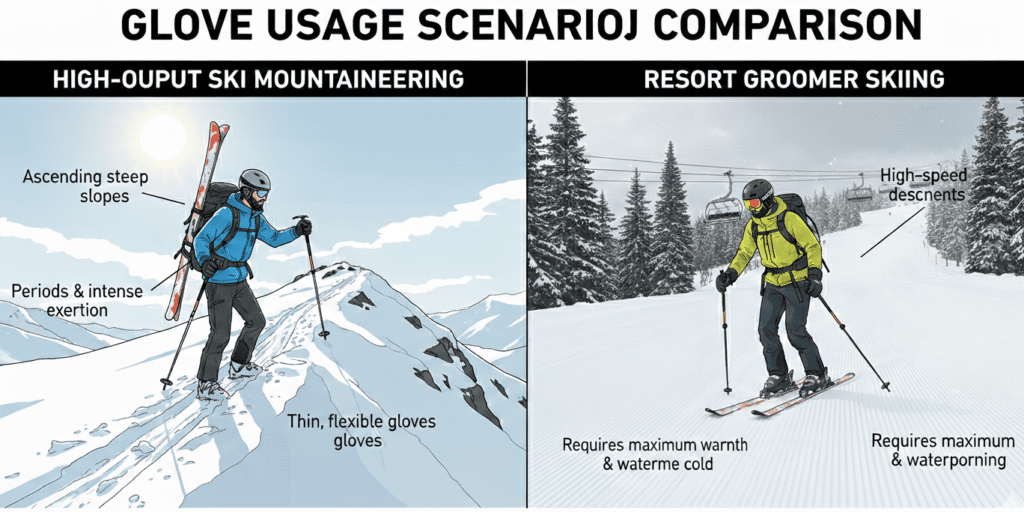
Before you pick a glove, it helps to see how differently these two skiing styles behave. From my experience, most people don’t realize how much uphill touring changes heat, moisture, and dexterity needs compared to sitting on windy lifts. When you lay the features out side-by-side, the glove differences stop being confusing and start making sense.
Key Features Compared
| Feature | Climbers | Groomers |
| Insulation | Light | Heavy |
| Breathability | High | Moderate |
| Waterproof | Optional | Strong |
| Dexterity | High | Medium |
| Sweat Handling | Critical | Low |
| Layering | Yes | Not needed |
| Bulk | Low | Medium–High |
| Best Conditions | Uphill, spring, tours | Lifts, cold days, storms |
This visual breakdown helps skiers choose the right tool for the right job instead of forcing one glove to do everything. I’ve tried both approaches over the years, and the “one glove for all days” strategy almost always leads to either sweaty frozen hands on climbs or numb fingers on chairlifts.
Mistakes Skiers Make Choosing Between Climbers and Groomers
Choosing the wrong glove for your skiing style is more common than most people realize. From my experience on both uphill tours and resort laps, I’ve seen beginners and even experienced skiers make the same errors season after season. These mistakes lead to sweaty, freezing, or totally unusable hands — and they’re easily avoidable if you understand the core differences.
Below are the most frequent mistakes I see, with real-world explanations and practical context so you can avoid them.
Buying Groomer Mitts for Uphill Touring
It’s tempting to grab a big, insulated mitt for a tour because “warm is always better.” The problem? Touring is a high-output activity. You generate a lot of heat while climbing or bootpacking, and those warm mitts trap sweat inside.
From personal experience, I’ve had my hands drenched in just 15 minutes on a spring skin track with heavy mitts. Once that sweat cools, your fingers freeze during transitions — not only uncomfortable, but dangerous if you’re adjusting skins or handling ropes. Touring gloves need light insulation, moisture management, and high breathability — not bulk.
Using Softshell Touring Gloves on Storm Days
Softshell gloves are great for climbers because they breathe well and allow sweat to escape. But on resort days with lifts, storms, and high winds, they can leave your hands exposed to freezing conditions.
I remember skiing a powder day in mid-winter with softshell gloves. By the second lift ride, my fingers were numb. The windchill on the chairlift penetrates softshell fabrics quickly. Waterproofing and thicker insulation matter far more for groomers, especially when you’re sitting idle and the body isn’t generating heat.
Ignoring Moisture Management (Climbers)
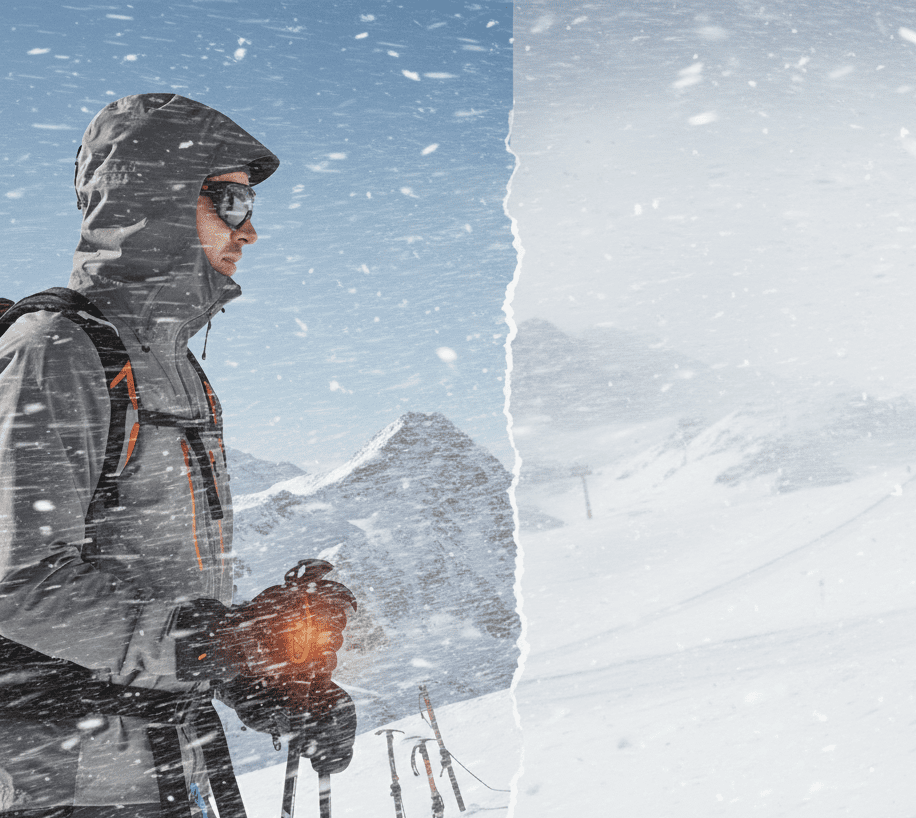
One of the biggest mistakes is underestimating sweat. Climbers naturally produce more heat, which means more sweat. If gloves don’t manage moisture properly, sweat builds up, cools, and freezes.
Outdoor gear testers consistently highlight that materials like Gore-Tex or breathable membranes aren’t just marketing — they actively help transfer moisture away. From my tours, I’ve seen sweat-soaked gloves freeze solid mid-climb. Choosing gloves with proper liners, softshell panels, and moisture-wicking fabrics is critical to avoid frostbite or extreme discomfort.
Assuming “More Insulation = Better”
A common belief is “the warmer, the better.” This works on lifts but fails for climbers. Over-insulated gloves trap heat and sweat, reduce dexterity, and make climbing or handling gear harder.
From my experience, gloves that are too insulated slow down fine motor tasks like tightening skins, adjusting buckles, or grabbing ice axes. Touring gloves prioritize breathability and dexterity first, insulation second. This is why layered systems — thin liner + shell — often outperform single thick gloves in uphill settings.
Buying One Glove for Two Totally Different Sports
Trying to use a single glove for both touring and resort skiing almost always leads to compromise. Climbers need breathability, moisture control, and dexterity. Groomers need insulation, windproofing, and waterproofing.
I’ve seen skiers buy a “midweight compromise glove” and end up miserable in both environments: sweaty hands uphill and frozen fingers on lifts. It’s far better to choose gloves specifically designed for the activity. This doesn’t mean spending excessively, but it does mean respecting that Ski Gloves for Climbers vs Groomers solve two different problems.
Getting these choices right changes your mountain experience dramatically. Hands stay dry, warm, and functional, and you avoid the frustration and risk of using the wrong glove. From my experience, understanding the difference is the single most overlooked tip among skiers at all levels.
Who Should Use Which Gloves? (Direct Answer)
Picking the right glove for your skiing style can make or break your day. From my experience, the wrong choice leads to cold, sweaty, or stiff hands. Understanding your main activity — climbing, touring, or riding lifts — is the key.
Here’s a simple guide to match gloves to your skiing style.
If You Bootpack, Skin, or Tour → Climbers Gloves
Climber gloves focus on breathability, dexterity, and moisture control.
When you’re bootpacking uphill or adjusting skins, your hands generate a lot of sweat. Gloves for climbers vent that moisture while still keeping your hands warm in cold mornings.
Thin palms, articulated fingers, and optional waterproofing let you handle ropes, buckles, and edges without overheating. From my experience, this setup keeps fingers flexible even on long tours.
If You Ride Lifts All Day → Groomer Gloves
Groomer gloves provide high insulation and waterproofing for low-activity skiing.
I’ve spent full days riding lifts with thick insulated gloves, and they make a huge difference. Your hands stay warm during chairlift rides, stormy weather, and cold mornings.
Bulk is less of an issue here. Mitts or padded gloves are fine because you’re not generating much heat. Waterproofing matters more than breathability since sweat isn’t the main problem.
If You Do Both → Two-Glove System or Liner + Shell Combo
Using one glove for both touring and lift skiing rarely works well.
From my experience, a light, breathable glove for uphill work and a warm, insulated glove for groomers is the safest option.
A layered system works too: a thin moisture-wicking liner under a waterproof shell. This keeps hands dry, warm, and functional in all conditions without compromise.
Making the right glove choice prevents frostbite, sweat freeze, and lost dexterity. Even a simple habit like switching gloves for different activities saves hours of discomfort and keeps your day on the mountain enjoyable.
When It Becomes a Safety Problem
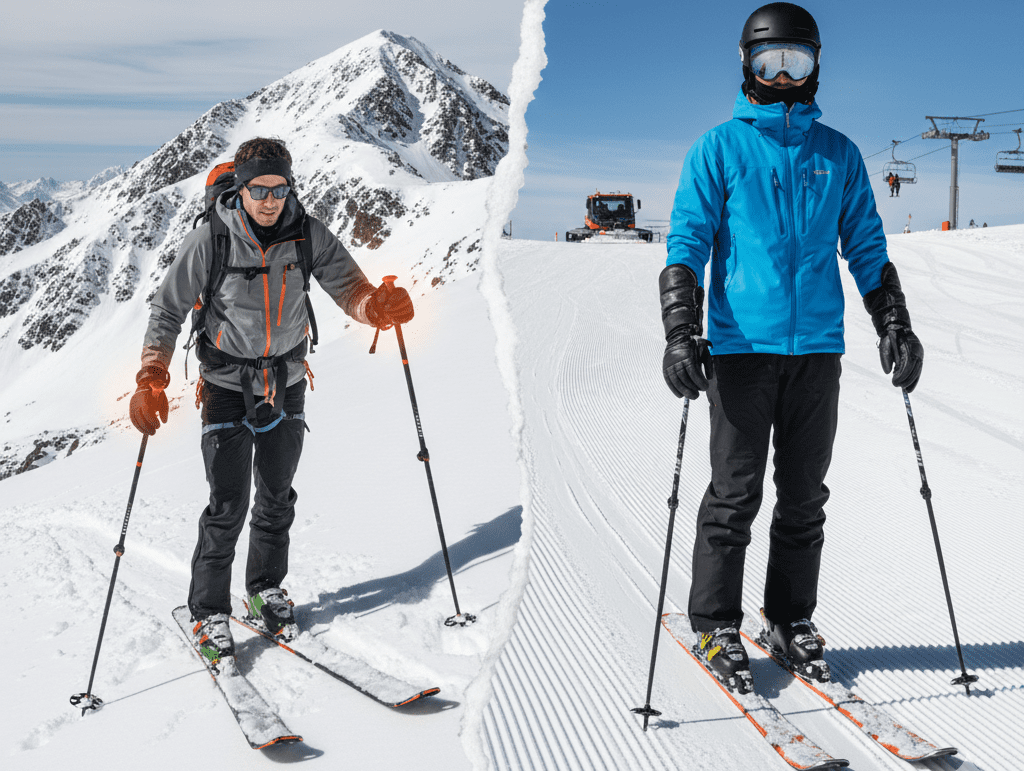
Choosing the wrong ski gloves isn’t just uncomfortable—it can be dangerous. From my experience, the right glove choice directly affects warmth, dexterity, and control, especially in extreme conditions.
Recognizing the warning signs early prevents frostbite, accidents, and cold-related injuries on the mountain.
Frostbite Risk on Groomers
Skiers wearing under-insulated gloves on cold, low-activity days are at real risk.
I’ve seen beginners shivering through long chairlift rides, fingers turning numb even with hand warmers. Thick, insulated gloves for groomer days prevent this, while using climbing gloves here leaves hands exposed.
Cold fingers slow reactions and reduce grip, which can make even simple chairlift or pole handling unsafe.
Sweat Freeze-Back for Climbers
Climbers often pick gloves with too much insulation.
During uphill skinning or bootpacking, your hands sweat. If moisture gets trapped in thick gloves, it can freeze during a rest or transition, making fingers stiff and painful.
From my tours in spring alpine conditions, I’ve seen climbers struggle to handle ropes or buckles after frozen sweat froze back inside the glove. Breathable, layered gloves prevent this entirely.
Dexterity Loss in Transitions
Handling bindings, skins, or ropes requires fine finger movement.
Gloves that are too bulky or stiff compromise dexterity. Even a small delay in adjusting gear can cause slips or mistakes on ice or steep terrain.
From personal experience, using the right climber glove for uphill work makes transitions smooth, safe, and quick, without fumbling or exposing skin to cold.
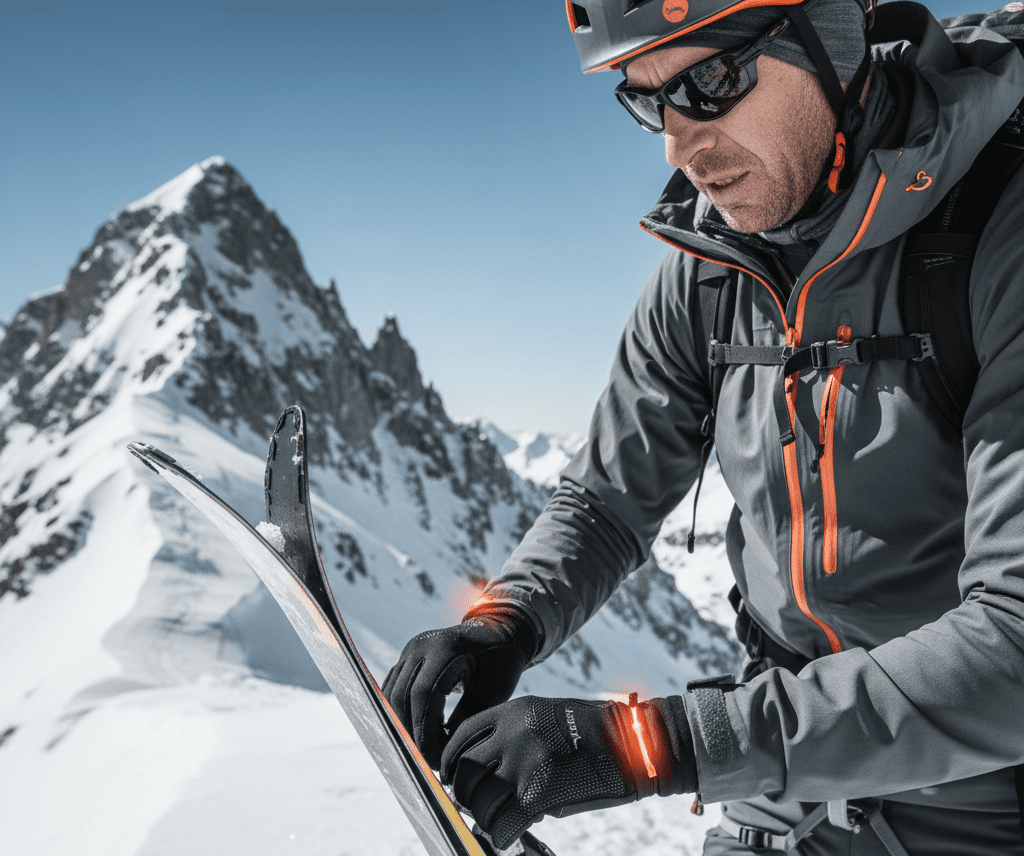
Pole Handling and Grip Safety
Grip is critical for both touring and groomer skiing.
I’ve noticed skiers with slippery palms or peeling synthetic gloves struggling to hold poles securely. On lifts or steep groomed runs, a poor grip can lead to falls or accidents.
Reinforced palms, proper glove material, and regular inspection for wear prevent grip failures and keep control consistent all day.
Key Takeaway: Safety problems arise when gloves are mismatched to activity. Frostbite, sweat freeze-back, lost dexterity, and grip failures are real risks. Observing your conditions, choosing the right gloves, and swapping layers when needed keeps hands safe, warm, and functional.
FAQ – Ski Gloves for Climbers vs Groomers
This FAQ answers the most common skier questions about using the right gloves for uphill touring and resort skiing. Clear, practical advice helps avoid mistakes and stay safe.
Can you use touring gloves at resorts?
Yes, but it’s usually not ideal. Touring gloves are light and breathable, so your hands may get cold on long lifts or during stormy days.
From my experience, using touring gloves for a full day on groomers can leave fingers numb by the second chairlift ride. Stick to insulated groomer gloves for low-activity skiing.
Are mittens bad for climbing?
Mittens provide warmth but limit dexterity. Handling skins, ropes, or buckles becomes tricky.
I’ve climbed with mittens and ended up fumbling with crampons and ski skins. Thin, articulated climbing gloves are safer and more practical for tours.
Do groomer gloves work for spring touring?
Only partially. Heavy groomer gloves can overheat your hands during uphill skinning.
On sunny spring bootpacks, I’ve had to unzip or remove thick mitts because my palms were sweating. Breathable climbing gloves or a liner-shell combo work better for active touring.
Do I need two pairs of gloves for skiing?
Often, yes. One glove for climbing/touring and another for lift or resort days covers all conditions safely.
From personal experience, using a two-glove system prevents both frostbite and sweat freeze-back. You can also use a liner+shell combo if you prefer less bulk in your pack.
Key Takeaway
Matching gloves to your activity keeps hands warm, dry, and safe. Touring and resort skiing demand different glove features. Observing your conditions, layering correctly, and picking the right glove type ensures comfort and safety all day.
Final Verdict
Climbers and groomers need different gloves for a reason. It’s not about brand or hype — it’s about how your hands produce and lose heat.
Active uphill touring demands breathability and dexterity. Sitting on lifts calls for insulation and waterproofing. Choosing the wrong glove can leave your hands wet, cold, or fumbling with gear.
The best approach? Pick gloves based on your movement and activity, not marketing claims or “one-size-fits-all” promises.
If you’re just starting out, check our guide on how to choose ski gloves for beginners to make sure your first pair keeps you safe and warm.
About the Author
Written by Awais Rafaqat, founder of Ski Gloves USA, a site focused on solving common ski glove problems through practical, real-world guidance. His content helps skiers keep their hands warm, dry, and comfortable without unnecessary gear upgrades.