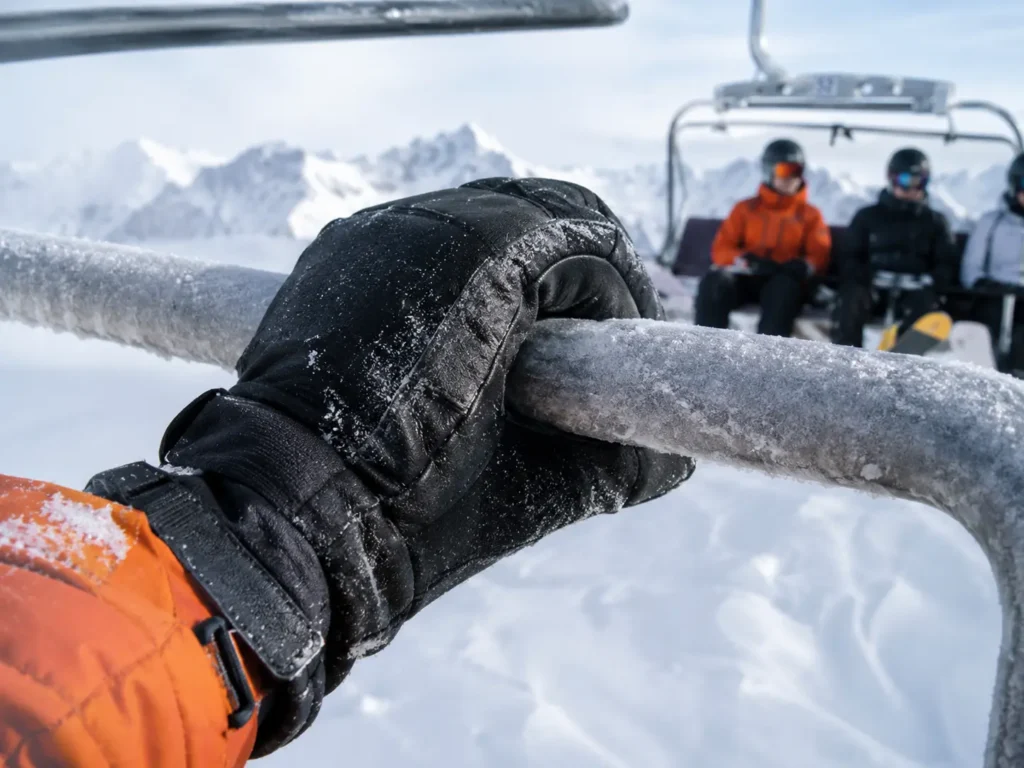
Quick answer: Most of the damage comes down to friction, not impact. Every time you grip a cold metal safety bar, the surface — rough, sometimes icy, occasionally chipped or bolted — grinds against your glove’s palm. It’s not dramatic in any single moment, but repeated over a season, that friction is one of the most common and most overlooked causes of premature glove wear on chairlifts.
If you’d rather get matched to a glove built to handle heavy lift use, the Ski Glove Finder does that in under a minute.
- The Real Reasons Gloves Get Damaged on Chairlifts
- When Chairlift Damage Happens Most
- Check Your Own Gloves in 30 Seconds
- What to Look For When Buying for Lift-Heavy Use
- Real Fixes That Actually Reduce Wear
- Common Mistakes That Make It Worse
- When It Becomes a Real Problem, Not Just Cosmetic Wear
- Dry Cold vs. Wet Coastal Resorts Changes the Picture Too
- Not All Lifts Wear Gloves the Same Way
- Frequently Asked Questions
- The Bottom Line
The Real Reasons Gloves Get Damaged on Chairlifts
Most of this damage isn’t from skiing itself — it happens during loading, riding, and unloading, in the few seconds your hand is in direct contact with hardware. It doesn’t feel aggressive at the moment. Over a full season, it adds up to visible wear on palms, fingertips, and seams.
Ski instructors regularly cite chairlift contact as one of the leading causes of early glove replacement, particularly for leather models. Here’s what’s actually happening, mechanically, each time it occurs.
Abrasion Against Metal Safety Bars
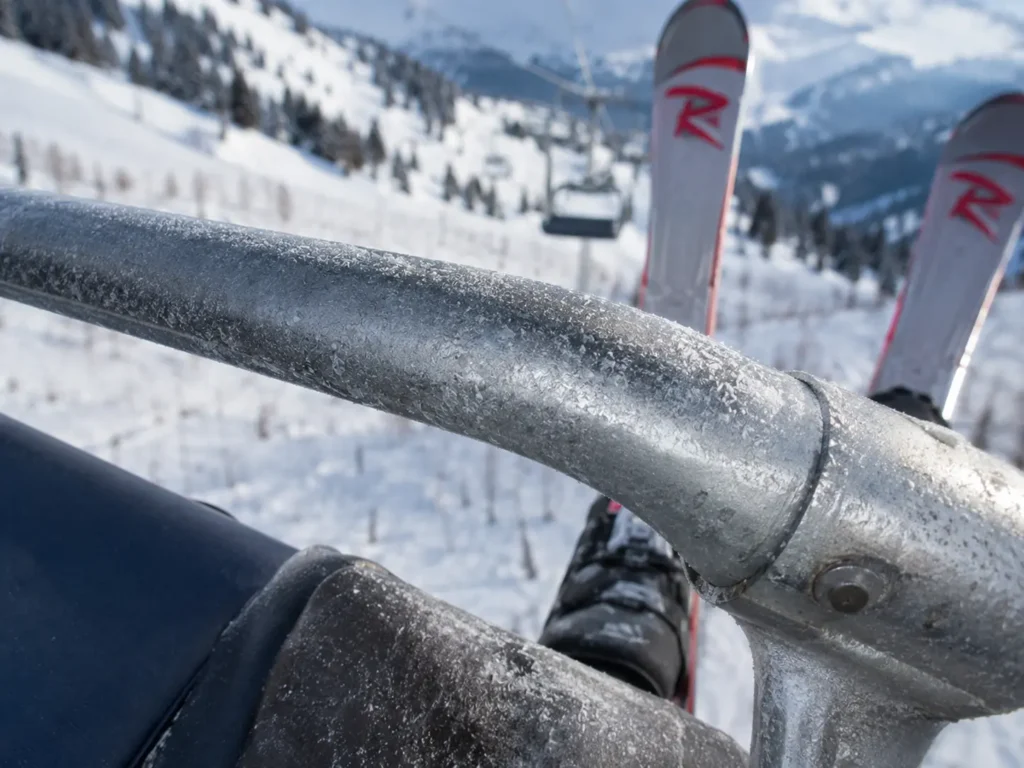
This is the primary cause. Chairlift bars are cold, often textured, and unforgiving against glove palms — especially during loading and unloading, when riders tend to grip harder out of habit or nerves.
Steeper load ramps and icy approach zones make this worse, since skiers instinctively tighten their grip when the footing feels less certain.
Friction From Mixed Skier-Snowboarder Seating
On shared chairs, a snowboard’s edge often rests close to another rider’s hands. A small shift or bump can nick or scrape glove material, and lightweight leather or synthetic palms show this kind of contact fastest.
Narrow, older chairs make this more likely simply because there’s less room between riders.
Ice Buildup Turning Metal Into Sandpaper
A frozen safety bar isn’t just cold — it’s texturally different. Ice crystals create a gritty surface that behaves almost like fine sandpaper against glove material. Early mornings and storm days are worst for this, since overnight condensation freezes and often doesn’t melt until well into the day.
Waterproof-breathable membranes like Gore-Tex are built to keep moisture out while letting sweat vapor escape — but that membrane sits underneath the outer shell. It doesn’t do anything to protect the exterior material from surface contact. A Gore-Tex glove can stay perfectly dry inside while still showing palm scuffing from lift use, because the membrane and the abrasion-facing surface are two different layers doing two different jobs.
Exposed Bolt Heads and Rough Paint
Older, fixed-grip lifts sometimes have chipped paint, rough weld seams, or exposed bolt heads right where riders naturally grip. A handful of small high points is enough to wear through glove material faster than a smooth surface would, even at the same contact frequency.
Resorts typically repair these over time, but they’re still common on aging lift infrastructure.
Rubber Palm Stiffening in Cold Temperatures
Rubber has a glass transition point — a temperature below which it stiffens and loses flexibility instead of bending smoothly. Once a rubber palm crosses that threshold, it can’t absorb friction the way flexible rubber does, and that stiffness accelerates abrasion against metal surfaces. This breakdown of how temperature affects rubber’s molecular structure explains the mechanism in more depth if you’re curious why cheaper rubber palms tend to crack or flake after a cold season.
Wet Leather That Freezes, Then Flexes
Leather is genuinely durable, but wet leather that freezes loses flexibility in its fibers. The next time you flex your hand — gripping a bar, holding a pole — those stiffened fibers can develop tiny surface cracks. On storm days, this wet-freeze-flex cycle can visibly age an otherwise high-quality glove in a single weekend.
When Chairlift Damage Happens Most
Wear isn’t evenly distributed across a season — it spikes under specific, recognizable conditions.
Spring slush days
Wet snow soaks into palm material, and riders often grip harder because everything feels more slippery, which compounds the friction.
Wet snow followed by an overnight refreeze
Gloves that were wet the day before freeze stiff, then get scraped against icy bars during the next morning’s loading.
Beginner lessons and family days
New skiers tend to grip the bar tighter and longer, out of nervousness more than necessity, which increases contact friction.
Cold, icy mornings
Frozen condensation acts like sandpaper on the bar until the sun softens it later in the day.
Older resort lifts with rough hardware
Fixed-grip chairs with chipped paint or exposed welds create more contact points than smooth, newer lift bars.
Mixed skier-snowboarder seating
Snowboard edges bump or rub against palms more often on narrow, older chairs.
None of these ruin a glove in a single ride. Stacked across a season, they’re what separates a glove that looks new after 30 days from one that looks worn after 10.
Check Your Own Gloves in 30 Seconds
Before assuming your gloves need replacing, this quick check tells you whether what you’re seeing is normal cosmetic wear or something further along.
Look specifically at the center of the palm and the thumb crease — the two spots that take the most direct chairlift contact. Run a finger across the surface.
If it feels smooth but slightly polished or shiny compared to the rest of the glove, that’s normal surface wear from repeated friction. No action needed beyond monitoring it.
If you can feel a texture change — roughness, small raised fibers, or a slightly tacky feel, the surface layer is starting to break down. This is the point where conditioning (for leather) or simply changing grip habits makes the most difference.
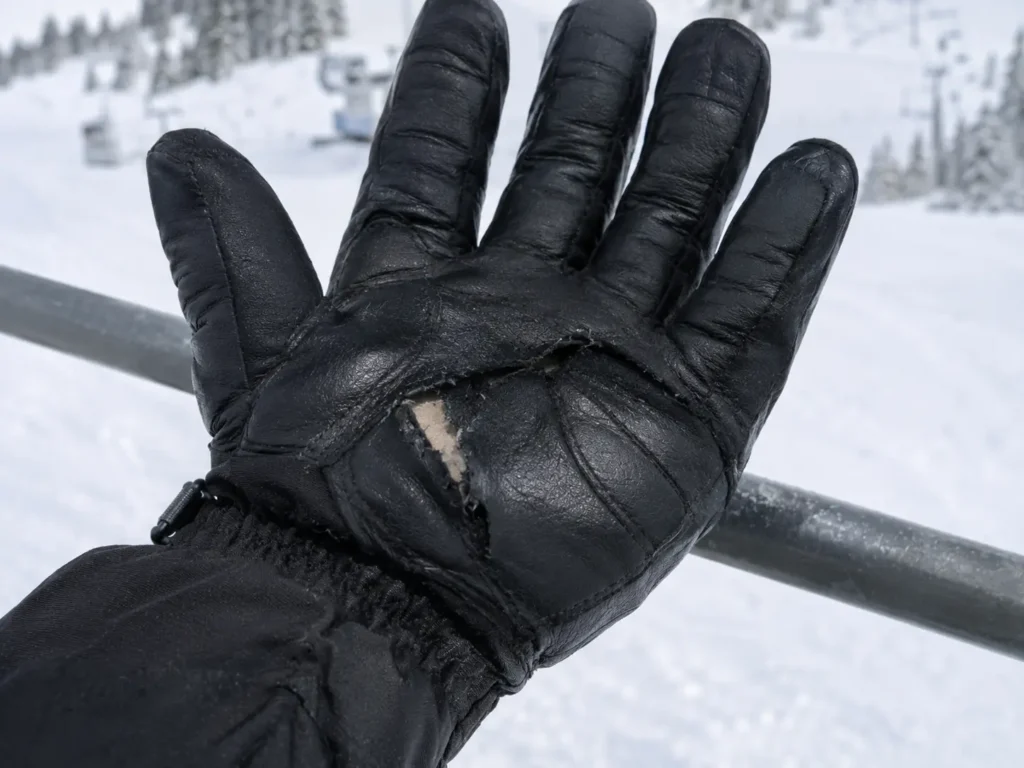
If you can see through to a different-colored layer underneath, or feel any give where there shouldn’t be any, that’s past cosmetic wear and worth watching closely over the next few outings.
This takes less time than reading a single glove review, and it tells you which stage you’re actually at instead of guessing based on how old the gloves feel.
What to Look For When Buying for Lift-Heavy Use
Not every glove is built with chairlift contact in mind, and the difference often isn’t obvious from a product photo alone.
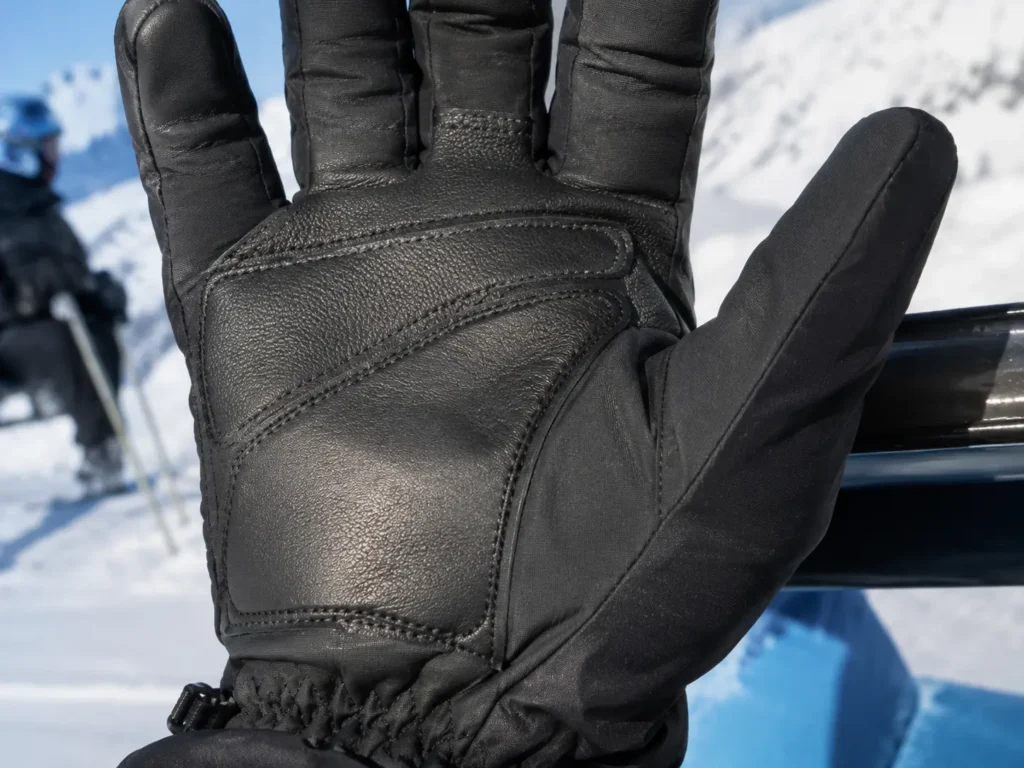
Palm reinforcement material matters more than brand name. Look specifically for described reinforcement at the palm center and thumb — some gloves use a secondary leather or synthetic overlay specifically in high-contact zones, which is a meaningfully different construction than a single-layer palm.
Stitching pattern around the palm affects how wear spreads. A palm with a single continuous panel tends to wear evenly but eventually thin out as a whole. A palm built from multiple smaller reinforced sections tends to show localized wear that’s easier to visually track and, in some cases, spot-repair.
Material choice interacts with your actual lift frequency. A ski instructor or lift-heavy resort skier riding 5+ days a week benefits more from a reinforced or hybrid rubber-leather palm than from premium full-grain leather alone, simply because contact frequency matters more than material prestige at that usage level. A weekend skier riding occasionally has more flexibility to prioritize feel and dexterity over pure abrasion resistance.
Color and cosmetic wear-hiding aren’t the same as durability. Darker palm colors hide scuffing visually longer, which can create a false impression of better durability when the underlying wear rate is identical. Judge durability by construction and reinforcement, not by how visible the wear looks.
Real Fixes That Actually Reduce Wear
Grip the edge of the palm, not the full surface. Most abrasion happens when the entire palm drags across the bar. A “side palm” grip keeps less material in contact and noticeably reduces scraping — it feels slightly unnatural for the first few rides, then becomes automatic.
Avoid resting your palm flat on a frost-covered bar. If the bar looks textured or frosty, lifting on with your fingers instead of laying your whole palm down avoids the worst of the ice-abrasion effect.
Look for reinforced palm patches. Gloves with added material at the palm center and thumb crease take the abuse instead of the primary leather or synthetic layer. This isn’t a brand-specific feature — check the product description or photos for visible reinforcement before buying.
Condition leather before spring or wet-weather days. Wet leather that dries out stiffens and becomes more crack-prone. A standard leather balm or wax before a wet storm cycle keeps the material flexible enough to resist surface cracking. REI’s guide to caring for water-repellent gear covers the same underlying principle — treated material resists moisture damage better than untreated material, whether it’s a jacket or a glove palm.
Stay aware of seat position on mixed chairs. Sitting with your palm turned slightly upward or centered, rather than resting flat toward a snowboarder’s edge, avoids most incidental nicks during loading.
Teach kids an “open palm” grip. Kids instinctively squeeze a safety bar the way they’d grip a pull-up bar, which grinds through palm material fast. An open-palm grip — fingers curled, palm slightly lifted — cuts wear significantly and is easy for a child to learn in a single lesson.
Brush off loose ice or snow before gripping. A quick brush of the bar with a gloved hand before settling in removes loose ice crystals that would otherwise grind against the palm during the ride. It takes two seconds and meaningfully reduces the sandpaper effect on frosty mornings.
Rotate between two pairs if you ski frequently. Giving leather palms a full day to dry and recover between uses reduces the wet-freeze-flex cycle that causes the fastest cracking. This isn’t necessary for casual skiers, but for anyone on the mountain most days of the week, it noticeably extends glove life.
Common Mistakes That Make It Worse
Gripping tightly for the entire ride
A tight, full-palm grip against cold metal wears through leather faster than the actual skiing does. Loosening the grip, or shifting to the edge of the palm, slows this down immediately.
Drying wet leather on direct heat
Heaters and direct boot-dryer heat pull moisture out too fast, which stiffens leather and makes it more prone to cracking on the next lift ride. Air-drying with mild, indirect warmth protects the material far better.
Skipping waterproof treatment altogether
Untreated leather absorbs water more readily, and once it’s saturated, the surface softens and scuffs roughly twice as fast against metal. A treatment before wet-weather days is a small step with an outsized effect.
Leaving gloves wet overnight
Damp palms develop rough spots that catch more readily on textured bars the next day. Drying between ski days matters more for glove longevity than most people expect.
Choosing smooth, non-reinforced palms for lift-heavy terrain
Instructors and lift-heavy skiers see faster wear on single-layer smooth palms specifically because of how much lift contact they accumulate. Reinforced palms are a meaningfully better match for that use pattern.
Ignoring early texture changes
Waiting until damage is visible from a distance means missing the earlier window where conditioning or a grip adjustment could have slowed things down. The 30-second palm check covered above catches this stage before it becomes a bigger repair.
When It Becomes a Real Problem, Not Just Cosmetic Wear
Early chairlift wear is mostly cosmetic — it looks rough but doesn’t change how the glove performs. The threshold that actually matters is when the glove stops protecting your hand properly.
Torn palm seams
Once a seam opens, inner layers are exposed, warmth drops fast, and water gets in more easily. Repair rarely holds up to daily use once a seam has genuinely failed.
Exposed insulation
Visible insulation fibers mean the glove has lost structural integrity. Those fibers absorb water and freeze, making the glove stiff within a single run.
Loss of palm grip
A palm polished smooth, or a peeling rubber coating, means poles and bars slip more easily — a real control issue on steeper terrain, not just an appearance problem.
Deep cracking in leather
Cracks that go beyond surface-level absorb water and tear along those lines, especially in spring slush conditions. Conditioning helps early cracking, but deep cracks usually signal the glove is near the end of its useful life.
Peeling rubber or PU overlays
Once these start lifting, they catch on lift hardware and tear away in chunks, exposing softer material underneath that wears out much faster.
Replacement makes sense once a glove can no longer keep hands warm, stay dry through a run, grip poles or bars securely, or resist further abrasion. If the wear is purely cosmetic, there’s no real need to replace it early.
Dry Cold vs. Wet Coastal Resorts Changes the Picture Too
Climate affects this mechanism differently than most people expect.
In dry, cold interior climates — the kind with consistently powdery snow — ice on chairlift bars tends to be finer and more consistent, since there’s less freeze-thaw cycling day to day. Abrasion in these conditions is steady but relatively predictable, and leather that’s kept conditioned tends to hold up reasonably well across a full season.
In wet, coastal or maritime climates, the freeze-thaw cycle is far more aggressive — bars can be wet and slushy one hour, then frozen solid the next as temperatures drop with elevation or time of day. That’s exactly the wet-freeze-flex cycle that cracks leather fastest, which is part of why palm wear often looks worse per ski-day at wetter, more variable resorts than at consistently cold, dry ones.
Skiers who split a season between climate types sometimes assume a glove is failing when really it’s just experiencing a harsher wear pattern at one location than the other. Matching your conditioning schedule to the wetter destination, rather than your home mountain’s typical conditions, avoids being caught off guard.
Not All Lifts Wear Gloves the Same Way
The type of chairlift you’re riding most often changes how much of this actually applies to you.
Fixed-grip lifts — the older style that never disconnects from the cable — tend to be the worst offenders. They’re more likely to have aging hardware, chipped paint, and exposed bolt heads, and riders often grip harder during the more abrupt loading and unloading these lifts require.
Detachable high-speed lifts generally have newer, smoother bars and softer, more controlled loading, which reduces peak-friction moments. That said, higher rider volume on popular high-speed lifts means more total contact time across a season, even if any single ride involves less aggressive gripping.
Gondolas and cabin lifts remove chairlift-bar contact from the equation almost entirely, which is part of why gloves used mainly on gondola-heavy resorts often show noticeably less palm wear than gloves used at fixed-grip-lift-heavy areas, even across a similar number of ski days.
If you split your season across multiple resorts, palm wear differences between trips often come down to lift infrastructure as much as how many days you actually skied.
Frequently Asked Questions
Do leather ski gloves get damaged faster on chairlifts than synthetic ones?
Leather is durable but genuinely more abrasion-sensitive than most synthetic palm materials, especially when wet or untreated. Regular conditioning before wet or spring days meaningfully slows this kind of damage.
Why do my gloves crack specifically around the palm?
Cracking usually follows a wet-then-frozen cycle, where flexing frozen, stiffened fibers stresses the material. This shows up more on older gloves and after repeated wet-snow exposure without conditioning in between.
Can chairlift scuffs actually be repaired?
Minor surface scuffs often respond well to leather conditioner or a rubber patch for synthetic palms. Deep tears or exposed insulation are past the point where a small fix holds up under continued daily use.
Are rubber palms more durable than leather on lifts?
Rubber generally resists metal-bar scuffing better and holds grip well in wet or icy conditions, but it stiffens and becomes more crack-prone in extreme cold. Reinforced or hybrid palms tend to outlast either material alone in lift-heavy terrain.
Should kids use mittens instead of gloves to avoid this kind of wear?
Mittens have fewer seams exposed to abrasion, which reduces one failure point, but they limit dexterity and grip control. Gloves with reinforced palms paired with proper open-palm gripping technique protect kids just as well while keeping full pole control.
Does riding gondolas instead of chairlifts eliminate this kind of wear?
Largely, yes — gondola cabins remove direct hand-to-bar contact almost entirely, so palm wear from this specific mechanism drops significantly. Other wear sources (pole contact, general use, seam stress) still apply regardless of lift type.
Is it worth buying a separate pair of gloves just for lift-heavy days?
For most recreational skiers, no — a single well-reinforced pair handles both skiing and lift contact fine. This mainly becomes worth considering for instructors or lift operators spending significantly more time in direct hardware contact than a typical guest.
The Bottom Line
Chairlift wear isn’t random, and it isn’t really about how aggressively you ski — it’s almost entirely about repeated, low-grade friction during the few seconds your hand touches lift hardware each ride. Grip technique, basic leather care, and choosing a reinforced palm for lift-heavy terrain address the actual mechanism, not just the symptom.
None of the fixes here require new gear mid-season, and most take less time to apply than reading this sentence took. The 30-second palm check is worth building into a habit — checking every few weeks tells you whether you’re in the normal cosmetic-wear stage or approaching the point where conditioning, technique changes, or eventually replacement actually matters.
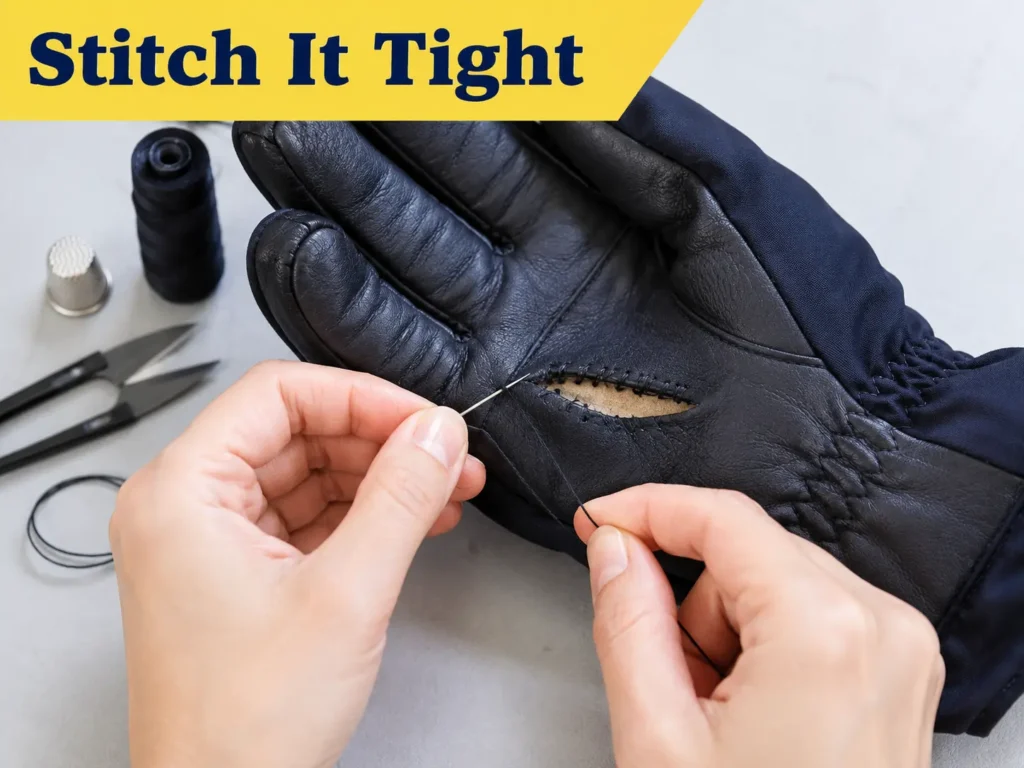
For damage that’s already gone past cosmetic — torn seams, exposed insulation, deep cracking — our step-by-step guide to fixing torn ski gloves covers the repair options in detail. And if you’re noticing wear that isn’t chairlift-specific — general seam failure, UV fading, pole-contact wear — our broader guide to why ski gloves wear out so fast covers those separate causes without repeating what’s already been explained here.