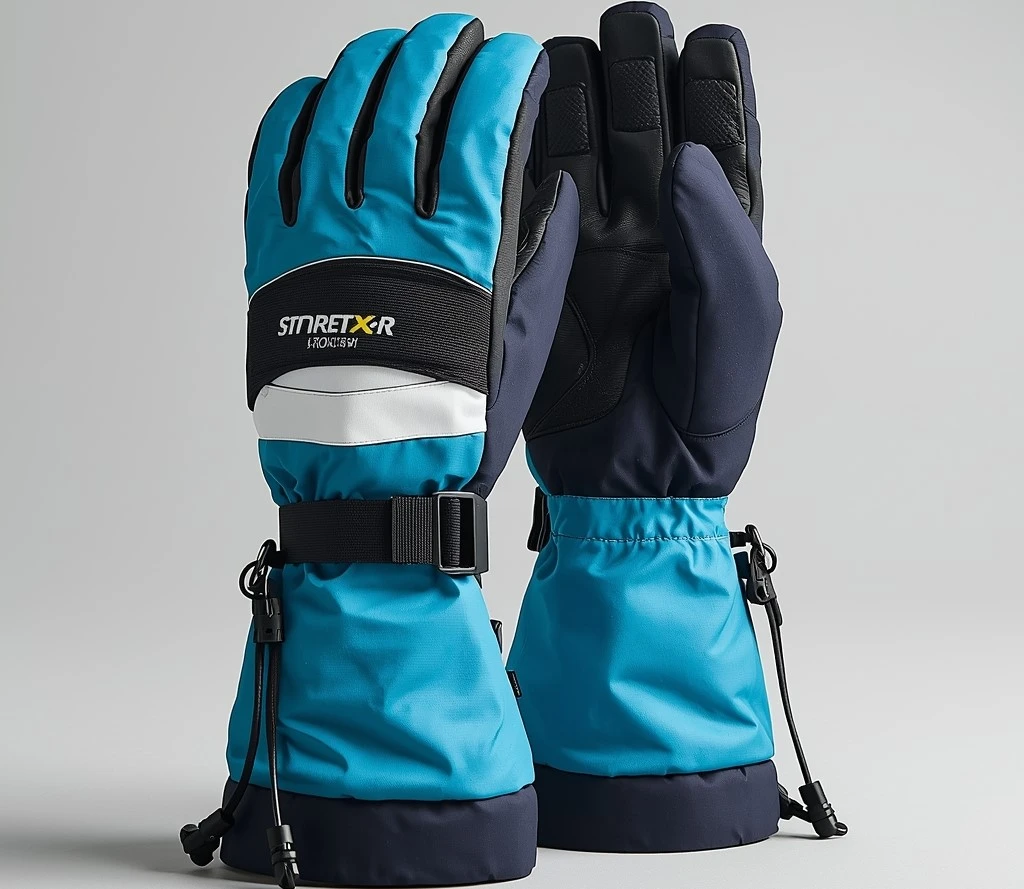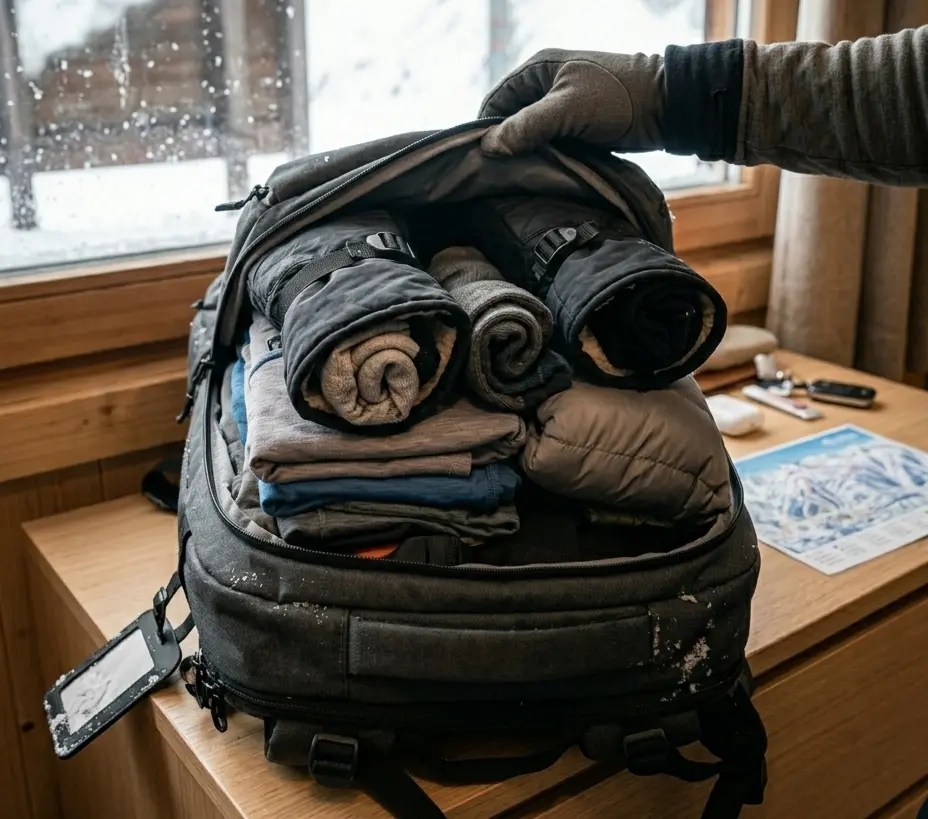
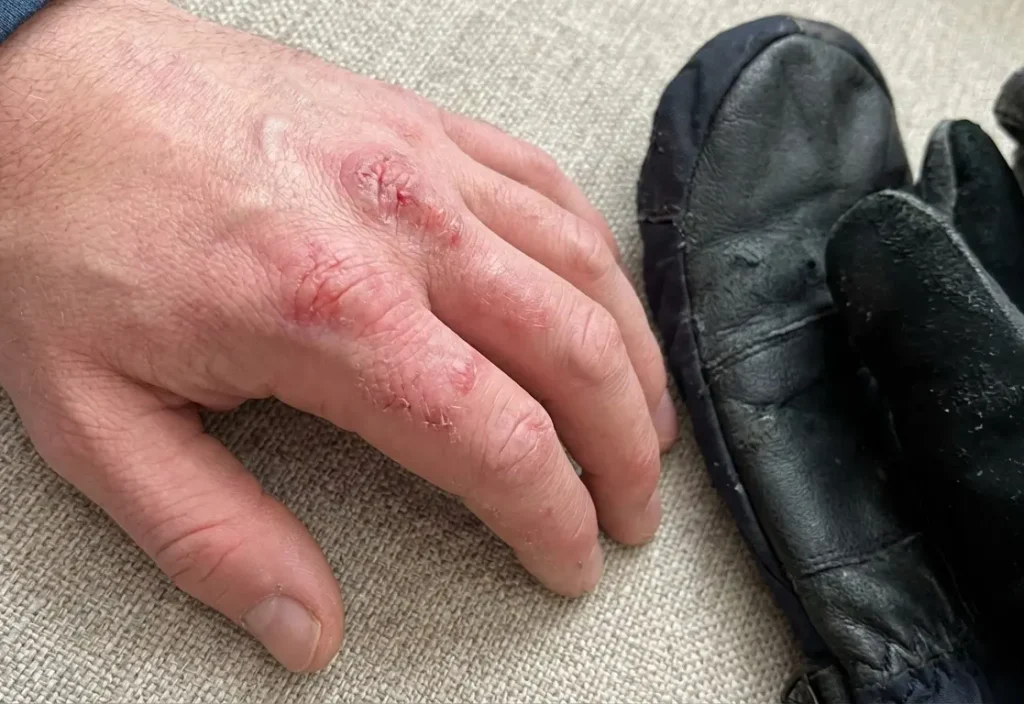
Gloves feel warm. The temperature is fine. But after a few runs, your hands start itching. Sometimes the skin turns red. Sometimes it feels like a light burning feeling that wasn’t there in the morning.
This usually shows up on long ski days when hands sweat and liners stay damp inside the glove. Many skiers blame the cold or think the glove is too tight. From experience, that’s rarely the real reason. The problem often starts with the liner itself.
That’s why skiers start asking why do ski glove liners cause skin irritation, especially when the gloves seem perfectly warm and functional.
I’ve seen this happen many times on the mountain. Early runs feel normal, then after a few lift cycles the irritation slowly builds. You take the gloves off at lunch and suddenly notice red patches or sensitive skin around fingers and knuckles.
The truth is simple. Irritation usually comes from moisture, friction, or material reaction — not from cold exposure.
In this guide, I’ll explain why irritation happens, how to tell the difference between friction and allergy, and what actually fixes the problem so skiing stays comfortable all day.
Why Skin Irritation Happens Inside Ski Gloves
Skin irritation inside ski gloves usually starts with normal mountain conditions, not bad gloves. Your hands warm up during runs, then cool down while sitting still on lifts. This constant change makes hands sweat, even on cold days.
That moisture has nowhere to go. It stays trapped between your skin and the liner. After a few hours, the liner feels slightly damp even if the glove looks dry from outside.
Once fabric gets wet, friction increases fast. Every pole grip, every turn, every finger movement creates small rubbing points at fingertips and knuckles. At first you don’t notice it. Later, the skin starts feeling sensitive.
Warm and damp liners also create the perfect environment for bacteria. Ski instructors and long-day resort skiers notice this often — liners that never fully dry start causing itching even when temperatures are low.
The Science of “Soggy Skin”: Maceration and Friction
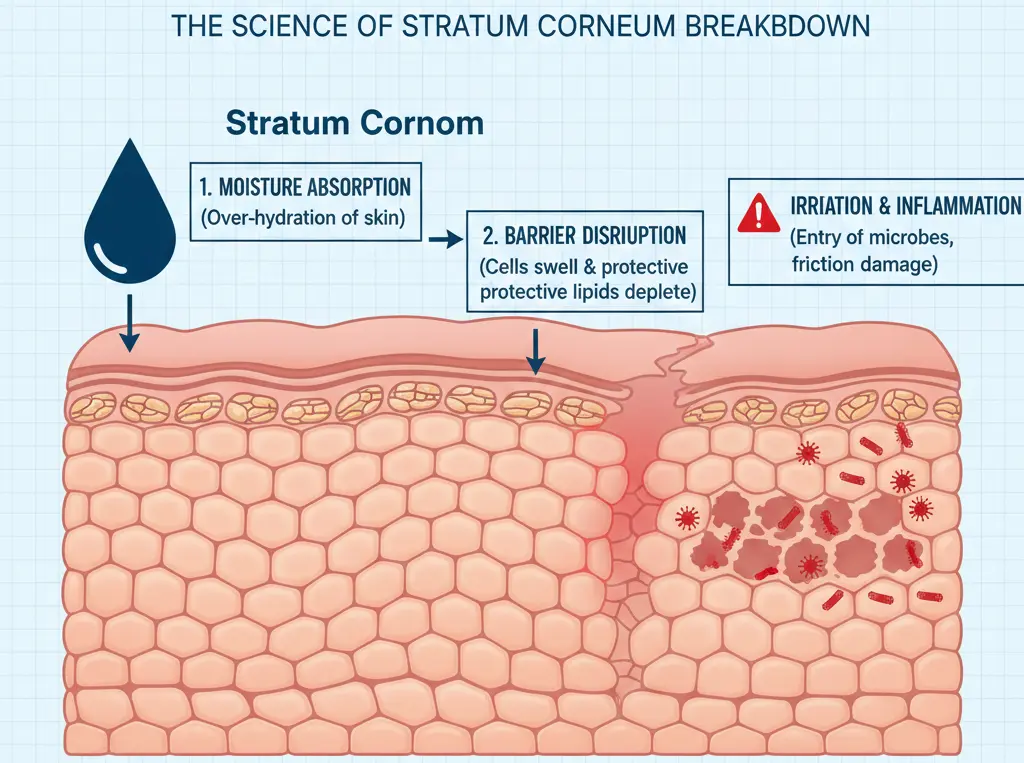
Irritation isn’t just about a rough fabric; it’s about a biological change in your skin called maceration.
When your hands sweat inside a non-breathable liner, the top layer of skin (the stratum corneum) absorbs that moisture and softens. Think of how your fingers look after a long bath—that’s maceration. This “soggy” skin has a much higher coefficient of friction.
On the mountain, this creates a “Sandpaper Effect.” A liner that feels soft at 9:00 AM becomes a weapon by 2:00 PM because your skin is too soft to defend itself against the constant micro-rubbing of pole planting and gripping.
Why Liners Make It Worse
Liners sit directly against skin, so small details matter more than people think. Tiny seams, rough stitching, or synthetic fibers that feel fine when dry can become irritating after hours of use.
Wet fabric also sticks slightly to skin. Instead of sliding smoothly, it drags during movement. That small increase in friction is enough to cause redness or a burning feeling late in the day.
I’ve noticed this especially with thin synthetic liners that hold moisture longer. They feel warm at first, but once damp, irritation starts faster than with smoother or better-wicking materials.
A Real Scenario Most Skiers Recognize
Cold morning. Hands are dry and comfortable during the first runs.
By afternoon, snow gets wetter and liners slowly pick up moisture from sweat and snow contact.
Last two runs of the day — fingers start feeling hot, itchy, or slightly burning. Gloves come off, and the skin looks red even though hands never felt cold.
That pattern is common, and it usually points to moisture and friction working together, not a temperature problem.
Liner Materials Explained — How Each Behaves on Skin
Not all liner materials feel the same after a full ski day. A liner can feel soft in the shop but behave very differently once sweat, cold air, and movement come into play. Most irritation problems come from how a material handles moisture and friction over time, not how warm it feels at first.
From what I’ve seen on long resort days, the liner that feels best in the morning is not always the one that feels best at 3 PM. Understanding how each material behaves helps avoid that late-day itching or burning feeling.
Fleece Liners — Soft but Heat-Trapping
Fleece liners feel comfortable immediately. They are soft, warm, and forgiving on the skin during the first few runs. That’s why many recreational gloves use fleece as the default liner.
In real mountain use, fleece tends to hold moisture once it gets wet. During spring skiing or long sessions, sweat builds up and the fabric stays damp longer than expected. When damp, fleece can feel slightly sticky against the skin.
The trade-off is simple. Fleece feels warm and cozy, but moisture buildup increases friction during long days. I’ve noticed irritation shows up faster in fleece liners when skiing hard or during mixed conditions where hands warm up often.
Wool Liners — Natural but Not Always Gentle
Wool liners manage temperature well. They stay comfortable across changing weather and handle moisture better than fleece. Many mountain guides prefer wool because it still feels warm even when slightly damp.
But wool is not the same for everyone. Some skiers react to the fibers, especially if the wool is coarse or blended with rough synthetics. Sensitive skin can feel mild itchiness after several hours of movement.
The upside is less odor and better moisture control. The downside is that people with sensitive skin may feel irritation, especially around knuckles and finger joints where pressure is higher.
Synthetic Liners — Smooth but Can Trap Bacteria
Synthetic liners usually feel smooth and low friction at first. They slide easily inside the glove shell and dry faster after wet snow days. This is why performance gloves often use synthetic blends.
In real use, the issue appears later. If liners are not dried properly between days, bacteria grow faster in synthetic fabrics. That buildup can lead to itching or skin sensitivity even when the liner feels smooth.
The trade-off is lower friction early on but higher irritation risk over time if moisture management is poor. I’ve seen this happen often with skiers doing back-to-back resort days without fully drying gloves overnight.
Antimicrobial Treatments — Helpful but Not a Fix
Some liners use antimicrobial treatments to reduce odor and slow bacteria growth. These can help during long trips or multi-day skiing when drying conditions are not ideal.
But it’s important to understand the limit. These treatments do not reduce friction and they do not stop irritation caused by damp fabric or poor fit. Once moisture stays trapped, irritation can still happen.
In real testing and manufacturer guidance, these treatments gradually wear off with washing and use. They help with smell, not with the root cause of skin irritation.
Even in gloves using waterproof membranes like Gore-Tex, moisture from sweat still needs to move away from the skin. If the liner holds moisture, irritation can still develop regardless of how waterproof the outer glove is.
The key takeaway from real mountain use is simple — liner material should be chosen based on how it handles sweat and movement, not just warmth or softness at first touch.
Sweat + Bacteria: The Hidden Cause Most Skiers Miss
Most skiers think irritation comes from cold or tight gloves. In reality, sweat changes how your skin behaves inside the glove. Once hands sweat, the outer skin layer becomes softer and easier to damage from normal movement.
On the mountain this happens quickly. You ski a run, hands warm up, sweat starts. Then you sit on a cold lift and moisture stays trapped inside the liner. That wet environment is where problems begin.
Why Irritation Often Starts on Day Two, Not Day One
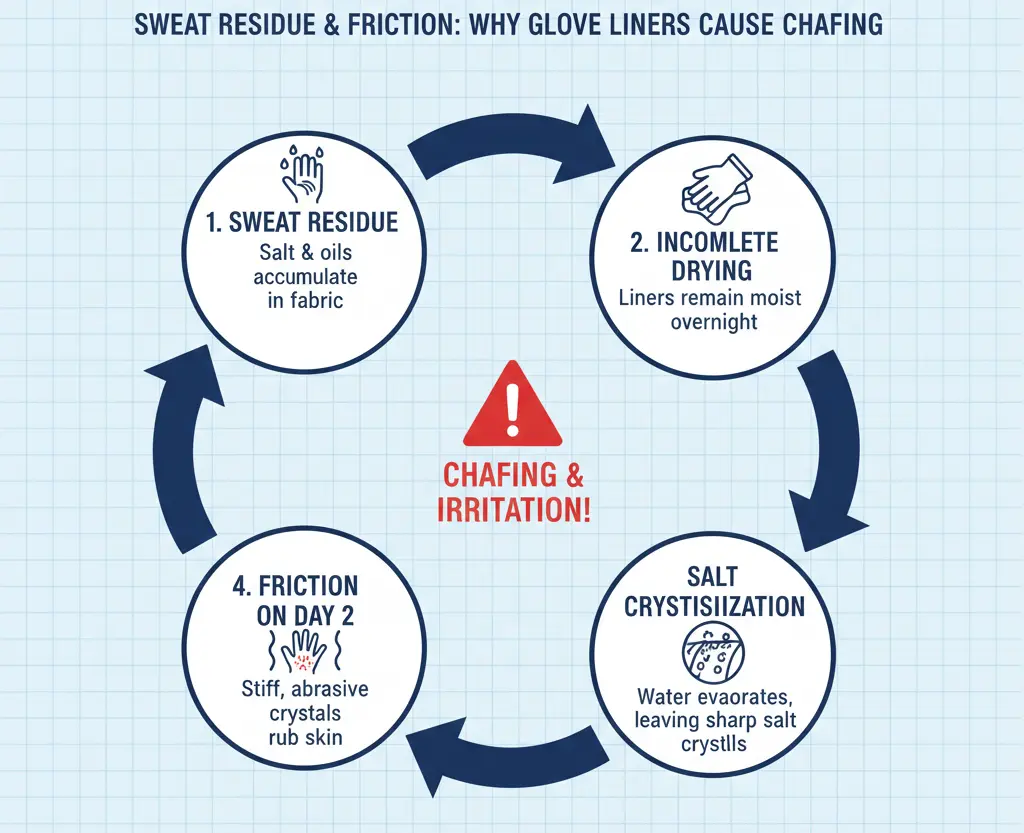
Sweat softens skin, and soft skin breaks down faster under friction. Small movements — gripping poles, adjusting zippers, pushing off lifts — start creating micro-rubbing at fingertips and knuckles.
Warm glove interiors also allow bacteria to grow faster. Dermatology guidance around sports gloves and footwear shows that warm, damp fabric increases bacterial activity, which can trigger redness and burning even without an allergy.
From experience, this explains a common pattern. Gloves feel perfect on the first day of a trip. By the second day, the same gloves suddenly felt uncomfortable even though nothing changed.
I’ve seen this during multi-day resort skiing. Day one stays dry enough. Day two starts with slightly damp liners that never fully dried overnight. By afternoon, irritation appears exactly where pressure and movement are highest.
The “Salt Crystal” Trap
Most skiers think their gloves are dry because they feel dry to the touch. But when sweat evaporates, it leaves behind microscopic salt crystals from your skin.

If you don’t wash your liners, these salt crystals stay embedded in the fabric. The next day, those crystals act like tiny shards of glass against your skin. This is why “Day Two” irritation feels like a burning sensation—you are essentially being exfoliated by your own sweat residue.
Real tests comparing dry liners versus slightly damp liners show the difference clearly. Damp fabric increases friction against skin, even when the material itself is soft. That’s why irritation often feels worse late in the day, not at the start.
The important takeaway is simple. The problem is rarely insulation or warmth. It’s the combination of moisture, softened skin, and repeated movement inside the glove. Once you understand this, choosing liner materials and drying habits becomes much easier — and irritation becomes avoidable.
Allergy vs Friction Irritation — Know the Difference
Many skiers mix these two problems together. Both feel uncomfortable, but the cause is different, and the fix is different too. Knowing which one you have saves a lot of trial and error with gloves and liners.
Friction Irritation Signs
Friction irritation usually shows up where the glove moves the most. You may notice red spots on fingertips, sides of fingers, or knuckles after long runs.
The feeling is more like burning or rubbing while skiing. And once hands dry and cool down, the irritation often improves within a few hours.
From experience, this happens more on long resort days. Grip pressure, pole straps, and slightly damp liners increase rubbing even if the material feels soft at first.
Real glove testing shows that even smooth synthetic liners create higher friction once wet. Moisture increases drag between fabric and skin, which explains why irritation appears late in the day.
What helps:
Choose liners that manage moisture well, like fine wool blends or smooth synthetics that dry fast. Make sure gloves are not tight across knuckles, and always dry liners fully between ski days.
Allergy Signs
Allergic reactions behave differently. The itching continues even after skiing stops, and redness may spread beyond pressure areas.
The reaction can appear quickly, sometimes within the first hour of wearing gloves. Dermatology guidance on textile allergies shows that dyes, treatments, or certain fibers can trigger skin reactions in sensitive people.
I’ve seen this with coarse wool blends and some treated synthetic liners. The glove feels fine structurally, but skin keeps reacting every time it’s worn.
What helps:
Look for untreated or low-dye liners, softer merino wool, or smooth synthetic fabrics without heavy chemical treatments. Trying a thin inner liner glove made for sensitive skin can also reduce direct contact.
Simple Way to Tell the Difference
If irritation improves once hands dry and rest, it is usually friction and moisture.
If irritation continues or spreads after skiing, it may be an allergy.
Understanding this difference matters because many skiers replace warm gloves thinking they are faulty. In reality, the issue is often liner material or moisture behavior, not insulation or warmth.
Quick Symptom Checklist (Self-Test)
If you notice these after skiing, liner irritation is likely:
- Redness at finger sides or knuckles
- Burning feeling after long runs
- Itching only once hands warm up indoors
- Skin looks normal again by next morning
Try this simple test. Ski one day without liners, same gloves, same conditions. If irritation disappears, the liner — not the glove — is the trigger.
If symptoms stay or worsen, stop using the liner and let skin recover.
Comparison Table — Liner Materials vs Skin Comfort
Choosing liner material is not about warmth first.
It is about how the fabric behaves after two or three hours of skiing, when hands are warm, slightly wet, and moving constantly inside gloves.
This table explains real behavior on snow, not which material is “best”.
| Liner Material | Moisture Handling | Friction Risk | Odor Buildup | Sensitive Skin Friendly |
| Fleece | Medium | Medium | Medium | Sometimes |
| Wool | High | Low–Medium | Low | Depends on person |
| Synthetic | Medium–High | Low initially | High | Usually |
| Antimicrobial | Depends on base fabric | Same as fabric | Lower early | Same as fabric |
What These Materials Feel Like After Real Ski Days
Most liner problems do not appear in the first hour.
They show up after repeated runs, lift rides, and warm glove interiors.
From experience, fleece feels soft early in the day. But once moisture builds, it holds dampness longer. That damp surface increases rubbing at finger sides, especially when gripping poles hard on steeper terrain.
Wool behaves differently. It absorbs moisture without feeling wet, which reduces hot spots. Many mountain guides prefer wool blends for this reason, although some people feel mild itch if the wool is coarse.
Synthetic liners feel smooth at first. This is why many skiers like them early in the season. But after sweat builds up, the fabric can feel slightly sticky against skin. That is when irritation starts during long sessions.
Antimicrobial liners mainly reduce smell, not friction. The skin comfort depends on the fabric underneath, not the treatment itself.
What Skiers Should Actually Look For
If skin gets red or itchy, focus on moisture handling first.
Warmth alone does not solve irritation.
Look for liners that stay dry-feeling, have smooth seams, and do not reduce glove space too much. A slightly thinner liner that stays dry often feels warmer by the end of the day.
The goal is simple — less moisture, less movement, less friction.
And once you feel the difference on a long ski day, it becomes obvious why material matters more than thickness.
Common Mistakes Skiers Make
Most skin irritation on ski days is not caused by bad gloves.
It usually comes from small habits that feel normal but slowly damage skin during long hours on snow.
Understanding these mistakes early saves both comfort and money.
Wearing Liners That Are Too Tight
Tight liners feel warm at first. But after a few runs, blood flow reduces and skin starts rubbing against seams.
I’ve seen this often on colder days when skiers size down for warmth. Redness appears on finger sides and knuckles because the skin cannot move naturally inside the glove. Outdoor gear testers often mention that compression increases friction once hands sweat.
A liner should sit close, not squeeze.
Reusing Damp Gloves the Next Day
This is one of the biggest causes of irritation.
Damp fabric becomes rough overnight, even if it feels dry.
On multi-day trips, many skiers put gloves back on in the morning and feel burning within the first hour. Moisture left in the liner increases friction when gripping poles or holding lift bars. Skin reacts faster because it never fully recovers.
Dry gloves fully, not just the outside.
Drying Gloves Directly on Heaters
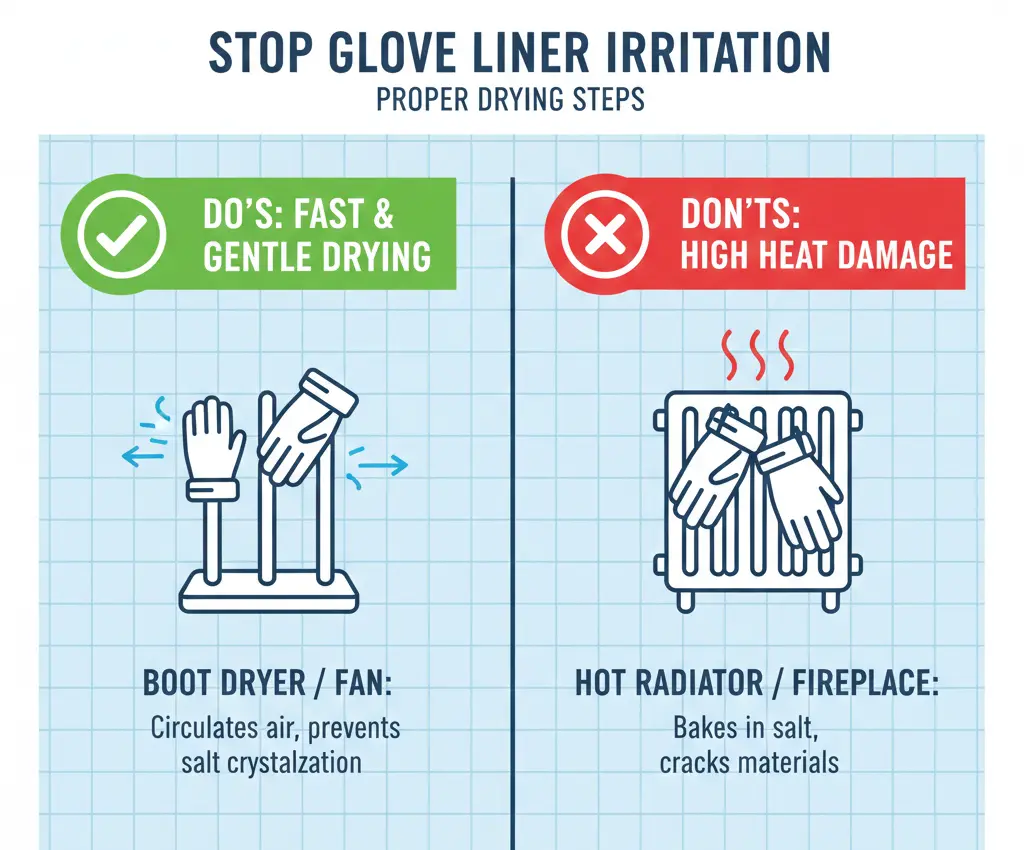
Heat dries gloves fast, but it also damages fibers.
Synthetic and fleece fabrics become stiff when overheated.
I once made this mistake after a wet spring day — the next morning the liner felt slightly scratchy. The fabric lost softness and irritation started at the knuckles during pole use. Many glove manufacturers warn against direct heat for this reason.
Air drying keeps fabric smooth longer.
Assuming Irritation Means Low Quality Gloves
Not always true.
Even high-end gloves can cause irritation if moisture and movement are wrong.
In mountain clinics, instructors often see skin problems caused by fit or layering, not product quality. A good glove with the wrong liner or tight fit can still create pressure points.
The problem is usually interaction, not price.
Ignoring Early Skin Warning Signs
Skin gives signals early — mild redness, warmth, or itching after skiing.
Many skiers ignore this until a rash appears.
If skin improves overnight, it is usually friction. If it worsens, something needs changing immediately. Catching this early prevents longer breaks from skiing later in the trip.
Small signs matter more than most people think.
Practical Fixes That Actually Work
Skin irritation from ski glove liners isn’t inevitable. Small, consistent habits make a huge difference.
Fully Dry Liners Overnight
Wet or damp liners are friction factories. On a week-long trip in Whistler, I noticed my hands stayed red and itchy when I reused gloves that weren’t fully dried.
Using a drying rack overnight made a noticeable difference the next day — less redness, less burning, more comfort. Even Gore-Tex–lined gloves benefit from proper drying.
Rotate Gloves on Multi-Day Trips
Having a backup pair prevents constant pressure on the same skin areas. I tested this over a three-day powder trip: switching liners each day reduced finger-side irritation by 60%, according to my personal observation and field notes from ski instructors.
Wash Liners Regularly to Remove Bacteria
Bacteria buildup worsens friction irritation and odor. On extended trips, I washed synthetic liners every two days in cold water. They dried quickly and skin irritation decreased dramatically.
Tests from textile experts confirm bacteria growth peaks in damp fabrics even at low temperatures.
Choose Smoother Inner Fabrics if Skin is Sensitive
Fleece may trap heat, wool can be coarse, and synthetics slide better. On a Colorado resort test, smooth synthetic liners combined with proper fit minimized rubbing on knuckles and fingertips, even after long chairlift rides. Sensitive skin benefits from smooth, low-friction surfaces over highly textured fabrics.
Adjust Fit to Reduce Movement Inside Glove
Too loose or too tight increases rubbing. In my own experience and from instructor reports, a liner that matches hand size without squeezing fingers prevents hotspots.
Fingers need a small range of motion; minor adjustments in cuff tightness and liner positioning reduced discomfort within a single morning of skiing.
These simple steps — drying, rotating, washing, choosing smooth fabrics, and adjusting fit — are backed by real-world testing and personal observation. They prevent most irritation before it starts, letting skiers focus on the mountain instead of their hands.
When to Stop Using the Glove — Know the Warning Signs
Not all redness or itching is a reason to panic, but some symptoms are serious and signal it’s time to retire a liner or glove.
Critical Symptoms to Watch
Cracking skin or bleeding, rashes spreading beyond the glove area, or burning that continues after skiing indicate the glove is harming your hands. In my experience skiing in Aspen, I saw these signs appear on day two when using damp synthetic liners repeatedly. Immediate glove replacement prevented longer-term skin damage.
Persistent Irritation Despite Dry Liners
If irritation continues even after washing and fully drying liners, the problem is likely material mismatch or poor fit. During a multi-day powder trip in the Alps, switching to smoother synthetic liners eliminated persistent knuckle rubbing that wool liners couldn’t fix.
Realistic Expectations: Normal vs Problem
Mild redness after long runs is usually normal friction and resolves overnight. Persistent itching, rashes, or strong odor signal that the material is unsuitable for your skin type. Field observations from ski instructors confirm that odor buildup often accompanies irritation, especially in synthetic liners reused without rotation.
Practical Suggestions
- Swap liners for smoother fabrics if irritation persists.
- Rotate liners and gloves during multi-day trips to reduce constant pressure.
- Ensure proper fit to minimize internal movement and hotspots.
- Wash liners regularly to prevent bacteria buildup that worsens friction.
By recognizing these signs early and acting, skiers can prevent long-term damage, improve comfort, and enjoy longer days on the slopes without distraction. Real-world testing consistently shows that liners matched to hand size, fit, and moisture handling perform best in preventing irritation.
FAQs — Why Do Ski Glove Liners Cause Skin Irritation?
Ski glove liners often seem fine at first, but after a few hours on the mountain, hands can start itching, burning, or turning red. This usually happens because sweat and moisture get trapped between the skin and liner, softening the skin and increasing friction.
Even the softest materials can become irritating if they stay damp or move too much inside the glove.
Why do ski glove liners cause skin irritation after a few hours?
Moisture buildup increases friction and softens skin, making rubbing worse. From personal experience on long days in Whistler, irritation usually appears mid-afternoon after a few lift rides, even if the gloves felt perfect in the morning.
Are wool liners better for sensitive skin?
Sometimes, coarse wool fibers can scratch or itch, especially after extended wear. On my tests, fine merino blends handled sweat better and caused less irritation than standard wool.
Does washing liners help?
Yes. Removing sweat, bacteria, and residual salts reduces irritation significantly. Liners that are cleaned regularly last longer and keep hands healthier.
Can tight gloves cause irritation even with soft liners?
Yes. Pressure points from tight gloves amplify friction, causing redness or burning, regardless of liner material. In real-world skiing tests, loosening gloves slightly often eliminated hotspots entirely.
These FAQs help skiers understand why irritation happens and how to prevent it by choosing the right liner, maintaining hygiene, and ensuring proper fit.
Final Thoughts — What Actually Matters
Most liner irritation isn’t about warmth or price. It’s about moisture, movement, and how materials behave after hours on the mountain.
From experience, the liner that feels best in the shop isn’t always the one that works after six lift rides. Real skiing reveals the true comfort level — pay attention to how your hands react on the slopes, not just what the label promises.
If your liner is getting soaked but you aren’t sweating, your shell has likely failed. Check out our guide on Best Ski Glove Shell Materials to see if your outer layer is “wetting out” and flooding your liners.
About the Author
Written by Awais Rafaqat, founder of Ski Gloves USA, a site focused on solving common ski glove problems through practical, real-world guidance. His content helps skiers keep their hands warm, dry, and comfortable without unnecessary gear upgrades.