Quick answer: Raw skin is different from ordinary glove discomfort — it means friction has already broken down the outer layer of skin, not just made you uncomfortable. The right response depends on how far it’s gone: a hot spot can often be taped and skied through carefully, but skin that’s already raw or weeping needs to come out of the glove, not push through the rest of the day.
If this keeps happening across multiple gloves or multiple trips, it’s worth ruling out a fit problem rather than treating each occurrence separately — the Ski Glove Finder can help match you to a shape that doesn’t set this pattern up in the first place.
This post focuses specifically on the moment skin has already broken down — what’s actually happening, how to tell how serious it is, and what to do right now. For the full breakdown of every root cause behind glove discomfort — fit, seams, insulation distribution, wrist strap tension — our complete guide to why ski gloves feel uncomfortable covers that in depth, so this post won’t repeat it.
- What "Raw" Actually Means, Mechanically
- The Three Stages, and Why the Middle One Is the Only One You Can Ski Through
- What To Do Right Now, In Order
- Why This Happens Faster Than People Expect
- Deciding Whether to Keep Skiing or Stop for the Day
- Preventing the Repeat, Without Guesswork
- Frequently Asked Questions
- The Takeaway
What “Raw” Actually Means, Mechanically
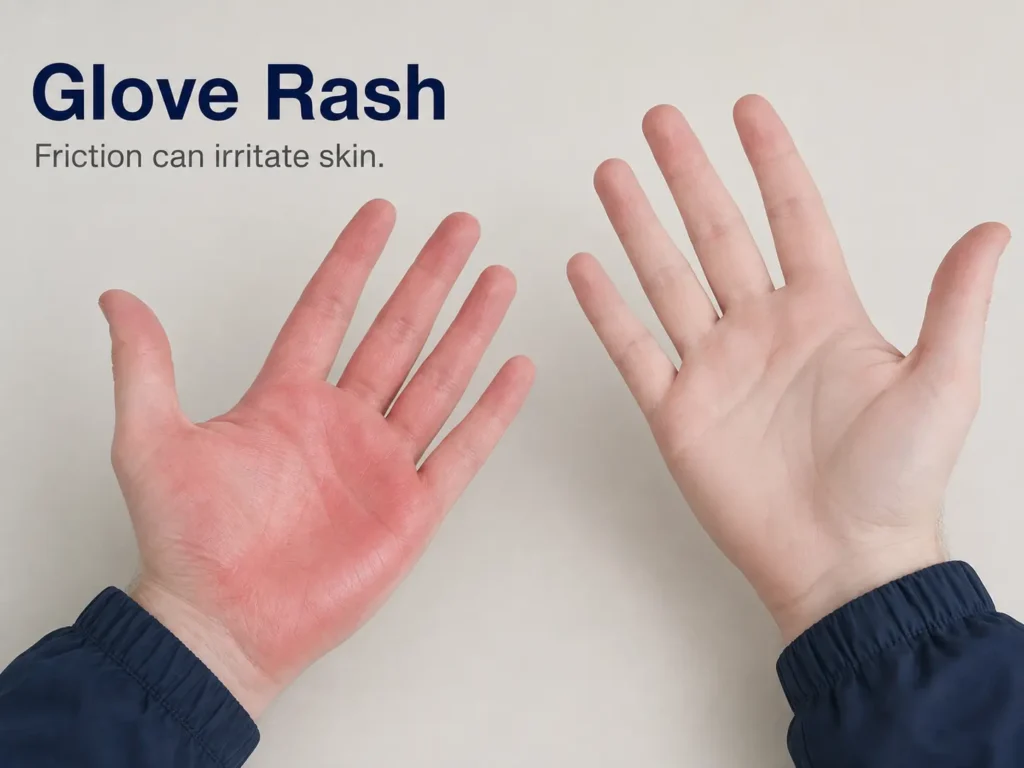
Skin has an outer barrier layer that handles ordinary pressure and light friction without issue. Raw skin means that the barrier has been mechanically worn through — not just irritated, but structurally compromised. That’s the real distinction between “my hands are uncomfortable” and “my skin is raw”: one is a pressure sensation, the other is early tissue damage.
Repeated friction against skin measurably increases the risk of surface breakdown, and moisture accelerates the process significantly — damp skin has a higher friction coefficient than dry skin, so the same amount of rubbing does more damage once sweat or melted snow gets involved. This is why raw skin often shows up faster than expected on a day that started fine: the friction wasn’t new, but the moisture that made it damaged built up over the session.
The Three Stages, and Why the Middle One Is the Only One You Can Ski Through
Hot spot
Warm, slightly tender, no visible skin change. This is a warning, not damage yet. The barrier is intact.
Raw skin
Visibly red, tender to light touch, the surface may feel thin or slightly weepy. The barrier has broken down at the surface level. This can often still be managed for the rest of a session with the right protection, but it’s actively getting worse with continued unprotected friction.
Open or broken skin
Cracked, bleeding, or blistered with the roof already torn. At this point you’re managing an injury, not preventing one, and continuing to ski in the same glove makes it worse every run.
The middle stage is the only one where “keep skiing carefully” is a reasonable option. Hot spots need prevention, not treatment. Open skin needs to come out of the glove.
What To Do Right Now, In Order
Get the glove off and actually look
Don’t diagnose through the glove based on how it feels — pull it off at the next stop and check the skin directly. Feel alone under-reports how far things have progressed, especially once fingers are cold enough that sensation is already dulled.
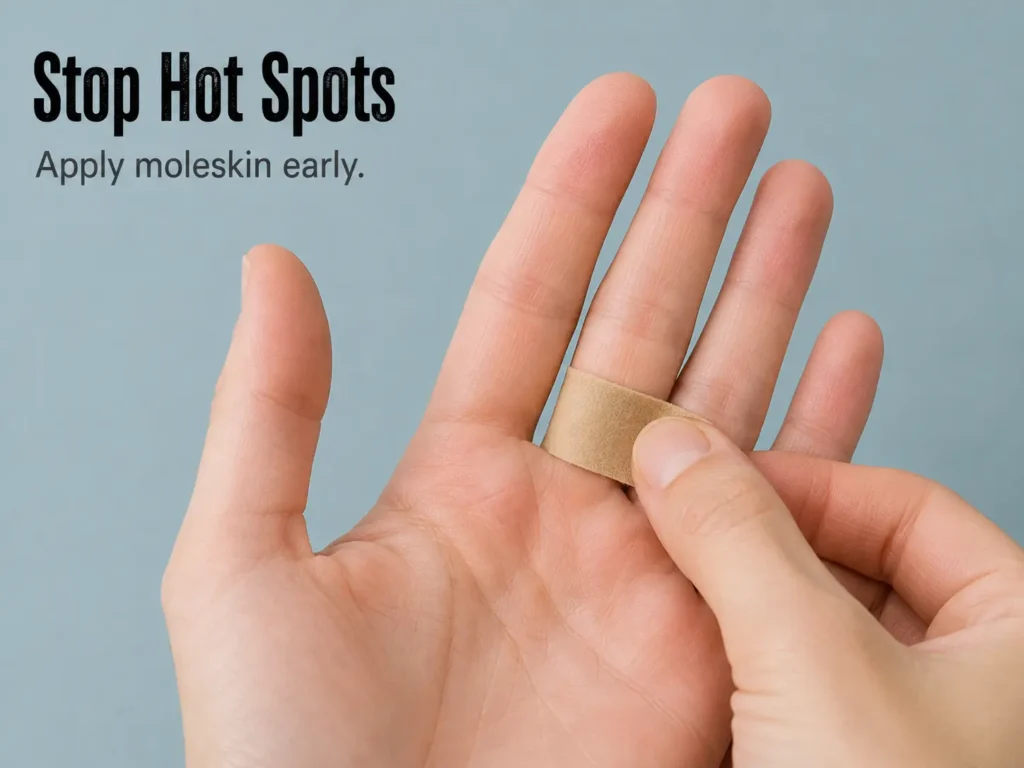
If it’s a hot spot: cover it before putting the glove back on. Moleskin or athletic tape works — the goal is changing what’s actually in contact with the skin, not adding cushioning on top of the same friction surface. The American Academy of Dermatology’s guidance on blister prevention specifically recommends this kind of early coverage before the skin breaks down further, which is the same principle that applies here.
If it’s raw but not broken: the same taping approach can work, but check it again at your next break rather than assuming it’s holding. Raw skin under continued friction degrades faster than a hot spot does, so the margin for “this is fine, keep going” is much smaller than it feels in the moment.
If it’s open, bleeding, or a blister has already torn: stop using that glove for the rest of the day. Clean the area if you can, cover it, and switch to a spare pair or call the day early on that hand. Mayo Clinic’s first-aid guidance on blisters covers proper cleaning and covering if the skin has already broken — worth following exactly rather than improvising, since broken skin in cold, damp conditions is more prone to irritation and slower to recover than the same injury indoors.
Why This Happens Faster Than People Expect
A few specific conditions compress the timeline from “fine” to “raw” faster than a typical day would suggest, and recognizing them helps explain why the same gloves that were fine last week caused a problem today.
New or unfamiliar gloves worn on a full day
A stiff, unbroken-in shell concentrates friction at the same points repeatedly, and a full day gives that repetition far more cycles than a short test run would ever reveal.
Damp liners from a previous day
Skin that starts the day already softened by residual moisture has less resistance to friction from the first run, not just by afternoon.
Aggressive or extended pole use
Terrain that demands constant, hard pole planting concentrates pressure at the exact points a lighter grip would barely touch.
Skiing through the early warning
The gap between “this feels slightly off” and “this is now raw” is often shorter than skiers expect, especially once cold has already dulled sensation and is delayed when the warning actually registers.
Deciding Whether to Keep Skiing or Stop for the Day
This comes down to a fairly small set of questions, and answering them honestly saves more skin than any amount of taping.
Is the skin broken, or just red and tender?
Broken skin means stop using that glove today — no taping method fully protects skin that’s already lost its surface layer from further friction damage.
Does the area re-irritate within one run of taping it?
If protection isn’t holding for even a full run, the friction source is stronger than the fix, and continuing will outpace whatever you do to manage it.
Is this the same spot that’s had a problem before?
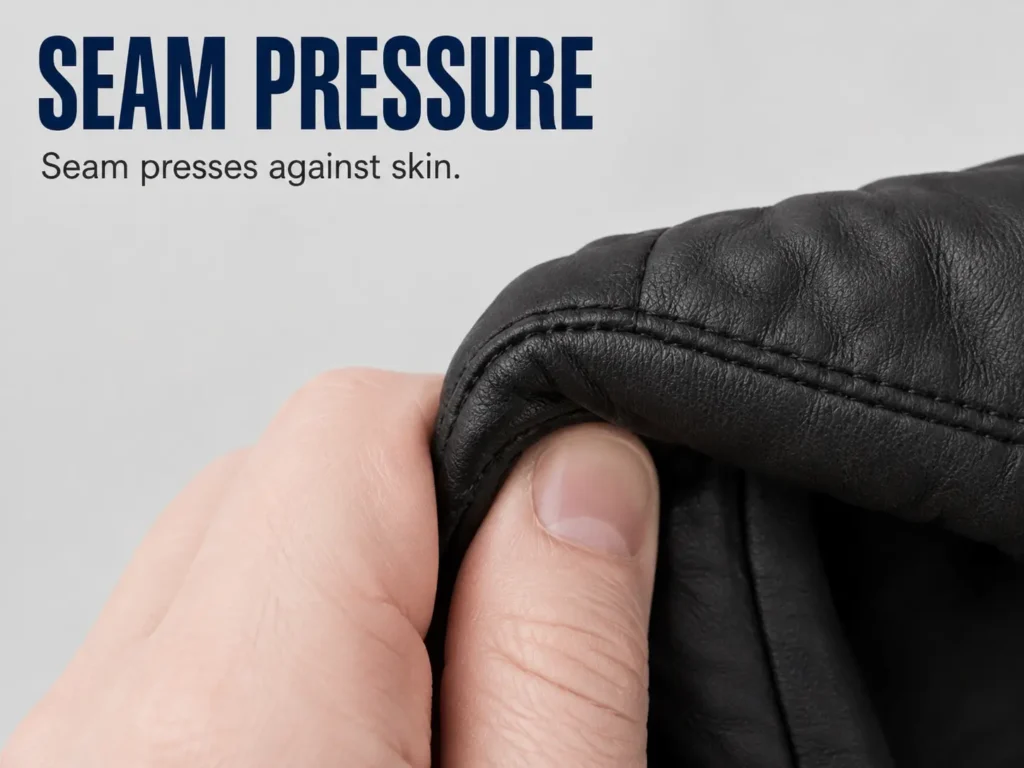
A repeat location points to a genuine seam or fit issue rather than a one-off bad day, and taping the same spot repeatedly across multiple trips is treating a symptom that keeps coming back for a structural reason.
Would you make this same call for a foot blister on a hike?
Most skiers already know the answer for a foot — tape a hot spot, stop for a real blister — and applying that same standard to hands, rather than pushing through because gloves feel less critical than boots, avoids a lot of unnecessary damage.
Preventing the Repeat, Without Guesswork
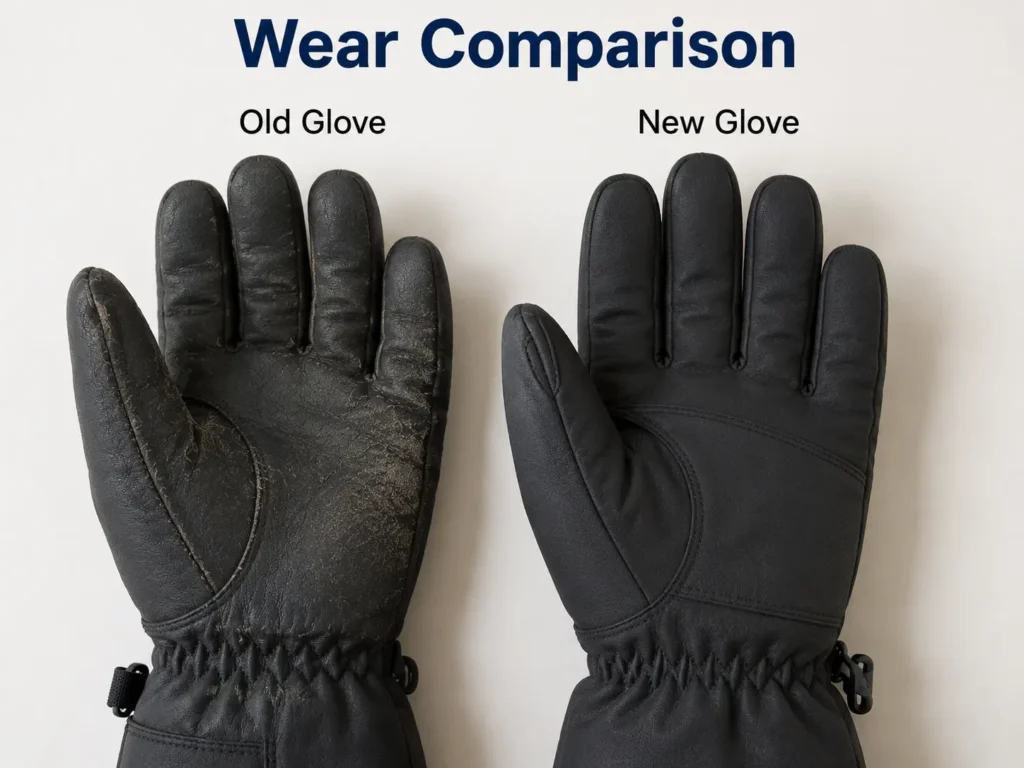
If this has happened more than once with the same gloves, or in the same spot across different gloves, it’s a signal worth acting on rather than re-taping every time it shows up.
A glove that fits correctly, worn with a liner that manages moisture rather than holding it against skin, addresses most of what causes this in the first place — and diagnosing exactly which of those is the actual cause takes the kind of testing our uncomfortable-gloves diagnostic guide walks through, including the fist-grip test that reveals seam and fit problems an open-hand check misses entirely.
If you’re shopping for a replacement specifically because a current pair keeps causing this, our breakdown of the best ski gloves across budget tiers covers construction quality and seam placement alongside price — the two factors that matter most for this specific problem, more than insulation weight or brand name.
Frequently Asked Questions
Is raw skin from ski gloves the same thing as a blister?
Not quite — raw skin is the surface breaking down under repeated friction, while a blister forms when fluid collects between skin layers as a protective response to that same friction. Raw skin can develop into a blister if the friction continues, but the two aren’t identical, and raw skin without a fluid-filled blister still needs the same basic protection.
Can I put a liner over already-raw skin and keep skiing?
Sometimes for a hot spot, generally not for skin that’s already broken down. A liner alone doesn’t stop friction the way targeted tape or moleskin over the specific spot does, and skin that’s already compromised needs a barrier between it and any moving surface, not just an extra layer of fabric.
How long does raw skin from glove friction take to heal?
For surface-level raw skin without an open wound, a few days away from the same friction source is usually enough. Skin that’s actually broken or blistered takes longer, and re-exposing it to the same rubbing before it’s healed resets the clock rather than letting it progress.
Does this mean my gloves are the wrong size?
Not necessarily on its own, but a repeat pattern in the same location across more than one ski day is a strong signal that fit or seam placement is the underlying cause rather than a one-time fluke.
The Takeaway
Raw skin is a signal, not just an annoyance — it means the friction has already won that round, and the only real question left is how you respond to limit the damage. A hot spot deserves prevention. Raw skin deserves careful, honest monitoring through the rest of the day. Broken skin deserves a stop, not another run.
None of this requires guessing. Look at the actual skin rather than trusting how it feels through a cold glove, match what you see to the right response, and if the same spot keeps coming back, treat that as the structural signal it is rather than something a piece of tape should keep solving for you.
If your ski gloves are leaving your skin raw, blisters are often the next step. Learn how to stop them before they start with our guide to preventing blisters from ski gloves — including moisture control, fit adjustments, and protective products that work on the mountain.