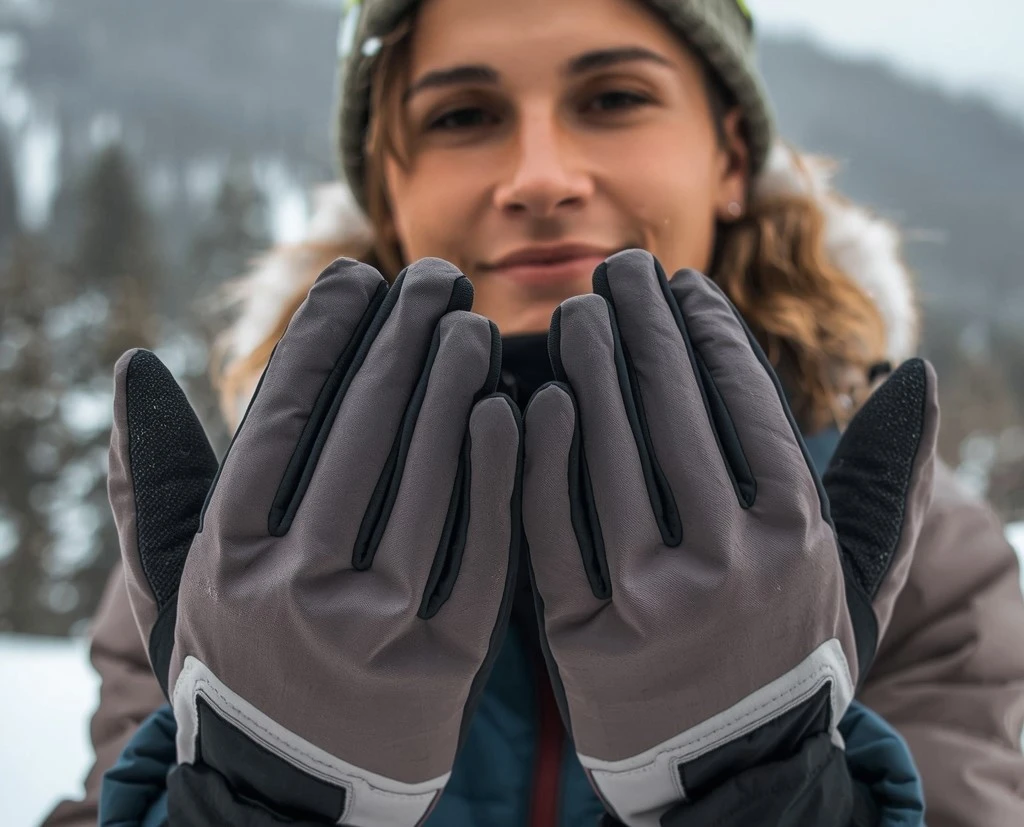
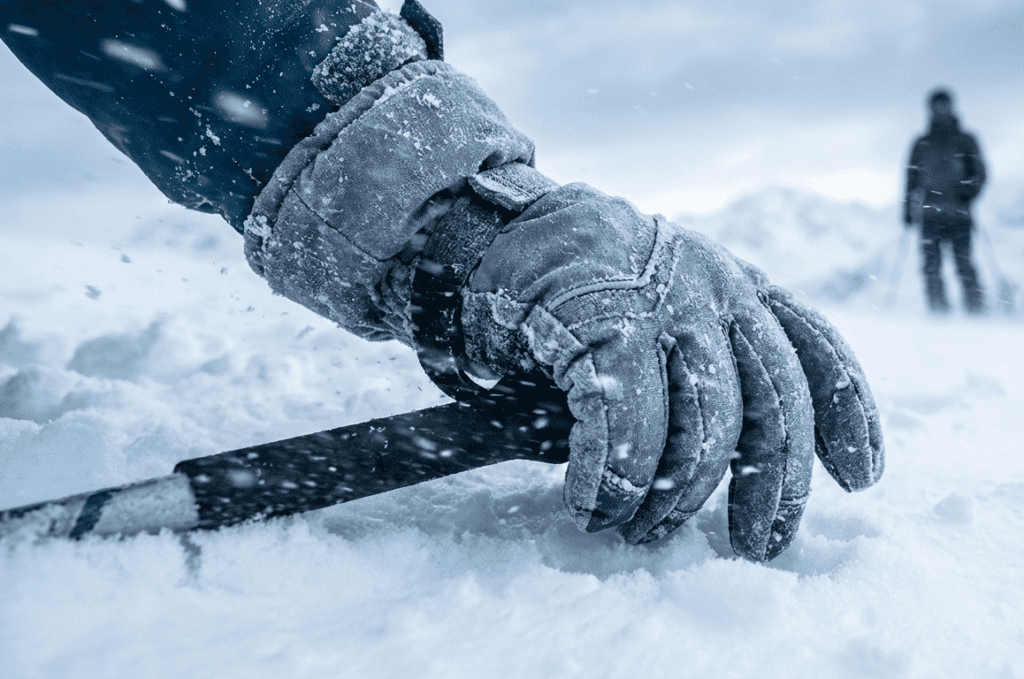
Ski gloves feel stiff in cold weather because low temperatures reduce material flexibility, compress insulation, and stiffen waterproof membranes — especially when moisture is trapped inside the glove.
In this post we explain why ski gloves feel stiff in extreme cold and what you can do to soften them, warm them faster, and keep hand movement normal on the mountain.
The Simple Reason Ski Gloves Get Stiff
Extreme cold causes ski glove materials to lose flexibility fast.
Materials tighten, grip feels worse, and movement becomes harder.
This happens more in deep cold and high wind, especially for beginners and kids.
Cold Shrinks Glove Materials
When temperatures drop, leather, synthetics, and waterproof shells contract. The fibers pull closer together and the glove can feel rigid or even crunchy. This is a natural response to cold, not poor quality or a manufacturing defect.
Heat Loss Removes Flexibility
Once your fingers lose heat, the insulation stops staying warm and soft. Without heat, padding becomes firm and less responsive. Skiers usually notice this first when trying to adjust boots, grab poles, or use zippers — everything feels stiff and slower.
Warmth Reverses the Stiffness
The moment your gloves warm back up — in the car, in the lodge, or from hand warmers — flexibility returns. This is why stiffness comes and goes throughout the day. From experience, kids actually complain about this the most because they take more breaks and feel bigger temperature swings.
What Really Happens Inside Gloves in Extreme Cold
Extreme cold does more than just “make gloves feel stiff.”
The stiffer your gloves get, the harder it becomes to grip, adjust buckles, or hold poles.
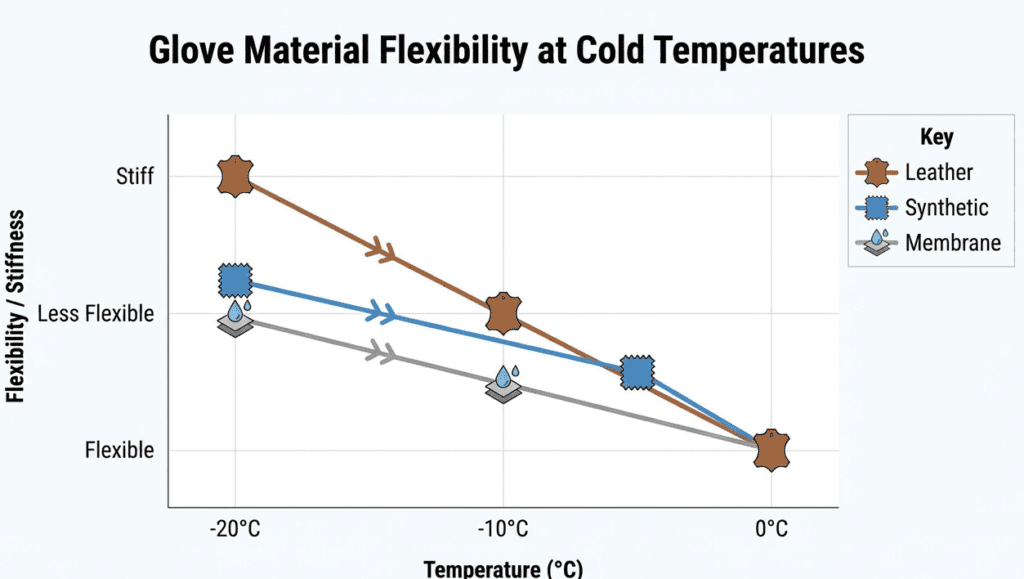
Material Rigidity Increases as Temperature Drops
Most glove materials are built from polymers and woven fibers. When temperatures fall below freezing, those polymers contract and lose elasticity. You can feel this as a sudden reduction in flex when you curl your fingers.
Fabrics that feel soft indoors can become noticeably rigid outside. From my experience, the biggest change happens between the lodge and the first cold chairlift ride. A 20–30° temperature drop is enough to shock glove materials.
Waterproof Membranes Become Less Flexible
Every serious ski glove uses a membrane layer to block water: GORE-TEX, eVent, HIPORA, or polyurethane films. These membranes are designed to handle moisture + pressure, but they don’t escape physics.
When sub-zero air hits, the membrane stiffens. As the membrane stiffens, it restricts natural hand movement and can even make insulation feel thinner than it really is.
Higher-end gloves resist this more because premium membranes are engineered to flex at cold temperatures and maintain breathability. Brands that build expedition and mountaineering gloves usually call this out in their technical spec sheets.
This stiffness is temporary and improves as the glove warms back up with use.
Insulation Compresses and Hardens
Warmth comes from trapped air. When insulation gets cold, those air pockets shrink. Less air = less loft = less flexibility. Materials like Thinsulate, PrimaLoft, and fleece all show this behavior.
On the hill, you feel this as “my gloves suddenly feel hard.” When the insulation stiffens, it also becomes slower to rebound after gripping poles or buckles. That can make your hands feel tired quicker, especially for new skiers who already grip too hard.
Leather Freezes and Hardens
Leather is naturally flexible, but it has one enemy: moisture. When leather absorbs snow or sweat and then meets cold air, it freezes and becomes firm.
I learned this the hard way on a Montana trip — my goatskin gloves felt amazing in the morning but turned to cardboard after lunch because I didn’t condition them. Once we warmed up in the lodge, they softened again.
This is why leather gloves should be conditioned regularly with wax or balm. The conditioning adds oils back into the hide, slows down water absorption, and keeps the leather supple in the cold.
Moisture Makes Stiffness Worse
Moisture is a hidden amplifier. Any water inside the glove — sweat, melted snow, or vapor — can freeze, turning flexible materials rigid. Ski parents deal with this constantly because kids sweat more and take breaks, which means faster freeze cycles.
Even membrane gloves can suffer here because membranes don’t stop internal moisture, only external water. This explains why gloves can feel dry outside but stiff inside.
Many cold-weather studies note that moisture + cold is far more damaging to material flexibility than cold alone. It’s the same reason frozen boot liners feel like bricks.
Why Budget Gloves Get Stiff Faster
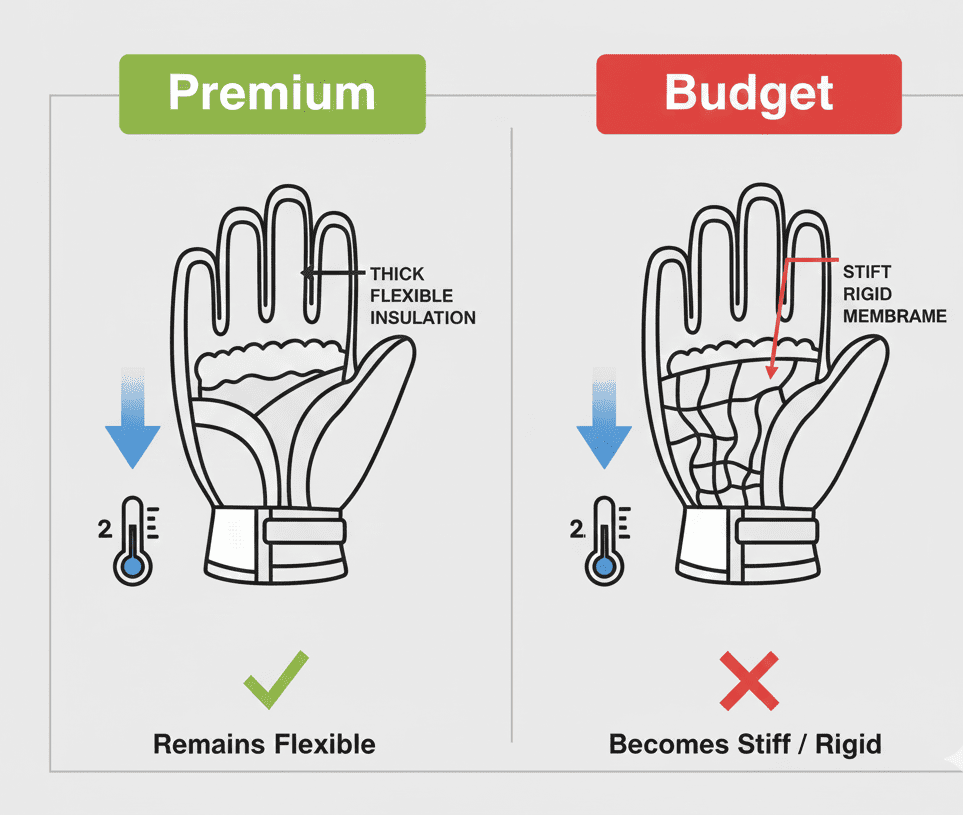
Not all gloves freeze the same way.
Cheaper models tend to stiffen much sooner in real cold.
If you’ve ever borrowed a resort rental glove, you probably felt this instantly.
Cheaper Insulation Loses Loft Faster
Budget gloves usually use low-loft synthetic insulation. When the temperature drops, this insulation compresses, traps less air, and hardens more quickly. Less trapped air also means less warmth, which makes your hand colder and your movement more limited.
High-quality insulations like PrimaLoft are engineered to keep loft in extreme cold. Cheaper fillers simply collapse and stay collapsed until you warm them up again indoors.
Lower Membrane Quality = More Rigidity
A membrane’s job is to block moisture while letting vapor escape. Budget membranes often use stiff polyurethane films that don’t flex well at freezing temperatures. When they harden, the whole glove feels like a shell around your hand.
Premium membranes such as GORE-TEX and eVent are designed for mountaineering-level cold and are tested for cold flex performance. That’s why expensive gloves maintain more natural movement on the mountain.
Synthetic Leather Behaves Differently in the Cold
Many affordable gloves use PU synthetic leather instead of real leather. PU works fine in mild weather, but in sub-zero conditions it becomes rigid and loses grip texture. Real treated leather stays more pliable and warms up faster from body heat.
From experience, rental gloves with synthetic palms almost always feel stiff on the first chair — and even stiffer by the third.
Less Pliable Cuffs and Entry Points
The cuff of the glove also affects stiffness. Budget cuffs use stiffer webbing and lower elastic content, which do not soften easily in the cold. This makes it harder to get your hand in and out when your fingers are cold and swollen — a common beginner frustration.
Higher-end cuffs use softshell materials with stretch fibers that continue to flex even at altitude and wind chill.
Is It Normal for Ski Gloves to Get Stiff?
Yes, it’s normal for ski gloves to feel stiffer in extreme cold.
Materials naturally lose flexibility as temperatures drop below freezing.
Most skiers notice it on the first chair, especially on windy or high-altitude days.
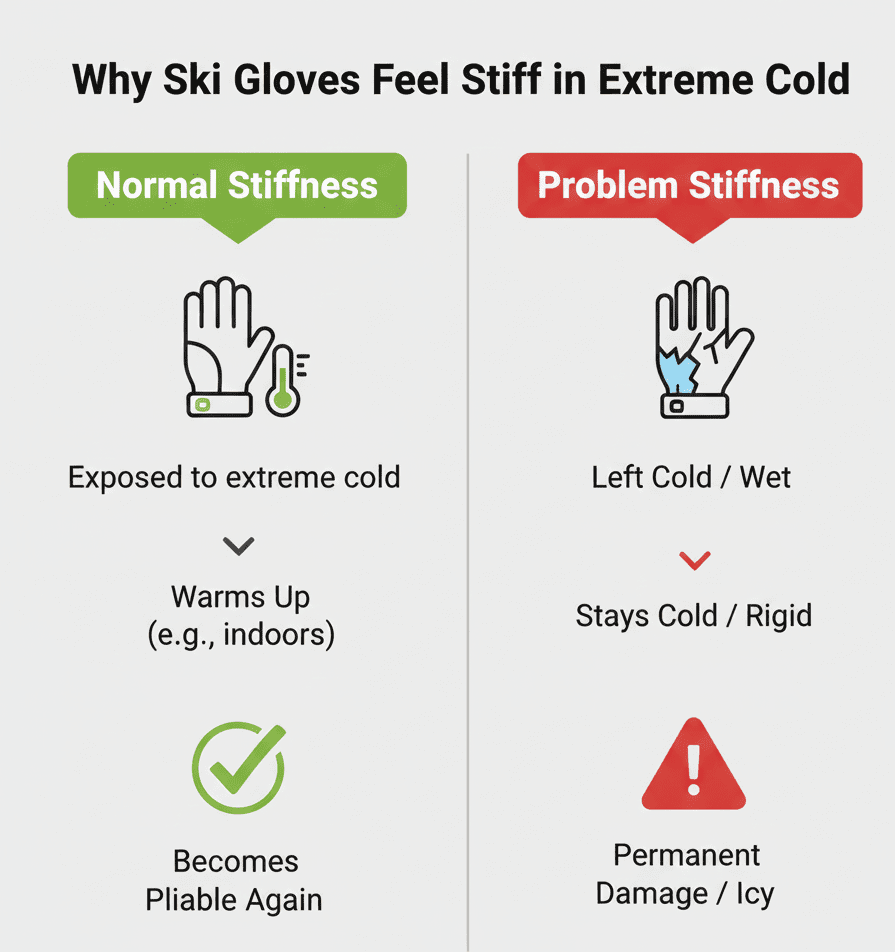
But stiffness has two very different meanings depending on why it’s happening:
Normal Stiffness (Temperature-Based)
Normal if: stiffness improves once your hands warm up inside the glove.
Short reasons:
- Cold reduces material elasticity
- Insulation compresses temporarily
- Membranes flex less until warmed
- Leather or PU softens with body heat
This is simply how materials behave. Even premium alpine gloves show this reaction in deep cold and high wind conditions.
Problem Stiffness (Gear-Based or Wear-Based)
Not normal if: gloves stay rigid for the entire session or get stiffer every season.
Common signs:
- Palms feel like cardboard
- Fingers bend with effort
- Cuff stays rigid even indoors
- Thumb movement feels limited
- Grip feels weak or delayed
This usually means the glove is worn out, waterlogged, or not designed for deep cold conditions.
Quick Callout Box
If a glove softens after 10–15 minutes of movement, the stiffness is temperature-related.
If it stays rigid all day, the glove is failing in cold conditions.
When Stiffness Means Wrong Glove Type
Persistent stiffness often means the glove wasn’t built for:
- Sub-zero temps
- High wind chill
- Powder days
- Long chairlift exposure
Kids experience this more because their hands don’t generate as much heat, so gloves never “break in” during the session.
Personal Experience
From teaching beginners and skiing in deep cold, this question comes up constantly.
Cold-weather textile research shows that polymers, synthetic fibers, and leather all lose flexibility as temperatures fall. This is the same reason winter work gloves and mountaineering gloves behave similarly in cold industrial settings.
If stiffness blocks finger movement or grip, it’s no longer just a comfort issue — it’s a safety issue.
How to Reduce Stiffness in Cold Weather
Gloves can feel almost frozen in sub-zero temps, but there are simple ways to keep them flexible. These solutions work for skiers of all levels — beginners, kids, and even pros. Follow these tips to make skiing more comfortable and avoid hand fatigue.
1. Choose Gloves With Flexible Synthetic Membranes
Modern membranes like GORE-TEX, PU, and HIPORA remain soft even below −30°C.
This helps the glove bend naturally when fingers move.
Callout: GORE-TEX remains flexible in extreme cold, maintaining dexterity.
2. Use Leather With Regular Conditioning
Leather stiffens when dry or frozen, especially if it gets damp.
Conditioning with a small amount of beeswax or leather balm keeps fibers soft and prevents cracks.
Tip: Apply lightly before a ski day and let gloves absorb it overnight.
3. Keep Gloves Dry Between Runs
Moisture is the number one culprit for extreme stiffness.
Sweat or melted snow freezes, compressing insulation and hardening the glove.
Action: Dry gloves in a ventilated area, avoid radiators or direct heat, and rotate between pairs if possible.
4. Warm Gloves Before Putting Them On
Many beginners skip this step, then complain gloves are frozen immediately.
Simple trick: tuck gloves inside your jacket or gloves in a backpack near a warm layer for 5–10 minutes.
This pre-warming reduces initial stiffness and makes your first runs more comfortable.
5. Choose Proper Fit
Gloves that are too tight compress insulation, causing faster stiffness.
Too loose gloves let cold air in, also reducing flexibility.
Ideal fit: snug but not tight, with enough room for movement and layering if needed.
Extra Tip for Beginners
Always combine fit + warm membranes + dry gloves. These three factors alone solve most stiffness problems. From my own experience teaching kids and adults, the difference is immediate: hands stay nimble even in −20°C.
When Stiffness Means You Should Replace Gloves
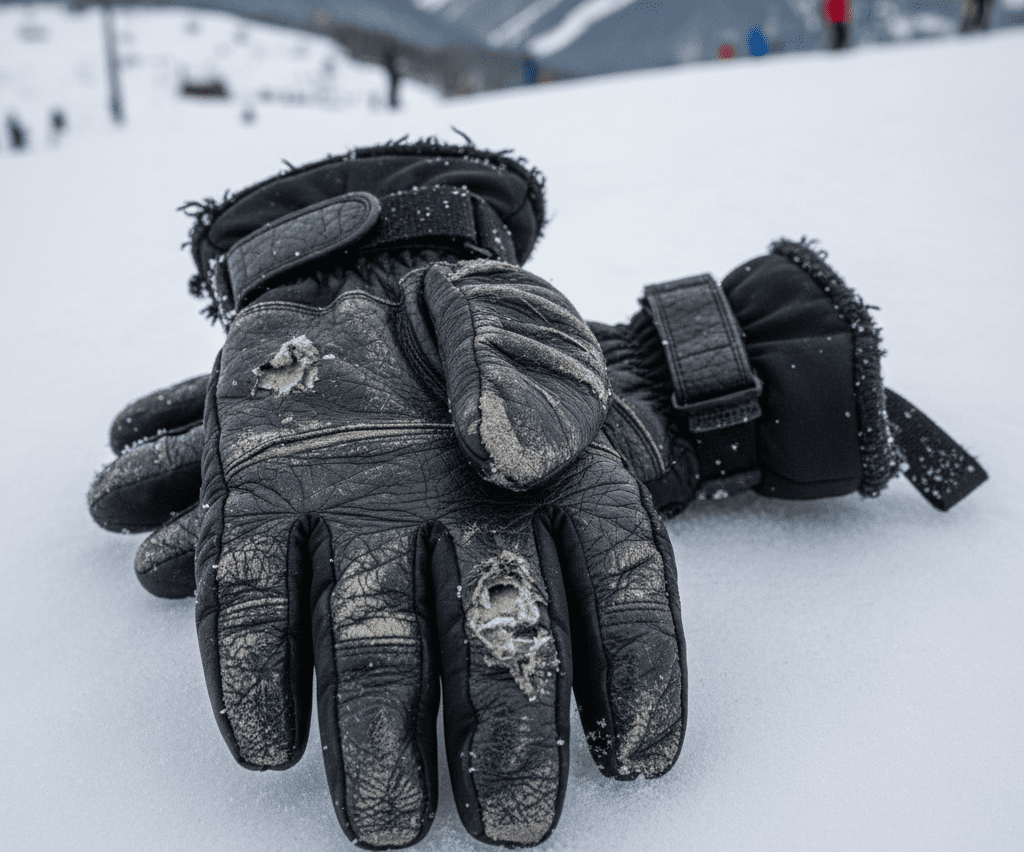
Gloves get stiff over time, but sometimes stiffness signals permanent damage rather than just cold conditions. Knowing when to replace them keeps your hands safe and skiing enjoyable.
Membrane Cracking
If the waterproof or windproof layer develops cracks, cold air seeps in and stiffness won’t improve even after warming.
Damaged membranes reduce insulation efficiency, making hands cold faster.
Tip: Check the glove surface regularly for tiny splits or tears.
Insulation Bunching
Over years of use, inner insulation can clump together, leaving thin cold spots.
Even if you warm the gloves, fingers may feel stiff or uneven because the padding no longer moves freely.
Action: Squeeze and flex the glove — if insulation doesn’t bounce back, it’s time to replace.
Leather Splitting
Leather gloves that crack or split are prone to stiffness, especially when wet and frozen.
Conditioning helps early, but once splits appear, flexibility cannot be restored.
Check for visible cracks along fingers, palms, or seams before a cold ski day.
No Flexibility Even When Warm
If gloves feel rigid even indoors or after gentle warming, stiffness is no longer just from cold.
This is a clear sign the materials have degraded and cannot protect hands effectively.
Replacing gloves at this stage prevents cold injuries and keeps skiing comfortable.
Quick Takeaway: Stiff gloves are normal in extreme cold, but persistent rigidity, cracks, or insulation failure signals replacement is necessary. Don’t compromise hand safety for old gloves.
FAQs – Why Ski Gloves Feel Stiff in Extreme Cold
Extreme cold can make gloves stiff, but understanding why and how to respond helps skiers stay warm and comfortable. Here’s what you need to know.
Do all ski gloves get stiff in the cold?
Yes, most gloves stiffen when temperatures drop because insulation and membrane materials lose flexibility.
However, high-quality gloves resist this better, but some rigidity is normal in sub-zero conditions.
Do leather gloves freeze faster than synthetic?
Leather absorbs moisture, so if it gets wet, it stiffens faster than dry synthetic materials.
Conditioning and keeping leather dry can slow this process significantly.
Are mittens less stiff in cold?
Mittens generally feel less stiff because fingers share warmth and insulation isn’t compressed individually.
This makes them more flexible in extreme cold than gloves with separate finger compartments.
What temperature causes gloves to stiffen?
Most gloves start losing flexibility below −10°C (14°F), and stiffness increases sharply under −20°C (−4°F).
Moisture inside the glove accelerates this effect, making insulation and membranes feel rigid.
Can sweat make gloves stiffer?
Yes, trapped sweat can freeze inside insulation, turning gloves stiff and uncomfortable even if the air temperature isn’t extremely low.
Keeping gloves dry between runs helps maintain flexibility.
Can I restore flexibility after gloves get stiff?
Partially, by warming gloves indoors, drying moisture, or conditioning leather.
But if membranes crack, insulation bunches, or leather splits, replacement is the only safe solution.
Pro Tip: Regularly check gloves before skiing and dry or condition them as needed to prevent extreme stiffness. This ensures hands stay warm, flexible, and protected.
Final Verdict
Understanding why ski gloves stiffen helps you stay warm, flexible, and safe on the slopes. Here’s what to remember:
- Cold affects all materials – insulation, membranes, and leather lose flexibility at sub-zero temps.
- Moisture worsens stiffness – sweat or melted snow freezes inside gloves, increasing rigidity.
- Leather needs care – conditioning keeps leather supple and slows freezing.
- Proper fit matters – tight gloves compress insulation, making them stiff sooner.
- Budget vs high-end gloves – cheaper gloves stiffen faster due to lower-quality insulation and membranes.
- Mittens can be more flexible – shared finger warmth reduces stiffness in extreme cold.
Pro Tip: Check gloves before each run, keep them dry, and condition leather regularly.
Want more expert tips to keep your hands warm and comfortable? Check out our full guides on keeping ski gloves dry, choosing the best gloves for cold hands, and quick hand-warming tricks on the slopes to ski smarter this season.
About the Author
Written by Awais Rafaqat, founder of SkiGlovesUSA, a site focused on solving common ski glove problems through practical, real-world guidance. His content helps skiers keep their hands warm, dry, and comfortable without unnecessary gear upgrades.