QUICK ANSWER: Gore-Tex gloves keep hands dry through a physical membrane containing roughly 9 billion pores per square inch — each one about 20,000 times smaller than a water droplet (blocking snow) but around 700 times larger than a water vapor molecule (letting sweat escape). The mechanism that pushes sweat out is called a vapor pressure gradient: your warm, humid hand creates pressure that drives moisture outward toward the cold, dry air outside. It only works, though, if the rest of the glove system cooperates — an outer shell that’s saturated with water shuts the whole process down.
Not sure which glove actually has this technology done right? The Ski Glove Finder matches you to specific gloves based on your conditions and hand temperature in under a minute, instead of leaving you to guess from a spec sheet.
- The Question Behind the Question
- Why Hands Get Wet Inside Gloves in the First Place
- The Mechanism: Pore Size and Vapor Pressure
- Why "Waterproof" Doesn't Automatically Mean "Dry"
- Leather Shell or Synthetic Shell — It Changes the Outcome
- Wet Snow vs. Cold Dry Days — Different Tests, Different Answers
- Membrane vs. Non-Membrane — The Honest Trade-Off
- Common Mistakes People Make With Membrane Gloves
- When Gore-Tex Gloves Stop Performing Properly
- Decision Checklist
- Frequently Asked Questions
- Final Thoughts
The Question Behind the Question
Most people who search “how do Gore-Tex gloves work” are really trying to answer something more specific: why do my hands feel damp and cold by the end of the day, even in a glove that’s supposedly waterproof? The honest answer, most of the time, is that the moisture started on the inside, not the outside. Understanding the actual mechanism — not just the marketing phrase “waterproof and breathable” — is what lets you diagnose that correctly instead of blaming a glove that’s actually doing its job.

Why Hands Get Wet Inside Gloves in the First Place
Hands sweat more than most people expect, even in freezing conditions. Active skiing raises body heat fast, and hands respond the same way any part of the body does during exertion — they sweat to cool down. That moisture has to go somewhere. In a basic glove with no membrane, it stays trapped in the insulation. Once insulation is damp, it loses warmth and dries very slowly, which is why gloves that felt fine on the first run of the day can feel cold and heavy by the third chairlift ride.
That’s the actual problem a Gore-Tex membrane is built to solve — not “keeping snow out,” which is only half the job.
The Mechanism: Pore Size and Vapor Pressure
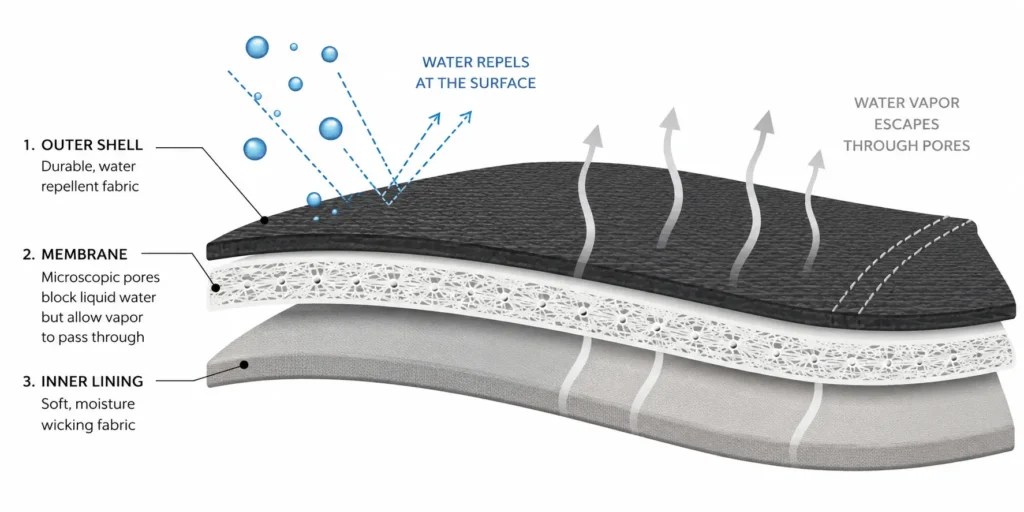
A Gore-Tex membrane is built from ePTFE — expanded polytetrafluoroethylene, a material containing an enormous number of microscopic pores. The specific ratio is what makes it work: each pore is roughly 20,000 times smaller than a liquid water droplet, which is why rain, snow, and meltwater can’t physically pass through. At the same time, each pore is roughly 700 times larger than an individual water vapor molecule — small enough to block liquid, large enough to let vapor through.
The thing that actually moves that vapor is a vapor pressure gradient. Your hand runs around 90°F and stays humid inside a glove. The air outside is colder and drier. That temperature and humidity difference creates pressure that pushes water vapor molecules outward, through the membrane, toward the lower-pressure cold air. This is also why breathability drops when you’re sitting still on a chairlift rather than actively skiing — without your hand generating heat, the pressure differential driving that outward flow weakens.
Why “Waterproof” Doesn’t Automatically Mean “Dry”
External moisture still plays a real role. Wet snow, gripping an icy lift bar, or dragging a hand through powder all add water to the outer shell. If that outer fabric absorbs enough water — a state called “wetting out” — it doesn’t just get heavier, it actively blocks the vapor pressure process described above. A saturated outer fabric can cut a garment’s breathability by as much as 70%, according to Nikwax’s own technical documentation on waterproof-breathable care — which means a Gore-Tex glove with a soaked exterior behaves almost like a non-breathable one, even though the membrane itself is undamaged.
So a Gore-Tex glove is actually solving two separate problems simultaneously: keeping outside water from getting in, and letting inside moisture get out. A basic glove usually only handles the first one, and often not for very long.
Leather Shell or Synthetic Shell — It Changes the Outcome
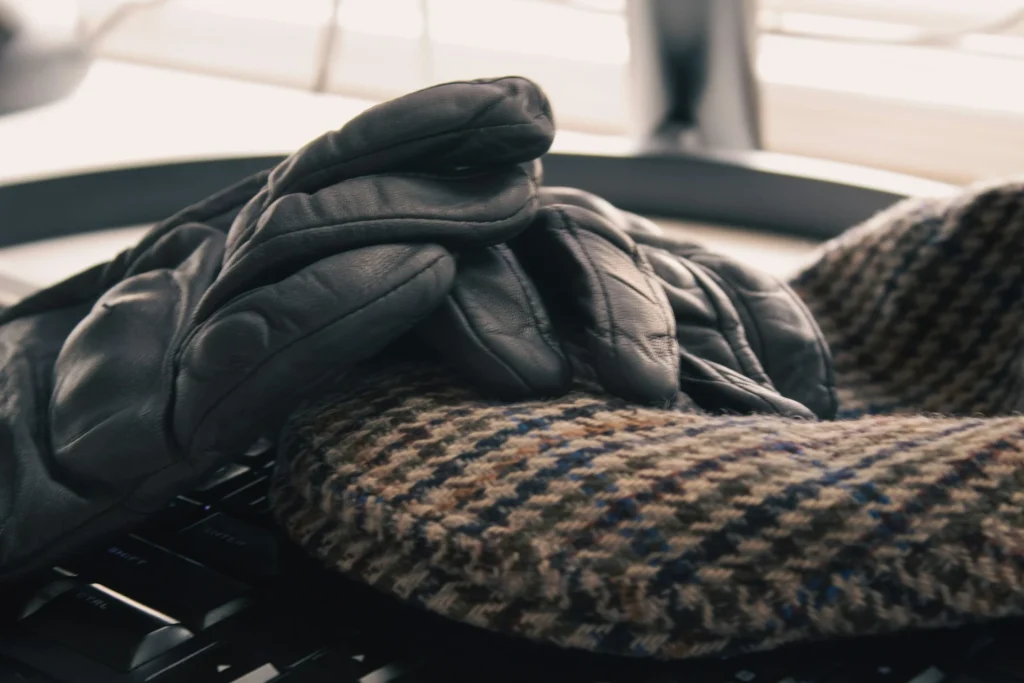
The membrane performs differently depending on what’s built around it. Leather shells are more durable and offer better wind resistance, but they’re slower to dry once saturated. Synthetic shells are lighter, dry faster, and generally suit high-activity skiing better, since they don’t hold onto moisture as long once the outer layer gets wet. Neither is objectively better — independent testing of waterproof-breathable rainwear consistently finds that shell material and DWR maintenance matter as much as the membrane technology itself for real-world performance. A Gore-Tex glove with a neglected, saturated shell will underperform a well-maintained non-membrane glove in the same conditions.

Wet Snow vs. Cold Dry Days — Different Tests, Different Answers
The same glove can perform completely differently depending on conditions, and a lot of the confusion around “waterproof” gloves comes from comparing across those conditions without realizing it.
Wet, spring-style snow sticks to everything and gets gloves wet through repeated contact — falls, adjusting boots, pushing off on flat sections. A membrane glove’s outer shell absorbs some of that contact, but sustained wet-snow exposure will eventually saturate even a well-maintained shell, at which point the membrane is working harder to compensate.
Cold, dry days shift the equation. Snow doesn’t melt on contact, so external moisture is a smaller factor — sweat becomes the dominant moisture source. In these conditions, breathability matters more than waterproof rating, because the glove’s main job is managing what your own hand produces, not blocking outside water.
Long, stationary lift exposure is where the difference shows up most clearly. Dry insulation holds warmth stable even in wind. Damp insulation loses heat fast the moment you stop moving, which is why a thick, damp glove can feel colder than a thinner, dry one — moisture pulls heat away from skin faster than air does.
| Condition | Main Moisture Source | What Matters Most |
| Wet spring snow | External moisture + sweat | Membrane construction, shell maintenance |
| Cold, dry weather | Sweat | Breathability over raw waterproof rating |
| Long lift rides | Stored moisture from earlier activity | Dry insulation |
Membrane vs. Non-Membrane — The Honest Trade-Off
Neither construction is universally correct — they solve different problems.
| Feature | Membrane Gloves | Non-Membrane Gloves |
| External water protection | High | Medium |
| Sweat management | Medium to high | Low |
| Warmth consistency over a full day | Stable | Drops once damp |
| Dexterity | Slightly reduced | Usually better |
| Drying speed overnight | Slower | Faster |
| Cost | Higher | Lower |
Membrane gloves make more sense for wet snow, storms, and mixed conditions, where they help maintain stable warmth across a long day outside. Non-membrane gloves work well in genuinely cold, dry climates or shorter sessions where a glove has time to dry out between runs — and they trade less dexterity for that simplicity.

Common Mistakes People Make With Membrane Gloves
Assuming waterproof also means sweat-proof
A membrane blocks external water; it doesn’t eliminate sweat production. Intense activity can still create dampness inside even a properly functioning Gore-Tex glove.
Buying the warmest glove available by default
Heavy insulation feels like the safe choice, but overheated hands sweat more, and once insulation is damp, warmth drops fast regardless of how thick it was to begin with.
Packing gloves away wet
Moisture trapped inside a bag overnight means starting the next day already damp — one of the simplest, most overlooked causes of “my gloves stopped working” complaints.
Neglecting the outer shell’s DWR coating
The membrane can be in perfect condition while a worn DWR finish on the outer fabric lets it wet out anyway, cutting breathability by a large margin regardless of what’s happening at the membrane level.
When Gore-Tex Gloves Stop Performing Properly
Normal wear looks like:
slight dampness after heavy activity, gradual moisture buildup late in the day, insulation that still feels springy though slightly heavier by afternoon. That’s typical of a functioning system under real use, not a sign of failure.
A real problem looks like:
water soaking through quickly, cold spots forming early in the day, or an outer shell that stays visibly wet no matter what. Often the actual failure point isn’t the membrane itself — it’s a worn DWR finish on the outer shell that’s let the fabric wet out. A simple check: after a short run, squeeze the glove gently. If moisture appears instantly or the insulation feels cold, that points to shell failure rather than a membrane problem, and it’s usually fixable with proper cleaning and DWR renewal rather than replacement.
Decision Checklist
- Choose a Gore-Tex membrane glove if: you ski wet or variable conditions, do 10+ days a season, or have had a DWR-only glove fail on you before.
- A non-membrane glove is fine if: you ski consistently in cold, dry conditions and prioritize dexterity and lower cost over maximum wet-weather protection.
- Skip Gore-Tex if: you’re an occasional skier in mild, dry conditions — the premium won’t earn its keep at low usage volume.
- Prioritize DWR maintenance over buying a new glove if: your current membrane glove is wetting out early — that’s usually a shell problem, not a membrane problem.
For picks that actually use genuine Gore-Tex at different price points, Best Ski Gloves Under $100 breaks down which budget options include real membrane construction versus DWR-only coatings.
Frequently Asked Questions
Do Gore-Tex gloves stop sweat completely?
No. They let sweat vapor escape rather than trapping it, but intense activity can still produce more moisture than any membrane can move outward fast enough to feel fully dry.
Why do my hands still feel damp sometimes even in a Gore-Tex glove?
Most commonly, sweat trapped in the insulation or liner — not a membrane leak. Fit and ventilation affect this too; a glove that’s too tight restricts the airflow that helps moisture move.
Are Gore-Tex gloves actually warmer than regular gloves?
Indirectly, yes. The membrane itself doesn’t add heat — what it does is keep insulation dry, and dry insulation holds warmth far better than damp insulation over a full day.
Do Gore-Tex gloves need special care?
Yes. Sweat contains body oils and salt, and as vapor passes through the membrane over time, residue can build up inside the pores and reduce breathability. Washing with a technical cleaner made for waterproof-breathable gear — not a standard laundry detergent — flushes that buildup out and restores vapor flow.
Is Gore-Tex worth the extra cost over a basic waterproof coating?
For regular skiers or anyone in wet, variable conditions, generally yes — the membrane keeps working even after the outer shell gets wet, which a DWR-only coating can’t do once it saturates. For a handful of mild, dry ski days a year, the cost difference is harder to justify.
Final Thoughts
Keeping hands dry isn’t one feature working alone — it’s waterproofing, breathability, insulation, and shell maintenance all working together, and the one most people neglect is maintenance. A glove that felt perfect out of the box can underperform a season later simply because the DWR finish wore down, not because the membrane failed. Understanding that sweat, not snow, is usually the real source of dampness changes how you shop for a glove and how you take care of one — and once you’re looking at moisture management instead of just a waterproof rating on a tag, the right choice gets a lot clearer.