Quick answer: A slipping glove is almost never one problem. It’s usually one of four — the palm surface has worn smooth, the material is wet or damp, a leather palm has stiffened from lost oils, or the glove is a size too big and shifting under load. Each cause needs a different fix, and applying the wrong one is why so many skiers try something and conclude nothing works. Run a quick check on your palm before spending money on anything, or use the ski glove finder if you’re not sure your current pair is even the right fit to begin with.
- Four Different Problems Get Blamed on One Bad Glove
- Check Your Palm Before You Buy Anything New
- Leather and Synthetic Palms Fail in Different Ways
- Cold Hands Make You Grip Harder, Which Makes It Worse
- Where Slipping Actually Becomes a Problem
- Fixes That Actually Match Each Cause
- Your Grip Technique Might Be Part of the Problem
- Mistakes That Make Slipping Worse
- When It's Time to Stop Treating and Start Replacing
- FAQ
Four Different Problems Get Blamed on One Bad Glove
Most skiers notice the same thing: their pole feels like it’s rotating in their hand, or they’re gripping harder than they should have to by midday. The instinct is to blame the glove itself. Sometimes that’s fair. Often it isn’t.
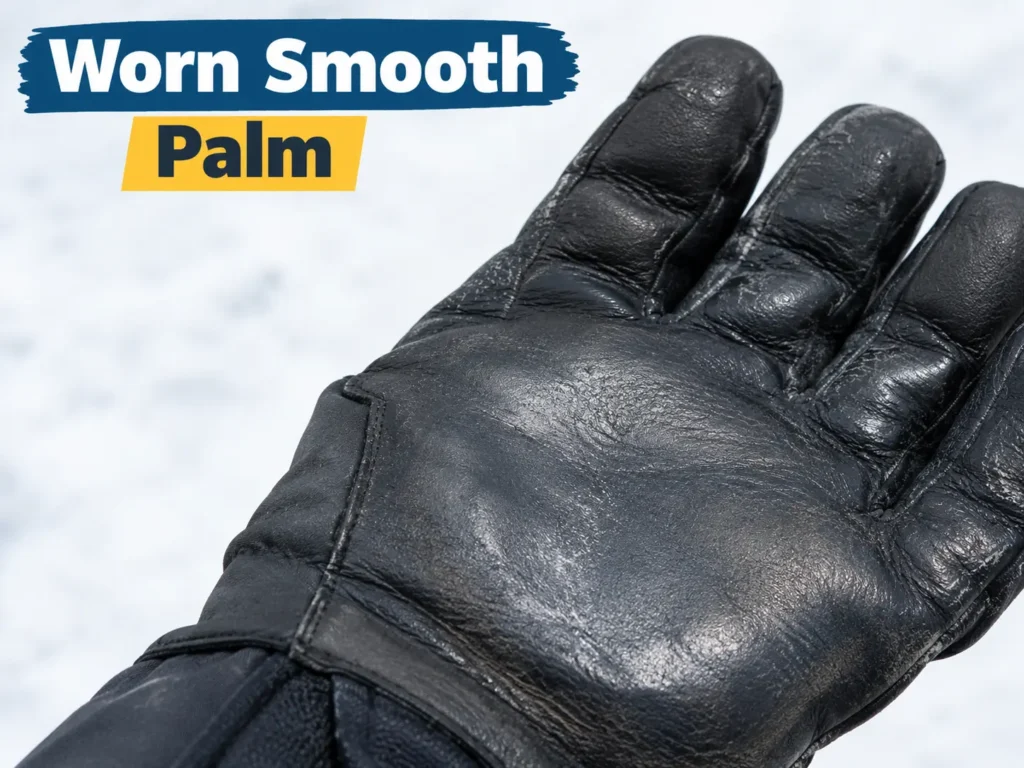
Surface wear is the most common cause. Every time a palm contacts a pole handle, a chairlift bar, or a boot buckle, a tiny amount of texture gets rubbed away. Leather does this by polishing rather than tearing — it goes glassy-smooth over months of use, and once that texture is gone, no amount of conditioning brings it back.
Moisture is the second cause, and it’s the one people misdiagnose most. A glove that grips fine in the morning and slips by afternoon usually hasn’t failed — it’s gotten wet, either from snow contact or from sweat working its way out from the inside. Wet surfaces lose friction regardless of how good the glove was when dry.
Stiffening only affects leather. Natural oils in the hide keep it flexible enough to mold around a pole handle. Once those oils dry out — through repeated wet-dry cycles, sun exposure, or sitting near a lodge heater — the leather stops conforming and starts sliding across the handle instead of wrapping it.
Fit is the one nobody checks first. A glove that’s even slightly too big has excess material bunching in the palm when you close your fist. That loose fabric moves independently of your hand, and no grip treatment fixes a sizing problem.
Check Your Palm Before You Buy Anything New
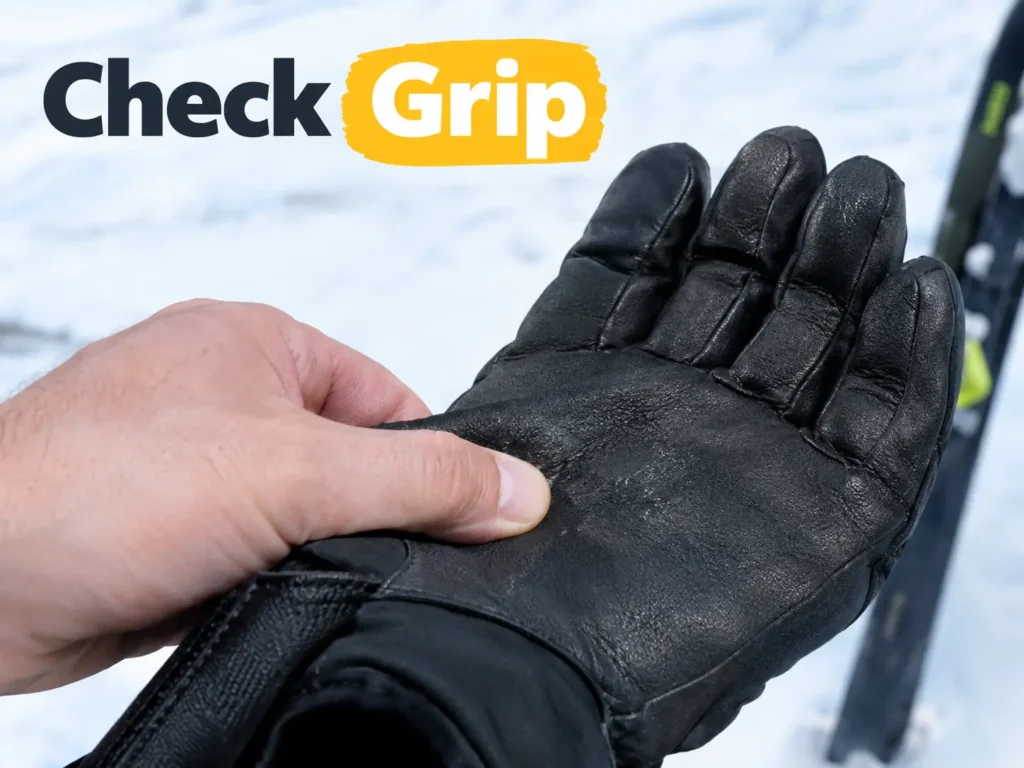
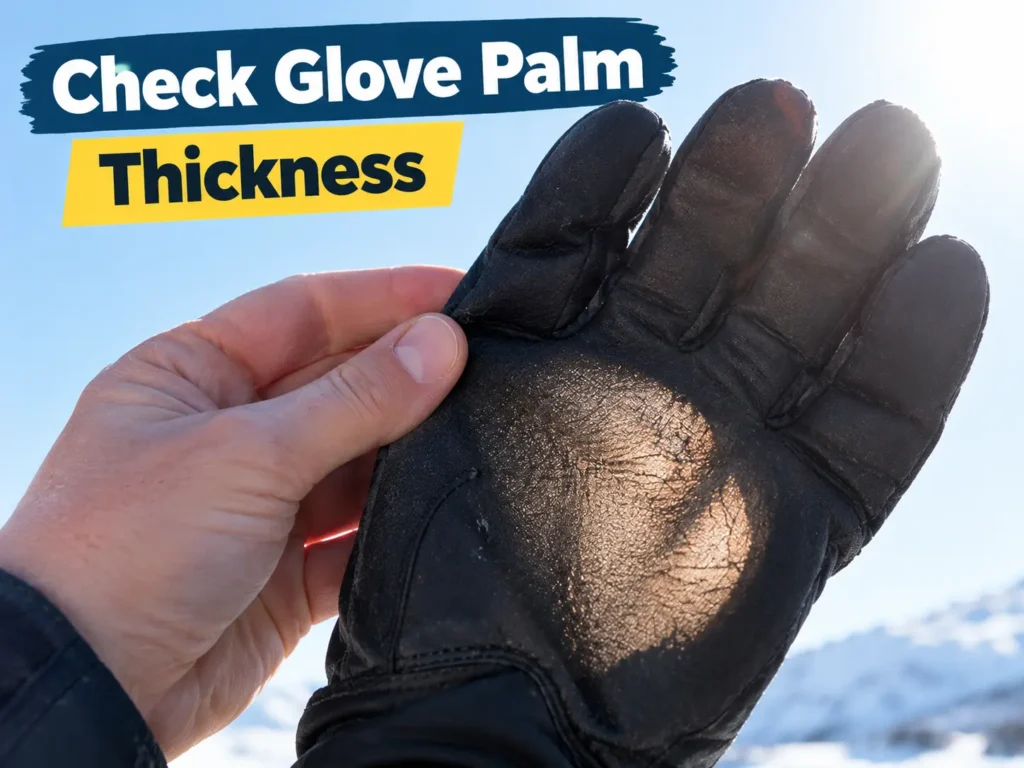
Two minutes of checking saves you from treating the wrong problem. Start by holding the palm up to bright light at a low angle. A surface that’s gone shiny and reflective where it used to have texture has worn smooth through abrasion.
Next, run cold water across the palm. If it beads and rolls off, water resistance is intact and moisture isn’t your issue. If it soaks in within a few seconds, the surface has lost its water-repellent finish, and that alone will cause slipping in wet snow even on an otherwise fine glove.
Bend the glove sharply, palm side up, with your thumb. Leather that flexes easily and springs back is still supple — any grip loss is from surface wear, not stiffening. Leather that resists bending or holds the bent shape has dried out and needs conditioning before anything else.
Finally, make a full fist with the glove on. Watch for fabric bunching across the palm or knuckles. If it bunches, sizing is the actual problem, and it’s worth a look at glove sizing options before spending time on any surface treatment.
| What You’re Seeing | Likely Cause | What Actually Fixes It |
| Palm looks glassy and smooth | Surface worn from abrasion | Add texture — tape, silicone, or a sewn patch |
| Grips fine dry, slips in snow | Water-repellent coating has worn off | Re-treat the DWR finish, then check dry-condition grip separately |
| Leather feels stiff and won’t flex | Oils have dried out | Condition the leather before trying anything else |
| Excess material bunches in a fist | Glove is too large | Address sizing — no treatment fixes this |
| Grips other things fine, slips only on poles | Pole handle material mismatch | Add texture to the palm regardless of current condition |
Leather and Synthetic Palms Fail in Different Ways
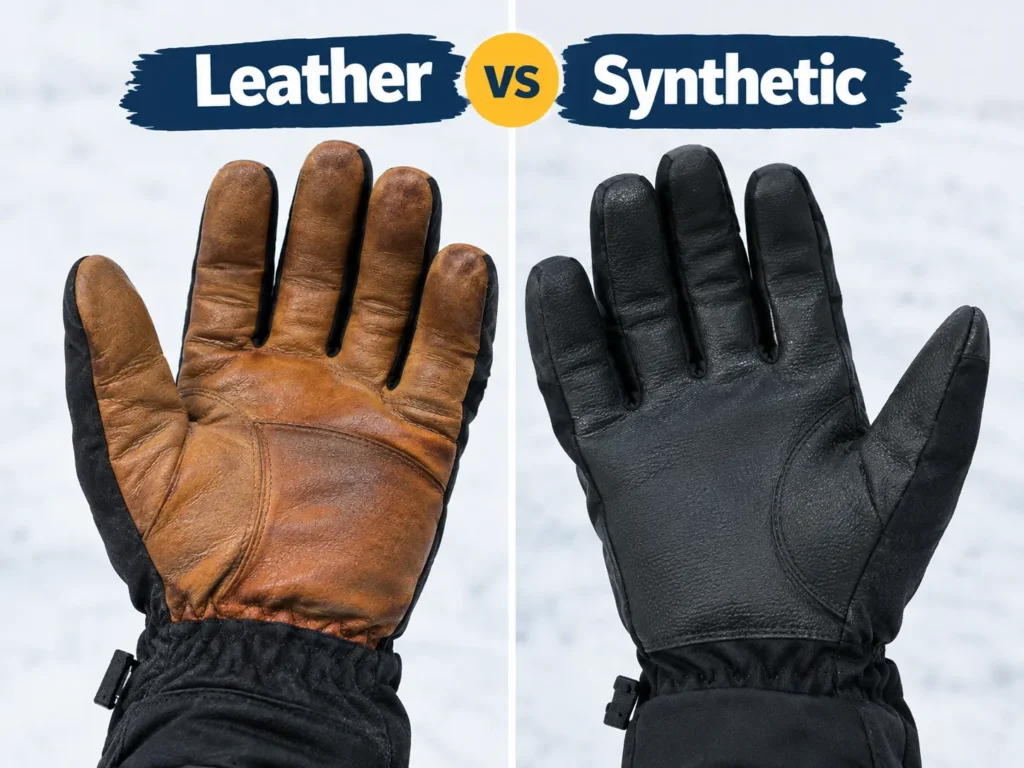
Leather and synthetic palms don’t lose grip through the same mechanism, which is why a fix that works on one often does nothing on the other. Leather’s grip comes from surface oils holding a slight natural tack while the hide flexes around the handle. Synthetic palms rely entirely on molded surface texture, since there’s no oil layer to maintain.
That difference shows up clearly once water gets involved. Independent friction testing on glove materials found that leather-type surfaces held a friction advantage over textile surfaces when dry, but that advantage dropped sharply once the surface got wet. In practice, this means a dry leather palm can out-grip a synthetic one, but the gap narrows or reverses the moment either gets damp — which matches what skiers actually notice on wet spring days.
This is also why treatments transfer unevenly between materials. Silicone dots bond well to synthetic fabric because there’s a stable surface to grip. On leather, natural oils slowly migrate into the adhesive layer over time, and dots that held fine in December can start lifting by March. Rubber spray coatings behave the opposite way — they hold up well on both, but can permanently stiffen certain thin synthetic weaves in a way that never fully softens again.
None of this means one material is simply better. It means the maintenance schedule has to match the material. Leather needs oil replenished on a schedule. Synthetic needs its surface texture protected from wear, since there’s no conditioning step that restores a molded texture once it’s smooth.
Cold Hands Make You Grip Harder, Which Makes It Worse
There’s a mechanical reason a slipping pole feels worse as the day goes on, and it has nothing to do with the glove getting more worn between 9 a.m. and 2 p.m. It’s your hand.
Skin temperature drops steadily during a cold day on the mountain, and cold hands lose fine motor control before they lose raw strength. A controlled study on hand and finger performance found that dexterity, grip strength, and forearm muscle activity all decline as skin temperature drops, and recover as skin temperature rises — which is exactly the pattern skiers describe as their hands “not working right” by the end of a run.
The instinctive response to a slipping pole is to grip harder, and that instinct works against you. A tighter grip on a cold hand increases muscle fatigue faster than it improves control, since a fatigued hand loses fine positioning even while raw squeezing force holds up. That’s the forearm ache showing up by noon that has nothing to do with how hard the terrain actually was.
This is worth knowing because it changes what you should try first on a cold day. If your palm passes all four diagnostic checks and you’re still slipping late in the day, warming your hands during a break does more than another layer of grip treatment will. A five-minute glove-off warm-up in a lodge restores dexterity that no amount of pole-gripping technique can compensate for.
Where Slipping Actually Becomes a Problem
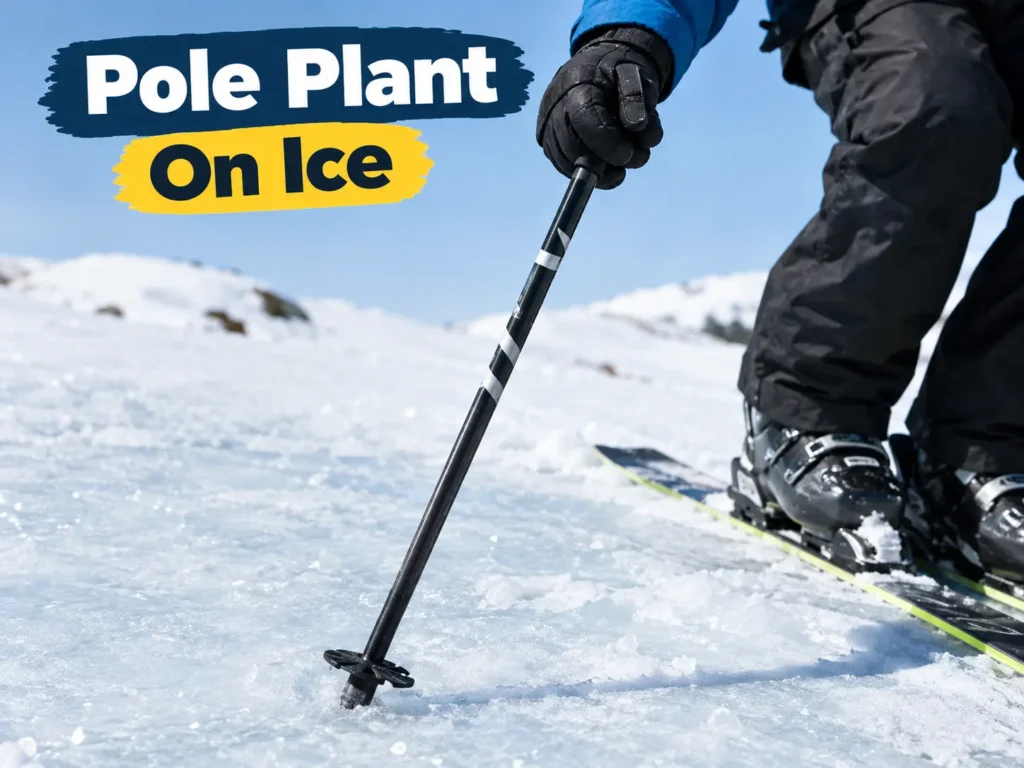
A minor grip issue on a groomed blue run rarely matters much — you notice it, adjust, and move on. The same issue becomes a real safety concern in specific conditions where a pole plant is doing more work than usual.
Icy hardpack is the clearest example. A pole planted on ice needs a confident, precise placement, and a hand that’s sliding around inside a slipping glove can’t deliver that. The pole skates instead of plants, and the timing of the turn that depended on it gets thrown off right when you needed the most stability.
Moguls create a different version of the same problem. Rapid, repeated pole plants in quick succession give a slipping glove no time to recover grip between plants, and fatigue from constantly re-gripping compounds fast on a bump run in a way it doesn’t on a long, open groomer.
Steep terrain adds consequence rather than difficulty. The grip issue itself isn’t worse on a steep pitch, but the margin for a missed or late pole plant is thinner, since recovery options narrow as pitch increases. This is where skiers most often describe a slipping glove as feeling genuinely unsafe rather than just annoying.
Aggressive, fast skiing shortens the time between plants and increases the load on each one, which is why the same glove that feels fine for a relaxed morning run can start slipping noticeably once the pace picks up in the afternoon. The glove hasn’t changed — the demand placed on it has.
Fixes That Actually Match Each Cause
Once you know which of the four causes you’re dealing with, the fix is usually straightforward. The mistake is picking a method before diagnosing the problem.
For surface wear on synthetic palms, silicone dots applied in a spaced pattern — not a solid coat — hold up well because the palm can still flex between the dots without cracking the material. Clean and lightly scuff the surface first so the silicone has something to grip mechanically rather than relying on the bond alone.
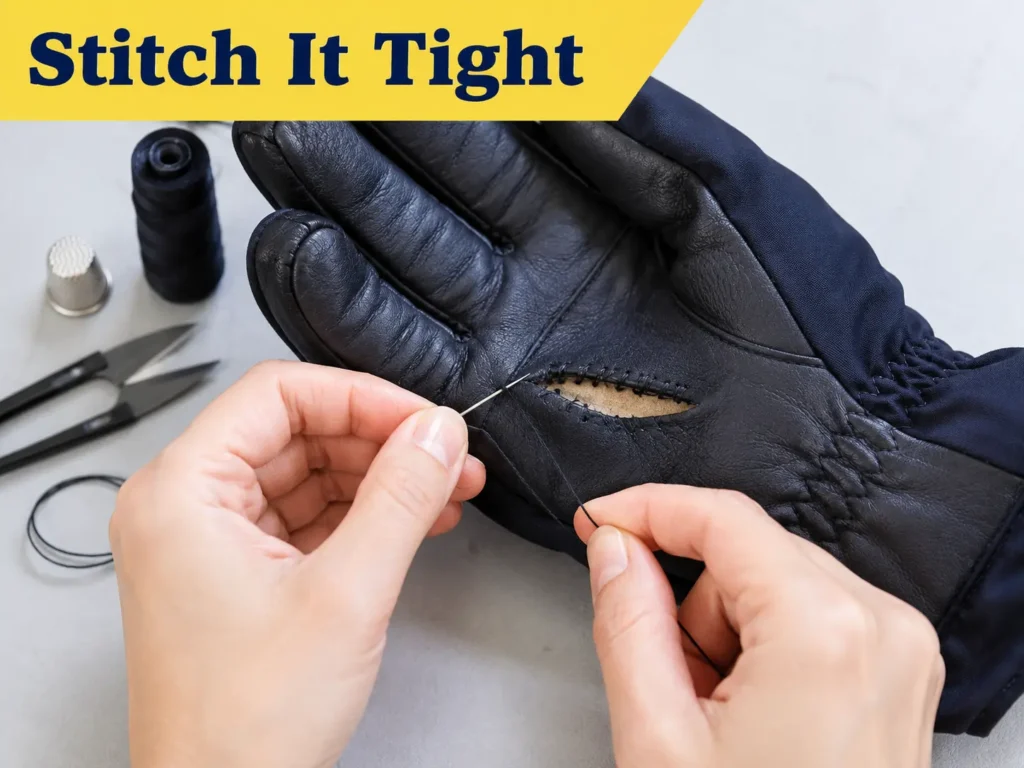
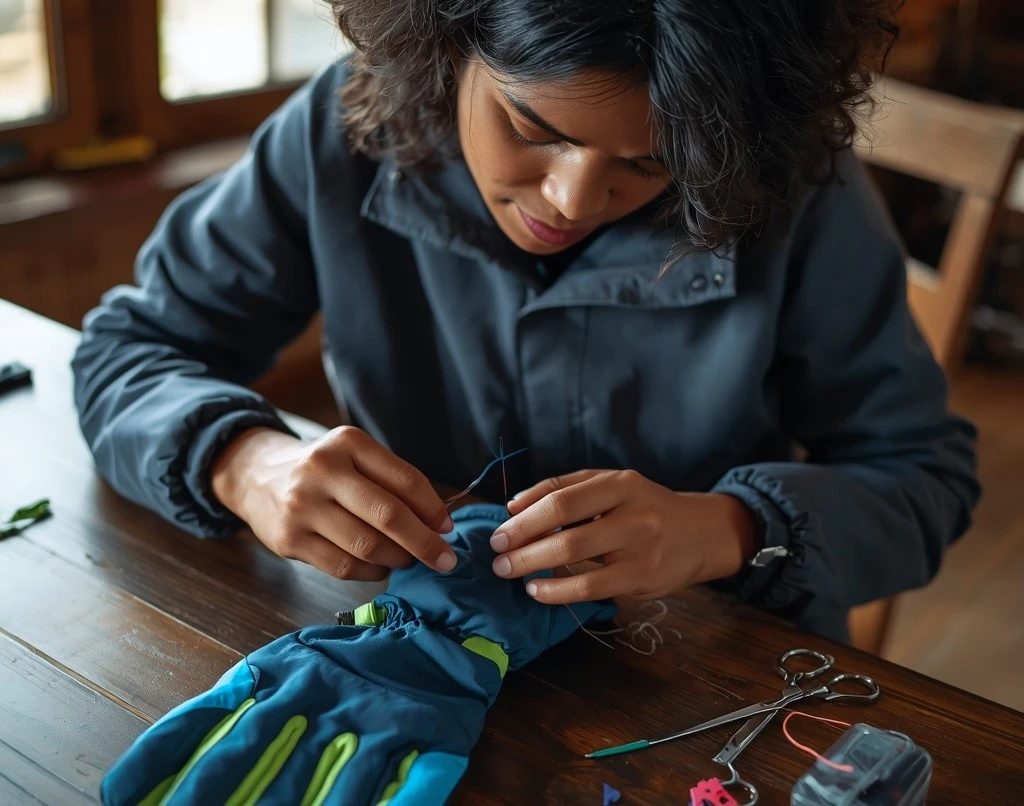
For leather that’s gone glassy-smooth, conditioning won’t bring back lost texture, since the surface material itself is worn away rather than just dried out. A sewn suede patch is the more durable option here, replacing the worn zone instead of trying to add grip on top of it.
For leather that’s stiff but not yet worn smooth, conditioning comes first and often solves the entire problem on its own. Work a neutral leather conditioner into the palm, let it absorb fully, and avoid over-applying — leather that’s over-oiled turns greasy rather than grippy, which is its own kind of slip.
For moisture-related slipping, re-treating the water-repellent finish matters more than any surface texture add-on, since a wet palm loses grip regardless of what’s underneath the water film. Combining a DWR re-treatment with light silicone texture addresses both the water problem and any underlying wear at once.
| Cause | Best Fix | Rough Time Investment |
| Worn synthetic palm | Silicone dots, properly prepped | 20 minutes plus overnight cure |
| Worn leather palm | Sewn suede patch | 45–60 minutes |
| Stiff, dried leather | Leather conditioner | 10 minutes, repeat every few sessions |
| Water-repellent finish worn off | Re-treat DWR | 15 minutes |
| Too-large glove | Correct sizing, not a treatment | N/A |
Your Grip Technique Might Be Part of the Problem
Equipment isn’t the only variable. How you’re actually holding the pole changes how much grip you need in the first place, and this gets skipped in almost every gear-focused discussion of slipping.
A death grip on the pole handle doesn’t improve control — it just tires the hand faster and often reduces the fine adjustments needed for a clean pole plant. Instructor guidance on pole mechanics emphasizes that stabilizing the torso through muscular tension and active engagement of the hand, forearm, and bicep matters more than raw grip force alone, which suggests a relaxed, properly positioned hold does more for control than white-knuckling the handle.
Using the pole strap correctly also reduces how much grip your palm has to supply on its own. When your hand comes up through the strap correctly and the strap sits across the palm rather than twisted around the wrist, part of the holding force transfers to the strap instead of relying entirely on friction between skin and handle. Skiers who skip the strap or use it incorrectly are asking their palm to do a job the equipment was designed to share.
This matters most on days when your gloves are already borderline — slightly worn, slightly damp, or just cold. Good technique won’t fix a genuinely worn-out palm, but it buys meaningful margin on a glove that’s otherwise fine and just having an off day.
Mistakes That Make Slipping Worse
Treating a wet-glove problem with a surface-texture fix is the most common mistake, because the symptoms look identical from the outside. Silicone dots don’t help a palm that’s simply soaked — the water film sits on top of the texture and defeats it just as easily as it defeats bare fabric.
Skipping surface prep before any treatment is a close second. Silicone and rubber coatings bond to whatever is already on the palm — old wax residue, skin oil, dried snow — and when that layer separates from the glove later, it looks like the product failed when the real issue was preparation.
Over-conditioning leather causes a different version of the same slipping problem. Leather that’s already supple doesn’t need more oil, and pushing extra conditioner into a palm that’s already absorbed what it needs just creates a greasy surface with less traction than before you started.
Ignoring fit because “the glove felt fine in the store” is the mistake that wastes the most money. A glove that’s a half-size too large will bunch and shift no matter what’s done to the palm surface, and that’s a sizing decision, not a maintenance one.
When It’s Time to Stop Treating and Start Replacing
Grip treatments extend a glove’s life, but they don’t reverse structural wear. If the palm fabric has thinned enough that you can see light through it when held up to a lamp, no surface treatment will hold — the base material can’t support one anymore.
The same applies if the seams around the palm have started separating alongside the grip loss. A palm losing texture in isolation is a maintenance problem. A palm losing texture while the surrounding stitching is also failing is a glove reaching the end of its usable life, and a proper seasonal care routine going forward will get more mileage out of the replacement than skipping maintenance did with the old pair.
FAQ
Does a liner help with pole grip, or just warmth?
A liner mainly helps with warmth and sweat management, but it can help grip indirectly on thin, uninsulated shells by transmitting some of its own surface texture through to the pole. On thicker insulated gloves, the shell absorbs that texture and the liner makes little difference to grip specifically.
Will re-waterproofing my gloves fix slipping on its own?
Only if moisture is actually your cause. Re-treating the DWR finish restores water resistance and stops the specific slipping that happens when a palm gets wet, but it does nothing for a palm that’s worn smooth or a glove that’s simply too big.
How often should leather ski gloves be conditioned?
Every five to eight days of active use is a reasonable schedule for gloves used regularly through the season, with an extra application before wet spring conditions specifically. Conditioning too rarely lets the leather dry out and stiffen; conditioning too often risks over-oiling the surface.
Is it normal for a brand-new pair of gloves to slip?
It shouldn’t be, and it’s usually a sizing or pole-compatibility issue rather than a defect. Run the fist test for bunching first, and if the glove fits correctly but still slips against a specific pole’s handle material, the mismatch is between that pole and that glove rather than a flaw in either one.