Quick answer: If you ski wet snow, slush, or conditions that change during the day, get a membrane glove — a true waterproof construction. If you ski exclusively in dry, cold powder and trust the forecast, a water-resistant coating is genuinely adequate and gives you a real breathability advantage. The decision comes down to one question: how confident are you that the snow will stay dry all day? Ski glove finder can help narrow down a specific glove once you know which type you need.
- What Waterproof and Water-Resistant Actually Mean
- How Each One Actually Fails
- When Waterproof Is the Right Call
- When Water-Resistant Is Actually Fine
- Waterproof vs. Water-Resistant, Side by Side
- Matching the Choice to Your Conditions
- Self-Checks Worth Running Before You Buy
- Common Mistakes With This Choice
- The Bead Test You Can Run at Home
- Warning Signs Your Current Choice Isn't Working
- Making the Final Call
- FAQ
What Waterproof and Water-Resistant Actually Mean
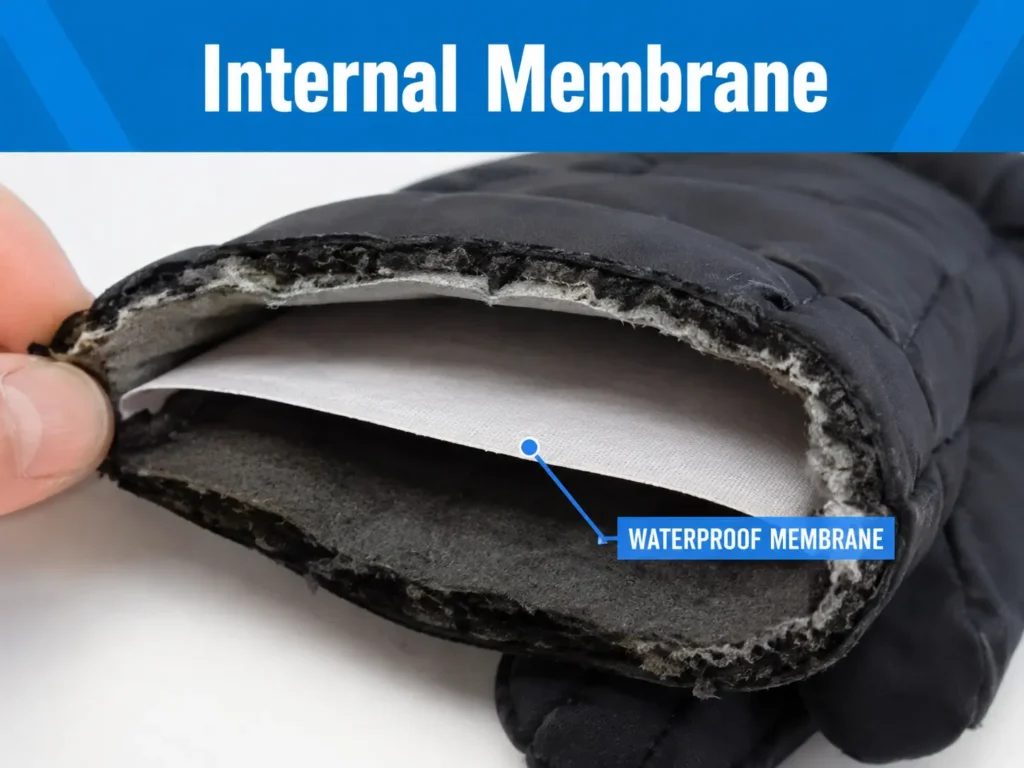
Waterproof means the glove has a membrane — a thin physical barrier bonded inside the shell, between the outer fabric and the insulation. This isn’t a coating sitting on the surface; it’s a structural layer with pores small enough to block liquid water but large enough to let water vapor (your sweat) pass through. Real materials science on membrane mechanics confirms the mechanism is genuinely different depending on construction — some, like the ePTFE Gore-Tex uses, rely on pore size alone, while newer electrospun membranes are air-permeable in a different way. Either way, the barrier doesn’t degrade over the course of a single ski day the way a surface coating does.
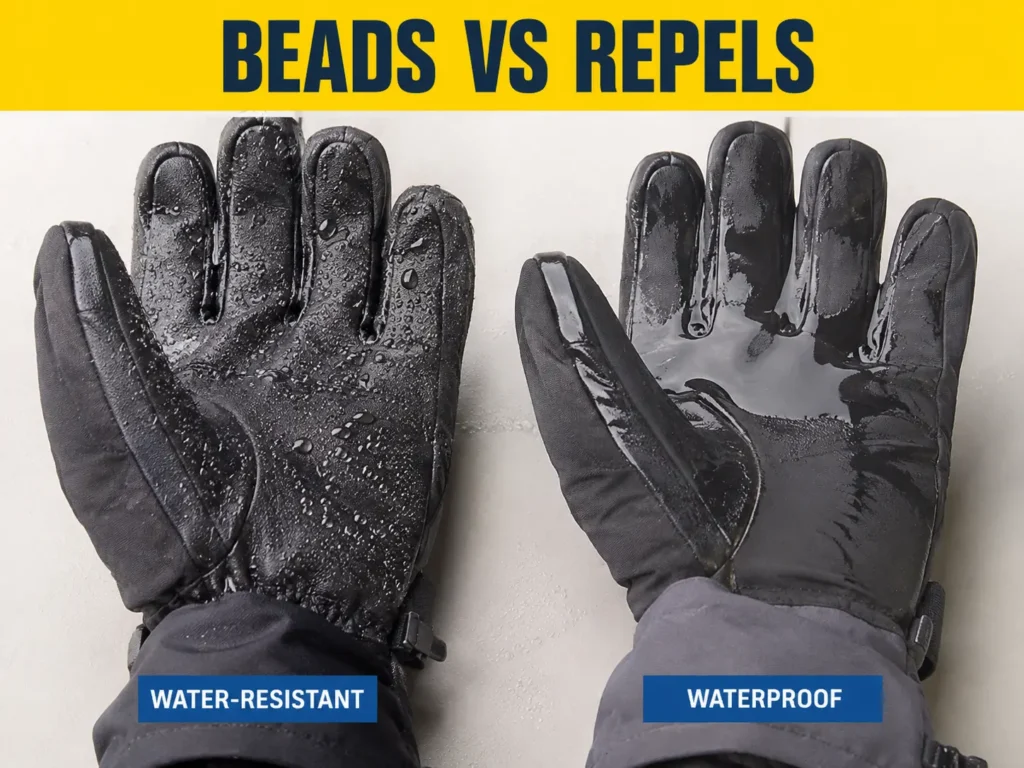
Water-resistant means the outer shell fabric has a DWR (durable water repellent) treatment — a chemical coating applied to the surface that makes water bead and roll off rather than soak in. It works well for brief, light contact. It fails once contact is sustained or the coating wears down, and the industry’s own pressure test standard is exactly why: DWR-treated fabric fails that pressure test at a much lower threshold than a true waterproof membrane, which is the actual technical line between the two categories, not just marketing language.
How Each One Actually Fails
The practical difference isn’t which type is “better” — it’s which failure mode you can live with. A membrane’s failure mode is gradual: delamination from the shell fabric over repeated seasons of heavy use, a slow decline you can generally see coming. A DWR coating’s failure mode is sudden: it saturates once contact exceeds its capacity, and there’s no warning transition — hands that were dry at 10am can be soaked by lunch with nothing in between.
That single distinction is why the decision matters more than most buying guides make it sound. It’s not really a spectrum from “somewhat waterproof” to “very waterproof.” It’s two different failure timelines, and choosing wrong means either paying for protection you don’t need or discovering the gap in coverage exactly when you can least afford it.
There’s a useful mental shortcut here: think of a membrane as insurance and a coating as a bet. Insurance costs more upfront and pays off precisely when conditions turn against you. A bet costs less and pays off as long as conditions stay favorable — but there’s no partial payout when they don’t. Neither approach is wrong; they’re just suited to different risk tolerances and different confidence levels about what the day will actually bring.
When Waterproof Is the Right Call
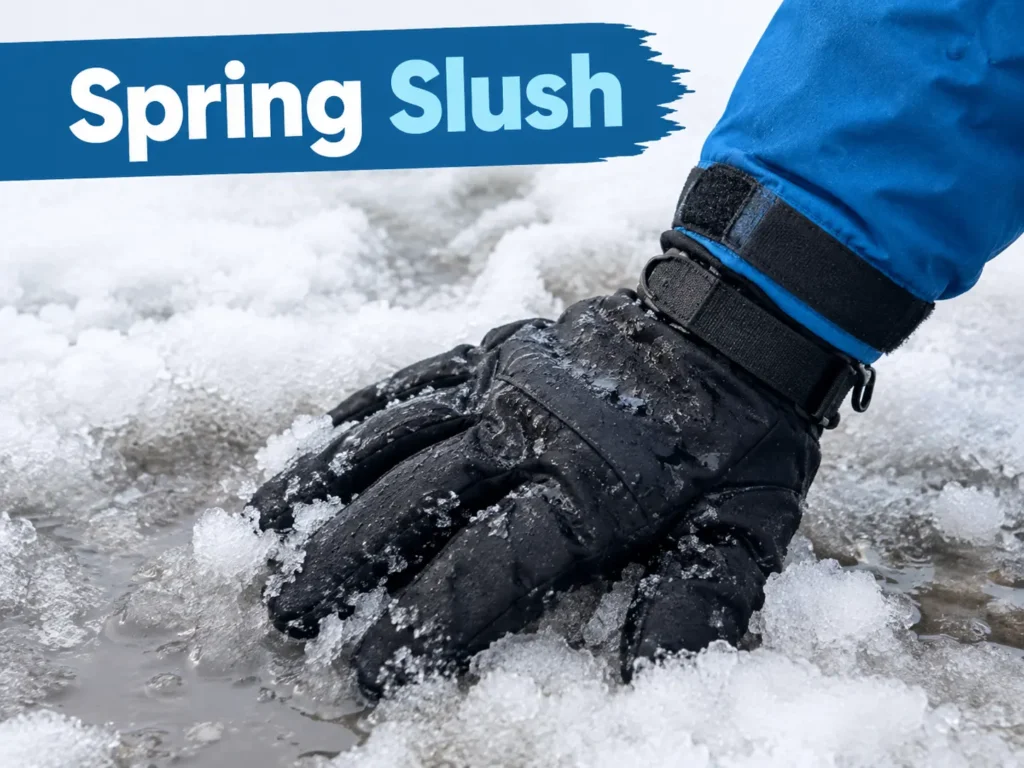
Wet snow and slush carry more liquid water than dry powder, and at temperatures near freezing — spring skiing, Pacific Northwest resorts, variable coastal weather — a DWR coating can saturate within the first hour of real contact. A membrane glove keeps working regardless, because its blocking mechanism doesn’t depend on how wet the snow itself is.
High fall frequency matters just as much as climate. Each fall drives sustained snow contact into the palm, wrist, and cuff — a beginner falling regularly in a single session is putting a coating through far more stress than an experienced skier making clean, upright runs all day. Waterproof is the safer default for anyone falling often, regardless of what the forecast says.
Unpredictable or changing conditions round out the case for waterproofing. A morning that starts cold and dry can turn wet and warm by afternoon, and a coating that was fine at 9am can be failing by 2pm. A membrane covers both states without requiring a glove change mid-day. The honest trade-off is breathability — a membrane adds a layer, which reduces airflow slightly compared to an uncoated water-resistant shell, and that shows up as a bit more hand sweat on high-output days.
It’s worth being specific about backcountry and touring conditions here too, since they combine several of these risk factors at once. A full day can start well below freezing at dawn and reach near-freezing, sun-warmed snow by afternoon — exactly the unpredictable-conditions case waterproof is built for, compounded by the physical exertion of uphill travel generating real sweat regardless of shell choice.
When Water-Resistant Is Actually Fine
Confirmed dry, genuinely cold conditions — well below freezing, low-humidity snow — are where water-resistant gloves perform adequately, sometimes for a full day without the coating ever being meaningfully challenged. In these conditions, the breathability advantage is real and noticeable, since dry, cold, active skiing generates real sweat that a more breathable shell manages better than a membrane would.
Short sessions under a couple of hours on groomed terrain with minimal fall risk are the other scenario where the cost savings of water-resistant make sense without real downside. The risk is entirely about conditions changing unexpectedly — a water-resistant glove has no fallback once its coating saturates, and there’s no fixing that mid-session without a second pair.
This is also where budget-conscious skiers can make a genuinely reasonable trade, rather than a compromise. If your ski days really are confined to reliable, cold, dry conditions, spending extra on a membrane buys protection against a scenario that essentially never happens for you. The money is better spent elsewhere — better insulation, a better fit, or simply saved — as long as the “confirmed dry” assumption actually holds up across a real season, not just in a best-case memory of how conditions usually go.
Waterproof vs. Water-Resistant, Side by Side
| Factor | Waterproof (Membrane) | Water-Resistant (DWR Coating) |
| How it blocks water | Physical membrane barrier | Surface coating causes beading |
| Performance in wet snow | Stays dry regardless of duration | Saturates within roughly 30-60 minutes of sustained contact |
| Performance in dry cold | Fine, slightly less breathable | Fine, genuine breathability advantage |
| Failure mode | Gradual delamination over seasons | Sudden saturation mid-session |
| Durability of protection | Consistent for roughly 3-5 seasons | Degrades with each wash and season, needs re-treatment |
| Weight | Heavier, slightly stiffer | Lighter, more flexible |
| Cost | Higher upfront | Lower upfront, ongoing re-treatment cost |
Matching the Choice to Your Conditions
| Your Conditions | Choose | Why |
| Wet, heavy snow (Pacific Northwest, spring, coastal) | Waterproof | Coating saturates fast in near-freezing wet snow |
| Dry, cold powder (interior Rockies, high-altitude) | Either | Coating rarely gets challenged; water-resistant saves money |
| Frequent falls or beginner skiing | Waterproof | More snow contact means faster coating saturation |
| Park and rail riding | Waterproof | Repeated ground contact saturates a coating quickly |
| Multi-day trips with unpredictable weather | Waterproof | Conditions can shift mid-trip with no fallback for water-resistant |
| Short, controlled groomed sessions | Water-resistant | Coating won’t be challenged in a short, dry, low-fall session |
Self-Checks Worth Running Before You Buy
A few honest questions do more to settle this decision than any spec sheet. Think back on the last three times your hands were cold or wet while skiing, and for each one, identify whether the moisture came from outside (snow contact) or inside (sweat). External moisture on more than one of those occasions is a real signal you need waterproof, regardless of what you assumed going in.
Estimate honestly how often you actually fall in a typical session. More than a few falls means sustained snow contact that a coating handles poorly, independent of how cold or dry the air itself is. And consider how reliably you can actually confirm the forecast for your ski days — a single familiar resort with a checked forecast is a very different reliability level than a multi-day trip to unfamiliar terrain with elevation-driven weather swings.
Common Mistakes With This Choice
Assuming a water-resistant glove that worked fine last season will work the same way this season is a common one — conditions vary year to year, and a favorable outcome last time only confirms it worked in those specific conditions, not that the glove is generally reliable.
Treating waterproof as a fix for cold hands is another. A waterproof glove keeps hands dry; it doesn’t add warmth on its own. Cold hands in a dry, waterproof glove point to an insulation or fit problem, not a waterproofing one — pairing the wrong fix with the wrong diagnosis wastes money without solving anything.
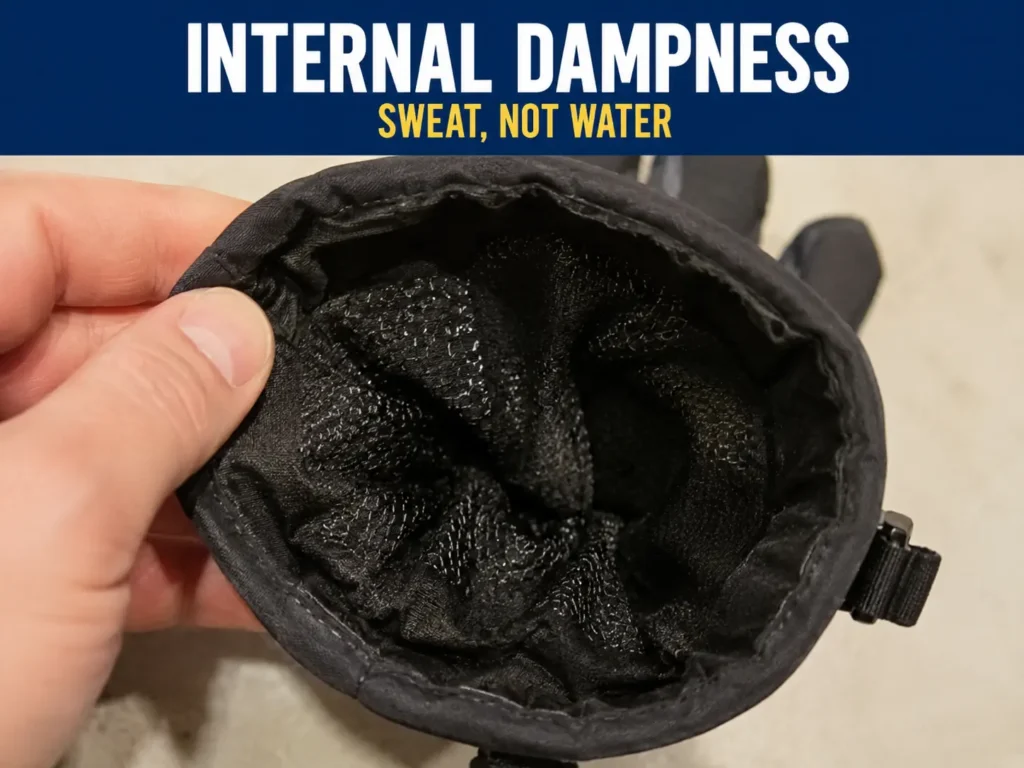
Mistaking internal moisture for external failure rounds out the list. Wet hands inside a glove on a dry day, with no visible outside moisture, is sweat condensing inside — a breathability issue, not a waterproofing failure. Switching to water-resistant in that situation improves breathability but removes protection you may still need on other days.
Cold, wet exposure genuinely matters for hand health beyond just comfort — sustained wet cold raises real risk of frostbite and related cold injury, which is part of why getting this choice right isn’t purely about comfort.
It’s also worth naming a mistake that runs the opposite direction: buying waterproof and assuming that solves every cold-related problem going forward. A membrane glove with too little insulation for the temperature is still a cold glove — it’s just a cold, dry one instead of a cold, wet one. Waterproofing and warmth are two separate specs solving two separate problems, and upgrading one doesn’t substitute for the other.
The Bead Test You Can Run at Home
Pour cold water over the palm of a glove you already own. If it beads and rolls off immediately, the DWR coating is still active. If it soaks in within a few seconds, the coating has depleted and needs re-treatment. This works on both types — even a waterproof glove has an outer DWR layer on top of the membrane, and running this test tells you whether that outer layer still needs attention, separate from whether the membrane underneath is intact.
Re-treating a depleted coating is covered in more depth as part of general glove care in the washing guide on this site, since the wrong detergent or drying method can actually damage a coating further rather than restore it.
Timing the test matters as much as running it. Testing a glove that’s been sitting dry in a closet all summer tells you less than testing it right before the season starts, since a coating that looked fine in storage can have already degraded from the wear and washing of the previous season. Making this a season-opening habit, rather than a one-time check, catches a depleted coating before it fails on an actual ski day rather than after.
Warning Signs Your Current Choice Isn’t Working
| Warning Sign | What It Actually Means |
| Hands wet inside on dry days | Internal sweat, not external failure — an insulation or fit issue |
| Water-resistant glove wet within 30 minutes | Coating has depleted past useful protection |
| Waterproof glove wet on the inside on wet days | Membrane has likely delaminated or a seam has failed — structural, not fixable |
| Hands cold despite staying dry | Not a waterproofing issue — check insulation weight or circulation |
| Water-resistant performing fine all season | Conditions have simply been dry, not proof the coating handles wet conditions |
Making the Final Call
The decision really comes down to risk tolerance. Waterproof removes the risk of a mid-day failure in changing conditions, at the cost of some breathability and a higher price. Water-resistant only works reliably within a narrow, genuinely predictable range of conditions. If your ski days aren’t fully controlled and predictable, waterproof is the safer default — not an upgrade, just the appropriate choice for uncertainty.
None of this needs to be complicated once you’ve been honest with yourself about your actual conditions rather than your best-case assumptions about them. Most skiers already know, if they think about it directly, whether their typical day looks more like “confirmed dry groomer” or “who knows what the afternoon brings” — and that answer alone gets you most of the way to the right choice without needing to compare spec sheets in detail.
FAQ
Does a waterproof rating ever wear out completely?
The membrane itself is durable, typically holding up for 3-5 seasons of regular use before delamination becomes a real issue. The outer DWR layer on top of it wears out faster and needs periodic re-treatment, but that’s separate from the membrane failing.
Can I make a water-resistant glove waterproof by re-treating it more often?
No — re-treatment restores the DWR coating’s beading performance, but it doesn’t add a membrane. A re-treated water-resistant glove still saturates under sustained wet contact; it just takes slightly longer to get there than a depleted one would.
Is it worth buying waterproof even if I mostly ski dry conditions?
If your dry conditions are genuinely reliable and predictable, water-resistant is a reasonable, cost-effective choice. Waterproof becomes worth the extra cost mainly as insurance against the days your conditions don’t go as planned.
Do more expensive waterproof gloves always use better membranes?
Not automatically. Price often tracks membrane brand recognition and overall build quality more than raw waterproofing performance, so checking for a genuinely named membrane technology and real seam-sealing quality matters more than price alone.
Can a water-resistant glove be upgraded to waterproof later?
Not in a meaningful way — adding a membrane requires rebuilding the glove’s internal construction, which isn’t a practical aftermarket modification. If a water-resistant glove isn’t cutting it, replacement rather than upgrade is the realistic path.
Does higher price always mean better waterproofing?
No more than it does for insulation — price tracks a mix of brand, construction quality, and materials, and a mid-range glove with a genuinely named membrane can outperform an expensive one relying on marketing language alone. Checking for the actual membrane name and seam-sealing detail tells you more than the price tag does.