QUICK ANSWER: For genuinely extreme cold, mittens beat gloves on raw warmth — fingers sharing one insulated pocket lose less heat than fingers isolated in separate channels. The Black Diamond Mercury Mitt is widely regarded as one of the warmest non-heated mittens available. If you need finger dexterity and still want serious cold protection, the Black Diamond Guide Glove is the warmest non-heated glove most independent testers have used. Below -10°F consistently, a heated glove system is worth the extra cost and weight.
Not sure how cold your actual conditions really get, or whether your hands need a glove or a mitten? The Ski Glove Finder asks about your temperature range and hand sensitivity directly, then matches you to specific gear instead of a general category.
What “Extreme Cold” Actually Means for Gear Choice
Extreme cold isn’t just a lower number on a thermometer.
Below roughly -10°F, wind chill on an exposed chairlift can drop effective temperature further still. At that point, insulation weight alone stops being the deciding factor.
Circulation matters more. Fit matters more. Moisture management matters more than at any milder temperature, because a small amount of trapped sweat can be the difference between comfortable hands and numb ones.
This guide focuses specifically on gear built for that range — not general resort cold, which is a different, less demanding problem.
Gloves or Mittens? The Short Version
We’ve covered the full physics of this elsewhere — mittens vs. gloves breaks down exactly why shared finger heat matters and when dexterity should win instead.
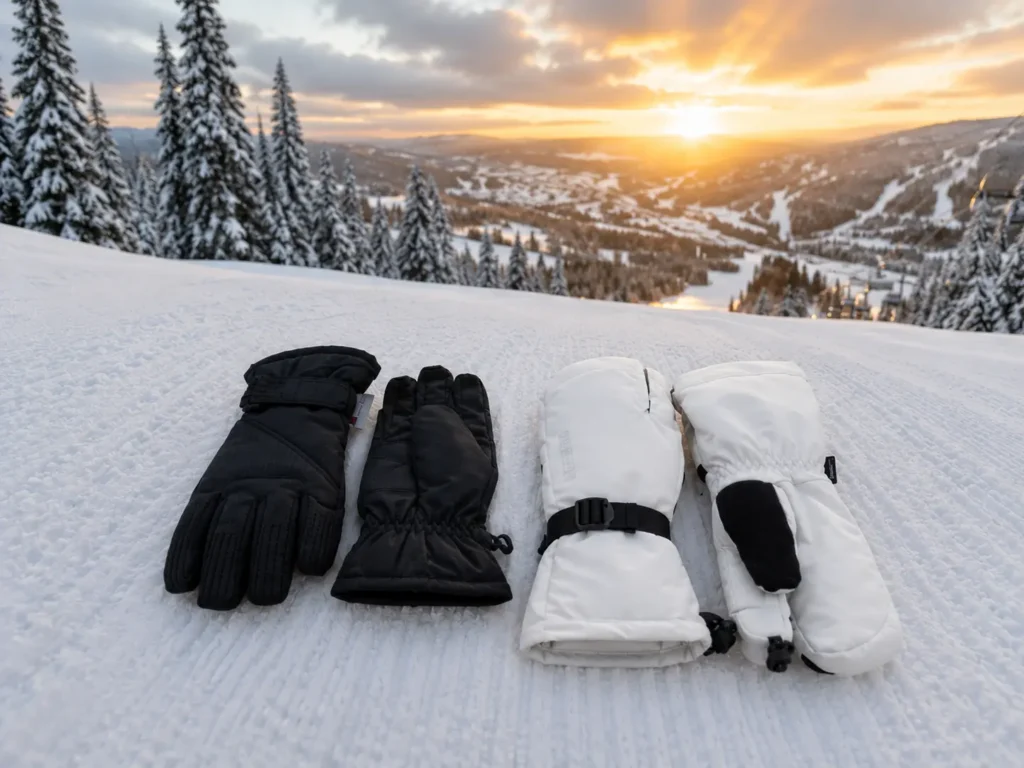
The short version for extreme cold specifically: mittens almost always win on raw warmth at the same insulation weight, because four fingers sharing one pocket lose heat more slowly than four fingers separated into individual channels.
Gloves win when you need real dexterity — operating a camera, working boot buckles repeatedly, backcountry technical work. In truly extreme cold, that tradeoff gets sharper, not softer. A glove has to work harder to match a mitten’s warmth at the same temperature.
Best Mitten for Extreme Cold: Black Diamond Mercury Mitt
OutdoorGearLab’s independent testing describes this mitten as a genuine standout for cold-hand performance, with their lead tester specifically praising it for miserable, brutally cold days.
That’s a real, published assessment — not a marketing copy pulled from Black Diamond’s own site.
The removable liner is what actually makes 170g of PrimaLoft Gold usable across multiple days. Pull it out after a wet session, dry it separately overnight, and you’re not stuck with a soaked mitten the next morning.
If a mitten sounds like the right call for your hands but you want to see how the Mercury stacks up against other warm mitten options at different price points, Best Ski Mittens breaks down the full lineup, from budget picks to this same extreme-cold tier.
Who should buy this: Anyone whose hands go numb in standard insulated gloves regardless of brand. Skiers in consistently severe cold — high altitude, deep-winter Rockies or Northeast conditions.
Honest limitation: This is a bulky mitten. Fine motor tasks — zippers, phone use, technical gear — require pulling it off. If dexterity matters even occasionally throughout your day, factor that cost in before buying.
Best Glove for Extreme Cold: Black Diamond Guide Gloves
Black Diamond’s own flagship glove, and independently rated by OutdoorGearLab as one of the warmest non-heated gloves they’ve tested.
The insulation stack matches the Mercury Mitt’s PrimaLoft Gold weight, but in glove form — a genuine attempt to close the warmth gap between gloves and mittens rather than just adding bulk.
The boiled wool liner is worth understanding specifically. Wool retains meaningful warmth even when damp, which matters directly in extreme cold where any trapped sweat would otherwise become a real liability.
If you’d rather compare this against other men’s gloves across the full price range before committing to this tier, Best Ski Gloves for Men covers everything from budget picks up to this same extreme-cold level.
Who should buy this: Skiers who need finger dexterity — adjusting bindings, using poles precisely, backcountry technical work — but are unwilling to sacrifice serious warmth to get it.
Honest limitation: Stiffer and less flexible than a standard resort glove, and still colder than the Mercury Mitt at the same conditions. You’re trading some warmth for dexterity, not eliminating the tradeoff entirely.

Best Leather Option: Hestra Army Leather Heli Ski Gloves
Hestra built this as the benchmark other warm leather gloves get measured against, and the construction backs that reputation up directly.
Pig leather and goat leather aren’t interchangeable choices — goat leather on the palm holds up to repeated pole grip better than most alternatives, while the pig leather shell handles genuine cold without the stiffness some full-leather gloves develop.
The removable fleece liner means this glove dries fully overnight even after a wet day, which matters over a multi-day trip in serious cold.
Who should buy this: Skiers who want leather’s durability and feel alongside real cold-weather performance, without stepping up to a mitten.
Honest limitation: Real leather requires actual maintenance — conditioning, drying properly, avoiding prolonged wet storage. Skip this if you’re not willing to do that upkeep.
When to Consider a Heated Glove
Below roughly -15°F consistently, or for anyone with circulation issues like Raynaud’s, passive insulation eventually reaches its limit regardless of quality.
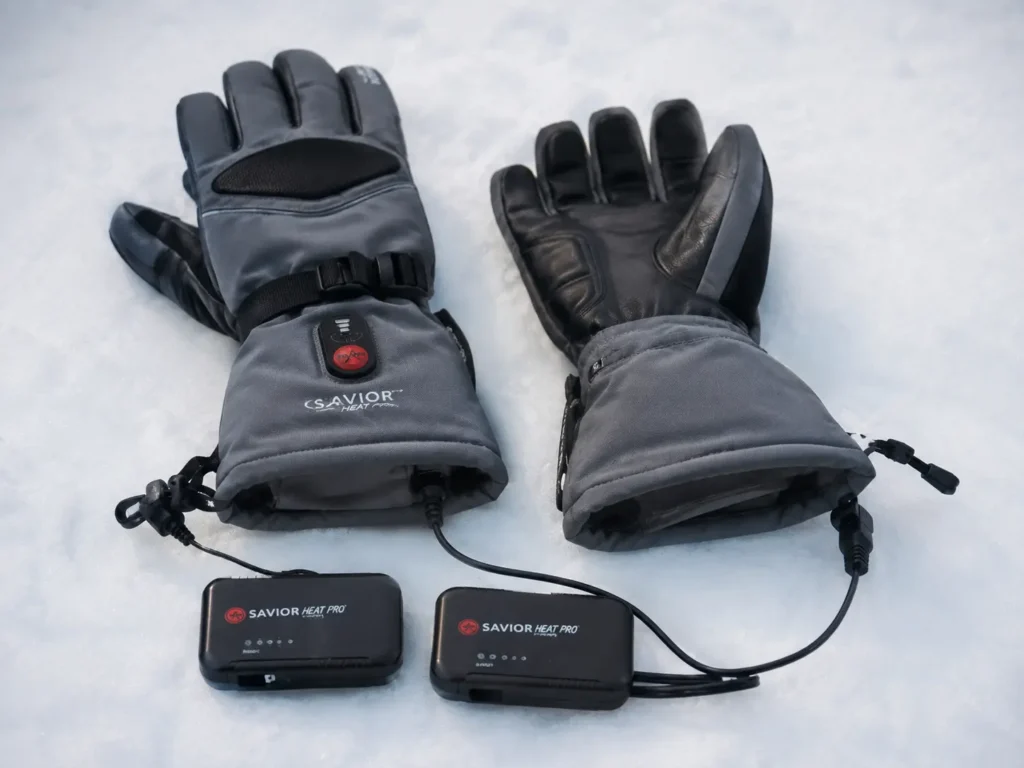
A heated glove system runs a low-voltage current through resistive wiring, typically concentrated across the back of the hand and sometimes the fingertips.
Battery life is the real constraint to understand before buying. Most heated gloves run somewhere between 3 and 8 hours depending on heat setting, which means a full day of skiing may require a mid-day recharge or a spare battery.
Who should buy this: Anyone who has tried multiple well-insulated non-heated options and still experiences numbness or pain in genuinely cold conditions. This is a real solution for that specific problem, not an upgrade everyone needs.
Honest limitation: Added weight from the battery pack, a real dependency on charge level, and a meaningfully higher price than passive insulation. If your hands run normal to cold rather than genuinely circulation-impaired, passive insulation at this tier usually performs just as well for less money and less to manage.
Why Hands Get Cold Even in Good Gear
Cold hands in expensive gloves usually come down to one of three things, and it’s rarely the insulation weight itself.
Trapped moisture is the most common cause. Sweat that can’t escape turns insulation into a liability rather than an asset — a wetted-out outer shell can cut breathability dramatically, which means moisture that should have escaped stays trapped against skin instead.
Restricted circulation from a too-tight fit is the second common cause. A snug glove feels secure in a store, but tight insulation compresses and blood flow to fingertips drops. Cold fingertips in a “warm” glove are frequently a fit problem, not an insulation problem.
Stationary exposure is the third. Active skiing generates body heat that a glove’s insulation can work with. A slow, windy chairlift ride removes that heat generation entirely, which is why hands that felt fine on a run can go numb ten minutes later sitting still.
Common Mistakes People Make Shopping for Extreme Cold Gear
Buying the thickest glove available by default
More insulation without addressing fit or moisture management doesn’t solve the underlying problem, and an oversized glove with dead air space at the fingertips can actually perform worse than a properly fitted thinner one.
Ignoring liner removability
A fixed-liner glove that gets wet on day one stays compromised for the rest of a multi-day trip. Removable liners that dry separately overnight are a genuine functional advantage in extended cold-weather use, not a minor feature.
Assuming heated gloves are always the answer
Battery weight, charge management, and cost are real tradeoffs. For most people whose hands run cold but not circulation-impaired, a well-built passive mitten solves the problem for less complexity.
Sizing tight for a “secure” feel
In extreme cold specifically, this mistake costs more than in mild conditions — restricted circulation is the fastest way to cold fingertips regardless of how much insulation surrounds them.
Decision Checklist
- Consistently below -10°F, warmth is the only priority: Black Diamond Mercury Mitt
- Need real dexterity but still face serious cold: Black Diamond Guide Glove
- Want leather durability with genuine cold-weather performance: Hestra Army Leather Heli
- Circulation issues, or numbness even in good passive gear: A heated glove system, accepting the battery tradeoff
- Multi-day trips in wet, cold conditions: Prioritize a removable liner over raw insulation weight — drying time matters as much as warmth
Frequently Asked Questions
Are mittens actually always warmer than gloves?
At equivalent insulation weight, yes — shared finger contact reduces heat loss compared to individually isolated fingers. The gap narrows with premium gloves like the Black Diamond Guide, but a mitten still generally wins on raw warmth.
What’s the warmest non-heated glove available?
The Black Diamond Guide is widely regarded as one of the warmest non-heated gloves on the market, independently rated by OutdoorGearLab among the top performers in cold-weather testing.
Do liners actually make gloves warmer, or just bulkier?
Only if there’s room for them to work. A liner that makes the outer shell tight compresses insulation and restricts blood flow, which can leave you colder than going without the liner entirely. Fit has to accommodate the liner, not just tolerate it.
Is it worth paying for a heated glove instead of just buying a warmer passive one?
Depends on why your hands are cold. If it’s genuinely severe conditions or a circulation issue like Raynaud’s, heated gear solves a problem passive insulation structurally can’t. If your hands are just moderately cold-sensitive, a well-fitted, well-insulated passive glove or mitten usually gets you there for less money and complexity.
Why do my hands sweat inside a supposedly waterproof glove, then get cold?
Usually a sign the outer shell has wetted out — Gore-Tex’s membrane can only move vapor outward if the outer fabric isn’t saturated. Once the shell is soaked, sweat has nowhere to go, and trapped moisture is what actually causes the cold, not a failure of insulation weight.
Final Thoughts
Extreme cold gear comes down to matching the tool to the actual problem, not just buying the thickest option available. If your hands are cold because of insulation weight alone, the Mercury Mitt or Guide Glove solve that directly. If they’re cold because of trapped moisture or poor fit, more insulation won’t fix it — better liner management and a properly sized glove will. And if you’ve genuinely tried well-built passive gear and still go numb, that’s the specific situation heated gloves exist for, not a default upgrade everyone needs.