Quick answer: Ski gloves crack because the outer material stops being able to flex without damage — and the reason differs completely by material. Leather cracks when the natural oils holding its fibers flex dry out. PU-coated synthetic gloves crack when the coating stiffens in the cold and the coating itself starts separating from the fabric underneath it. One of those is often fixable if you catch it early.
The other one isn’t. If you’re not sure which material your current pair is even made from, the ski glove finder breaks that down by construction, not just warmth rating.
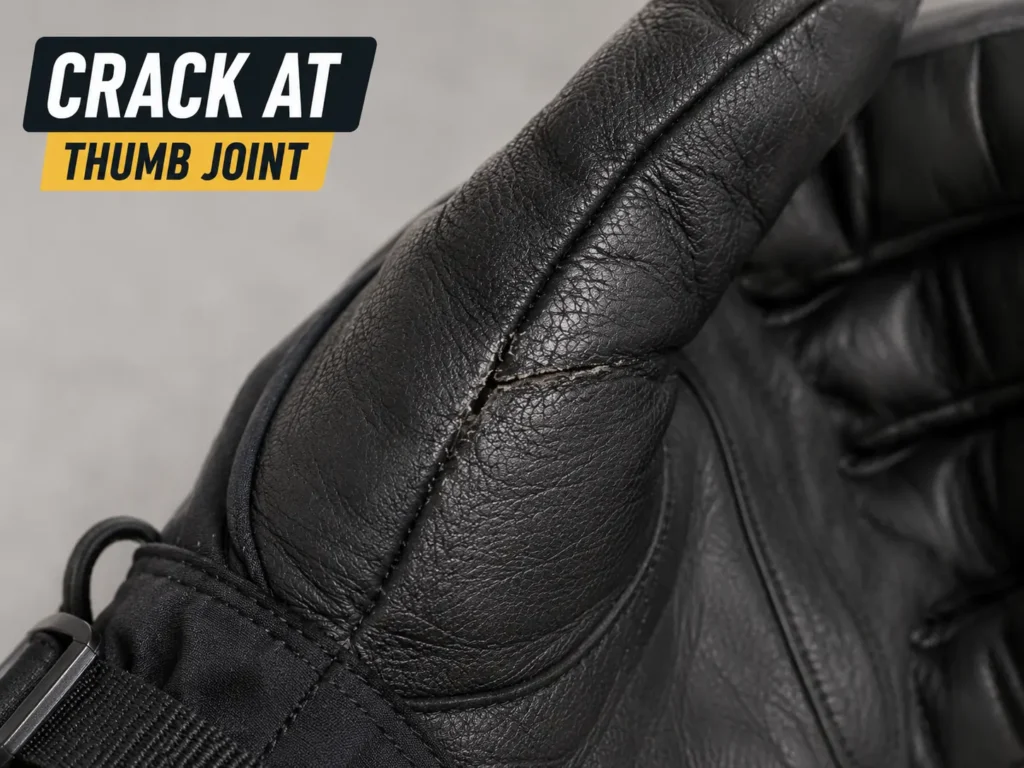
Cracking almost never shows up evenly across a glove. It starts at the thumb joint, the knuckle line, or the finger bases, and it starts there for a specific reason — those are the points that flex the most, on every single grip, all day. Where a crack shows up and what it looks like tells you more about what’s actually wrong than most skiers realize.
- What's Actually Happening When a Glove Cracks
- Two Materials, Two Completely Different Failure Modes
- Crack Cause Reference
- The Habits That Actually Prevent It
- Cracking Doesn't Look the Same Across Materials
- How to Tell How Deep It Actually Goes
- Common Mistakes That Accelerate Cracking
- Warning Signs: Repairable vs. Past Recovery
- Matching Your Situation to the Right Response
- Self-Check Tests You Can Run Today
- When Standard Advice Doesn't Apply
- Decision Checklist
- Frequently Asked Questions
What’s Actually Happening When a Glove Cracks
A crack is what happens when a material is asked to flex past the point it can absorb that movement without permanent damage. That threshold isn’t fixed — it depends entirely on what the material is and what condition it’s currently in.
Leather starts flexibly because it contains natural oils distributed through its fiber structure. Those oils let the fibers slide against each other slightly with every bend instead of tearing. PU-coated synthetic starts flexible because the polyurethane itself has some give at moderate temperatures. Both materials lose that flexibility for completely different reasons, which is exactly why the same-looking crack on two different gloves can mean two completely different things.
Two Materials, Two Completely Different Failure Modes
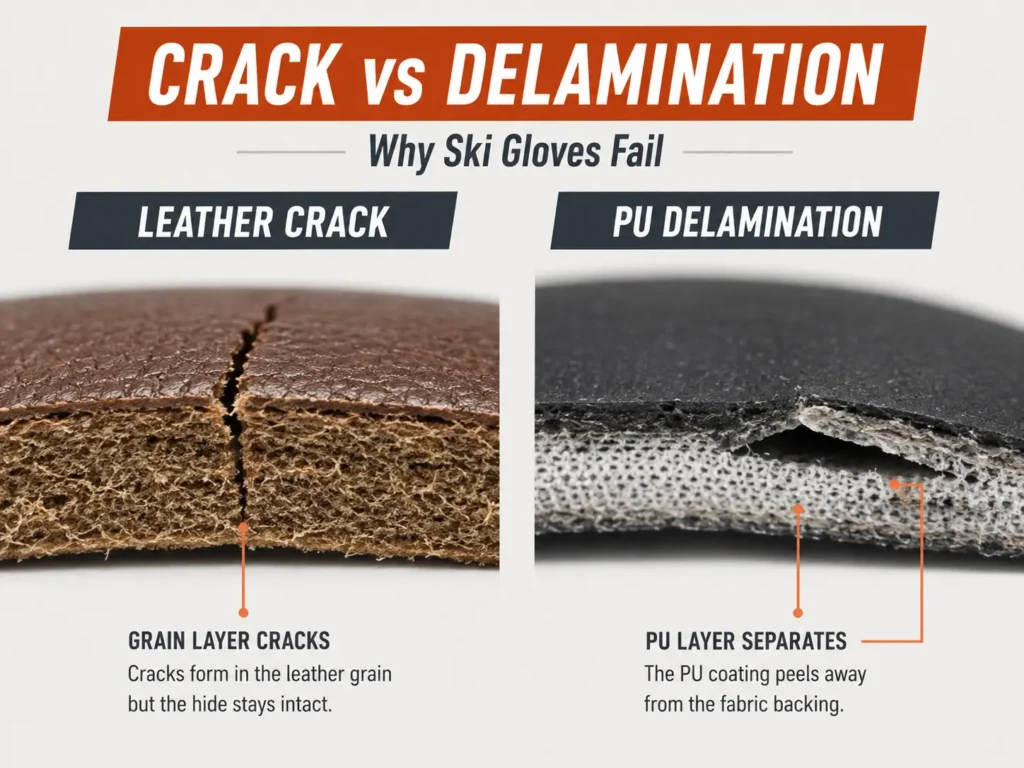
Leather is a biological material, and its flexibility depends on oil content in its collagen fiber structure. Every ski session removes a small amount of that oil — some evaporates in cold, dry air, and some gets mechanically worked out through the repeated compression and stretching of normal flexing. The thumb joint loses oil fastest simply because it moves through the largest range of motion, most often. Once oil concentration drops below the level the fibers need to flex without tearing, micro-cracking starts, and visible cracking follows from there.
PU-coated gloves work on an entirely different principle. A polyurethane coating is bonded onto a base fabric, usually nylon or polyester, and that coating stays reasonably flexible at moderate temperatures but stiffens meaningfully once it drops below roughly -10°C — the same glass transition behavior that affects PU palm material on the bulk and grip side of glove construction. Below that threshold, ordinary hand movement — gripping a pole, releasing it, adjusting a buckle — flexes the stiffened coating past what it can absorb, and micro-fractures start forming across the surface.
Those micro-fractures aren’t the end of the story for PU. As flexing continues, the fractures don’t just widen into visible cracks — the coating itself can start separating from the fabric underneath it entirely, a failure mode called delamination. PU-coated fabric is genuinely prone to this under aggressive flexing or repeated thermal stress, and once the coating starts lifting away from its base layer, no amount of surface treatment reattaches it.
Crack Cause Reference
| Cause | Mechanism | Where It Shows Up | Key Detail |
| Leather oil depletion | Natural oils evaporate and mechanically wear out of the fiber structure | Thumb joint, knuckle line, finger bases | Recoverable if caught before the crack goes through the full thickness |
| PU coating stiffening | Polymer loses flexibility below its glass transition point in cold | Fine surface crazing across palm and fingertips | Precedes delamination — an early warning, not yet structural failure |
| PU coating delamination | The coating separates from the fabric base beneath it | Peeling flakes rather than surface lines | Structural failure — cannot be reversed by any surface treatment |
| Cold-cycle thermal stress | Repeated contraction and expansion between cold and warm stresses the surface | Fine cracking that appears even in unused, stored gloves | Affects both materials, independent of actual flexing |
| Thin PU construction | Manufacturer applies coating below the thickness needed for a full season | Crazing within the first 5–10 days on snow | A manufacturing decision, not a care failure |
The Habits That Actually Prevent It
Three specific habits matter more than anything else for preventing cracking, and they’re different depending on which material you own.
Condition leather before visible cracking starts, not after. Every five to eight ski days is a reasonable schedule, with extra attention to the thumb joint and knuckle line specifically, since those points lose oil faster than the rest of the glove. A simple test: apply a small amount of conditioner to the thumb joint and watch how it absorbs. Fast absorption within a few minutes means the leather needed it. The conditioner sitting on the surface means it was already adequately oiled.
Avoid letting PU-coated gloves sit at extreme cold and then flex immediately. A glove left in a cold car overnight starts its next session at its most brittle point, which is exactly when normal hand movement is most likely to create micro-fractures. Warming gloves to room temperature before heavy use reduces that risk meaningfully.
Never use leather conditioner on a PU-coated glove. Leather conditioner works by replenishing oils inside a biological fiber structure — PU is a synthetic polymer and doesn’t absorb oil-based products the same way. Applying it to a glove that’s already showing delamination can add moisture at the coating-to-fabric interface, which tends to accelerate separation rather than help it.
Cracking Doesn’t Look the Same Across Materials
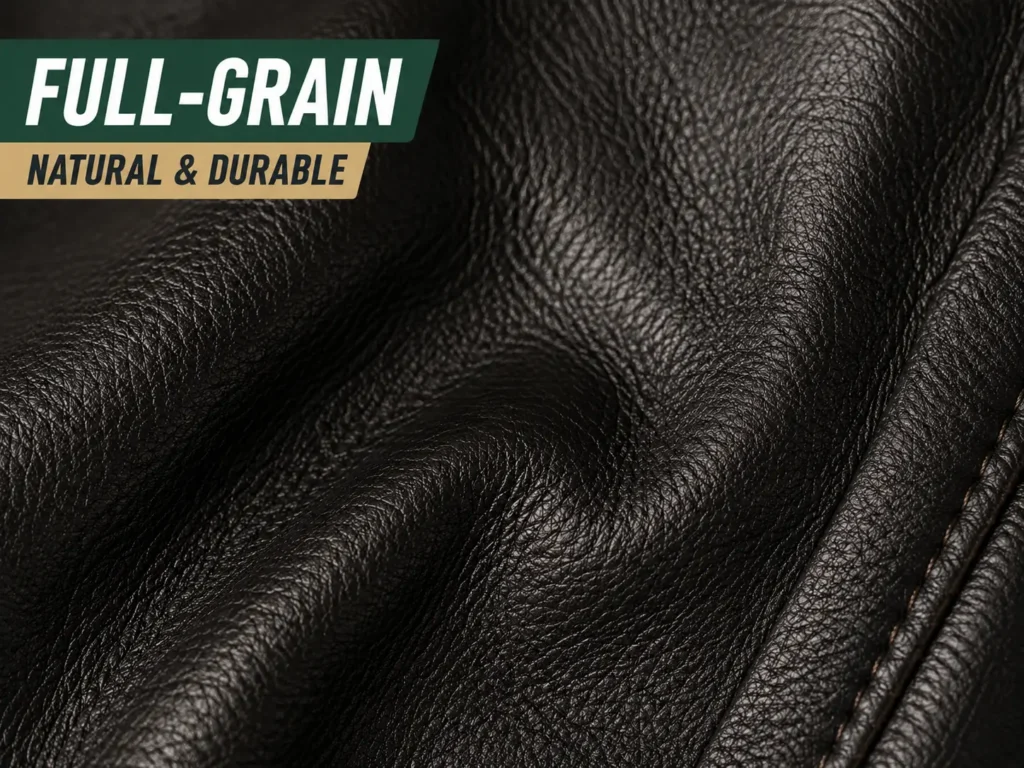
Full-grain leather is the most crack-resistant option with proper care. Its oil content is highest and least disturbed by manufacturing, and conditioning genuinely reverses early-stage cracking in this grade. Expect five to seven seasons of normal use before cracking becomes a real concern, assuming a reasonable conditioning schedule.
Top-grain leather has had its surface buffed during manufacturing, which removes some of that natural oil content before the glove ever reaches you. It cracks faster than full-grain under the same use and needs more frequent conditioning to stay ahead of it — typically three to five seasons rather than five to seven.
Split leather, common in budget gloves, has comparatively little inherent oil content to begin with. It cracks readily under normal cold and flexing, often starting at the seams before the flex points even show damage, and conditioning can slow that decline without fully compensating for the lower-quality starting material.
PU-coated synthetic is the fastest to fail structurally. One to two seasons of regular use is typical, sometimes just one season in genuinely harsh, cold conditions. Once delamination begins, there is no maintenance schedule that stops it — at that point, the honest answer is that the glove is heading toward the end of its life, and comparing options across materials and price points is a more useful next step than continuing to treat a coating that’s already separating from its base.
Nylon and other plain fabric shells are worth mentioning because they don’t crack in this sense at all — they fray and tear instead, which is a completely different failure mode with its own causes and fixes.
How to Tell How Deep It Actually Goes
Three quick checks tell you whether a crack is still recoverable or already structural.
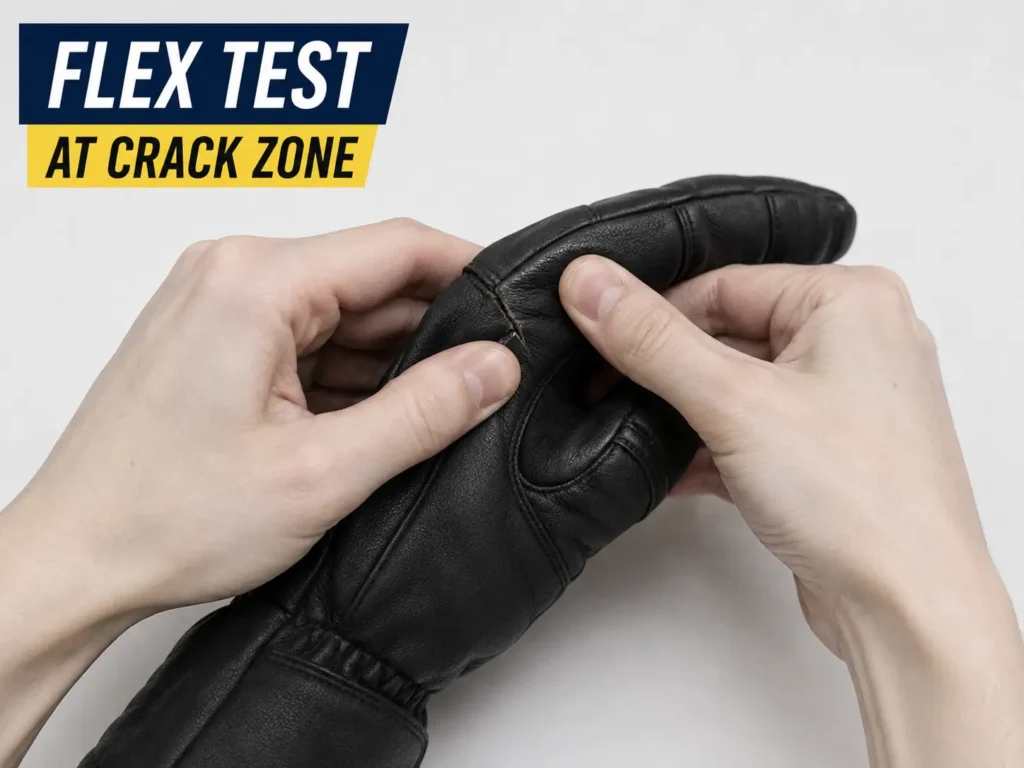
Bend the glove at the crack zone and watch it. A crack that opens noticeably wider under bending extends past the surface layer. One that stays the same width, or closes slightly, is a surface-only finish crack. If material visibly lifts or peels away from a layer beneath it during the bend, that’s delamination, not ordinary cracking.
Run a finger firmly across the cracked area. On leather, a surface crack feels like a raised ridge. A crack that’s gone through the full grain layer feels like a shallow depression instead, where the edges have genuinely separated. On PU, check the material right next to the crack — firm and attached means surface cracking; slightly loose or raised means delamination has already started spreading from that point.
Run cold water over the area and press the interior lining while it’s still wet. If you can feel dampness on the inside, the crack has gone all the way through the shell, and the glove’s waterproofing is already compromised at that specific point — no surface treatment restores that barrier function once it’s breached.
Common Mistakes That Accelerate Cracking
Treating a crack as purely cosmetic and skiing on without checking it. The first visible crack is worth taking seriously, not because one crack ends a glove’s life, but because how fast it grows tells you whether you’re still in the recoverable window. A crack that doubles in length within a few sessions is actively progressing; one that stays the same size after ten days has likely stabilized.
Applying surface treatment to a crack that’s already through the full material thickness. A conditioner or waterproofing spray over a through-thickness crack seals the visible surface while the structural damage underneath goes untouched. It looks better and does nothing — the next session reopens it.
Storing PU-coated gloves in a cold trunk or unheated garage between trips. Repeated cold-to-warm-to-cold cycling stresses the coating even when the gloves aren’t being worn, which is part of why gloves that see less actual use can still crack on a similar timeline to gloves that see heavy use.
Buying by warmth rating alone without checking material grade. A warm, cheap glove typically gets there partly through thin PU coating or low-oil-content leather. Warmth rating tells you nothing about how well the material resists cracking — the material specification does.
Using the same conditioning routine on PU that works on leather. As covered above, this doesn’t just fail to help — on a glove already showing delamination, it can actively make the separation worse.
Warning Signs: Repairable vs. Past Recovery
| Warning Sign | What It Means |
| PU flaking off in visible pieces during a session | Delamination is active and progressing — no treatment stops it |
| Crack runs completely through the leather’s full thickness | The structural layer is breached; water gets in regardless of surface care |
| Leather feels brittle and snaps under a gentle bend | Oil depletion is complete — conditioning adds surface moisture but can’t restore lost structure |
| Multiple cracks appear across several flex points at once | Generalized material decline, not a single spot to treat |
| Insulation is visible through a crack in the shell | The shell has failed as a barrier entirely |
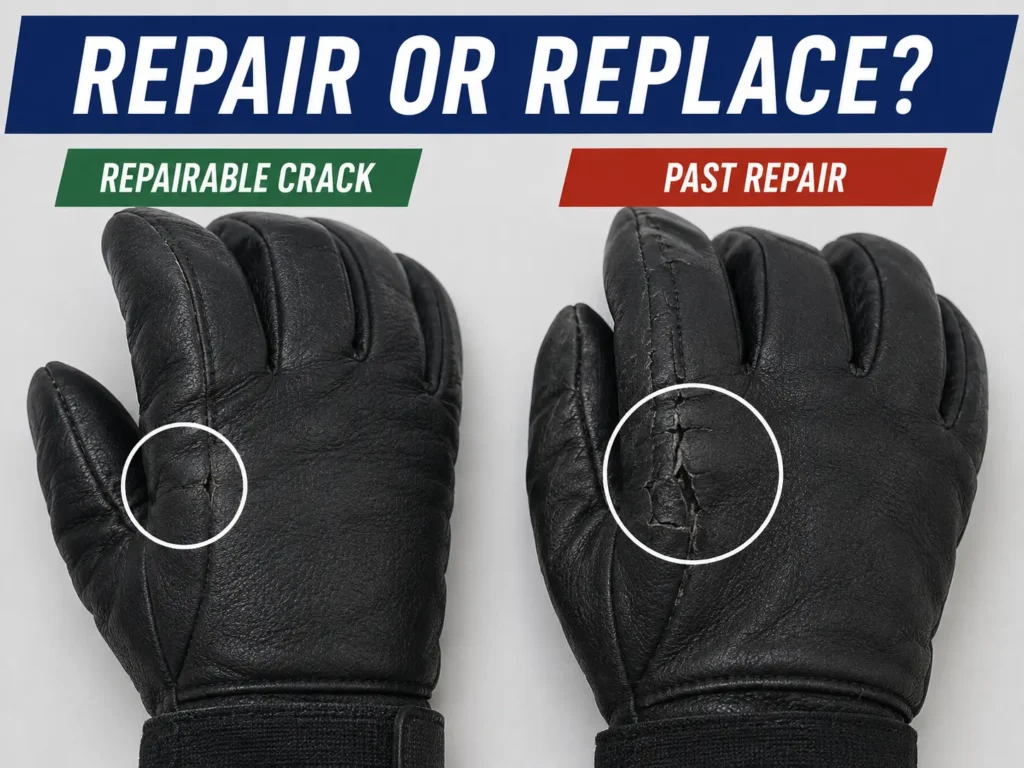
| Cracking is limited to one small spot and material around it is still supple | Still in the recoverable window for leather |
Matching Your Situation to the Right Response
| Your Situation | Root Cause | Right Response |
| Leather crack at one flex point, rest of glove still supple | Localized oil depletion | Condition that zone specifically — recoverable |
| Fine crazing across a PU palm under bright light | Early PU stiffening, pre-delamination | Warning stage — plan for replacement within the season |
| PU visibly peeling in flakes | Active delamination | Not fixable — replacement is the honest answer |
| New gloves cracking within the first season | Thin PU construction, a manufacturing choice | Not a care failure — choose a different model or grade next time |
| Cracking only at seams, material itself intact | Adhesive or seam-specific failure | Seam repair, not a material-condition problem |
Self-Check Tests You Can Run Today
Bend test: widening crack means it’s deep; stable or closing means it’s surface-only.
Finger-pressure test: a raised ridge is leather surface damage; a depression means it’s gone through the grain.
Moisture test: interior dampness means the crack has breached the shell’s waterproofing entirely.
Pinch-and-look test: plastic-like uniform stretch is PU; grain texture with resistance is genuine leather.
When Standard Advice Doesn’t Apply
New gloves that crack within the first season are a construction problem, not a maintenance one. No conditioning schedule fixes a coating that was applied too thin to begin with — the useful takeaway is choosing a higher material grade next purchase, not blaming your own care routine.
Gloves that seem very light, occasional use can still crack on a surprisingly similar timeline to heavily used gloves if they’re stored somewhere that cycles through cold and warm repeatedly, since thermal cycling stresses material independent of how much it’s actually being flexed.
Anyone genuinely unsure whether a cracked pair is worth repairing at all — rather than just diagnosing the crack itself — gets a more complete answer from the replacement timing guide, which covers the broader repair-versus-replace decision across usage frequency and overall condition, not just cracking specifically.
Decision Checklist
| Your Situation | Action | Priority |
| Surface crack only, leather still supple when bent | Condition thoroughly, increase frequency going forward | Repair |
| One flex point cracking, rest of glove intact | Focused conditioning on that specific zone | Repair |
| PU showing fine crazing but no peeling yet | Reduce cold-to-flex exposure, plan ahead | Monitor |
| PU actively flaking during use | No maintenance fix exists | Replace |
| Crack runs through full leather thickness | Structural breach — conditioning can’t close it | Replace |
| Leather snaps or feels rigid under gentle bend | Oil depletion complete | Replace |
| New gloves cracked in the first season | Manufacturing issue, not a care problem | Replace with a different grade |
A crack in a ski glove is genuinely diagnostic — its location, its depth, and how it responds to bending tell you whether you’re looking at something a good conditioning routine can still fix or something that’s already past that point. Reading it correctly, rather than guessing, is what separates gloves that last five or six seasons from ones that get replaced a year early for no real reason.
Frequently Asked Questions
Can a cracked PU-coated glove ever be repaired?
Surface crazing, caught early, can be slowed by reducing cold-to-flex exposure and avoiding aggressive use until it’s replaced. Once the coating is actually peeling or flaking, no treatment reattaches it — at that stage, replacement is the realistic answer.
Is leather conditioner safe to use as a general preventive step, even before cracking starts?
Yes, and it’s more effectively used preventively than after cracking appears. Conditioning before oil levels drop too far avoids the problem entirely rather than trying to reverse it later.
Why do gloves sometimes crack even in storage, without being worn?
Repeated cold-to-warm thermal cycling stresses material independent of actual flexing. A glove stored somewhere that swings between cold and warm repeatedly accumulates that stress even sitting unused in a closet or car trunk.
Does a higher price always mean better crack resistance?
Generally yes for leather grade, since full-grain leather costs more and resists cracking longest. For PU-coated gloves, price correlates less reliably — coating thickness and bonding quality vary enough between brands that price alone isn’t a safe predictor.