Quick answer: Most ski gloves don’t need a full wash nearly as often as people assume — a damp cloth handles surface dirt just fine. When a full wash is actually needed, lukewarm water and a technical wash (never regular laundry detergent) protects the waterproofing, a gentle hand massage instead of scrubbing protects the seams, and air drying away from any direct heat protects both the membrane and any leather. Get those three things right and a pair of gloves can last five seasons instead of one. Ski glove finder can help if washing reveals a pair that’s genuinely past saving.
- Deciding Whether You Need a Full Wash at All
- The Actual Washing Method
- Rinsing and the No-Wring Rule
- Leather Needs a Different Approach Entirely
- Synthetic and Membrane Gloves Handle Washing Differently
- Drying Without Ruining Anything
- Common Washing Mistakes
- Restoring Performance After Washing
- Is It Time to Wash? A Quick Checklist
- Quick Problem Diagnosis
- When Washing Isn't the Right Move
- FAQ
Deciding Whether You Need a Full Wash at All
Over-washing damages gloves almost as reliably as never washing them does, so the first real decision is whether a full wash is even the right move. External mud or dirt usually just needs a damp cloth — this keeps the DWR coating fully intact, since even a gentle wash puts some wear on it. A smelly interior is very often a liner problem rather than a shell problem, and if the liner is removable, washing just that piece solves most odor complaints without touching the outer shell at all.
Stiff leather usually needs conditioner, not water — leather dries out from lost oils, and washing it without immediately reconditioning makes the stiffness worse, not better. A full hand wash is really reserved for deep, pervasive grime that a cloth and spot-cleaning can’t touch.
Running through these four categories before touching any water saves both time and the glove’s coating. Most people default straight to a full wash out of habit, when a two-minute spot clean or a five-minute liner wash would have solved the actual problem just as well, with none of the wear a full wash puts on the shell.
The Actual Washing Method
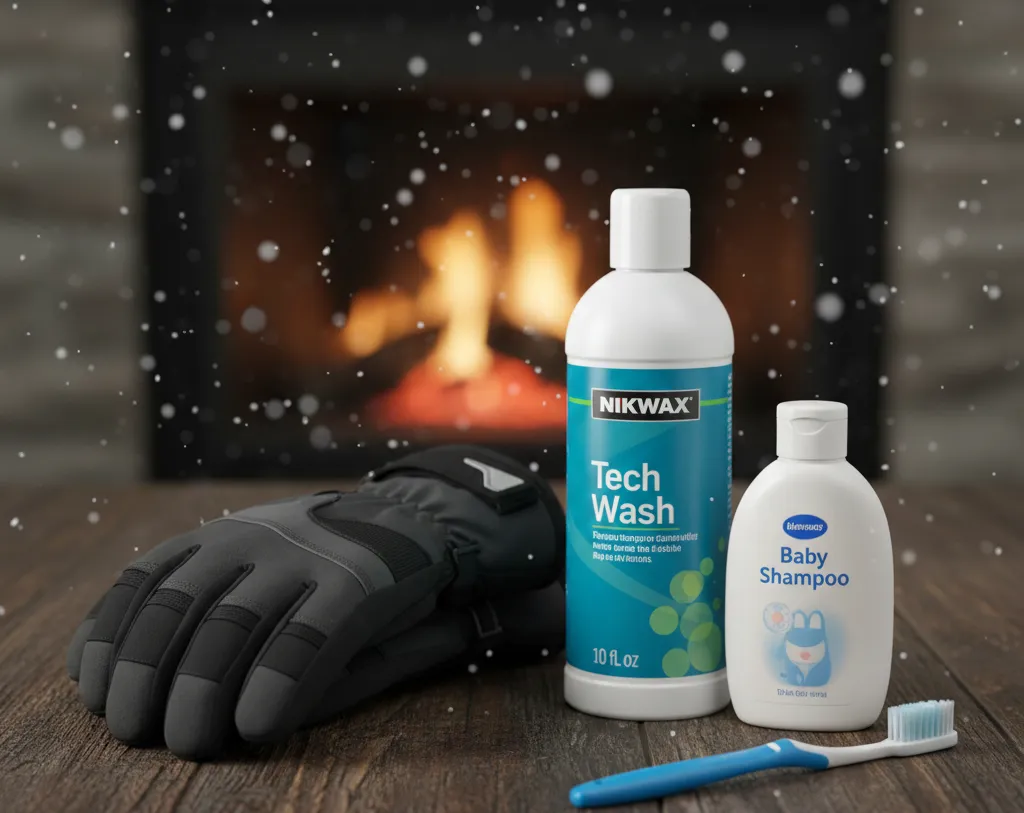
Start with the crumb shake — turn the gloves upside down and give them a firm shake. Trail mix, wax shavings, and general pocket debris genuinely do end up inside gloves more often than people expect. Remove any liner that comes out, since it holds most of the season’s sweat and needs to be treated as its own item. A soft-bristled brush — an old toothbrush works fine — knocks off dried mud or salt before any water touches the glove.
Fill a sink with lukewarm water, never hot. High heat can loosen the adhesive bonding a waterproof membrane to the outer shell, which is a structural failure, not a cosmetic one. Use a technical wash made for waterproof gear rather than standard laundry detergent — this matters more than most other steps combined, and the reasoning is worth understanding rather than just following blindly.
Standard detergent is built to strip oils and grease from fabric, and a DWR (durable water repellent) coating is chemically similar enough to oil that detergent treats it the same way. Technical resources on fabric care confirm this directly: standard detergent surfactants leave a residue on fibers that degrades DWR performance, and that damage compounds with every wash using the wrong product. One wash with regular detergent can measurably reduce water repellency; repeated washes can strip it almost entirely.
This is worth taking seriously even for a glove that isn’t obviously labeled “waterproof.” Most ski gloves, even mid-range synthetic ones, rely on some form of DWR treatment on the shell regardless of whether they have a full internal membrane, so the same detergent rule applies broadly rather than only to premium technical gear.
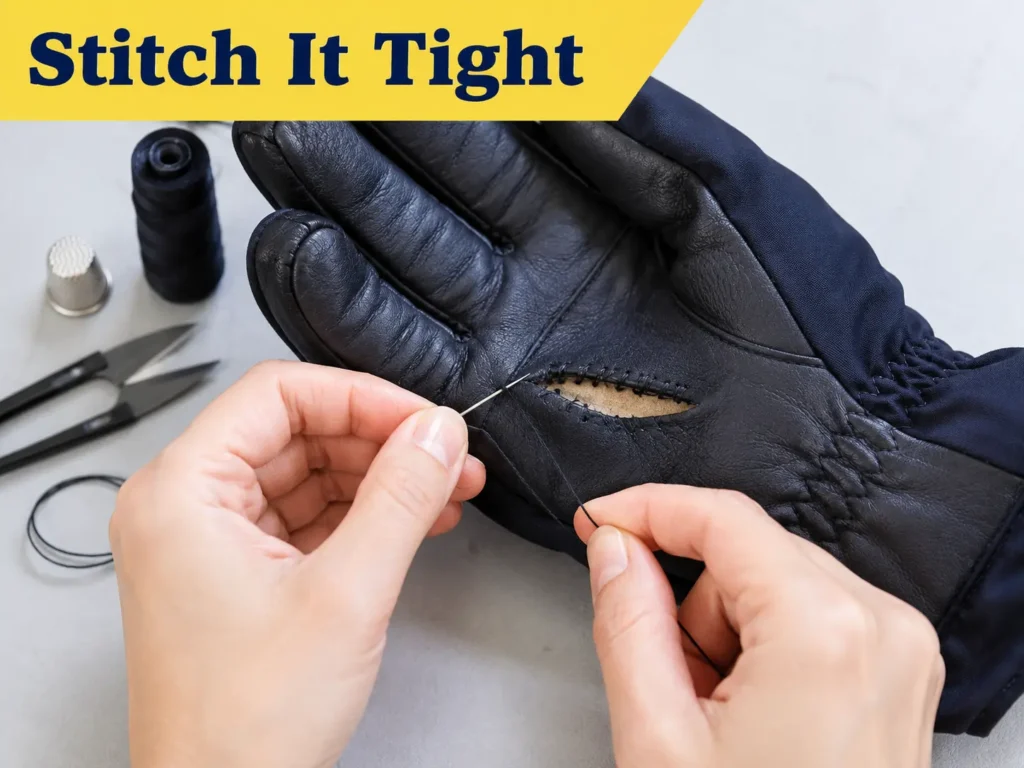
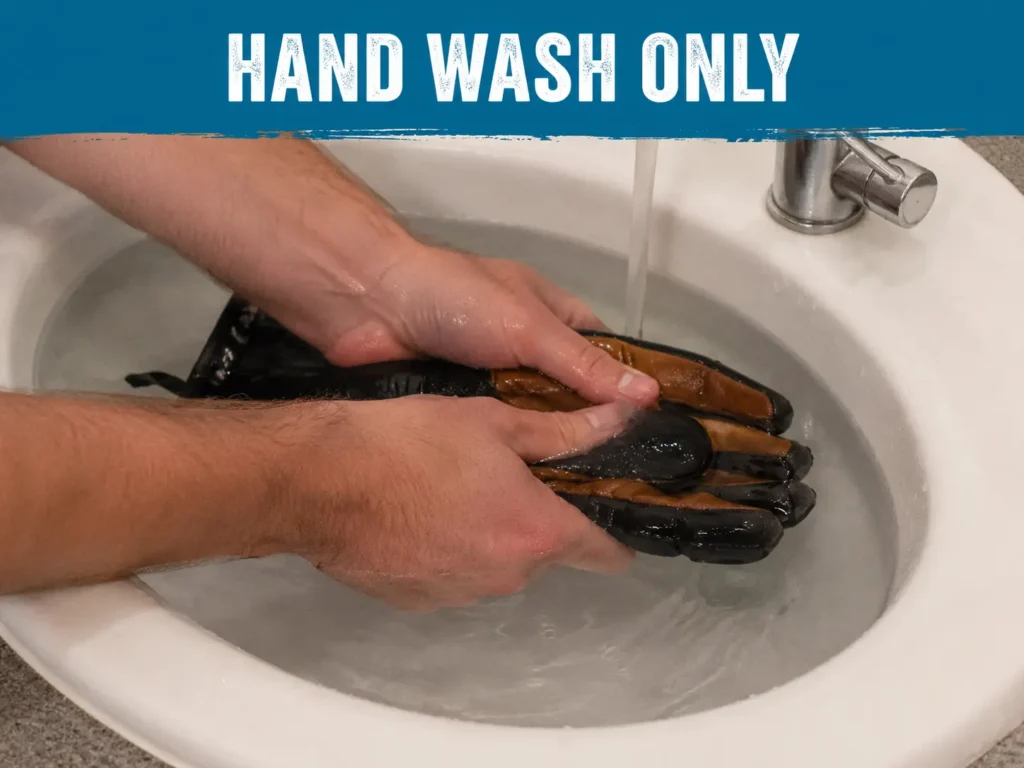
Submerge the gloves and massage gently with your fingertips, focusing on the knuckle and fingertip areas where grime concentrates most. Don’t scrub — the seams and internal stitching aren’t built to handle aggressive agitation, and scrubbing is a common way a wash session turns into a repair job. Ten minutes of soaking is generally enough for anything short of severe grime; longer soaking, especially for leather, does more harm than good.
Rinsing and the No-Wring Rule
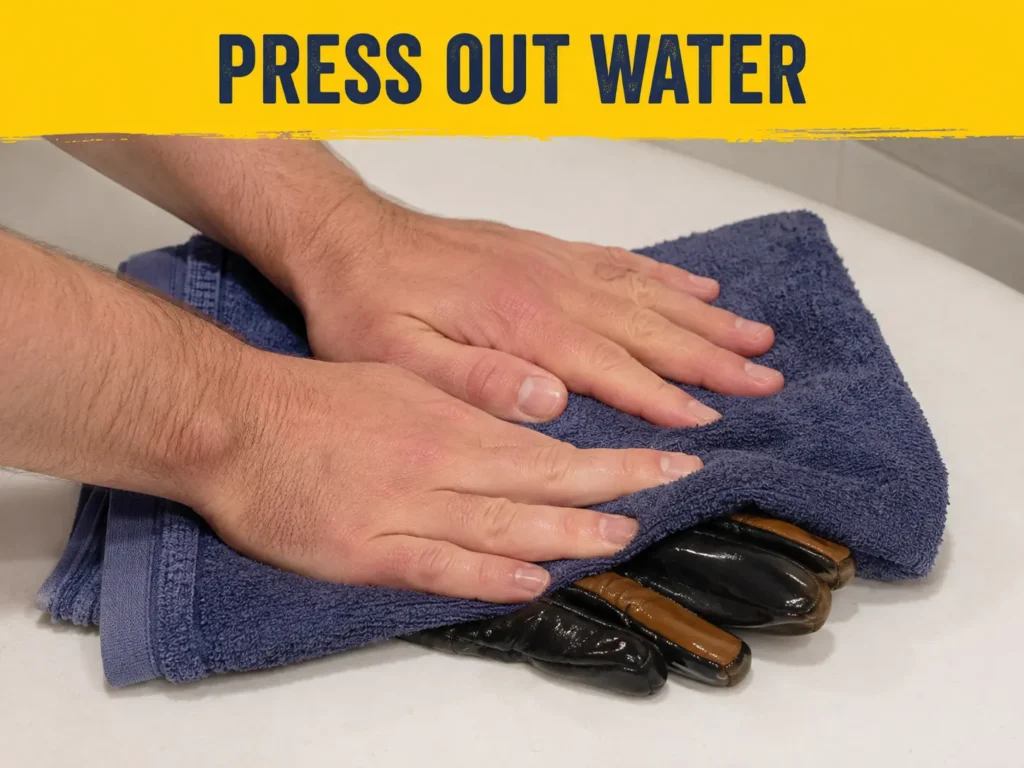
Rinse under cool, running water until no more suds appear. The rule that matters most here: never wring or twist ski gloves. Twisting puts direct stress on internal stitching and can damage a waterproof insert in ways that aren’t visible until the glove leaks on the next wet day.
A folded towel does the job wringing would otherwise do, without the stress. Lay the glove flat on a dry towel, fold the towel over it, and press down firmly with your palms. The towel pulls moisture out through simple absorption rather than mechanical force, which protects the glove’s structure while still getting most of the water out before drying begins.
Skipping this step and going straight to drying leaves a glove far more saturated than it needs to be, which extends drying time significantly and increases how long the material sits wet — the exact condition that makes both leather and insulation most vulnerable to damage. The towel-press step takes under a minute and meaningfully shortens everything that comes after it.
Leather Needs a Different Approach Entirely
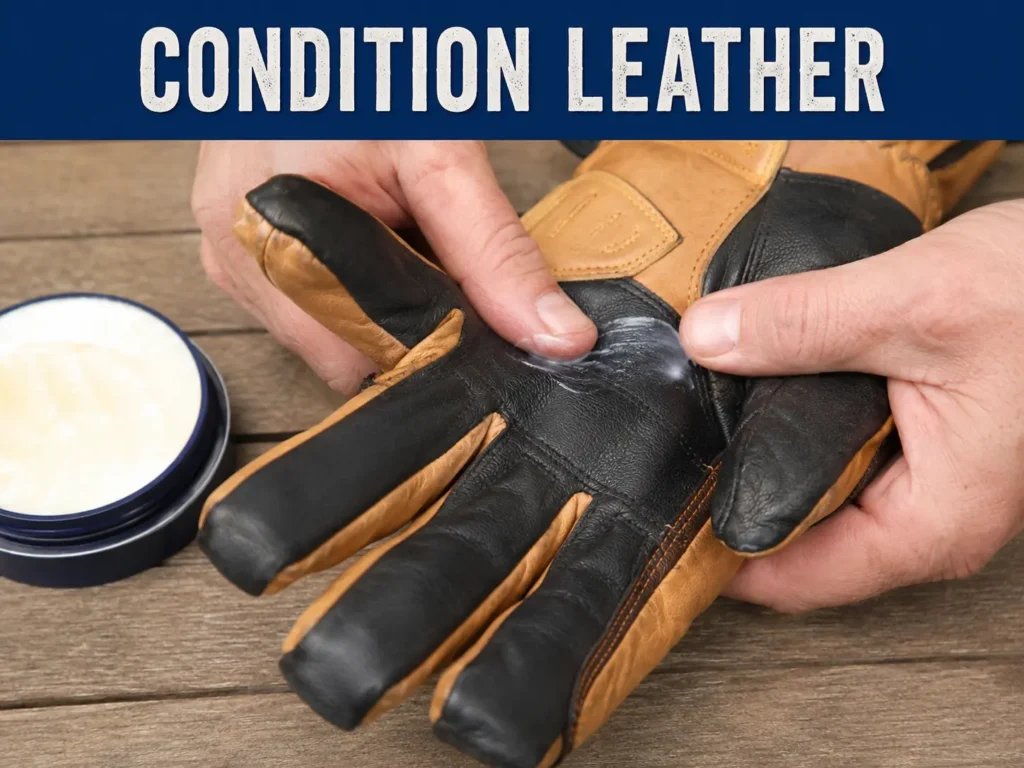
Leather palms change the whole calculation, since leather is a natural material that loses its own oils every time it gets wet. Full submersion is rarely the right call for a leather-palmed glove — a damp cloth with a small amount of leather-safe soap, wiped over the surface and then rinsed clean, cleans the leather without stripping the oils that keep it flexible. This trades some deep-cleaning power for keeping the leather’s actual structure intact, which is almost always the better trade for a glove you want to last multiple seasons.
Leather that does need deeper cleaning still shouldn’t soak the way synthetic fabric can. Leather’s natural oils are what keep the fibers supple, and Wikipedia’s overview of leather conditioning explains the basic mechanism clearly: those oils are volatile and evaporate over time regardless of washing, which is why leather shrinks, stiffens, and eventually cracks without regular conditioning — water exposure just accelerates a process that happens anyway.
This is also why a leather glove that’s been washed but never conditioned afterward often ends up in worse shape than one that was never washed at all. The water exposure alone strips some surface oils regardless of technique, and without replacing them, the leather is left more depleted than it started. Conditioning isn’t an optional finishing touch on leather — it’s the step that makes washing safe to do in the first place.
Synthetic and Membrane Gloves Handle Washing Differently
Synthetic shells, especially ones built around a waterproof membrane, actually benefit from an occasional full soak in a way leather doesn’t. Salt and body oil accumulation clogs the membrane’s microscopic pores over a season, and a proper wash flushes that residue out, which genuinely restores some of the breathability that felt like it had degraded. The trade-off is that a full wash also strips whatever DWR coating remains on the outer surface, so re-treatment afterward isn’t optional — it’s part of the same job, not a separate step to skip.
Gloves that combine both materials — a synthetic shell with a leather palm, which describes a large share of ski gloves on the market — need the more conservative leather approach applied to the whole glove, not just the palm section. Treating the shell as fully washable while trying to protect only the leather patch usually means water and detergent reach the leather anyway through the seams, defeating the point of being careful about it in the first place.
Drying Without Ruining Anything
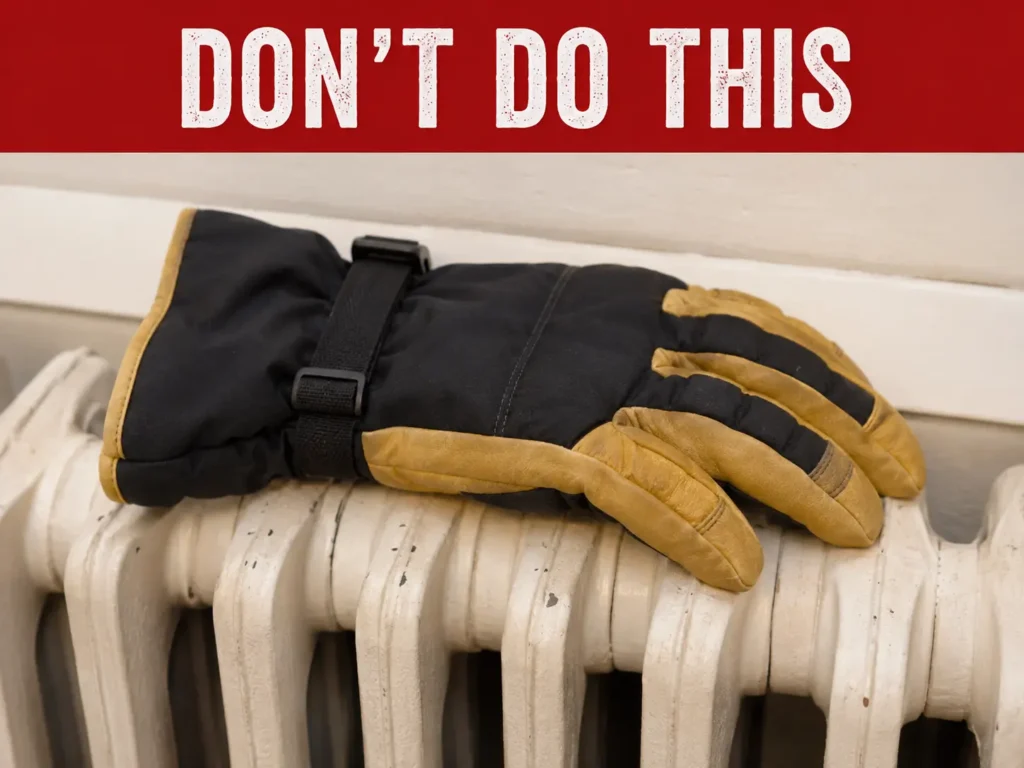
This is where most washing mistakes actually happen, more than during the wash itself. Heat is the real threat here, and the underlying reason is consistent across everything gloves are made of — retailer guidance on washing waterproof gear confirms that high heat can damage both the membrane and the fabric it’s bonded to, which is exactly why a radiator, a heater vent, or a clothes dryer are all the wrong call regardless of how tempting the faster drying time is.
Airflow, not heat, is what actually dries gloves safely. Standing them upright somewhere with good air circulation — a boot dryer set to room-temperature air, or simply propped open with something like a rolled towel inside each cuff — lets moisture escape gradually without stressing the materials. A standard floor fan positioned a few feet away speeds this up meaningfully without introducing any heat risk at all. For gloves that are soaked through rather than just damp, stuffing the interior with crumpled newspaper and changing it every few hours pulls moisture out of the insulation layer faster than air alone can reach it.
Patience matters more than most people expect here. A genuinely soaked pair of insulated gloves can take a full 24 to 48 hours to dry completely at room temperature, and pulling them into use before the insulation is fully dry just means starting the next session already partway toward the same wet-glove problem. Checking the interior, not just the outer shell, before calling a glove dry catches this — insulation dries slower than the shell fabric around it.
Common Washing Mistakes
Trusting a washing machine’s delicate cycle is one of the most common mistakes, since even a gentle machine cycle involves mechanical agitation that can shift insulation or stretch seams in ways hand washing simply doesn’t. If a machine wash is genuinely unavoidable, a mesh laundry bag at minimum prevents the gloves from tangling with themselves or anything else in the load.
Drying on a radiator or heater vent overnight is a close second — it feels like the obvious fast solution, but the heat that dries gloves quickly is the same heat that damages the glue holding a membrane in place and makes leather brittle.
Using fabric softener is a mistake specific to washing, not drying. Softener coats fabric fibers with a waxy residue that actively defeats DWR performance, making the shell absorb water instead of repelling it — precisely the opposite of what the coating exists to do.
Washing more often than necessary rounds out the list. Every wash puts some wear on the DWR coating regardless of technique, so a full wash reserved for genuine grime or persistent odor, rather than a routine after every weekend, preserves the coating considerably longer.
Ignoring the care label rounds out the list, and it’s an easy one to skip since gloves rarely come with obvious washing instructions the way a shirt does. Checking for a small tag inside the cuff before assuming any general method applies takes a few seconds and occasionally reveals a manufacturer-specific requirement — a particular temperature limit, or a hand-wash-only instruction — that overrides the general guidance here.
Restoring Performance After Washing
Washing only gets a glove clean — it doesn’t restore what washing itself strips away, so there’s a genuine second step most people skip. For leather, conditioning while the leather is still slightly damp, around 90% dry, lets the oils absorb more evenly into the fibers than applying them to bone-dry leather would.
For synthetic shells, running water over the surface after it’s dry is the simplest real test: water that beads and rolls off means the DWR is still functioning, and water that soaks in and darkens the fabric means it’s time for a re-proofing spray before the glove goes back into regular use.
Re-proofing spray works best applied to a clean, slightly damp shell rather than one that’s bone dry, similar to leather conditioner’s timing — the fabric absorbs the treatment more evenly that way. A light, even coat across the entire outer surface, not just the palm or high-wear zones, gives the most consistent results, since an unevenly treated shell tends to show water absorption in exactly the spots that got skipped.
Is It Time to Wash? A Quick Checklist
- Does it smell noticeably, beyond a faint end-of-day scent? Wash it.
- Does water soak into the fabric instead of beading on the surface? Wash and re-proof afterward.
- Does the leather feel dry, crunchy, or stiff to the touch? Condition it — skip the water entirely.
- Are there visible white salt lines on the fabric? Wash it — that salt actively degrades the membrane over time if left in place.
Quick Problem Diagnosis
| Problem | Likely Cause | Fix |
| Gloves feel stiff as a board after drying | Oils washed out, or dried with too much heat | Apply leather conditioner and let it sit for 24 hours |
| Liner still damp after a full day | Not enough airflow around it | Use a fan or unheated boot dryer, never a clothes dryer |
| Hands get wet despite the glove looking fine | Accumulated dirt is pulling water through via capillary action | A full wash with technical cleaner to clear the membrane |
| Water soaks in instead of beading after washing | DWR coating stripped during the wash | Apply a waterproof re-proofing spray |
When Washing Isn’t the Right Move
Heated gloves with integrated batteries should never be submerged, even if marketed as waterproof — the risk to the charging port or internal wiring isn’t worth it. Spot-clean the exterior only. Gloves already showing serious material breakdown — flaking leather, delaminating fabric — will often degrade faster from a wash than they would sitting unused, since washing accelerates damage that’s already underway rather than reversing it. Down-filled gloves need a dedicated down wash product specifically; regular soap causes the feathers to clump into hard, ineffective little balls that no amount of fluffing afterward fully reverses.
FAQ
Can I use dish soap if I don’t have a technical wash on hand?
A small amount of very mild, fragrance-free soap works in a pinch for a light wash, but it isn’t a real substitute for a technical wash on a genuinely dirty pair — dish soap is formulated to strip grease and oil just as thoroughly as laundry detergent is, with the same DWR-stripping downside.
How often should ski gloves actually be washed?
Most gloves need a full wash only once or twice a season unless conditions have been unusually wet or dirty. Between full washes, a damp-cloth wipe after use and proper drying handle the day-to-day maintenance without wearing down the coating unnecessarily.
Will washing my gloves void a manufacturer warranty?
Check the care label first — some manufacturers specify hand-wash-only instructions, and washing outside those instructions can technically void warranty coverage on defects, even though it’s rarely enforced for a straightforward wash done reasonably.