Quick answer: Bulk isn’t really about how much material is packed into a glove — it’s about how much that material resists your hand’s natural movement. Four things drive that resistance: how the finger tubes are cut, what the palm is made from, whether the insulation is matched to your actual conditions, and how much cuff volume your skiing genuinely requires.
If your current gloves are bulky enough that you’re already shopping, the ski glove finder filters by warmth and fit so you’re not guessing your way into the same problem again.
Most skiers treat bulk as the unavoidable cost of warmth — thicker gloves are just what cold weather requires, so a clumsy grip is the trade you accept. That framing misses something simple: two gloves with the identical warmth rating can feel completely different in an actual grip, and warmth rating has nothing to do with why.
- What Bulk Actually Is — And What It Isn't
- Four Things Are Fighting Your Grip At Once
- The Bulk Factors and What Each One Affects
- The Choices That Actually Fix It
- Bulk Doesn't Feel the Same Across Glove Types
- Conditions Change What Bulk Costs You
- The Bulk Check
- Common Mistakes and What They Actually Cost
- Warning Signs: Construction vs. Something Else
- Matching Construction to How You Ski
- Self-Check Tests You Can Run Today
- When Standard Advice Doesn't Apply
- Decision Checklist
- Frequently Asked Questions
What Bulk Actually Is — And What It Isn’t
How bulky a glove feels has almost nothing to do with how much insulation is stuffed inside it. It’s really about how much the glove pushes back when you try to close your hand around a pole, a zipper pull, or a boot buckle.
That distinction matters because it explains why thickness alone is a bad predictor. A thick glove that moves with your hand’s natural mechanics can feel less bulky in use than a thinner one that doesn’t, and cold-weather hand research backs up just how large that mechanical penalty can be. Army cold-weather testing on gloved hands found that gloves alone — independent of the cold itself — can cut manual dexterity by 50 to 80 percent compared to a bare hand. That’s the scale of what a poorly built glove is working against before temperature even enters the picture.
It’s also worth being honest that some bulk is simply the cost of the glove doing its job. A gauntlet cuff sealing against snow entry, or a heavier fill weight on a genuinely cold day, is bulk you’re getting something real for. The bulk worth fixing is the kind that’s buying you nothing.
Four Things Are Fighting Your Grip At Once
Bulk that’s actually fixable comes down to four separate construction decisions, and figuring out which one is yours is what turns “these feel bulky” into an actual fix instead of a guess.
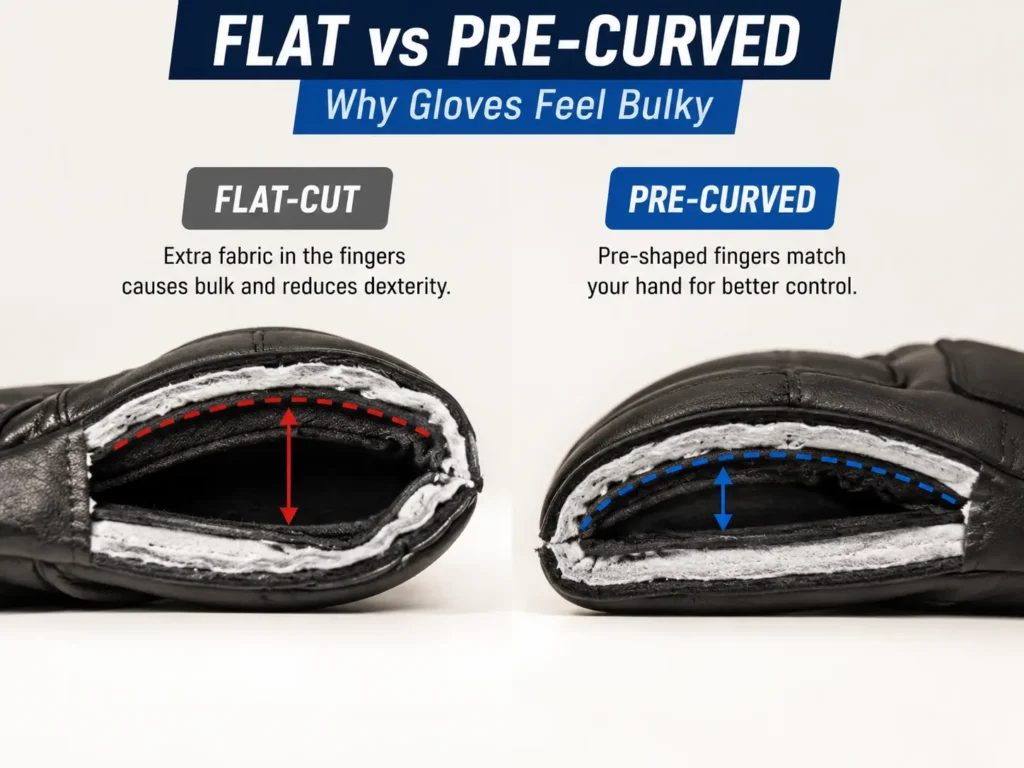
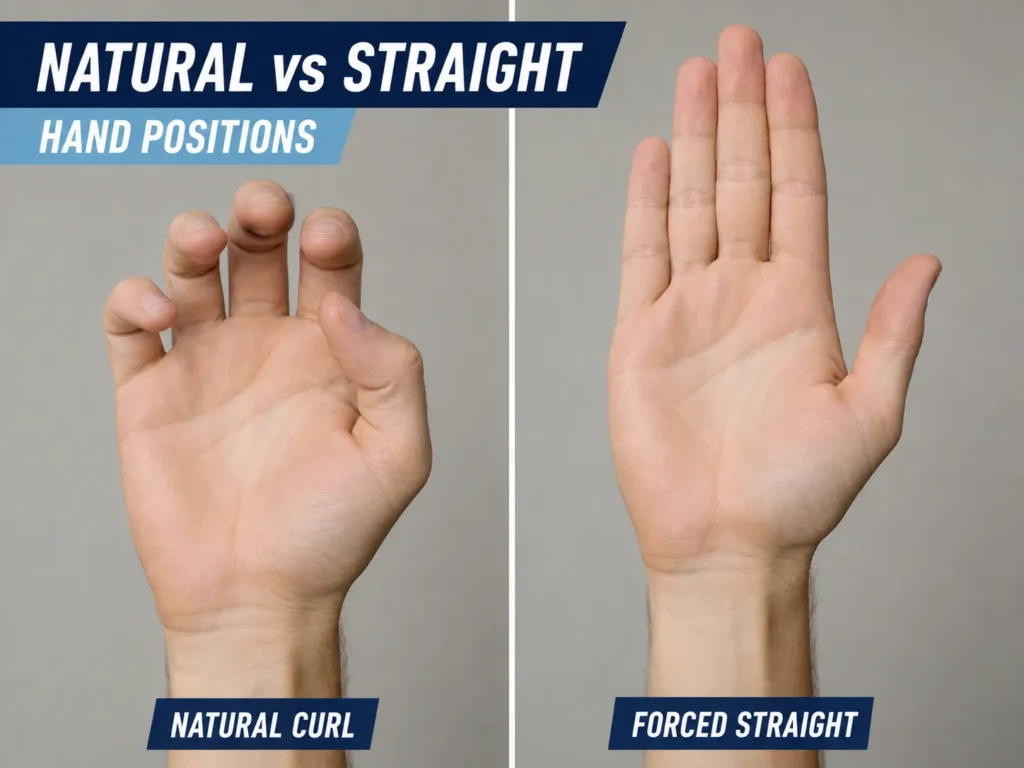
Cut geometry is the least discussed and often the most impactful. Relax your hand and your fingers don’t sit straight — they curl slightly inward at rest. Most budget and mid-range gloves are cut with straight, flat finger tubes, which resist that natural curl: fabric bunches on the back of the fingers, the palm side pulls tight, and the sensation reads as bulk even when the insulation inside is entirely reasonable. Gloves cut with a pre-curved tube shape align with the hand’s resting position instead of fighting it.
Palm material does the most work of any single zone, because it’s what’s actually flexing every time you close your hand. PU (polyurethane-coated) leather is common in budget and mid-range gloves because it’s inexpensive and holds up to abrasion, but it doesn’t stay flexible in the cold — the same polymer chemistry that gives PU its range of hardness generally loses flexibility once material temperature drops below a glass transition point, and ski-slope temperatures sit well below that threshold for most PU coatings.
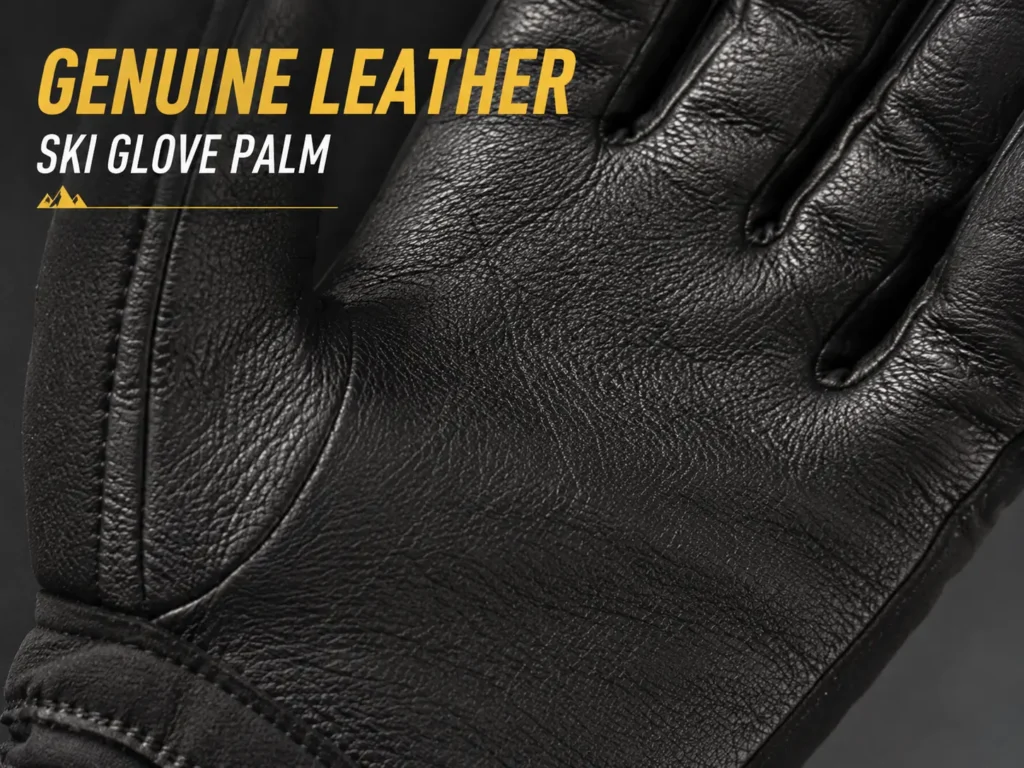
Genuine leather, particularly goatskin, behaves differently, and the reason is what’s actually in the material. Leather holds natural oils in its fiber structure, and regular conditioning replenishes those oils as cold and repeated use deplete them — which is a large part of why a well-maintained leather palm stays supple through a season while a PU coating just gets stiffer with age. Leather also breaks in over several uses, gradually conforming to your specific hand.
Insulation matched poorly to conditions adds bulk with no thermal benefit. A glove built for -25°C backcountry days carries meaningfully more fill than one built for -10°C resort skiing, and that extra fill is physically present in the finger tubes and shell whether or not the day actually calls for it. Skiing a groomed trail at -8°C in a backcountry-rated glove means carrying volume that isn’t doing anything useful.
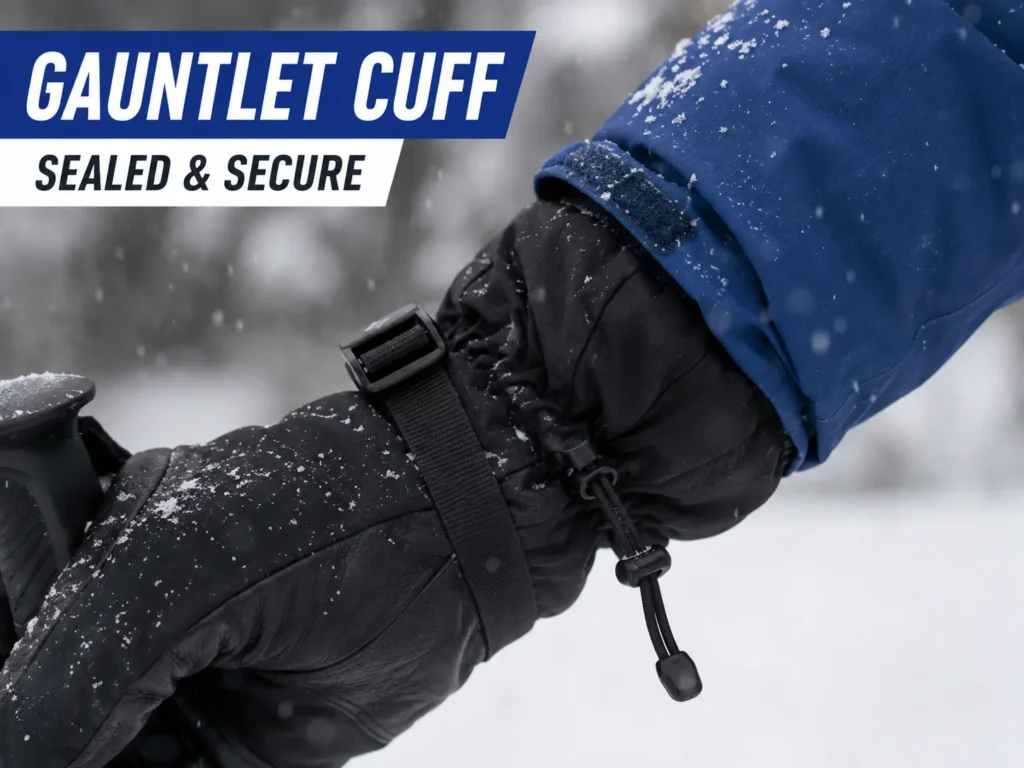
Cuff volume is the one cause that’s usually justified rather than a flaw. A gauntlet cuff wide enough to seal over a jacket sleeve requires real fabric and a closure system — there’s no way to build that seal without adding bulk at the wrist, and in wet snow or frequent falls, that seal is doing genuine work.
The Bulk Factors and What Each One Affects
| Factor | What It Does | Affects Most | Key Detail |
| Flat-cut finger geometry | Straight tubes resist the hand’s natural curl | Budget and mid-range gloves broadly | Not fixed by sizing down — bunching persists either way |
| PU leather palm | Polymer stiffens below its flex threshold in the cold | Grip-intensive activity, repeated pole plants | Gets worse through a cold day, not better |
| Insulation-to-conditions mismatch | Carries fill weight the actual temperature doesn’t need | Resort skiers in backcountry-rated gloves | Zero thermal trade-off to fixing it |
| Gauntlet cuff volume | Necessary fabric and closure to seal the wrist | Powder, wet snow, frequent-fall conditions | Often the wrong thing to try to eliminate |
The Choices That Actually Fix It
Three specific construction choices make a real difference to how bulky a glove feels in use, and none of them require sacrificing warmth.
Choose pre-curved finger construction over flat-cut when it’s available. This is usually a $60-and-above feature, but it’s the single change most likely to eliminate the bunching-and-tension sensation that reads as bulk during active grip, regardless of how much insulation the glove contains.
Choose genuine leather over PU where grip fatigue matters to you. If you’re doing repeated pole plants over a full ski day, the flexibility difference between a conditioned goatskin palm and a cold-stiffened PU palm accumulates into real fatigue by afternoon. Conditioning the leather periodically keeps that advantage intact.
Match fill weight to the temperatures you actually ski, not the coldest day you might someday encounter. Buying for the worst-case cold means carrying unnecessary bulk on every ordinary day in between — and if a genuinely extreme day does come up, a liner underneath a correctly matched glove handles it better than an oversized glove handles everything else.
Bulk Doesn’t Feel the Same Across Glove Types
Budget uniform-fill gloves, mapped-insulation gloves, backcountry-rated gloves, and close-cut performance gloves all produce bulk through different mechanisms, and lumping them together is where a lot of generic advice breaks down.
Budget gloves using uniform fill — the same density in the wide palm as the narrow finger tubes — compress that fill into the tighter finger geometry, which is a real cause of tightness more than pure bulk, and it’s covered in depth separately since the mechanism and fix are distinct from the four causes above.
Mid-range gloves with mapped insulation (lighter fill in the fingers, heavier on the back of the hand) solve the compression problem but can still feel bulky if the cut is flat rather than pre-curved — mapping fixes one cause without touching the other, which is exactly why two “mapped insulation” gloves from different brands can still feel noticeably different.
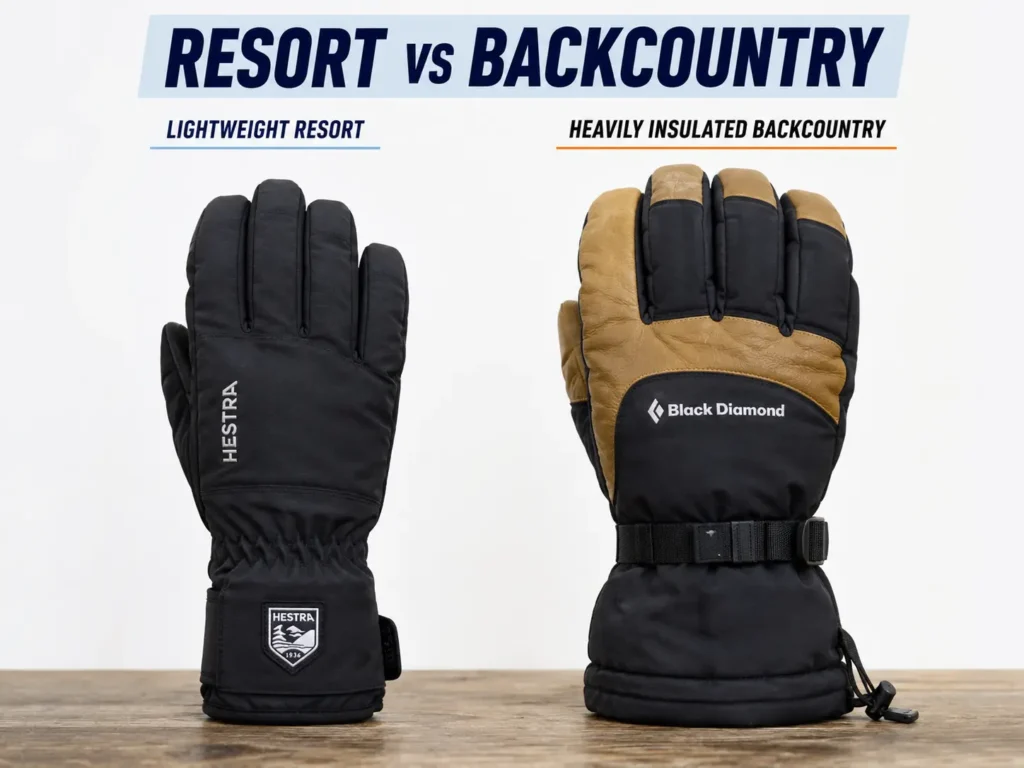
Backcountry and extreme-cold gloves carry bulk that’s largely earned. Heavier fill, more shell layers, and a wider gauntlet are providing thermal margin a resort glove doesn’t need, and comparing their bulk directly against a resort glove is comparing two different jobs.
Close-cut performance and racing gloves intentionally minimize bulk at the cost of some warmth margin, using thinner insulation and a tighter cut specifically to preserve pole feel — appropriate for skiers prioritizing dexterity over maximum cold protection, less appropriate for anyone who runs genuinely cold-handed.
If you’re comparing constructions before a purchase, comparing options by budget covers fill weight and cut differences across price tiers, which is a faster starting point than reading individual spec sheets one at a time.
Conditions Change What Bulk Costs You
Two skiers in identically insulated gloves can have completely different opinions about whether the bulk is worth it, purely based on what they’re actually skiing.
Groomed-trail resort skiers who rarely fall and prioritize pole feel and buckle adjustments get the least benefit from gauntlet cuff volume and the most benefit from pre-curved cut and a supple palm — for this group, bulk is mostly a cost with limited upside.
Powder skiers and snowboarders who fall often need the gauntlet’s wrist seal regardless of how it feels, since an unsealed wrist in a forward fall lets snow in under real pressure. For this group, cuff bulk is doing a job a shorter cuff simply can’t replace.
Backcountry skiers and anyone in sustained extreme cold are the group where higher fill weight bulk is genuinely earning its keep — the thermal margin it provides matters more during a long, physically demanding descent than the dexterity it costs.
Cold-handed skiers — people who get cold at temperatures where others are comfortable — are usually better served accepting more bulk from fill weight than fighting for the thinnest possible glove, since the trade-off actually favors warmth for this group specifically.
The Bulk Check
Run through this once with your current gloves to find which of the four causes is actually yours.
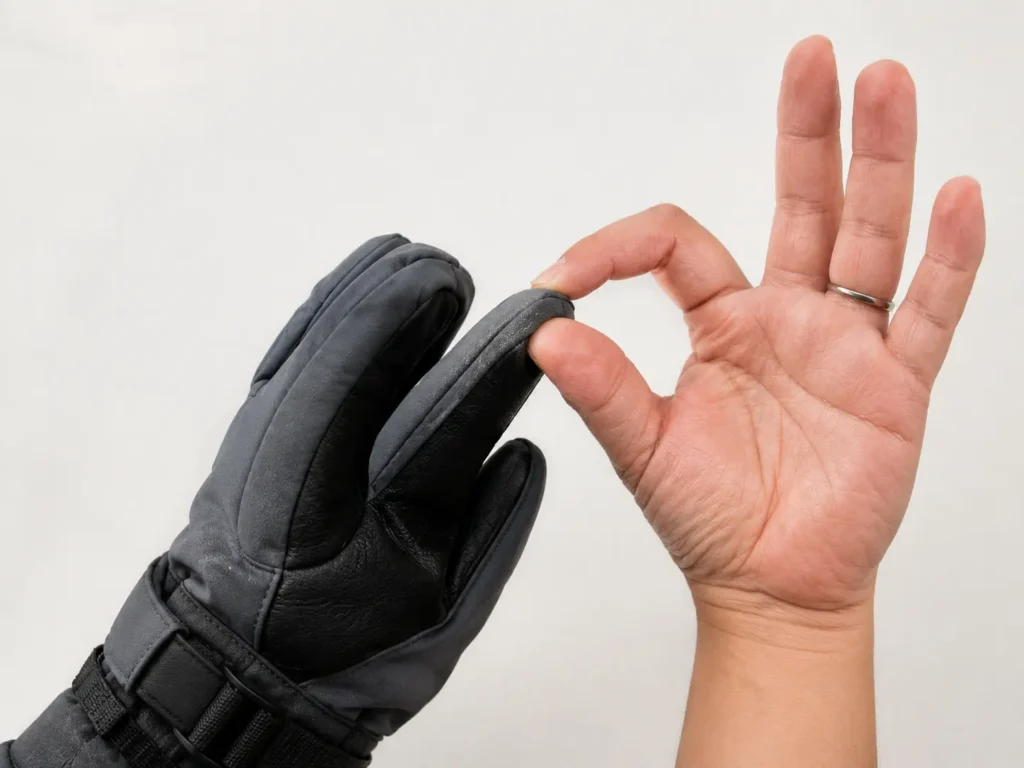
Relax your hand and put the glove on without straightening your fingers. Bunching on the back of the fingers or tension across the palm points to flat-cut geometry.
Pinch and gently stretch the palm material. Uniform, plastic-like stretch along visible seam lines means PU leather. Grain texture with even resistance means genuine leather.
Compare your glove’s stated fill weight against the temperatures you actually ski most often. A meaningful mismatch toward warmer-than-necessary is a sign you’re carrying insulation you don’t need.
Check whether the bulk is concentrated at the wrist specifically. If so, that’s the gauntlet cuff doing its sealing job, not a construction flaw — the question becomes whether your conditions justify it, not whether it’s fixable.
Common Mistakes and What They Actually Cost
Buying by warmth rating alone tells you fill quantity, not distribution or shell behavior in the cold. Two gloves can share a rating and still feel entirely different in an actual grip.
Sizing up to “fix” a bulky feeling is the most common wrong move. If the real cause is flat-cut geometry or a stiff palm, a bigger glove adds loose material on top of the same resistance — dexterity often gets worse, not better.
Testing fit bare-handed when you plan to ski with a liner skips the volume the liner will actually occupy, which can turn a glove that felt fine in the store into one that feels tight and clumsy on the mountain.
Assuming higher price always means less bulk overlooks that some premium gloves prioritize weatherproofing or branding over cut geometry and palm flexibility specifically — price correlates loosely with the things that actually matter here, not perfectly.
Chasing the thinnest glove available without checking cut or palm material can produce a glove that’s thin and still bulky in the ways that matter — thickness and true bulk aren’t the same variable.
Warning Signs: Construction vs. Something Else
| Warning Sign | What It Indicates |
| Bunching on the back of relaxed fingers | Flat-cut geometry, not undersizing |
| Palm stiffens noticeably as the day gets colder | PU leather cold-stiffening, not glove failure |
| Bulk concentrated only at the wrist | Gauntlet cuff doing its sealing job |
| Fine in-store, clumsy on the first cold run | Likely shell or palm material, not sizing |
| Consistent dense, hard-to-compress fill in the fingers only | Uniform fill compression — a tightness issue, covered separately |
| Bulk that eases noticeably as hands warm up during skiing | Cold-stiffened material easing with body heat, not a construction flaw |
Matching Construction to How You Ski
| Situation | What Drives Bulk | What Matters Most |
| Groomed-trail resort skier, rarely falls | Cut geometry and palm material | Pre-curved fingers, genuine leather palm |
| Powder skier or frequent faller | Gauntlet cuff volume | Accept the cuff bulk — it’s functional |
| Backcountry or extreme-cold skier | Fill weight for thermal margin | Higher fill is earning its keep here |
| Casual skier, budget-conscious | Uniform fill and flat cut together | Mapped insulation matters more than price tier alone |
| Genuinely cold-handed skier | Trade-off between warmth and dexterity | Favor warmth — accept more bulk than average |
Self-Check Tests You Can Run Today
Relaxed-hand test: bunching vs. no bunching tells you flat-cut vs. pre-curved.
Pinch test: plastic-like stretch vs. grain texture tells you PU vs. genuine leather.
Conditions check: fill weight against your actual ski temperatures flags unnecessary bulk.
Wrist-only check: bulk isolated to the cuff points to a functional trade-off, not a flaw.
When Standard Advice Doesn’t Apply
Very casual skiers — a handful of days a season — often get more value from a simpler, well-fitted glove than from chasing pre-curved construction or premium leather, since the cumulative grip fatigue that makes cut geometry matter most builds up over repeated full days on the mountain.
Skiers whose gloves used to feel fine and now feel bulky are usually dealing with a different problem entirely — insulation that’s compressed and lost loft after a season or two of storage, or a shell that’s stiffened with age. That’s a tightness-and-aging issue rather than a construction one, and the ski gloves tight guide covers both the finger-tube compression and cold-stiffening mechanisms in more depth than makes sense to repeat here.
Racing and high-dexterity skiers are intentionally accepting a closer cut with less insulation margin, which is a deliberate trade-off rather than a bulk problem needing a fix — for this group, the four causes above mostly don’t apply the way they do to a standard resort glove.
Decision Checklist
| Your Situation | Action | Priority |
| Bunching shows up on the relaxed-hand test | Look for pre-curved construction on your next pair | Fix on next purchase |
| Palm stretches like plastic and stiffens in cold | Consider a genuine leather palm, condition regularly if you already have one | Fix habit or upgrade |
| Fill weight clearly exceeds your typical ski temperature | Size down in warmth rating, not glove size | Act now |
| Bulk isolated entirely at the wrist and you ski powder or wet snow | No action needed — the cuff is doing its job | Good |
| Gloves that used to fit fine now feel bulky after storage | Check for insulation compression — different issue, different fix | Investigate separately |
| Everything above already accounted for | Current construction is likely a good match — no action needed | Good |
Bulk in a ski glove is rarely one single thing, and buying a thinner or more expensive glove without knowing which of these four causes is actually yours is a reasonable way to spend money without fixing anything. Once you’ve identified the real cause — cut, palm, fill match, or cuff — the fix is specific rather than a guess, and for anyone whose gloves have simply aged rather than been built badly to begin with, the tightness guide linked above is the more accurate next stop.
Frequently Asked Questions
Does a thinner glove always mean less bulk?
Not necessarily. A thin glove with flat-cut fingers and a stiff PU palm can feel bulkier in actual use than a slightly thicker glove with pre-curved fingers and a supple leather palm. Cut and material affect perceived bulk more than raw thickness does.
Will sizing up fix a bulky feeling?
Only if the actual cause is genuine undersizing, which is uncommon. If the real issue is flat-cut geometry or palm stiffness, a larger glove adds loose material on top of the same resistance rather than resolving it.
Is a heavier gauntlet cuff ever worth downsizing?
Only for skiers who consistently stay on dry, groomed terrain and rarely fall. For powder, wet snow, or frequent falls, the cuff’s sealing function is worth the added bulk at the wrist.
Can two gloves with the same warmth rating really feel that different?
Yes, and it’s the central point of this guide. Warmth rating describes fill quantity, not cut geometry, palm material, or how the shell behaves once it’s actually cold. Two gloves can share a rating and still feel completely different in a real grip.