

Quick answer: For most resort skiers, synthetic insulation is the safer default — it keeps working when damp, dries overnight, and costs less than high-fill down. Down wins on pure warmth-to-weight for genuinely dry, extremely cold conditions, but it’s a poor choice if you sweat heavily, fall often, or ski wet coastal snow, since it loses almost all insulating power once soaked. Which one actually fits your situation comes down to your climate and how much your hands sweat, not just how cold it gets. Ski glove finder can help match a specific glove once you know which insulation type you’re after.
- How Insulation Actually Works, Briefly
- Synthetic Insulation: The Reliable Choice for Most Skiers
- Down Insulation: Best Warmth-to-Weight, Worst When Wet
- Down vs. Synthetic, Side by Side
- Where Insulation Should Be Thick, and Where It Shouldn't
- Matching Insulation to How You Actually Ski
- Common Insulation Mistakes
- Quick Problem Diagnosis
- Protecting Insulation Over Time
- A Quick Decision Checklist
- What Extra Money Actually Buys in Insulation
- FAQ
How Insulation Actually Works, Briefly
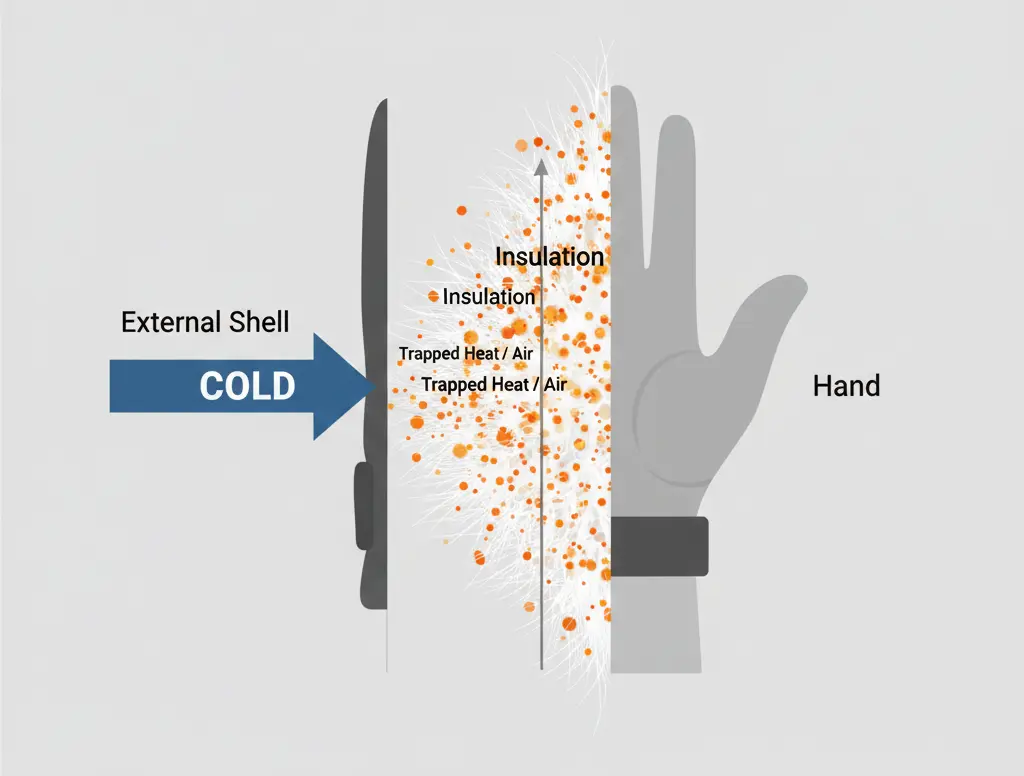
Insulation doesn’t generate warmth — your body does. What insulation does is trap small pockets of still air near your skin, and your body heat warms that trapped air into a barrier against the cold outside. This matters because it explains both of the insulation’s failure modes at once: compress the material and the trapped air pockets collapse, or get it wet and water fills those same pockets instead of air.
That second failure mode is worth understanding precisely, because it’s the whole reason down and synthetic perform so differently when damp. Water conducts heat away from the body dramatically faster than air does — real physics confirms water’s much higher thermal conductivity comes from its higher heat capacity per volume compared to air. That’s why wet insulation feels cold almost immediately, regardless of which material it’s made from.
The practical takeaway from this physics is simple even without the details: any insulation choice is really a bet on how likely your hands are to get wet, not just how cold it’ll be. That single variable — moisture exposure — determines more about real-world warmth than the temperature rating printed on the tag.
Synthetic Insulation: The Reliable Choice for Most Skiers
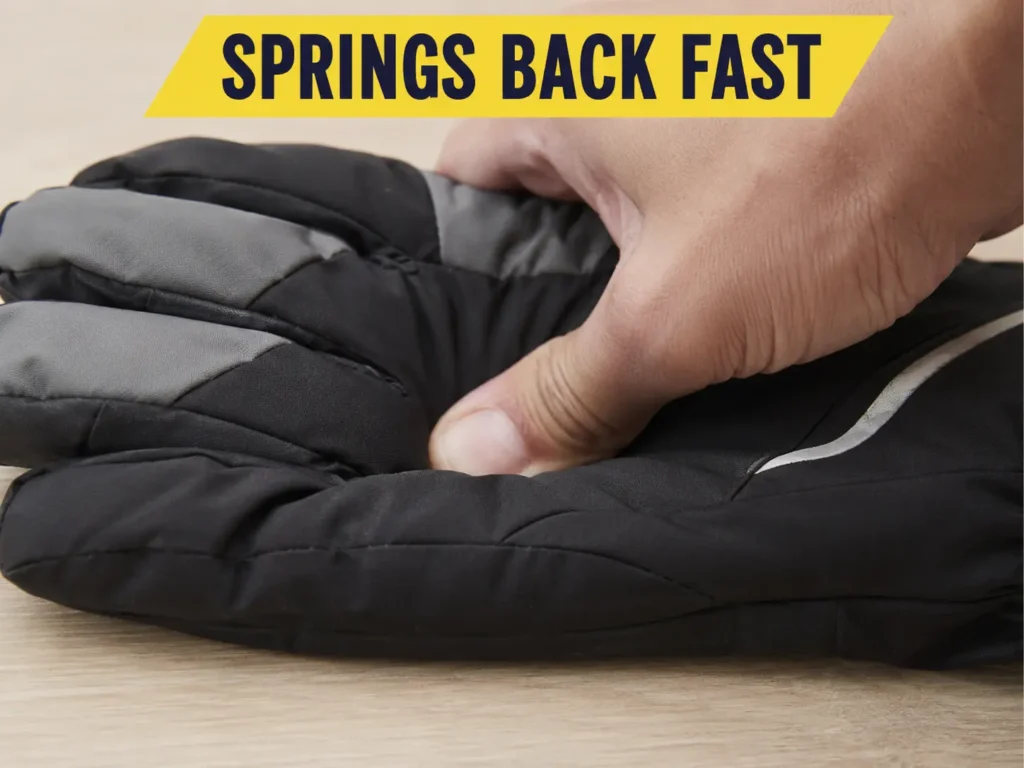
Synthetic insulation is made of fine polyester fibers engineered to mimic down’s air-trapping structure, most commonly under names like PrimaLoft or Thinsulate. Its defining advantage is what happens when it gets wet: the fibers don’t absorb water into their core, so even a damp synthetic glove keeps most of its loft and keeps trapping warm air, just somewhat less efficiently than when fully dry.
That moisture tolerance is why synthetic works for the majority of ski conditions most people actually encounter — sweaty hands, falls in wet snow, a storm day with heavy precipitation. It also dries fast, usually overnight at room temperature, and costs less than comparable high-fill down. The trade-off is bulk: matching down’s warmth with synthetic means using a thicker, heavier glove, since synthetic fibers aren’t as efficient per gram at trapping air.
Not all synthetic insulation performs identically, either. Continuous-filament constructions — long, unbroken fibers rather than short, chopped ones — tend to hold their loft longer under repeated compression than short-staple versions, which matters more for a glove used constantly through a whole season than for occasional use. This is a genuine construction difference worth checking for, not just a marketing distinction between brand names.
Down Insulation: Best Warmth-to-Weight, Worst When Wet
Down comes from the soft under-plumage of geese or ducks, and its quality is measured in fill power — the volume in cubic inches that one ounce of down occupies. Higher fill power means larger, fluffier clusters trapping more air per unit of weight, which is exactly why fill power ratings climb as high as 800 or 900 in premium products: more air trapped per ounce means a lighter, less bulky glove for the same warmth.
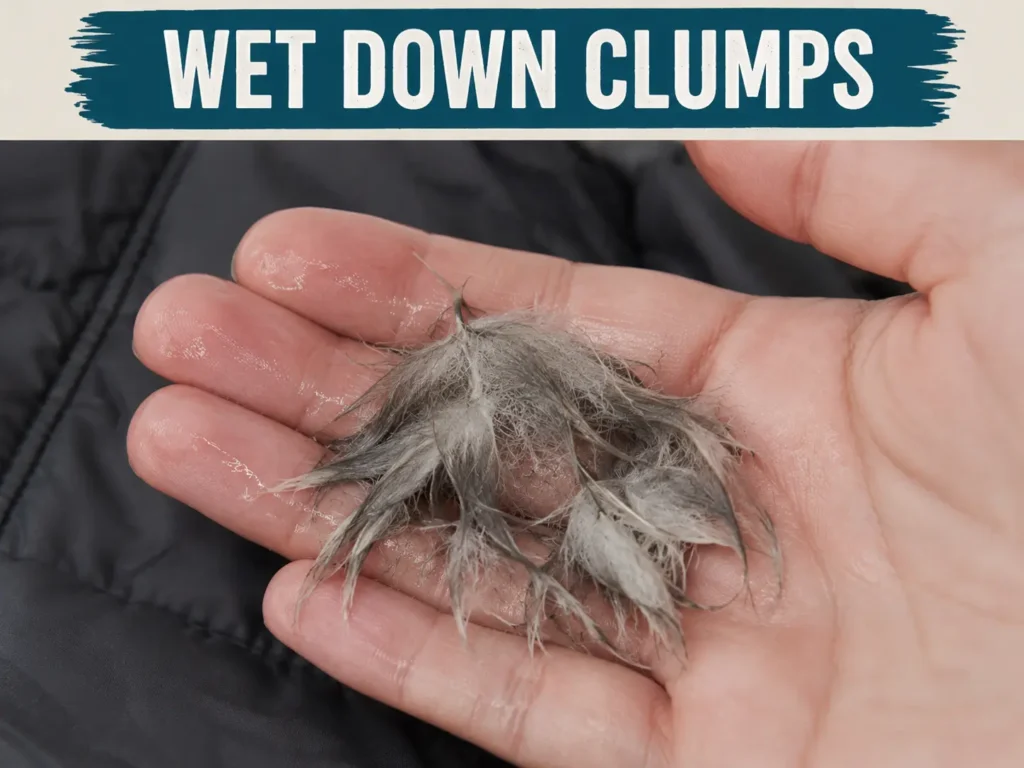
For genuinely dry, sub-zero conditions, nothing beats down’s warmth-to-weight ratio — a high fill-power mitten can feel almost weightless while outperforming a much bulkier synthetic equivalent in dry cold. The catch is absolute: once down gets wet, the clusters clump together, the trapped air pockets collapse, and the insulating value drops close to zero. It also dries far slower than synthetic, sometimes requiring specific drying techniques to avoid clumping permanently. Responsibly sourced down is generally certified under the Responsible Down Standard, worth checking for if animal welfare sourcing matters to your purchase.
There’s also a durability angle to down that’s easy to overlook next to the wet-weather headline. High-quality down, kept dry, actually resists loft loss from repeated compression better than most people expect over years of use — down clusters have a natural resilience to bouncing back that some lower-grade synthetics lack. The catch is that “kept dry” is doing a lot of work in that sentence, and for most ski conditions, staying reliably dry all season isn’t realistic.
Down vs. Synthetic, Side by Side
| Factor | Down | Synthetic |
| Warmth-to-weight | Excellent | Good, needs more bulk for equal warmth |
| Performance when wet | Fails almost completely | Retains most of its insulating value |
| Drying time | Slow, needs care | Fast, often overnight |
| Cost | Higher | Moderate |
| Durability under compression | Loses loft faster over repeated compression | Holds up better long-term |
| Best for | Dry, extreme cold, low fall frequency | Wet climates, heavy sweat, beginners |
Where Insulation Should Be Thick, and Where It Shouldn’t
Insulation performs a different job depending on where it sits on the hand, and treating the whole glove as one uniform thickness misses this. The palm takes constant compression from gripping a pole, and thick insulation there gets crushed flat during exactly the moments it’s supposed to be working, while also making it harder to feel and control the pole itself.
The back of the hand faces the opposite problem: it takes direct wind exposure with almost no compression, so thicker insulation there does real, uninterrupted work all day. Well-designed gloves map this directly — thinner, denser insulation on the palm for grip and durability, thicker, higher-loft insulation on the back of the hand for warmth. This mapping matters more than overall glove thickness for how warm hands actually feel, and it interacts directly with fit — a glove that’s slightly too small compresses insulation everywhere, not just the palm, which is covered in more depth in the fit guide on this site.
This mapping principle also explains why two gloves with identical total insulation weight can feel completely different in real use. A glove that distributes its full weight evenly across palm and hand back will feel bulkier during pole-gripping and no warmer overall than one that shifts that same total weight toward the back of the hand specifically. Total insulation quantity matters less than where a glove actually puts it.
Matching Insulation to How You Actually Ski
Resort skiers in cold, dry climates — the interior Rockies, for example — are the group best positioned to benefit from down’s warmth-to-weight advantage, since the conditions that make down fail (heavy moisture, frequent wetting) are exactly what dry, cold climates avoid.
Resort skiers in wet, coastal, or variable climates — the Pacific Northwest, much of the Northeast — are better served by synthetic almost by default, since the conditions there are precisely what causes down to fail.
Beginners who fall often, spend more time adjusting bindings and boots, and generally have more hand-to-snow contact than experienced skiers benefit from synthetic’s wet-weather tolerance regardless of climate, simply because more snow contact means more moisture exposure.
Backcountry and ski-touring skiers face a genuinely different problem: uphill travel generates significant body heat, and heavily insulated gloves worn during a climb often end up soaked in sweat before the descent even starts. A thin, uninsulated or lightly insulated glove for the climb, with a warmer insulated pair carried for the descent, solves this better than one glove trying to do both jobs.
This two-glove approach is worth taking seriously even for resort skiers with genuinely cold-sensitive hands, not just backcountry travelers. Carrying a lighter glove for high-output moments — hiking to a sidecountry stash, working on gear at the car — and switching to the heavier pair for chairlift-heavy stretches solves the same overheating-then-cooling problem that trips up backcountry skiers, just on a smaller scale.
Skiers with consistently cold hands or circulation issues benefit from prioritizing insulation weight over dexterity, and often do better in mittens than gloves for the same reason — shared finger space retains heat more efficiently than individually insulated fingers.
Family ski days with a lot of stationary time — helping kids with boots, waiting at meeting points — call for warmer insulation than the skiing itself would otherwise demand, since standing still generates far less body heat than active skiing does, regardless of insulation type.
Common Insulation Mistakes
| Mistake | Why It Backfires |
| Choosing gloves purely by thickness | A poorly constructed thick glove can insulate worse than a well-designed thinner one |
| Sizing too tight | Compresses insulation and cuts circulation — both work against warmth |
| Choosing down for a wet climate | Down’s warmth advantage disappears entirely once it’s wet |
| Drying insulated gloves on a heater vent | High heat can melt synthetic fibers and damage waterproof membranes |
| Ignoring palm vs. back-of-hand mapping | Uniform thickness wastes warmth where it’s not needed and skips it where it is |
Quick Problem Diagnosis
| What You’re Feeling | Likely Cause |
| Fingertips cold, palms fine | Glove too short — insulation crushed at the fingertips |
| Warm on the lift, cold by mid-run | Overinsulated for your activity level — sweat is cooling as you move |
| Cold all over, glove feels heavy | Waterproofing has failed and insulation is soaked |
| Fine at the start of the day, cold by afternoon | Moisture accumulating faster than it can escape — check breathability |
Protecting Insulation Over Time
Insulation loft isn’t permanent — it degrades with repeated compression over a season, and how gloves are stored between uses matters as much as how they’re used. Gloves crammed into the bottom of a ski bag under boots for an entire off-season take a lasting set in the flattened position, the same compression risk that applies during travel specifically, covered in more depth in the travel packing guide on this site.
Storing gloves loosely, rather than compressed, and letting any dampness fully dry before long-term storage both protect the insulation’s ability to loft back up season after season.
A Quick Decision Checklist
- Know your typical conditions: dry cold favors down, wet or variable conditions favor synthetic
- Check how often you fall or handle wet gear directly — more contact means more moisture exposure
- Consider your activity level: high-output uphill travel needs less insulation than stationary lift-served skiing
- Look for palm-vs-back-of-hand insulation mapping, not just a single total thickness number
- Factor in your own hand sensitivity — cold-prone hands may justify prioritizing warmth over dexterity
- Plan for storage and travel compression, not just on-mountain performance
What Extra Money Actually Buys in Insulation
Price differences between budget and premium insulated gloves usually reflect a few specific things: higher fill power in down products, continuous-filament construction in synthetics, and better insulation mapping between palm and hand back. None of these are guaranteed just because a glove costs more — checking the actual construction details matters more than trusting price as a proxy.
A mid-range synthetic glove with good palm-to-hand-back mapping often outperforms an expensive glove with uniform thickness and no real construction advantage, which is why the specific features above are worth checking regardless of budget tier.
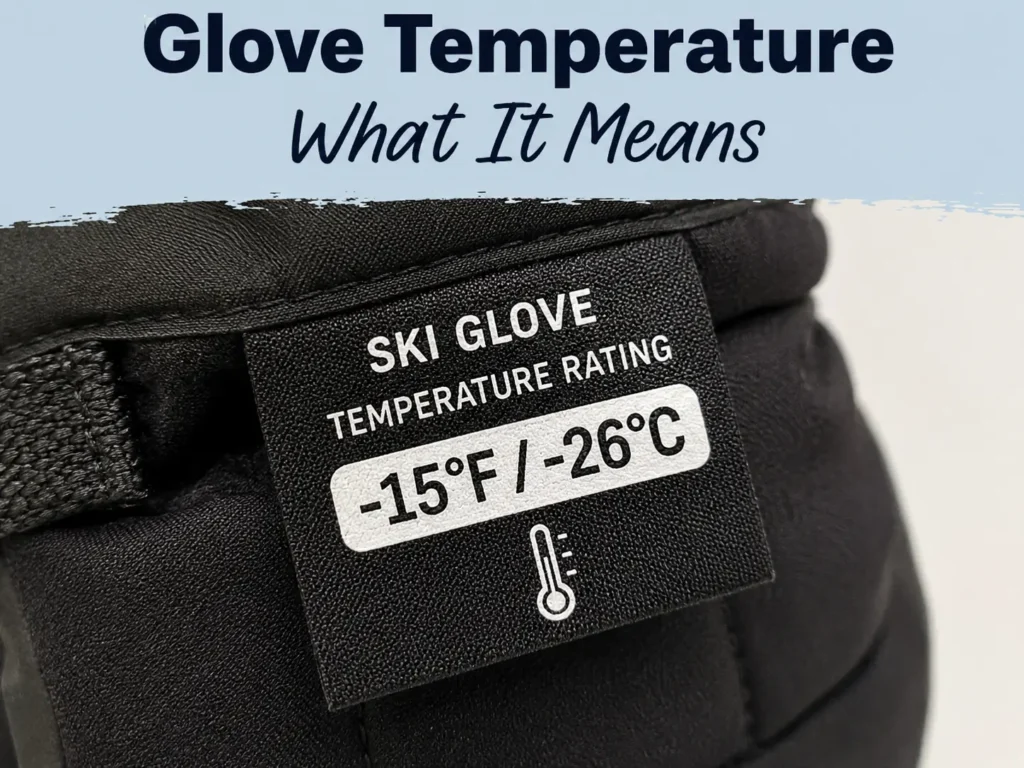
It’s also worth being skeptical of extreme temperature ratings printed on the tag. A “-40°F” rating tested in a controlled lab environment rarely reflects how a glove performs on an actual wet, windy mountain day, since real conditions add moisture and wind chill that a static lab test doesn’t capture. Treat printed ratings as a rough relative comparison between products, not a literal promise about what you’ll feel on snow.
FAQ
Is hybrid insulation — down and synthetic combined — worth it?
For skiers who want down’s warmth-to-weight with better wet-weather tolerance, hybrid constructions place synthetic fill in high-moisture zones (palm, cuff) and down in drier zones (back of hand), which is a genuine middle ground rather than a marketing gimmick, though it typically costs more than either material alone.
Does higher fill power always mean a warmer glove?
Not by itself. Fill power measures efficiency per ounce, not total warmth — a lower fill-power glove with more total down fill can still be warmer than a higher fill-power glove with very little down in it. Total fill weight matters alongside fill power.
Can I add insulation to an existing pair of gloves?
Not effective for the main insulation layer, but a thin liner glove worn underneath adds a meaningful warmth boost without altering the glove’s fit as much as trying to add bulk inside the shell itself.
Should kids’ ski gloves use different insulation than adult gloves?
Kids lose heat faster than adults and often have less patience for discomfort, so erring toward synthetic and slightly heavier insulation than an adult would choose in the same conditions is generally the safer default — the wet-weather reliability matters more given how much snow contact kids typically have.
Does insulation weight in grams tell me everything I need to know?
No — grams measure fill quantity, not construction quality or mapping. Two gloves with identical gram ratings can perform very differently depending on how that insulation is distributed and what type of fiber or down it actually is.
Is there a real difference between 100g and 200g insulation ratings?
Generally yes, in the sense that higher gram ratings correlate with more fill and typically more warmth, but the relationship isn’t perfectly linear once construction quality and mapping are factored in. A well-built 150g glove can outperform a poorly built 200g one, so the number is a useful starting filter rather than a guarantee.

Pingback: Ski Glove Insulation Explained: What PrimaLoft, Down, and Thinsulate Actually Do in Cold Weather – Ski Gloves USA