QUICK ANSWER: Ski gloves should be snug but never tight. You want roughly a quarter-inch of space at the fingertips, a palm that closes fully around a pole without straining across the knuckles, and a wrist seal that doesn’t dig in. Too tight restricts blood flow and makes hands colder, not warmer. Too loose creates dead air space that does the same thing from the opposite direction.
Not sure if fit is actually your problem, or if it’s the glove itself? The Ski Glove Finder matches you to specific gloves based on your hand type and conditions, which helps rule out a mismatched glove before you start troubleshooting fit.
- Why Fit Changes Everything About How a Glove Performs
- The Fingertip Test
- Palm and Knuckle Fit
- Thumb Mobility
- Wrist Closure
- The Mobility Test That Actually Matters
- How to Measure Your Hands Properly
- Do Leather Gloves Actually Stretch?
- Cuff Style Changes What "Correct Size" Even Means
- How Much Room a Liner Actually Needs
- Your Hands Change Size During the Day
- Sizing Quirks by Brand — What Actually Varies
- Fitting Kids' Ski Gloves Is a Different Problem Entirely
- Should Ski Gloves Be Tight or Loose?
- Common Fit Mistakes
- Decision Checklist
- Quick Problem-Diagnosis
- Frequently Asked Questions
- Final Thoughts
Why Fit Changes Everything About How a Glove Performs
A glove that’s rated for -10°F can still leave you with cold hands at 20°F if the fit is wrong.
That’s because insulation only works when it’s actually trapping air against your skin.
Too tight, and that insulation gets compressed — compressed insulation traps far less air, and restricted blood flow means less warm blood reaching your fingertips in the first place.
Too loose, and you get dead air space. The glove has to warm up before you feel any benefit, which takes real time and body heat to accomplish.
The Fingertip Test
Hestra’s own official sizing guide — one of the most established glove makers in the industry — specifies leaving about a quarter-inch of space at the fingertips.
That gap isn’t wasted room. It’s there specifically to let warm air circulate around your fingertip rather than pressing your finger directly against cold outer fabric.
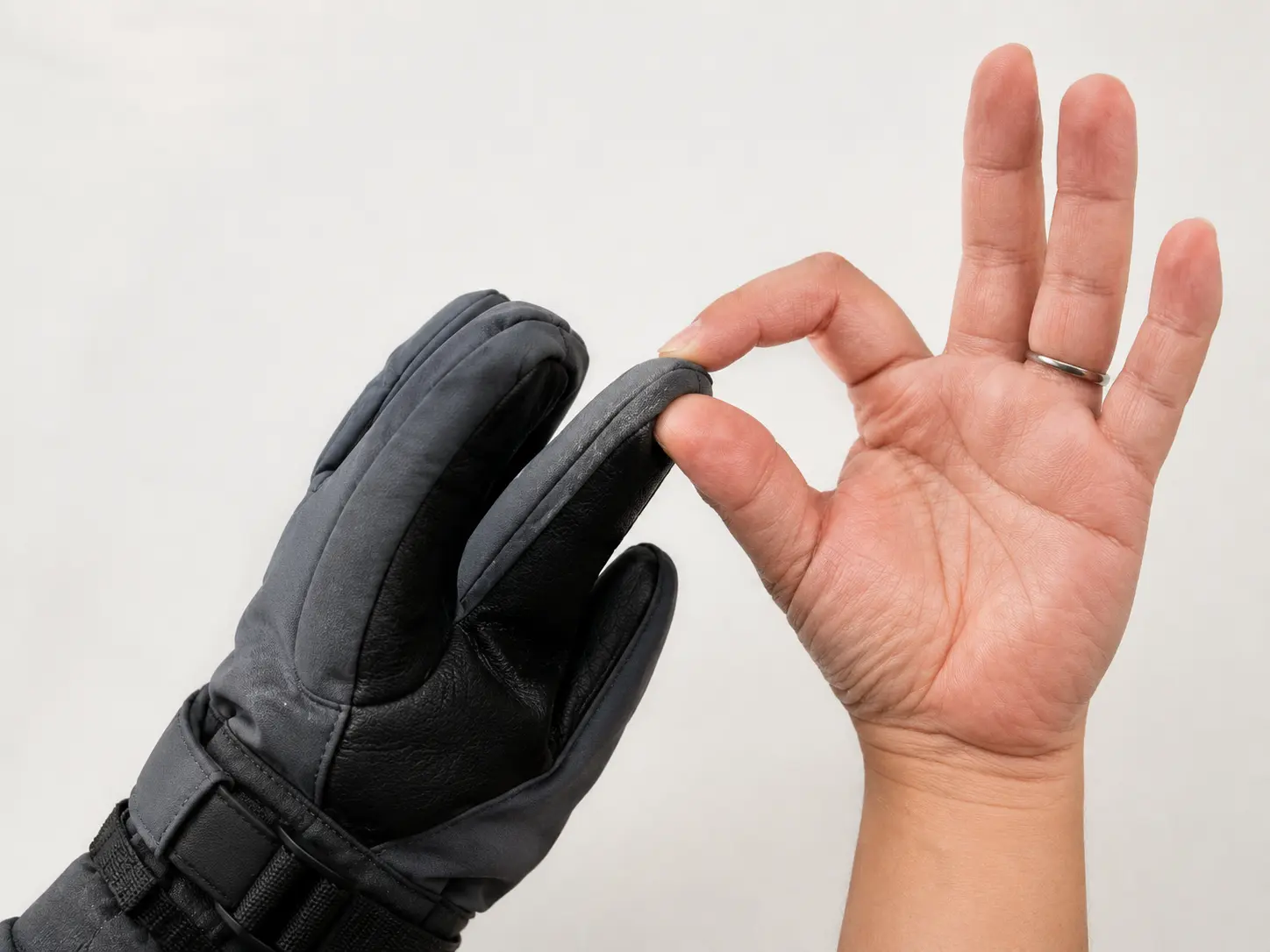
Here’s the actual test: put the glove on, make a loose fist, then gently pinch the fabric right at the tip of your index finger. You should feel a small pinch of extra material, not skin pressed flat against the seam.
If your fingertip touches the very end of the glove when your hand is relaxed, the insulation there is compressed and you’ve created what amounts to a cold bridge straight to your fingertip.
Palm and Knuckle Fit
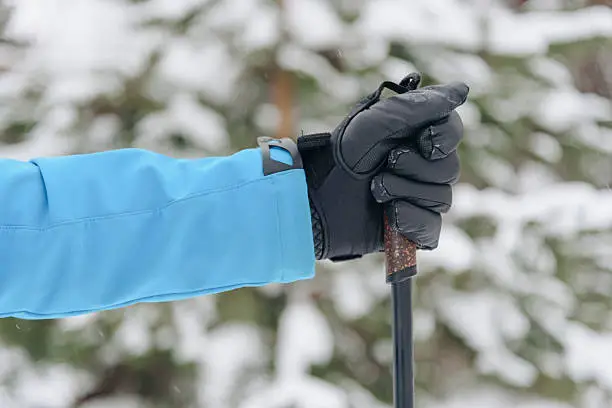
The palm needs to let you close your hand fully around a ski pole without the fabric pulling tight across your knuckles.
Tightness across the knuckles is a genuine circulation problem, not just a comfort issue — this is exactly the area where restricted blood flow shows up fastest as cold fingers.
A good test: grip an actual pole, or anything similarly shaped, and check whether the glove bunches up excessively in your palm. Excess bunched material there is a common cause of blisters on long ski days.
Thumb Mobility
Give a thumbs-up gesture with the glove on. There shouldn’t be a hard pull or resistance at the base of the thumb.
Thumbs get isolated the same way pinky fingers do, and a tight thumb joint restricts blood flow in exactly the spot most likely to go numb first on a cold chairlift.
Wrist Closure
The wrist should seal snugly enough to keep snow out without functioning like a tourniquet.
This matters differently depending on cuff style. A gauntlet cuff goes over your jacket sleeve and cinches with a drawcord — you want it snug enough to seal, not cranked down hard.
An under-cuff design sits inside your sleeve, and here the elastic should hold the glove in place without leaving a visible red line on your wrist afterward.
The Mobility Test That Actually Matters
Before deciding a glove fits, try a few real tasks with it on: zip a jacket, buckle a helmet strap, work a boot buckle.
If any of these require real effort or you find yourself using two hands where one should work, the glove is either too bulky through the fingers or too long in the finger length for your hand.
This test catches fit problems the fingertip and palm checks sometimes miss, especially with heavily insulated gloves that feel fine standing still but fight you the moment you need to actually use your hands.
How to Measure Your Hands Properly
Two measurements matter, and most brands’ size charts are built around both.
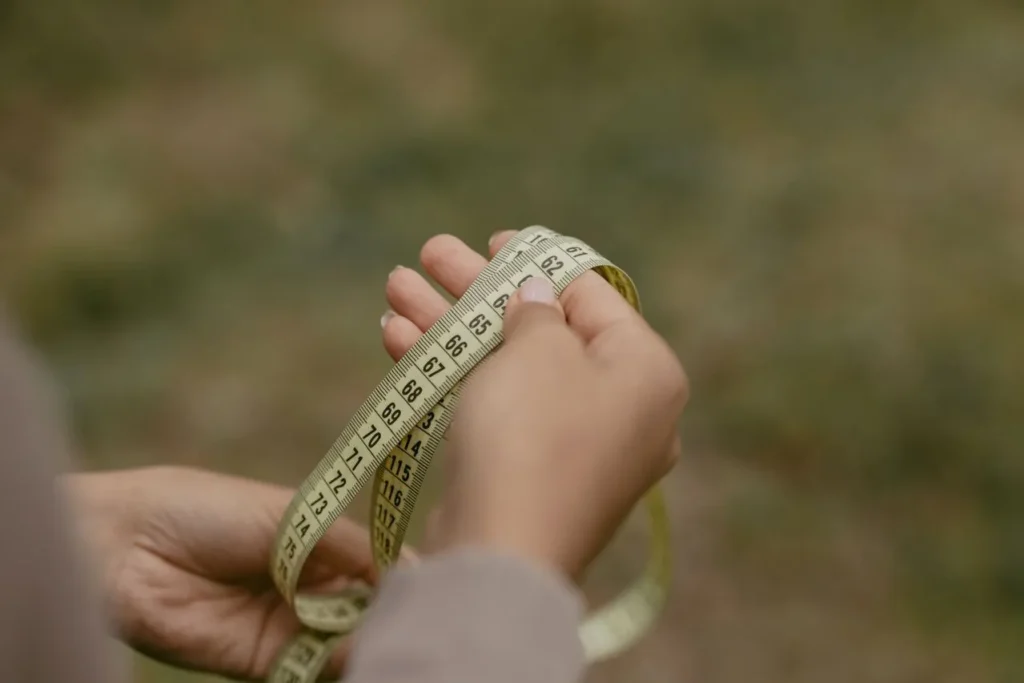
Hand circumference: wrap a tape measure around the widest part of your palm, just below the knuckles, excluding your thumb. Record it in inches.
Hand length: measure from the base of your palm, where your wrist crease sits, straight up to the tip of your middle finger.
If your two measurements land you between two different sizes on a brand’s chart, Hestra’s official guidance recommends sizing up for a looser preference and down for a snugger one — there’s no universal rule that works for every hand shape, which is why trying to force one “always size up” or “always size down” answer across every brand leads people wrong.
Always check the specific brand’s chart rather than assuming a generic S/M/L translates the same way across manufacturers — sizing systems genuinely differ between brands.
Do Leather Gloves Actually Stretch?
The honest answer is more nuanced than most sizing advice suggests.
Hestra’s own sizing documentation is direct about this: sport gloves, leather included, generally stretch very little over time. That’s a real correction to a common assumption.
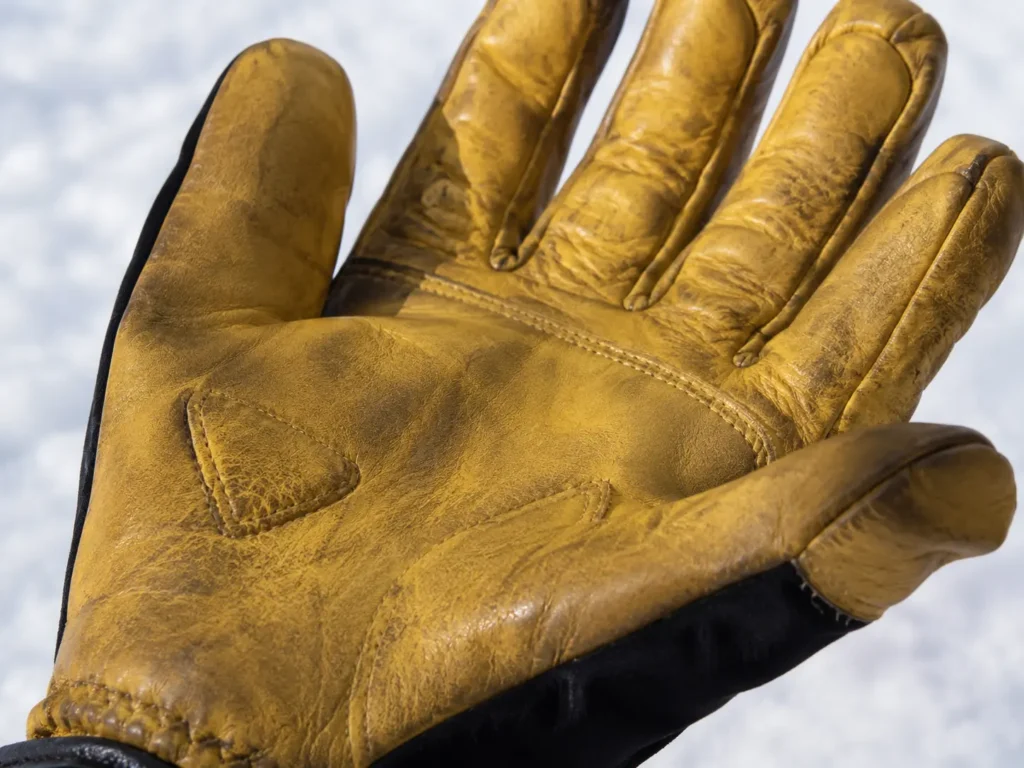
What leather actually does is break in — the material softens and gradually molds to your specific hand and grip pattern through repeated use, which changes how the glove feels without meaningfully changing its actual size.
Synthetic gloves don’t do this at all. Whatever fit you start with is close to the fit you’ll have for the life of the glove, since there’s no material softening process happening.
The practical takeaway: don’t buy a genuinely tight leather glove expecting it to loosen up significantly. A little break-in comfort, yes. A real size change, no — buy leather in the size that actually fits now.
A glove like the Hestra Army Leather Heli is a good example of this in practice — buyers consistently describe it feeling notably more broken-in and comfortable after several seasons, without ever actually changing size. For the full range of leather and synthetic picks at every price point, Best Ski Gloves for Men breaks down which construction suits which conditions.
Cuff Style Changes What “Correct Size” Even Means
Most sizing advice treats every glove the same, but cuff design shifts the actual fit math.
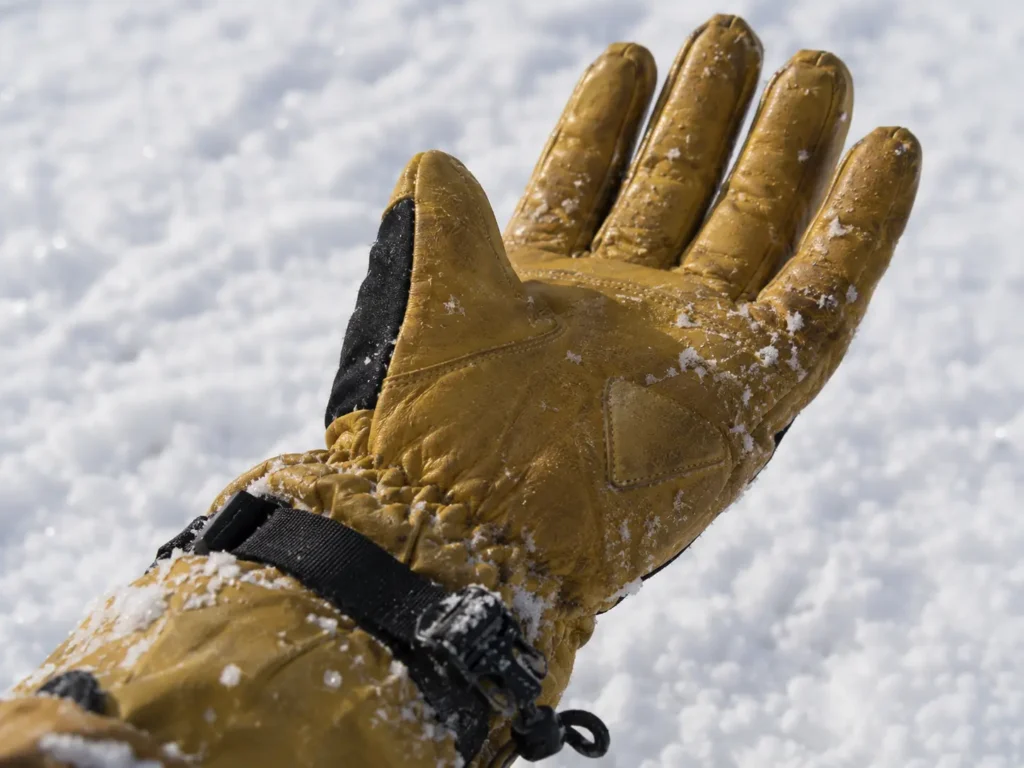
A gauntlet cuff is built to go over your jacket sleeve, which means the wrist and lower-forearm area is cut with extra room by design. If you’re between sizes on a gauntlet glove, sizing down is usually the safer call, since the cuff itself already has built-in room the size chart doesn’t fully account for.
A short or under-cuff glove sits inside your sleeve instead, which means it’s cut closer to the hand and wrist throughout. On this style, sizing up when you’re between two sizes tends to work better, since there’s no extra gauntlet volume to compensate for a slightly snug fit.
This is genuinely easy to miss, because most brand size charts give you one number regardless of cuff style — the chart doesn’t know which silhouette you’re buying, only your hand measurements.
How Much Room a Liner Actually Needs
“Try the glove on with your liner” is correct advice, but it’s incomplete without a starting point.
A standard liner glove adds meaningful bulk across the whole hand, not just a thin layer you can ignore when sizing. Most people who consistently wear a liner end up needing a full size larger than their bare-hand measurement suggests, not just a slightly looser fit within the same size.
The mistake to avoid: measuring your bare hand, buying that exact size, and only then realizing the liner won’t fit inside without compressing the outer glove’s own insulation — which defeats the purpose of layering in the first place.
If you already own the liner, bring it with you or measure your hand while wearing it. If you’re buying both at once, size the outer shell up one full size from your bare-hand measurement as a starting assumption, then adjust from there.
Your Hands Change Size During the Day
A glove that fits perfectly in a warm shop, on a resting hand, doesn’t always fit the same way three runs into an active ski day.
Physical exertion increases blood flow to your extremities, and hands genuinely swell slightly during sustained activity — the same reason rings can feel tighter after a long hike. A glove sized precisely to a cold, resting hand can start to feel snug once you’re actually moving and your hands have warmed up.
This cuts the other way too: hands that run cold to begin with can feel looser once blood flow to the fingers drops in genuinely cold conditions, which is part of why a “perfect” fit in a heated store sometimes feels different on the chairlift.
The practical fix isn’t to chase a moving target — it’s to test fit in conditions closer to actual use. If possible, try gloves on after you’ve been outside for a few minutes rather than straight from a warm car or shop, and lean toward the fingertip test rather than a first impression indoors.
Sizing Quirks by Brand — What Actually Varies
Brand size charts aren’t interchangeable, and a handful of specific patterns are worth knowing before you order online without trying anything on first.
Gordini’s Gore-Tex Storm line consistently runs on the larger side according to buyer feedback and independent reviewer notes — if you’re between sizes in a Gordini glove, sizing down is usually the right call. Kinco’s leather work-and-ski gloves tend to run close to true-to-size for most hands, with less variance than synthetic options. Budget synthetic gloves in general — the kind built around a single universal size chart across multiple glove styles — run tight more often than they run loose, since manufacturers tend to err toward a snugger default fit at lower price points.
None of this replaces checking a specific glove’s own size chart, but knowing the general direction a brand tends to run saves a return you’d otherwise only discover after the glove arrives.
Fitting Kids’ Ski Gloves Is a Different Problem Entirely
Kids’ gloves are sized by age range far more than adult gloves are, and that’s a deliberate choice rather than a shortcut — a child’s hand measurement changes fast enough within a single season that precise circumference sizing is often outdated by the next ski trip.
The practical approach for kids differs from the adult fingertip test. Some extra room at the fingertips is reasonable to plan for growth, but not so much that a child loses the ability to actually grip a pole or work a zipper — oversized kids’ gloves create the same dexterity and warmth problems oversized adult gloves do, just faster, since kids’ hands grow into the room more quickly than adults would.
Re-measuring at the start of each season is worth doing rather than assuming last year’s size still fits — a hand that grew half a size over the off-season is common, and a glove that fit in December can be genuinely tight by the following November.
Should Ski Gloves Be Tight or Loose?
Snug, not tight — and the distinction matters more than it sounds.
Snug means the glove contacts your hand throughout without pinching anywhere, and you can still make a full fist without real resistance.
Tight means the fabric is under visible stretch at the knuckles or fingertips even at rest, which compresses insulation and restricts blood flow before you’ve even started skiing.
A glove like the Dakine Titan Gore-Tex illustrates why this matters with synthetic shells specifically — since it won’t stretch or break in the way leather does, getting the size right at purchase is the only real fix; there’s no “it’ll loosen up” safety net waiting for you a few seasons in.
Common Fit Mistakes
Sizing down for a “secure” feeling
This is the single most common fit mistake, and it directly causes the cold-hands complaint people usually blame on insulation quality instead.
Forgetting to account for a liner
If you plan to wear a liner glove underneath, try the outer glove on with that liner in place before deciding on size — a glove that fits perfectly bare-handed can be genuinely too tight once a liner is added.
Trusting generic S/M/L labels across different brands
Sizing systems vary enough between manufacturers that a “medium” in one brand can measure closer to a “small” in another.
Skipping the mobility test entirely
A glove that passes the fingertip and palm checks can still fail in practice if it doesn’t let you actually use your hands for the tasks skiing requires.
Decision Checklist
- Quarter-inch of space at the fingertips when relaxed: correct fit
- Fingertip touches the end of the glove: too small, or insulation is compressed
- More than an inch of dead space at the fingertips: too large, warmth will suffer
- Full fist possible without knuckle strain: correct palm fit
- Visible fabric strain across knuckles at rest: too tight, circulation risk
- Buying leather and hoping it’ll loosen significantly: size for now, not for a future stretch that won’t really happen
- Planning to wear a liner: try the outer glove on with the liner before finalizing size
Quick Problem-Diagnosis
My fingertips are always cold, but my palm sweats. Usually a sign the glove is too tight at the fingers or wrist, restricting circulation while trapping the heat and moisture your palm is producing. Check the fingertip test above before assuming you just need warmer insulation.
My gloves feel fine standing still but fight me when I try to grip anything. That’s the mobility test catching a real problem — likely too much bulk or finger length for your actual hand size, even if the fingertip pinch test seemed fine.
One specific finger goes numb before the others. Thumbs are the most common offender since they’re structurally isolated from the rest of the hand. Check thumb mobility specifically rather than assuming the whole glove runs cold.
Women’s-specific gloves in my measured size still feel odd. Fit differences between men’s and women’s gloves go beyond just smaller sizing — narrower palms and proportionally shorter fingers mean a properly cut women’s glove, like the Dakine Women’s Sequoia Gore-Tex, often fits better than sizing down in a unisex glove. Best Ski Gloves for Women covers the full lineup of women’s-specific cuts across every budget.
Frequently Asked Questions
How much room should there actually be in a ski glove?
About a quarter-inch at the fingertips when your hand is relaxed — not a rule pulled from nowhere, but the exact standard Hestra’s own official sizing guidance specifies for their gloves, and one that translates reasonably across most brands.
Do ski gloves stretch out with wear?
Leather gloves soften and mold to your grip pattern over time, which changes the feel but not the actual size. Synthetic gloves don’t stretch or break in meaningfully at all — get the size right at purchase for either material.
Should I size up if I wear a liner glove?
Try the outer glove on with your liner before deciding. If it’s tight with the liner in, size up — a glove that’s correctly sized bare-handed can become genuinely too tight once you add a liner’s thickness.
Are mittens sized differently than gloves?
Mittens generally tolerate a bit more internal volume than gloves, since fingers sharing one compartment benefit from slightly more air space rather than needing precision around each individual finger.
How do I know if my gloves are simply too small?
If your fingertips press against the very end of the glove at rest, or you can’t make a full fist without real resistance, they’re too small — regardless of what size label is on them.
Final Thoughts
Fit problems get blamed on insulation and waterproofing far more often than they should. A properly fitted glove with modest insulation will frequently outperform a heavily insulated glove that’s too tight, simply because compressed insulation and restricted circulation undo whatever warmth the extra fill was supposed to provide. Run through the fingertip, palm, thumb, and mobility checks before assuming you need a warmer glove — often, you just need the right size of the one you already have.