Quick answer: Blisters form when friction, moisture, and pressure act on the same spot long enough for skin layers to separate — it’s a gradual mechanical process, not a random bad-luck event. Preventing it comes down to getting fit right, using the correct liner, managing moisture, breaking gloves in properly, and covering known pressure points before they become a problem, rather than treating any single fix as a complete solution.
If you’re dealing with recurring blister spots regardless of what you try, it’s worth checking whether the Ski Glove Finder points you toward a glove shape that fits your hand better than what you’re currently using, since no amount of liner or taping fully compensates for a glove that’s the wrong shape to begin with.
This is a prevention-focused guide — seven specific habits, in the order they’re worth addressing. If you’re already dealing with raw or damaged skin right now, our guide on what to do when skin is already rubbed raw covers the field response; this post is about stopping it from getting there in the first place.
- Why Blisters Actually Form
- 1. Get the Fit Right Before Anything Else
- 2. Choose the Liner Material Deliberately
- 3. Manage Moisture Actively, Not Just Reactively
- 4. Break New Gloves In Before a Full Day
- 5. Cover Known Pressure Points Before You Feel Anything
- 6. Take Genuine Breaks From Grip Load
- 7. Know When a Glove Has Reached the End of Its Useful Life
- Seams and Construction Details That Matter More Than They Look
- Common Mistakes That Undo Otherwise Good Prevention Habits
- A Quick Pre-Season Checklist
- Frequently Asked Questions
- The Takeaway
Why Blisters Actually Form
Blisters aren’t caused by friction alone. Medical literature on friction blisters describes the mechanism as mechanical separation of skin cells within the epidermis, driven by repeated shear force against the same spot — friction concentrates that force, moisture increases how much friction the skin experiences at a given pressure, and repetition over time is what actually causes the separation. Remove any one of those three factors and blister risk drops sharply, which is why prevention strategies target friction, moisture, and pressure independently rather than treating blisters as one single problem with one single fix.
This also explains why blisters seem to appear suddenly. The mechanical damage has usually been accumulating for hours before it crosses the threshold where you actually feel it — by the time there’s pain, the process has been running most of the day.
1. Get the Fit Right Before Anything Else
Fit is the foundation every other fix sits on top of. A glove that’s too tight concentrates pressure at the same points constantly. A glove that’s too loose lets the hand shift and re-rub the same areas with every grip cycle. Both create the exact repeated-shear pattern that leads to blisters — they just do it through opposite mechanisms.
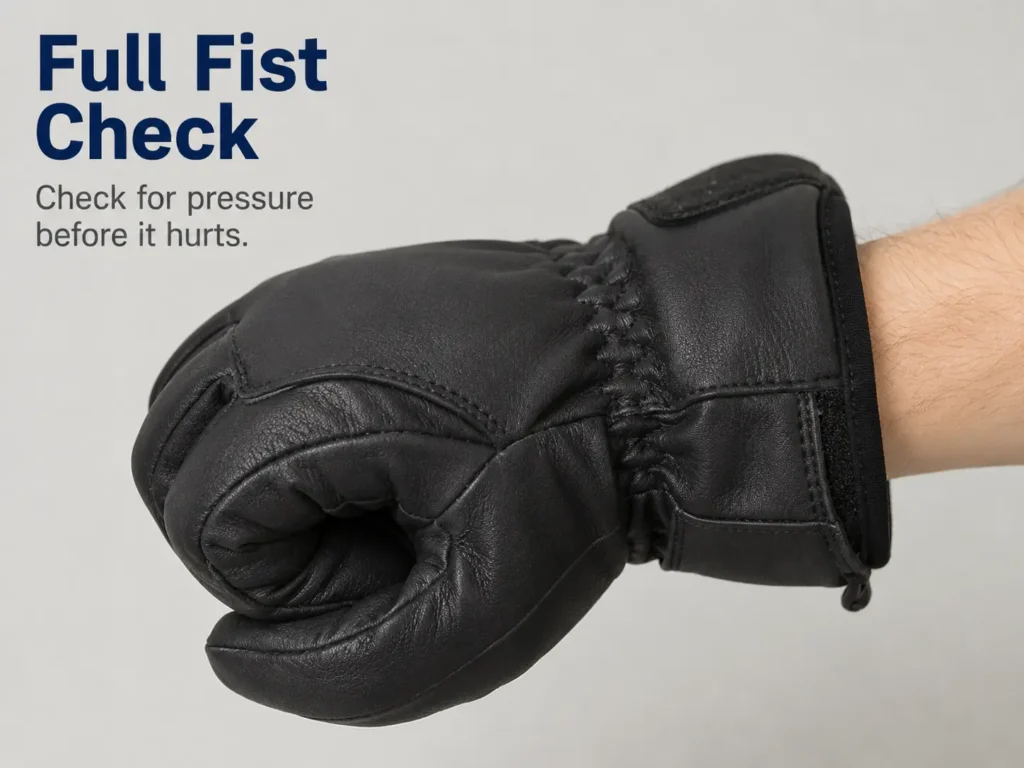
The fist grip test catches most fit problems that an open-hand fitting misses: make a firm fist as though gripping a pole and hold it for ten seconds. Material bunching across the knuckles, a seam pressing into a finger, or fingertips jammed against the glove end all show up under this load in a way they don’t when the hand is simply open and relaxed in the store.
If fit issues keep showing up in the same location across different gloves, that’s a signal worth taking seriously rather than working around indefinitely. Hand shape varies more between manufacturers than most buyers expect — the same stated size can run narrow in one brand’s cutting pattern and noticeably wider in another’s, which is why a recurring pressure point across multiple pairs usually points to a shape mismatch rather than bad luck with any individual glove. Our full buying guide across ski glove budget tiers breaks down which models tend to run narrow or wide in the palm, which matters more for blister prevention than most spec sheets suggest.
2. Choose the Liner Material Deliberately
A liner sits directly against skin, which makes its material one of the biggest levers in blister prevention — bigger, in a lot of cases, than the outer shell itself.
Silk and merino wool liners reduce friction at the skin-liner interface more effectively than cotton or generic synthetic blends, and they manage moisture at the same time, which matters because damp skin experiences meaningfully more friction than dry skin under identical pressure. Cotton in particular holds moisture against skin rather than moving it away, which works against blister prevention on both fronts at once.
Liner thickness matters too, but not in the direction most skiers assume. A liner that’s too thick for the glove’s internal volume increases pressure rather than reducing friction, which can make blister risk worse, not better, especially in a glove that already fits snugly.
3. Manage Moisture Actively, Not Just Reactively
Hands sweat during skiing regardless of air temperature, and that moisture is one of the two variables — alongside pressure — that determines how much damage a given amount of friction actually causes. Managing it isn’t a one-time fix; it’s an ongoing habit across the day.
Breathable glove shells let some of that moisture escape rather than trapping it entirely, and a wicking liner pulls sweat away from the skin surface toward the shell, where it has a better chance to evaporate. Neither eliminates sweat, but both reduce how much of it sits directly against skin at any given time.
On the mountain, loosening the wrist strap slightly during lift rides lets some airflow reach the interior, and swapping to a dry liner at a lunch break — if you’re carrying a spare — resets the moisture level for the second half of the day rather than compounding what built up during the first half.
Carrying a second liner is a small enough thing to pack that it’s worth treating as standard gear for any full-day trip, not just an occasional precaution for unusually warm conditions. The cost of a spare liner is minor compared to losing the second half of a ski day to hands that have been progressively softening under trapped moisture since the first run. For skiers who run warm or grip poles hard enough to sweat noticeably, this single habit often does more for blister prevention across a full day than any single piece of gear.
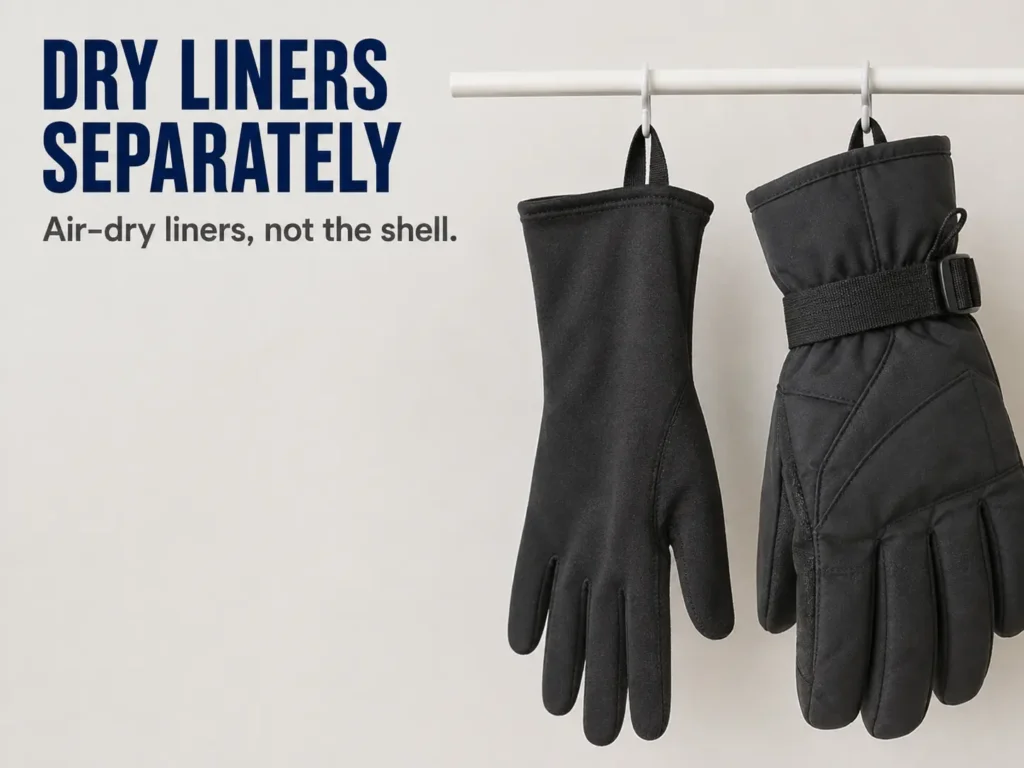
It’s also worth paying attention to how quickly a liner actually dries between sessions, not just whether it eventually does. A liner that’s still slightly damp the next morning starts that day’s skiing already behind, since the moisture accumulated on day one hasn’t fully cleared before day two’s friction begins. Hanging liners fully separated from the shell, rather than balled up inside it overnight, makes a meaningful difference here — airflow reaches all sides of the fabric instead of just the exposed surface.
4. Break New Gloves In Before a Full Day
New gloves are stiffer than they’ll ever be again, and that stiffness concentrates pressure at the same flex points repeatedly before the material has had a chance to soften with use. Wearing brand-new gloves straight into a full day on the mountain is one of the more avoidable ways blister risk gets set up.
A short break-in routine at home does most of the work: wear the gloves for fifteen to thirty minutes while doing normal hand movements, make repeated fists, grip something roughly pole-width. Most gloves show a noticeable improvement in flexibility within a couple of short sessions; stiffer leather-heavy constructions can take a few evenings longer.
Skipping this step doesn’t guarantee a blister, but it stacks the odds against you on exactly the kind of long, repetitive-grip day where blister formation is most likely in the first place.
5. Cover Known Pressure Points Before You Feel Anything
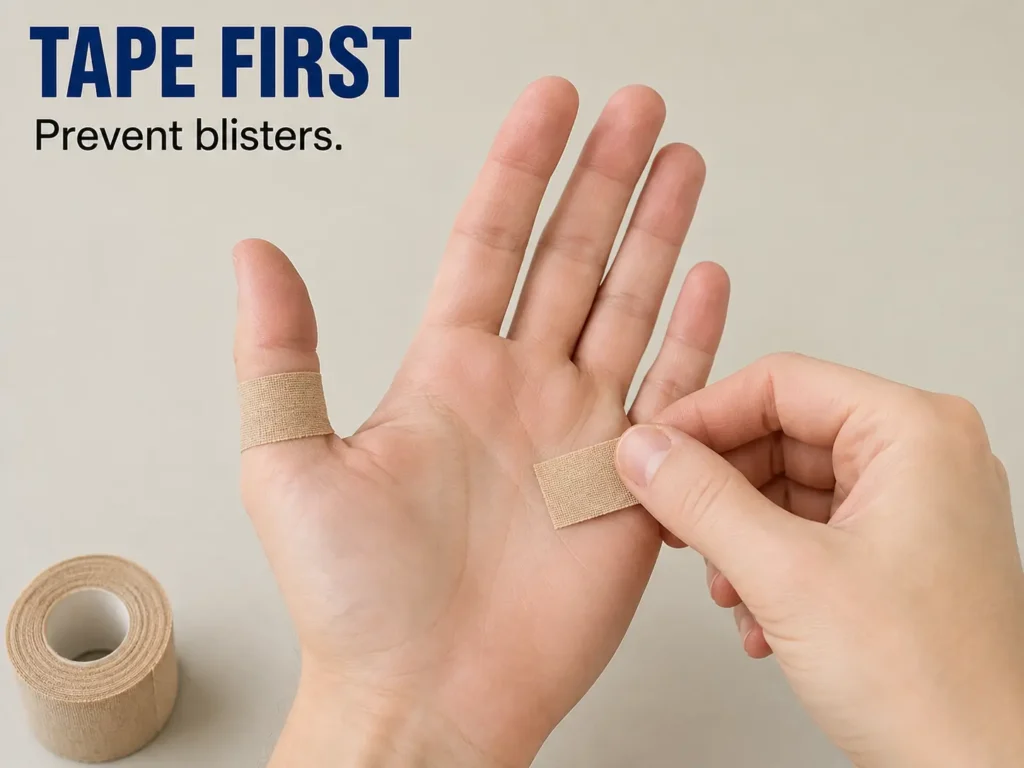
Once you know where your hands tend to develop hot spots — most skiers have one or two consistent locations, usually the thumb base or a knuckle — the most effective move is covering that spot before skiing starts, not waiting for a warning sign.
Moleskin or athletic tape applied to a known pressure point works by changing what’s actually in contact with the skin at that location, spreading the shear force across a wider area rather than concentrating it at one point. The American Academy of Dermatology recommends exactly this kind of proactive coverage for anyone who knows a friction-prone area in advance, and the same logic applies directly to a known glove pressure point.
This only works as prevention if it’s applied before the damage starts. Once skin is already irritated, padding manages the problem rather than preventing it — which is a different situation with a different fix.
6. Take Genuine Breaks From Grip Load
Continuous, sustained grip pressure on a pole handle keeps the same skin area under load for hours without relief, and that sustained pressure is a meaningful part of the blister equation independent of fit or material quality.
Deliberately loosening your grip on flatter sections, lift rides, and traverses gives the skin brief recovery windows throughout the day rather than one long uninterrupted exposure. This costs nothing and requires no gear changes — it’s a technique adjustment, and it’s one of the more overlooked prevention factors because it doesn’t involve buying anything.
For anyone doing particularly grip-intensive terrain — steep, technical, or heavily moguled runs — this matters more than it does for groomed cruising, simply because the grip force involved is higher and more sustained.
7. Know When a Glove Has Reached the End of Its Useful Life
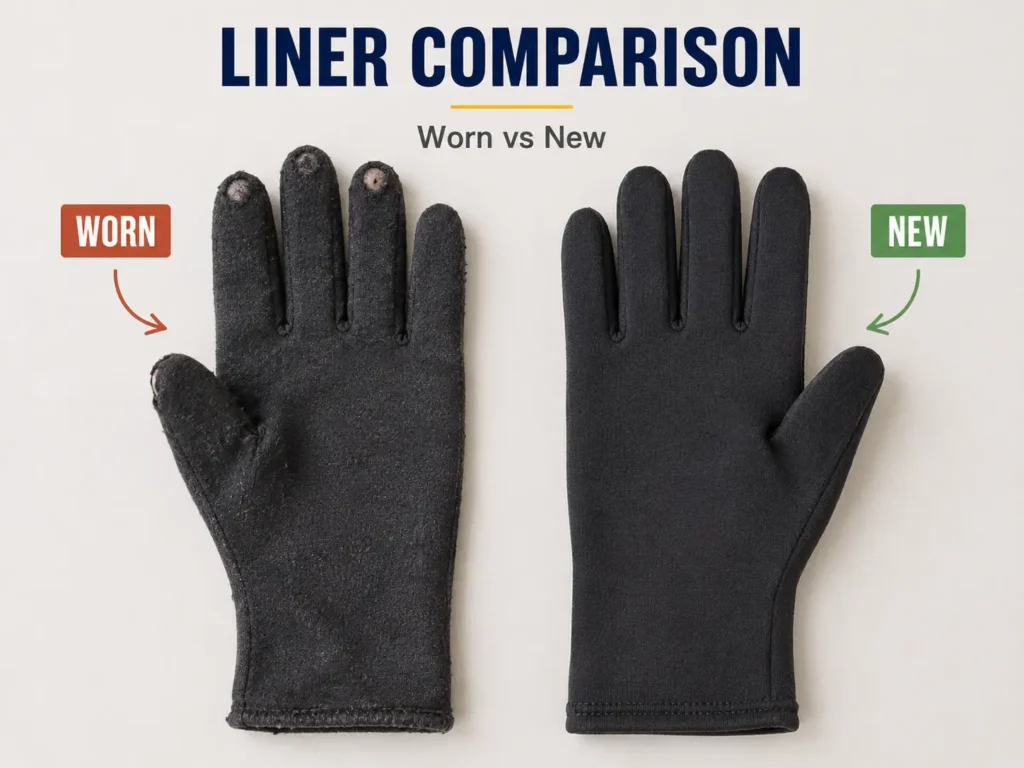
Materials degrade. A liner that’s been through many wash-and-wear cycles loses some of its moisture-wicking capability. Waterproof-breathable shells rely on maintained fabric treatments to keep moisture from working against the interior, and once that treatment wears down, the whole moisture-management system the glove depends on starts working against you instead of for you.
If blister-prone spots keep showing up in a pair of gloves that used to perform fine, and fit hasn’t changed, aging materials are a reasonable explanation worth considering before assuming a technique or habit is suddenly the problem.
Seams and Construction Details That Matter More Than They Look
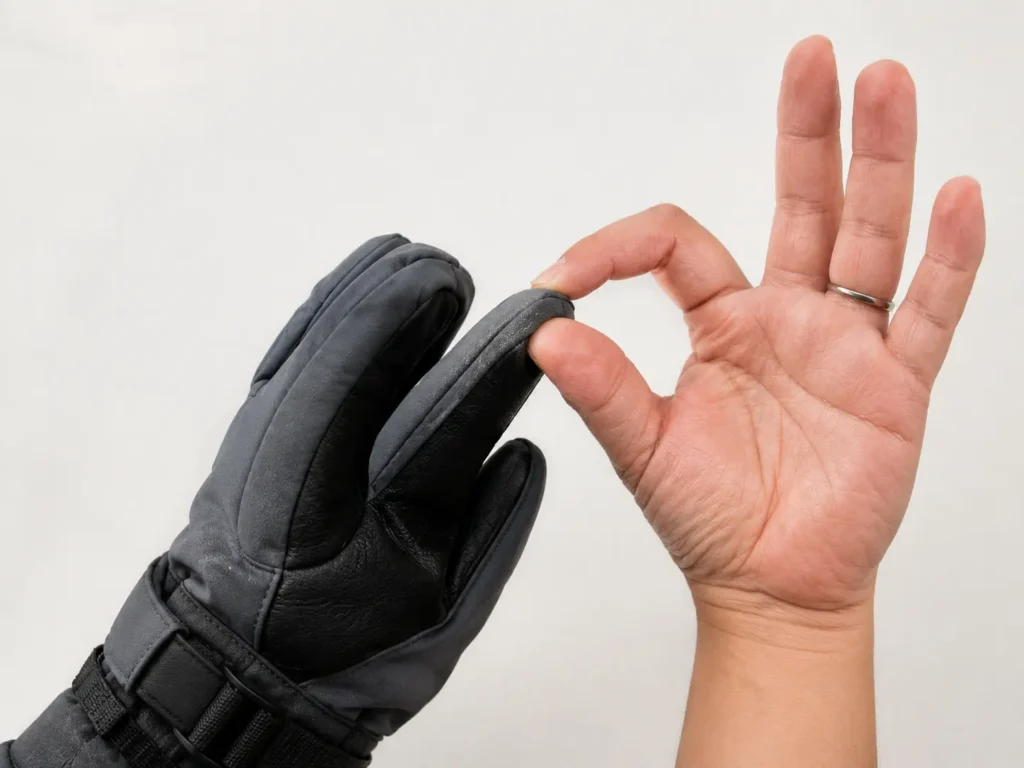
Seam placement is easy to overlook when trying gloves on, because seams that sit fine against an open, relaxed hand can land somewhere entirely different once the hand closes into a grip. A seam running along the side of a finger or across the palm’s high-pressure zone doesn’t announce itself in the store — it announces itself three hours into a ski day, after hundreds of grip cycles have pressed it into the same strip of skin.
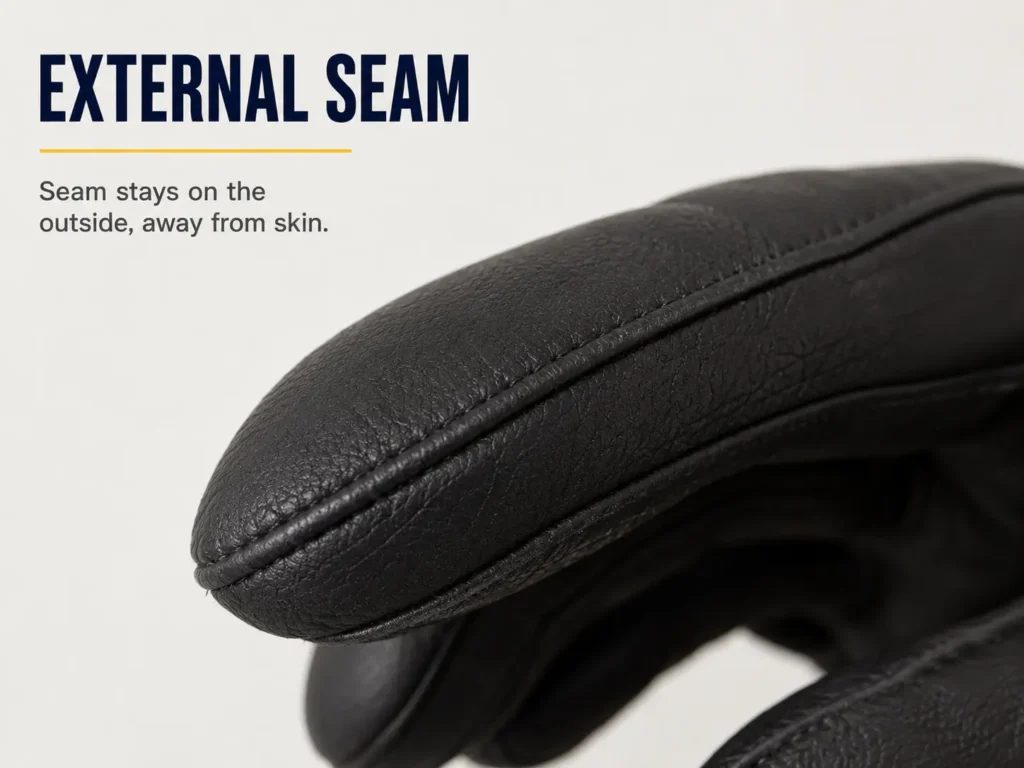
External seam construction, where stitching sits on the outside of the glove rather than pressing into the interior, avoids this problem structurally rather than requiring the wearer to work around it. It’s a genuine construction quality difference, and it tends to correlate with overall build quality more broadly — a glove that’s cut carefully enough to route seams away from pressure zones is usually cut carefully in other ways too.
Checking for this before buying is straightforward: run a finger along the inside of the glove, focusing on the palm and the sides of each finger. Raised stitching in a high-contact zone is a legitimate reason to try a different model, even if the glove otherwise looks and fits well.
Common Mistakes That Undo Otherwise Good Prevention Habits
Doubling up on liners once discomfort starts. The instinct when something feels wrong partway through a ski day is to add a layer, but an extra liner squeezed into a glove that’s already snug increases pressure rather than reducing friction — working directly against blister prevention rather than helping it.
Ignoring a hot spot because “it’s not that bad yet.” The gap between a mild hot spot and skin damage that actually needs recovery time is often smaller than it feels in the moment, especially once a cold has dulled sensation and is delayed when a warning actually registers as pain.
Assuming a more expensive glove automatically means lower blister risk. Price correlates loosely with construction quality, but a premium glove with the wrong hand shape for a particular wearer causes exactly the same friction pattern as a budget glove with the same fit mismatch. Fit and seam placement for your specific hand matter more than price point.
Washing liners in a way that damages their moisture-wicking finish. Hot water and standard detergent can degrade the treatments that make merino and synthetic wicking liners work as intended, which quietly increases blister risk over a season even though nothing about the glove looks different.
Skiers with naturally higher hand-sweat output deal with the moisture side of this equation more than others, and benefit disproportionately from liner choice and active moisture management compared to skiers whose hands stay relatively dry all day.
Beginners also see this more often, for a fairly simple reason: less efficient grip technique means more total grip force applied over a given run, which is exactly the repeated-shear pattern that drives blister formation. This tends to improve somewhat with experience as grip technique becomes more efficient, independent of any gear changes at all.
Anyone doing full, multi-run days rather than a few relaxed laps is accumulating more total shear cycles across the session, which is the same reason duration matters as much as intensity in how blister risk builds over a day.
A Quick Pre-Season Checklist
Fit checked with the fist grip test, not just an open-hand try-on. Liner material chosen deliberately — merino, silk, or a quality synthetic, not cotton. A plan for moisture management beyond “hope for the best,” whether that’s a breathable shell, a spare liner, or both. New gloves broken at home before their first full day out. Known pressure spots identified from past experience and ready to tape preemptively. A genuine intention to loosen grip periodically rather than white-knuckling an entire run.
Frequently Asked Questions
How long does it actually take for a blister to form?
It depends on friction intensity and moisture level, but the process is usually running for at least an hour or more before it’s felt as pain — which is why prevention that starts before skiing matters more than reacting once discomfort appears.
Can a glove that fit fine last season suddenly cause blisters this season?
Yes. Liner material and shell coatings both degrade with use and washing, and a glove that performed well when new can gradually lose the moisture management that was keeping blister risk low, even with identical fit.
Is taping a preventive measure or just a treatment?
Both, depending on timing. Applied before skiing to a known pressure point, it’s genuine prevention. Applied after a hot spot has already appeared, it’s damage control rather than prevention — still useful, but a different function.
Do thicker gloves reduce blister risk?
Not automatically. Thickness that adds bulk without matching the glove’s internal volume can increase pressure rather than reduce friction, which works against blister prevention rather than for it.
The Takeaway
None of these seven habits work in isolation the way marketing copy for any single product might suggest — fit, liner choice, moisture management, break-in, targeted padding, grip habits, and material lifespan all interact, and blister risk drops most when several of them are addressed together rather than relying on one fix to solve everything.
The pattern worth remembering is that blisters build gradually and are far easier to prevent than to manage once they’ve formed. A few minutes of attention before the first run — checking fit under load, taping a known pressure point, confirming gloves are actually dry — does more for a full day of comfortable skiing than almost anything applied after the fact, and it costs nothing beyond the time it takes to do it.