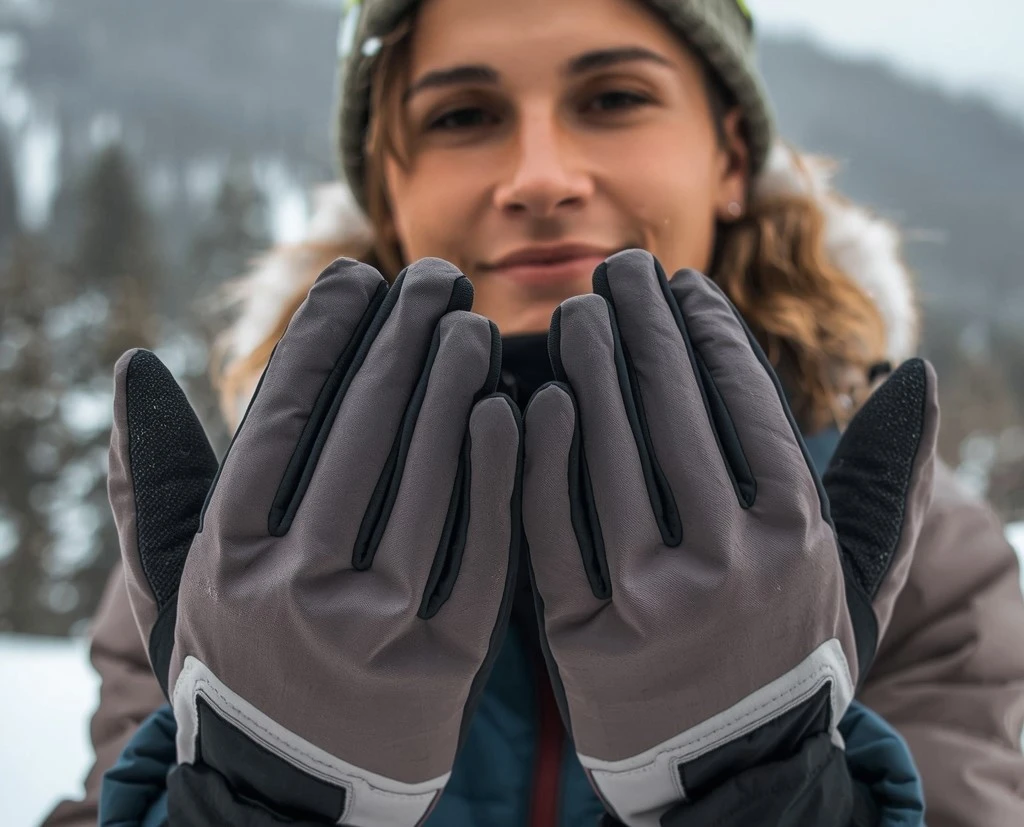
Quick answer: Most skiing frostbite doesn’t happen while you’re actively skiing — it happens on the chairlift, where stationary hands sit exposed to wind for five to fifteen minutes at a stretch. Preventing it comes down to four things working together: gloves that fit without restricting blood flow, a sealed gap between glove and jacket sleeve, dry liners, and covering your hands on every single lift ride. Get those four right and you’ve addressed the cause behind the large majority of cases.
If you’re not confident your current gloves are doing their part, the Ski Glove Finder matches you to a pair built for the conditions you actually ski in.
This article walks through why fingers are the first place frostbite shows up, what’s actually happening in the tissue, the specific habits that cause it despite decent gear, and exactly what to do if warning signs appear on the mountain.
- What's Actually Happening When Skin Freezes
- Why the Chairlift Is the Real Danger Zone
- The Three Stages, and Why Only the First One Gives You Room to Act
- The Habits That Cause Frostbite Even When Gear Isn't the Problem
- A Practical Framework You Can Run Through Before Every Session
- Matching Your Prevention to the Conditions You're Actually Skiing In
- Warning Signs and What Each One Actually Means
- What to Do If It Happens on the Mountain
- Who Needs to Be More Careful Than Average
- The Checklist Before Your First Run
- Frequently Asked Questions
- The Takeaway
What’s Actually Happening When Skin Freezes
Frostbite is tissue freezing. At a cellular level, when skin gets cold enough for long enough, ice crystals start forming inside and around the cells, and those crystals physically tear at the cell structure. The damage that shows up later — the swelling, the blistering — often comes from what happens after rewarming, when blood flow returns to tissue that’s already been injured. That’s why frostbite frequently looks worse a day after the exposure than it did in the moment.
Fingers are usually first for two straightforward reasons. They’re the farthest point from the heart, so blood has the longest trip to make, and the body’s cold response prioritizes the core over the extremities — it pulls blood away from fingers before it touches circulation to bigger muscle groups. On top of that, fingers have a lot of surface area relative to their volume, so they lose heat to the surrounding air faster than almost anywhere else on the body.
Wind matters more than most skiers assume. The CDC notes that frostbite affects areas like fingers, toes, ears, and the nose, and wind chill is a major reason those areas are hit first — moving air pulls heat away from skin far faster than still air at the same temperature. Checking the actual wind chill, not just the air temperature, tells you more about your real risk than a thermometer does. The National Weather Service’s wind chill chart shows how sharply exposure time drops once wind enters the picture — skin that could handle hours of calm cold might only tolerate half an hour once a stiff wind is added.
Why the Chairlift Is the Real Danger Zone
Here’s the part that catches most skiers off guard: hands that feel completely fine at the bottom of a run often aren’t fine by the top of the lift.
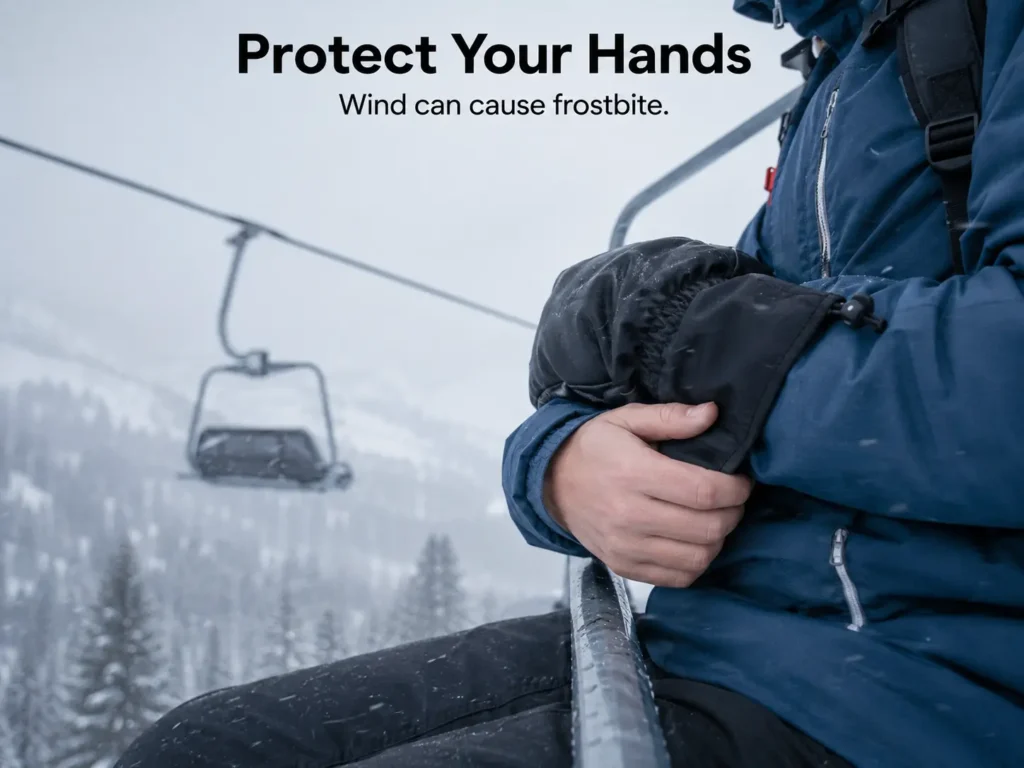
Skiing generates body heat and keeps hands moving, which helps offset the cold. Sitting on a chairlift removes both of those. You stop generating heat, your hands go still, and the lift itself adds wind on top of whatever’s already blowing. A five-minute ride on a windy day can undo the warmth built up over an entire run, and a longer lift can push hands into frostnip territory before you’ve even reached the top.
The reason this catches people off guard is that it doesn’t feel dramatic. There’s no single moment where things go wrong — just a slow, easy-to-miss cooling that a skier attributes to “it’s just cold today” rather than recognizing it as the specific, preventable pattern it actually is.
The fix is simple and doesn’t depend on buying anything: cover your hands on every lift ride, regardless of how warm they feel getting on. Tuck them against your body, under your arms, or inside your jacket. It costs nothing and it closes the single biggest gap in most skiers’ prevention routine.
The Three Stages, and Why Only the First One Gives You Room to Act
| Stage | What it feels/looks like | What’s happening | What to do |
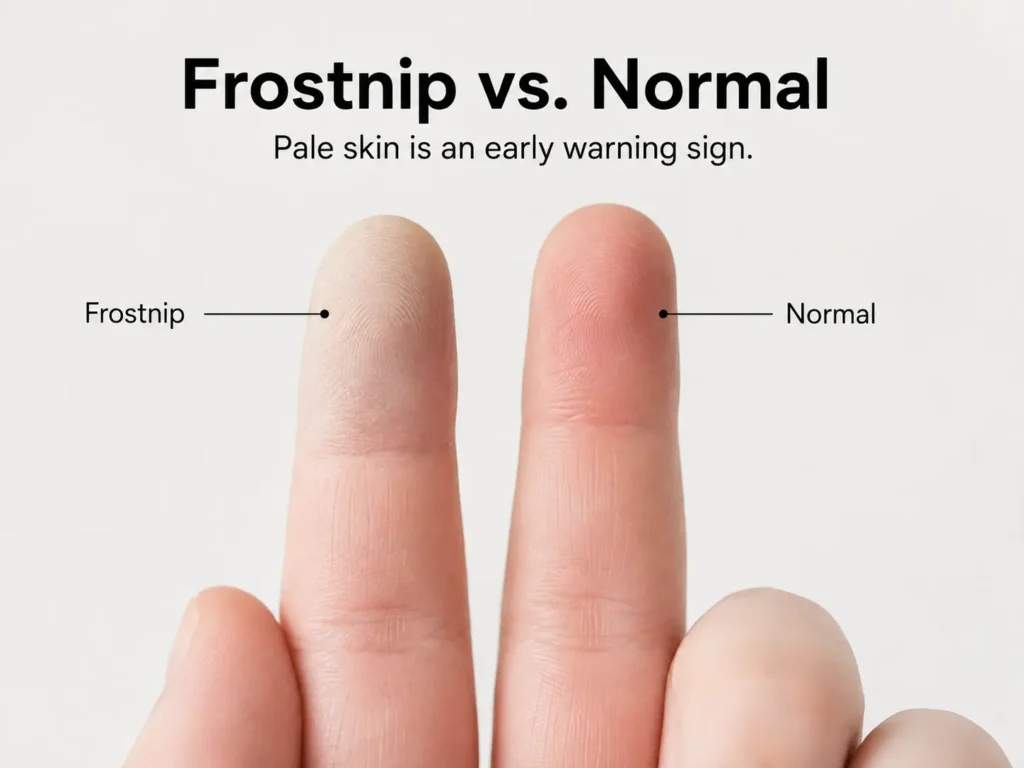
| Frostnip | Tingling, redness, mild numbness, skin still soft | Blood flow reduced but not stopped — fully reversible | Rewarm now — this is your window |
| Superficial frostbite | Skin pale or white, firm on the surface, soft underneath | Outer skin layer has frozen; blistering likely on rewarming | Get out of the cold, rewarm carefully, don’t rub, see a doctor |
| Deep frostbite | Skin white or grey, hard, no sensation | Freezing has reached deeper tissue | Medical emergency |
Frostnip is the entire prevention window. Once it progresses past that point, you’re managing an injury rather than preventing one, and the shift can happen within minutes once wind, moisture, and restricted circulation are all working against you at once.
The tricky part is that the warning sign fades rather than intensifies. Tingling gives way to numbness, and numbness can feel like relief — like the cold finally stopped bothering you. It hasn’t. The nerve signal has simply dropped off because circulation has dropped further. That’s the moment to treat it as urgent, not the moment to relax.
The Habits That Cause Frostbite Even When Gear Isn’t the Problem
A glove that’s slightly too tight
Insulation only works if blood is actually reaching your fingers to carry heat into it. A glove that compresses the fingers — even mildly — restricts that flow regardless of how much fill surrounds the finger. Gripping a ski pole for an extended stretch compounds this, since sustained grip pressure reduces circulation through the palm on its own.
A gap between glove and jacket sleeve
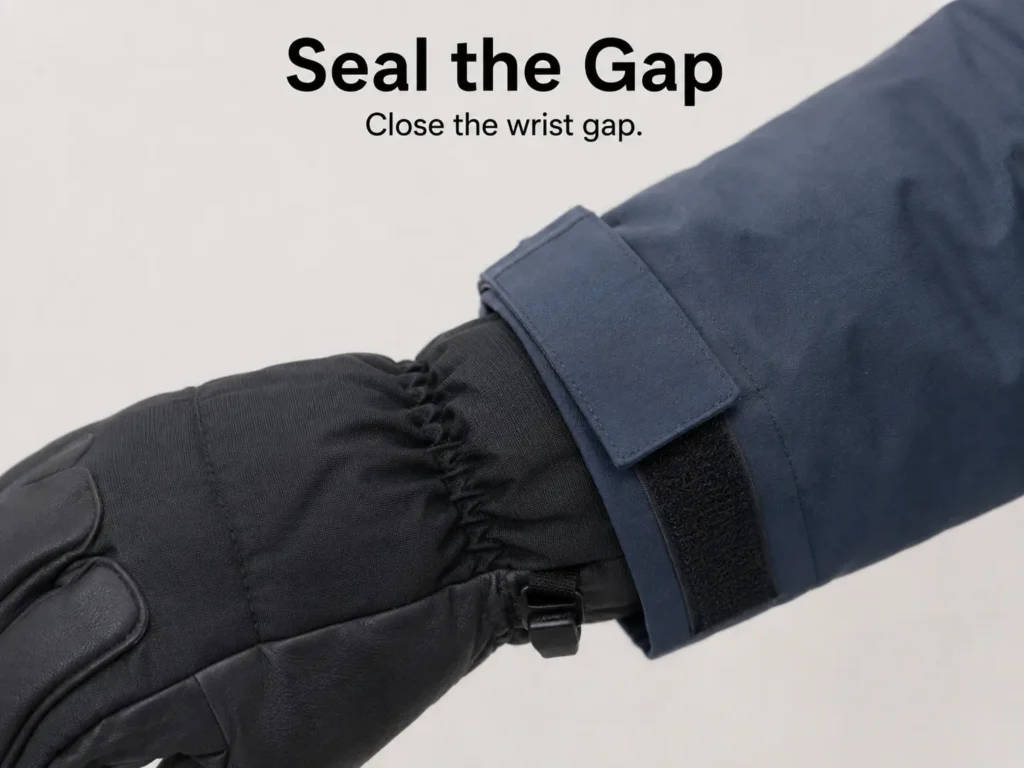
This is the entry point for wind to reach the wrist, where blood vessels sit close to the skin surface and heat loss happens fast. It’s an easy thing to miss because it doesn’t show up as a problem until you’re already on the lift.
A liner that never fully dried
Water pulls heat away from skin dramatically faster than dry air does, and a liner that’s absorbed sweat over a few hours of skiing works against the insulation around it rather than with it. This is why hands often feel fine in the morning and progressively worse by early afternoon — it’s rarely the temperature dropping; it’s moisture building up inside the glove.
Ignoring the early signal
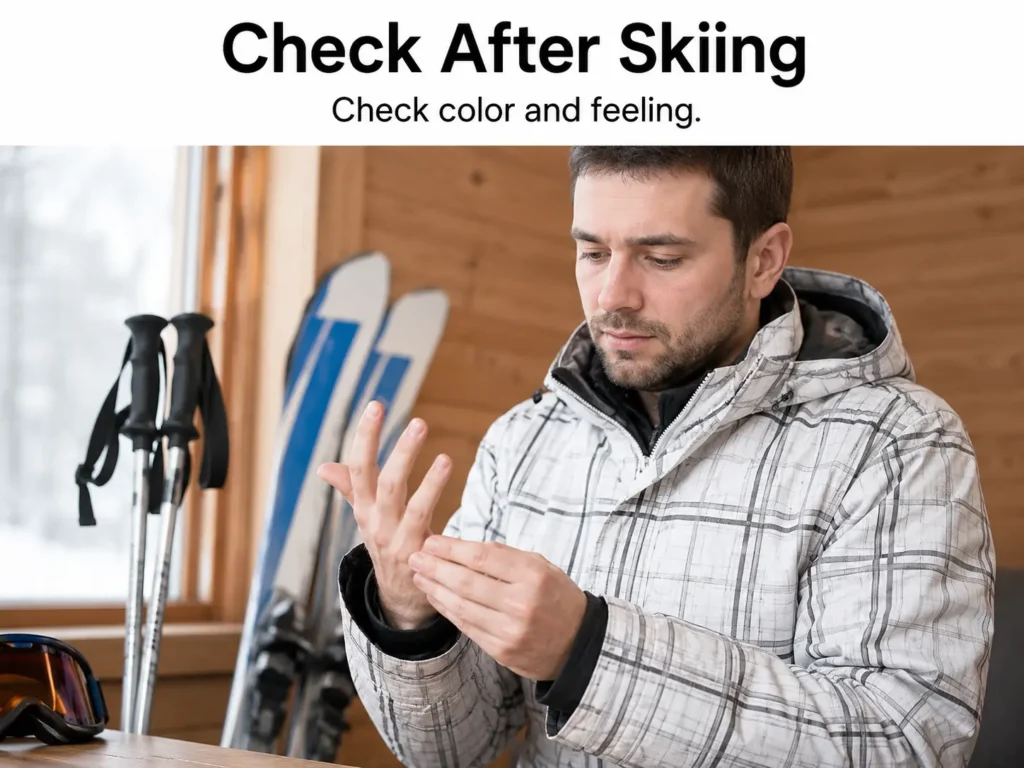
This isn’t a gear issue at all — it’s behavioral, and it likely contributes to more frostbite cases than any single equipment failure. Tingling gets written off as “just cold.” Fading sensation gets ignored because hands are inside gloves and out of sight. By the time the problem is obvious — skin that stays white once you’re indoors, fingers that won’t respond to warmth — the prevention window closed a while ago.
A Practical Framework You Can Run Through Before Every Session
Check your fit in two minutes
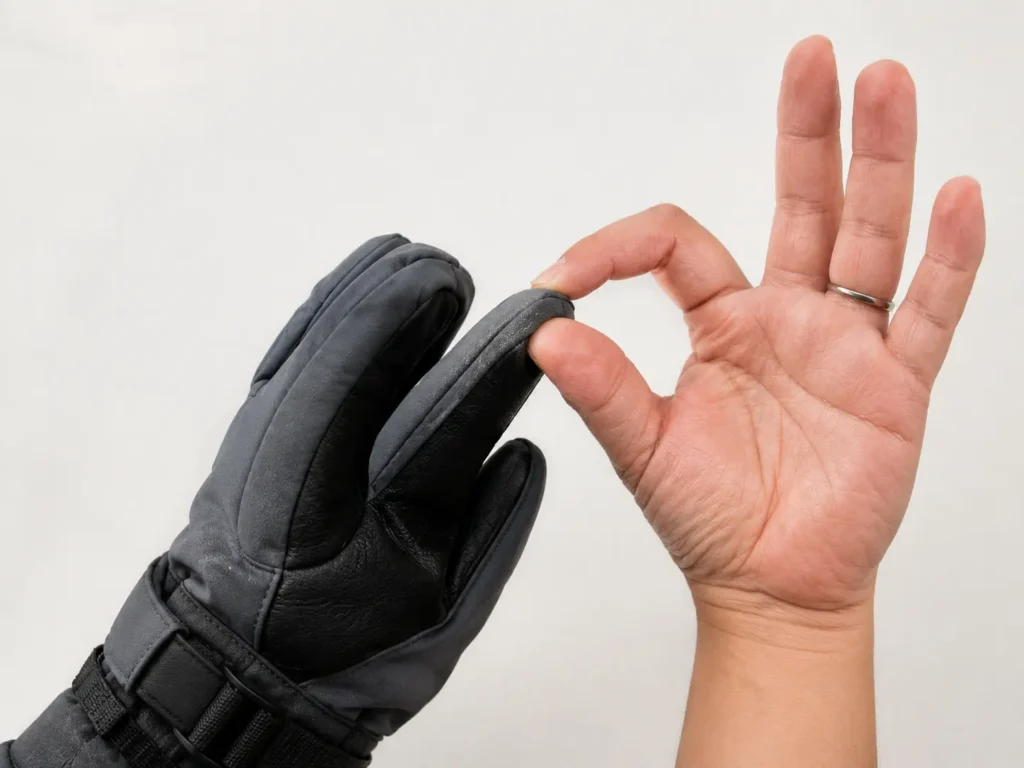
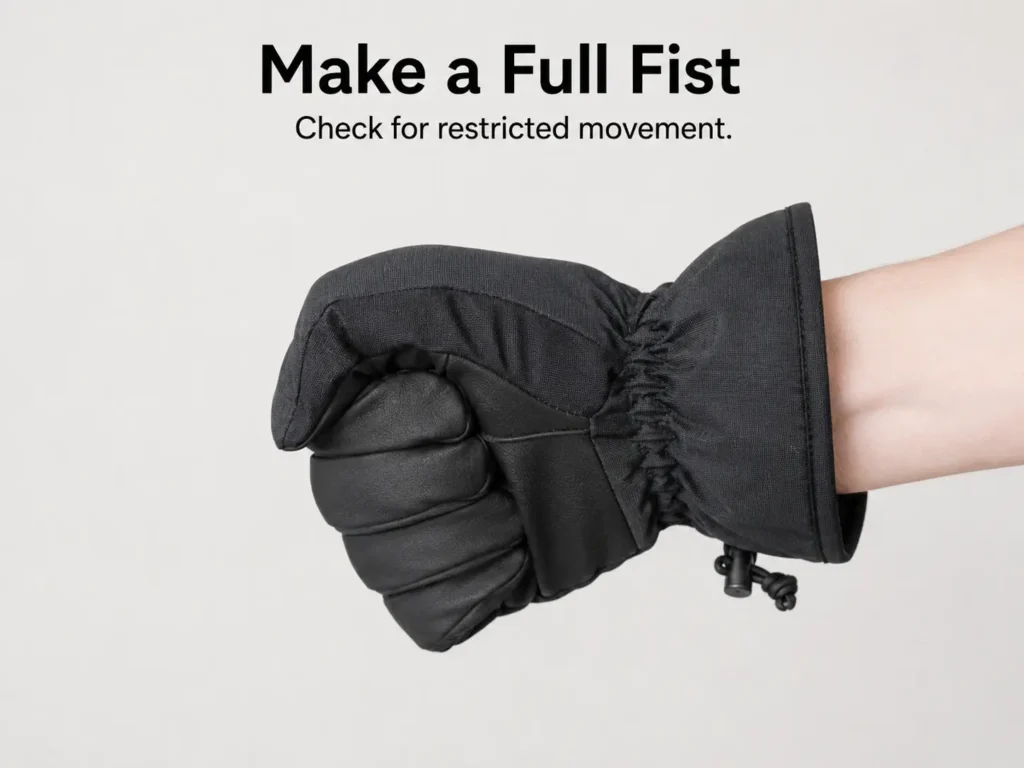
Make a full fist — fingers should curl completely without the glove pulling tight across the knuckles. Open your hand fully with no resistance. Then grip something roughly the width of a pole handle for thirty seconds; if your fingertips cool noticeably relative to your palm, the fit or insulation distribution isn’t right for how you actually grip.
Close the wrist gap
Raise your arms to shoulder height — roughly the position you’re in on a lift — and check whether your jacket sleeve separates from your glove cuff. If it does, tighten a gauntlet drawcord, or recognize that a short-cuff glove may need a different jacket pairing to close that gap reliably.
Dry your liner separately, every time
A liner left inside the shell overnight dries unevenly, if it dries at all, and the fingertip zone — the narrowest, least ventilated part — is usually the last to actually get dry. Pull it out, hang it separately, and check it’s dry to the touch before your next session. On multi-day trips, rotating a second liner set solves this without requiring perfect drying conditions.
Cover your hands on every lift, no exceptions
Not just on the cold days — every ride. This one habit does more to close the gap between “prepared” and “actually protected” than any gear upgrade.
Matching Your Prevention to the Conditions You’re Actually Skiing In
Not every cold day carries the same risk, and treating them all the same means either overdoing it on mild days or underdoing it on the ones that matter.
Calm, cold, low wind:
Insulation and fit matter most here — wind isn’t adding much risk, so focus on whether your gloves are actually warm enough and correctly sized.
High wind chill, even at moderate air temperature:
This is where a glove rated for a much colder still-air temperature can still fail you. Check actual wind chill, not just the number on the forecast, and lean toward a gauntlet cuff that seals the wrist properly. Skiers who deal with especially cold, high-wind conditions regularly may want to look at what actually holds up in those situations — our breakdown of the warmest gloves for extreme cold covers options built specifically for this scenario, rather than gloves that are simply “insulated” without being wind-tested.
Wet, near-freezing spring conditions:
Moisture becomes the dominant threat here, from both wet snow contact and hand sweat. Waterproofing matters more than raw insulation weight in this range.
Powder days with frequent falls:
Each fall is a chance for snow to work its way into a wrist gap, so a well-sealed cuff and genuinely waterproof construction matter more than on a groomed day with fewer spills.
Multi-day trips:
Moisture accumulates across days if liners aren’t dried properly each night. A glove that performed fine on day one can underperform by day three for reasons that have nothing to do with the glove itself.
Warning Signs and What Each One Actually Means
Tingling that fades into numbness.
This is not an improvement. It means blood flow has dropped further and the nerve signal is quieting down, not that your hands have adjusted to the cold. Rewarm immediately.
Pale or white fingertips.
This indicates blood vessels have constricted enough to reduce visible circulation at the skin’s surface. Get out of the wind and begin gentle rewarming.
Loss of tactile feedback.
If you can’t feel your pole through the glove anymore, your hands have been cold long enough that tissue is genuinely at risk, and you’ve also lost the ability to judge grip and terrain safely.
Skin that stays pale indoors.
If color doesn’t return within a few minutes of getting warm and sheltered, more than frostnip has likely occurred, and a medical check is the right call.
Burning pain during rewarming.
This is expected with superficial frostbite — it’s nerve endings responding as circulation returns to tissue that had frozen. It confirms the injury; continue gentle rewarming and get it checked.
What to Do If It Happens on the Mountain
Field response is different from clinical treatment, and the difference matters. Rapid rewarming is correct in a hospital, where refreezing won’t happen afterward. On a mountain, if you rewarm and then get cold again before reaching shelter, the freeze-thaw-refreeze cycle does more damage than staying frozen until you can get proper care. This is standard wilderness medicine guidance, and it’s the reason the field approach below prioritizes getting out of the cold over aggressive warming.
Get out of the wind first — every additional minute exposed adds to the damage. Once sheltered, gently press the fingertip: if it still gives slightly under a firm surface, that’s superficial and workable in the field. If it feels completely rigid, don’t attempt to rewarm it yourself — protect it and get to medical care.
For frostnip, body heat is the right tool. Tuck hands under the opposite arm or against your chest, inside your jacket. Don’t rub the skin — rubbing frostbitten tissue causes mechanical damage to already-weakened cells, even though rubbing is the right move for ordinary cold hands that haven’t frozen. Don’t pack it in snow, either; that adds moisture and cold at the same time, which is exactly what caused the problem.
If sensation and color come back within about ten minutes of body-heat rewarming, the frostnip has resolved, though the area stays more vulnerable to repeat injury for the rest of the day. If color doesn’t return, stop skiing and get it looked at — don’t re-expose it to cold, and don’t attempt hot-water rewarming unless you’re sure the person won’t be back out in the cold afterward.
Who Needs to Be More Careful Than Average
Most recreational skiers taking occasional runs in moderate cold are at relatively low risk when the basics above are covered. A few groups need a lower threshold for caution.
People with Raynaud’s phenomenon experience an exaggerated narrowing of blood vessels in response to cold, which means fingers can blanch and lose warmth at temperatures that wouldn’t bother most skiers, and the whole warning-sign timeline compresses — what takes half an hour for a typical skier might take five minutes. Heated gloves or chemical hand warmers alongside the standard prevention steps make more sense here than for the average skier.
Anyone with a previous frostbite injury is more susceptible to repeat damage at temperatures and exposure times that wouldn’t have affected the tissue before it was first injured. If that applies to you, treat every warning sign as more urgent than the general guidance suggests, and be more consistent about chairlift coverage than conditions alone might indicate.
Certain medications — some beta blockers and migraine medications among them — affect circulation and can shorten how much warning time you get before frostbite risk becomes real. If your prescribing doctor has flagged a medication as affecting circulation, it’s worth asking specifically how that interacts with cold-weather exposure.
The Checklist Before Your First Run
Gloves are completely dry from the day before. Fingers move through a full fist without resistance. The wrist gap is closed, whether by a tightened gauntlet cuff or a jacket that actually overlaps a short cuff. You’ve checked wind chill, not just air temperature. Your liner was pulled out and dried separately last night, not left balled up inside the shell. Hands are warm before the first run starts, not already cold from waiting around outside. You have a plan for covering your hands on every lift ride, and you know what tingling-then-numbness actually means if it shows up.
Frequently Asked Questions
How quickly can frostbite actually develop while skiing?
It depends heavily on wind. In a calm cold, exposed skin can often tolerate hours before frostbite risk becomes serious. Add strong wind, and that window can shrink to well under thirty minutes for exposed skin — which is part of why chairlift exposure catches people off guard.
Can frostbite happen even in gloves that are rated for the temperature?
Yes. A glove’s temperature rating is usually tested in low-wind, controlled conditions, so a rating that looks adequate on paper can still underperform in real wind chill. Fit and circulation matter just as much as the insulation number on the label.
Is frostbite only a risk in extreme cold?
No. Wind chill can push effective temperature well below the actual air temperature, and moisture inside a glove makes things worse at temperatures that wouldn’t otherwise be dangerous. Conditions that look mild on a thermometer can still carry real risk once wind and dampness are factored in.
Does a tighter glove keep hands warmer?
No — the opposite. A glove that’s snug enough to restrict blood flow reduces the amount of warm blood actually reaching your fingers, which can leave hands colder than a properly fitted glove with the same amount of insulation.
The Takeaway
Frostbite while skiing usually isn’t the result of extreme conditions — it’s the result of small, ordinary gaps that compound across a day: a liner that wasn’t fully dry, a wrist left uncovered on one chairlift ride, a glove that’s just slightly too snug under grip pressure. None of those alone typically causes a problem. Stacked together across several hours on the mountain, they often do.
The skiers who avoid it aren’t necessarily wearing the most expensive gear. They’re doing the same small things consistently — checking fit, closing the wrist gap, drying liners, covering hands on every lift — and treating the first sign of tingling as something to act on immediately rather than something to wait out. That framework holds up across almost any condition you’ll actually encounter on a ski trip, because it addresses the real causes rather than reacting to the symptom once it’s already underway.
If your hands are consistently cold well before any of this becomes a concern, it’s worth checking whether the glove itself is the gap — our guide on why hands stay cold even in gloves that should be warm enough walks through the most common reasons that happens and how to tell which one applies to you.