
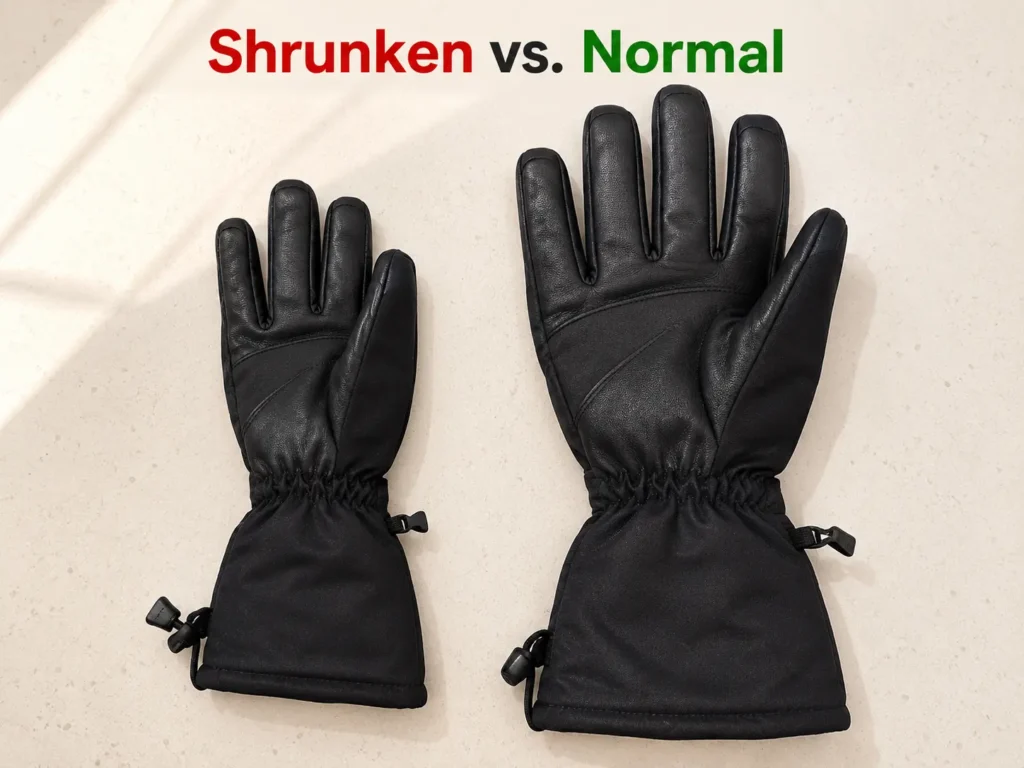
Quick answer: Heat is almost always the real cause — not the gloves being cheap or poorly made. Warm water, machine agitation, and dryer heat all pull glove fibers into a tighter, smaller shape than they started, and once that happens, it’s genuinely hard to fully reverse.
If you’d rather sidestep this entirely and get matched to a glove built for easier care, the Ski Glove Finder does that in under a minute.
- What's Actually Happening to the Materials
- Test Whether Your Gloves Can Still Be Saved
- Which Materials Shrink the Most
- Can Shrunken Gloves Actually Be Fixed?
- Who Actually Needs to Worry About This
- Fixing a Shrunken Glove, Step by Step
- Why the Full Washing Method Isn't Repeated Here
- Common Mistakes That Cause Shrinkage in the First Place
- Quick Prevention Checklist
- Frequently Asked Questions
- When Shrinkage Means It's Time to Replace, Not Repair
- The Real Takeaway
What’s Actually Happening to the Materials
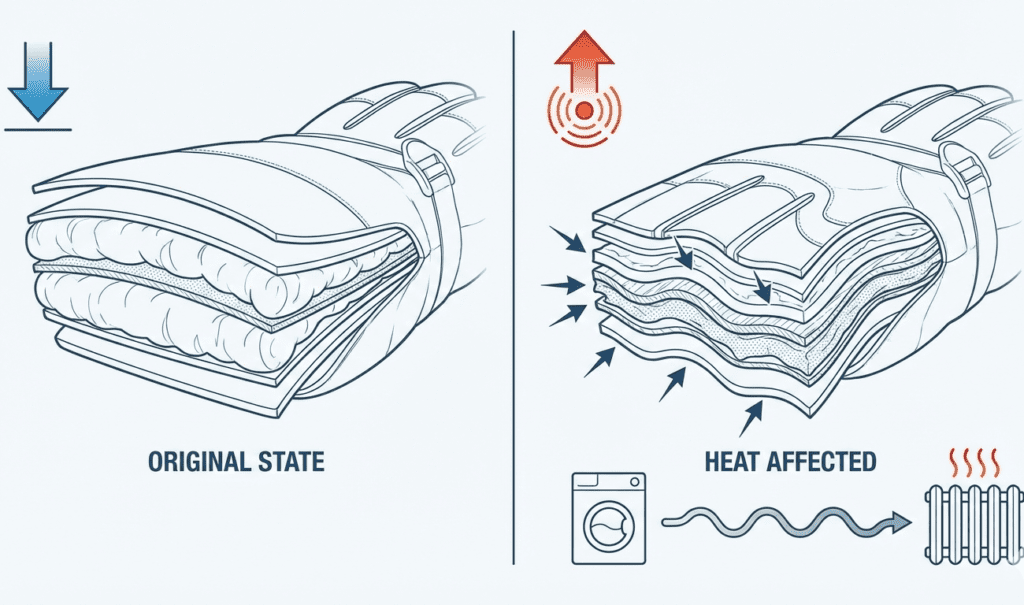
Shrinkage isn’t random, and it isn’t a sign of a defective glove. It’s a predictable material response to three specific stressors: heat, water, and physical agitation, often all three at once in a normal machine wash cycle.
Synthetic insulation compresses under heat
The fill inside a glove depends on loft — trapped air between fibers — to insulate. Heat causes that structure to compress and stay compressed, which pulls the glove tighter around your fingers even after it’s fully dry.
Leather swells wet, then contracts as it dries
Leather fibers absorb moisture and expand slightly, and if drying happens too fast — direct heat, a radiator, a sunny windowsill — those fibers lock into a smaller, tighter shape as they dry rather than settling back to their original size.
Machine agitation stresses seams and stitching in ways hands never would
The twisting motion of a washing machine pulls at construction points the glove wasn’t designed to flex against, and that stress compounds whatever heat-related shrinkage is already happening.
This same fiber-level mechanism is well documented outside of ski gear specifically — wool and animal-fiber textiles undergo an almost identical process, where heat and agitation cause fiber scales to interlock and pull tight, which is part of why the effect is largely irreversible once it’s set in.
Test Whether Your Gloves Can Still Be Saved
Before starting the fix process below, this quick check tells you whether it’s worth the effort or whether you’re looking at a replacement instead.
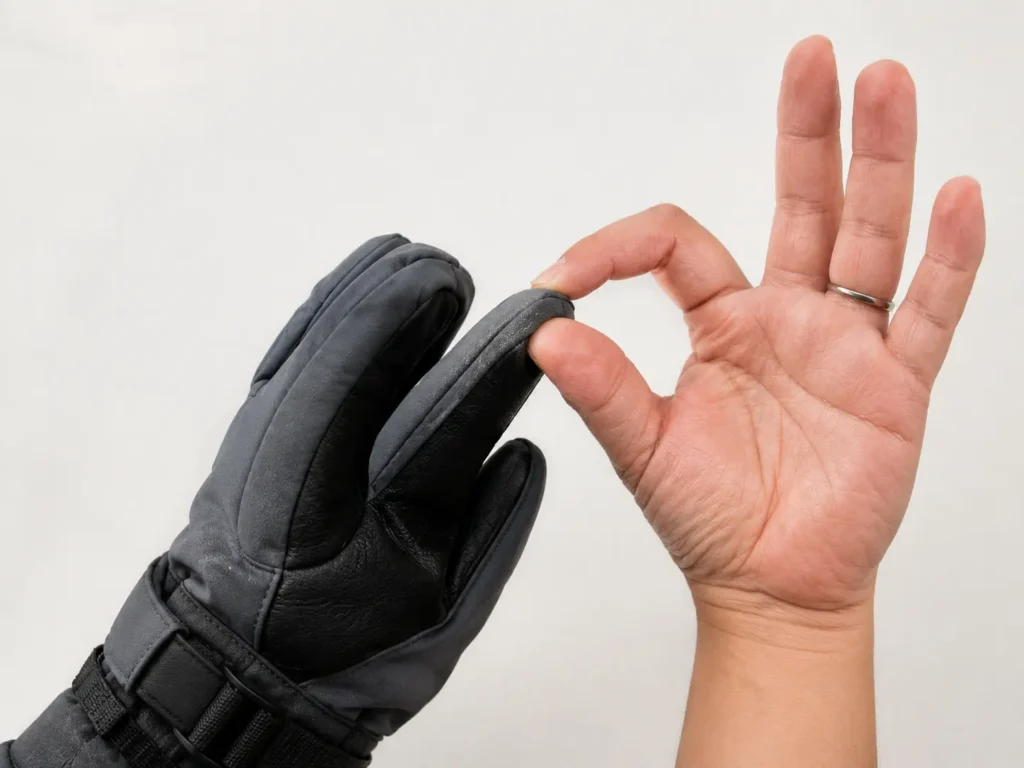
Flex the palm and fingers fully
Material that still bends with reasonable ease, even if it feels tighter than before, has a real chance of recovering. Material that resists bending or creaks when flexed has likely locked into its new shape.
Squeeze the insulation between two fingers
Insulation that compresses and springs back has retained some of its loft. Insulation that stays flattened, feeling thin and hard rather than springy, has lost structure that’s difficult to restore.
Try the glove on and make a full fist
Note whether it’s uncomfortably tight or genuinely restrictive. Snug-but-wearable suggests cosmetic shrinkage. Anything that pinches, numbs, or visibly presses on knuckles points toward the circulation concern covered later in this guide.
Check the leather’s surface, if applicable
Leather that still looks slightly glossy and supple has moisture and oils intact. Leather that looks dull, chalky, or shows fine surface cracking has likely dried out beyond what conditioning alone will fix.
This test takes under a minute and separates gloves worth spending twenty minutes rehydrating from gloves where that twenty minutes would be better spent shopping for a replacement.
Which Materials Shrink the Most
Not every glove material responds to washing mistakes the same way, and knowing which one you own changes how careful you need to be.
Leather is the most shrink-prone material in typical ski gloves, since it responds directly to both moisture and heat, and once it dries into a smaller, stiffer shape, reversing that fully is often not possible.
Wool and wool-blend liners follow the same felting mechanism that affects wool clothing generally — heat and agitation cause the fiber’s outer scales to interlock permanently, which is part of why wool liners shrink more dramatically than synthetic ones under the same washing mistake.
Synthetic shells and synthetic insulation are generally more shrink-resistant than natural fibers, though they’re not immune — high heat still compresses synthetic fill and can warp shell fabric, just usually less severely and less permanently than leather or wool.
Waterproof membranes themselves — the actual Gore-Tex or similar layer — don’t shrink in the same way, since they’re a different material class entirely. What changes is everything around that membrane: the shell fabric and insulation still respond to heat the same way they would in a non-membrane glove.
Owning a glove built primarily from synthetic materials doesn’t mean shrinkage risk disappears entirely — it means the margin for washing mistakes is somewhat wider, not that heat and agitation stop mattering.
Can Shrunken Gloves Actually Be Fixed?
Some can. Some genuinely can’t. Knowing which category yours falls into before spending an hour trying to rescue them saves real time.
Mild shrinkage is usually recoverable
If the glove still bends without much resistance and feels soft rather than board-like, there’s a reasonable chance gentle rehydration and reshaping brings back most of the original fit.
Severe shrinkage often isn’t
Leather that’s gone hard and stiff, insulation that’s visibly flattened and won’t rebound when squeezed, or a fit so tight it affects circulation — these are signs the fiber structure has locked into its new shape for good.
The line between the two comes down to whether the material still has any give left in it. A quick flex test tells you more honestly than guessing based on how the glove looks.
Who Actually Needs to Worry About This
Risk isn’t evenly distributed across every glove owner, and knowing where you fall changes how much caution actually makes sense.
Owners of leather or wool-lined gloves carry the highest risk, simply because those materials respond most dramatically to heat and agitation. If your gloves fall into either category, hand washing isn’t optional caution — it’s close to mandatory if you want to avoid this problem entirely.
Owners of premium gloves in general have more to lose from a washing mistake, not because expensive materials are more fragile, but because the replacement cost is higher. A $150 pair ruined in one wash is a bigger loss than a $40 pair with the same mistake.
Owners of primarily synthetic gloves face lower risk, though “lower” doesn’t mean “none.” Synthetic materials tolerate more washing error before visible shrinkage sets in, which buys some margin but doesn’t eliminate the underlying mechanism.
Anyone washing gloves infrequently — once or twice a season rather than regularly — has less cumulative exposure to washing-related stress overall, simply because there are fewer opportunities for a mistake to occur.

Fixing a Shrunken Glove, Step by Step
Patience matters more than any specific product here. Every method below depends on avoiding heat entirely — that’s non-negotiable, and skipping it undoes the rest of the process.
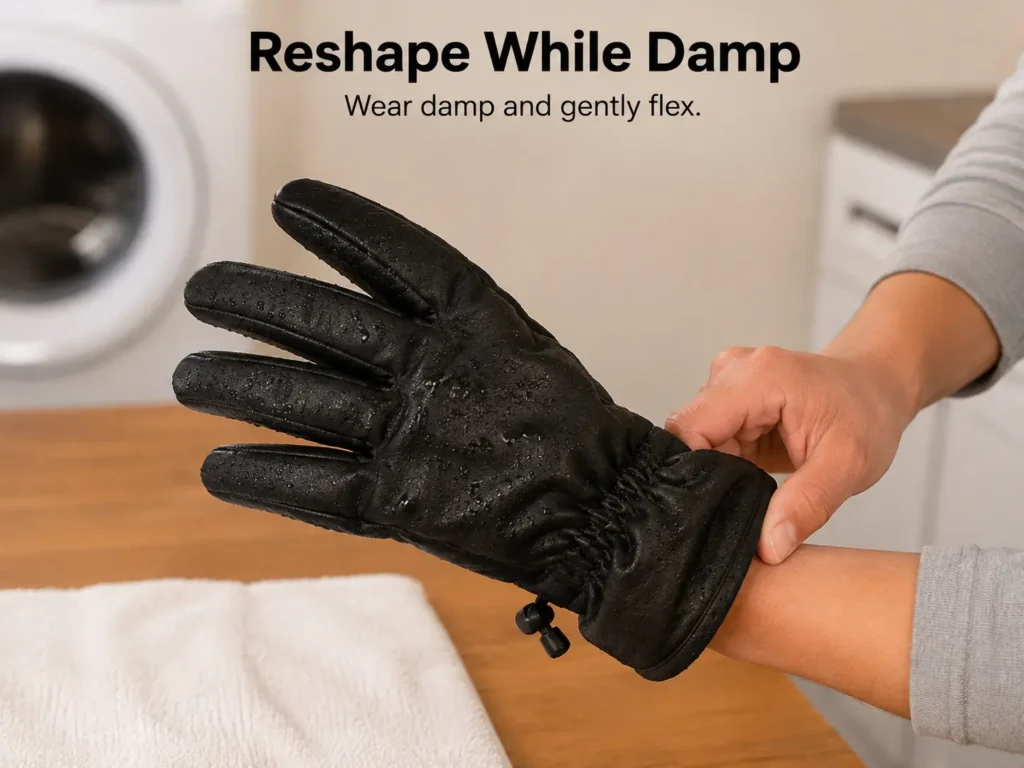
For synthetic gloves and liners: start with lukewarm water, never hot. Lightly dampen the glove until it’s flexible but not soaked, then put it on and gently open and close your hand to stretch the fibers back toward their original shape. Hold light stretches rather than forcing them, since forcing damp fibers risks tearing the insulation rather than reshaping it. Let the glove air dry partway while still worn, then finish drying flat.
For leather gloves: dampen with a cloth rather than soaking, since leather responds better to controlled moisture than a full soak. Reshape each finger by hand — bend, straighten, relax — without pulling or twisting. Once the leather feels pliable again, apply a leather conditioner rather than oil, since conditioners restore flexibility without breaking down the leather’s internal structure the way oil-based products sometimes can. Gore-Tex’s own care guidance for gloves covers similar handling principles for membrane-lined gloves, where the outer material needs gentle treatment even though the membrane itself isn’t what’s shrinking.
The rule that overrides everything else: no hot water, no hair dryers, no radiators, and no “just a quick low-heat cycle.” Even mild heat is often enough to lock shrinkage in permanently, undoing whatever progress gentle reshaping made.
Why the Full Washing Method Isn’t Repeated Here
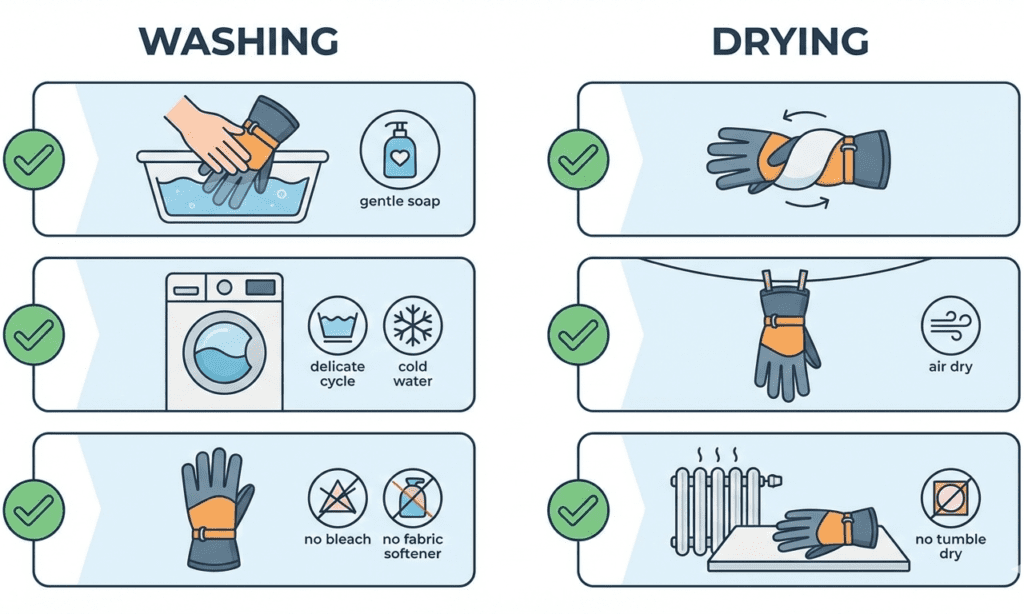
Getting the washing and drying process right the first time is genuinely the best prevention, and it deserves more depth than a quick summary. Rather than duplicate that here, the short version: hand wash only, cold or lukewarm water, gentle squeezing instead of wringing, and air drying away from any heat source. For the complete step-by-step method — detergent choice, drying position, and the specific mistakes that cause the most damage — our full guide to washing ski gloves covers the process in the depth it actually needs.
Common Mistakes That Cause Shrinkage in the First Place
Most shrinkage happens in a single bad wash, not gradually over a season, and it usually traces back to one of these avoidable habits.
Washing gloves together with a ski jacket
The heavier jacket pulls and tugs at the gloves throughout the cycle, adding mechanical stress on top of whatever heat exposure is already happening.
Using fabric softener
Softener coats fibers rather than cleaning them, and that coating can interfere with how the material handles heat and moisture during drying.
Wringing out water by twisting
This forces insulation to clump and shift out of its original shape, and once it dries in that compressed state, it tends to stay that way.
Hanging gloves by the fingertips to dry
The weight of retained water pulls the fingers downward during drying, which can leave them feeling shorter and tighter once fully dry.
“Just one quick dryer cycle”
Even a low-heat setting is often enough to trigger shrinkage, and the damage frequently happens within the first few minutes, not gradually over a full cycle.
Quick Prevention Checklist
Hand wash only, never machine wash. This keeps full control over pressure and movement, avoiding the twisting that machines apply by default.
Cold or lukewarm water, never warm or hot. Heat is the single fastest path to shrinkage, and this one habit prevents more damage than any other single change.
A gentle, delicate-fabric detergent. Strong detergents can strip protective coatings, which indirectly makes the material more vulnerable to heat and moisture stress later.
Press water out gently — never wring or twist. Twisting is one of the most common causes of insulation clumping and shape distortion.
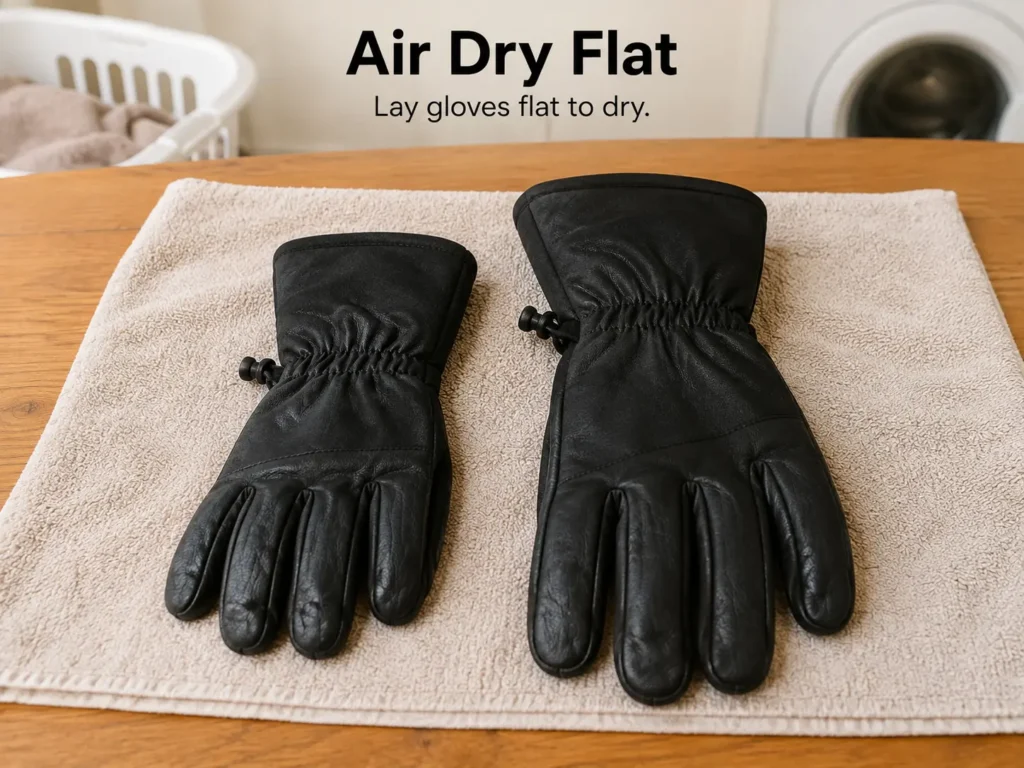
Air dries away from all heat sources, including sunlight, radiators, and vents, not just the dryer itself.
Reshape the glove by hand while it’s still slightly damp, gently opening and closing your fingers so it dries closer to its original shape rather than whatever position it happened to land in.
Frequently Asked Questions
Do all ski gloves shrink when washed?
No — but plenty do if washed incorrectly. Heat, machine agitation, or fast drying near a heat source are almost always the actual cause, not a flaw in the glove itself.
Can Gore-Tex gloves shrink?
The waterproof membrane itself stays structurally stable, but the outer shell fabric and insulation around it can still shrink from heat exposure, which changes the glove’s overall fit even though the membrane inside is unaffected.
Why did only the fingers shrink, not the whole glove?
Fingers have less insulation volume and more seams per square inch than the palm, so heat and agitation stress concentrates there first, making finger-specific shrinkage a common early sign before the rest of the glove shows changes.
Is shrinkage covered under warranty?
Typically not, if care instructions were ignored. Most manufacturers treat improper washing as user-caused damage rather than a product defect, since the care label exists specifically to prevent this outcome.
Should ski gloves ever go in a washing machine, even on a gentle cycle?
Generally no. Even gentle cycles apply more twisting and heat exposure than hand washing does, and the seams and insulation in most ski gloves simply aren’t built to handle machine agitation reliably.
Does shrinkage happen gradually, or all at once?
Almost always all at once, from a single wash — this isn’t typically a slow, cumulative process. One warm wash or one dryer cycle is usually enough to cause the bulk of the damage, which is part of why it catches people off guard.
Can a glove that shrank slightly still be worn safely?
If it still fits without restricting circulation and the material still flexes normally, mild shrinkage is often more of a comfort issue than a safety one. The self-check test above is the fastest way to confirm which category a specific glove falls into.
When Shrinkage Means It’s Time to Replace, Not Repair
Some shrinkage genuinely isn’t safe to just live with, and this is where the decision stops being about comfort and starts being about actual risk.
Tight-fitting gloves are a documented risk factor for reduced circulation in cold conditions, and Johns Hopkins Medicine specifically lists clothing and gloves that are too tight as a frostbite risk factor — restricted blood flow means fingers lose heat faster, not slower, even though the insulation itself hasn’t changed.
Watch for numbness that sets in faster than usual, a tingling or pins-and-needles sensation, visible pressure marks around the knuckles, or tightness that persists even without a liner underneath. Any of these point toward a genuine circulation issue, not just a cosmetic fit problem.
Grip control matters here too. Shrunken gloves that make it harder to grip poles, work zippers, or adjust bindings quickly reduce your margin for error on the mountain, particularly in icy or fast-changing conditions where quick adjustments matter. Even a small loss of dexterity at the wrong moment — fumbling a binding release or losing grip on a pole during a fall — carries more real-world consequences than the discomfort alone would suggest.
If shrinkage is affecting circulation, warmth retention, or grip control, replacing the gloves is the safer call. For finding a properly fitted replacement without overspending, our breakdown of ski gloves across every budget tier covers solid options whether you’re replacing a $40 pair or a $150 one.
The Real Takeaway
Shrinkage comes down to heat, water stress, and improper drying — not the price tag or brand of the glove. Even premium gloves shrink under the same conditions that damage budget ones; the materials respond to physics, not cost.
Fit matters more than most people initially realize. A glove that’s slightly too warm is an inconvenience. A glove that’s actually restricting circulation is a real safety issue, and no amount of “breaking it in” changes once the fibers have locked into a smaller shape.
The self-check test earlier in this guide is worth running the moment a glove feels different after washing, rather than waiting to see if it “loosens up” on its own — it generally doesn’t, and catching the problem early gives rehydration and reshaping the best possible chance of working before the material fully sets into its new shape.
Getting the wash and dry process right the first time avoids this problem entirely, and it costs nothing extra — it just takes a little more patience than tossing gloves in with a regular laundry load.

Pingback: Why Your Ski Gloves Shrank (And Can You Fix Them?) – Ski Gloves USA