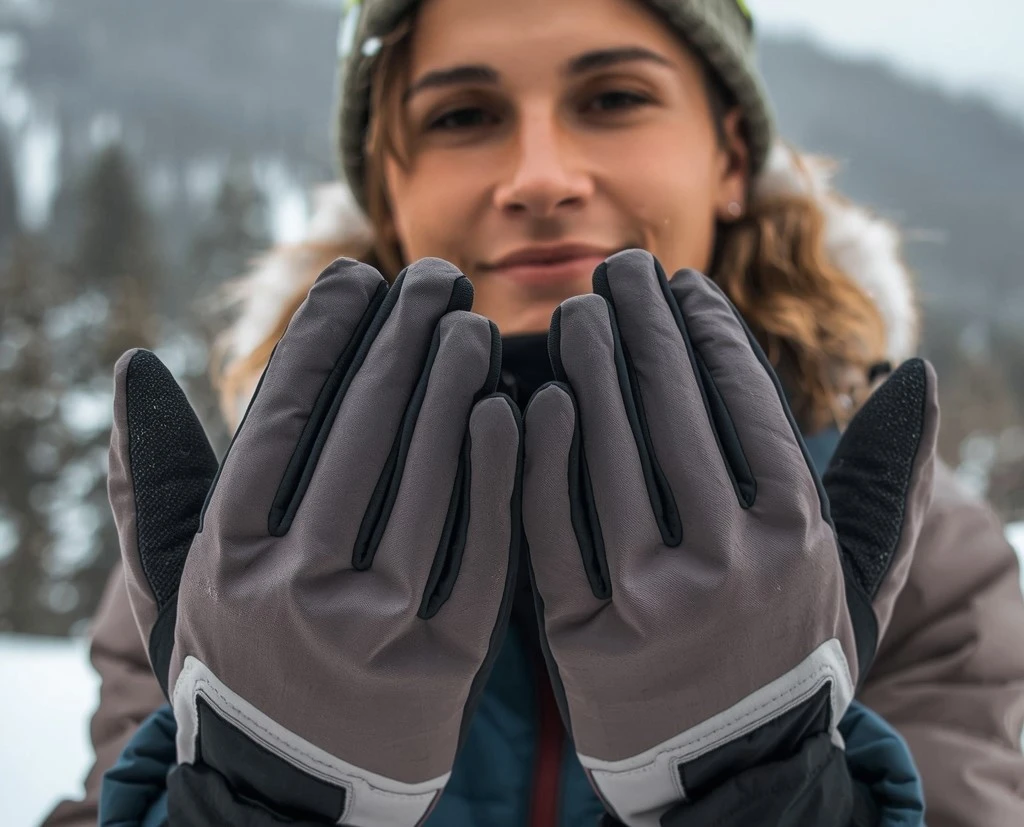
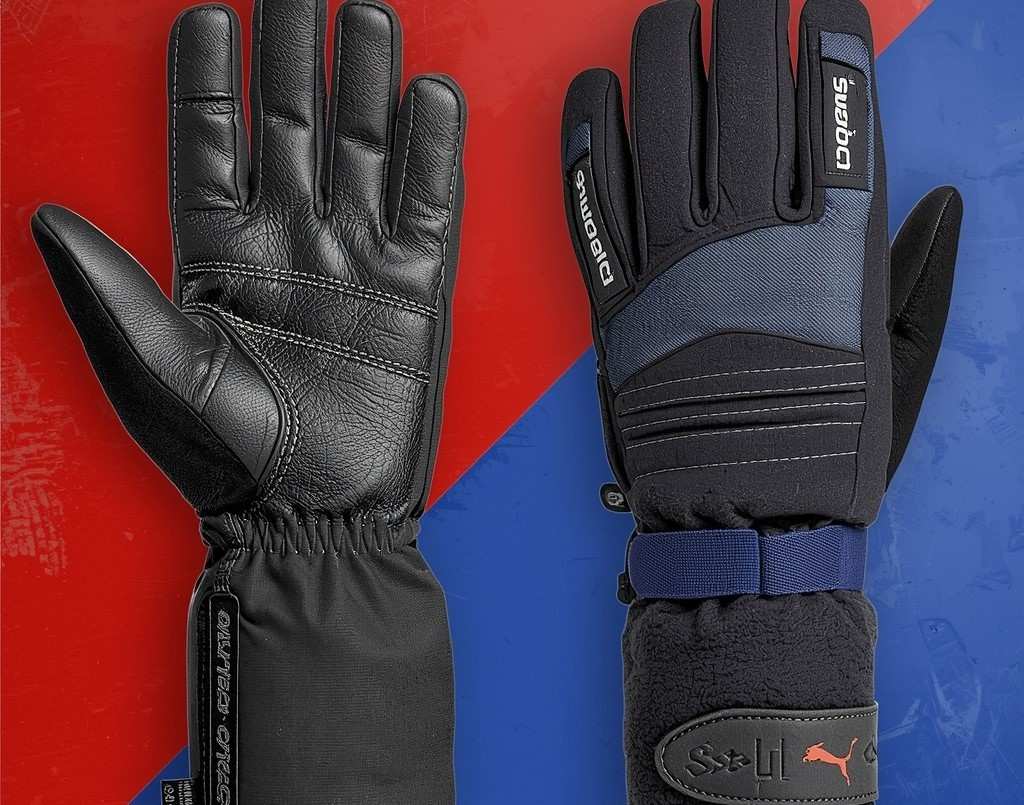
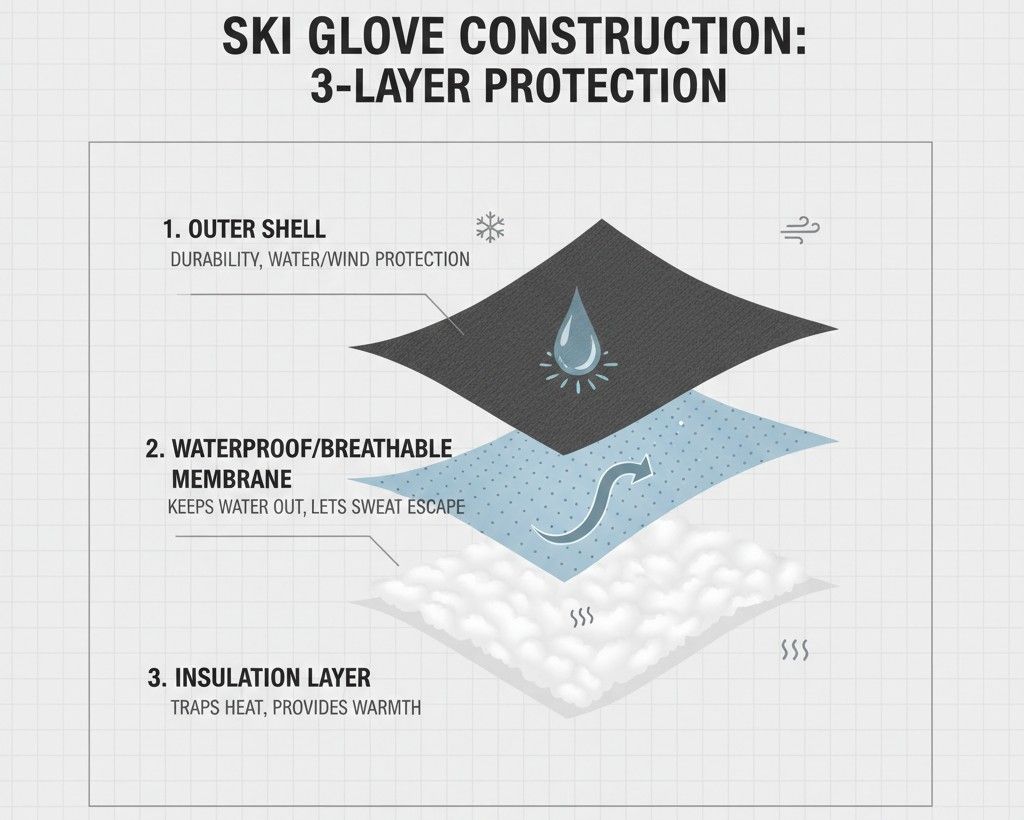
“If your hands are freezing, stop looking at your insulation and start looking at your shell.” Most skiers treat the outer layer of a glove like a wrapper, but it’s actually the engine. Your insulation is only as good as the shell protecting it.
From my experience on the mountain, cold hands are almost always a result of shell failure—whether it’s wind-chill or moisture—not a lack of warmth.
This is why understanding the best ski glove shell materials matters more than brand names or marketing labels. By the end of this guide, you’ll clearly know which shell materials actually work in real skiing, which ones wear out faster, and what fits your skiing style — not what ads promise.
Why Ski Glove Shells Fail in Real Skiing Conditions
Most glove shells do not fail because of one big mistake. They wear down slowly from normal skiing movements that happen hundreds of times a day. And the damage usually starts long before you can see it.
From what I’ve seen on long mountain days, shell damage comes from friction, pressure, and constant moisture changes. Snow itself is soft, but ice, metal, and repeated gripping slowly grind the outer fabric down.
The “Wetting Out” Problem: Why Shells Actually Fail
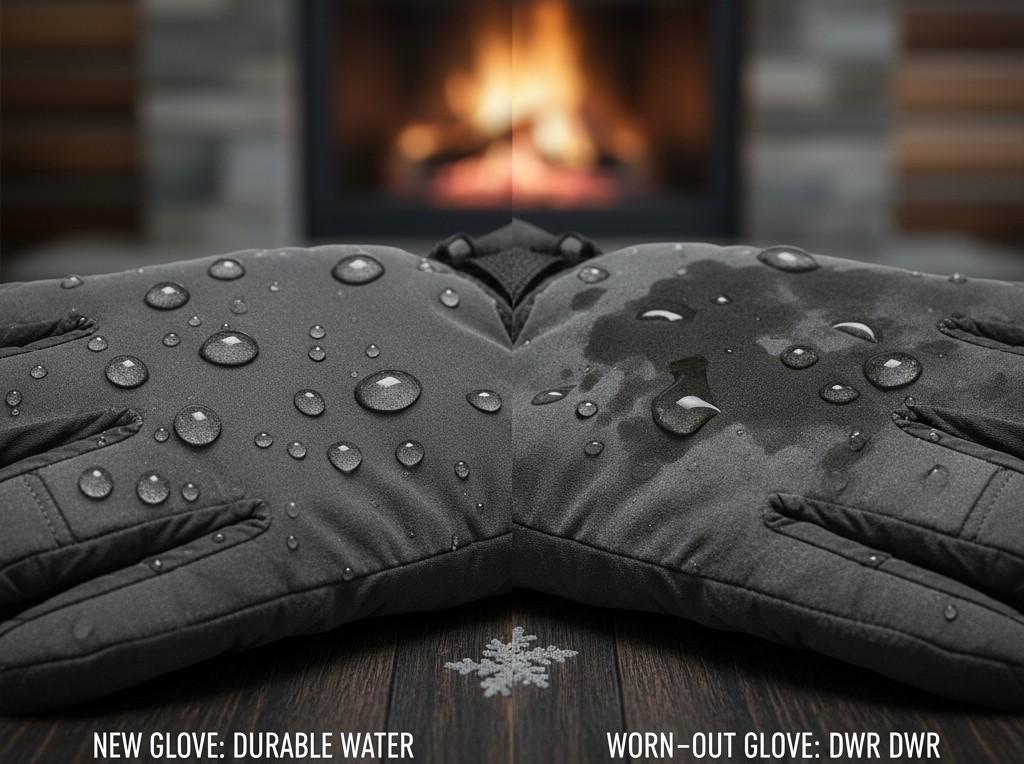
Most skiers think their gloves have a hole when their hands feel cold. Usually, it’s a process called “Wetting Out.” This happens when the DWR (Durable Water Repellent) coating wears off the fabric.
When DWR fails, the shell soaks up water like a sponge. Even if the inside is dry, that wet outer layer pulls heat away from your skin through conductive cooling. Before you throw away “leaking” gloves, try a DWR spray; your shell might actually still be alive.
Pole Grip Friction During Long Runs
Every turn puts pressure on the same palm areas. The pole grip rubs the shell again and again, especially on steeper runs where grip tightens.
After weeks of skiing, this creates thin spots in the palm. The shell may still look fine, but water starts entering through worn fibers.
Lift Bars and Metal Contact
Chairlift bars and safety rails often scrape knuckles without skiers noticing. Hard shells handle this better, while softer fabrics start to fuzz or weaken.
I’ve seen gloves age fastest in riders who rest hands on lift bars every run. Small contact, repeated all day, adds up quickly.
Wet Snow Packing Into Seams
Wet snow pushes into stitching lines when you fall or push off in heavy snow. Seams are always weaker than flat fabric areas.
Once moisture sits there and freezes, it expands slightly. Over time this stresses stitching and opens tiny paths for water.
Zippers, Buckles, and Carrying Skis
Carrying skis on the shoulder sounds harmless, but edges and bindings often scrape glove backs and fingers. Zippers on jackets also rub the same spots repeatedly.
This kind of contact does not tear gloves instantly. It slowly removes protective coatings that normally keep water out.
Freeze–Thaw Cycles on Spring Days
Spring skiing is especially hard on shells. Gloves get wet during warm runs, then freeze on lifts or during breaks.
This repeated freezing makes materials stiff. Stiff shells crack faster and lose flexibility, which speeds up wear.
Why This Matters for Warmth
When a shell starts failing, moisture reaches the insulation layer. And once insulation gets wet, it loses its ability to trap warm air.
Many skiers think insulation “wore out,” but in reality the shell stopped protecting it. That’s why gloves often feel cold suddenly after still looking usable from outside.
Understanding this helps you choose better shell materials later. The goal is not just waterproofing — it’s resistance to friction, metal contact, and repeated freezing that real skiing creates.
The Main Shell Materials You’ll See — And How They Behave on Snow
Most skiers choose gloves based on warmth or brand names. But on the mountain, shell material decides how gloves actually survive snow, wind, and daily abuse.
I’ve tested different gloves across cold chairlift days, wet spring snow, and long resort weeks. The biggest difference was never insulation — it was how the outer shell handled friction, moisture, and freezing.
Understanding how each material behaves helps you choose what fits your skiing style, not just what looks good in a shop.
1. Leather Shells: The Windproof Fortress
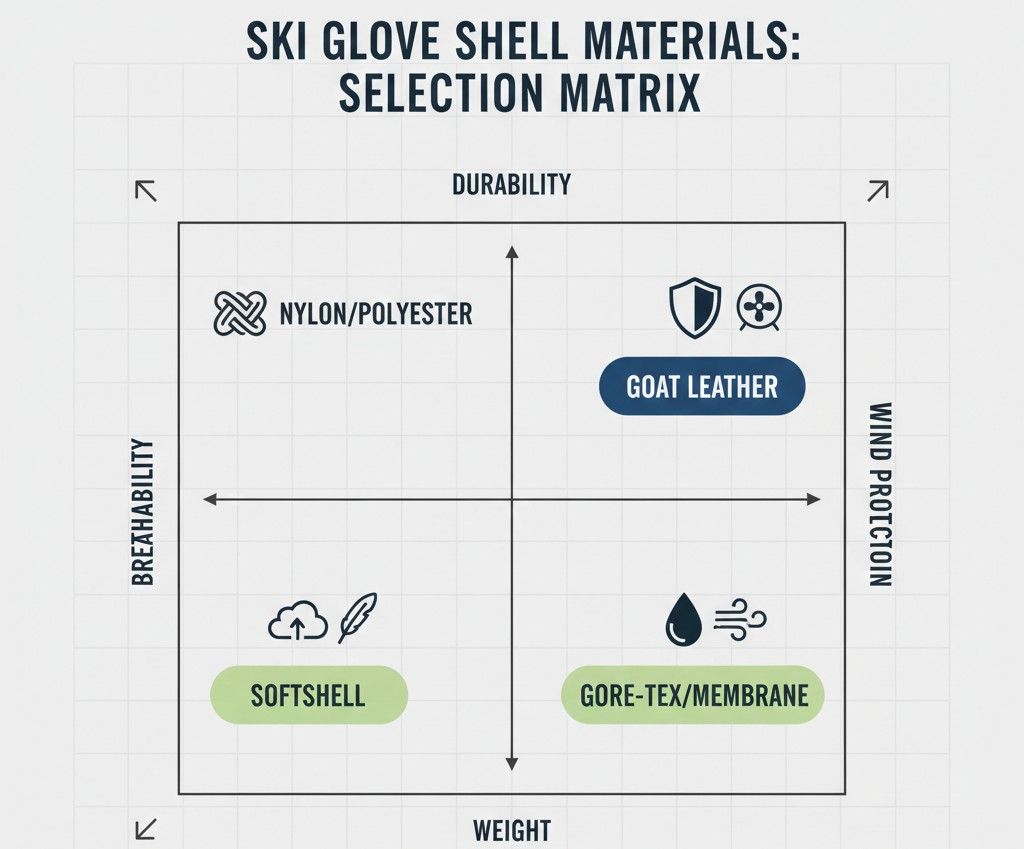
Most resort skiers don’t realize that leather isn’t just for style—it is a functional wind-shield. On a 15-minute chairlift ride in sub-zero temperatures, woven synthetic fabrics often have microscopic gaps that allow wind to strip away your hand’s micro-climate. Leather, however, is a solid barrier.
- The “Goat Leather” Advantage: In my experience, Goat Leather is the gold standard. It has a higher natural lanolin content than cowhide, which keeps it supple even when the temperature drops to -20°F. It handles the brutal friction of ski pole grips better than any other material; while synthetic palms might “fuzz” after two weeks of hard skiing, a treated leather palm can last for seasons.
- The Maintenance Debt: Leather is “living” gear. If you don’t treat it with a wax-based balm (like Sno-Seal or Nikwax) once a month, it will eventually stiffen and crack at the stress points.
- Best For: “Cold-Hand” skiers who spend long hours on windy chairs and don’t mind a 5-minute gear maintenance routine once a month.
2. Synthetic Shells: The “Fast-Dry” Workhorse
Synthetics (Nylon and Polyester) are common because they are lightweight and require zero break-in time. They move with your hand more naturally than thick leather.
- The Moisture Advantage: On “wet snow” days, synthetics are superior because they don’t absorb water as deeply as untreated leather. They also dry significantly faster in a lodge or hotel room.
- The Durability Warning: Synthetics show their age through “friction thinning.” The metal edges of your skis and the grit on your pole grips will eventually sand down the fabric. If you carry your skis on your shoulder, look for reinforcements; otherwise, your edges will slice through a synthetic shell in a single season.
- Best For: Skiers in milder climates or those who prioritize a lightweight, flexible feel over a 10-year lifespan.
3. Hard Shells & Membranes: The Storm Shield
When you see a glove marketed as a “Hard Shell,” it is usually built for extreme weather protection rather than dexterity. These are often built with a multi-layer construction.
- The Gore-Tex Connection: This is where you typically find high-end waterproof inserts like Gore-Tex. The hard shell acts as the armor, while the internal membrane handles the “waterproof-breathable” physics. On a stormy day with wet, heavy snow, a hard shell with a quality membrane is the only thing that will keep your hands dry for a full 8-hour session.
- The Trade-off: These can feel “stiff” and crinkly. They also have lower breathability than a softshell, meaning if your hands sweat during an aggressive run, that moisture can get trapped inside.
- Best For: Coastal skiers (Pacific Northwest/Tahoe) who deal with “wet” snow that would soak through other materials in hours.
4. Softshell: The Uphill Specialist
A softshell is a stretchy, woven fabric designed for movement. It’s a specialized tool that many resort skiers use incorrectly.
- The Dexterity Dream: Softshell feels like a second skin. It breathes incredibly well, making it the perfect choice for “skinning up” or boot-packing where your body heat is high.
- The Wind Betrayal: Because it is a woven knit, it has a high “CFM” (Air Permeability). This means the wind cuts right through it. If you wear a softshell on a high-speed chairlift in January, your fingers will go numb regardless of the insulation inside.
- Best For: Active touring, spring skiing, or high-output activities where you need your hands to breathe more than you need them to be blocked from the wind.
Choosing the right shell is less about finding the “best” material and more about matching it to how and where you ski. When you understand how each material behaves under real mountain use, glove choices become much clearer — and far less frustrating.
Area-by-Area Shell Stress Breakdown
Ski glove shells do not wear evenly. Certain areas take constant pressure every single run, while others mainly deal with wind and weather.
Once you understand where stress happens, shell material choices start making sense. Most glove failures begin in predictable spots, not randomly.
From what I’ve seen on long resort days, the same areas show damage first across almost every brand and price level.
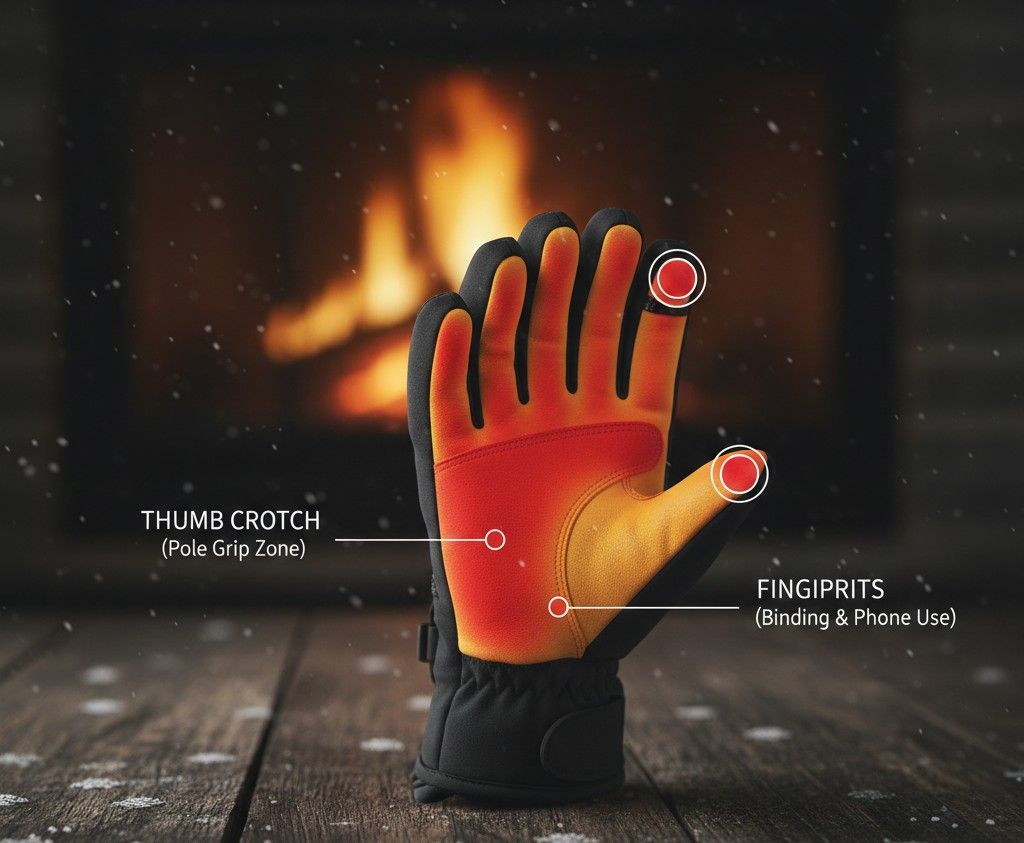
Palm Area
The palm takes the most abuse on the mountain. Every pole plant creates friction between the glove and the grip, and that happens thousands of times in a single day.
Falls also matter here. When skiers push themselves up from snow, the palm scrapes against ice crystals, which slowly roughens fabric surfaces.
Leather performs best in this zone because it handles repeated friction without thinning quickly. That’s why many durable gloves use leather palms even when the rest of the shell is synthetic.
Knuckles & Back of Hand
This area sees less friction but more impact and exposure. Lift bars often press or scrape against the back of the hand, especially on crowded chairs.
Wind exposure also matters here. On cold lift rides, wind pulls heat away fast if the shell blocks poorly.
Hard shell materials usually perform better in this area because they stop wind and resist moisture buildup during storms.
Finger Tips
Finger tips fail earlier than most skiers expect. They hit ski edges while carrying skis, push against bindings, and collect packed snow during falls.
Synthetic shells often show wear here first because the fabric is thinner and constantly flexing. Small abrasions turn into leaks once moisture starts entering.
In real use, this is usually the first sign that a glove shell is reaching the end of its useful life — even when the rest of the glove still looks fine.
Real Mountain Tests I’ve Seen
After enough full ski days, patterns become obvious. Gloves rarely fail the way marketing suggests — they fail where conditions repeat stress again and again.
On wet spring days, synthetic shells usually dry faster during lunch breaks or after riding lifts. But once wind picks up, they often feel colder because the material blocks less air movement.
During mid-winter storms, leather shells feel noticeably warmer on long chairlift rides. Not because insulation is thicker, but because wind struggles to pass through the outer layer. That difference shows up after several lift cycles, not just one run.
And on long resort days, durability matters more than insulation thickness. I’ve seen warm gloves become useless once the shell wears thin at the palm or fingertips. Moisture gets in, insulation packs down, and warmth disappears quickly.
One thing stands out from years of observing gear on the mountain — gloves usually fail from abrasion before they fail from cold exposure. Pole friction, lift hardware, and daily handling slowly break the shell long before insulation actually wears out.
Comparison Table — Shell Materials at a Glance
No single material is best for everyone. The right choice depends on where and how you ski.
| Shell Material | Wind Block | Water Resistance | Durability | Maintenance |
| Leather | High | Medium | High | Required |
| Synthetic | Medium | Medium | Low–Medium | Low |
| Softshell | Low–Medium | Low | Low | Low |
| Hard Shell | High | High | Medium | Low |
If you mostly ski cold lift-served resorts, leather or hard shells usually win. If your days are short and wet, lighter synthetic shells feel better — but expect faster wear.
In real skiing, the best shell is usually the one that matches your conditions. Cold and windy resorts reward stronger wind blocking. Wet or warmer climates reward quicker drying and flexibility.
.
Is Your Shell Actually Dead? (The 2-Minute Test)
Before you replace your gear, perform these two checks:
- The Bead Test: Pour a tablespoon of water on the back of the glove. If the water stays in a ball and rolls off, your shell is healthy. If it creates a dark, damp spot, your DWR is dead.
- The Seam Squeeze: Wear the glove and dip your hand in a bowl of slush for 30 seconds. Squeeze your hand into a fist. If moisture “bubbles” out of the stitching at the thumb or fingertips, the internal membrane or seam tape has failed.
Common Mistakes Skiers Make
Most glove problems don’t come from bad gear. They come from small misunderstandings about how gloves actually fail during real skiing. I’ve made some of these mistakes myself early on.
Scraping Ice with Your Thumb
This is the #1 shell killer I see. When your bindings or boot soles get iced up, don’t use the back of your glove or your thumb to scrape it. Ice crystals at 10°F are sharp. You are essentially running a serrated knife across your DWR coating and stitching. Always use a plastic scraper or your ski pole tip.
Choosing Insulation Over Shell Strength
Many skiers focus on warmth ratings first. But insulation only works if the shell stays dry and intact. Once the outer layer wears down at the palm or fingers, moisture reaches inside and warmth disappears fast.
Ignoring Early Wear at Contact Areas
Palm and fingertip wear usually starts slowly. Pole straps rubbing every run, carrying skis, or brushing snow away all add up. By the time damage looks obvious, the shell has already weakened underneath.
Trusting Waterproof Liners Too Much
Waterproof liners help with moisture, not abrasion. If the shell breaks down, the liner cannot protect the glove for long. I’ve seen many gloves still “waterproof” on paper but wet inside because the outer fabric was already worn thin.
Drying Gloves on Heaters
Direct heat feels like a quick fix after a cold day. But it stiffens leather and weakens synthetic coatings. Over time, the shell loses flexibility and cracks faster, especially around seams and fingers.
Who This Type of Advice Is For
This matters most for skiers who spend long hours on lifts and repeat the same movements all day. Resort skiers see more friction and contact than they realize.
It also helps skiers tired of replacing gloves every season. Understanding shell behavior usually extends glove life more than buying thicker insulation.
And it’s especially useful for mixed conditions — cold mornings followed by wet afternoons — where shells face both freezing and moisture in the same day.
Who Should Avoid This
Casual skiers going once or twice a year usually won’t see enough wear for material choice to matter much. Almost any decent glove will last several seasons at that pace.
Park riders are another case. Rails, grabs, and repeated falls destroy shells quickly regardless of material. Durability expectations are simply different there.
And honestly, if someone doesn’t want to dry or care for gloves at all, material choice alone won’t solve the problem.
Lifespan Expectations — Normal Wear vs Defects
Not all wear means something went wrong. Some changes are simply part of real skiing.
Leather palms becoming smoother over time is normal. That comes from constant pole grip friction and usually doesn’t affect performance early on.
Early seam separation, especially within a few days of use, is different. That often points to construction problems rather than normal wear.
Fabric thinning at fingertips happens gradually, especially on synthetic shells. This is expected where edges, buckles, and zippers make contact.
And when waterproofing fails after the shell is damaged, that’s usually normal aging — not a manufacturing flaw.
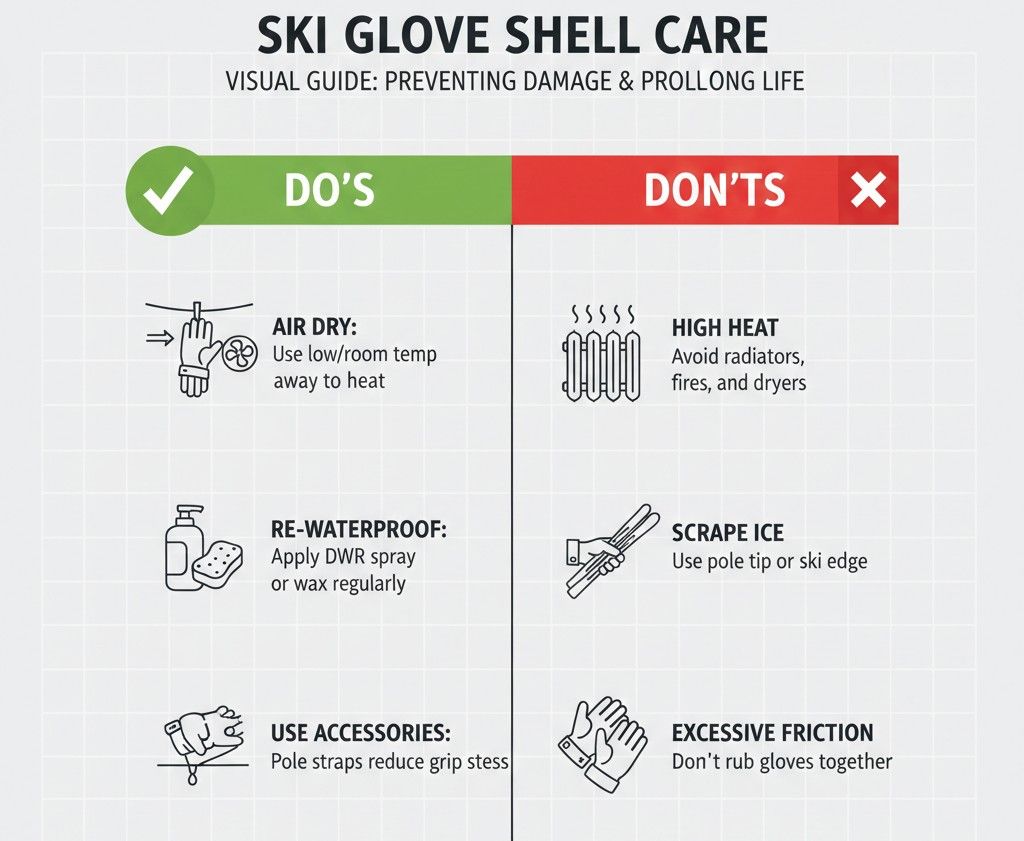
How to Stop Destroying Your Shells (Do’s & Don’ts)
Most skiers “kill” their gloves in the lodge, not on the mountain.
DO: Treat leather palms with a wax-based balm (like Sno-Seal or Hestra Balm) to keep the fibers flexible.
DON’T: Dry your gloves on a radiator or heater. High heat makes leather brittle and can melt the glue in synthetic seams.
DO: Air dry them at room temperature with the cuffs open.
DON’T: Use your hand to scrape ice off your skis. The sharp edges will slice the shell fibers instantly.
DO: Use a pole tip or a plastic scraper.
FAQs – Best Ski Glove Shell Materials
Many skiers think warmth comes only from insulation, but in real mountain use the outer shell plays a bigger role than most expect. After long days in changing weather, small shell damage often explains cold hands better than thin insulation. These are the questions I hear again and again from skiers when their gloves start feeling colder than they should.
Does shell material affect warmth?
Yes. Wind block and moisture control matter as much as insulation.
A strong shell keeps warm air inside and prevents cold air from reaching the insulation.
Why do gloves feel cold even when insulated?
Shell failure lets wind and moisture in.
Once insulation becomes damp or exposed to wind, it cannot trap heat properly.
Is a heavier shell always better?
No. Weight adds durability but reduces comfort.
A balanced shell gives protection without making gloves stiff or tiring to wear.
How often should gloves be replaced?
When shell wear lets moisture in — not when insulation feels thin.
If gloves stay dry and block wind, they are still working as intended.
Final Thoughts
If you ski cold, windy resorts (Rockies, East Coast), buy Goat Leather. The wind protection is unmatched.
If you ski wet, heavy snow (PNW, Tahoe), buy Hard Synthetic. It dries faster and won’t get heavy.
Whatever you choose, keep the DWR fresh and keep them away from heaters.
To keep your gloves performing their best, you can check our post on Best Waterproofing Treatments for Leather vs Synthetic Ski Gloves for practical, tested tips to protect your shells and extend glove life naturally.
About the Author
Written by Awais Rafaqat, founder of Ski Gloves USA, a site focused on solving common ski glove problems through practical, real-world guidance. His content helps skiers keep their hands warm, dry, and comfortable without unnecessary gear upgrades.