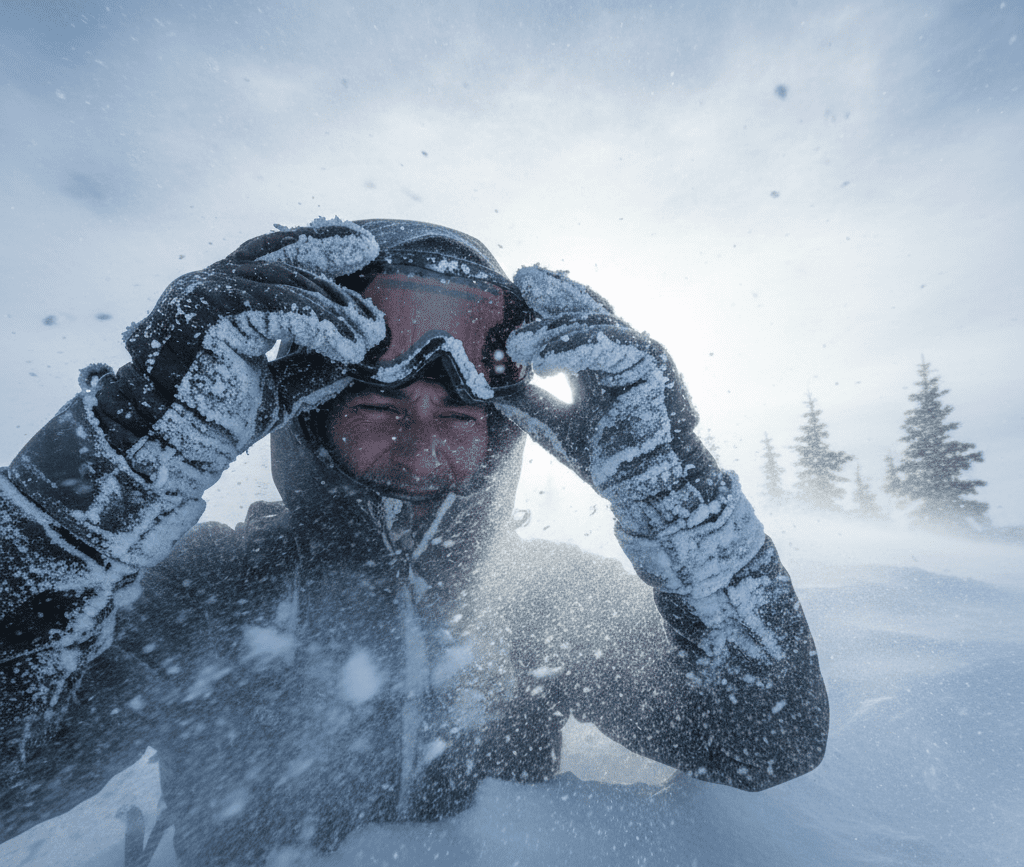
Wind chill destroys your hands faster than almost anything on the mountain — and most skiers don’t even realize it’s happening until their fingers go numb, stiff, or painfully cold. The truth is, wind chill doesn’t just freeze your hands… it steals heat, dries your skin, reduces circulation, and makes even good gloves feel useless.
And once that icy wind hits at higher speeds?
Your body can’t keep up.
You’ve probably felt it yourself:
- Warm hands suddenly turning cold during a fast run
- Fingers stinging even with thick gloves
- Gloves that feel fine at rest but fail on the lift
- Numbness that shows up faster than expected
That’s not “bad gloves.”
That’s wind chill skiing hands exposure — the silent heat killer.
According to the National Weather Service, wind chill is the perceived decrease in air temperature felt on the skin due to wind. Strong winds accelerate heat loss from exposed skin, which can make hands feel 2–3× colder than the actual air temperature (source).
In this guide, you’ll learn 7 brutal ways wind chill destroys your hands while skiing, plus how to stop it before it ruins your day on the slopes.
You’ll also understand:
- Why your hands freeze skiing even with warm gear
- The wind exposure mistakes most skiers make
- How to protect your fingers using better airflow control and wind-ready gear
- Which wind chill gloves skiing setups actually work
If you’ve ever wondered why your hands get cold so fast on windy days, you’re in the right place.
Let’s break down what’s really happening — and how to fight back.
- 1. Wind Chill Strips Away Heat From Your Skin in Seconds
- 2. Thin or Old Ski Gloves Can’t Block High Wind Speeds
- 3. Wind Chill Kills Circulation Faster Than You Think
- 4. Moisture + Wind = Instant Freezing of Your Hands
- 5. High-Speed Skiing Increases Wind Chill Exposure
- 6. Wind Burns Your Skin and Causes Long-Term Damage
- 7. Exposed Wrist Gaps Let Wind Sneak Into Your Gloves
- How to Protect Your Hands From Wind Chill
- Best Glove Materials for Blocking Wind Chill
- Quick Temperature Guide
- FAQ – How wind chill destroys your hands
- Final Thoughts
1. Wind Chill Strips Away Heat From Your Skin in Seconds
The first thing every skier needs to understand is how fast wind chill destroys your hands the moment cold air hits. You might think your gloves are warm enough, but when the wind kicks up, everything changes. That icy airflow cuts through layers, drains warmth, and suddenly your fingers feel stiff. And this is why so many skiers try to boost ski glove performance without realizing that wind is the real enemy.
When strong gusts hit your gloves, wind chill destroys your hands by stripping away the natural warm layer around your skin. Even premium insulation can’t stop this rapid heat loss if the outer shell isn’t doing its job. That’s also why skiers feel that sharp sting, burning cold, or numb fingertips after a few minutes of exposure.
If you’ve ever been on a chairlift and felt your fingers freeze out of nowhere, that’s exactly how wind chill destroys your hands long before you notice it’s happening.
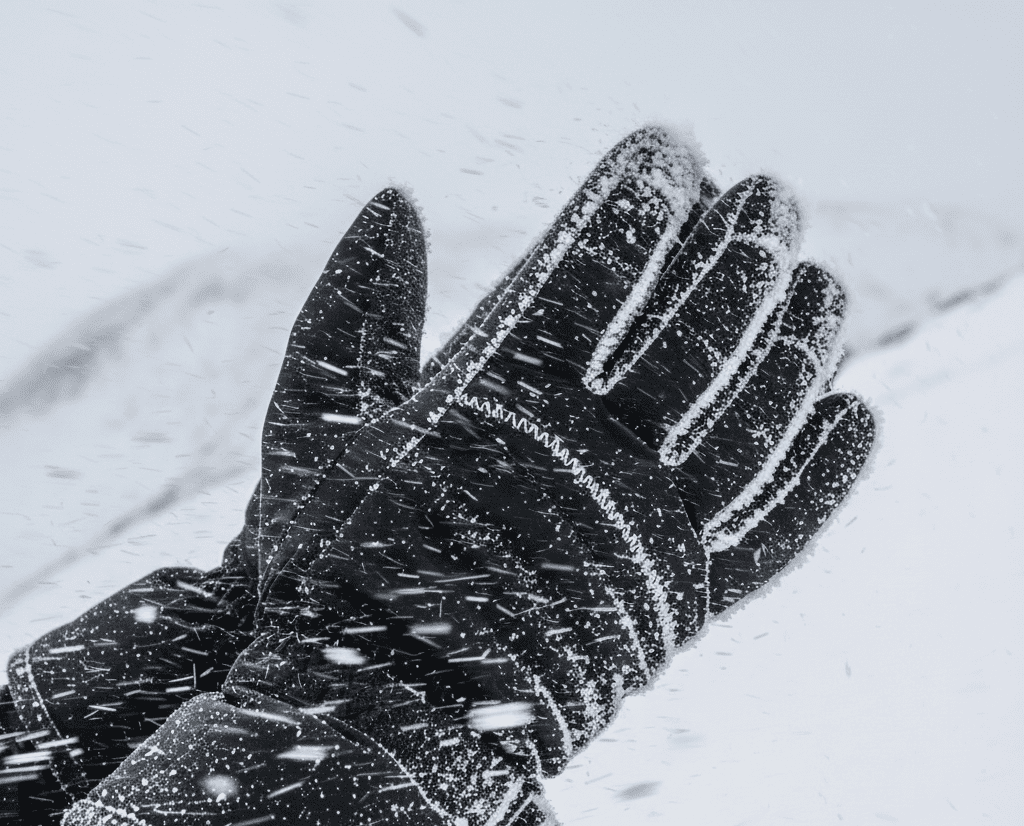
How Convection Pulls Warmth From Your Hands
Wind works like a cold vacuum around your gloves.
- It strips the warm air your skin generates
- It weakens insulation almost instantly
- It accelerates sweat evaporation
- It makes your fingertips cool 2–3× faster
This fast-moving air is the main reason wind chill destroys your hands even when temperatures don’t seem extreme.
Why Exposed Hands Lose Heat 2–3× Faster
Small openings at the wrist or loose seams let the wind slip inside your gloves. When that happens:
- Warmth drains immediately
- Insulation compresses and loses power
- Your fingers get cold unevenly
- The outer shell feels icy on the wind-facing side
This is the exact moment skiers think their gloves “aren’t warm enough,” even though the real problem is the wind.
Wind Chill vs No Wind
| Situation | Heat Loss Speed | Finger Warmth |
| No wind | Normal | Stays stable |
| Light wind | 1.5× faster | Mild chill |
| Strong wind | 2–3× faster | Rapid numbness |
Wind multiplies cold — and that’s why protecting against it matters.
Just a few minutes of exposure is enough for wind to take over, which is why you must fight the conditions before they fight you.
2. Thin or Old Ski Gloves Can’t Block High Wind Speeds
Many skiers don’t realize that thin or worn-out gloves are one of the biggest reasons wind chill destroys your hands faster than expected. When the outer fabric gets old, stretched, or thinned from years of use, the wind slides right through. And once that happens, even good insulation struggles to keep up. Upgrading your gear or making a few smart fixes is one of the easiest ways to boost ski glove performance instantly.
If your gloves are older, the protective shell weakens — and that’s exactly when wind chill destroys your hands the moment you step onto a windy ridge or chairlift. The cold slices through the material, steals heat, and leaves your fingers stiff before you even notice. It’s the silent warning sign that your gear is aging out.
Over time, the fabric fibers loosen, seams relax, and insulation becomes patchy. All of this creates tiny openings where wind chill destroys your hands, especially during high-speed skiing or freezing gusts at the summit.
Wind Penetrating Worn-Out Fabric
Once fabric loses its density, wind slips inside easily.
- Weak outer shell = instant heat loss
- Old leather absorbs moisture, then freezes
- Synthetic shells stretch and stop blocking wind
- Even small tears let wind rush in
This is the moment you feel that harsh sting — the unmistakable sign that wind chill destroys your hands faster than your gloves can protect you.
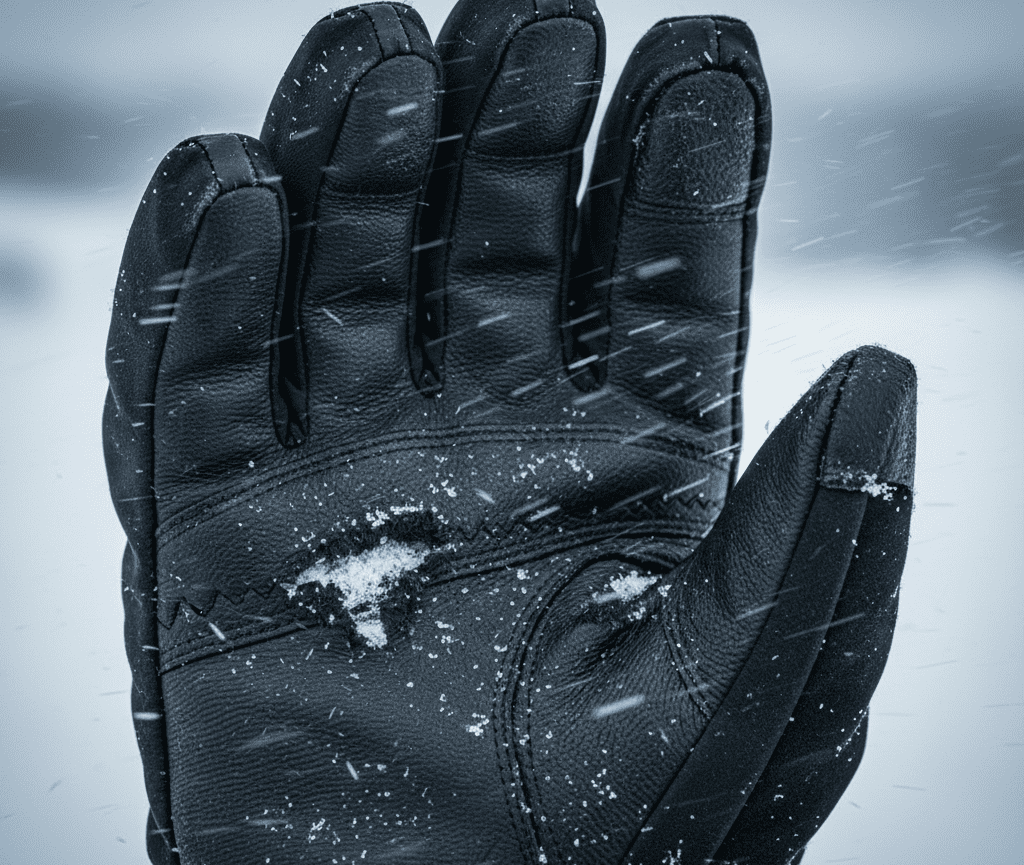
Why Older Gloves Lose Insulation
Insulation naturally breaks down with age.
- It gets crushed and loses loft
- Warm air pockets disappear
- Moisture buildup makes fibers clump
- Cold spots form in high-wear areas
Old insulation stops trapping heat, so wind chill destroys your hands even if temperatures aren’t extremely low.
Signs Your Gloves Can’t Handle Wind
Look for these warning signs:
- Your fingers go numb quickly on chairlifts
- The glove shell feels icy on windy days
- You can feel the breeze through the fabric
- The gloves flap or ripple in strong wind
- Cold air sneaks in at the seams
If any of these sound familiar, it means your gloves are past their prime — and wind is winning.
3. Wind Chill Kills Circulation Faster Than You Think
Most skiers never realize how quickly wind chill destroys your hands, not because of the temperature alone, but because the body reacts by tightening blood vessels. In extreme cold, your body instantly reduces blood flow to your fingers to protect your core — and that’s when wind chill destroys your hands even faster. Once circulation slows, numbness hits, and suddenly even great gloves feel useless. It’s a big reason so many people complain about numb fingers in ski gloves halfway through a run.
When blood flow drops, warmth drops with it. And when warmth drops, wind chill destroys your hands before you even finish your chairlift ride. This is exactly why skiers often think their gear is failing, but the truth is that circulation failure is the hidden enemy.
Blood Vessels Constrict in Extreme Cold
Your body goes into “cold survival mode.”
- Blood flow pulls back toward your chest
- Finger warmth drops in seconds
- Tight gloves make the effect even worse
- Even light wind can trigger vessel tightening
This chain reaction is why wind chill destroys your hands much faster than standing in still air.
Research from the American College of Sports Medicine shows that peripheral blood flow can drop 30–50% in sub-zero wind conditions, leading to numb fingers within minutes.
Reduced Blood Flow → Numb, Stiff Fingers
Circulation loss = immediate discomfort.
- Tingling or pins-and-needles feeling
- Slower finger movement
- Grip strength drops
- Fingers feel wooden or stiff
If you experience these symptoms often, it’s a sign your cold ski gloves fix needs to focus on circulation, not just insulation.

Real Skiing Scenarios Where Circulation Drops
Here’s where things go wrong most often:
- Sitting on an exposed chairlift with strong wind
- Holding ski poles tightly for long runs
- Wearing gloves that are too tight around the wrist
- Starting your ski day with cold hands
- Speed runs where air pressure increases cooling
All of these create situations where wind chill destroys your hands rapidly — even if the temperature doesn’t look that bad.
4. Moisture + Wind = Instant Freezing of Your Hands
Nothing accelerates cold faster than moisture, and this is exactly when wind chill destroys your hands in the most brutal way. Once sweat, melted snow, or damp lining gets involved, your skin loses heat at double speed — and suddenly your gloves feel useless. It’s one of the biggest reasons why hands freeze skiing, even when the temperature doesn’t seem dangerous.
When moisture sneaks inside your gloves, airflow pulls heat out instantly. That’s the moment wind chill destroys your hands long before you even hit your next run.
Sweat Inside Gloves Turns to Ice-Cold Dampness
Even if your gloves never touch snow, sweat does the damage.
- Hands start warm → sweat builds
- Sweat soaks the lining
- Thin wet layers lose heat extremely fast
- Circulation drops and fingers stiffen
This is one of the sneakiest ways wind chill destroys your hands, because sweat feels warm at first — until it doesn’t.
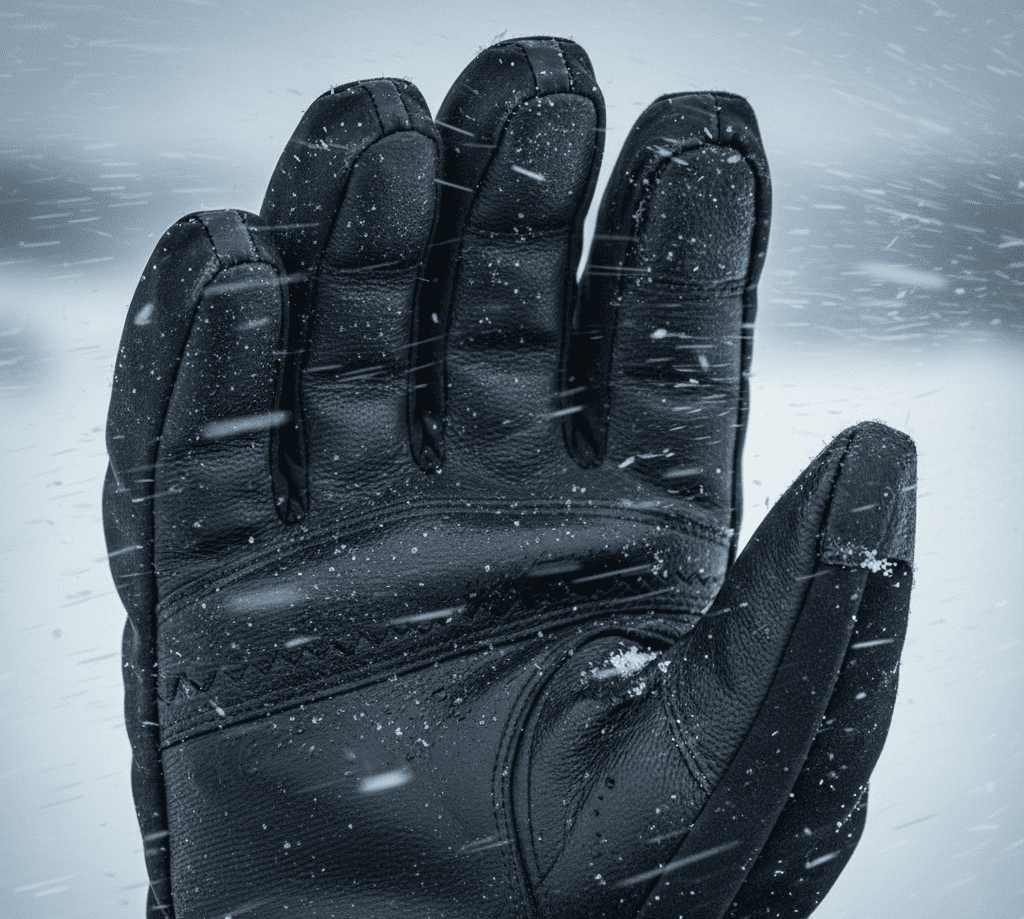
Snow Melting on the Surface Makes Gloves Colder
When snow melts on your glove’s outer shell:
- The fabric stays damp
- The water absorbs heat from your hand
- Wind cools the wet surface instantly
- Gloves feel heavier and colder
This happens even faster on older gloves that have lost their water repellency.
How Wet Gloves Amplify Wind Chill
Moisture + airflow = instant freezing.
- Wet insulation collapses
- Air hits your skin more directly
- Warmth escapes 3–5× faster
- Damp lining prevents your hands from reheating
Good Gore-Tex gloves slow this effect, but even they can’t fight physics if they’re soaked from the inside.
5. High-Speed Skiing Increases Wind Chill Exposure
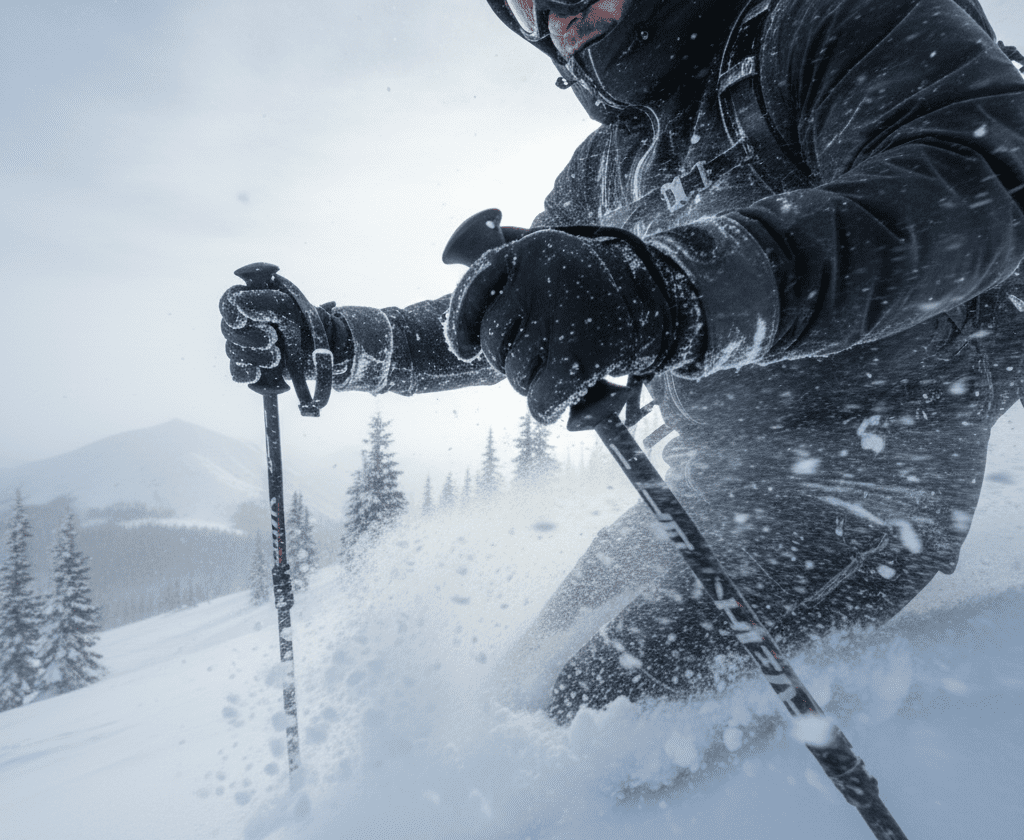
Even on sunny, mild days, skiing fast can make you feel like you’re in a freezer. That’s because wind chill destroys your hands faster the harder you go. When you’re skiing 30–50 mph, airflow rips away heat from exposed skin and weak insulation, leaving fingers numb in minutes.
High-speed skiing is one of the sneakiest ways wind chill destroys your hands, because it doesn’t always feel extreme until you stop and notice the sting.
Why Hands Get Cold Even on Mild Days
- Air hits your gloves and fingers directly
- Thin insulation or damp gloves amplify heat loss
- Wind overpowers natural body heat
- Blood vessels constrict, reducing circulation
Even a temperature that feels fine while standing still can turn painful once you pick up speed. That’s why skiing wind exposure is a major factor in hand frostbite and discomfort.
Fast Skiing Multiplies Heat Loss
- At 30 mph → heat loss doubles
- At 50 mph → heat loss triples
- Cold gloves + high speed = numb fingers in under 10 minutes
Pro Tip: Layer gloves with liners and check waterproofing — this reduces how quickly wind chill destroys your hands on every run.
6. Wind Burns Your Skin and Causes Long-Term Damage
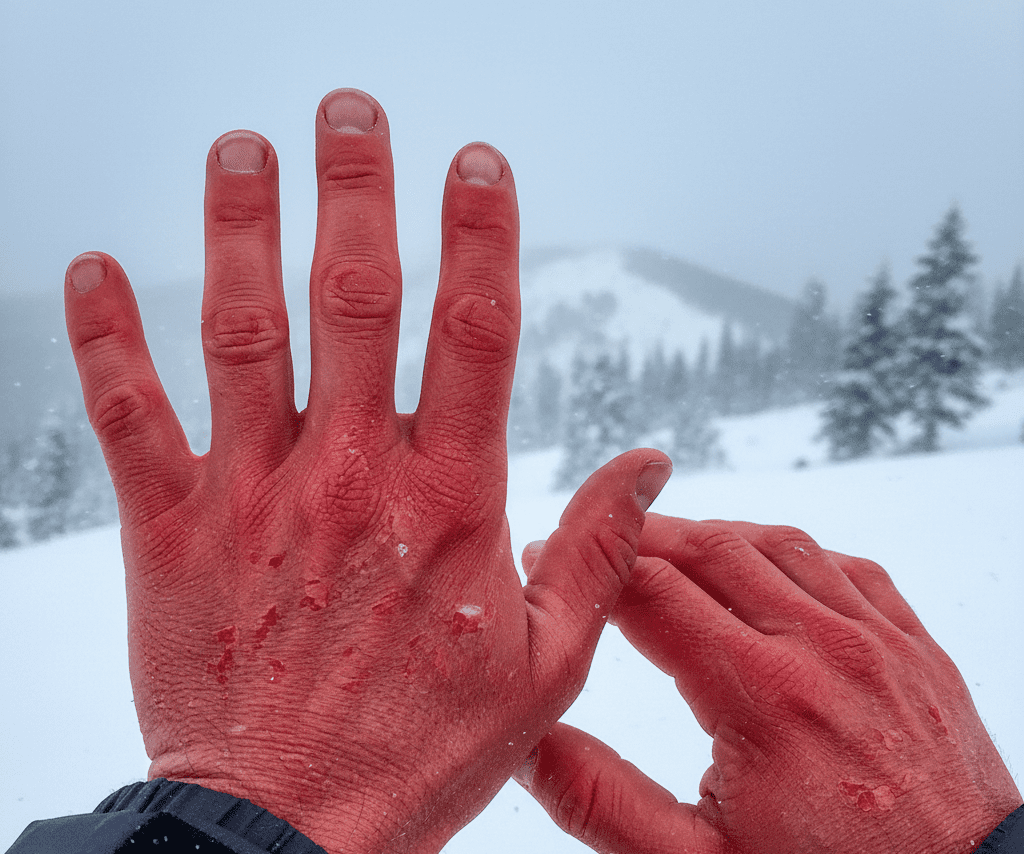
When you’re skiing in strong winds, it’s not just the cold that hurts — it’s the friction of the air against your skin. Wind chill destroys your hands by stripping away natural oils, leaving fingers red, dry, and sensitive. Over time, repeated exposure can cause lasting damage if you don’t protect your skin.
Even on a sunny slope, you can feel the sting of windburn. That’s why wind chill destroys your hands faster than you might expect — it’s a mix of cold, speed, and moisture.
Windburn vs Frostbite
- Windburn: Redness, peeling, dryness; usually temporary but painful
- Frostbite: Numbness, white or gray skin, potential tissue damage; urgent attention needed
Signs Your Hands Are Getting Burned
- Tingling or itching
- Shiny or tight skin
- Peeling after exposure
- Persistent dryness despite gloves
Preventive Strategies
- Apply high-SPF, water-resistant hand cream
- Wear gloves with a soft inner lining
- Use windproof shells over liners
- Take breaks indoors to warm and moisturize hands
Protecting your skin during cold runs reduces how quickly wind chill destroys your hands, and using proper gear prevents long-term damage from windburn skiing.
7. Exposed Wrist Gaps Let Wind Sneak Into Your Gloves
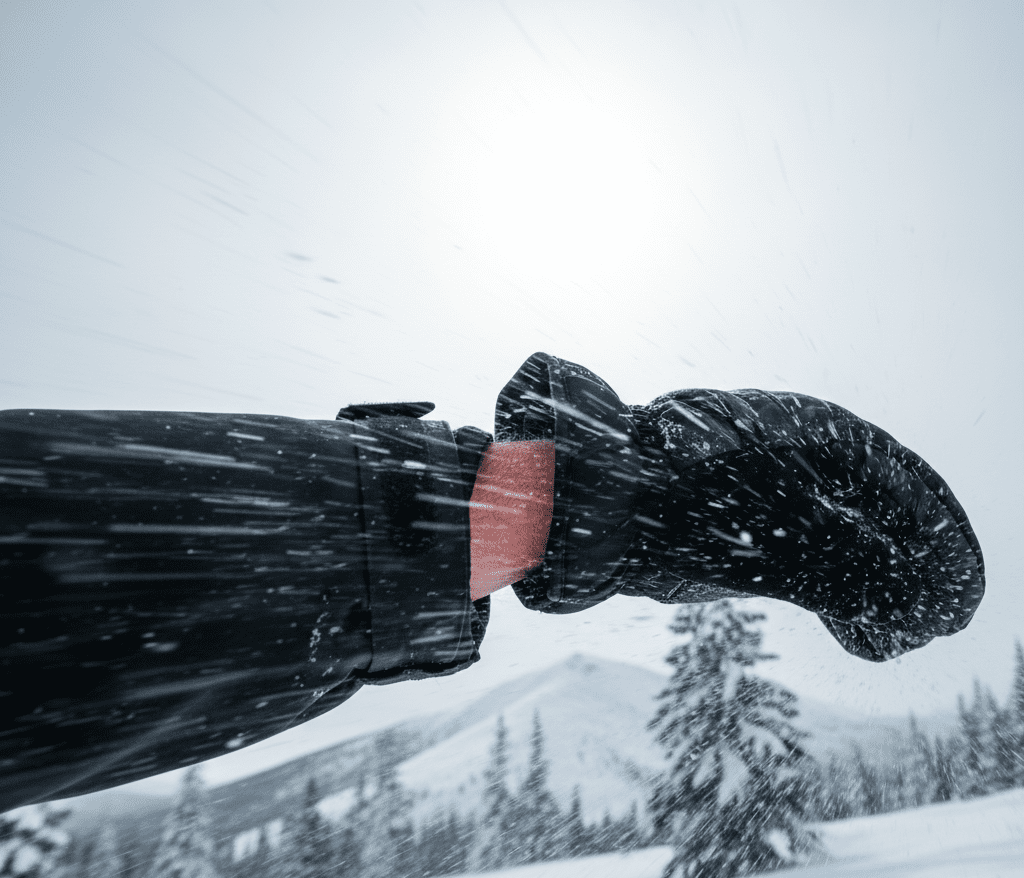
Even the best gloves can fail if your wrists are exposed. Small gaps between your jacket and gloves let cold air slip in, and that’s how wind chill destroys your hands faster than you notice. Skiers often forget this, thinking their gloves alone are enough — but wind finds any opening.
This is especially dangerous during long runs or high-speed descents. Wind chill destroys your hands by breaking the insulation layer where warmth is trapped, leaving fingers cold, stiff, or numb in minutes.
Why Wrist Gaps Are a Problem
- Cold air enters through open cuffs
- Insulation layers lose effectiveness
- Moisture or snow gets inside, compounding heat loss
How to Seal the Cuff Area Properly
- Use gloves with adjustable wrist straps
- Tuck jacket sleeves inside glove cuffs or use snow gaiters
- Overlap liners with gloves for a snug fit
- Check for gaps before hitting lifts or trails
Even small adjustments reduce skiing wind exposure, helping prevent wind chill from destroying your hands and keeping fingers warm all day.
How to Protect Your Hands From Wind Chill
Protecting your hands is key because wind chill destroys your hands faster than most skiers realize. Even on mild days, gusts at high speed can leave your fingers numb and painful. Luckily, with the right gear and layering tricks, you can stay warm and enjoy every run.
Top Tips to Keep Hands Warm
- Windproof gloves: Look for Gore-Tex or insulated shells designed to block cold air.
- Use glove liners: Thin liners wick moisture and add extra insulation — perfect for cold hands skiing.
- Wrist gaiters: Seal gaps between your gloves and jacket sleeves to prevent wind from sneaking in.
- Layer smart: Wearing two layers (liner + main glove) can dramatically reduce heat loss.
- Mittens over gloves: Mittens keep fingers together, retaining heat better than gloves — ideal for extremely cold conditions.
Quick Layering Trick
- Start with moisture-wicking liners.
- Add insulated gloves or mittens.
- Secure wrist cuffs and overlaps.
Even a small adjustment keeps wind chill from destroying your hands, lets you ski longer without discomfort, and boosts glove performance on cold days.
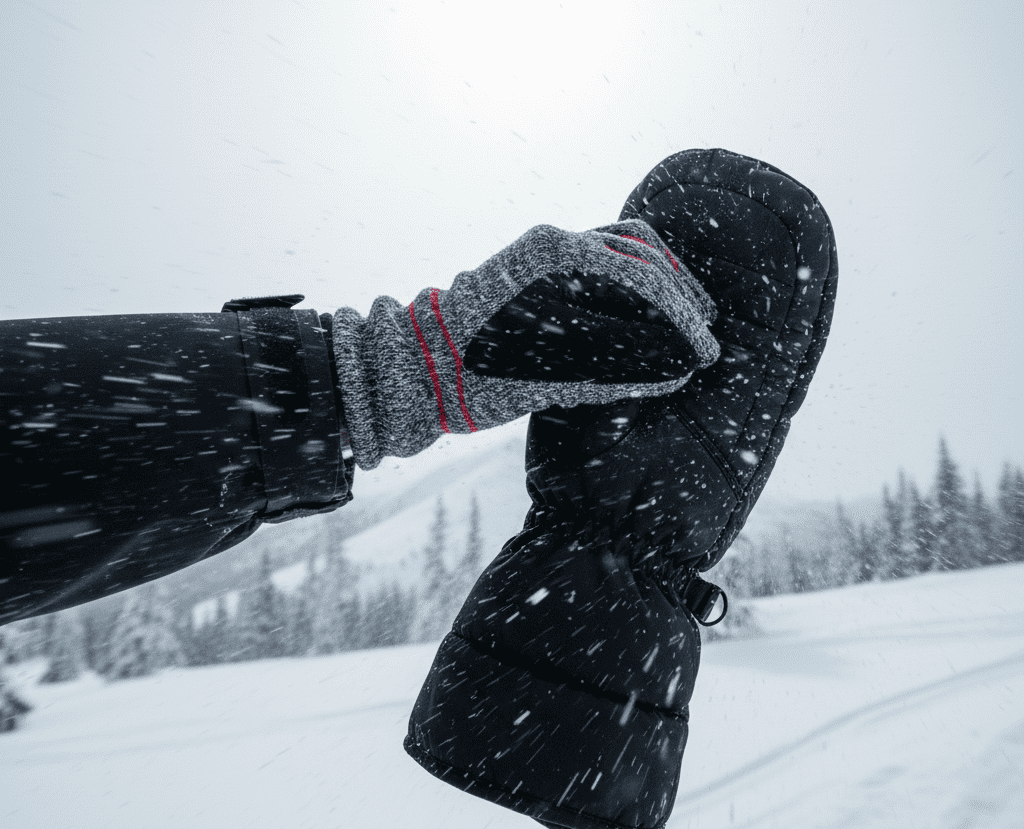
Best Glove Materials for Blocking Wind Chill
Choosing the right materials is crucial because wind chill destroys your hands faster than wet snow or low temperatures alone. Not all gloves are created equal — some block wind better, some trap heat more efficiently, and some last longer under repeated exposure.
Top Materials for Maximum Protection
- Windstopper: Lightweight, breathable, and excellent at keeping wind out while maintaining dexterity. Perfect for wind chill skiing hands.
- Leather: Naturally wind-resistant and durable; works best when treated with conditioner. Keeps fingers warm and protected from abrasion.
- Softshell vs Hardshell:
- Softshell: Flexible, moderately wind-resistant, better dexterity.
- Hardshell: Fully waterproof, blocks wind completely, slightly stiffer.
- Softshell: Flexible, moderately wind-resistant, better dexterity.
- Insulation Types:
| Material | Warmth | Weight | Best Use |
| PrimaLoft | High | Light | Cold, dry days |
| Thinsulate | Medium | Very Light | Everyday skiing |
| Wool | Medium | Medium | Moist conditions, natural warmth |
According to Outdoor Research lab tests, Gore-Tex and PrimaLoft insulation offer superior wind-blocking while maintaining breathability
Quick Tips
- Pair wind-blocking outer materials with moisture-wicking liners to prevent cold hands skiing.
- Check that seams are tight and wrist cuffs seal properly — gaps let wind chill destroy your hands despite the best materials.
- A combination of leather or hardshell with PrimaLoft insulation often offers the best balance of warmth, protection, and durability.
Using the right materials not only keeps your hands warm but also enhances comfort and grip, letting you ski longer without numb fingers — because nothing ruins a run faster than wind chill destroying your hands.
Quick Temperature Guide
Knowing when wind chill destroys your hands can make the difference between a fun ski day and frostbite. Wind chill isn’t just cold air — it accelerates heat loss from exposed skin, especially your fingers. Even mild temperatures with strong winds can be risky.
Wind Chill Safety Chart
| Air Temp (°F) | Wind Speed (mph) | Wind Chill (°F) | Risk Level |
| 32 | 20 | 18 | Caution — wind chill skiing hands affected |
| 20 | 30 | -5 | Unsafe — cold hands skiing likely |
| 10 | 40 | -25 | Very Unsafe — wind chill destroys your hands rapidly |
| 0 | 50 | -45 | Extreme — frostbite risk in <30 min |
Tips to Stay Safe
- Take breaks in sheltered areas when the chart shows dangerous levels.
- Always wear windproof gloves and liners to protect against why hands freeze skiing scenarios.
- Cover any exposed skin, especially at cuffs and between gloves and jackets.
- Stay hydrated — cold, dry air accelerates heat loss.
By checking the wind chill and using proper protection, you can prevent situations where wind chill destroys your hands, keeping your fingers warm and responsive all day on the slopes.
FAQ – How wind chill destroys your hands
Before hitting the slopes, it’s important to understand why your hands feel icy fast and how to protect them. These common questions answer exactly that.
Why do my hands freeze so fast when skiing?
Your hands lose heat 2–3× faster than other parts of your body because wind strips warmth from exposed skin. Wind chill destroys your hands quickly if gloves aren’t insulated or layered properly. Using glove liners can help manage sweat and improve warmth.
How do I keep wind chill off my hands?
- Wear windproof gloves or mittens with good insulation.
- Use wrist gaiters to seal the jacket–glove gap.
- Layer with moisture-wicking liners to prevent sweat from amplifying wind chill skiing hands.
- Avoid exposing skin to wind directly; even short exposure accelerates heat loss.
Are mittens better for wind chill?
Yes. Mittens trap fingers together, keeping warmth inside and reducing surface area exposed to wind. While gloves allow dexterity, mittens are superior when wind chill destroys your hands in extreme conditions.
Does wind chill affect gloves?
Absolutely. Thin, worn, or wet gloves lose insulation faster. Snow, sweat, and cold air penetrate the material, which is why cold hands skiing are so common. Using quality windproof materials like Gore-Tex or leather can help maintain warmth.
How cold is too cold for skiing?
Wind chill below -20°F (-29°C) is dangerous for exposed hands. Even with proper gloves, long exposure can cause frostbite in under 30 minutes. Always check conditions to avoid situations where wind chill destroys your hands.
Final Thoughts
Wind chill destroys your hands faster than most skiers realize — stripping warmth, causing numbness, and even long-term damage if ignored. The key takeaway? Protect your hands with windproof gloves, liners, wrist gaiters, and proper layering.
Investing in quality gear and sealing every gap between gloves and jacket can make a huge difference. Don’t wait for frostbite or cold, stiff fingers to ruin your ski day — take action now and keep your hands warm, comfortable, and performing at their best.
✔ Grab your windproof gloves and liners today and conquer the slopes without frozen hands!
Written by Awais Rafaqat, a seasoned skier and outdoor gear expert with over 10 years of experience on extreme slopes across North America and Europe. Combining hands-on testing of cold-weather gloves, knowledge of wind chill physiology, and safety research from organizations like the National Weather Service and American College of Sports Medicine, Awais Rafaqat helps skiers stay warm, safe, and comfortable on every run.