Quick answer: Spring ski days often start below freezing and end well above it. A glove built for a cold January morning can leave your hands sweaty and clammy by lunch in April. The fix isn’t a warmer or colder glove — it’s one built for breathability and medium insulation instead of maximum warmth. If you’re not sure how your current gloves hold up to that kind of swing, ski glove finder can help you match your conditions to the right glove before spring hits.
- Why Spring Skiing Needs a Different Glove
- Why Spring Mornings and Afternoons Feel Like Different Seasons
- Why Wet Hands Get Cold Faster
- What a Real Spring Day Looks Like
- Why Down Isn't the Answer Here
- What Actually Matters in a Spring Glove
- Don't Forget the Sun
- Matching Gloves to How Often You Ski in Spring
- A Simple Way to Check Your Current Gloves
- Common Mistakes When Choosing Spring Gloves
- Fit Changes a Little in Spring
- Spring Maintenance Matters More
- FAQ
Why Spring Skiing Needs a Different Glove
Winter glove shopping is mostly one question: how cold does it get? Spring adds a second question: how much will the temperature swing in one day, and can your hands handle both ends of it without freezing or sweating through.
That’s why a glove that felt great in January can feel awful in April. A heavily insulated winter glove holds heat well. That’s the wrong property once it’s above freezing and you’re working up a sweat from actual skiing. The sweat has nowhere to go, and a damp hand gets cold faster than a dry one in a lighter glove.
Why Spring Mornings and Afternoons Feel Like Different Seasons
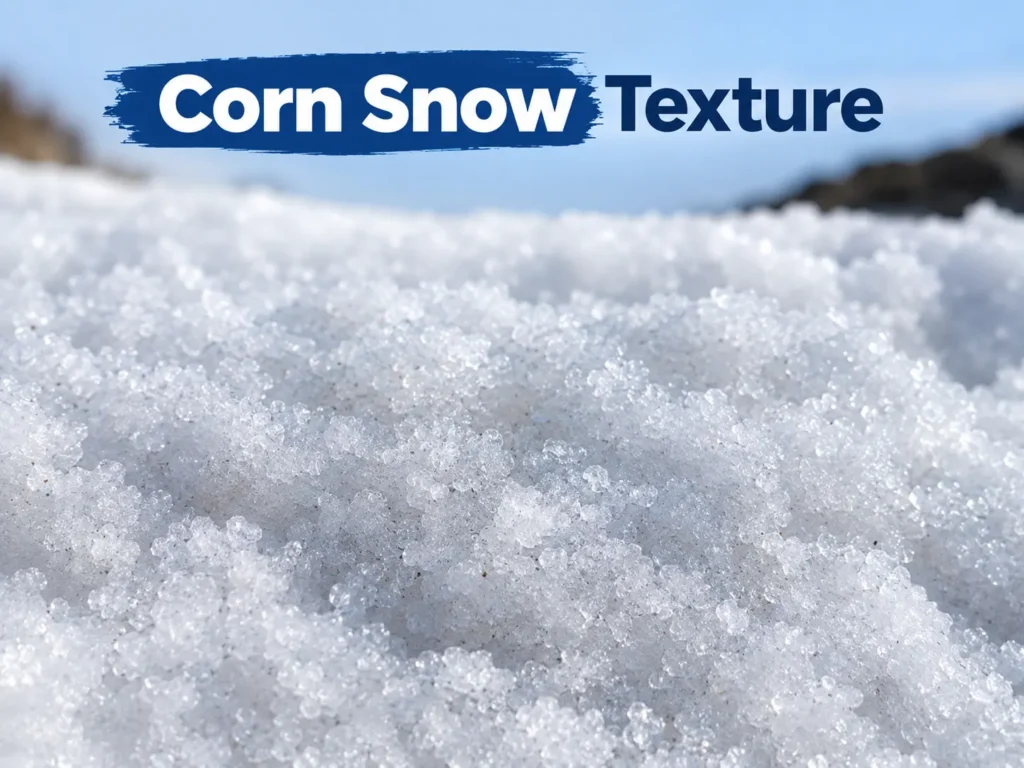
Spring snow goes through a freeze-thaw cycle every day. According to Avalanche.org, corn snow — the soft, grippy spring surface skiers love — forms when daytime warmth melts the top layer slightly and overnight cold refreezes it into larger, rounded grains.
That’s why an 8 a.m. run can feel like the coldest day of the year while the 1 p.m. run on the same slope feels like summer. Your hands deal with two very different temperatures in a few hours, and one glove built for only one of them handles the other one badly.
This is also why it helps to layer in spring more than any other season. A glove with a removable liner, or just packing a lighter backup pair for the afternoon, solves a problem a single fixed glove can’t. There’s no one warmth level that’s right for both an 8 a.m. start and a 2 p.m. finish.
If you’re putting together a spring kit rather than buying one pair, it helps to see how other skiers carry a backup pair instead of hunting for one glove that does everything.
Why Wet Hands Get Cold Faster
When your hands feel cold in spring, reaching for a warmer glove is usually the wrong move. According to Scientific American, water pulls heat away from a surface as it evaporates. That’s the same reason a wet hand feels colder than a dry one at the same air temperature.
A heavily insulated glove that traps sweat runs into this exact problem. The insulation stays warm, but the moisture against your skin is pulling heat away as it evaporates. So “my hands are cold” in spring is usually a moisture problem, not a warmth problem.
That’s the real case for breathability over raw warmth once it’s near or above freezing. A glove that lets sweat escape keeps your skin dry, and dry skin at a moderate temperature beats damp skin in a warmer glove almost every time.
What a Real Spring Day Looks Like
Say you’re on the chair at 8 a.m. It’s 22 degrees, your fingers are already stinging a bit, and you’re glad you wore something warm. By 11, the sun’s out, the snow’s softening up, and your hands feel fine. By 1 p.m. it’s pushing 45 degrees, the snow’s turned to mashed potatoes, and your gloves feel like ovens. That’s not a bad day. That’s just spring.
The mistake most people make is packing for the 8 a.m. version of the day and suffering through the rest of it. A glove that’s dialed in for that first cold hour becomes the problem by lunch, not the solution.
This is also why a lot of experienced spring skiers just carry two things instead of one — a warmer glove or liner for the first run or two, and something thinner for the rest of the day. It sounds like extra gear, but it’s really just planning for the day you’re actually going to have instead of the day you wish you were having.
Why Down Isn’t the Answer Here
Down insulation is incredible in dry, cold conditions. It’s light, it packs small, and it’s warmer per ounce than almost anything else. In spring, it’s often the wrong call, and it’s worth knowing why before you reach for your warmest pair out of habit.
Down loses almost all its insulating power once it gets wet, and it takes a long time to dry back out. Spring conditions — wet snow, higher humidity, sweat from warmer exertion — are exactly the conditions down struggles with. A soaked down glove doesn’t just stop keeping you warm. It gets heavy and stays useless for the rest of the day.
Synthetic insulation like PrimaLoft or Thinsulate holds onto some warmth even when damp, and it dries out faster between runs. That’s a real, practical reason synthetic tends to beat down for spring specifically, even though down wins on paper for warmth-to-weight in dry conditions.
What Actually Matters in a Spring Glove
Medium synthetic insulation — a thin layer of PrimaLoft or Thinsulate, not a thick winter fill — is the right call for most spring days. It handles a cold morning without trapping so much heat that the afternoon becomes miserable. If you’re used to shopping by a single warmth number, it helps to see how temperature ratings actually work instead of one fixed target.
A breathable waterproof membrane matters more in spring than in deep winter. Wet spring snow puts more moisture pressure on a glove than dry powder, and your hands are sweating more too from the warmer effort.
Shorter cuffs that tuck under a jacket sleeve make more sense than big gauntlet cuffs once you’re done with waist-deep powder. A gauntlet cuff earns its bulk in a storm. On a sunny spring day, it’s just extra weight and heat.
Grip at the palm still matters in spring, maybe more. Corn snow is firm and grippy, and it rewards more aggressive skiing than soft powder does.
| Condition | What to Prioritize | What to Skip |
| Cold mornings, warm afternoons | Removable liner or breathable medium insulation | Maximum warmth rating |
| Wet, slushy midday snow | Real waterproof membrane | Deep gauntlet cuff |
| Aggressive corn-snow carving | Palm grip and dexterity | Bulk insulation |
| Multiple spring trips, different resorts | A glove that layers with a liner | One fixed-warmth glove |
Don’t Forget the Sun
Spring skiing brings a UV problem, winter doesn’t. According to the EPA, snow can reflect up to 80 percent of UV radiation, and UV gets stronger at higher elevation. A bright spring day on the mountain means more sun exposure than the same sun angle at sea level.
Short cuffs feel better in spring, but they leave more wrist skin exposed than a winter gauntlet cuff — for longer, on the sunniest days of the season. That’s not a reason to skip short-cuff gloves. It’s a reason to put sunscreen on your wrists, not just your face.
Matching Gloves to How Often You Ski in Spring
An occasional spring skier — one or two bonus trips after the main season — doesn’t need a dedicated spring glove. A lighter liner glove under your existing shell handles a handful of days fine, and buying a separate spring pair mostly just adds gear you’ll barely use.
A regular spring skier chasing corn snow a few times a month has a stronger case for a real spring setup. The freeze-thaw cycle repeats every day of a real spring season, so it’s worth solving properly instead of dealing with it over and over.
Where you ski matters too. Rocky Mountain spring skiing tends to follow the classic cold-morning, warm-afternoon pattern above. The Pacific Northwest runs wetter and less predictable, with less reliable overnight refreezes, so waterproofing matters more there than layering for temperature swings.
Backcountry spring touring is its own case. You generate heat climbing up, then face a cold, fast descent. That often calls for a different glove on the way up than on the way down, not one glove for both.

A Simple Way to Check Your Current Gloves
Before you buy anything new, it’s worth checking whether your current gloves are actually the problem or if you’ve just been using them wrong. Put them on and flex your hand into a fist a few times. If they feel tight or restrictive, that’s circulation getting cut off, and that alone will make your hands feel cold no matter how warm the insulation is.
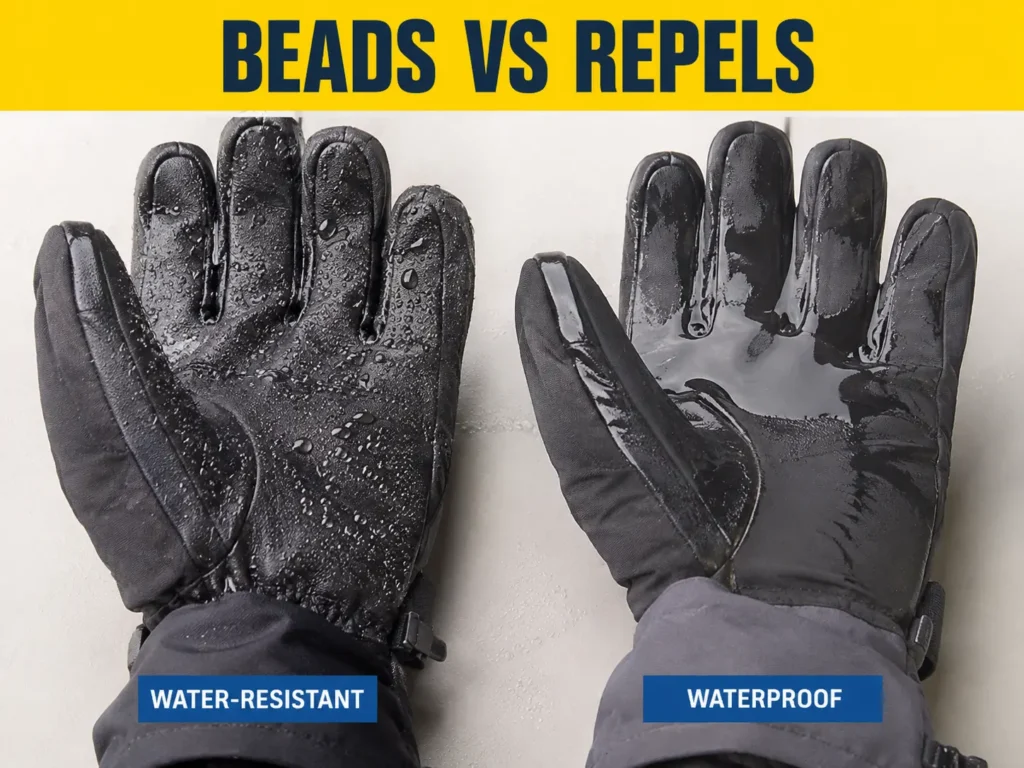
Next, check how they’ve handled water so far this season. Flick a few drops on the back of the glove. If the water beads up and rolls off, the coating’s still doing its job. If it soaks in right away, that’s your real problem, and it’s a cheaper fix than buying a whole new pair.
If the gloves pass both checks and you’re still overheating by afternoon, that’s genuinely an insulation problem, not a fit or waterproofing one, and that’s when it’s worth switching to something lighter for spring specifically.
Common Mistakes When Choosing Spring Gloves
Grabbing the same heavy winter gloves out of habit is the most common mistake, and it’s what causes the sweaty-then-cold problem above. The glove that felt perfect in January is often wrong once real spring temperatures show up.
People also underestimate how much moisture a spring day brings. Between wet snow and more sweat from warmer-weather effort, spring puts more total moisture on a glove than a cold, dry powder day, even though the air feels milder.
Buying the cheapest option without checking for a real waterproof membrane backfires in exactly the conditions spring brings — sustained contact with wet, saturated snow, which is harder on a basic DWR coating than dry powder is.
Expecting one glove to cover the whole spring season also causes trouble. Conditions swing too much between an early-March cold snap and a late-April slush day. A liner system or a lighter backup pair works better than one glove trying to do both.
Fit Changes a Little in Spring
A glove that fit fine in January can feel slightly different in April. Cold hands run a little smaller; warmer spring hands run a little bigger, especially by afternoon after some effort.
It’s a small effect, not a reason to size up. But it explains why a glove that felt snug and fine on a cold morning can feel a bit tight by early afternoon. A glove with some stretch handles that is better than a stiff synthetic shell.
Dexterity matters more in spring too. You’re more likely to be pulling off layers, adjusting goggles, or handling gear through a variable day than on a steady cold winter day where everything stays bundled up. A less bulky glove makes those small adjustments easier all day.

Spring Maintenance Matters More
A few maintenance habits matter more in spring than any other season. Drying gloves fully between days matters more because wet spring snow soaks a glove more than dry powder does. A glove packed away still damp starts the next day already behind.
Check your DWR coating more often too. Sustained contact with wet snow wears it down faster than dry powder does. A quick water-bead test before a spring trip catches a fading coating before it fails mid-run.
Leather palms need conditioning more often during a heavy spring stretch. The same wet-dry cycling that makes good corn snow also strips oils from leather faster than a dry winter does. A glove that needed conditioning every couple weeks in January might need it weekly in April.
FAQ
Do I need more waterproofing in spring than winter?
Yes, even though it seems backwards. Wet spring snow soaks a glove more than dry winter powder does, which puts more pressure on the waterproofing than a typical cold, dry day.
Can I just remove the liner from my winter gloves?
Only if your winter glove has a removable liner to start. If it doesn’t, you’re stuck with the same fixed warmth no matter how warm the afternoon gets.
Are fingerless or convertible gloves good for spring skiing?
They work on very mild, calm, sunny days, since they favor dexterity and ventilation over warmth. They struggle on the cold-morning half of a typical spring day, which is where most spring ski days still start.
Do spring gloves wear out faster than winter gloves?
About the same overall, but they fail differently. Spring gloves see more moisture per hour of use, which wears down waterproof membranes and DWR coatings a bit faster than the drier conditions of deep winter.