
Quick answer: Wet toddler hands almost always trace back to one of three sources happening at once — snow getting in from outside, sweat building up inside, or an open gap at the wrist letting both in. Fixing only one of the three explains why so many parents try a “better” glove and still end up with the same soggy mittens by lunchtime. Manage snow contact with the right construction, sweat with a liner, and the wrist gap with correct cuff positioning, and most of the problem disappears. Ski glove finder can help if you’re also still deciding on the glove itself.
- Why Standard Waterproof Gloves Still Fail on Toddlers
- Mittens Outperform Gloves for Toddlers
- Long Gauntlet Cuffs Are Non-Negotiable
- Waterproof Membrane vs. DWR-Only Matters More for Toddlers
- Synthetic Insulation, Not Down
- The Liner System That Controls Interior Moisture
- Sealing the Wrist Gap
- Overnight Drying That Actually Works
- What to Do Based on Your Situation
- Mistakes That End in Wet Hands by Midday
- When the Gloves Are Not the Problem
- FAQ
Why Standard Waterproof Gloves Still Fail on Toddlers
Most waterproof gloves are built around adult use patterns — occasional snow contact from pole handles and chairlift bars, with hands mostly away from snow during active skiing. A DWR coating and membrane built for that contact level holds up fine.
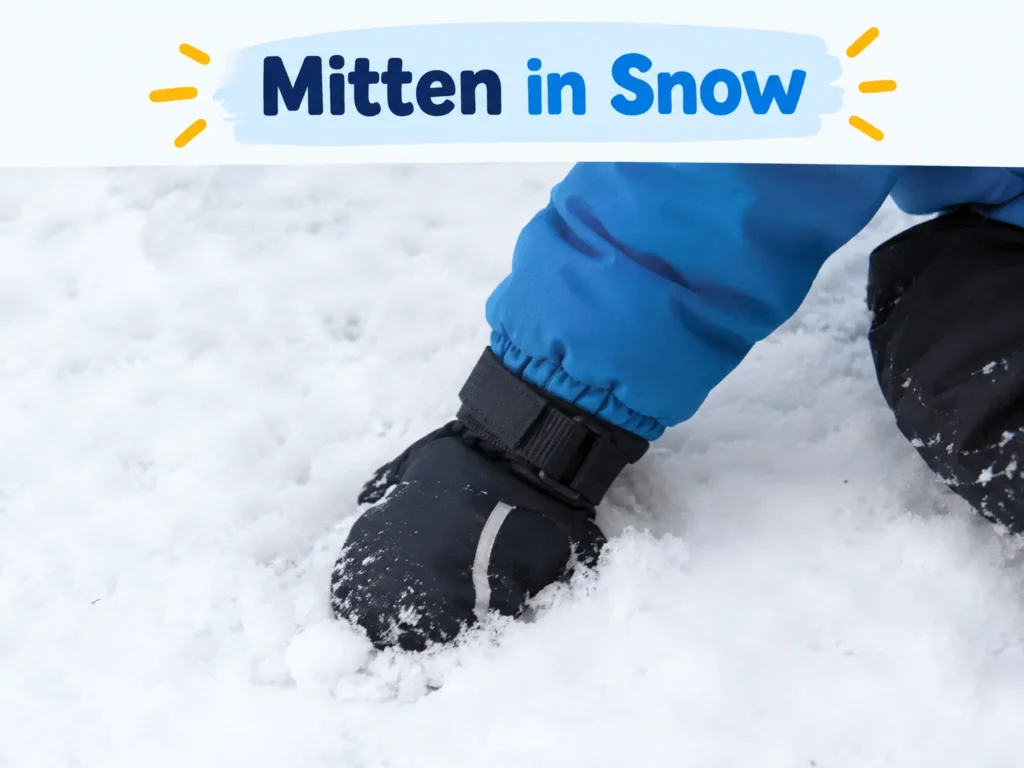
Toddlers contact snow constantly and directly. Falls happen often at this age, and nearly every one involves palm-down contact with snow for several seconds at a time. That adds up to far more sustained snow exposure across a morning than the outer shell’s water-repellent coating is built to handle before it saturates — and once the outer coating saturates, the membrane underneath is carrying the entire moisture load alone.
The wrist gap makes this worse specifically for toddlers. Adult jackets have longer, more tapered sleeves that seal reasonably well against a glove cuff. Toddler jackets often have proportionally shorter sleeves with a wider cuff opening relative to the mitten. Snow works into that gap during falls and melts against skin from body heat, soaking the lining from the inside out — a failure mode parents often blame on glove quality when the actual cause is cuff position.
This combination — high fall frequency plus a proportionally larger wrist gap — is specific enough to toddlers that gear built and marketed for “kids” broadly, spanning ages three to twelve, often misses it. A glove sized down from an older child’s design frequently keeps the shorter, adult-pattern cuff proportions that work fine for a coordinated eight-year-old but leave a genuine gap on a toddler whose falls happen constantly and whose jacket sleeve is already shorter to begin with.
Mittens Outperform Gloves for Toddlers
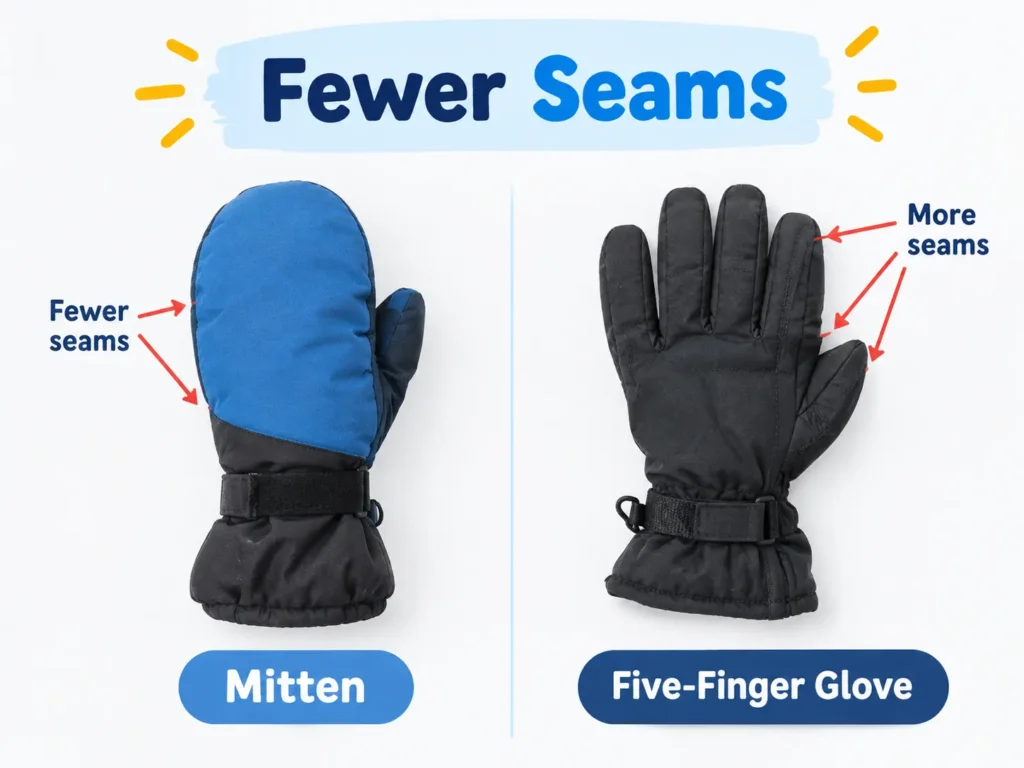
Mittens have meaningfully fewer seams than gloves, and each seam is a potential entry point once snow contact is sustained. A mitten typically has two to three seam lines on the outer shell; a five-finger glove has eight to twelve. At the contact frequency toddlers produce, that difference matters more than it would for an adult skier — the fuller comparison of mittens against gloves, including warmth and dexterity trade-offs beyond just seam count, is covered in the mittens vs. gloves guide on this site.
Mittens also share warmth across fingers rather than isolating each one in its own insulated pocket, which genuinely does help toddlers specifically — children have a proportionally larger surface area relative to their body mass than adults do, and peer-reviewed pediatric thermoregulation research confirms this makes children lose heat through the skin faster and more effectively than adults in the same cold exposure. Shared finger warmth in a mitten works with that physiology rather than against it.
This same physiological difference is also why toddlers can go from comfortable to genuinely cold noticeably faster than an adult standing in the exact same conditions. It’s not that toddlers are more sensitive or complain more readily — the underlying rate of heat loss really is higher, which means the margin for a wet glove or an open wrist gap is smaller for a toddler than it would be for an adult wearing the same gear.
Long Gauntlet Cuffs Are Non-Negotiable
The cuff should extend well up the forearm — at least four inches above the wrist — to create genuine overlap with the jacket sleeve. Short-cuff mittens that sit right at the wrist work fine for adult use patterns but can’t seal the gap during toddler falls, where arms extend forward and the sleeve rides up in exactly the moment sealing matters most.
A gauntlet cuff that reaches mid-forearm and closes with a drawcord or wide closure removes the gap responsible for most mid-session wet-hands complaints — a longer cuff isn’t a premium feature here, it’s the specific fix for the specific failure mode toddler falls create.
Cuff length is also one of the easier things to check before buying, even without trying gloves on a moving toddler mid-fall. Measuring roughly four inches up from the wrist crease on the child’s actual arm, then comparing that against a glove’s stated cuff length before purchase, catches an inadequate cuff at the shopping stage rather than discovering it on the first cold, wet ski day.
Waterproof Membrane vs. DWR-Only Matters More for Toddlers
A mitten with a genuinely bonded waterproof membrane, not just a DWR spray coating on the outer shell, keeps working through repeated snow contact because the membrane blocks moisture regardless of how many times the outer shell itself gets wet. A DWR-only mitten repels water well for the first hour, then saturates progressively as contact frequency climbs — exactly the pattern toddler use creates. For this specific use case, a bonded membrane earns its higher price.
The practical way to check before buying: a membrane construction is usually stated explicitly on the product page or tag, often by name, while a DWR-only shell tends to only mention “water-resistant” without naming an internal membrane layer at all. That absence is itself informative — manufacturers that built in a real membrane generally want to advertise it.
Synthetic Insulation, Not Down
Down loses thermal performance dramatically once wet — the individual clusters compress and the trapped air that made them warm collapses. Synthetic insulation retains a meaningful share of its warmth even when damp. Given how much moisture exposure toddler use guarantees, synthetic is the safer default regardless of how good down performs in genuinely dry conditions.
The Liner System That Controls Interior Moisture
Hand sweat is the moisture source parents notice least until they find gloves damp on the inside despite looking dry outside. Active toddlers sweat during skiing the same way adults do, and without any moisture management, that sweat saturates an insulated mitten’s lining within a few hours of active use.
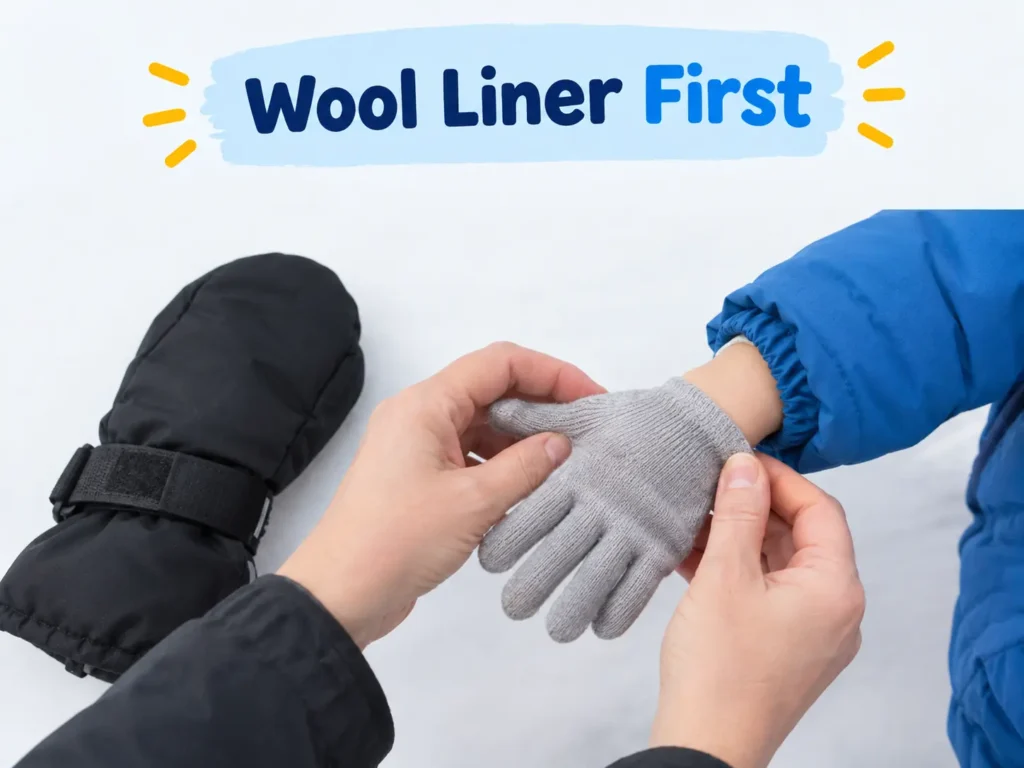
A thin moisture-wicking liner worn under the outer mitten pulls sweat away from skin and slows how fast that moisture reaches the outer insulation. Wool liners specifically hold a real advantage worth understanding: comparative material data shows merino wool can hold more moisture — roughly 30% of its own weight — while still feeling dry to the touch, compared to around 7% for most synthetics before they start feeling wet — and wool keeps insulating even once damp, where synthetic liner material doesn’t hold warmth the same way once saturated.
The liner also helps during lodge breaks specifically: removing just the outer mitten while leaving the liner on keeps a toddler’s hands reasonably warm during a snack or bathroom stop, while the outer mitten gets a chance to air out before going back on.
Getting a toddler to actually accept a liner is sometimes the harder problem than choosing the right one. Involving the child in putting it on themselves, even if a parent finishes the job, and normalizing it as just another part of the mitten rather than an extra step tends to reduce resistance more than explaining the moisture-management reasoning ever will at this age.
Sealing the Wrist Gap
This is the single highest-leverage fix, and it has to be redone every single time mittens go back on, since toddlers undo it constantly by putting their own mittens on incorrectly.
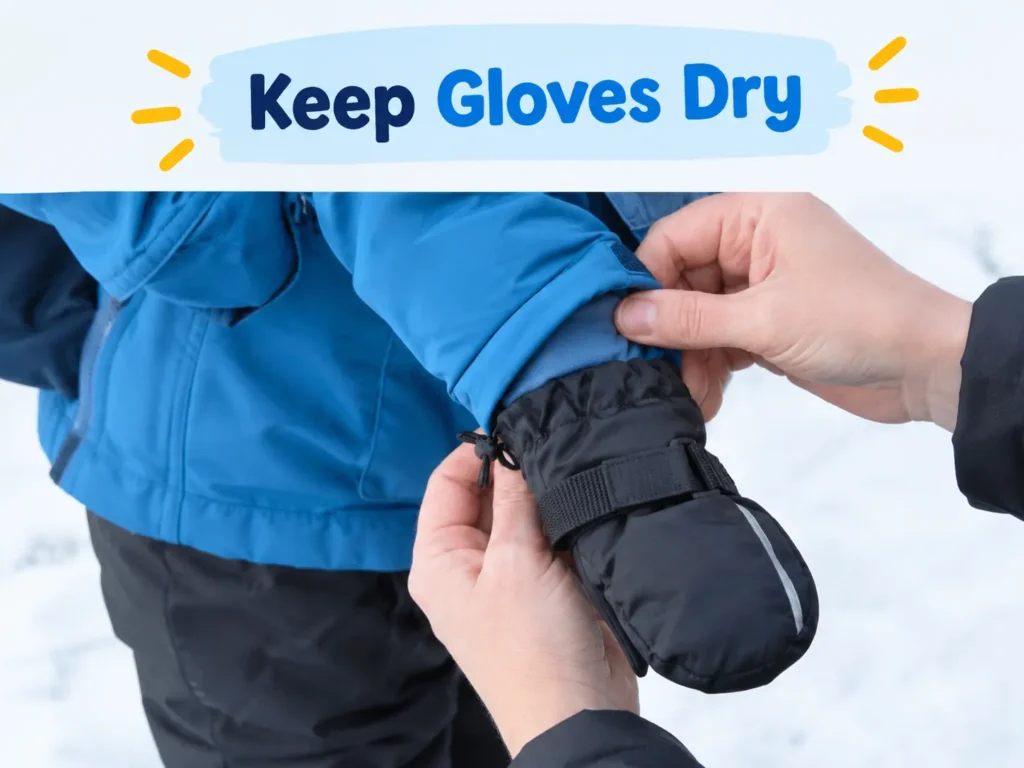
The correct sequence: the jacket sleeve goes inside the mitten’s gauntlet, with the mitten cuff pulled over the sleeve and the closure tightened around both layers together. This seals the gap regardless of arm position during a fall. The incorrect version — sleeve sitting outside the cuff — is exactly where most toddlers end up by their second run of the day after removing and replacing their own mittens once. Checking cuff position at every break is faster and more effective than any equipment upgrade.
A quick visual check takes less time than describing it: with the mitten on, look for a continuous line of fabric from forearm to fingertip with no visible gap or skin at the wrist. If daylight or bare skin shows between the jacket and the mitten cuff at any point, the seal isn’t complete yet regardless of how tight the closure feels.
Overnight Drying That Actually Works
A mitten that isn’t fully dry before the next ski day starts is already compromised — the insulation that stayed damp overnight never fully regains its loft, the liner still holds moisture, and the outer coating is already partially saturated from the previous day. The result is a child getting cold and wet faster on day two than day one, for reasons that have nothing to do with conditions being worse.
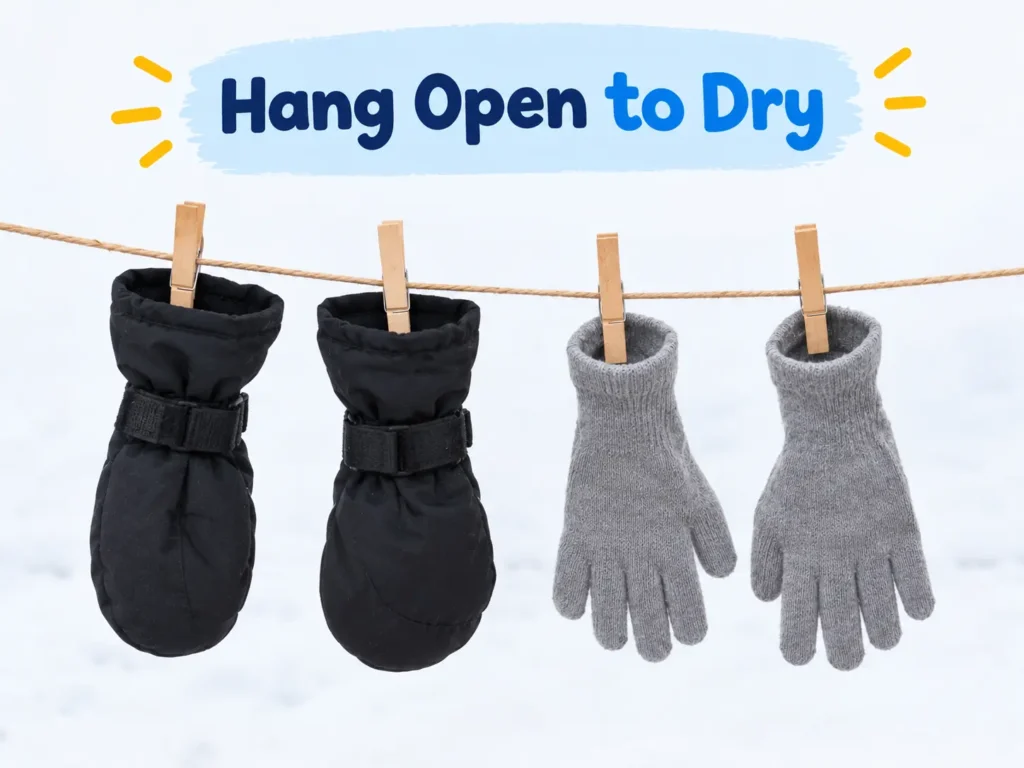
Drying works best when the outer mitten, the liner, and any removable inner lining are separated rather than left stuffed together. Stuffed together, only the outermost surface dries; the interior stays damp overnight and starts the next morning already behind. Open the gauntlet cuff fully and hang each piece separately somewhere with real airflow — a warm room, near (not directly on) a heat source, or a low-heat glove dryer that circulates air through the interior. A glove dryer specifically handles this fastest and most reliably for consecutive ski days, typically drying both lining and insulation within a few hours.
What doesn’t work: leaving everything stuffed together in a ski bag overnight, or placing mittens directly on a hot radiator, which dries the surface quickly while stiffening insulation and risking membrane delamination over repeated use.
Timing the start of drying matters too, not just the method. Beginning the process the moment gear comes off, rather than letting damp mittens sit in a bag for an hour or two while the family finishes up other end-of-day tasks, gives drying a meaningful head start before the next morning. That extra hour or two of drying time can be the actual difference between fully dry gear and gear that’s merely mostly dry by departure time.
What to Do Based on Your Situation
| Situation | Priority | Why |
| Ages 18 months–3, ski lesson format | Drawcord gauntlet, non-negotiable liner | Highest fall frequency, least ability to manage cuff position independently |
| Ages 3–5, skiing with parents | Either closure type works; keep checking cuff at breaks | Beginning to understand positioning with simple reminders |
| One ski day per season | Focus spending on cuff length and membrane, skip premium insulation | Overnight drying isn’t a factor for a single day |
| Multi-day trips (4+ days) | Two rotating pairs, or a dedicated glove dryer | Overnight drying in typical lodge conditions often isn’t sufficient |
| Wet spring conditions | Re-treat DWR before the trip; wash liners every two days | Near-freezing wet snow saturates coatings faster than cold dry powder |
Mistakes That End in Wet Hands by Midday
Putting mittens over the jacket sleeve instead of tucking the sleeve inside first is the most common and most damaging mistake — it creates a direct snow path to the wrist on every forward fall, and the fix takes three seconds once you’re checking for it.
Skipping the liner and relying entirely on the outer mitten is a close second. Without one, sweat saturates the outer lining progressively across the morning, and a mitten that looks dry from outside can already be failing from the inside by early afternoon.
Storing mittens stuffed together overnight compounds day over day rather than resetting each morning, which is exactly why day two so often feels worse than day one in identical conditions.
When the Gloves Are Not the Problem
If a toddler’s hands are cold despite genuinely dry mittens, insulation weight relative to actual temperature is the more likely cause, not moisture — a mitten rated for mild cold won’t perform the same in a genuine cold snap regardless of how dry it stays. Cold-weather safety guidance from the American Academy of Pediatrics, available through HealthyChildren.org, is worth reviewing directly for broader cold-exposure precautions beyond glove choice alone.
If a toddler keeps removing mittens despite dry hands, fit is the more likely explanation. Mittens that are too large shift during skiing and become annoying; too small restricts circulation and creates its own discomfort. Neither is a moisture problem, and no amount of waterproofing improvement fixes a sizing issue.
If a liner itself seems to bother a child, sensitive skin reacting to synthetic material is a real possibility worth ruling out — switching to a wool liner solves this for some kids without giving up any of the moisture-management benefits
FAQ
How often should the liner be washed on a multi-day trip?
Daily is ideal if it’s genuinely absorbing sweat each session, since a liner that starts each day already damp loses most of its moisture-management benefit before the day even begins.
Is a glove dryer worth buying for one family ski trip a year?
For a single annual trip, thorough separated air-drying overnight in a warm room usually works well enough without the extra purchase. A dryer earns its cost mainly on multi-day, back-to-back trips where overnight drying time is tight.
Can an older toddler’s mittens be sized up for next season instead of replaced?
If the cuff still overlaps the jacket sleeve properly and the fit isn’t loose enough to shift during skiing, sizing up slightly for one more season is reasonable — the wrist-seal function matters more than a snug fit through the fingers at this age.
Does the same three-part system apply to snowsuits and other cold-weather gear, not just mittens?
The same three moisture sources — outside contact, inside sweat, and gaps at closures — apply broadly to any cold-weather gear a toddler wears, though the specific fixes differ. A snowsuit’s cuffs, zippers, and waist closure all function similarly to a mitten’s wrist gap, and the same logic of checking for gaps and managing sweat with a breathable base layer carries over directly.

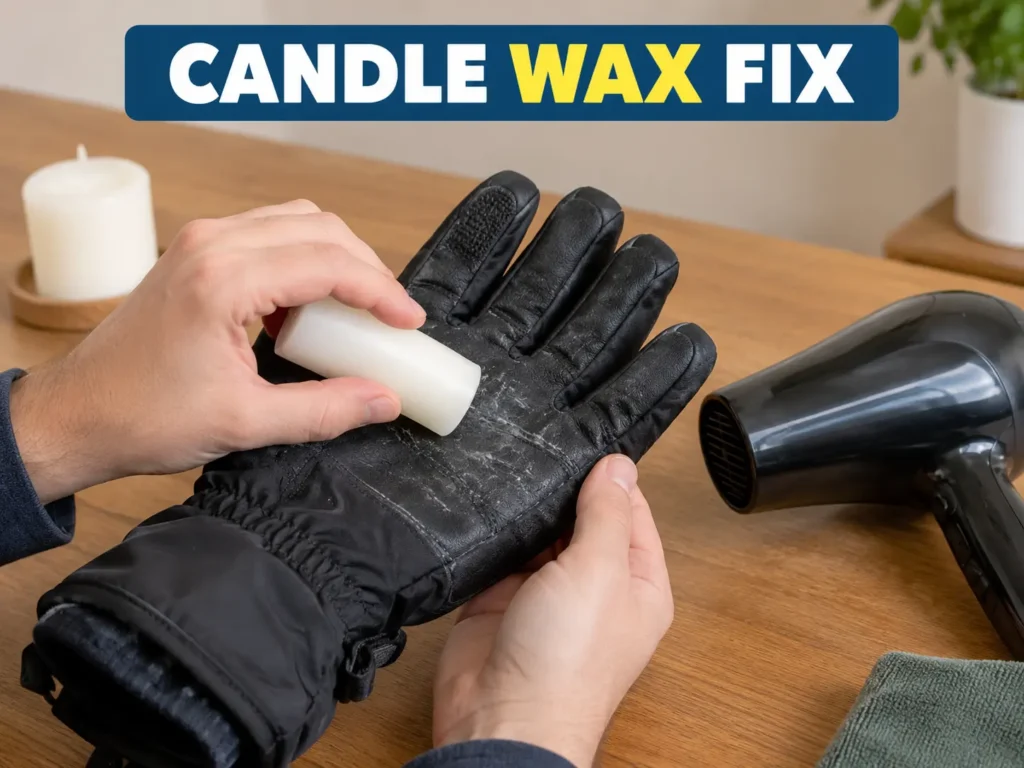
What if, instead of just patching up your torn ski gloves, you experimented with unconventional materials like duct tape or even fabric from old ski jackets? Could these creative solutions not only extend the life of your gloves but also add a unique flair to your ski gear?