Quick answer: A liner helps most if your hands run cold, you ski full days with a lot of chairlift time, or your current gloves feel damp by afternoon. It won’t help, and can even make things worse, if your outer glove is simply under-insulated for the temperature, or if the liner is cotton, or if adding it makes your outer glove too tight. The material and the fit decide whether a liner is worth it far more than the decision to wear one at all. If you’re not sure whether your current setup needs a liner or a warmer outer glove instead, the ski glove finder can help sort that out.
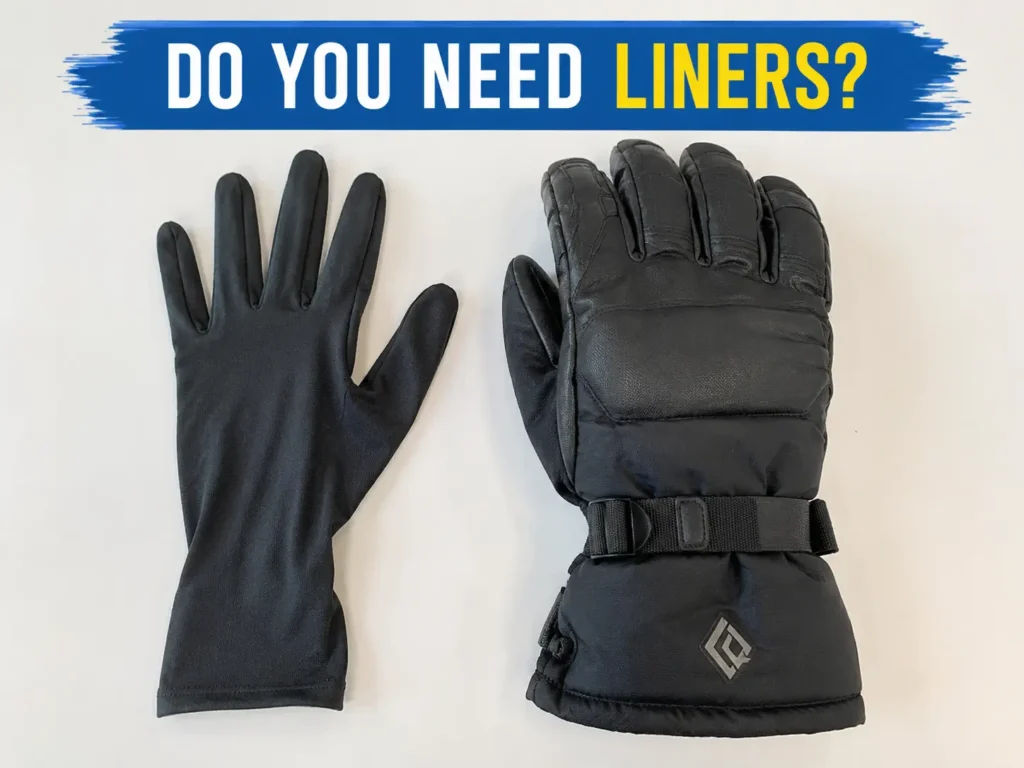
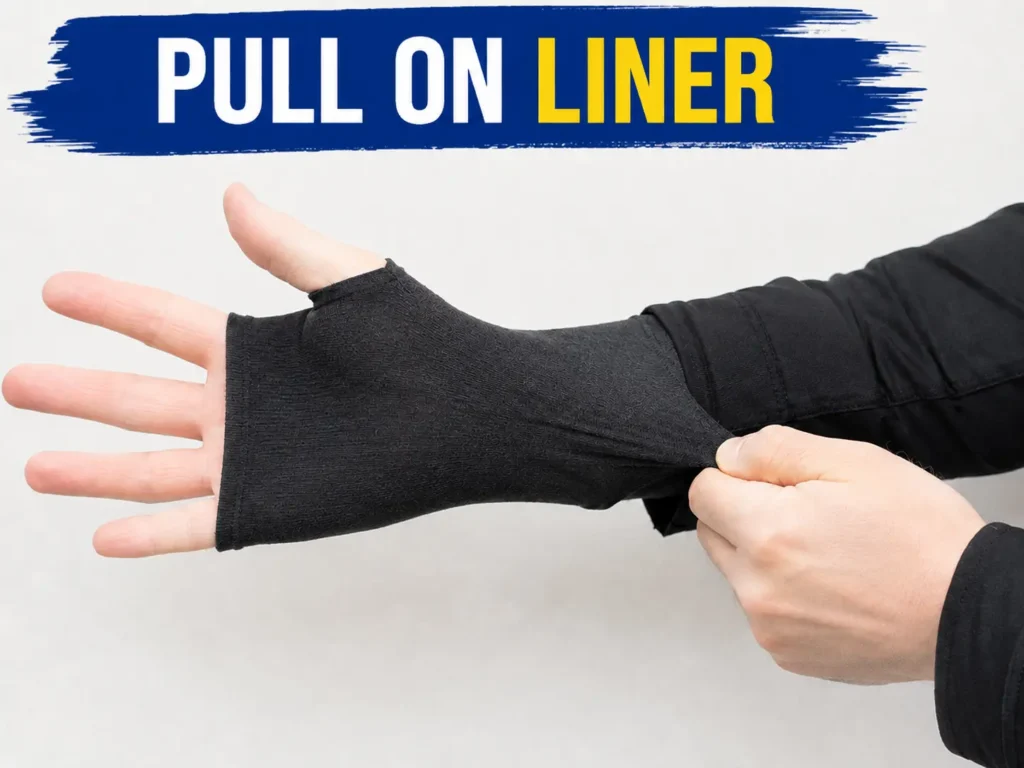
A liner is a thin inner glove, usually merino wool, synthetic fleece, or silk, worn under an outer ski glove or mitten. People buy them expecting a straightforward warmth boost, and are sometimes surprised when a liner leaves hands colder or damper instead.
That surprise almost always comes down to one of two things: the wrong material, or an outer glove that got too tight once the liner went in. Get past those two issues and a liner does exactly what it’s supposed to.
- What a Liner Actually Does
- Do You Actually Need One?
- What the Research Actually Shows
- Why Moisture Undoes the Whole Point
- Merino, Synthetic, Fleece, or Silk
- The Sizing Trap Almost Everyone Falls Into
- When a Liner Won't Fix Cold Hands
- Common Mistakes
- Which Liner Fits Your Situation
- Decision Checklist
- Warning Signs a Liner Isn't Working
- Frequently Asked Questions
What a Liner Actually Does
A liner has two jobs, and neither one is “add generic warmth.” The first is adding a second layer of trapped, still air between skin and outer glove. Insulation works by trapping air, and a liner creates its own small air pocket in addition to the one already inside the outer glove.
The second job is moisture management. Hands sweat during skiing, even in genuinely cold conditions. A liner made from the right material pulls that moisture away from the skin before it reaches the outer glove’s insulation, where it would otherwise start working against you.
Both functions matter, but the second one is usually the bigger deal in practice. A liner that manages moisture well can keep hands feeling dry and comfortable even without adding much raw warmth at all.
It helps to think of a liner less like extra insulation and more like a specialized layer with one narrow job: protecting the air pocket that’s already doing the real work. Once that framing clicks, most of the advice below makes a lot more sense — everything comes back to either strengthening that air pocket or keeping moisture from wrecking it.
Do You Actually Need One?
Three things decide this more than anything else: how cold your hands run compared to other skiers, how long your typical ski day is, and whether your current gloves already have a liner built in.
Cold-handed skiers benefit the most, plainly and consistently. If your hands are already at the edge of comfort while everyone else on the chairlift seems fine, a liner is solving a real, specific problem you have that other people simply don’t.
Session length matters almost as much. A liner’s moisture-management benefit compounds across a full day — six or eight hours of accumulated hand sweat is a very different situation than a two-hour morning session, and the case for a liner gets stronger the longer you’re out there.
If your current gloves already have a liner built in, check that system on its own before adding anything else. A built-in liner was sized and matched to the outer shell specifically, and it may already be solving the exact problem you’re trying to fix with something extra.
What the Research Actually Shows
Glove insulation performance varies a lot more than most people expect, even between similar-looking gloves. A real, peer-reviewed EJAP study measuring heat loss from gloved hands found that insulation effectiveness varied dramatically depending on the specific area of the hand and the glove’s design — fingers, palm, and back of hand all lose heat at meaningfully different rates even within the same glove.
This matters for liners specifically because a liner effectively changes that whole equation. It adds a second insulating layer everywhere at once, including in the areas — fingertips especially — where the outer glove alone tends to perform worst.
That’s the honest version of why a liner helps: not a single dramatic number, but a real, measurable improvement to the weakest parts of an already-imperfect system.
Why Moisture Undoes the Whole Point
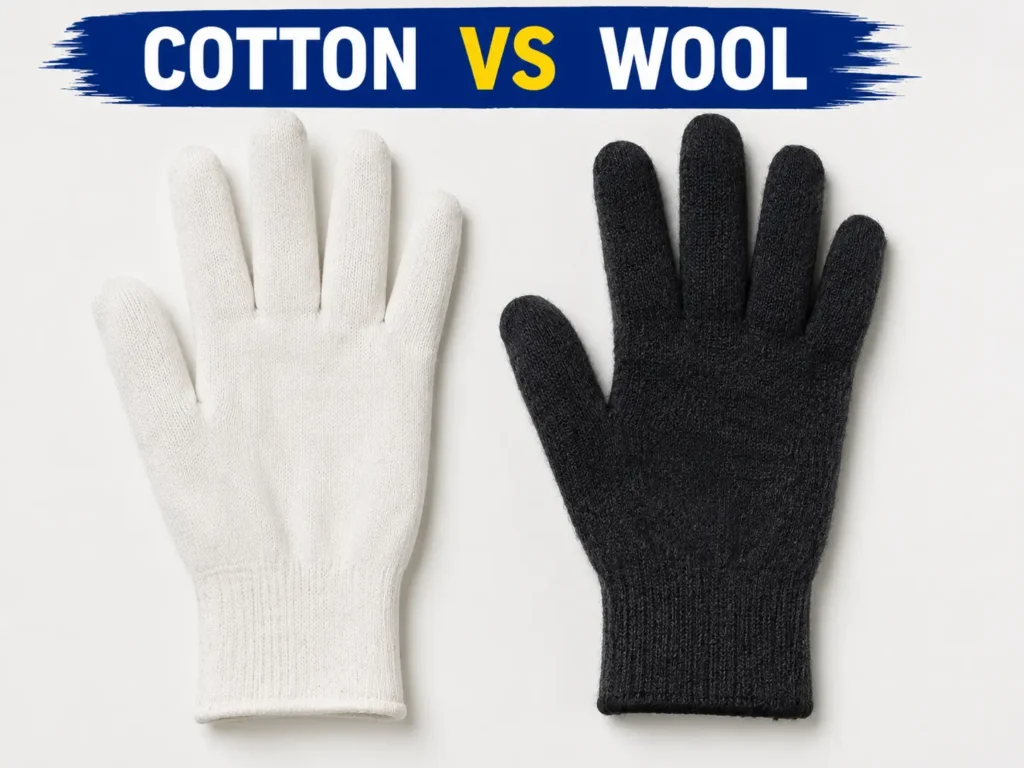
A liner that manages moisture poorly doesn’t just fail to help — it can actively make hands colder than skiing with no liner at all. Cotton is the material to avoid here, specifically and completely.
As NOLS explains in its cold-weather safety guidance, wet fabric held against skin is a genuine driver of heat loss in cold conditions, and cotton is singled out as the material least suited to staying functional once damp. A cotton liner absorbs sweat and holds it right against the skin instead of moving it away.
This is why a liner recommendation always has to come with a material caveat. The layer itself isn’t the variable that matters most — what it’s made of is.
Merino, Synthetic, Fleece, or Silk
Merino wool has a real, specific advantage here. According to IWTO, the international wool industry’s own research body, merino fiber can absorb up to 35% of its own weight in moisture while continuing to feel dry against the skin — which is why it holds up well across a long, high-sweat ski day.
Synthetic liners wick moisture along the fiber surface toward the outside instead, where it can evaporate. They dry faster between uses than merino, which matters on multi-day trips, but they can get overwhelmed faster during long, high-output sessions.
Fleece feels warm immediately but holds moisture at the skin rather than moving it away, making it a better fit for standing still in the cold — coaching, photography — than for active skiing. Silk adds almost no warmth on its own; its real value is reducing friction and bulk in an already tight-fitting glove.
The Sizing Trap Almost Everyone Falls Into
An outer glove that fits well on its own will almost always feel tight once a liner goes in underneath it. That tightness compresses the outer glove’s insulation, and compressed insulation traps less air — which cancels out some of the benefit the liner was supposed to add.
The fix is simple, even if it’s not what most people expect: try the outer glove on with the liner already in place before buying either one separately. If a current outer glove feels tight once a liner is added, sizing up the outer glove is the real fix, not switching to a thinner liner just to make it fit.
This distinction matters most for skiers whose outer glove is already close to its coldest-rated limit. For a full breakdown of what a glove’s temperature rating actually accounts for, and why a tight fit changes that math, the rating guide covers that directly.
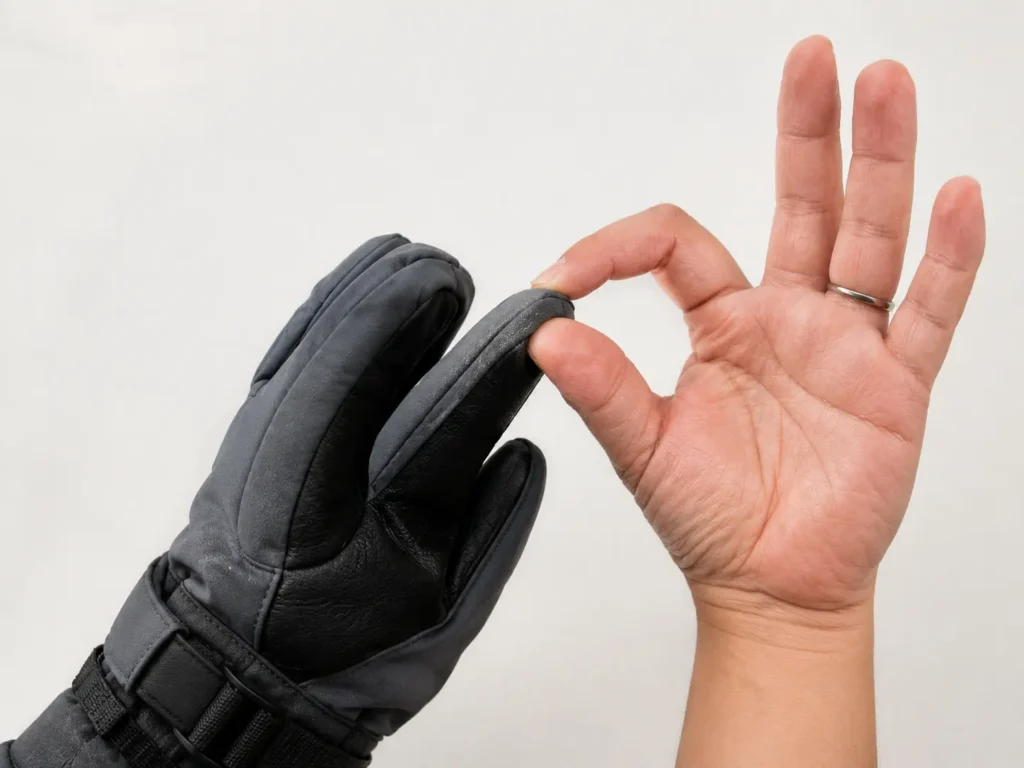
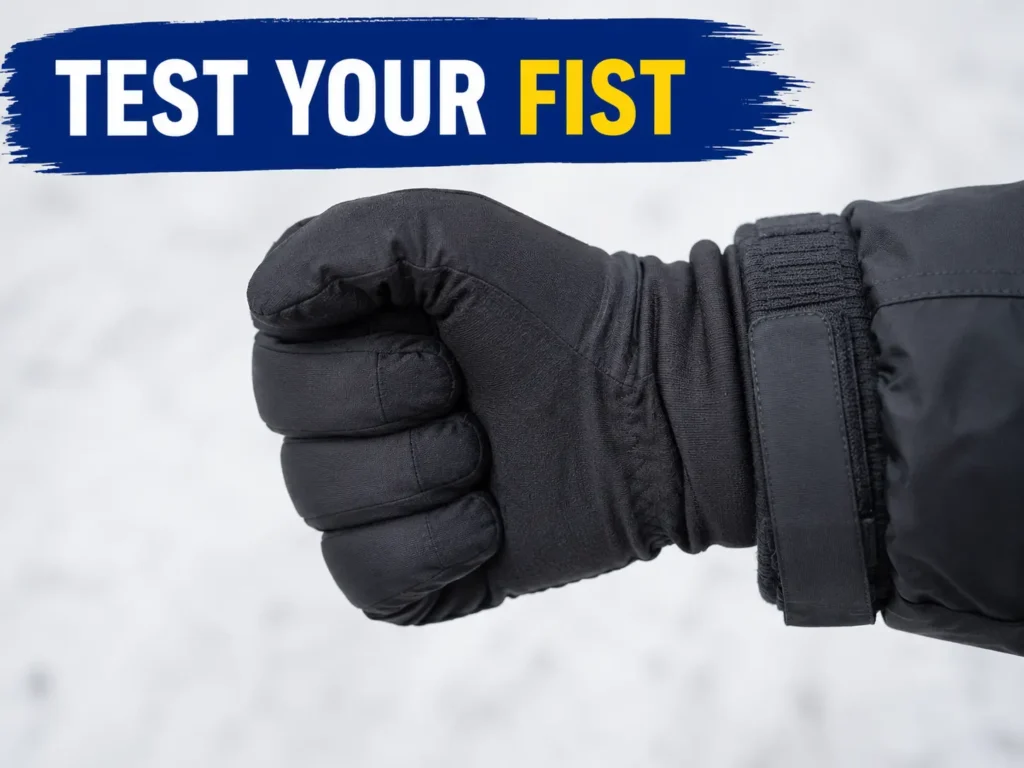
Fingertip fit deserves a specific check here, separate from the rest of the hand. Press each fingertip gently from outside the glove with both layers on. Real resistance, or a sense of the liner bunching against the fingertip, means that specific zone is too tight for this liner thickness — even if the rest of the glove feels fine.
This finger-specific check matters because finger tubes are already the narrowest part of any glove, meaning insulation there gets compressed more than anywhere else even before a liner enters the picture. Adding a liner without checking this spot specifically is how a well-intentioned upgrade quietly makes the coldest part of the hand even colder.
When a Liner Won’t Fix Cold Hands
If an outer glove is genuinely under-rated for the temperature you’re skiing in, a liner extends its range somewhat — but it doesn’t turn an inadequate glove into an adequate one. Below a certain point, the fix is a warmer outer glove, not another layer underneath an already-insufficient one.
If cold hands only show up during active skiing, rather than specifically on chairlifts or at rest, the outer glove itself is usually the limiting factor. Active skiing generates real body heat, and a correctly rated glove should handle that heat output on its own — a liner in this case mostly just adds moisture-management overhead without addressing the actual insulation gap.
If an outer glove already has a purpose-built removable liner, a separate aftermarket liner usually isn’t the answer either. That system was sized and matched as a unit, and stacking a third layer on top compresses both existing layers rather than adding clean extra warmth.
There’s a fourth situation worth naming too: cold hands that only show up in the first ten or fifteen minutes of a ski day, then go away on their own. That pattern usually points to a normal circulation warm-up period, not an insulation gap at all. A liner doesn’t speed up that warm-up process, and adding one to fix this specific symptom generally doesn’t change much.
Common Mistakes
Adding a liner to an outer glove that already fits snugly. This is the single most common mistake. Try the combination together before buying, not separately.
Choosing cotton because it’s what’s already around the house. It works against the entire point of wearing a liner in cold, active conditions. Merino or a real synthetic liner material is worth the small extra cost.
Assuming a liner fixes an under-rated outer glove. It extends the range somewhat, but it isn’t a substitute for a correctly rated glove in genuinely cold conditions.
Washing a merino liner in hot water or a dryer. Heat causes wool fibers to felt and bond together, permanently reducing the loft that made the liner warm in the first place. For the correct way to wash and dry both liners and outer gloves without damaging the materials, the care guide covers the specifics.
Which Liner Fits Your Situation
| Your Situation | Liner Recommendation |
| Cold hands, full ski days, temperatures well below freezing | Merino wool — best all-day moisture management |
| High sweat output, moderate cold, multi-day trips | Thin synthetic — dries fastest between sessions |
| Tight-fitting outer glove with little room to spare | Silk — adds almost no bulk |
| Standing still in the cold — coaching, photography | Fleece — warmest option, moisture management matters less here |
| Outer glove already has a built-in removable liner | No separate liner needed |
| Mild conditions, warm-running hands, short sessions | No liner — active skiing warmth is usually enough |
Decision Checklist
| Situation | What It Means |
| Hands cold specifically on chairlifts, fine while skiing | A liner is likely to help — this is the classic use case |
| Hands cold even during active skiing | Outer glove is probably under-rated — a liner won’t fully fix this |
| Currently using a cotton liner | Replace it — this actively works against you in cold conditions |
| Outer glove feels tight once a liner is added | Size up the outer glove rather than switching to a thinner liner |
| Gloves already have a built-in removable liner | Skip a separate aftermarket liner |
| Skiing 3 or fewer days a season in mild conditions | A liner is probably unnecessary |
Warning Signs a Liner Isn’t Working
| Warning Sign | Likely Cause |
| Hands still cold with a liner in place | Outer glove is under-rated, or the liner material isn’t managing moisture well |
| Liner feels damp by midday | Wrong material for your sweat rate, or fit is too tight to let moisture escape |
| Fingertips feel compressed or numb | Liner added bulk without resizing the outer glove |
| Liner bunches up inside the glove | Liner is too thick for the outer glove’s finger tubes |
A liner is a genuinely useful, low-cost fix for a specific problem — cold hands from insufficient insulation and unmanaged moisture. It’s not a universal upgrade, and treating it like one is how people end up colder, not warmer, after adding one. Get the material and the fit right, and the rest tends to take care of itself.
Frequently Asked Questions
Will a liner make my hands warmer no matter what?
No. A liner only helps if the material manages moisture correctly and the outer glove is sized to fit around it. The wrong material or a too-tight fit can leave hands colder than no liner at all.
How do I know if my outer glove is too tight for a liner?
Put both layers on and make a full fist. Real resistance, or fingertips pressed tight against the interior, means the outer glove needs to be sized up rather than switching to a thinner liner.
Do I need a liner if my gloves already have one built in?
Generally no. A built-in removable liner is sized and matched to the outer shell as a system. Adding a separate liner on top compresses both layers rather than adding clean extra warmth.
Is merino always better than synthetic for a liner?
Not universally — it depends on your sweat rate and trip length. Merino manages high sweat rates better over a full day; synthetic dries faster between sessions on multi-day trips.
Can I use any thin glove as a liner?
Only if it’s made from a moisture-managing material. Regular cotton-blend gloves hold moisture against the skin instead of moving it away, which works against the entire purpose of wearing a liner.