Quick answer: Most off-season glove damage traces back to one of three causes: sealing in moisture that was never fully dry, compressing the insulation under weight for months, or leaving gloves somewhere with big temperature swings. Confirm gloves are fully dry, stuff them loosely, use a breathable bag, and store them in a stable, cool spot — that combination prevents nearly all of it. If you’re shopping for a replacement pair after storage damage got the better of last year’s gloves, the ski glove finder can help narrow down options.
Gloves that looked fine in April often come out in November smelling musty, feeling flat, or cracking at the finger joints. None of that damage happened on the mountain. It happened quietly, over months, in a closet or a gear bin.
The frustrating part is that most of this damage isn’t fully reversible once it sets in. A few specific habits prevent nearly all of it, and none of them take more than a few minutes.
- Three Separate Things Are Actually Going Wrong
- Confirm They're Actually Dry First
- Why a Sealed Bag Backfires
- Compression Doesn't Need Water to Ruin a Glove
- Temperature Swings Age Leather Even When It's Bone Dry
- The Actual Storage Process, Step by Step
- Between-Ski-Day Storage Is a Smaller Version of the Same Problem
- Storing Gloves You Don't Use Every Season
- Storage Container Comparison
- Storage Location Comparison
- Common Mistakes
- Warning Signs Storage Went Wrong
- Pre-Storage Checklist
- When Correct Storage Isn't Enough
- Frequently Asked Questions
Three Separate Things Are Actually Going Wrong
Storage damage isn’t one problem — it’s three different processes, and each one needs a different fix.
The first is mildew. Sweat, skin oils, and residual moisture left in a glove’s lining are exactly the conditions bacteria and mold need to grow, and a sealed, humid environment gives them months to do it.
The second is compression. Insulation works by trapping still air in its fiber structure, and if a glove sits flattened under weight for months, that structure can bond in the compressed position and never fully spring back.
The third is material degradation from the environment itself — heat, UV, and temperature swings drying out leather or breaking down synthetic shells and waterproof coatings, even with zero moisture involved.
Confirm They’re Actually Dry First
Surface-dry and actually-dry are not the same thing. A glove’s outer fabric dries faster than the insulation underneath it, so a glove can feel fine to the touch while still holding real moisture inside.
Press the back-of-hand area firmly between both palms for about five seconds. If it feels cool or slightly dense rather than light, moisture is still in there, and the glove needs more open-air time before it goes anywhere near storage.
For the full process of getting gloves properly dry after a season of use, including how long that actually takes in different conditions, the drying guide covers it directly.
Why a Sealed Bag Backfires
Sealing gloves in plastic feels protective, but it does the opposite of what you want. It traps whatever moisture is left inside instead of letting it escape, and that trapped humidity is exactly what mold and bacteria need to grow.
This isn’t unique to ski gloves. As humidity guide resources on textile preservation explain, controlling relative humidity is one of the single biggest factors in preventing mold growth in stored fabric, and sealed, poorly ventilated containers routinely trap humidity well above safe levels.
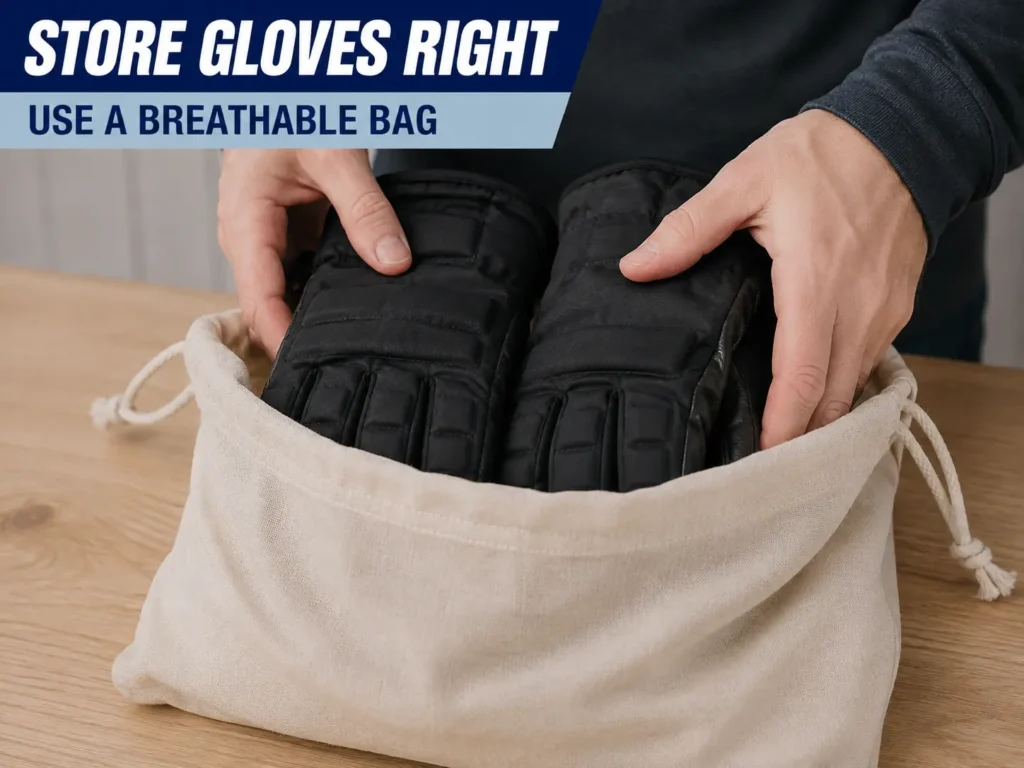
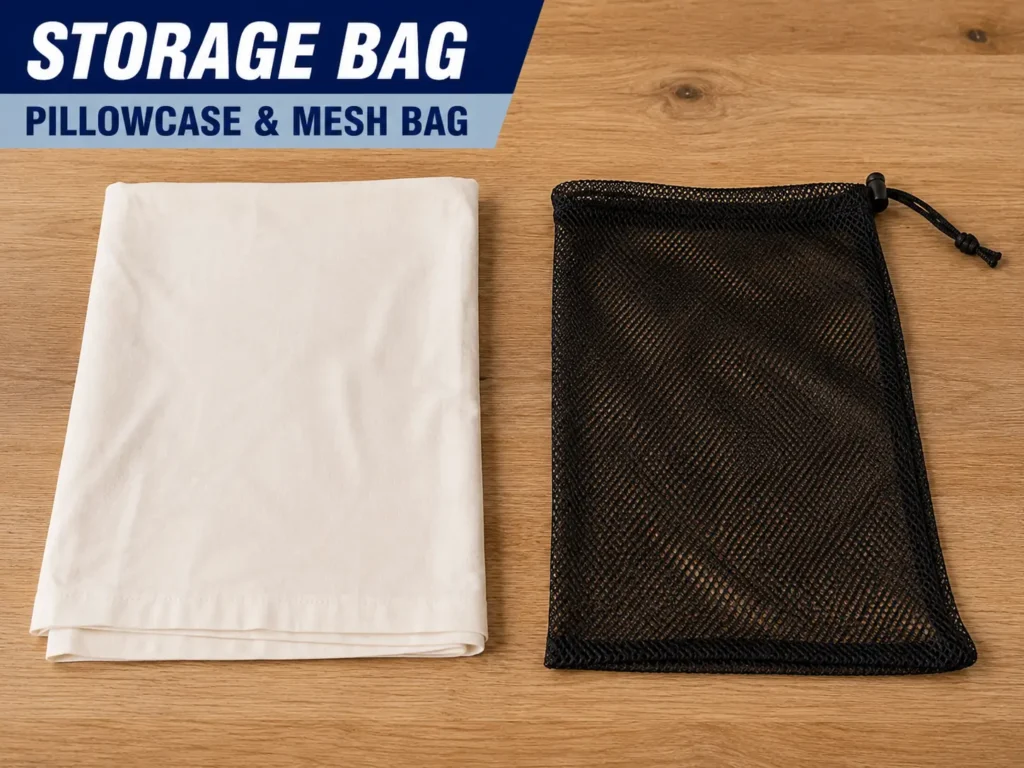
A breathable container — a cotton pillowcase, mesh bag, or open cardboard box — lets any remaining trace moisture continue escaping into the surrounding air for weeks after the gloves feel dry. A sealed bag has nowhere for that moisture to go.
Compression Doesn’t Need Water to Ruin a Glove
Weight alone can undo months of insulation performance, with zero moisture involved. When insulation sits flattened under other gear for an entire off-season, the fiber structure holding those tiny air pockets can collapse and stay that way.
This matches what textile conservation research has found in padded and insulated materials generally. CCI research on storing padded and structured garments confirms that sustained compression during storage can cause distortions that don’t fully reverse, which is exactly why loosely stuffing a glove to hold its shape matters as much as keeping it dry.
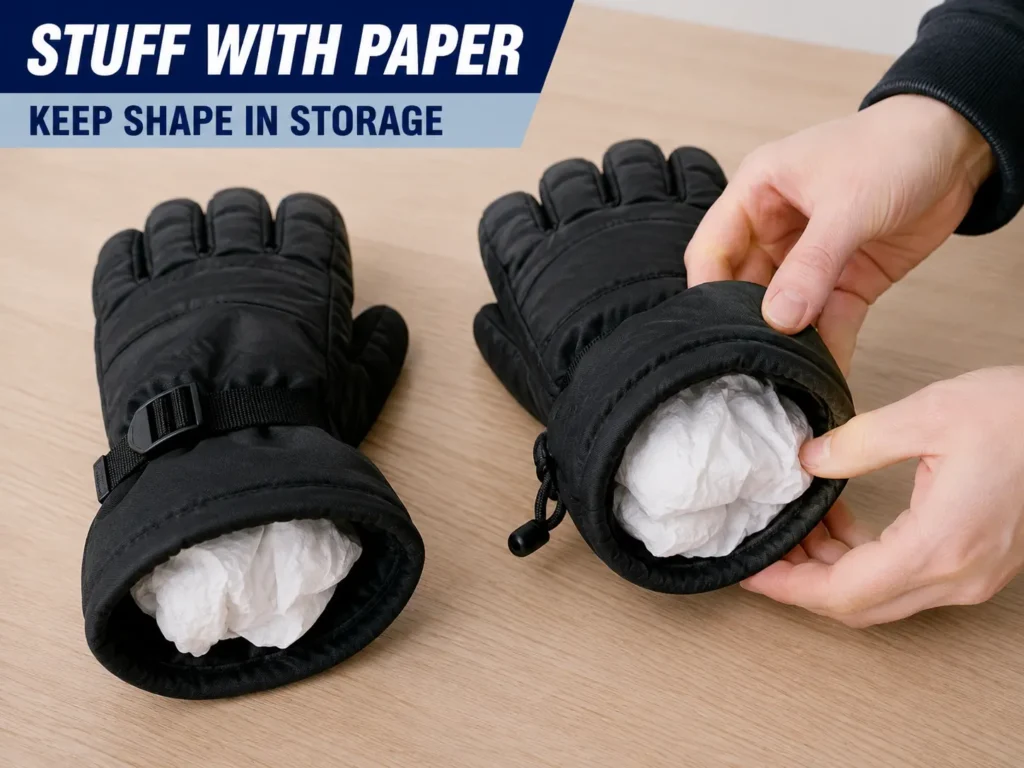
Crumpled plain paper, not newspaper, works well for this. It fills the interior enough to resist collapse without stretching the material, and it can absorb small amounts of remaining moisture as a side benefit.
Temperature Swings Age Leather Even When It’s Bone Dry
Leather doesn’t need moisture exposure to degrade in storage. Heat alone drives moisture out of the leather’s own fiber structure, and that loss is what eventually shows up as stiffness and cracking.
Storage-related research on leather specifically backs this up. An NPS report on leather preservation notes that sustained heat exposure accelerates the loss of natural moisture and oils that keep leather fibers flexible, which is why an attic or hot garage does real, gradual damage even to a glove that’s never gotten wet in storage.
A stable, moderate temperature — a bedroom closet rather than an attic or garage — avoids this almost entirely, with no extra product or effort required. For the fuller picture on why leather cracks and how far that damage can be reversed once it starts, the cracking guide covers the mechanism in more depth.
The Actual Storage Process, Step by Step
Confirm dryness with the press test
Covered above — this is the single most important step, and skipping it undermines everything else on this list.
Remove any detachable liner and store it separately
If a liner stays packed inside the shell, any moisture in either piece has direct contact with the other. Separated, both pieces can keep releasing trace moisture into the surrounding air instead of into each other.
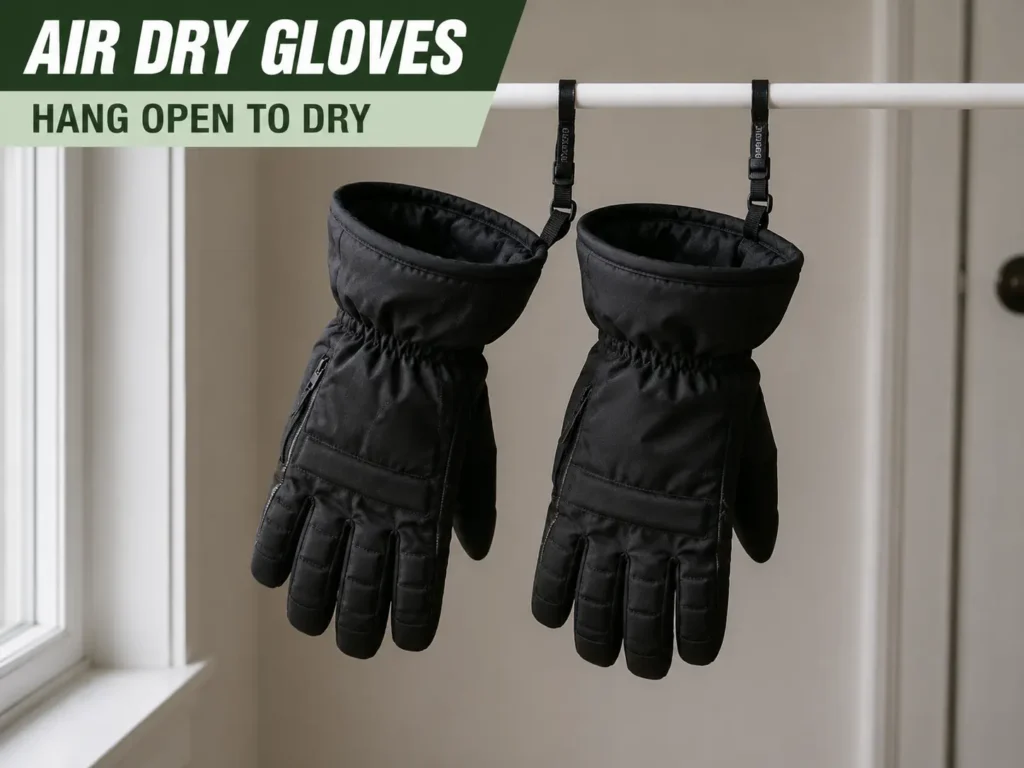
Open the cuffs completely
A closed cuff is the only place air could otherwise escape from inside the glove, so leaving it closed traps humid air right where you don’t want it.
Stuff loosely with plain paper
Enough to hold shape and resist compression, not so much that the material stretches. Avoid printed newspapers, since ink can transfer onto the lining over months of contact.
Use a breathable container
A cotton pillowcase, mesh laundry bag, or open cardboard box, never a sealed plastic bag or airtight bin. This is the second most consequential decision after confirming dryness.
Pick a stable location
A closet in a climate-controlled part of the house — not a garage, attic, or basement — avoids both the humidity risk and the temperature-swing risk in one decision.
Check in at the two-month mark
Pull the gloves out, open the container, and check for any smell or dampness. Catching an early problem at two months is fixable. Catching it at five months, right before the season starts, often isn’t.
Between-Ski-Day Storage Is a Smaller Version of the Same Problem
Overnight storage between ski days shares the same underlying issue — trapped moisture — just on a much shorter timeline. A boot bag or ski bag left sealed overnight doesn’t let gloves dry at all before the next morning.
The fix is the same idea, scaled down. Take gloves out of any bag the moment you’re done for the day. Open the cuffs fully, remove any liner, and hang both pieces somewhere warm and dry-aired, not sealed in gear.
On a multi-day trip, skipping this even once or twice lets moisture build up night after night, and by day three or four, gloves that never got directly soaked can still end up genuinely damp from accumulated, untreated moisture.
A quick habit worth building on multi-day trips: check the interior with a dry hand each morning before putting gloves back on. If it feels cooler or slightly damp compared to the outer shell, that’s residual moisture that didn’t fully clear overnight, and it’s worth giving the gloves extra open-air time before the next run rather than pushing through with a still-damp interior.
Storing Gloves You Don’t Use Every Season
Gloves that only come out once or twice a year face a version of this problem that’s easy to overlook. A single early-season outing that leaves gloves with even mild residual moisture, followed by eleven months of storage before the next use, gives mold far more time to establish than a normal off-season would.
For infrequent use like this, an additional check partway through the storage period — not just at two months, but again around month five or six — catches problems that a single early check might miss. It costs a few extra minutes a year and avoids finding a fully developed problem right when the gloves are needed again.
Storage Container Comparison
| Container | Why It Works or Fails |
| Cotton pillowcase or fabric bag | Best option — breathable, protects from dust, works for any material |
| Mesh laundry bag | Good — maximum airflow, fine for a closet with minimal light exposure |
| Open cardboard box | Acceptable for short-term storage — breathable, absorbs a little residual moisture |
| Sealed plastic bag | Avoid — traps all moisture inside, creates mold risk within weeks |
| Airtight storage bin | Avoid — same failure as plastic, no air exchange at all |
| Sealed boot or ski bag | Avoid for off-season use — usually retains humidity from the season and gets left somewhere with temperature extremes |
Storage Location Comparison
| Location | Assessment |
| Climate-controlled closet | Best — stable temperature, low humidity, no direct light |
| Under-bed storage, same room | Good — similar conditions to a closet, slightly more dust |
| Uninsulated garage | Poor — wide temperature swings and often high humidity |
| Attic | Poor — the most extreme temperatures of any common option, worst for leather |
| Damp or unfinished basement | Poor — highest mold risk of any common storage spot |
| Vehicle trunk or interior | Poor — heat, light, and humidity all at once; not suitable for months of storage |
Common Mistakes
Trusting how the outside feels, not the inside. The press test exists because outer fabric dries faster than insulation. Surface-dry is not the same thing as actually dry.
Sealing gloves the same night as the last ski day. Gloves right off the mountain hold more residual moisture than they will after a day or two of open air. Give them real drying time before they go into any storage container.
Packing gloves under other gear. Boots, helmets, and jackets stacked on top of gloves in a bin compress insulation for months at a time. Store gloves on top, not underneath.
Choosing a garage or attic for convenience. It saves closet space, but the temperature swings in both locations do real, gradual damage to leather and synthetic shells alike.
Reusing an old vacuum-seal bag to save space. Vacuum sealing feels efficient, but it’s one of the most aggressive forms of compression available, and it applies that pressure evenly across the entire glove rather than just the areas that would naturally get compressed under a stack of gear. Insulation stored this way is at the highest risk of not recovering its loft at all.
Skipping the mid-storage check entirely. A two-month check costs a few minutes and catches a small problem while it’s still fixable, instead of finding it fully developed right before the season starts.
Warning Signs Storage Went Wrong
| Warning Sign | Likely Cause |
| Musty smell when the cuff is opened | Bacteria growth from residual moisture that didn’t fully escape |
| Visible spots on the interior lining | Active mold — more advanced than smell alone |
| Insulation feels flat, doesn’t spring back | Compression damage from being stored under weight |
| Leather feels stiff, minor surface cracking | Temperature extremes drove moisture out of the leather fibers |
| Outer shell fabric feels stiffer than before | UV or heat exposure degrading the synthetic material |
Pre-Storage Checklist
| Check | Why It Matters |
| Press test passed, not just surface-dry | The single biggest factor in preventing mold |
| Liner removed and stored separately | Prevents moisture transfer between liner and shell |
| Cuffs fully open | Lets any remaining moisture keep escaping |
| Paper stuffing in place, not overstuffed | Prevents insulation compression without stretching material |
| Breathable container, not sealed | Second most important decision after dryness |
| Stable, moderate-temperature location chosen | Avoids both mold risk and leather/synthetic degradation |
| Two-month check scheduled | Catches problems while they’re still fixable |
When Correct Storage Isn’t Enough
If gloves already have a musty smell or visible mold going into storage, careful storage technique won’t fix that — it just prevents the problem from getting worse. Gloves in that condition need actual treatment before storage, not just a better container.
The advice here also assumes at least a reasonably stable indoor space is available. If the only storage option is a damp basement or a hot attic, finding even a small dedicated spot inside the main living area — a drawer or closet shelf — beats correct technique applied in a genuinely poor environment.
Frequently Asked Questions
Can I speed up drying with a hair dryer before storing gloves?
Direct heat risks damaging both leather and waterproof membranes. Open-air drying takes longer but doesn’t carry that risk, and it’s worth the extra day or two before gloves go into storage.
Do silica gel packets work in a sealed storage bag?
Not for glove insulation specifically. Silica gel absorbs moisture from surrounding air, but moisture already held inside the insulation fibers isn’t affected by it. A breathable container is still the better fix.
How long can ski gloves sit in storage before damage starts?
There’s no fixed number — it depends on how dry they were going in and the storage conditions. That’s exactly why a two-month check matters: it catches developing problems well before a full off-season has passed.
Is it okay to store gloves in their original box?
A vented cardboard box works fine for shorter storage periods, as long as it isn’t sealed with tape and the location has stable, moderate conditions. It’s less ideal than a breathable fabric bag for a full off-season.
Does compressed insulation ever fully recover?
Sometimes partially, after a day or two sitting uncompressed. Long-term compression over months of storage can leave some of that loft permanently reduced, which is why loose stuffing during storage matters in the first place.