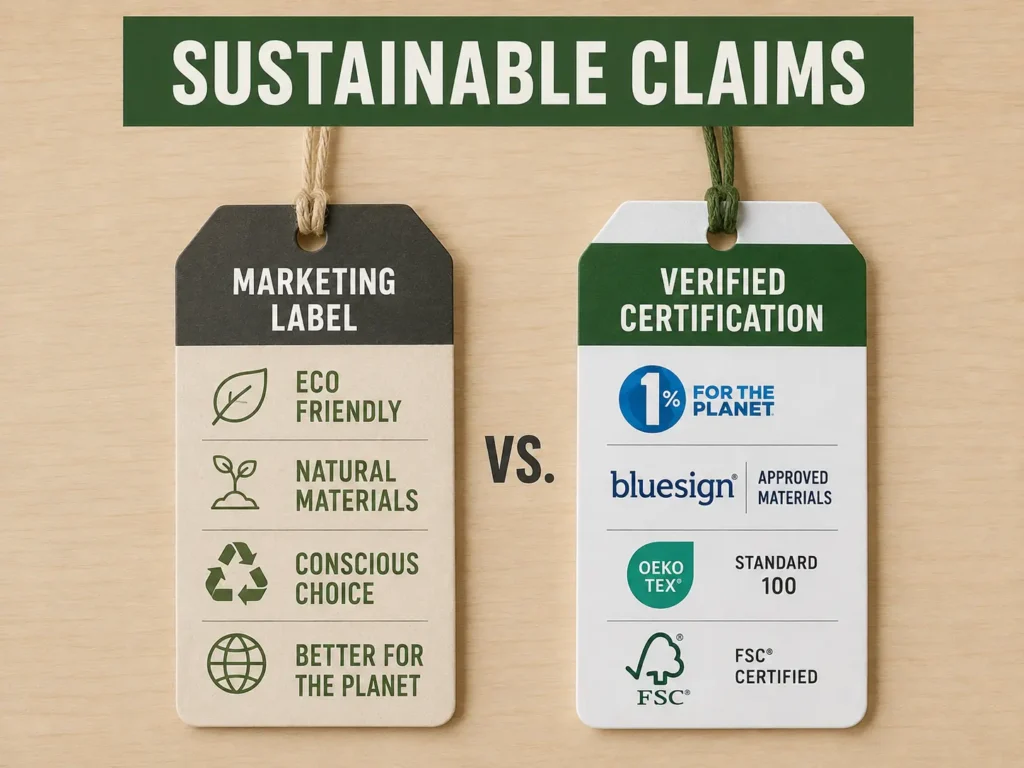
Quick answer: “Eco-friendly,” “sustainable,” and “planet-conscious” aren’t regulated terms — any glove can carry them regardless of how it was actually made. The only way to tell a real environmental claim from a marketing word is to look for a specific certification name: Bluesign, GRS, or OEKO-TEX. If none of those appear on a product listing, the eco claim can’t be verified.
If you want to compare specific certified gloves side by side once you know what to look for, the ski glove finder is a faster way to do that than reading listings one at a time.
Most skiers assume choosing sustainable gear means accepting a performance tradeoff — slightly less warmth, slightly less waterproofing, in exchange for a clearer conscience. At equivalent construction tiers, that tradeoff generally doesn’t hold up. The real tradeoff is between a verified environmental benefit and an unverified marketing claim, and most of the confusion around sustainable ski gloves comes from not knowing which one you’re actually looking at.
That distinction matters more than it sounds, because it changes what you’re actually shopping for. If the real choice were warmth versus environment, the decision would be a straightforward personal tradeoff. Since it’s actually verified versus unverified, the decision becomes a research task — a short one, but a real one, and most shoppers skip it because the marketing language is designed to make it feel unnecessary.
- The Word "Sustainable" Isn't Regulated
- Three Certifications Actually Worth Trusting
- Certification Reference
- The Choices That Actually Matter
- Eco Materials Aren't One Category
- When Eco Isn't the Right Priority
- Common Mistakes When Choosing Sustainable Gloves
- Warning Signs a "Sustainable" Label Is Unverified
- Matching Your Priority to What to Look For
- Self-Check: Verifying a Claim in 30 Seconds
- When Standard Advice Doesn't Apply
- Decision Checklist
- Frequently Asked Questions
The Word “Sustainable” Isn’t Regulated
Nothing stops a manufacturer from printing “eco-friendly” on a glove that hasn’t changed anything about how it’s made. There’s no audit requirement, no legal standard, and no enforcement body checking whether the claim is true before it goes on a hang tag.
That’s not a fringe problem. A Dutch regulatory investigation from 2021 found that 53 percent of sustainability claims across fashion and sports apparel were vague, unverifiable, or outright false. Ski gloves fall squarely inside that product category, and there’s no reason to assume the industry performs meaningfully better than the broader apparel market that investigation covered.
That’s the starting point for buying anything marketed as sustainable: the word on the label tells you almost nothing on its own. What matters is whether a specific, named certification backs it up.
Three Certifications Actually Worth Trusting
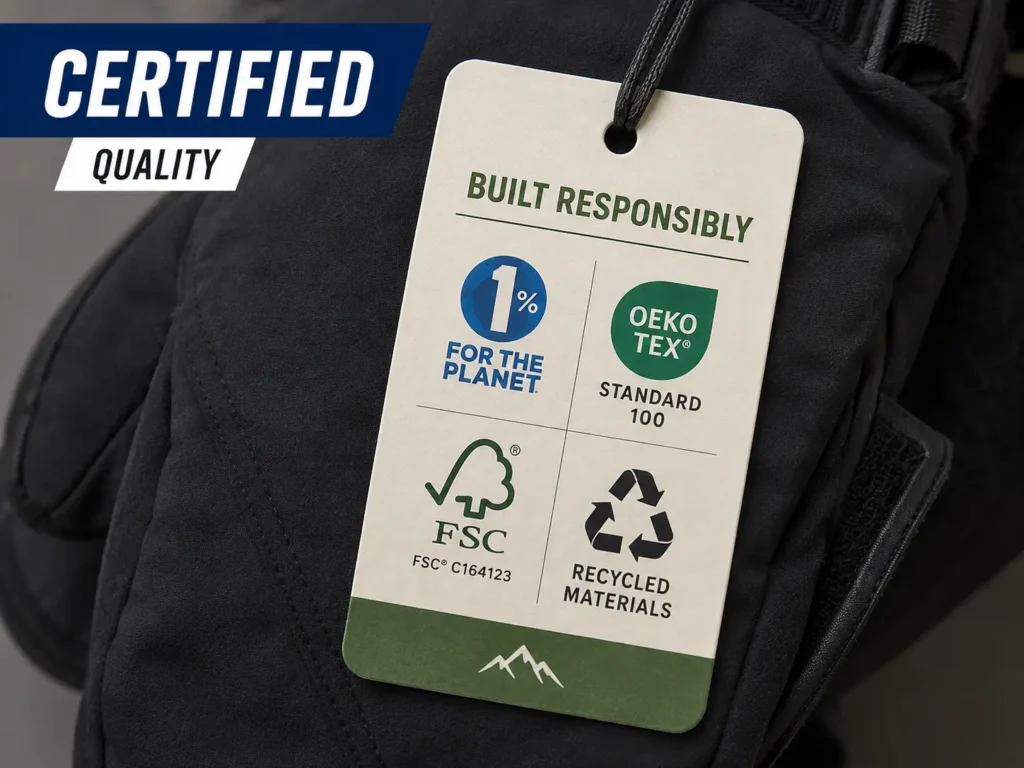
Bluesign is the most rigorous of the three. It audits the entire manufacturing supply chain — full-chain factory auditing covering the chemistry used in dyeing and finishing, water consumption, and energy use at each production stage, not just the finished product. A Bluesign-certified fabric has been verified at the factory level.
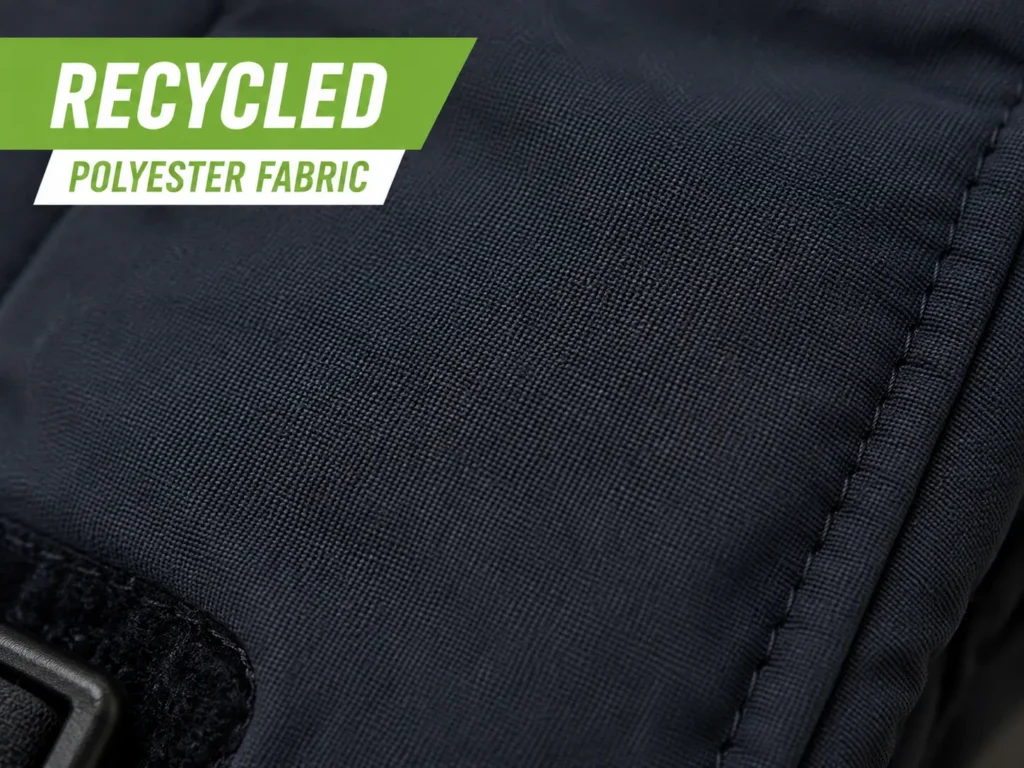
The Global Recycled Standard (GRS) verifies recycled-content claims specifically. A glove listing “55 percent recycled polyester” with GRS certification has had that exact figure independently confirmed by a third-party auditor. Without GRS attached to the claim, a recycled-content percentage is just something the manufacturer said.
OEKO-TEX Standard 100 certifies that a finished product contains no harmful substances above set threshold levels. It’s a chemical-safety certification more than a manufacturing-process one — it tells you what isn’t in the glove, which is a narrower scope than Bluesign but still a real, checkable standard.
Certification Reference
| Certification | What It Verifies | What It Doesn’t Cover |
| Bluesign | Full manufacturing chemistry, water, and energy use | Doesn’t address end-of-life disposal or labor practices directly |
| GRS | Recycled content percentage, independently confirmed | Doesn’t verify chemical safety or manufacturing energy use |
| OEKO-TEX Standard 100 | Absence of harmful substances in the finished product | Doesn’t verify recycled content or manufacturing process |
| No certification named | Nothing verifiable | The word “eco-friendly” alone carries no independent backing |
The Choices That Actually Matter
Check for a certification name, not the word itself
Scroll past “sustainable,” “eco-conscious,” and “planet-friendly” in any listing and look specifically for Bluesign, GRS, or OEKO-TEX. If none appear, the claim is unverified — not necessarily false, but not something you can confirm from the listing alone.
Match the certification to your specific priority
Recycled content, chemical safety, manufacturing process, and labor practices are four different things, and no single certification covers all of them. A GRS-certified glove has verified recycled content but may still use conventional fluorocarbon waterproofing — GRS says nothing about that.
Don’t sacrifice the construction tier to get an eco label
A certified glove that fails at waterproofing in your actual conditions creates more waste through early replacement than a well-built conventional glove that lasts several seasons. The environmental credential only helps if the glove is still right for how you ski.
Eco Materials Aren’t One Category
PrimaLoft Bio is the main biodegradable synthetic insulation available in ski gloves. According to PrimaLoft’s own published material specifications, it’s designed to biodegrade meaningfully faster than standard polyester insulation in biologically active environments, while performing the same as standard PrimaLoft in warmth-per-gram. The practical caveat worth knowing: that biodegradation depends on a biologically active environment — a standard sealed landfill slows the process considerably compared to composting-type conditions.
Thinsulate Eco takes a different approach, using recycled polyester content rather than targeting biodegradability. It lowers manufacturing energy and waste without changing what happens to the material at end of life — a real but different kind of environmental benefit than PrimaLoft Bio’s approach.
Recycled polyester shell fabric (rPET), when GRS-certified, uses meaningfully less manufacturing energy than virgin polyester — Textile Exchange’s data puts recycled polyester’s production energy well below virgin polyester’s, largely because it skips the petroleum-extraction stage entirely. It performs identically to virgin polyester in cold-weather use, with one honest limitation: rPET still sheds microplastics during wear at rates similar to virgin polyester, since shedding comes from the fiber structure rather than the polymer’s origin.
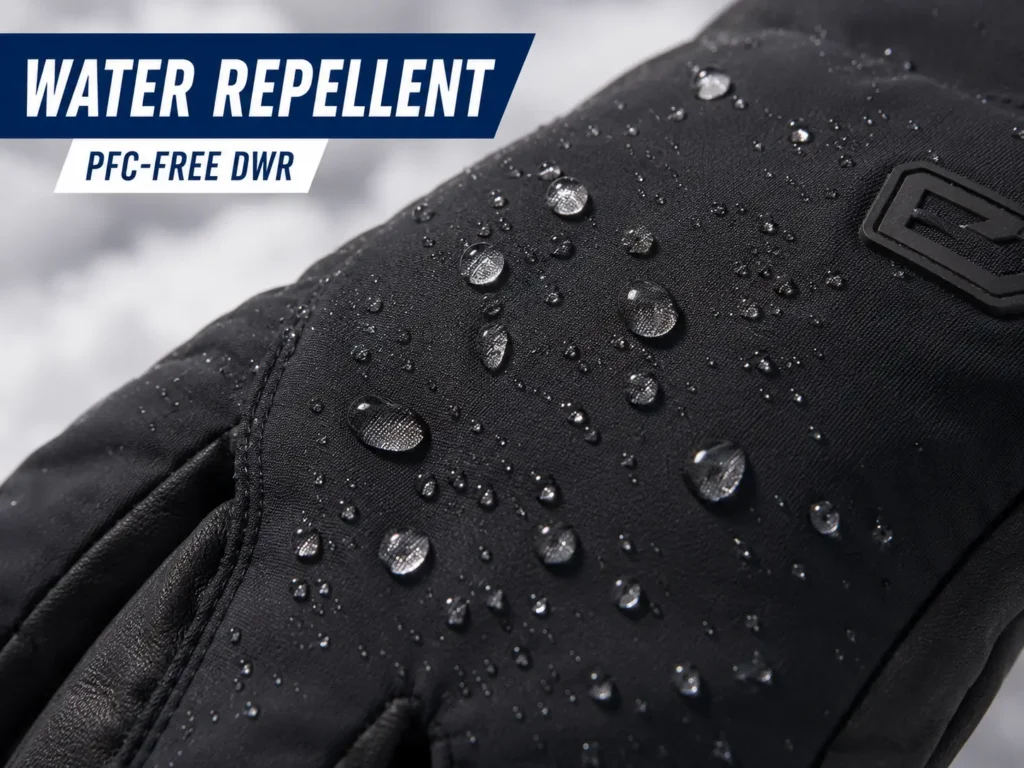
PFC-free DWR eliminates a real environmental problem — conventional fluorocarbon waterproofing is a persistent contaminant that accumulates in water systems and doesn’t break down under normal conditions. PFC-free alternatives perform comparably for a normal number of uses before needing retreatment, which is a maintenance interval shared by conventional DWR as well, not a unique downside of the eco version.
If you’re comparing specific gloves that carry these certifications against your budget, comparing options by price tier is a faster way to see which certifications actually show up at which price point than reading individual spec sheets.
When Eco Isn’t the Right Priority
Backcountry and touring skiers need construction specifications to take priority over certifications. Sustained aerobic effort produces high sweat rates that demand strong moisture-vapor transmission, and equipment failure in remote terrain has real consequences. A certified glove that meets those specs is the right choice; a certified glove that doesn’t is not, regardless of its environmental credentials.
Skiers in consistently extreme cold — below roughly -15°C — have fewer certified options at the heaviest insulation levels. Recycled down at high fill power performs identically to virgin down and is genuinely available. Certified synthetic fill at expedition warmth is comparatively harder to find than the conventional equivalent, which narrows selection if extreme cold is your actual condition.
Very casual skiers should weigh cost-per-use honestly. Certified sustainable gloves typically cost more than conventional equivalents at the same construction tier, and for someone skiing only a handful of days a season, a less expensive conventional glove that lasts several seasons can represent a comparable or lower total environmental footprint than a pricier certified one used at the same frequency.

Common Mistakes When Choosing Sustainable Gloves
Trusting the word “eco-friendly” without checking for a certification name. The word has no enforcement behind it. The certification name is what actually converts a marketing claim into something verified.
Assuming sustainable materials automatically underperform. At equivalent construction tiers, certified rPET shells, PrimaLoft Bio, and PFC-free DWR generally match conventional equivalents in real cold-weather use — the performance gap most people assume exists usually doesn’t, at the same construction level.
Choosing a lower construction tier just to get a certified label. A certified glove that’s underbuilt for your actual conditions fails early and gets replaced sooner, which works against the environmental goal the certification was supposed to serve.
Ignoring which specific problem a certification addresses. GRS verifies recycled content. Bluesign verifies manufacturing chemistry and energy. OEKO-TEX verifies chemical safety in the finished product. None of them alone covers everything, and assuming one certification means “fully sustainable” overstates what it actually checked.
Treating durability as separate from sustainability. A glove that lasts twice as long, certified or not, has a real environmental advantage over one that needs replacing sooner — seam construction and material durability are part of the environmental picture, not just a comfort consideration.
Warning Signs a “Sustainable” Label Is Unverified
| Warning Sign | What It Means |
| “Eco-friendly” or “sustainable” appears with no certification name nearby | Claim is unverified — not necessarily false, but unconfirmed |
| Recycled-content percentage listed with no GRS reference | Figure is a manufacturer claim, not an independently confirmed one |
| “Green” materials mentioned with no specifics on which certification applies | Vague marketing language, the exact pattern flagged in the Dutch investigation above |
| Product listing emphasizes packaging sustainability but says nothing about the glove material itself | Common way to imply broader sustainability while addressing only a minor piece of it |
Matching Your Priority to What to Look For
| Your Priority | What Actually Addresses It | Certification to Check For |
| Lower manufacturing energy and waste | Recycled shell or insulation content | GRS |
| Reduced chemical contamination | PFC-free waterproofing | Look for “PFC-free” or “fluorocarbon-free” specifically named |
| Full supply-chain accountability | Comprehensive manufacturing audit | Bluesign |
| Chemical safety in the finished product | Absence of harmful substances | OEKO-TEX Standard 100 |
| Longest-lasting, lowest-replacement-frequency option | Durable construction regardless of eco label | Check seam quality and construction tier directly |
Self-Check: Verifying a Claim in 30 Seconds
Scroll the listing for a certification name. Bluesign, GRS, or OEKO-TEX present means the claim is checkable. Absent means it isn’t, regardless of how confidently the word “sustainable” is used elsewhere on the page.
Check whether the certification matches your actual priority. A GRS badge doesn’t confirm chemical safety. A Bluesign badge doesn’t confirm recycled content specifically. Match the certification to the specific thing you care about.
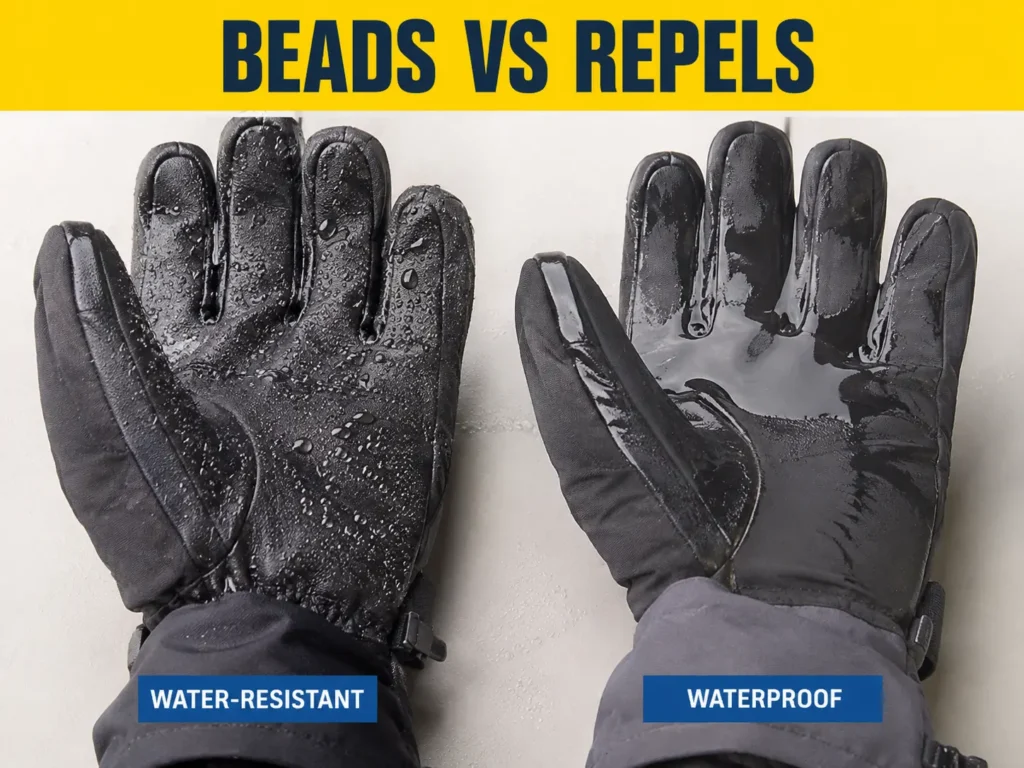
Run the water-bead test once the gloves arrive. Pour a small amount of cold water on the shell. Beading and rolling off confirms active DWR, PFC-free or otherwise. If it spreads and darkens the fabric, heat-activate it — a low-heat tumble dry or a warm iron through a thin cloth reactivates DWR regardless of which chemistry it uses.
When Standard Advice Doesn’t Apply
Backcountry and touring use shifts the priority away from certification hunting entirely, since the waterproof vs water-resistant performance question under sustained, high-output conditions matters more for safety than which sustainability certification a glove carries. That comparison is worth understanding on its own terms before layering an eco-priority decision on top of it.
Buyers focused purely on recycled content, not chemistry or labor practices, can reasonably treat GRS alone as sufficient, without needing Bluesign or OEKO-TEX as well — the certifications aren’t cumulative requirements, they’re separate answers to separate questions.
Anyone shopping secondhand or reclaimed leather gloves is working outside the certification system entirely. Reclaimed leather from hide trimmings is a legitimate lower-impact choice with no formal certification standard attached to it — verifiable only by asking the seller directly about sourcing, not by looking for a badge.
Decision Checklist
| Your Situation | Action | Priority |
| Listing says “eco-friendly” with no certification named | Treat the claim as unverified | Verify before trusting |
| Recycled-content percentage given without GRS | Confirm independently or discount the figure | Check before buying |
| Priority is chemical safety specifically | Look for OEKO-TEX Standard 100 | Match certification to priority |
| Priority is full manufacturing accountability | Look for Bluesign | Match certification to priority |
| Backcountry or extreme-cold use | Prioritize construction specs over certification | Specs first |
| Casual skier, low seasonal use | Weigh cost-per-use honestly before paying a certification premium | Consider conventional equivalent |
The honest version of choosing sustainable ski gloves has very little to do with feelings about the word “sustainable” and almost everything to do with whether a specific claim is checkable. Once you know which certification answers which question, the decision stops being about trusting a hang tag and starts being about matching a verified standard to what you actually care about.
Frequently Asked Questions
Is recycled polyester actually better than virgin polyester for a ski glove shell?
Yes, in manufacturing energy specifically — meaningfully lower according to Textile Exchange’s data, and it diverts post-consumer plastic from landfill or ocean. The honest limitation is that it still sheds microplastics during wear at rates similar to virgin polyester, since that comes from the fiber structure rather than where the polymer originated.
Does a sustainable glove always cost more than a conventional one?
Usually somewhat more at the same construction tier, since certification and recycled or biodegradable materials add cost. Whether that premium is worth it depends heavily on how often you ski and which specific certification you’re prioritizing.
Can a glove be genuinely sustainable without carrying any certification?
Yes — some smaller or newer manufacturers are genuinely responsible without having pursued formal certification yet, since audits cost money and time. The tradeoff is that you can’t verify it from the listing alone; you’d need to contact the brand directly for documentation.
Do PFC-free waterproof gloves need to be retreated more often than conventional ones?
No — PFC-free DWR and conventional fluorocarbon DWR follow a similar retreatment interval. The chemistry differs, but the maintenance schedule doesn’t meaningfully change because of it.
Is checking for a certification worth the extra time when shopping?
Yes, and it takes under a minute in practice. A single scroll through a product listing looking for Bluesign, GRS, or OEKO-TEX by name is the entire process — far less effort than the research most shoppers already put into comparing warmth ratings or price, and it’s the one check that actually confirms whether an environmental claim means anything.