Quick answer: Four things degrade glove color at the same time — UV light breaking the chemical bonds inside dye, salt crystallizing in the fibers and pulling pigment loose, moisture letting dye migrate, and heat speeding up all three. Which one dominates depends on your material and your climate, not luck.
If your current pair is fading fast enough that you’re already shopping, the ski glove finder filters by material and warmth so you’re not guessing at what actually holds color better in your conditions.
Most skiers treat fading as something that just happens with age, the same way anything gets a little worn out over time. That framing misses the actual timeline: the dye in a glove shell starts degrading from the first sunny ski day, well before any of it is visible, and by the time color loss is obvious, the underlying chemical process has usually been running for a full season or more.
- What Fading Actually Is — And What It Isn't
- Four Things Are Attacking the Dye at Once
- The Fading Factors and What Each One Affects
- The Habits That Actually Slow It Down
- Material Fading Isn't One Pattern
- Climate Changes the Timeline More Than Most Skiers Realize
- The Five-Minute Fade Check
- Common Mistakes and What They Actually Cost
- Warning Signs: Cosmetic vs. Something Else
- Matching Prevention to How You Ski
- Self-Check Tests You Can Run Today
- When Standard Prevention Doesn't Apply
- Decision Checklist
- Frequently Asked Questions
What Fading Actually Is — And What It Isn’t
Dye doesn’t wash out of glove fabric the way food coloring washes out of a shirt. It’s chemically bonded to the fiber, and visible fading only shows up once enough of those bonds have been broken or enough pigment has been physically displaced to change how the material reflects light.
That distinction matters because it separates fading from most other kinds of glove wear. A faded shell hasn’t necessarily lost waterproofing, insulation, or structural strength — those are separate systems governed by separate materials. Fading is a dye problem first, and only becomes a material problem when the same exposure that degraded the color has also been degrading the fabric underneath it.
It’s also worth being clear early on that prevention slows this process — it doesn’t stop it. Dye exposed to UV and moisture across dozens of ski days over multiple seasons is going to shift color eventually, no matter how carefully the gloves are stored and cleaned in between. The realistic goal is a longer timeline, not permanent color.
Four Things Are Attacking the Dye at Once
Ski gloves fade through several distinct mechanisms running in parallel, and understanding which one is dominant for your gloves is what turns prevention from guesswork into something targeted.
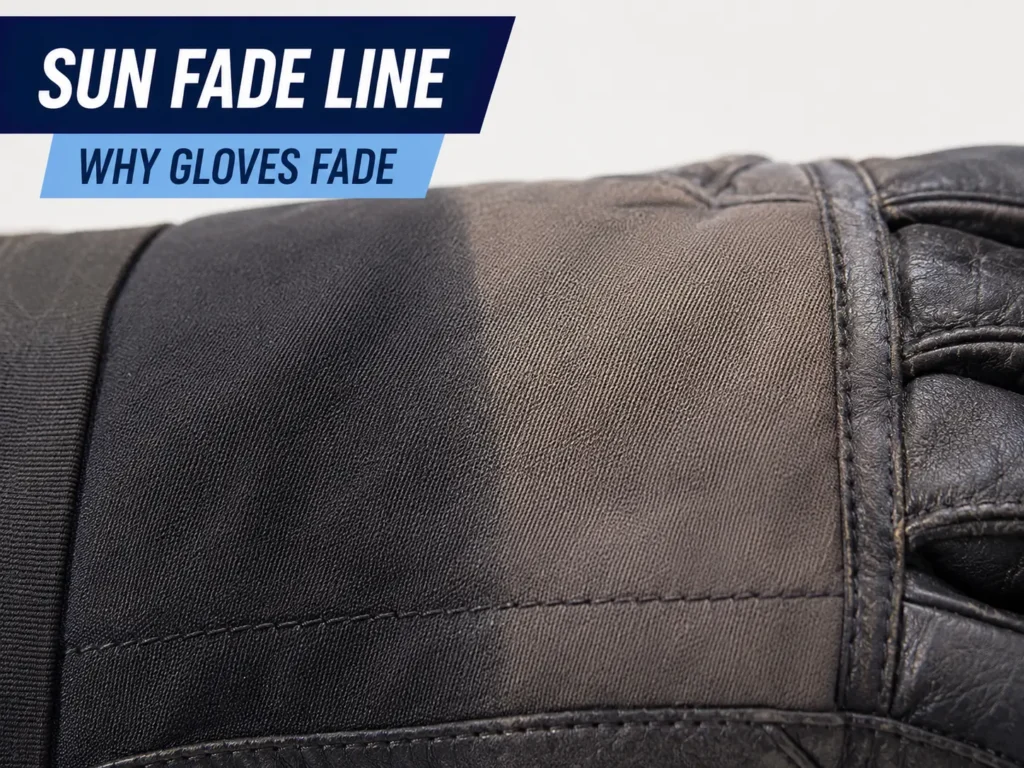
UV radiation is usually the biggest factor. Photons in the ultraviolet range carry enough energy to break the molecular bonds holding a dye molecule together — a process called photodegradation. A U.S. patent covering polyester lightfastness treatments states it directly: continuous sun exposure causes dye photodegradation and color change in synthetic fabrics like polyester and nylon, and heat and moisture accelerate that breakdown rather than acting independently of it — which matters here, since bright sun, temperature swings, and wet fabric describe an ordinary ski day almost exactly.
Salt works through a different mechanism entirely — it doesn’t break dye bonds chemically, it physically disrupts where pigment sits in the material. Research on salt crystallization in porous materials found that when salt crystals rehydrate, the hydrated form can be roughly four times larger in volume than the dry crystal, generating real mechanical stress inside whatever it’s growing in. In leather or tightly woven fabric, that repeated expansion pulls pigment loose at a microscopic level, which is why salt damage tends to look patchy and chalky rather than evenly dulled.
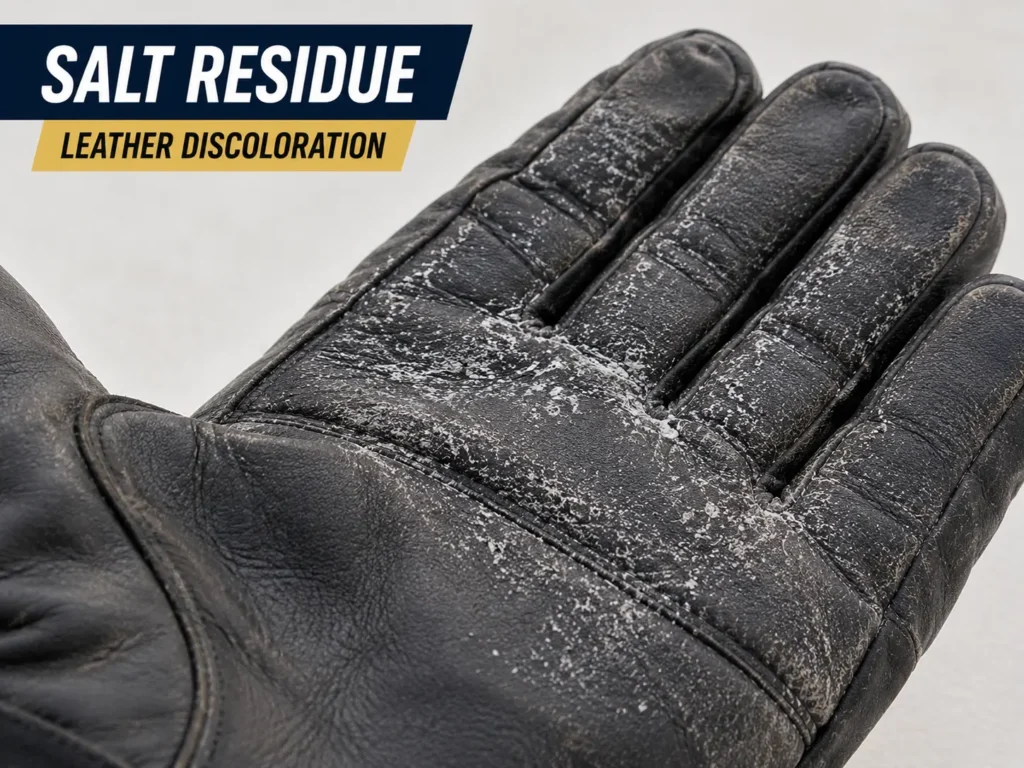
Moisture on its own, without salt, still causes fading by letting dye molecules migrate within the fiber instead of staying fixed in place — part of why gloves that get soaked and dried repeatedly, even in fresh water, fade faster than ones that mostly stay dry.
Heat is less a standalone cause and more a multiplier on the other three. It rarely shows up alone, but it’s present in nearly every fading scenario that happens fast — which is exactly why storage temperature ends up mattering as much as sun exposure does.
The Fading Factors and What Each One Affects
| Factor | What It Does | Affects Most | Key Detail |
| UV exposure | Breaks molecular bonds holding dye together | Synthetic shells, dark colors especially | Cumulative and mostly permanent once it happens |
| Salt (sweat + snow) | Crystallizes and physically displaces pigment | Leather, high-contact zones like palm | Repeated wet-dry cycles do more damage than one soaking |
| Moisture | Lets dye migrate within the fiber | All materials, worse with poor drying | Fresh water still causes it, just more slowly than salt water |
| Heat | Accelerates UV, salt, and moisture damage together | Any material left near a heat source | The fastest single way to cause visible color shift |
The Habits That Actually Slow It Down
Three things make a real, measurable difference to how fast color loss shows up, and none of them require special products.
Rinse gloves after a salt-heavy day
Plain water, before the moisture fully dries and crystallizes, interrupts the crystal-growth cycle before it does more damage. It won’t restore color already lost, but it’s one of the higher-value, lowest-effort habits available — especially for anyone skiing coastal or maritime conditions.
Keep gloves out of direct heat, always
A car dashboard, a radiator, a heater vent — even brief exposure accelerates dye breakdown faster than an entire normal season of skiing. This is the single fastest way to do visible damage in the shortest amount of time.
Store gloves cool, dark, and dry in the off-season
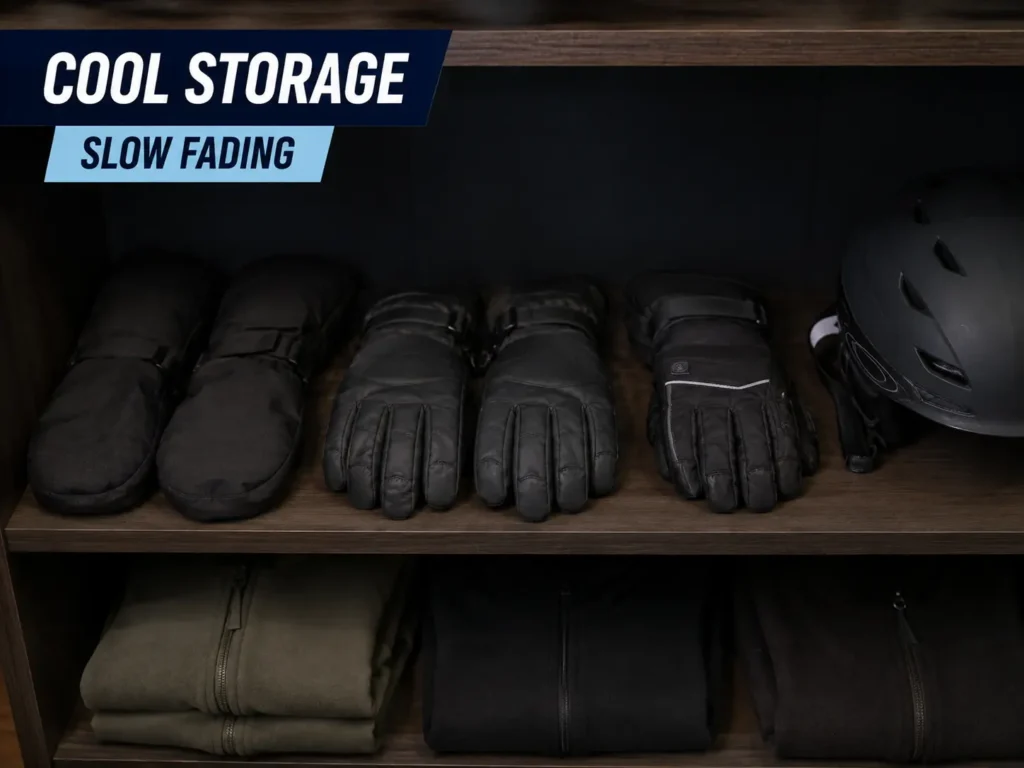
UV, heat, and humidity are each individually damaging, and they commonly co-occur in the worst storage spots — garages, car trunks, attic shelves. A cool closet away from a window slows every mechanism at once, for the cost of nothing.
Material Fading Isn’t One Pattern
Leather, synthetic shells, neoprene, and Gore-Tex don’t fade the same way, and treating them as interchangeable is where a lot of generic advice falls apart.
Leather doesn’t fade so much as discolor and dry unevenly. Its dye sits differently in the hide than synthetic dye sits in woven fiber, so leather fading often shows up as blotchiness or uneven lightening at high-flex points like the knuckles, replacing what was originally a richer, slightly glossy finish with a dusty, matte look. Sun and salt both accelerate it, and because the same oils that keep leather flexible are being stripped alongside the color, fading and cracking tend to show up together rather than as separate problems.
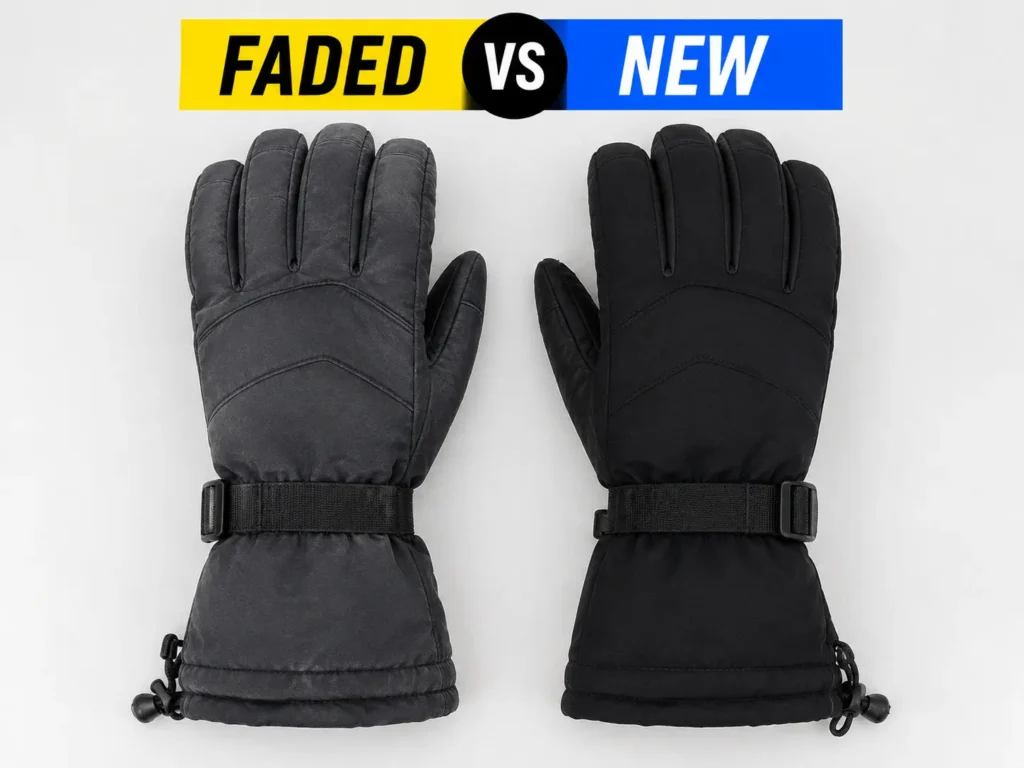
Synthetic shells — nylon, polyester, and their blends — tend to fade toward grey or a washed-out version of the original color, rather than discoloring unevenly. That’s the classic “black gloves turn charcoal” pattern, driven almost entirely by UV photodegradation of the dye itself, with salt and moisture playing a secondary role depending on conditions.
Neoprene fades in a genuinely distinct pattern: concentrated, blotchy color loss right at the palm and grip zones, rather than an even dulling across the whole glove. Neoprene fading is driven heavily by sweat and friction together, not primarily UV, so the areas under the most contact and moisture stress fade first while the back of the hand — plenty of sun exposure, far less sweat — often barely changes.
Gore-Tex and other laminated shells generally hold color better than bare synthetic fabric, since the membrane-and-face-fabric construction adds a layer of physical protection over the dyed layer. It’s not immune, but it typically takes noticeably longer to show visible loss under the same conditions.
If you’re weighing shell materials before a purchase and color longevity actually matters to the decision, the best ski gloves breakdown covers material trade-offs across price points, which is worth a look before buying rather than after.
Climate Changes the Timeline More Than Most Skiers Realize
Two skiers with identical gloves and identical use frequency can end up with visibly different fading outcomes purely from where they live and how they store gear between seasons.
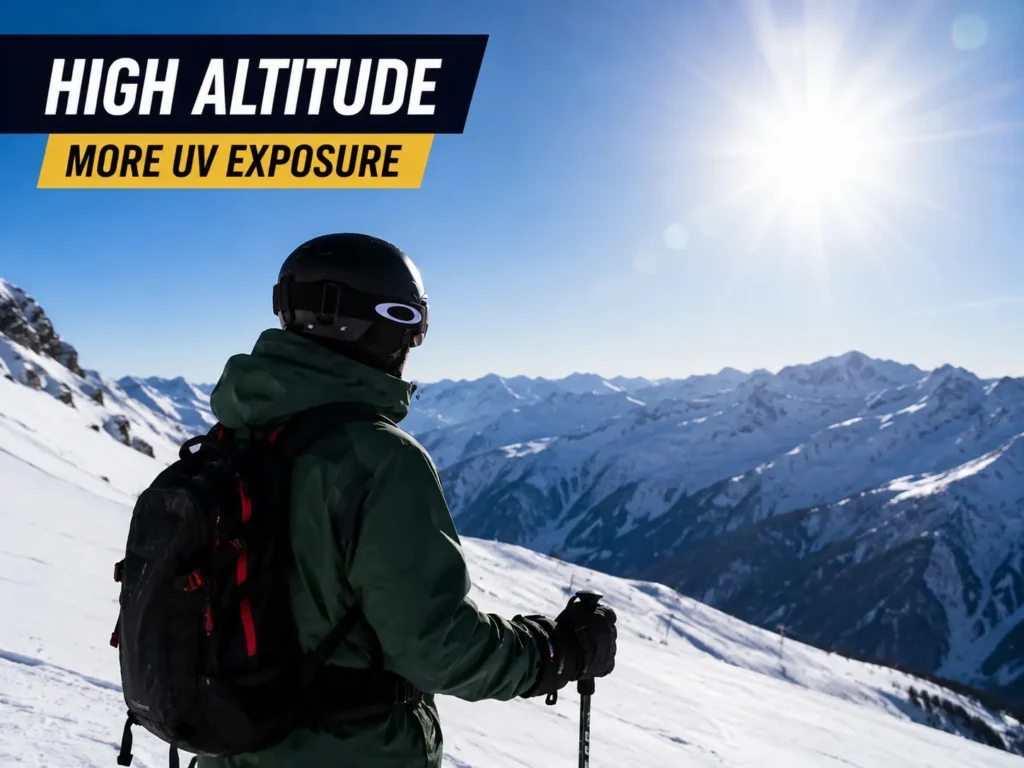
High-altitude, sunny, dry climates — Colorado’s Front Range, interior mountain towns — combine intense UV on the hill with, often, relatively benign dry-summer storage. The fading here is mostly a direct function of hours in the sun, since UV intensity increases roughly 10 to 12% for every thousand meters of elevation, and snow reflects back around 80% of it compared to roughly 15% off grass or dirt — meaning a skier at 9,000 or 10,000 feet is absorbing meaningfully more cumulative UV per hour, from two directions at once.
Coastal and maritime mountain climates add salt and humidity on top of UV, both during use and potentially during storage if gloves sit somewhere with poor air circulation. That combination tends to produce faster, patchier fading than sun exposure alone.
Storage climate matters even when nobody’s skiing. The Smithsonian’s Museum Conservation Institute, which studies textile preservation across different U.S. climate zones, notes that in desert conditions, low humidity combined with intense sunlight causes fibers to degrade faster than in more northern, humid exposures — while warm, humid climates instead bring a different risk profile centered on mold rather than UV. The practical read for gloves: a hot, sunlit garage shelf during the off-season is working against color regardless of what climate you actually ski in.
The Five-Minute Fade Check
Done once a season, this separates fading that’s purely cosmetic from fading that signals something else is wrong.
Where is it concentrated?
Even, all-over lightening on a synthetic shell points to UV as the dominant cause. Patchy, crusty, or white-residue fading concentrated at contact points points to salt. Blotchy fading paired with stiffness on leather suggests UV and moisture have been working on it together.
Check the storage spot from last off-season
Direct window light, proximity to a heat source, or a consistently damp basement all contribute as much as anything that happened on the mountain — this is easy to overlook because it’s invisible while it’s happening.
Compare fade speed to actual ski days
A glove that’s noticeably faded after five or six days out is either an unusually poor dye job, or it went through a specific bad-storage or bad-drying incident — that’s not typical wear-based fading and is worth investigating.
Check whether stiffness or texture change came with it
Fading that shows up alongside cracking, chalkiness, or reduced flexibility — especially on leather — means the exposure degrading color is also degrading the material, which shifts this from a cosmetic issue to a functional one. Heat and UV exposure severe enough to visibly shift color that fast can affect waterproof coatings too, so it’s worth checking DWR performance at the same time rather than treating it as a separate issue.
Common Mistakes and What They Actually Cost
Assuming dark gloves are just “cheap” once they fade misreads the chemistry. Dark dyes absorb more of the UV spectrum than light ones, so black and dark neon gloves fade first and fastest regardless of price or quality — it’s optics, not construction.
Leaving gloves in a hot car or near a heater “just for a few minutes” does more visible damage per exposure than weeks of normal skiing, because heat multiplies UV and moisture damage that’s already accumulating rather than adding a small amount on its own.
Never rinsing after a salt-heavy day lets crystallization cycles repeat unchecked all season. Each wet-dry cycle without a rinse does incremental damage that’s easy to miss until the residue becomes visible.
Treating a redyed glove as “fixed” without changing storage or habits restores color temporarily but not the underlying cause — a redyed synthetic shell kept in the same hot, sunny storage spot fades again on a similar timeline.
Storing gloves in the same spot they were dried the year before, without checking it skips a five-minute audit that costs nothing and directly extends how long color holds, especially for anyone who’s moved, renovated, or changed where gear lives in the off-season.
Warning Signs: Cosmetic vs. Something Else
| Warning Sign | What It Indicates |
| Even, gradual grey-out on a synthetic shell | Normal UV fading — cosmetic only |
| Sudden, dramatic color shift within one trip | Likely a specific heat event — check membrane too |
| Patchy white residue with fading at palm and fingers | Salt crystallization — rinse habit needed |
| Fading plus stiffness or cracking on leather | Material degradation, not just dye — beyond cosmetic |
| Fading concentrated only where a strap crosses the glove | Also a wear point — check for thinning fabric there |
| Uneven blotchy fading only at the grip zone (neoprene) | Normal for the material — sweat-driven, not a defect |
Matching Prevention to How You Ski
| Situation | Fading Risk | What Matters Most |
| High-altitude, sunny, dry climate | UV-dominant | UV protectant spray at season start; lighter shell color if choosing new |
| Coastal or maritime climate | Salt-dominant | Rinse after every salt-heavy day; dry storage between sessions |
| Casual skier, under 10 days/season | Low from use, higher from storage | Storage spot matters more than in-season habits |
| Frequent skier, 25+ days/season | Cumulative UV and salt combined | Both rinsing and UV protection; expect visible fading within 2-3 seasons |
| Leather gloves specifically | Salt and moisture, tied to conditioning | Conditioning schedule affects fading and cracking together |
Self-Check Tests You Can Run Today
Fade location test: even vs. patchy tells you UV vs. salt as the dominant cause.
Storage audit: check last year’s off-season spot for direct light or heat exposure.
Timeline check: fading speed against actual ski days flags an unusual incident vs. normal wear.
Flex-and-fade check (leather): stiffness alongside fading means material damage, not just color.
When Standard Prevention Doesn’t Apply
Very infrequent skiers — under five days a season — see so little in-use UV exposure that storage conditions end up mattering more than anything that happens on the mountain. A five-day season doesn’t generate meaningful cumulative sun exposure on its own; a hot attic shelf across eight off-season months can still do real damage regardless.
Gloves already several seasons old have likely absorbed most of the UV damage they’re going to show, since photodegradation is cumulative and doesn’t reset. At that point, prevention habits protect whatever color is left rather than restoring what’s already gone — a reasonable goal, just a different one than for a newer pair.
Neoprene owners specifically shouldn’t expect UV protectant spray to help much, since neoprene fading is driven mainly by sweat and friction rather than sun exposure — the more useful habit there is simply rinsing and drying the palm zone thoroughly after each session.
Decision Checklist
| Your Situation | Action | Priority |
| Gloves stored somewhere sunlit or hot last off-season | Move storage spot now, before it happens again | Fix habit |
| Ski coastal or maritime terrain and never rinse | Start rinsing after salt-heavy days | Act now |
| Dark synthetic gloves faded within one season | Normal for the color and UV load — not a defect | No action needed |
| Fading paired with leather stiffness or cracking | Treat as material issue, not cosmetic — condition and reassess | Urgent |
| Never checked where fading is concentrated | Run the fade location test today | Act now |
| Everything above already accounted for | Continue current habits; recheck storage spot each fall | Good |
Fading is one of the more predictable things that happens to ski gear once the mechanism behind it is clear. When gloves are past the point where color matters less than function, browsing replacement options across price points is a more useful next step than continuing to manage a pair that’s already done its job — and for the storage habits that make the single biggest difference to color between seasons, off-season storage covers that in more depth than makes sense to repeat here.
Frequently Asked Questions
Does washing gloves make fading worse?
Not inherently — the drying method matters more than the wash itself. A gentle wash followed by air-drying away from heat and direct sun actually helps, since it removes salt and sweat residue before it crystallizes. The damage comes from hot water, machine drying, or heat-drying, not from cleaning.
Will a lighter-colored replacement fade less than my black pair did?
Not in absolute chemical terms — most dark colors sit on a similar fading trajectory regardless of exact shade, since dark dyes all absorb more UV energy than light ones. What changes with a lighter color is how visible the fading looks against the starting point, not how much dye damage actually occurs.
Is it worth redyeing a faded synthetic shell?
For synthetic fabric, fabric dye can restore visible color, but it doesn’t address what caused the fading in the first place — a redyed glove kept in the same conditions fades again on a similar timeline. It’s a cosmetic fix worth doing only if the glove is otherwise structurally sound.
Does a faded glove perform worse than a new one?
Usually not. Fading affects the dye layer, not insulation, membrane, or seams underneath it. The exception is when fading shows up alongside stiffening or cracking, which signals the underlying material has taken damage too, not just the color.