QUICK ANSWER: Cold hands are usually a shell problem, not an insulation problem. Leather shells block wind naturally and hold up best under repeated pole-grip friction, but need regular conditioning. Synthetic shells dry faster and need less upkeep, but wear thin at contact points faster. Hardshell membrane gloves (like Gore-Tex) handle sustained wet snow better than either, at the cost of some breathability. The right shell matches your specific conditions — there’s no single “best” material for every skier.
Not sure which shell type actually fits how you ski? The Ski Glove Finder matches you to specific gloves based on your conditions and hand temperature, rather than a general material recommendation.
- Why Shell Material Matters More Than People Think
- The "Wetting Out" Problem, Explained
- Where Shells Actually Wear Out First
- Leather Shells: Wind Resistance With a Maintenance Cost
- Synthetic Shells: Lower Maintenance, Faster Wear
- Hardshell and Membrane Construction: The Storm Option
- Softshell: Built for Movement, Not Wind
- The Hybrid Approach: Leather Where It Matters, Synthetic Where It Doesn't
- Shell Materials at a Glance
- Is Your Shell Actually Failing? Two Simple Checks
- Common Shell Mistakes
- Who This Actually Matters For
- Who Can Mostly Ignore This
- Decision Checklist
- Frequently Asked Questions
- Final Thoughts
Why Shell Material Matters More Than People Think
Most skiers troubleshoot cold hands by assuming they need thicker insulation.
That’s often the wrong fix. Insulation only works if it stays dry and the wind can’t strip heat away from it directly.
The shell is what actually controls both of those things. A glove can have excellent insulation and still leave your hands cold if the shell lets wind through or soaks up water partway through the day.
Understanding what each shell material actually does — not just what it’s called — changes how you shop for gloves entirely.
The “Wetting Out” Problem, Explained
Most gloves don’t fail because of a hole. They fail because the outer fabric’s water-repellent coating wears down.
Every synthetic shell has a DWR (Durable Water Repellent) finish applied to it. Fresh DWR makes water bead up and roll off. Worn DWR lets the fabric absorb water instead.
REI’s independent breakdown of how rain gear actually works explains this clearly: once a shell “wets out,” it doesn’t just get heavier — it actively pulls heat away from your skin through direct contact with cold, saturated fabric.
This is why a glove that felt fine in November can feel cold and wet by February, even without any visible damage. The DWR simply wore down through normal use.
Where Shells Actually Wear Out First
Glove shells don’t wear evenly. Certain zones take far more repeated stress than others, and knowing where helps explain why a glove that “looks fine” can still be letting moisture in.
The palm absorbs the most friction of any area, from thousands of pole-grip cycles across a single ski day. Leather handles this specific stress better than synthetic fabric, which is exactly why so many hybrid gloves put leather only on the palm.
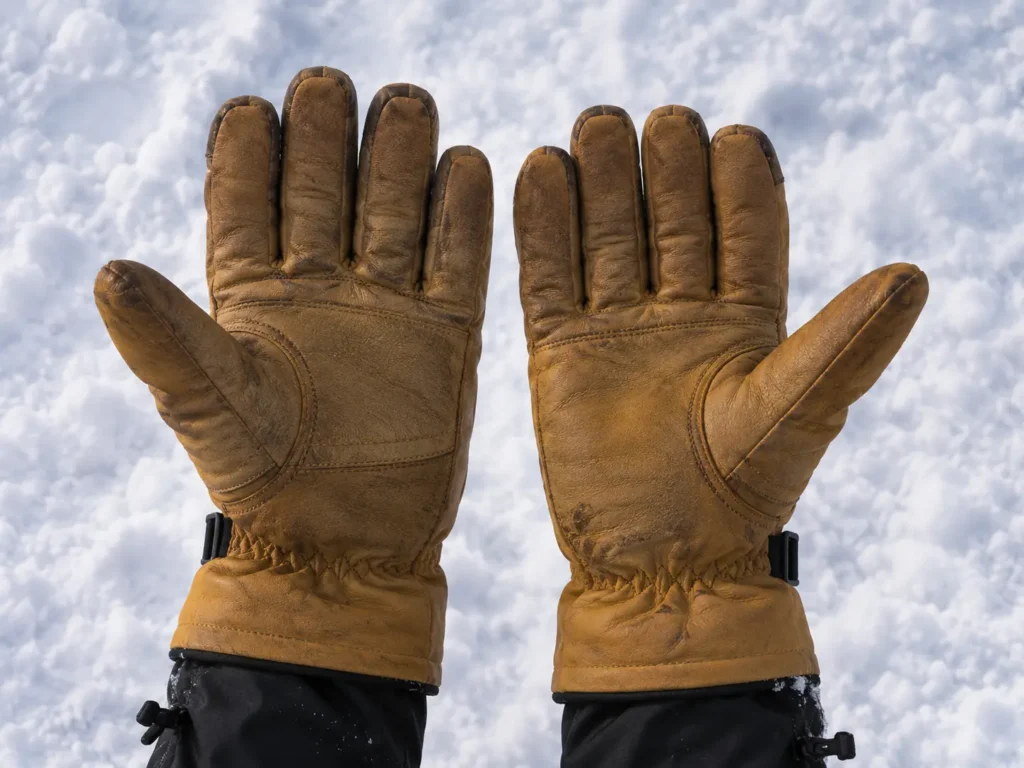
Knuckles and the back of the hand take more impact than friction — lift bar contact, falls, and direct wind exposure during stationary chairlift rides. Hardshell and leather both block wind here more effectively than a woven softshell.
Fingertips wear out earlier than most people expect, from contact with ski edges while carrying skis, binding contact, and repeated flexing. Thin synthetic fabric shows abrasion here before leather does.
Leather Shells: Wind Resistance With a Maintenance Cost
Leather isn’t primarily about looks or premium feel — it’s a genuinely effective wind barrier.
Woven synthetic fabric has microscopic gaps between fibers that wind can work through over time. Leather is a solid, continuous material, which is why it blocks wind more completely at the same thickness.
Goatskin is the most common premium choice for a specific reason: it holds up to repeated pole-grip friction better than cowhide or synthetic alternatives, without stiffening as quickly in genuinely cold temperatures.
The tradeoff is real maintenance. Leather needs conditioning with a wax-based treatment — Nikwax’s waterproofing wax for leather is a commonly recommended option — roughly once a season for regular skiers, more often for heavy use. Skip that maintenance and the leather stiffens and eventually cracks at stress points.
A glove like the Hestra Army Leather Heli is a good example of full-leather construction done well — goatskin palm, genuine wind resistance, and a removable liner that lets the whole system dry properly between days.
Best for: Skiers who spend long hours on windy chairlifts and are willing to do occasional upkeep in exchange for genuine cold-weather performance.
Synthetic Shells: Lower Maintenance, Faster Wear
Synthetic shells — nylon, polyester, and similar woven fabrics — need no break-in period and stay lighter and more flexible than leather from day one.
On wet, warmer days, synthetics have a real advantage: they don’t absorb as much water as untreated leather, and they dry substantially faster during a lunch break or overnight.
The honest tradeoff is durability at contact points. The same ski edges and pole grips that leather shrugs off will visibly thin a synthetic shell within a season or two of regular use, especially without reinforced high-wear zones.
Best for: Skiers who ski fewer days a season, prioritize low maintenance, or ski primarily in milder, less windy conditions where leather’s wind-blocking advantage matters less.
Hardshell and Membrane Construction: The Storm Option
A “hardshell” glove pairs a stiffer, more weatherproof outer fabric with an internal waterproof-breathable membrane — most commonly Gore-Tex.
This construction is what actually keeps hands dry through a full day of sustained wet, heavy snow — the specific condition where both leather and basic synthetic shells eventually let moisture through. How Gore-Tex gloves keep hands dry inside breaks down exactly how that membrane manages to block liquid water while still letting sweat vapor escape.
The tradeoff is feel and breathability. Hardshell gloves run stiffer and crinklier than a soft leather or synthetic shell, and if you’re working hard enough to sweat heavily, that moisture has a harder time escaping than it would through a lighter softshell.
Best for: Skiers in consistently wet climates — Pacific Northwest, Tahoe, spring conditions — where sustained moisture, not just occasional snow contact, is the main challenge.
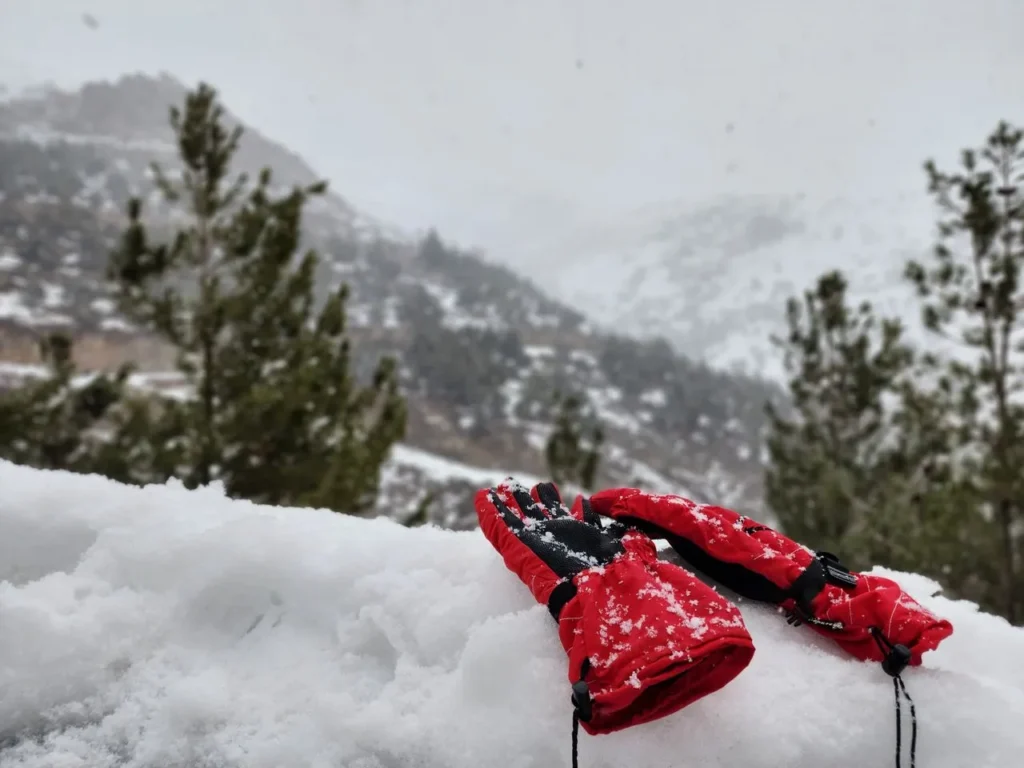
Softshell: Built for Movement, Not Wind
A softshell is a stretchy, breathable woven fabric, built around comfort and mobility rather than maximum weather protection.
It feels closest to bare-handed dexterity of any shell type, which is exactly why it shows up most often in backcountry touring and ski-mountaineering gloves, where body heat runs high and hand mobility matters constantly.
The real weakness is wind. Softshell’s air permeability is high by design — that’s what makes it breathable — but it also means wind passes through far more easily than through leather or a hardshell.
Best for: High-output activity like backcountry touring or boot-packing, where the risk is overheating rather than wind chill. A poor fit for a slow, exposed chairlift ride.

The Hybrid Approach: Leather Where It Matters, Synthetic Where It Doesn’t
Most mid-range and premium gloves don’t commit fully to one material — they combine leather in high-wear zones with synthetic or membrane construction everywhere else.
A leather palm handles the pole-grip friction leather is genuinely better at, while a synthetic or Gore-Tex backhand keeps the glove lighter, more breathable, and faster-drying than full leather construction would allow.
The Dakine Leather Titan is a solid real-world example of this approach — a goatskin palm paired with a Gore-Tex ePE backhand, aiming for leather’s durability exactly where it’s needed most without the full maintenance burden of an all-leather shell.
For a broader look at how shell material choices play out across a full lineup of men’s gloves at different price points, Best Ski Gloves for Men covers several hybrid and full-leather options side by side.
Shell Materials at a Glance
| Shell Material | Wind Block | Water Resistance | Durability at Contact Points | Maintenance |
| Leather | High | Medium | High | Regular conditioning required |
| Synthetic | Medium | Medium | Low to Medium | Low |
| Hardshell + Membrane | High | High | Medium | Low |
| Softshell | Low to Medium | Low | Low | Low |
No single row in that table is the “correct” answer — the right choice depends entirely on matching material to your actual conditions rather than chasing the highest number in every column.
Is Your Shell Actually Failing? Two Simple Checks
The bead test:
Pour a small amount of water on the back of a dry glove. If it beads up and rolls off, the DWR coating is still working. If it soaks in and leaves a dark, damp patch, the coating has worn down.
The seam check:
Submerge a gloved hand briefly in slush, then make a fist. If moisture works its way out through the stitching at the thumb or fingertips, the internal seam sealing or membrane has likely failed, not just the surface DWR.
Both checks take under a minute and tell you whether a glove needs reproofing or genuinely needs replacing — a distinction worth making before assuming a glove is done.

Common Shell Mistakes
Scraping ice with a bare thumb or the back of a glove
Sharp, cold ice crystals act almost like an abrasive against DWR coating and stitching. A plastic scraper or pole tip does the same job without damaging the shell.
Assuming thicker insulation fixes cold hands
If the shell is letting wind or moisture through, more insulation just gives moisture more material to soak into — it doesn’t address the actual failure point.
Drying gloves on a heater or radiator
Direct heat stiffens leather and can degrade the adhesives holding synthetic seams together. Air drying at room temperature, cuffs open, protects the shell’s flexibility.
Ignoring early wear at the palm or fingertips
These are the first areas to show real damage, and catching thinning fabric early — before it’s actively letting water through — is the difference between reproofing and replacing.
Trusting a waterproof rating to cover for shell damage
A membrane can be completely intact while a worn, thinned outer shell still lets moisture reach it faster than the membrane can manage. Waterproofing and abrasion resistance are two separate properties, not one guarantee.
Who This Actually Matters For
Skiers doing 10 or more days a season, especially with long chairlift exposure, get the most value from matching shell material carefully — that’s where the wind-block and durability differences actually compound over a full season.
Skiers replacing gloves every year or two despite them “still looking fine” often have a shell wear problem specifically, not a general durability issue with all gloves — the fixes above (proofing, proper drying, avoiding ice-scraping abuse) frequently extend a glove’s working life significantly.
Who Can Mostly Ignore This
Casual skiers doing a handful of days a year won’t put enough cumulative stress on a shell for material choice to matter much — nearly any reasonably built glove holds up fine at that usage level.
Park and rail riders are a separate case entirely. Repeated falls and rail contact wear down any shell material fast, and durability expectations there are different from resort or backcountry use regardless of what the glove is made from.
Decision Checklist
- Long, windy chairlift days in cold, dry climates: Leather or hardshell — wind blocking matters more than anything else
- Wet, warmer conditions — Pacific Northwest, Tahoe, spring skiing: Hardshell with a genuine membrane, not just synthetic DWR
- Backcountry touring or high-output activity: Softshell for breathability, accepting reduced wind protection
- Want durability without full leather maintenance: A hybrid glove — leather palm, synthetic or membrane backhand
- Casual skier, a handful of days a season: Material choice matters less than fit and basic waterproofing at this usage level
Frequently Asked Questions
Does shell material actually affect warmth, or is that just insulation?
Both matter, but they solve different problems. Insulation traps warm air; the shell decides whether wind and moisture can reach that insulation in the first place. A glove with excellent insulation and a compromised shell will still leave you cold.
Why do gloves feel colder over a season even though the insulation hasn’t changed?
Almost always shell wear — DWR breaking down, or fabric thinning at contact points — letting wind or moisture reach insulation that used to be protected. The insulation itself typically hasn’t degraded nearly as much as the shell protecting it.
Is a heavier, thicker shell always better?
No. Extra shell weight adds some durability but reduces dexterity and can make a glove tiring to wear over a full day. A shell matched to your actual conditions outperforms a heavier one that’s overbuilt for what you actually ski.
How often should I replace gloves versus just reproofing them?
If the bead test shows the DWR has failed but the seam check shows no internal leaking, reproofing usually solves the problem. If moisture gets through the stitching itself, that’s typically a sign the glove has reached the end of its useful life.
Is leather worth the maintenance for an occasional skier?
Usually not. The maintenance cost only pays off with enough use to actually stress the shell — a handful of ski days a year rarely justifies leather’s upkeep over a well-built synthetic or hybrid option.
Final Thoughts
Shell material decides how a glove actually performs once insulation and price are equal. Leather and hardshell both block wind well but ask something different of you in return — leather wants regular conditioning, and a hardshell trades some breathability for weather protection. Synthetic and softshell both prioritize comfort and low maintenance over long-term durability at contact points. None of these is the universally correct choice — the right one is whichever matches the specific wind, moisture, and activity level you actually face on the mountain.