QUICK ANSWER: For most skiers, the Dakine Titan Gore-Tex (~$83) is the strongest pick — genuine Gore-Tex, a removable liner, and Amazon’s Choice with 528 reviews. Want the same Gore-Tex protection for less? The Gordini Storm (~$75) delivers it at a lower price with 475 reviews backing it up. On the tightest budget, the Kinco 1927KW (~$33) has the deepest review record on this entire list — 1,779 reviews at 4.7 stars.
You don’t need to spend $150+ to get a genuinely good ski glove. What you need is honest matching — the right glove for your actual days-per-season and conditions, not just the highest star rating. Every pick below states plainly who it’s for, who should skip it, and what the real trade-off is. Nothing here is filler.
Not sure which fits your actual situation? The Ski Glove Finder asks seven quick questions about your conditions, hand temperature, and budget, then matches you against the full glove database instead of making you read five reviews to figure it out.
- What $100 Actually Buys You in a Ski Glove
- All 5 Gloves — At a Glance
- Dakine Titan Gore-Tex — Best Overall
- Gordini Storm Glove — Best Gore-Tex Value
- Burton Gore-Tex Insulated Gloves — Best for Snowboarders
- Kinco 1927KW Premium Leather — Best Budget/Durability Pick
- Spyder Insulated Snow Gloves — Best for Casual Skiers
- Common Mistakes Buying Ski Gloves Under $100
- Quick Diagnosis — Which One Fits Your Situation
- When None of These Five Is Right
- Frequently Asked Questions
- Final Thoughts
What $100 Actually Buys You in a Ski Glove
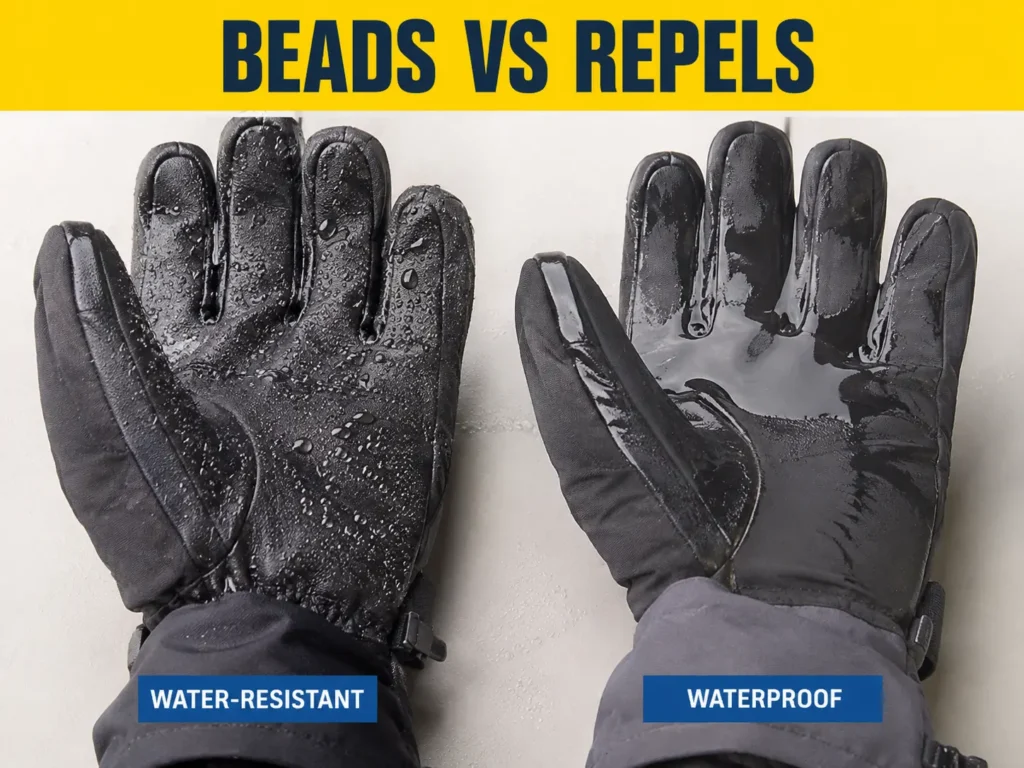
Under $100, the real dividing line isn’t brand — it’s waterproofing method. Gore-Tex is a physical membrane built into the glove that blocks water regardless of how saturated the outer shell gets, and it’s genuinely available at this price point on three of these five picks. A DWR (Durable Water Repellent) coating sits on the surface, works well when fresh, and wears down after roughly 8 to 12 ski days of regular use — after that, the outer fabric starts absorbing water instead of shedding it. The other real variable is shell material: leather (the Kinco) outlasts synthetic in raw durability but needs conditioning and isn’t membrane-waterproof; synthetic shells (everything else here) dry faster and need less maintenance but wear out over two to three seasons of heavy use.
All 5 Gloves — At a Glance
| Glove | Best For | Waterproofing | Rating | Price |
| Dakine Titan Gore-Tex | Best overall | Gore-Tex membrane | 528 reviews, 4.6★ | ~$83 |
| Gordini Storm | Best Gore-Tex value | Gore-Tex full insert | 475 reviews, 4.5★ | ~$75 |
| Burton Gore-Tex Insulated | Snowboarders | Gore-Tex membrane | 2 reviews, 5.0★ | ~$83 |
| Kinco 1927KW | Best budget/durability | Pigskin leather (not membrane) | 1,779 reviews, 4.7★ | ~$33 |
| Spyder Insulated | Casual/infrequent skiers | Waterproof coating | 55 reviews, 4.3★ | ~$26 |
Dakine Titan Gore-Tex — Best Overall
Dakine Men’s Titan Gore-Tex Ski Gloves
– Gore-Tex waterproof membrane
– Removable 280g fleece liner
– Gauntlet cuff with cinch cord
$82.64
★★★★★ (4.6/5)
Check Price →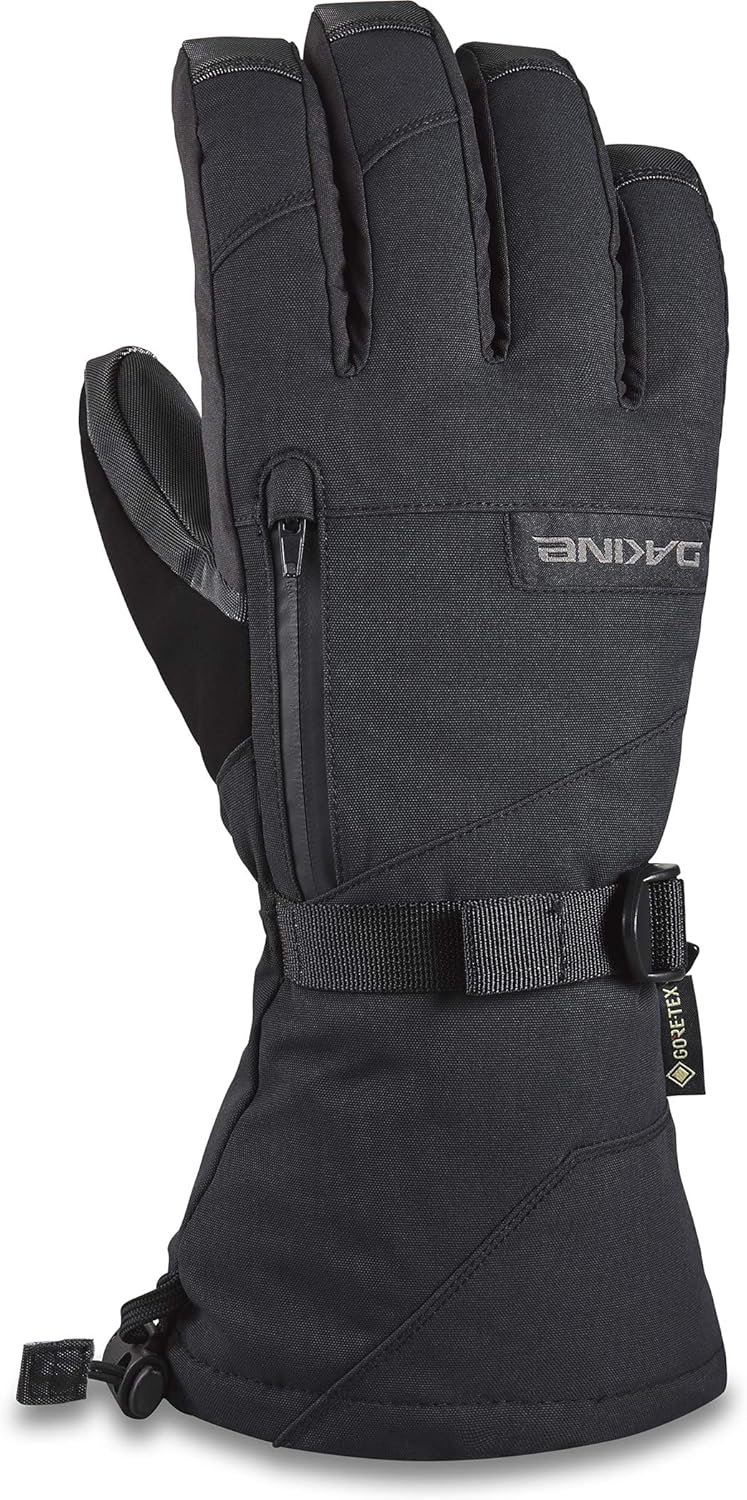
528 reviews at 4.6 stars is a real, deep sample — Gore-Tex at $83 is genuinely good value, since Gore-Tex is the industry benchmark every other waterproofing technology gets compared against. It blocks water while still letting sweat vapor escape, which is why hands stay dry from both directions instead of just one.
The gauntlet cuff with a cinch cord is the correct cuff style for resort skiing — it pulls over your jacket sleeve and seals the gap that lets snow in during falls, which matters more than people expect until they’ve had cold, wet wrists on a powder day. The removable 280g fleece liner is the other real advantage: split it from the shell after a wet day and both dry faster than a fixed-liner glove would.
Who should buy this: Resort skiers doing 10+ days a season in wet or variable conditions. Anyone who’s had non-Gore-Tex waterproofing fail mid-season. Skiers who fall occasionally and want the cuff actually sealed.
Honest limitation: The synthetic insulation is adequate down to about -10°C in moderate wind, not built for genuinely extreme cold — below that, you want a heavier glove outside this price range. At $83, it’s also the priciest pick here, so if you ski only a handful of times a year, the Gore-Tex premium isn’t fully earning its keep.

Gordini Storm Glove — Best Gore-Tex Value
Gordini Men’s Gore-Tex Storm Glove
– Full Gore-Tex waterproof insert
– HeatCore synthetic insulation
– Vermont ski brand since 1956
$74.99 10% OFF
★★★★★ (4.5/5)
Check Price →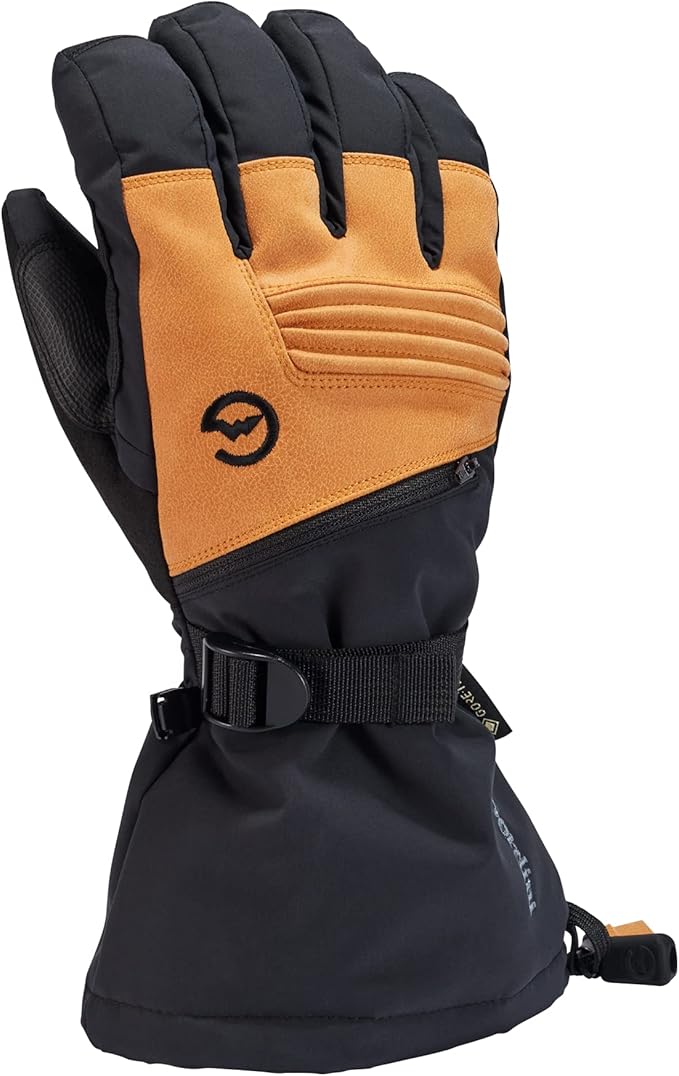
Gordini has built ski gloves since 1956 — genuine Vermont ski heritage, not a generic label. A full Gore-Tex insert runs the entire interior of the glove rather than just the palm or back of hand, which gives more complete waterproof coverage than a partial-coverage design. At 475 reviews, this is a large enough sample that the 4.5-star average reflects a genuinely consistent product, not an early batch of enthusiastic buyers.
What reviewers consistently mention: warmth in cold conditions, durability across multiple seasons, and the gauntlet keeping snow out. The one recurring complaint worth knowing before you order: sizing runs slightly large.
Who should buy this: Skiers who want Gore-Tex reliability but want to spend a bit less than the Dakine. Anyone who’s had non-Gore-Tex waterproofing fail on them before.
Honest limitation: The nylon shell dries faster than leather but doesn’t have leather’s long-term durability — expect visible wear after two to three seasons of regular use, even though the Gore-Tex membrane itself keeps protecting the interior indefinitely. If you’re between sizes, size down given the large-fitting feedback.

Burton Gore-Tex Insulated Gloves — Best for Snowboarders
Burton Men’s Gore-Tex Insulated Gloves
– Gore-Tex waterproof membrane
– DRYRIDE insulation for warmth
– Reinforced palm for snowboard use
$82.99
★★★★★ (5/5)
Check Price →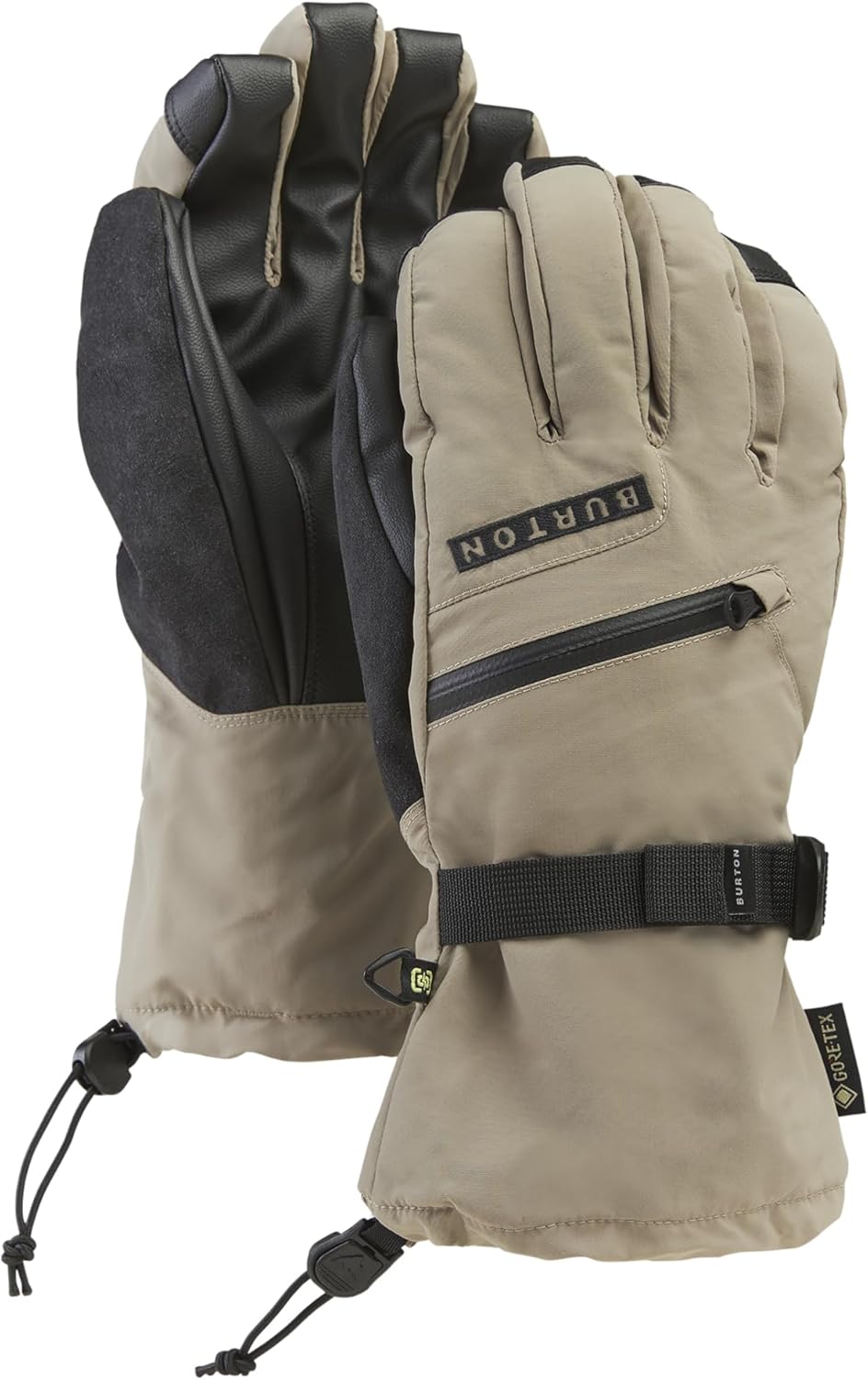
Burton is the largest snowboard brand in the world, and the construction reflects how snowboarders actually use their hands — palm-down fall catches, constant binding adjustments, prolonged low-wrist-angle riding. That’s a genuinely different wear pattern than skiing, and the palm reinforcement here is built specifically around it.
Worth being direct about the one real limitation: this specific Amazon listing only has 2 reviews. That’s thin data, full stop. Burton as a brand has decades of credibility and this glove line shows up regularly in snowboard gear roundups, but the listing itself hasn’t accumulated much Amazon-verified purchase history yet.
Who should buy this: Snowboarders specifically — the palm construction suits board use patterns better than a ski-oriented glove would. Anyone who already trusts Burton and wants Gore-Tex at this price point.
Honest limitation: 2 reviews is genuinely low confidence if review volume matters to your decision — the Dakine (528) or Gordini (475) give you far more purchase data to lean on. You’re buying partly on brand reputation here, not on Amazon-verified consensus.

Kinco 1927KW Premium Leather — Best Budget/Durability Pick
Kinco 1927KW Premium Leather Ski Gloves
– Pigskin leather shell
– HeatKeep insulation + silk lining
– Trusted by ski patrollers for decades
$32.98
★★★★★ (4.7/5)
Check Price →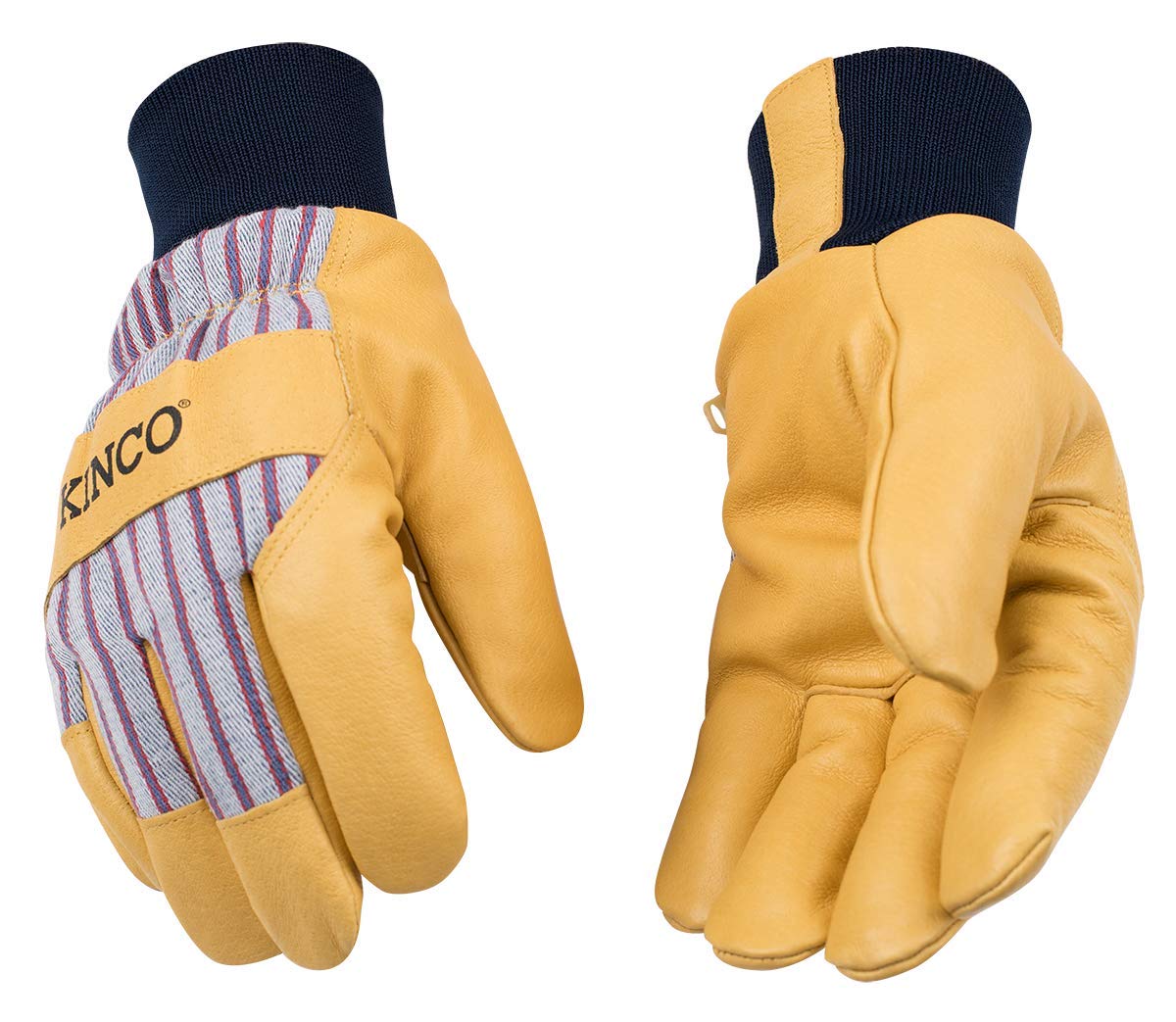
1,779 reviews at 4.7 stars is the strongest purchase-confidence data on this entire list, and the reputation extends well beyond Amazon. Treeline Review’s independent testing calls out multiple publications — including Outside Magazine and Powder Magazine — for writing rave coverage of this exact glove, in Treeline’s words, coverage that “borders on love poems.” One detail from their review is worth repeating directly: a ski friend of their author who’s worked as a lift operator in Colorado for over two decades told them, “I’ve bought two pairs in twenty years. That’s it.” That’s a real, independently sourced durability claim, not marketing copy.
Pigskin leather is naturally water-resistant when conditioned — not waterproof like Gore-Tex, but it repels water effectively and actually improves with wear rather than degrading. At $33, this is leather-shell construction and silk-interlock lining you’d expect to pay $60-70 for in a branded synthetic glove.
Who should buy this: Any budget-conscious skier who still wants real leather durability. Beginners unsure how much they’ll ski. Anyone who loses gloves regularly and doesn’t want to risk $80+ on something that might vanish on a chairlift. Skiers in dry, cold climates where leather’s natural water resistance is enough.
Honest limitation: Requires conditioning with a leather treatment (Nikwax or Sno-Seal) before first use and periodically through the season — five minutes and a few dollars, but not optional if you want it to perform. Skip it if you ski consistently wet conditions — Pacific Northwest slush or wet East Coast snow will eventually get through leather that DWR-only synthetics also struggle with, just on a different timeline.
Spyder Insulated Snow Gloves — Best for Casual Skiers
Spyder Men’s Insulated Winter Snow Gloves
– Waterproof coated shell
– Synthetic insulation for warmth
– Spyder ski brand since 1978
$26.33 15% OFF
★★★★ (4.3/5)
Check Price →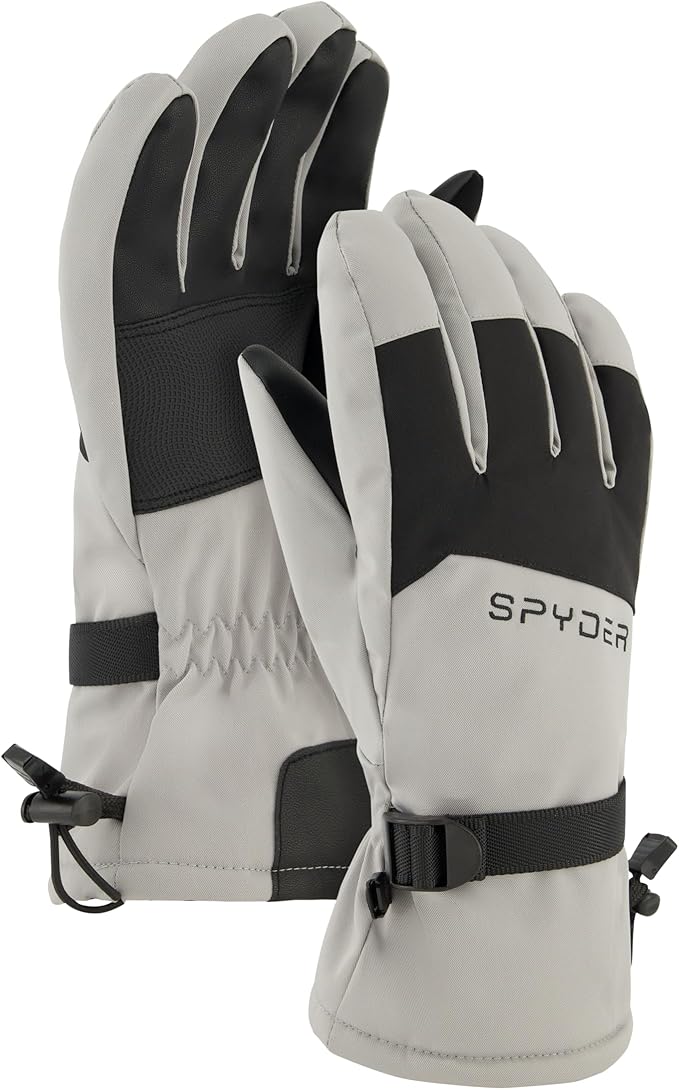
Spyder has made ski race apparel since 1978 and supplies the US Ski Team — a real ski brand at the lowest price on this list, not a generic winter-goods label. The waterproof coating on the outer fabric handles light snow and moderate conditions reasonably, but it isn’t built for deep powder or sustained wet snow the way a membrane glove is. The short-cuff design sits under your jacket sleeve rather than over it — fine on dry days, less protective during frequent falls in powder.
Who should buy this: Casual skiers doing fewer than five days a season in mild resort conditions. First-timers are still deciding if the sport is worth a bigger investment. Parents buying for a teenager who’ll outgrow the size anyway. Anyone who wants a cheap backup pair.
Honest limitation: Regular skiers doing 10+ days a season will see this glove’s construction fall short compared to the Dakine, Gordini, or even the Kinco at that use volume — it’s genuinely built for occasional use, not a full season.
Common Mistakes Buying Ski Gloves Under $100
Assuming higher review count always means a better product, not just a more purchased one. The Kinco’s 1,779 reviews and the Burton’s 2 reviews aren’t a verdict on quality — they’re a verdict on confidence. The Burton might be an excellent glove; there’s just far less Amazon-verified data backing that up yet.
Buying Gore-Tex you won’t use. If you’re skiing three or four days a year in mild, dry conditions, the $50 premium for Gore-Tex over the Spyder or Kinco isn’t buying you much you’ll actually notice. Match the spend to your actual usage, not to the “best” spec on paper.
Skipping leather conditioning and blaming the glove when it underperforms. Unconditioned pigskin loses water resistance fast. The five-minute Nikwax step on the Kinco isn’t optional — it’s the difference between the glove performing as described and not.
Ignoring cuff style. A short cuff under your jacket sleeve is fine for groomed, low-fall-frequency days. On a powder day where you’re falling regularly, a gauntlet cuff sealing over your sleeve is doing real work a short cuff can’t.
Quick Diagnosis — Which One Fits Your Situation
| Your Situation | Go With |
| Wet snow, storms, Pacific Northwest or East Coast conditions | Dakine Titan or Gordini Storm — Gore-Tex isn’t optional here |
| Want the best value Gore-Tex under $75 | Gordini Storm |
| Snowboarder | Burton Gore-Tex — built for board-specific wear patterns |
| Maximum durability at minimum price | Kinco 1927KW — leather outlasts synthetic at this price tier |
| 3-5 days a year, mild conditions | Spyder or Kinco depending on budget — don’t overspend for the use case |
| Most Amazon-verified purchase data | Kinco — 1,779 reviews is the deepest sample here |
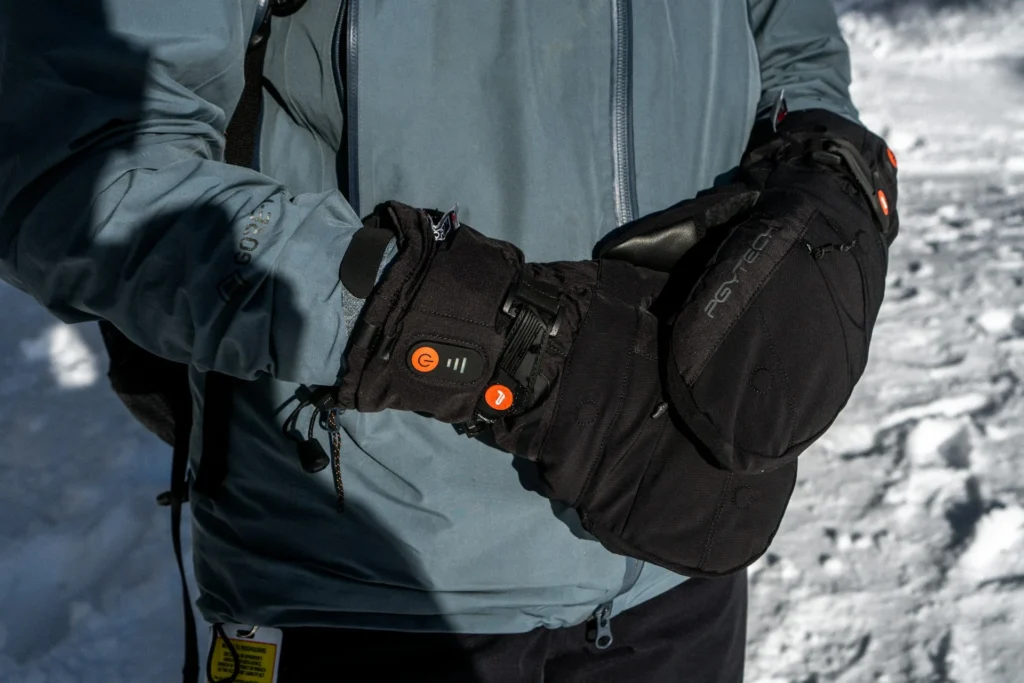
Once you’ve picked a glove, keeping it performing across the season is its own separate skill — Ski Glove Care Tips covers waterproofing maintenance and drying between days. And if you’re wondering whether the jump to heated gloves is worth it beyond this price range, Are Heated Ski Gloves Worth It? breaks that down separately.
When None of These Five Is Right
Every pick here is a men’s resort glove under $100. None of them are built for extreme cold below -20°C, extended backcountry touring, or serious circulation conditions like Raynaud’s that need a heated glove. If you’re regularly skiing genuinely severe cold, you need 200g+ insulation with a sealed membrane — that’s a glove priced above this list, not a compromise within it. And if you’re shopping for a woman, don’t default to men’s sizing in a smaller size — women’s-specific cuts fit narrower palms and shorter fingers properly, which affects both warmth and dexterity in a way sizing down in a men’s glove doesn’t fix.
Frequently Asked Questions
Can you actually get a good ski glove under $100?
Yes — three of the five picks here use genuine Gore-Tex, which is the same core waterproofing technology found in $150-200 gloves. What you’re not getting at this price is premium leather construction with a membrane combined, or extras like a battery-heated system.
What’s the warmest glove on this list?
The Dakine Titan and Gordini Storm are comparable — both handle standard resort cold well with synthetic insulation rated to around -10°C. Neither is built for genuinely extreme cold; that requires stepping above this price range.
Is Gore-Tex actually worth it under $100, or is that just marketing?
Worth it if you ski regularly or in wet conditions — the Dakine and Gordini prove real Gore-Tex is achievable at this price, and the membrane construction genuinely outperforms DWR coatings once you’re several hours into a wet snow day. Not worth it if you’re skiing a handful of mild, dry days a year.
Should I size up or down for these budget gloves?
Depending on the specific glove — the Gordini runs slightly large based on consistent review feedback, so consider sizing down. The Kinco runs closer to true-to-size for most hands. When in doubt, check the specific glove’s sizing notes rather than assuming a universal rule.
How long do budget ski gloves actually last?
Synthetic shells (Dakine, Gordini, Burton, Spyder) typically show real wear after two to three seasons of regular use, even though the Gore-Tex membrane on the three that have one keeps protecting indefinitely. The Kinco’s leather shell, properly conditioned, genuinely outlasts synthetic — the Treeline Review-sourced “two pairs in twenty years” anecdote is an extreme case, but it reflects a real durability advantage leather has over synthetic in dry conditions.
Final Thoughts
If you’re not sure where to start, the Dakine Titan is the safe default — real Gore-Tex, the deepest review base among the Gore-Tex options, and a removable liner that actually matters if you ski consecutive days. Only step down to the Gordini if the $8 difference matters to you specifically, since the core waterproofing is equivalent. And if you’re genuinely budget-constrained or just starting out, don’t feel like the Kinco is a lesser choice — 1,779 reviews and independently verified durability claims say otherwise, for the right conditions.
Affiliate Disclosure: This post contains affiliate links. If you buy through them, we may earn a commission at no extra cost to you. It never changes which gloves we recommend. Prices correct as of June 2026, subject to change.