Quick answer: For most regular skiers, yes — but only in specific conditions, and the reason isn’t the one most people expect. Heated gloves earn their cost fastest in wet, moderate-cold snow, not extreme dry cold, because that’s where passive insulation actually fails. If you ski a handful of mild days a season with decent circulation, the cost and battery management genuinely aren’t worth it.
If you’re deciding what to buy either way, the Ski Glove Finder can match you to the right option, heated or not, based on how and where you actually ski.
The rest of this comes down to real numbers: what heated gloves cost over their working life, what battery life actually looks like in the cold, who genuinely benefits, and where the value case falls apart.
- Why Wet Snow Is the Real Test, Not Extreme Cold
- What's Actually Inside a Heated Glove
- Battery Life Isn't What the Spec Sheet Implies
- Who Actually Gets Real Value From Heated Gloves
- Who Should Skip Them
- The Total Cost of Ownership, Honestly
- Maintenance and the Failure Points That Actually Matter
- Heated Gloves vs. Premium Passive Gloves, Head to Head
- Common Mistakes That Waste the Investment
- A Practical Way to Decide
- Frequently Asked Questions
Why Wet Snow Is the Real Test, Not Extreme Cold
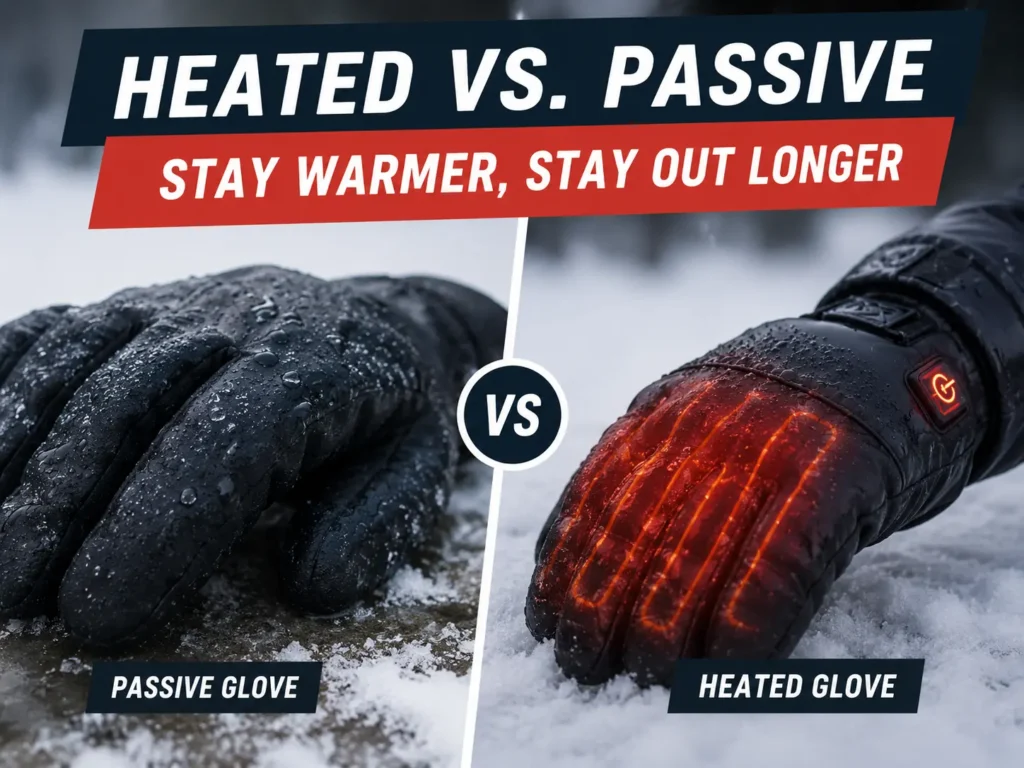
The instinct is to assume heated gloves matter most at the coldest temperatures, but that’s backwards. Passive insulation — the kind in a standard glove — works by trapping still air and slowing heat loss. It doesn’t fail because it’s too cold; it fails when it gets wet, because water conducts heat away from skin many times faster than dry, air-trapping insulation does.
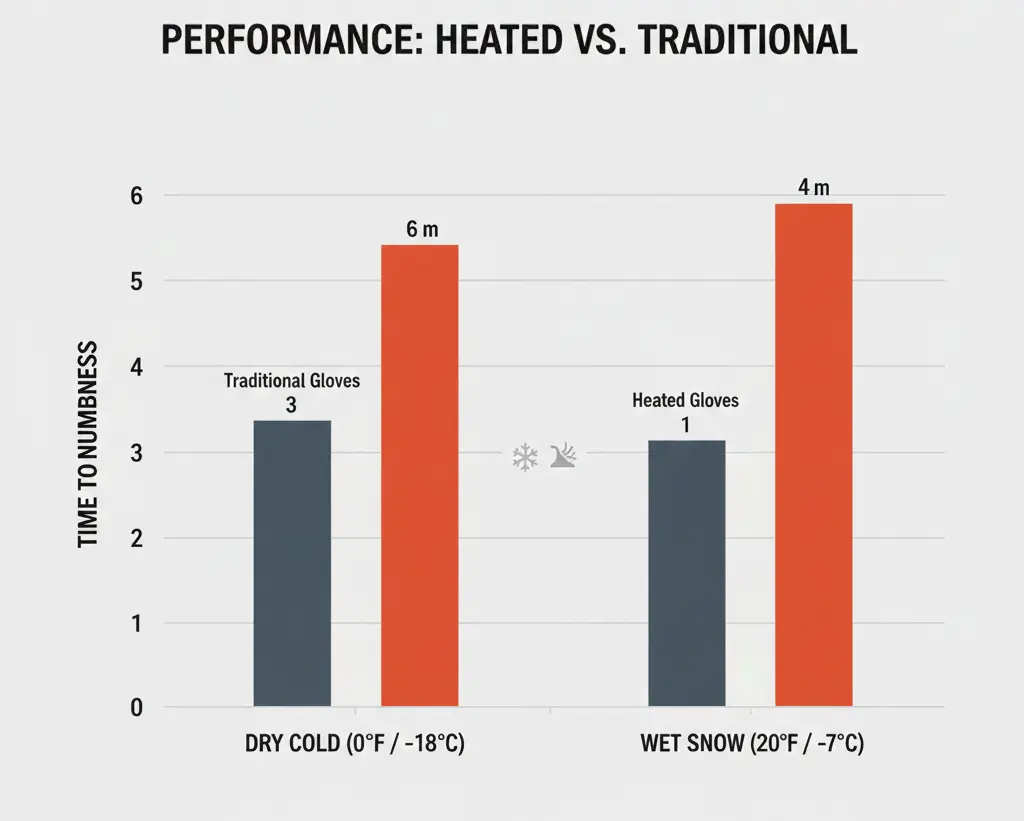
This is why a premium $150 insulated glove can perform close to a heated glove in dry, 15°F powder, but fall behind noticeably in heavy, wet snow at 28°F — a temperature that sounds milder but is actually harder on a glove’s insulation than a colder, drier day. Wet snow that works into seams and cuffs compromises the insulation’s ability to trap air, and once that happens, passive warmth drops fast regardless of how many degrees below freezing it actually is.
An active heating element doesn’t have that dependency — it keeps producing warmth whether the surrounding insulation is doing its job or not, which is exactly why the gap between heated and standard gloves widens most in wet, moderate-cold conditions rather than in the driest, coldest ones.
What’s Actually Inside a Heated Glove
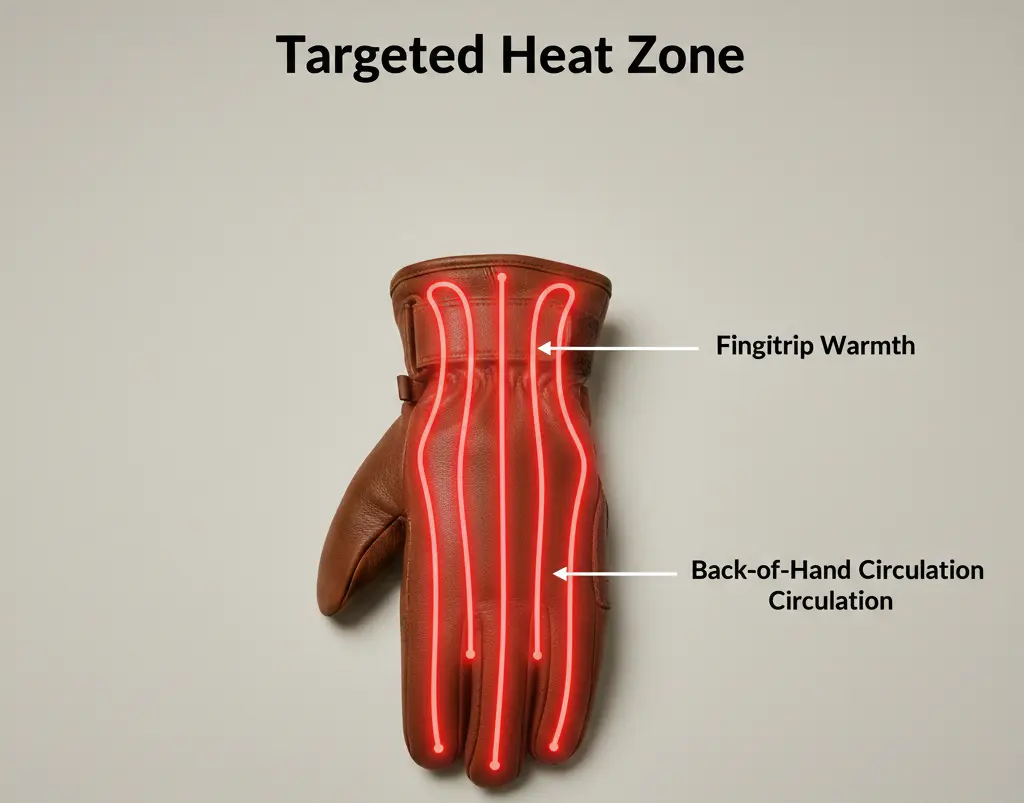
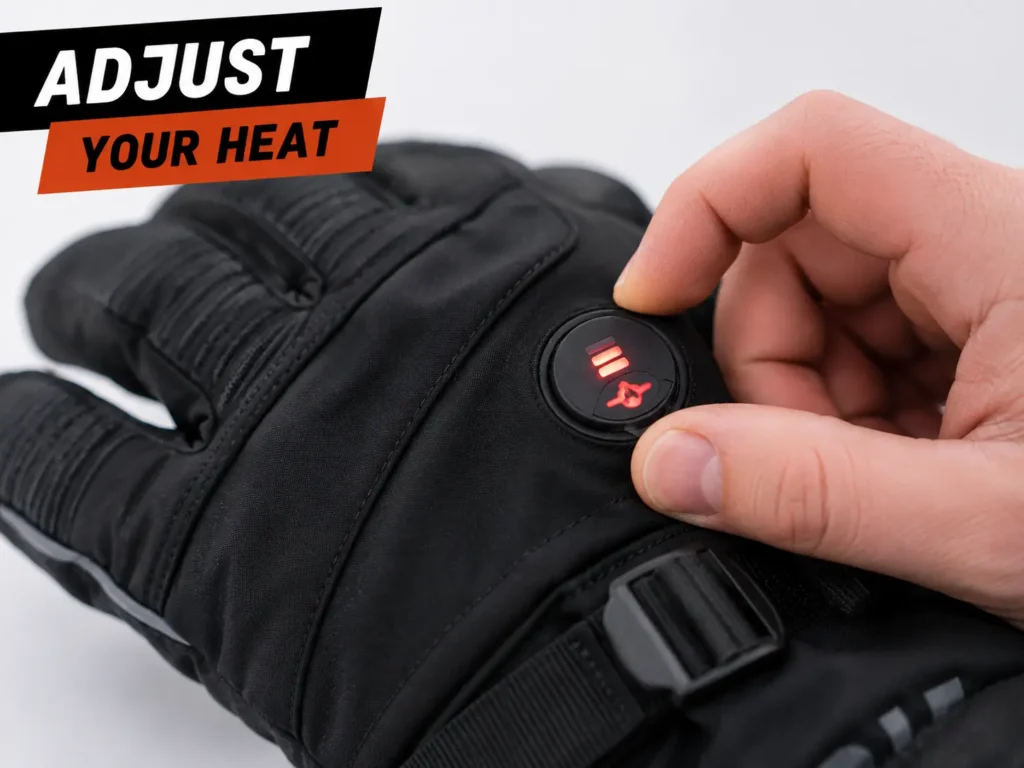
The mechanism is simple: a rechargeable battery, usually housed in a small pocket near the cuff, powers a thin heating element running through the lining near the fingers and palm. A control button cycles through heat settings, typically low, medium, and high. The deeper mechanics of how the heating elements are built and placed are worth understanding on their own if you’re comparing specific models rather than just deciding whether the category is worth it in the first place.
What matters for the worth-it question is simpler: heated gloves replace warmth that moisture or wind is stealing, rather than just slowing heat loss the way passive insulation does. That’s a meaningfully different job, and it’s why heat setting matters as much as it does — running high in dry conditions wastes battery capacity you may need later, and running low in genuinely wet conditions may not fully offset what the moisture is taking away.
Battery Life Isn’t What the Spec Sheet Implies
Manufacturer battery-life claims are almost always measured at room temperature, not on a chairlift in January. Cold temperatures measurably reduce a lithium battery’s usable capacity — the chemical reaction that releases stored energy slows down as temperature drops, and can lose a meaningful share of rated capacity in genuinely cold conditions compared to how the same battery performs indoors. A glove rated for six hours on the box commonly delivers noticeably less than that on a cold, active ski day, and less still on the highest heat setting, which draws power fastest.
This isn’t a defect — it’s a predictable property of how lithium batteries behave in the cold, and it’s the single most common source of disappointment for first-time heated glove buyers who expect the rated runtime to hold regardless of temperature. Planning around a shorter real-world window than the spec sheet promises, especially on the coldest days, avoids the specific bad outcome of a dead battery mid-afternoon on the day you needed it most.
Who Actually Gets Real Value From Heated Gloves
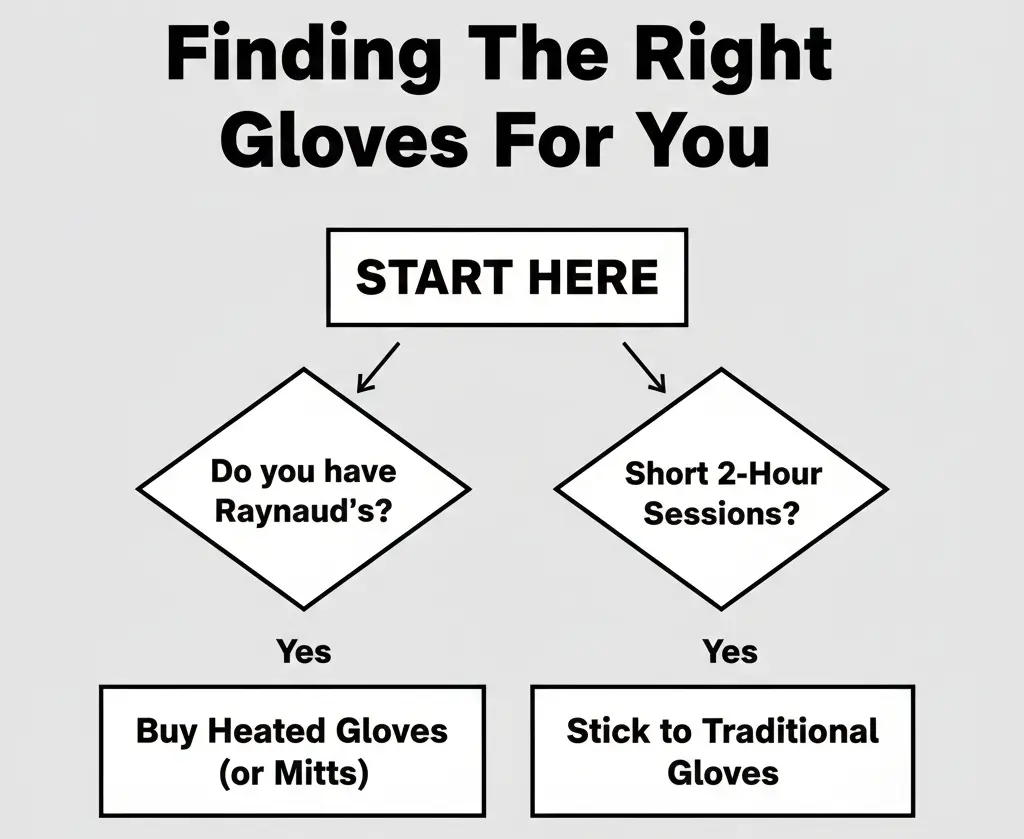
The clearest case for heated gloves isn’t about how cold someone runs generally — it’s circulation. Raynaud’s phenomenon causes blood vessels in the fingers to narrow sharply in response to cold, cutting off blood flow to the point where fingers turn pale or blue and stay cold well past what normal circulation would produce, and it affects a meaningful share of the population, most commonly women. For someone with this condition, no amount of passive insulation reliably compensates, because the problem isn’t heat escaping through the glove — it’s the body actively restricting blood flow to the hand in the first place. Active heat addresses that directly in a way a thicker liner never fully can.
Beyond circulation conditions, frequency and duration matter more than raw cold tolerance. Someone skiing 30-plus days a season is putting far more total hours into conditions where insulation gradually loses ground to moisture and time than someone doing a handful of weekend trips, and the cost of a heated glove amortizes very differently across those two usage patterns.
Who Should Skip Them
Someone skiing under 10 days a season in a generally mild, dry climate is rarely accumulating enough exposure to moisture-driven insulation failure for heated gloves to pay off relative to a good $100–150 passive glove. Short outings under three hours per session almost never reach the point where passive insulation has genuinely run out of capacity.
Anyone who dislikes managing gear — charging routines, heat-setting adjustments, remembering to top off a battery before a trip — will find the added responsibility genuinely detracts from a day that a simple pull-on glove doesn’t ask anything of. There’s no performance failure in admitting that trade-off isn’t worth it for a specific person’s priorities.
Tight budgets deserve an honest note here too: heated gloves under roughly $120 commonly cut costs on battery capacity and heating-element coverage in ways that undercut the entire value proposition, leaving a buyer with most of the cost and complexity of heated gear without the performance that justifies it.
The Total Cost of Ownership, Honestly
The purchase price is only part of what a heated glove actually costs over its working life. Rechargeable batteries in heated gloves are consumable components — they lose capacity over repeated charge cycles the same way a phone battery does, and most heated glove batteries need replacement well before the shell and heating elements themselves wear out. A replacement battery pack typically costs a meaningful fraction of the original glove price, and budgeting for at least one replacement over a glove’s working life is realistic for anyone using them regularly across multiple seasons.
Set against that cost is what the alternative actually looks like — a premium passive glove in the same price range needs no charging infrastructure, no replacement batteries, and no seasonal storage considerations, but delivers a hard ceiling on performance that a heated glove doesn’t have. The honest comparison isn’t heated-glove price versus passive-glove price at checkout — it’s total cost across several seasons of actual use, weighed against how many of those seasons include the wet, long, or circulation-limited days where the difference actually shows up.
Working out a rough cost-per-day figure makes this concrete. A heated glove used for 25 days a season across three seasons, including one battery replacement partway through, spreads its total cost — purchase price plus that replacement — across 75 total days of use. A comparable passive glove used the same amount, with no replacement cost but a shorter effective warmth ceiling on the days that actually needed more, spreads a lower total cost across the same 75 days. Neither number tells you which is the better purchase on its own — it depends entirely on how many of those 75 days actually hit the wet or long-session conditions where the heated glove’s advantage shows up at all.
Maintenance and the Failure Points That Actually Matter
Full recharge cycles rather than partial top-offs extend a lithium battery’s usable life more reliably, and storing a heated glove’s battery around half charge during the off-season — rather than fully charged or fully drained — reduces the degradation that happens during long storage periods.
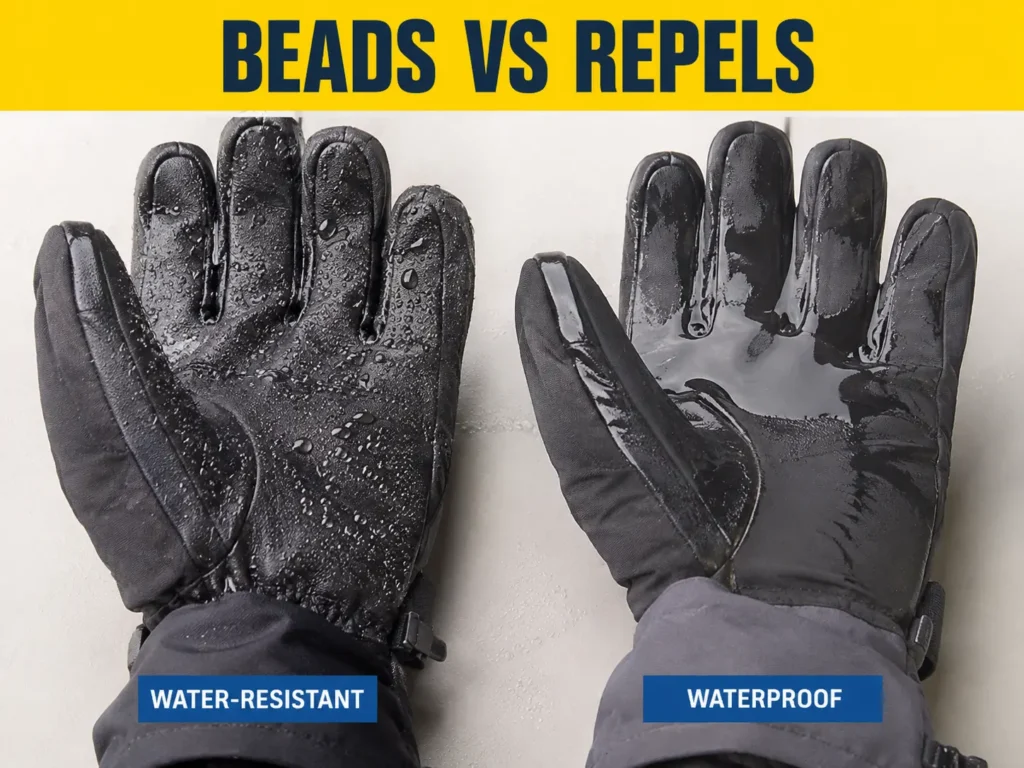
Waterproofing claims deserve real scrutiny rather than taking “waterproof” at face value. Consumer electronics use a standardized IP rating system specifically because marketing terms like “waterproof” and “water-resistant” aren’t consistently defined, while an actual IP rating specifies exactly what level of water exposure a product is tested against. A heated glove’s outer shell needs a genuine waterproof-breathable membrane, not just a DWR coating that wears off after a season, since moisture reaching the battery or heating element is the single most common cause of premature failure in this category.
Direct heat during drying — a radiator, a heater vent — degrades both the battery and the heating element wiring faster than normal use does, the same way it damages passive insulation. Air-drying at room temperature protects the electronics as much as it protects the shell material.
Heated Gloves vs. Premium Passive Gloves, Head to Head
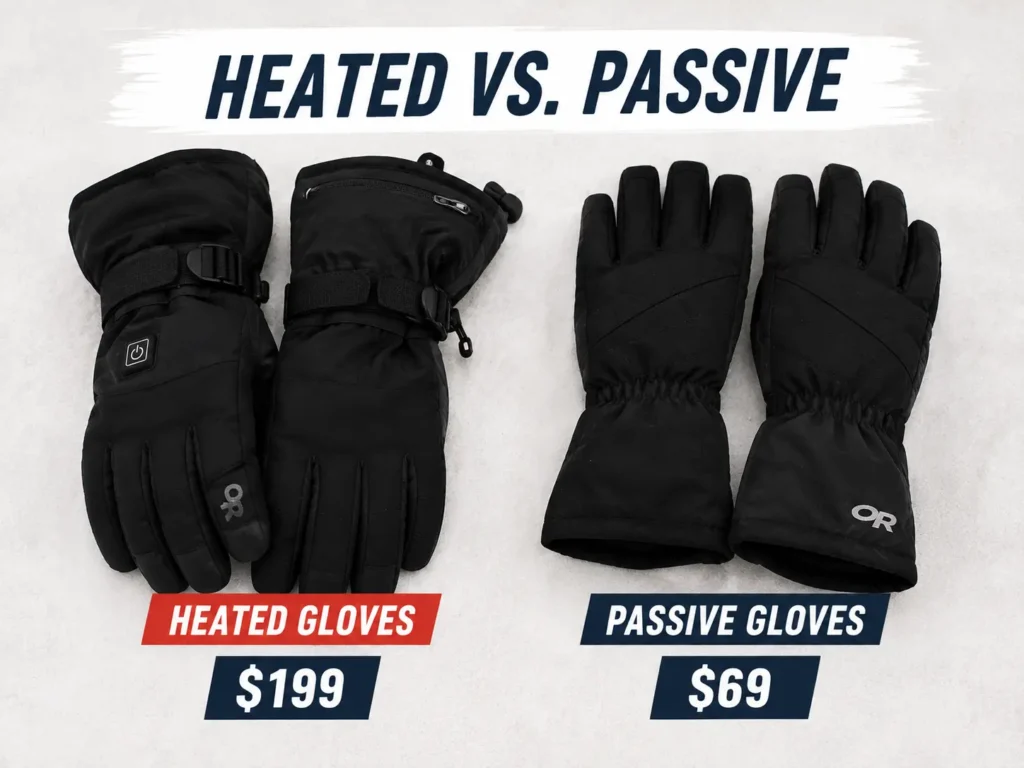
A genuinely well-built passive glove in the $80–150 range and a heated glove at a similar price point aren’t as far apart as the price tags might suggest, at least for the first stretch of a ski day. Both use quality insulation, both handle dry cold reasonably well, and for the first two to three hours in moderate conditions, many skiers wouldn’t notice much difference between them.
Where they diverge is what happens after that window closes. A passive glove’s warmth is a fixed resource — however much still air its insulation can trap, that’s the ceiling, and once moisture or extended exposure erodes that capacity, there’s no way to add more warmth without adding a layer. A heated glove’s warmth is a managed resource instead — as long as there’s charge left, the heat output stays roughly constant regardless of how long the insulation itself has been fighting moisture and cold. That’s the entire value proposition condensed into one sentence: passive gloves have a performance ceiling that heated gloves don’t, but heated gloves have a battery ceiling that passive gloves don’t.
Neither category is strictly better — they trade one kind of limit for another. The decision comes down to which limit you’re more likely to actually hit given your real skiing pattern, not which technology sounds more advanced.
Common Mistakes That Waste the Investment
The most frequent mistake is treating a heated glove like a passive one — switching it on at the start of the day and leaving it on the highest setting regardless of conditions. That approach burns through battery capacity fastest exactly when temperatures are mildest and least in need of maximum heat, leaving less in reserve for the afternoon or the coldest stretch of the day.
A related mistake is not testing a new pair before relying on it. Charging fully and wearing the gloves around the house for an hour or two confirms the heat settings and battery behavior actually match expectations, rather than discovering a problem for the first time on a lift at 9,000 feet.
Skipping waterproofing maintenance is another common one — even a heated glove’s active warmth can’t fully offset a shell that’s stopped repelling water because the factory DWR coating has worn off. Reapplying a DWR treatment at the start of each season protects the same shell material a passive glove depends on, and it matters just as much here.
Finally, buying based on sticker price alone tends to backfire. A cheaper heated glove usually reflects a smaller battery and less heating-element coverage, not just a lower markup — the price difference in this category correlates with real performance differences more consistently than it does in passive gloves, where brand name and price sometimes diverge from actual quality.
A Practical Way to Decide
Start with how your hands actually behave in the cold, not how cold the day is. Fingers that go numb specifically, rather than just feeling generally chilly, point toward a circulation factor that heated gloves address directly. General coldness that’s otherwise manageable often points toward an insulation or fit gap that a better passive glove solves first, before spending more on active heat.
From there, weigh moisture against dry cold. If your typical ski days involve wet, heavy snow more often than dry powder, that’s where the value case strengthens fastest. If you mostly ski dry, cold conditions and rarely encounter wet snow, a premium passive glove closes most of the performance gap on its own.
Finally, be honest about session length and frequency. Long, frequent days accumulate the conditions where passive insulation runs out of capacity; short, occasional outings rarely do, regardless of how cold those specific days happen to be.
Frequently Asked Questions
Do heated gloves work as well in extreme dry cold as in wet conditions?
They still work, but the performance gap over passive gloves is smaller in dry cold than in wet snow — a well-insulated passive glove genuinely competes for the first several hours in dry conditions, while the gap widens faster once moisture becomes a factor.
How long do heated glove batteries realistically last per charge in cold weather?
Expect noticeably less than the manufacturer’s rated runtime once temperatures drop, especially on higher heat settings, since cold measurably reduces usable lithium battery capacity regardless of the glove brand.
Is it worth buying heated gloves just for a once-a-season trip?
Rarely. The total cost of ownership — purchase price plus eventual battery replacement — is hard to justify against a handful of days a year, and a quality rental or a premium passive glove usually covers that use case better.
Can a heated glove fix a fit problem?
No — heat doesn’t restore circulation that a too-tight cuff or fingers are already restricting. Fit needs to be right first; heat is solving a temperature and moisture problem, not a fit problem.
Do heated mittens offer better value than heated gloves?
The same underlying trade-off applies as with unheated versions — a mitten’s shared finger chamber holds warmth more efficiently, so a heated mitten often runs a battery-life advantage over a heated glove at the same setting, at the cost of the same dexterity trade-off unheated mittens carry.
Does running a heated glove on low setting all day actually save meaningful battery life?
Yes, and it’s the single most effective habit for stretching a charge through a full day. The jump in power draw between low and high settings is large enough that starting low and only bumping up during genuinely cold stretches — a lift ride, a wind-exposed ridge — routinely adds an hour or more of usable runtime compared to running high from the first chairlift.
Are heated gloves safe to use with metal ski poles or lift equipment?
Yes — the heating elements operate at low voltage and are fully insulated within the glove lining, the same way any battery-powered wearable is designed to keep the electrical components isolated from what your hands actually touch. Normal contact with poles, rails, and lift equipment carries no meaningful risk specific to the heating system.
The case for heated gloves is genuinely strongest in wet, moderate-cold conditions and for anyone dealing with a real circulation limitation — not in the driest, coldest extremes where marketing usually points. If that matches your actual skiing pattern, browsing the current heated glove options is a more useful next step than guessing from spec sheets alone. If it doesn’t match how you ski, a well-chosen passive glove will likely serve you better for less money and no battery to manage.