
QUICK ANSWER: For most men, the Gordini Gore-Tex Gauntlet (~$53) is the strongest pick — genuine Gore-Tex waterproofing and 1,191 reviews at 4.5 stars, more verified purchase data than the other four gloves on this list combined. If you ski back-to-back days and need a liner that dries separately overnight, the Dakine Titan Gore-Tex (~$69) is worth the extra $16. On a tight budget for occasional resort days, the Spyder Insulated (~$27) is an honest entry point, not a compromise pick.
The right men’s ski glove comes down to one question before anything else: what’s the coldest temperature you’ll actually face, including a slow chairlift ride in the wind? A glove that feels warm while you’re actively skiing can feel completely inadequate ten minutes into a windy lift line at -15°C. The five gloves below cover that full range — from a $27 glove built for five casual days a season to a $72 glove built for someone skiing 30+ days in a serious cold.
Not sure which of these actually fits your situation? The Ski Glove Finder asks seven quick questions about your conditions, hand temperature, and budget, then matches you against the full glove database instead of making you read five reviews to figure it out yourself.
- What Actually Separates These Five Gloves
- All 5 Gloves — At a Glance
- Gordini Gore-Tex Gauntlet Gloves — Best Overall
- Dakine Titan Gore-Tex — Best for Consecutive Ski Days
- Dakine Scout — Best for Dry Mountain Climates
- Burton Profile Gloves — Best for Snowboarders
- Spyder Insulated Snow Gloves — Best Budget Pick
- Common Mistakes Men Make Buying Ski Gloves
- Who Should Choose Which — Direct Recommendations
- When None of These Five Is the Right Choice
- Decision Checklist — Choose in 60 Seconds
- Frequently Asked Questions
- Final Thoughts
What Actually Separates These Five Gloves
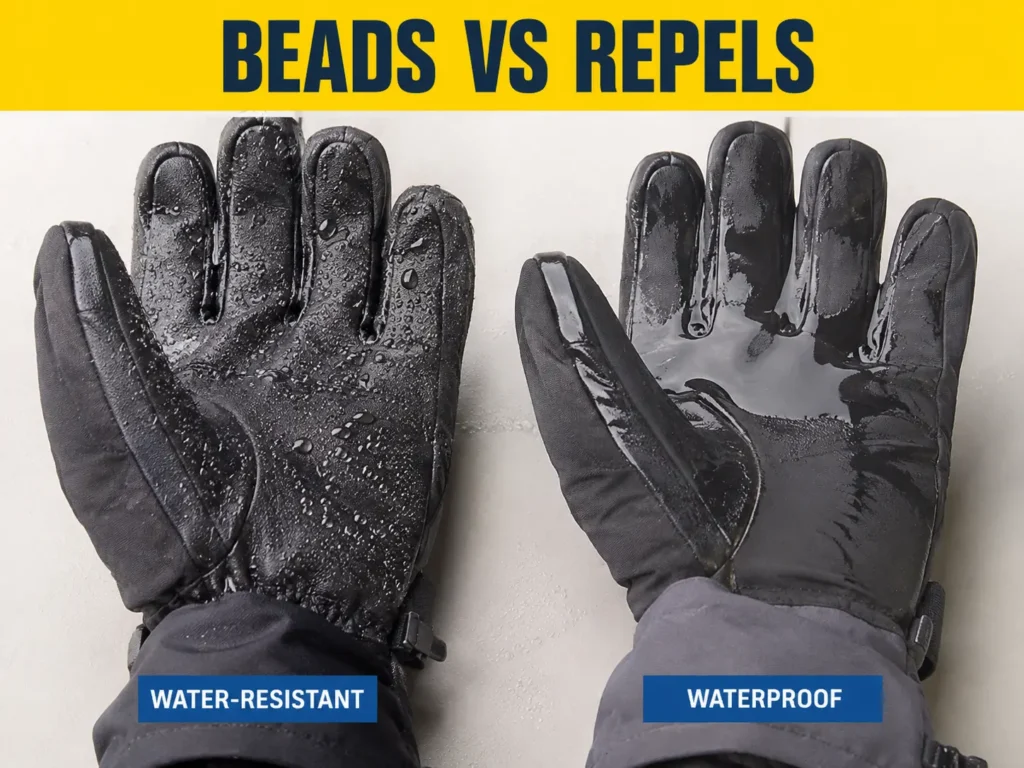
Two things decide almost everything here: waterproofing system and insulation weight. A Gore-Tex insert is a physical membrane bonded inside the glove — it keeps blocking water no matter how saturated the outer shell gets. A DWR coating sits on the surface and works well when new, but wears down after roughly 8 to 12 ski days, after which the outer fabric starts absorbing water instead of shedding it. Four of the five picks below use a real membrane construction (Gore-Tex, DRYRIDE, or DK Dry). Only the Spyder relies on DWR alone — and it’s positioned specifically for a use case where that’s a reasonable tradeoff, not a hidden flaw.
All 5 Gloves — At a Glance
| Glove | Best For | Waterproofing | Rating | Price |
| Gordini Gore-Tex Gauntlet | Best overall | Gore-Tex insert | 1,191 reviews, 4.5★ | ~$53 |
| Dakine Titan Gore-Tex | Consecutive ski days | Gore-Tex + Gore Warm | 529 reviews, 4.6★ | ~$69 |
| Dakine Scout | Dry mountain climates | DK Dry insert | 146 reviews, 4.4★ | ~$72 |
| Burton Profile | Snowboarders | DRYRIDE 2-layer | 33 reviews, 4.3★ | ~$62 |
| Spyder Insulated | Occasional skiers | DWR only | 58 reviews, 4.0★ | ~$27 |

Gordini Gore-Tex Gauntlet Gloves — Best Overall
Gordini Men’s Gore-Tex Gauntlet Gloves
– Gore-Tex insert waterproofing, Megaloft insulation
– Genuine leather fingers, gauntlet cuff with drawcord
– Most review-proven pick: 1,191 reviews at 4.5 stars
~$53
★★★★½ (4.5/5 — 1,191 Amazon reviews)
Check Price on Amazon →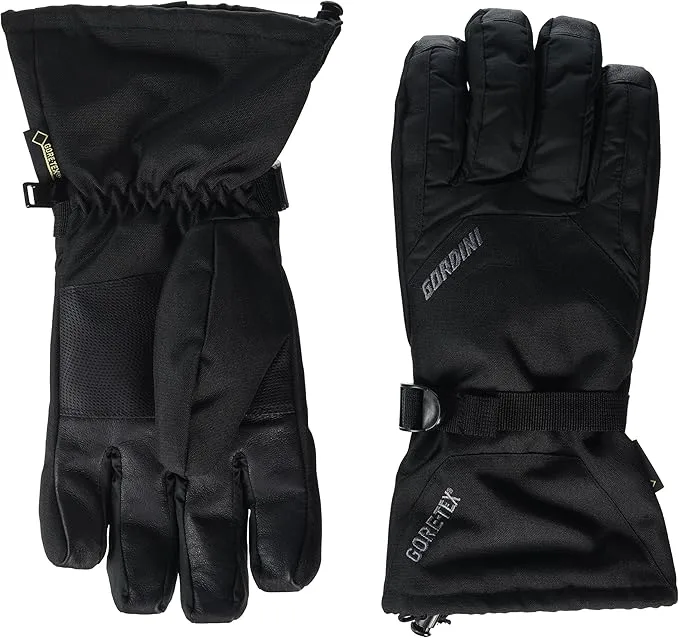
Gordini has built ski gloves since 1956, and 1,191 reviews at 4.5 stars is the most reliable purchase data on this entire list by a wide margin — more than the other four gloves combined. At that sample size, the rating isn’t a small-batch anomaly; it reflects thousands of skiers using this glove in real conditions.
Switchback Travel’s independent ski glove testing rates the Gordini GTX Storm line as a genuine standout in the sub-$100 range for its mix of comfort, dexterity, and protection — a rare case of a budget glove holding up against options costing twice as much. The construction backs that up: a real Gore-Tex insert rather than a surface coating, genuine leather on the fingers where synthetic materials wear out fastest, and a gauntlet cuff with a drawcord that seals properly over a jacket sleeve — the detail that actually matters on a powder day where you’re falling and getting snow driven up your wrist.
Who should buy this: Regular resort skiers who want real Gore-Tex without spending $80+. Anyone who’s had a DWR-only glove fail mid-season in wet snow. The strongest all-around pick given the price, review confidence, and construction.
Honest limitation: No removable liner — the insulation is fixed in the shell, so it dries as one piece rather than splitting liner from shell for faster drying between consecutive ski days. For that specific need, the Titan below is the better fit.

Dakine Titan Gore-Tex — Best for Consecutive Ski Days
Dakine Men’s Titan Gore-Tex Ski Gloves
– Gore-Tex + Gore Warm technology, 230g + 280g removable fleece liner
– Liner dries separately overnight — ideal for consecutive ski days
– Amazon’s Choice badge, 529 reviews at 4.6 stars
~$69 (on sale from $85)
★★★★½ (4.6/5 — 529 Amazon reviews)
Check Price on Amazon →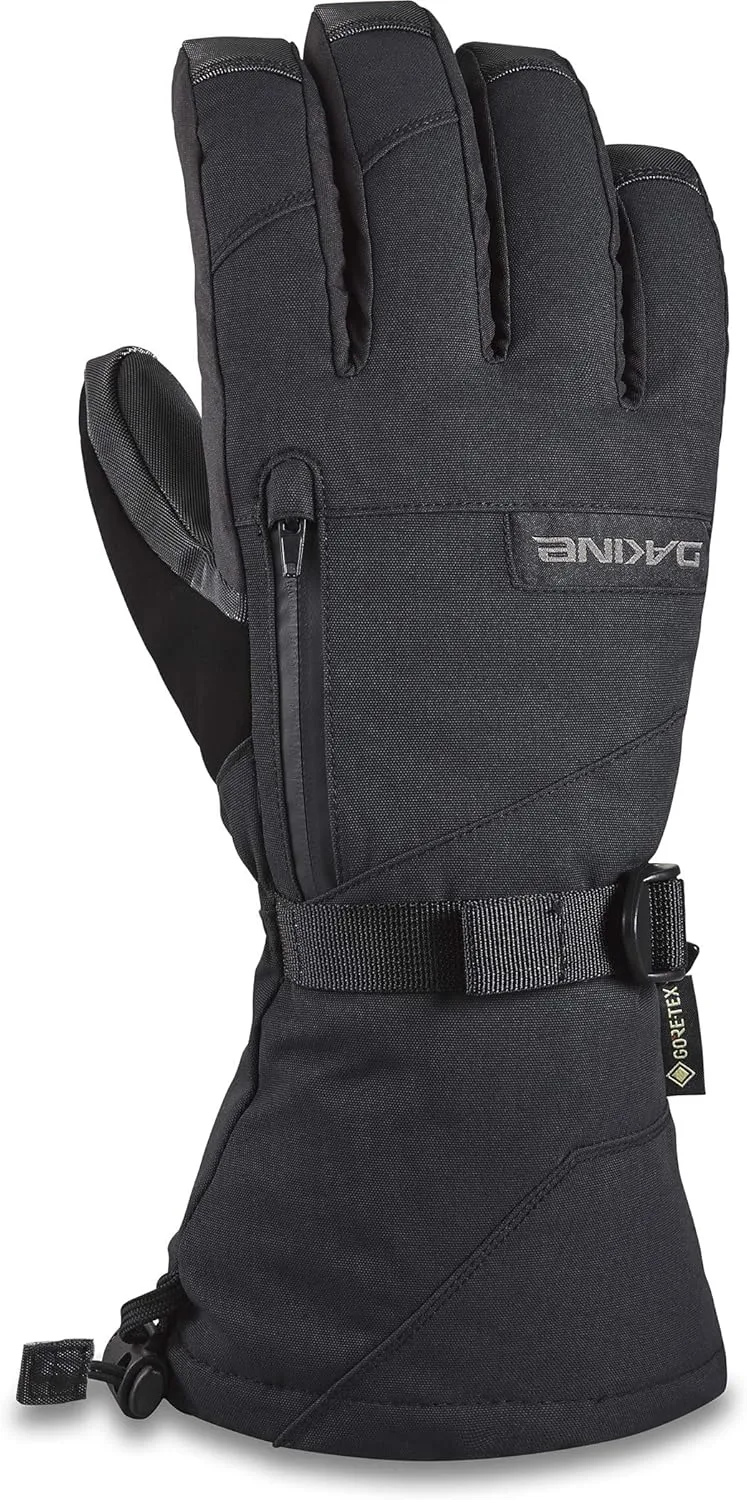
The Titan’s real advantage over the Gordini isn’t warmth alone — it’s the removable 280g fleece liner. Split liner from shell after a wet day and both pieces dry in roughly half the time a fixed-liner glove takes, which matters directly if you’re skiing back-to-back days and don’t want to start day two with a damp glove.
The insulation stack is genuinely heavier than the Gordini’s: 110g at the palm, 230g on the back of the hand, plus the 280g liner on top of that. That combination makes the Titan the better call once temperatures consistently drop below about -12°C, or when long, exposed chairlift rides in wind are a regular part of your day. The 55% recycled polyester shell with PFC-free DWR is standard across Dakine’s current line, not a one-off marketing add.
Who should buy this: Skiers doing multiple consecutive days who need the liner to dry separately overnight. Cold-handed skiers who need more margin than the Gordini provides.
Honest limitation: At $69, that’s $16 more than the Gordini for a liner-removability feature and extra insulation you may not need if you’re not skiing back-to-back days or in genuinely severe cold.

Dakine Scout — Best for Dry Mountain Climates
Dakine Men’s Scout Snowboard & Ski Gloves
– DK Dry waterproof insert, Rubbertec palm for superior pole grip
– 61% recycled polyester shell with PFC-free DWR
– Best for dry mountain climates: Colorado, Utah, northern Rockies
~$72
★★★★☆ (4.4/5 — 146 Amazon reviews)
Check Price on Amazon →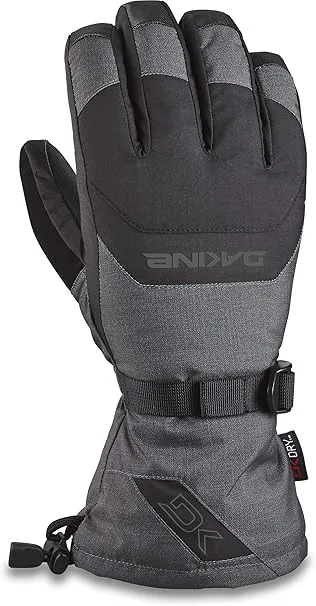
DK Dry is Dakine’s proprietary polyurethane insert — a real membrane construction, not a surface coating, though it’s not quite equivalent to Gore-Tex in sustained wet conditions. That distinction matters most in coastal or consistently wet snow environments; in dry mountain climates like Colorado or Utah, the difference in practice is minimal.
Where the Scout earns its spot is the Rubbertec palm — a non-PVC grip material that holds a ski pole more securely than smooth synthetic leather, especially once your hands are damp from exertion. Insulation weights match the Titan (110g palm, 230g back of hand) without the removable liner, which keeps the glove lower-bulk and gives slightly better finger feel.
Who should buy this: Skiers in dry climates who want Dakine’s build quality and the Rubbertec grip without paying for Gore-Tex protection they won’t fully use.
Honest limitation: At $72, you’re only $19 away from the Gordini’s genuine Gore-Tex construction at a lower price. In the Pacific Northwest, Vermont, or any consistently wet-snow region, the Gordini is the stronger value even though the Scout costs more.
Burton Profile Gloves — Best for Snowboarders
Burton Men’s Profile Gloves
– DRYRIDE 2-layer waterproof membrane, ThermacoreECO insulation
– Screen Grab full-palm touchscreen, ergonomic pre-curved fit
– Lifetime warranty on all Burton outerwear
~$62
★★★★☆ (4.3/5 — 33 Amazon reviews)
Check Price on Amazon →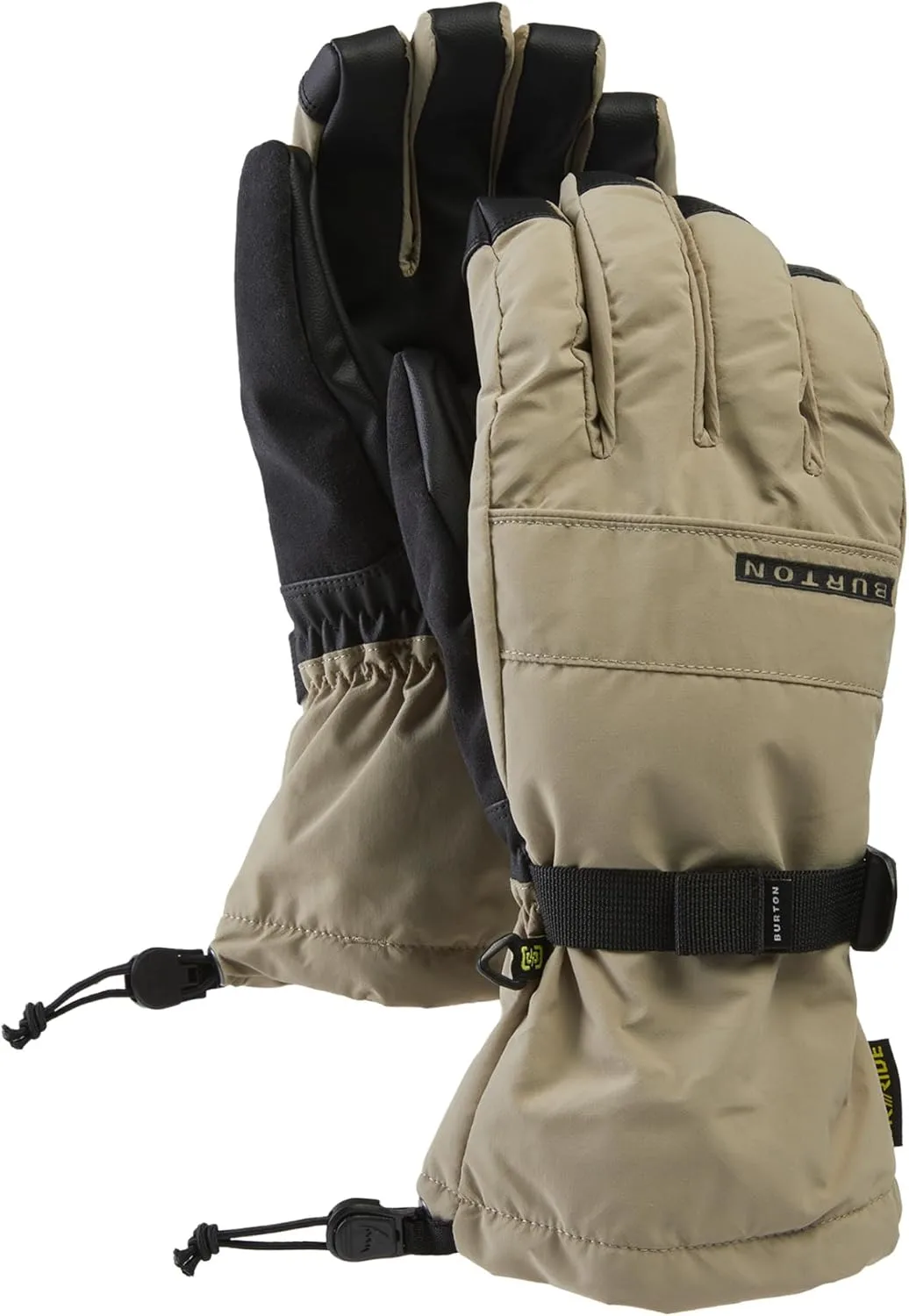
Burton is the largest snowboard brand in the world, and it shows in how this glove is shaped: a pre-curved ergonomic fit built around the wrist-forward hand position snowboarders actually use, not a generic ski-glove shape sold to both. DRYRIDE 2-layer is a legitimate waterproof-breathable membrane — a step below Gore-Tex in performance tier, but genuinely better than DWR alone.
The Screen Grab palm deserves a specific callout: most touchscreen gloves only work on one or two fingertips, while this one works across the full palm and all fingers, which means actual usable phone control without removing the glove. Combined with Burton’s lifetime warranty on outerwear, that’s a real confidence signal on top of the construction itself.
Who should buy this: Snowboarders specifically — the palm shape and Screen Grab tech are built around board use. Anyone who wants reliable touchscreen access and values a lifetime warranty.
Honest limitation: At 33 reviews, this has the thinnest purchase data on the list — Burton’s brand track record and warranty offset that somewhat, but if review volume matters to you, the Gordini (1,191) or Titan (529) give you more to go on. Not built for consistently sub-12°C conditions.
Spyder Insulated Snow Gloves — Best Budget Pick
Spyder Men’s Insulated Snow Gloves
– DWR waterproof treatment, flexible stretch design
– Adjustable wrist closure, adequate insulation above -8°C
– Best for 5 or fewer ski days per season in mild conditions
~$27
★★★★☆ (4.0/5 — 58 Amazon reviews)
Check Price on Amazon →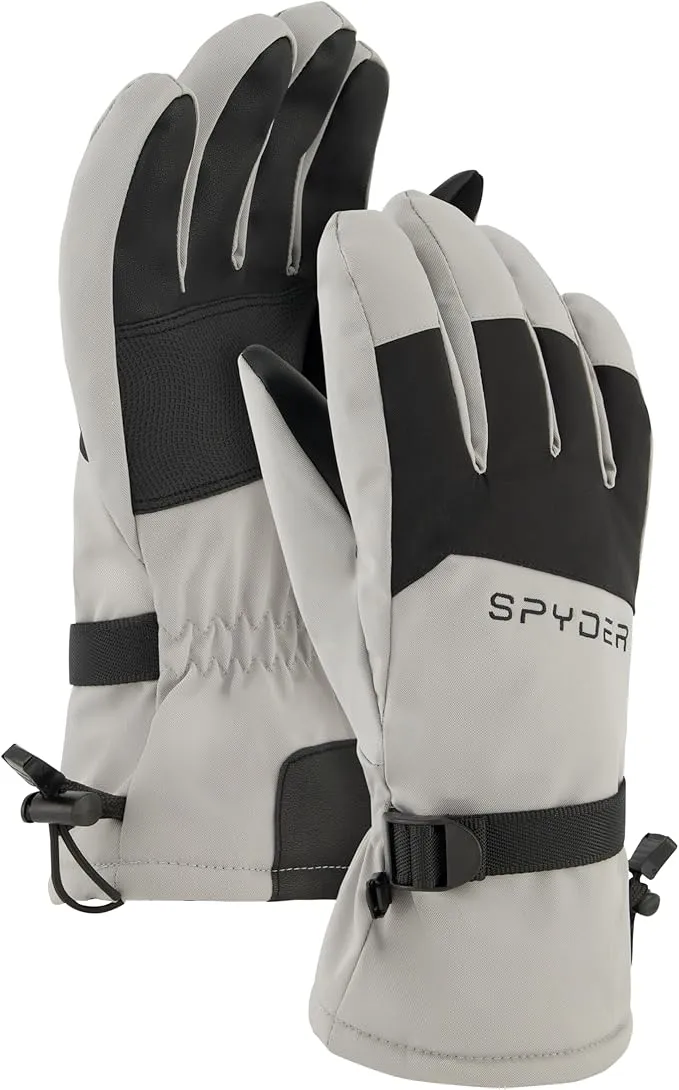
Spyder has made ski race apparel since 1978 and supplies the US Ski Team — a real ski brand, not a generic winter-goods label with a glove attached. At $27, this is a legitimate entry-level glove for skiers who don’t need — or want to pay for — Gore-Tex.
The honest read: DWR-only waterproofing performs fine in mild resort conditions above roughly -8°C, before the coating has had a chance to wear down. For someone doing three to five days a season, that’s the actual use case, not a compromise. The 4.0-star rating from 58 reviews, lower than the Gore-Tex options above, reflects the construction tier honestly rather than signaling a flawed product.
Who should buy this: Casual skiers doing five or fewer days a season in mild conditions. First-timers deciding if the sport sticks. A backup pair worth keeping in a jacket pocket.
Honest limitation: Skip this for regular skiing, wet Pacific Northwest or East Coast conditions, or anything below -10°C — DWR wears down with use volume in exactly the way that matters for a frequent skier.
Common Mistakes Men Make Buying Ski Gloves
Buying based on price alone without checking waterproofing type. A $30 glove and a $50 glove can both say “waterproof” — the difference between a DWR coating and a real membrane insert is the actual thing that determines whether your hands stay dry by afternoon, not the price tag by itself.
Overbuying insulation for how you actually ski. A heavily insulated glove on someone who runs warm or skis aggressively can cause sweating, and damp hands from the inside get cold just as fast as damp hands from outside snow. Match insulation weight to your actual hand temperature and activity level, not to the coldest number on the spec sheet.
Ignoring review count in favor of star rating alone. A 4.3-star rating from 33 reviews and a 4.5-star rating from 1,191 reviews are not equally trustworthy claims. Neither is dishonest, but only one of them is backed by enough purchase data to treat as a settled result.
Assuming a snowboard-specific glove and a ski-specific glove are interchangeable. The Burton Profile’s pre-curved, wrist-forward shape is built for how snowboarders actually hold their hands — wearing it for skiing works fine, but a ski-oriented glove like the Gordini or Dakine will generally fit a skier’s hand position more naturally.
Who Should Choose Which — Direct Recommendations
- Regular resort skiing, want the most review-proven Gore-Tex option: Gordini Gore-Tex Gauntlet (~$53)
- Multiple consecutive ski days, need the liner to dry overnight: Dakine Titan Gore-Tex (~$69)
- Dry mountain climate, want Dakine build without paying for Gore-Tex: Dakine Scout (~$72)
- Snowboarder, or want full-palm touchscreen and a lifetime warranty: Burton Profile (~$62)
- 5 or fewer ski days a season, tight budget: Spyder Insulated (~$27)
- Wet snow conditions — Pacific Northwest, Vermont, spring skiing: Gordini or Dakine Titan; DWR-only gloves aren’t built for this
- Severe, consistent cold below -15°C: Dakine Titan’s 280g removable liner gives you the most insulation margin here
For the equivalent picks in women’s sizing, see Best Ski Gloves for Women. For a deeper look at how brands assign temperature ratings, see What Does Ski Glove Temperature Rating Mean. And if you’d rather skip the reading and get matched directly, the Ski Glove Finder does that in under a minute.
When None of These Five Is the Right Choice
If you’re skiing 25+ days a season in genuinely severe cold — well below -15°C consistently — all five of these gloves are working at or past their comfortable range. That’s a different tier of glove entirely: leather-shell, heavily insulated options built for that specific use case, not a resort-oriented Gore-Tex glove stretched past what it’s designed for. Similarly, if dexterity for technical backcountry work matters more than warmth, a lighter glove built specifically for that isn’t on this list.
Decision Checklist — Choose in 60 Seconds
| Your Situation | Recommended Pick |
| Regular resort skiing, variable conditions | Gordini Gore-Tex Gauntlet — $53, 1,191 reviews |
| Consecutive ski days, need overnight drying | Dakine Titan Gore-Tex — removable liner, $69 |
| Dry climate (Colorado, Utah), Dakine build | Dakine Scout — DK Dry, Rubbertec palm, $72 |
| Snowboarder, want touchscreen + warranty | Burton Profile — Screen Grab, lifetime warranty, $62 |
| 5 or fewer days/season, tight budget | Spyder Insulated — $27 |
| Wet snow conditions | Gordini or Dakine Titan — Gore-Tex only |
| Severe cold, below -15°C consistently | Dakine Titan — most insulation margin here |
Frequently Asked Questions
What’s the difference between Gore-Tex and DWR waterproofing?
Gore-Tex is a physical membrane bonded inside the glove that blocks water regardless of how saturated the outer shell gets. DWR is a chemical coating on the outer fabric that causes water to bead off when fresh, but wears down after roughly 8-12 ski days of use and washing — once it’s gone, the outer shell absorbs water that reaches the insulation.
Do I actually need Gore-Tex, or is DWR enough?
Depends on your conditions. In dry mountain climates — Colorado, Utah, the northern Rockies — DWR performs well and Gore-Tex isn’t strictly necessary. In consistently wet conditions — Pacific Northwest, Vermont, spring skiing — DWR saturates within a season of regular use, and Gore-Tex’s membrane construction handles that reliably where DWR can’t.
Is a $27 glove actually good, or just cheap?
For the right use case, genuinely fine — Spyder’s real ski-brand background and a 4.0-star rating from 58 reviews back that up. The honest limitation is DWR-only waterproofing and standard insulation, which is a real tradeoff at this price, not a hidden flaw. It becomes the wrong choice specifically for frequent skiing or wet conditions.
How much does review count actually matter when comparing these gloves?
More than people assume. The Gordini’s 1,191 reviews versus the Burton’s 33 aren’t just different numbers — they represent very different confidence levels in what the rating actually means. Neither product is dishonest, but a rating built on over a thousand purchases is a more settled result than one built on three dozen.
Should I buy a snowboard-specific glove if I only ski?
You can, but it’s not optimized for you. The Burton Profile’s pre-curved shape and wrist-forward fit are built around snowboard hand positioning. It’ll work fine for skiing, but a ski-oriented glove like the Gordini or Dakine will generally match a skier’s actual grip and hand position more naturally.
Final Thoughts
If you’re not sure where to start, the Gordini is the safe default — genuine Gore-Tex at the lowest price on this list, backed by more real purchase data than the other four combined. Only step up to the Titan if you’re actually skiing back-to-back days or genuinely cold conditions where the extra insulation and liner removability earn their keep. And don’t buy Gore-Tex you won’t use: if you’re doing five casual days a year in mild weather, the Spyder does that job honestly for a quarter of the price.
Affiliate Disclosure: This post contains affiliate links. If you buy through them, we may earn a commission at no extra cost to you. It never changes which gloves we recommend. Prices correct as of April 2026, subject to change. Last updated June 2026.