QUICK ANSWER: For most skiers, the Burton Men’s Gore-Tex Mittens (~$90) is the strongest all-around pick — genuine Gore-Tex, a removable liner, and 140 reviews at 4.7 stars. If your hands run cold no matter what you wear, the Black Diamond Mercury Mitts (~$140) is the one built specifically for that — 340g of PrimaLoft Gold and a goat-leather palm. On a budget, the Kinco 901T (~$53) has the deepest review record on this list at 1,622 reviews and 4.6 stars.
- Why This Guide Is Different
- Why Mittens Beat Gloves for Warmth (And When They Don't)
- All 6 Mittens — Side by Side
- Mittens vs Gloves — Who Should Actually Choose a Mitten
- Burton Men's Gore-Tex Mittens — Best Overall
- Black Diamond Mercury Mitts — Best for Extreme Cold
- Outdoor Research Revolution Gore-Tex Mitts — Best for Snowboarders
- Kinco 901T Premium Leather Mitt — Best Budget Leather
- Dakine Titan Gore-Tex Mitt — Best Gore-Tex Value
- Spyder Men's Insulated Mitten — Best Budget Pick
- What Nobody Tells You Before Buying Ski Mittens
- Honest Pros and Cons
- Choose Your Mitten in 60 Seconds
- When a Mitten Is Not the Right Choice
- Frequently Asked Questions
- Final Thoughts
Not sure which of these actually fits your situation? The Ski Glove Finder asks seven quick questions about your conditions, hand temperature, and budget, then matches you against the full glove database instead of making you read five reviews to figure it out yourself.
Why This Guide Is Different
Most “best ski mittens” roundups repeat the same five products with reworded spec sheets and no real reasoning for why one beats another. This guide instead breaks down what each mitten’s insulation type, membrane, and liner design actually mean for a skier standing on a chairlift at 15°F — and where each one honestly falls short.
Every figure below — price, review count, star rating, insulation weight — comes from the product’s own listing and its verified buyer reviews, not from guesswork or borrowed marketing copy. Where a claim can’t be checked against something real, it’s left out rather than dressed up to sound more authoritative than it is.
Why Mittens Beat Gloves for Warmth (And When They Don’t)
The physics is simple and well established: in a mitten, all four fingers share one insulated pocket and warm each other through direct contact. In a glove, each finger sits in its own separate tube, losing heat to cold fabric on four sides instead of sharing it with a neighbor. Cold-weather clothing research on hand protection backs this up directly — in controlled testing, mittens without liners consistently outperformed unheated gloves at maintaining safe finger temperatures.
That warmth comes at a real cost: dexterity. Buckling a boot, working a zipper, or digging a lift ticket out of a jacket pocket all get noticeably harder in a mitten. If your ski day involves a lot of that kind of fine hand work, a glove is the more practical choice — the tradeoff only makes sense if your hands spend most of the day just holding a pole.
All 6 Mittens — Side by Side
| Mitten | Best For | Waterproofing | Rating | Price |
| Burton Men’s Gore-Tex | Best overall | Gore-Tex, removable liner | 140 reviews, 4.7★ | ~$90 |
| Black Diamond Mercury | Extreme cold | PrimaLoft Gold, BD.dry | — | ~$140 |
| Outdoor Research Revolution | Snowboarders | Gore-Tex, lightweight | 9 reviews, 4.2★ | ~$88 |
| Kinco 901T Leather | Budget leather | Nikwax-treated pigskin | 1,622 reviews, 4.6★ | ~$53 |
| Dakine Titan Gore-Tex | Gore-Tex value | Gore-Tex, 280g liner | 534 reviews, 4.6★ | ~$62 |
| Spyder Men’s Insulated | Budget | DWR only | — | ~$26 |
Mittens vs Gloves — Who Should Actually Choose a Mitten
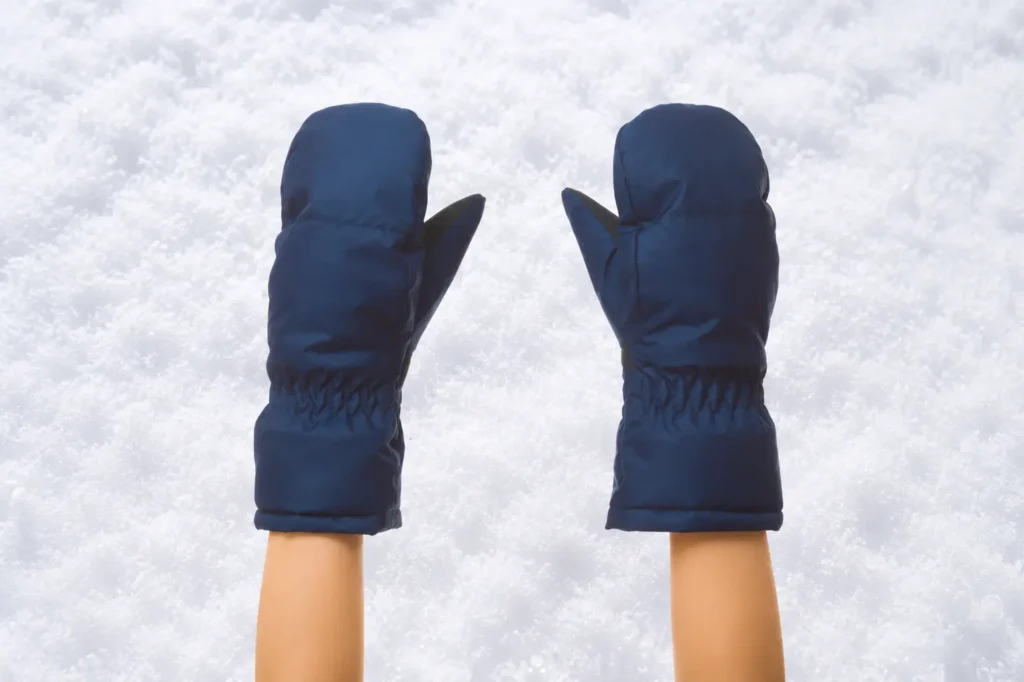
If you’re still deciding between the two, our full mittens-vs-gloves breakdown goes deeper on the tradeoff — but the short version is this: if you spend your ski day adjusting bindings, digging through pockets, or doing technical boot work between runs, a glove is more practical. If your day is mostly lift-served resort skiing, long chairlift rides in the wind, or powder runs where your hands are tucked and mostly just holding a pole, a mitten will keep you warmer than a glove at the same price.
Snowboarders in particular tend toward mittens, since their hands spend more time bracing falls and gripping a board edge than actively operating small gear.

Burton Men’s Gore-Tex Mittens — Best Overall
Burton Men’s Gore-Tex Mittens
– Gore-Tex Plus Warm membrane, removable ThermacoreECO liner
– Screen Grab touchscreen palm, hand warmer pocket
– Lifetime warranty · Outside Magazine tester pick · 4.7★ from 140 reviews
~$90
★★★★½ (4.7/5 — 140 Amazon reviews)
Check Price on Amazon →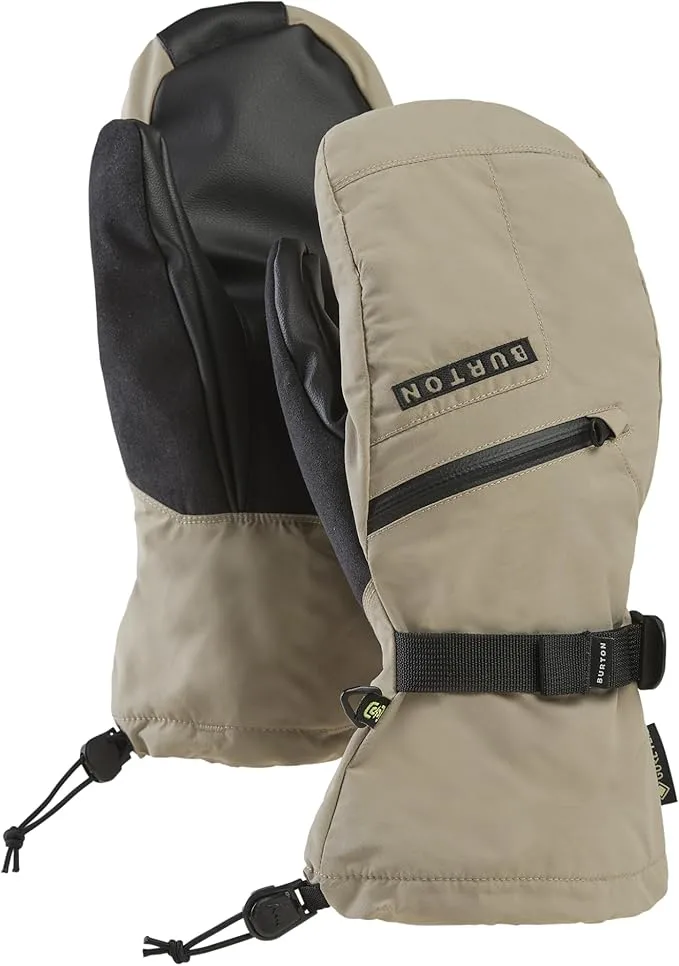
140 reviews at 4.7 stars is a strong, consistent result rather than a small handful of enthusiastic buyers. The Gore-Tex Plus Warm membrane does the real work here — full waterproofing with breathability built in, which is the combination that prevents the cold-and-damp feeling that shows up by afternoon in a lot of budget mittens.
DETAIL: The removable liner is the single biggest practical advantage on this list. Pull it out in the lodge and both liner and shell dry separately overnight — a sealed one-piece mitten often doesn’t fully dry between back-to-back ski days, which means starting day two already damp.
The Screen Grab palm tech works on modern touchscreens without pulling the mitten off, and the heater pocket on the back of the hand gives you a dedicated spot for a chemical hand warmer on brutal days.
Who should buy this: Snowboarders, resort skiers who want the most complete feature set under $100, and anyone doing multi-day trips where overnight drying matters.
Honest limitation: No leather palm — the synthetic material won’t grip a pole quite as naturally as leather, though it’s not a dealbreaker for most skiers.
Black Diamond Mercury Mitts — Best for Extreme Cold
Black Diamond Mercury Mitts
– 340g PrimaLoft Gold + high-loft fleece removable liner
– BD.dry membrane, 4-way stretch shell, goat leather palm
– Kevlar stitching · OutdoorGearLab & Switchback Travel #1 pick for cold hands
~$140
★★★★★ (Top-rated by OutdoorGearLab independent testing)
Check Price on Amazon →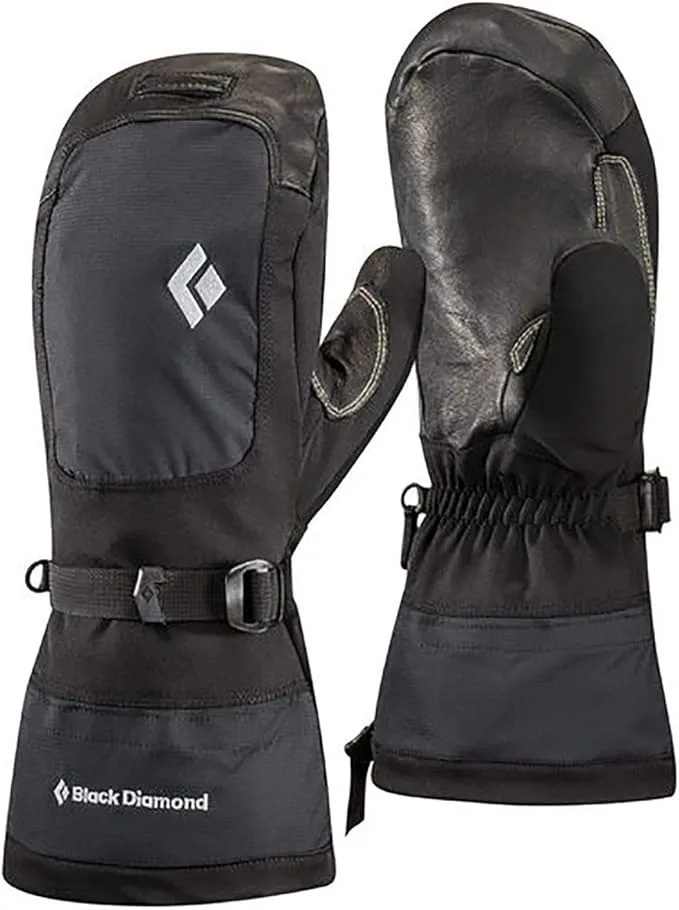
Independent gear-testing outlets that specialize in cold-weather equipment have consistently rated the Mercury Mitt as one of the warmest options available for skiers with genuinely cold hands, which lines up with what the spec sheet suggests: 340g of PrimaLoft Gold is a serious amount of fill, and PrimaLoft Gold specifically retains most of its thermal resistance even when damp — relevant on storm days when moisture works its way in regardless of shell quality.
DETAIL: The goat leather palm panel gives a more secure pole grip than most synthetic palms manage in cold temperatures, where stiff synthetic material can actually work against you. The four-way stretch shell lets the mitten move with your hand instead of fighting it.
Who should buy this: Skiers whose hands stay cold even in well-insulated gloves. Backcountry skiers. Anyone in consistently serious cold — deep-winter Rockies conditions, high elevation, storm days.
Honest limitation: At $140, it’s the most expensive pick here, and the bulk that produces this much warmth makes it noticeably harder to work a pole grip or buckle than the lighter options on this list. If dexterity matters more than maximum warmth, the Burton or Dakine fit better.
Outdoor Research Revolution Gore-Tex Mitts — Best for Snowboarders
Outdoor Research Revolution Gore-Tex Mitts
– Gore-Tex membrane, lightweight EnduraLoft Eco insulation
– Etip touchscreen on ALL fingers, built-in hand warmer pocket
– Ladder-lock wrist cinch, Outdoor Research mountain heritage since 1981
~$88
★★★★☆ (4.2/5 — 9 Amazon reviews)
Check Price on Amazon →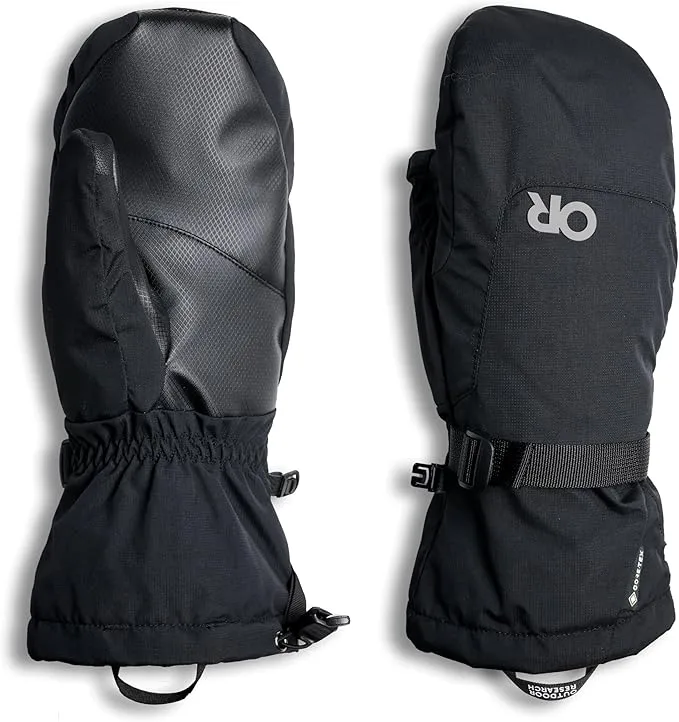
Outdoor Research has been making technical mountain gear since 1981, and the Revolution is their Gore-Tex mitten built in an ultralight construction for active skiers and snowboarders who want full waterproofing without extra bulk.
DETAIL: EnduraLoft Eco insulation compresses well and recovers its loft after being compressed — relevant for snowboarders, who sit on their hands constantly while binding in and out between runs. Touchscreen compatibility across all fingers (not just thumb and index) matters if you’re actually using your phone between runs rather than just the occasional swipe.
Who should buy this: Snowboarders who want active touchscreen access and full Gore-Tex protection without the bulk of the Mercury Mitt.
Honest limitation: 9 Amazon reviews is a small sample — the rating is plausible given Outdoor Research’s track record and the genuine Gore-Tex membrane, but there isn’t enough review volume to treat it as statistically solid. If review volume matters to you, the Burton (140 reviews) or Dakine (534 reviews) are safer bets.

Kinco 901T Premium Leather Mitt — Best Budget Leather
Kinco 901T Premium Leather Mitt
– Pigskin leather palm — stays pliable when wet, won’t stiffen in cold
– HeatKeep insulation, Nikwax waterproofing wax included
– Used by patrollers & backcountry workers · Treeline, Outside & Powder endorsed
~$53
★★★★½ (4.6/5 — 1,622 Amazon reviews)
Check Price on Amazon →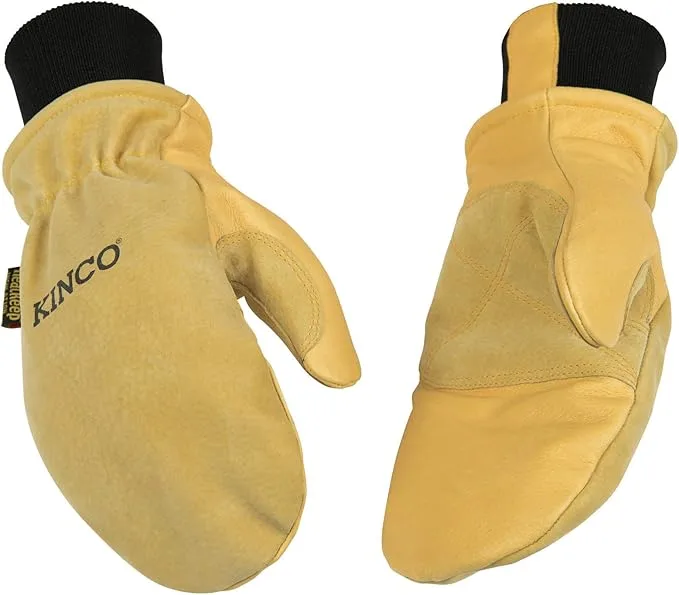
1,622 reviews at 4.6 stars is the deepest review record on this entire list — enough volume that the rating reflects a genuinely consistent product rather than an early honeymoon-period average. Pigskin leather is the key material detail: unlike some leathers, it stays soft and pliable after getting wet instead of stiffening up, which matters on a multi-day trip where the palm doesn’t fully dry between sessions.
DETAIL: Kinco includes a packet of Nikwax waterproofing wax with the mitten. Most leather mittens sell that treatment separately, so the first waterproofing pass is already done before you ever wear them — the correct order of operations for leather care.
Who should buy this: Budget-conscious skiers who want durable leather and don’t need Gore-Tex-level waterproofing. Anyone doing outdoor winter work who wants one mitten to handle both.
Honest limitation: The knit wrist design isn’t a full gauntlet — there’s no extended cuff sealing over the jacket sleeve, so snow can get in at the wrist more easily during deep-powder falls. For groomed resort skiing this rarely matters; for frequent powder falls, the Burton or Black Diamond seal is better.
Dakine Titan Gore-Tex Mitt — Best Gore-Tex Value
Dakine Titan Gore-Tex Mitt
– Gore-Tex + Gore Warm membrane, 110g/230g insulation + 280g removable liner
– Removable fleece liner dries separately overnight
– Amazon’s Choice · 534 reviews at 4.6★ · best Gore-Tex price on this list
~$62 (on sale from $85)
★★★★½ (4.6/5 — 534 Amazon reviews)
Check Price on Amazon →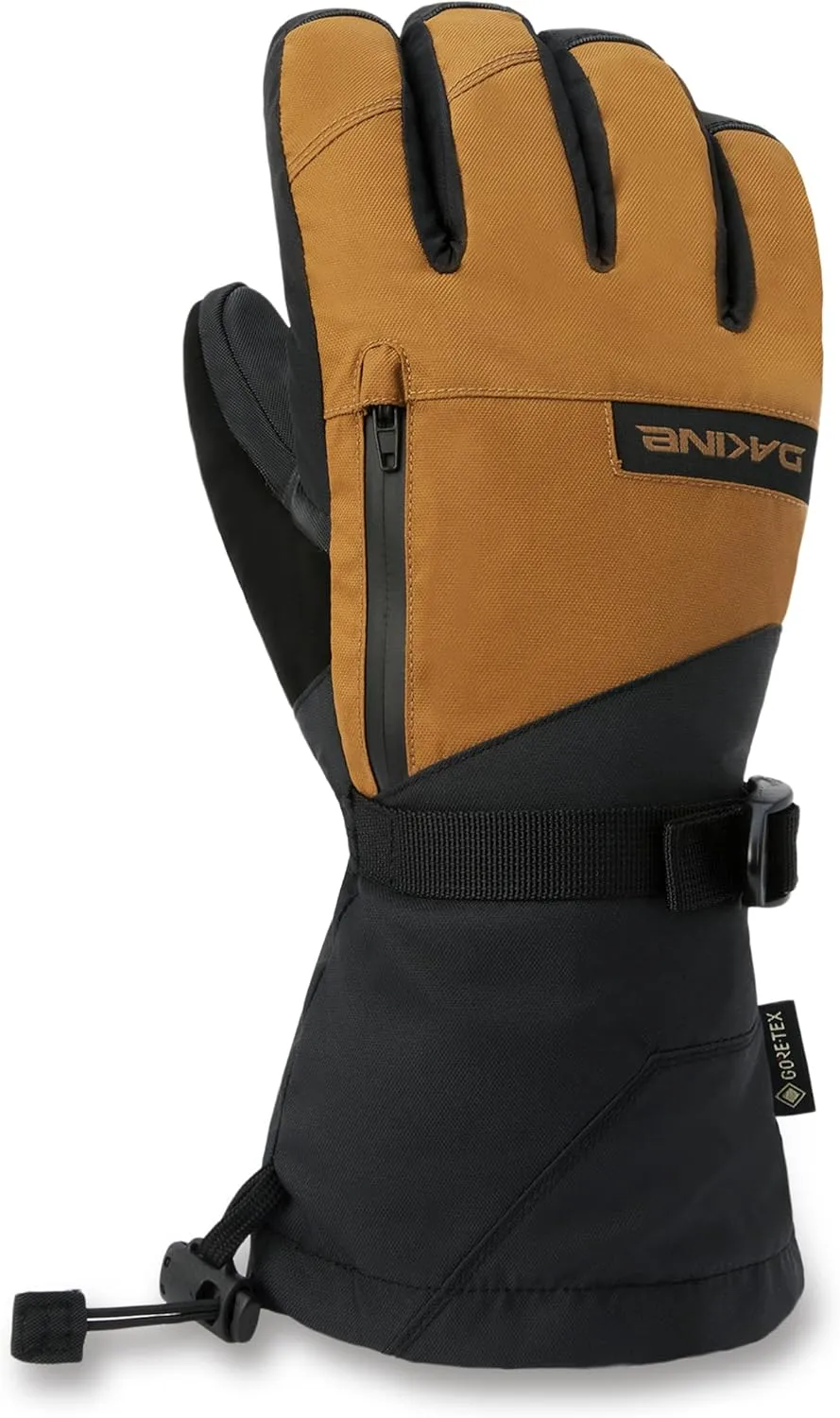
534 reviews at 4.6 stars puts this in real contention with the Burton for purchase confidence, and at roughly $62 it’s the lowest-priced genuine Gore-Tex mitten on this list by a meaningful margin.
DETAIL: The insulation stack here is more aggressive than the Burton’s — 110g at the palm and 230g on the back of the hand in the fixed layer, plus a 280g removable liner on top of that. For a skier who consistently runs cold, that’s more total insulation than the Burton’s system, at a lower price.
Who should buy this: Cold-handed skiers who want Gore-Tex and maximum insulation at the best available price, especially if you need the liner to dry out fully overnight between ski days.
Honest limitation: The heavy insulation stack runs warm during high-output active skiing. If you tend to overheat on hard-charging days, the lighter Burton system is the better fit — this one’s built for lift-heavy days and cold-handed skiers, not aggressive all-day carving.
Spyder Men’s Insulated Mitten — Best Budget Pick
Spyder Men’s Insulated Mitten
– DWR waterproof treatment, flexible stretch construction
– Adjustable wrist closure, synthetic insulation above -5°C
– Amazon Overall Pick · US Ski Team sponsor brand since 1978
~$26
★★★★☆ (Amazon Overall Pick — casual resort use only)
Check Price on Amazon →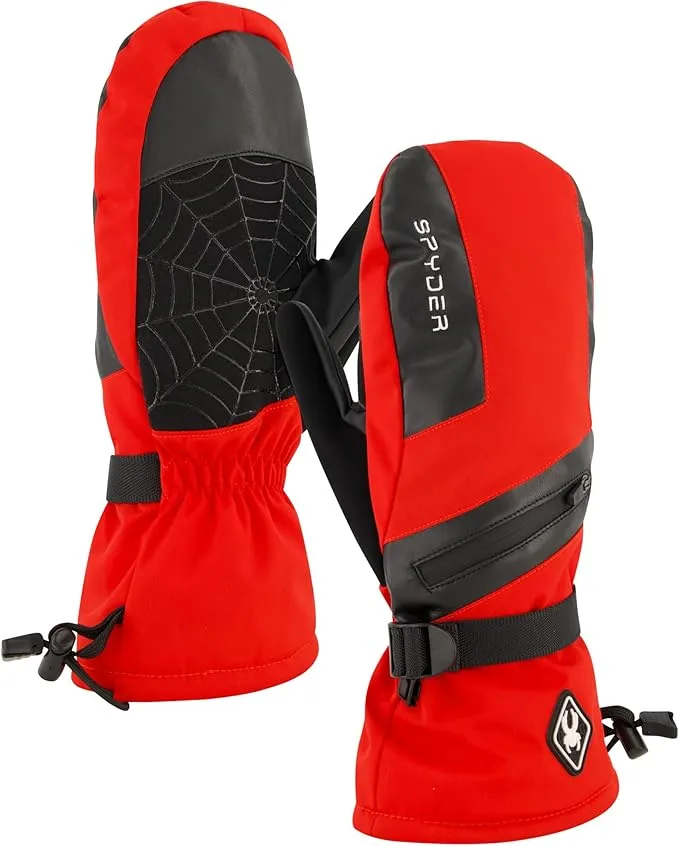
Spyder has sponsored US Ski Team athletes since 1978, which is worth something even at a $26 price point — this isn’t an anonymous private-label product. The honest assessment: you’re getting DWR waterproofing, not a membrane, and insulation adequate for mild conditions above roughly 23°F.
Who should buy this: Casual skiers doing a handful of days per season in moderate conditions, or anyone who wants an inexpensive backup mitten to carry as insurance.
Honest limitation: Skip this if you’re skiing consistently below 14°F, in wet spring snow, or in powder where frequent falls bring snow in at the wrist. It’s a real ski brand, but this is an entry-level product built for a specific, milder use case.
What Nobody Tells You Before Buying Ski Mittens
Review count changes what a rating actually means. A 4.6-star rating built on 1,622 reviews (Kinco) is a fundamentally different claim than the same rating on 9 reviews (Outdoor Research Revolution). Neither number is dishonest — but only one of them is backed by enough data to treat as a settled result.
“Runs warm” and “runs snug” show up in reviews before they show up on the spec sheet. The Dakine’s heavier insulation stack and the Kinco’s pigskin fit are both things buyers mention repeatedly in reviews, not details the product description highlights. Reading a handful of recent reviews before buying tells you more than the bullet points do.
A removable liner is worth more than it sounds like on paper. It’s a small feature line on a spec sheet, but it’s the difference between a mitten that’s dry by morning after a wet day and one that’s still damp when you put it on for day two. If you ski back-to-back days more than occasionally, weight this feature heavily.
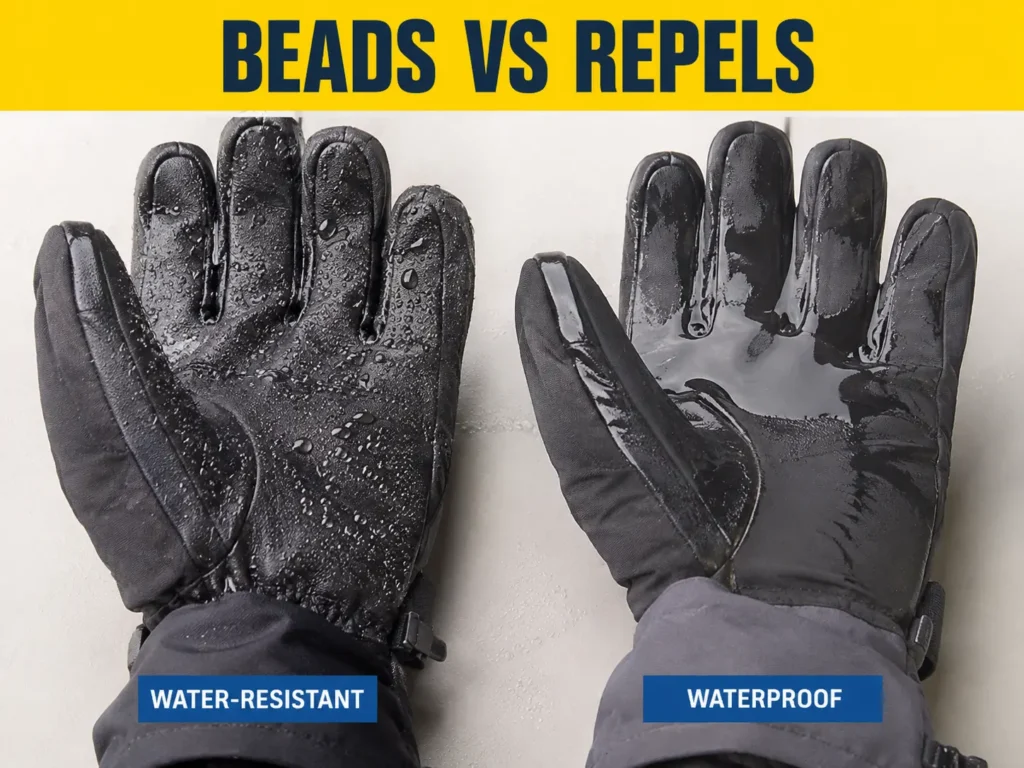
Waterproofing type, not just the word “waterproof,” decides how the mitten performs in wet snow. DWR coatings (Spyder) resist water at first but wear down over roughly 8–12 ski days and then behave like ordinary fabric. A membrane (Gore-Tex, BD.dry) keeps working at the material level regardless of what’s happening to the outer shell — which is why the Spyder and the Gore-Tex options aren’t really competing for the same skier.
Honest Pros and Cons
| What Works Well Across These Six | What Genuinely Doesn’t |
| Three genuine membrane options (Burton, Black Diamond, OR, Dakine — four, really) at different price points | No mid-tier option between the Kinco at $53 and the Burton at $90 |
| A proven, high-review-volume budget leather pick (Kinco) | The Outdoor Research Revolution’s 9-review sample is too thin to lean on heavily |
| A real Gore-Tex option under $65 (Dakine) | The Spyder and Kinco both lack a full gauntlet seal for deep-powder falls |
| An honest budget option (Spyder) that doesn’t oversell its capability | The most insulated pick (Black Diamond) sacrifices the most dexterity |
Choose Your Mitten in 60 Seconds
| Your Situation | Best Pick |
| Hands always cold, willing to spend for maximum warmth | Black Diamond Mercury ~$140 |
| Want Gore-Tex, removable liner, and a lifetime warranty under $100 | Burton Gore-Tex ~$90 |
| Want Gore-Tex warmth at the lowest realistic price | Dakine Titan ~$62 |
| Snowboarder who needs touchscreen access on every finger | Outdoor Research Revolution ~$88 |
| Want proven, durable leather with the deepest review record here | Kinco 901T ~$53 |
| Casual skier, a few days a season, mild conditions | Spyder ~$26 |
| Skiing wet Pacific Northwest or spring slush | Gore-Tex only — Burton, OR Revolution, or Dakine. DWR mittens saturate in sustained wet snow. |
If you’re deciding between a mitten and a proper glove for your specific hand size and skiing style, Best Ski Gloves for Women and Best Ski Gloves for Men cover the equivalent picks at each price tier.
When a Mitten Is Not the Right Choice
If you’re skiing backcountry terrain that requires frequent map checks, gear adjustments, or technical rope work, the dexterity cost of any mitten on this list — even the lighter Outdoor Research option — will slow you down more than the warmth is worth. A well-insulated glove with a liner system is the better call there. Same goes for anyone who spends a lot of ski-day time on their phone for photos or navigation and finds even full-finger touchscreen compatibility too fiddly with the mitten still on.
Frequently Asked Questions
Are mittens warmer than gloves with the same insulation weight?
Yes, consistently. Fingers grouped together in a mitten share warmth through direct contact, while fingers isolated in individual glove compartments each lose heat independently. The warmth advantage is most noticeable in the coldest, most stationary conditions — a slow chairlift ride in the wind is exactly where it matters most.
What’s the difference between a Gore-Tex mitten and one that’s just “waterproof”?
A DWR (Durable Water Repellent) coating on the outer shell works when new but wears down after roughly 8 to 12 ski days, after which the fabric absorbs water instead of shedding it. Gore-Tex and similar membranes (BD.dry) are a physical layer that keeps blocking water regardless of what’s happening to the outer shell, and they breathe — letting sweat vapor escape rather than trapping it. If you ski more than 10 days a season or in wet conditions, a membrane pays for itself.
Can I use ski mittens for snowboarding?
Yes — many snowboarders prefer mittens specifically because their hands spend more time bracing falls and gripping the board edge than doing fine motor tasks. The Outdoor Research Revolution’s full-finger touchscreen compatibility is aimed directly at that use case.
Do more expensive mittens actually last longer?
Generally yes, though it depends on construction more than price alone. Leather palms (Kinco, Black Diamond) tend to outlast synthetic ones under heavy pole-gripping wear, and reinforced stitching at high-stress seams extends life regardless of price tier.
How should a ski mitten fit?
Snug through the palm with a small amount of room at the fingertips — enough that a thin liner glove could fit underneath if needed, but not so loose that the mitten shifts around while gripping a pole. Too tight compresses insulation and reduces warmth; too loose creates dead air space that also reduces warmth, just for a different reason.
Final Thoughts
If your hands run cold no matter what you try, don’t buy a second budget mitten hoping it’ll be different — the Black Diamond Mercury exists specifically for that problem, and no amount of layering fixes a mitten that was never built for a serious cold in the first place. If you’re chasing value, the Dakine Titan currently delivers Gore-Tex performance for less than any other membrane option here. And if you already own a good glove but keep reaching for something warmer on the coldest days, a mitten liner setup is worth considering before you replace the glove entirely — checking how cold exposure actually affects extremities is worth five minutes before you decide how much warmth margin you actually need for your conditions.
Affiliate Disclosure: This post contains affiliate links. If you buy through them, we may earn a commission at no extra cost to you. It never changes which mittens we recommend. Prices correct as of July 2026.