QUICK ANSWER: For most people Kinco 1927KW Leather (~$32) is the best ski glove under $50 — 1,799 reviews at 4.7 stars, pigskin leather that stays pliable when wet. For kids, the Columbia Youth Whirlibird (~$34) is the only glove on this list with real membrane waterproofing instead of just a DWR coating. For the lowest price with genuine 3M insulation, the MOREOK 3M Thinsulate (~$17) has the deepest review base here at 6,964.
- Why This Guide Is Different
- The Honest Truth About Gloves Under $50
- All 5 Gloves — Quick Comparison
- How These Gloves Were Compared
- Kinco 1927KW Leather Gloves — Best Overall Under $50
- Spyder Men's Insulated Ski Gloves — Best for Mild Resort Days
- Trifabricy Wool Fleece Gloves — Best Liner or Light-Use Option
- Columbia Youth Whirlibird Gloves — Best Kids Pick Under $50
- MOREOK 3M Thinsulate Gloves — Best High-Volume Budget Buy
- What Nobody Tells You About Budget Ski Gloves
- Why These Five Gloves Were Picked
- Decision Checklist — Pick in 60 Seconds
- Are Your Current Gloves Actually Failing, or Are They Just the Wrong Glove for Your Conditions?
- When a Budget Glove Under $50 Is Not the Right Choice
- Honest Pros and Cons
- Frequently Asked Questions
- Final Thoughts
Not sure which of these actually fits your situation? The Ski Glove Finder asks seven quick questions about your conditions, hand temperature, and budget, then matches you against the full glove database instead of making you read five reviews to figure it out yourself.
Why This Guide Is Different
Most “under $50” glove roundups list five products with reworded spec sheets and no real reasoning for why one beats another at this price. This guide instead explains the one thing that actually separates gloves in this bracket — waterproofing method — and then matches five specific gloves to five specific skier situations, with the honest limitation of each one spelled out rather than buried.
Every number below — price, review count, star rating, insulation type — comes from the product’s own listing and its verified buyer reviews. Nothing here is presented as a personal test, because it isn’t one; it’s a comparison built from specs and real purchase data, and it’s labeled that way throughout.
The Honest Truth About Gloves Under $50
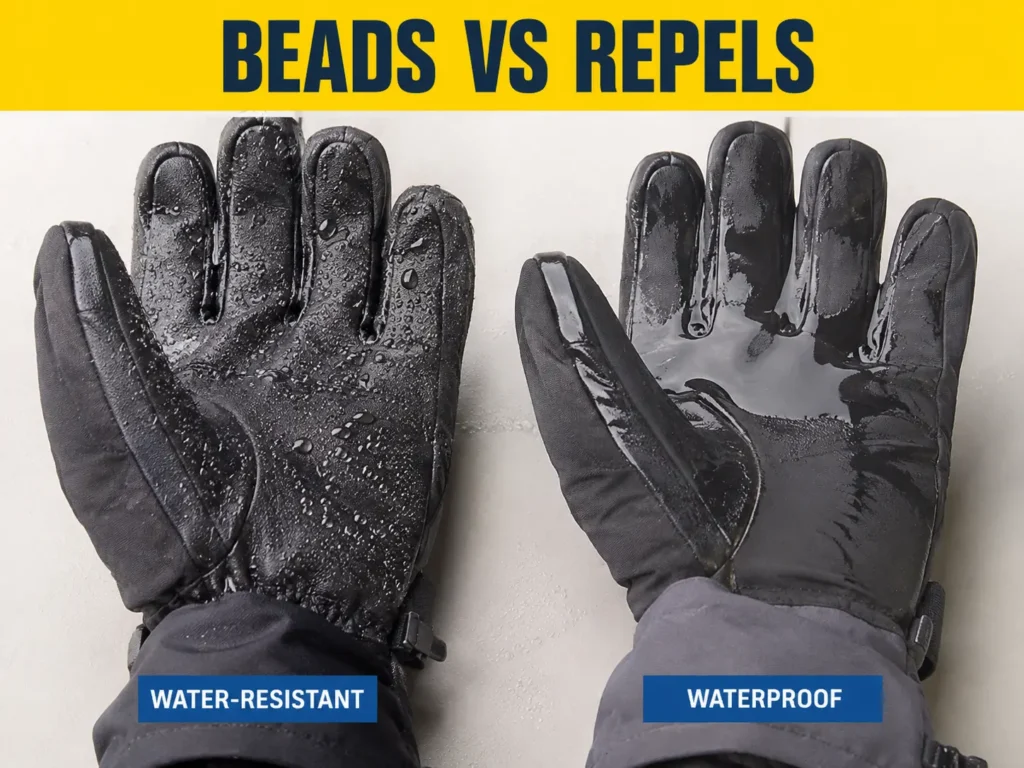
Every glove on this list uses DWR (Durable Water Repellent) — a chemical coating on the outer shell — rather than a Gore-Tex-style membrane. That’s the real dividing line in this price bracket, and it’s worth understanding before you compare anything else.
DWR makes water bead up and roll off when it’s fresh, which is why a budget glove can look just as waterproof as a $90 one in a five-second demo. The difference shows up over time: DWR wears down after roughly 8 to 12 ski days, and once it’s gone, the outer fabric absorbs water instead of shedding it. A membrane — the kind used in the Columbia Youth Whirlibird’s Omni-Tech construction below — is a physical layer that keeps blocking water regardless of what’s happening to the outer shell.
In dry, cold conditions — Colorado, Utah, the northern Rockies — this rarely matters, because cold powder doesn’t melt on contact with the glove. In wet conditions — the Pacific Northwest, spring slush, a heavy snowfall day — DWR gloves saturate faster than membrane gloves. None of that makes a DWR glove a bad purchase. It makes it the correct purchase for a specific skier: someone doing fewer than 10-15 days a season in mostly dry conditions, who doesn’t need to spend $70+ on Gore-Tex they won’t fully use.
All 5 Gloves — Quick Comparison
| Glove | Best For | Waterproofing | Rating | Price |
| Kinco 1927KW Leather | Best overall | DWR + pigskin leather | 1,799 reviews, 4.7★ | ~$32 |
| Spyder Men’s Insulated | Mild resort days | DWR only | 61 reviews, 4.2★ | ~$28 |
| Trifabricy Wool Fleece | Liner / backup only | None | 844 reviews, 4.3★ | ~$6 |
| Columbia Youth Whirlibird | Kids | Omni-Tech membrane | 21 reviews, 4.9★ | ~$34 |
| MOREOK 3M Thinsulate | Budget + insulation | DWR only | 6,964 reviews, 4.4★ | ~$17 |

How These Gloves Were Compared
Each glove was evaluated on four things: material durability, insulation type and performance, waterproofing method, and how those specs translate to real ski conditions. Budget gloves were compared against each other, not against $100+ gloves — a fair comparison has to stay inside the price bracket a reader is actually shopping in.
Kinco 1927KW Leather Gloves — Best Overall Under $50
Kinco 1927KW Leather Ski Gloves
– Pigskin leather palm — flexible when wet, stays pliable in cold
– HeatKeep polyester insulation, breathable canvas back
– Work & ski tested — 1,799 reviews from daily outdoor workers
~$32
★★★★★ (4.7/5 — 1,799 Amazon reviews)
Check Price on Amazon →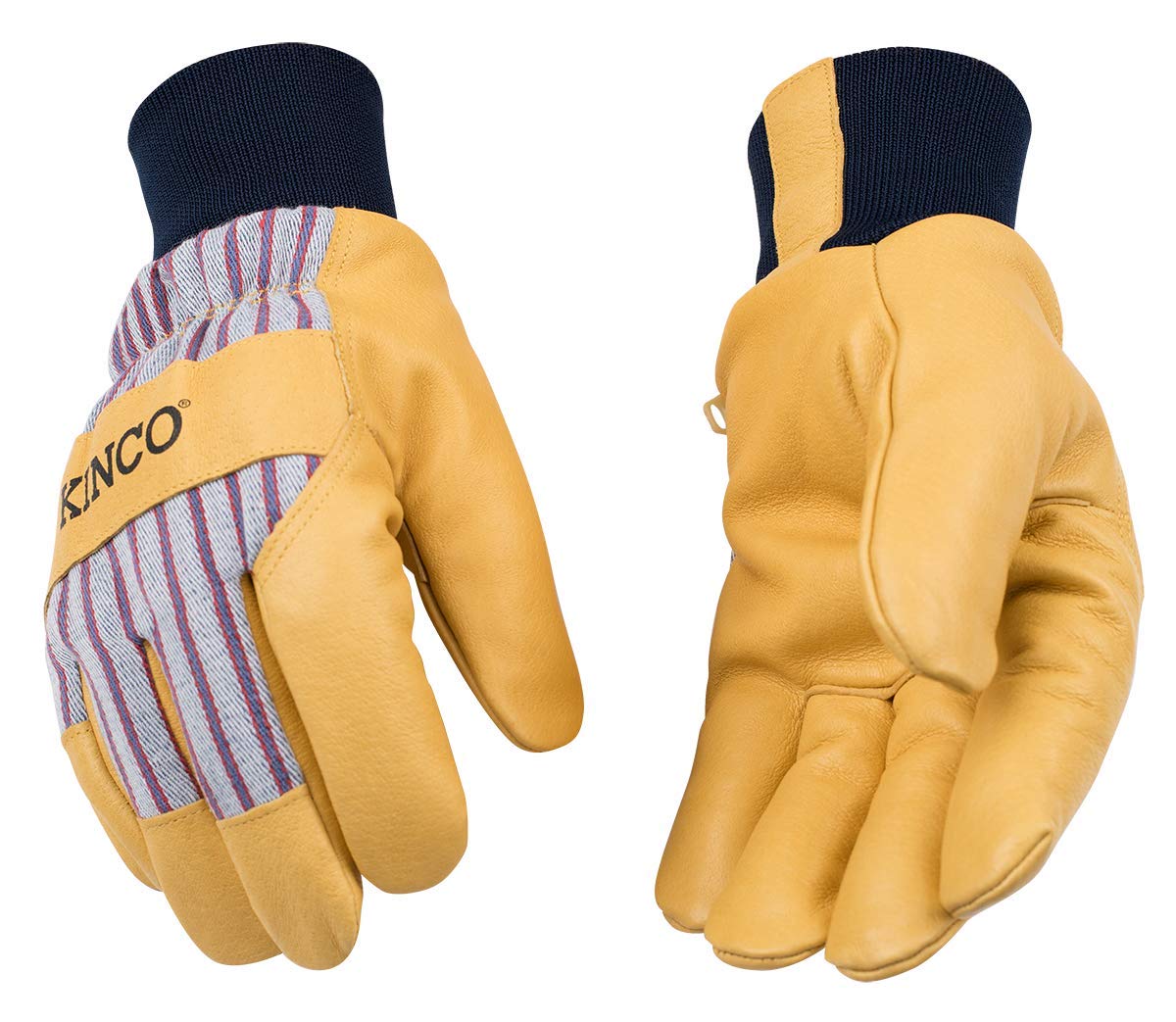
Kinco 1927KW Leather Glove is the strongest purchase signal on this entire list 1,799 reviews at 4.7 stars, and it’s worth noting where those reviews come from: the Kinco isn’t marketed primarily as a ski glove. It’s a work-and-ski glove used by ranchers, construction workers, and mountain staff who need something that holds up to daily abuse in genuinely harsh conditions, not just an occasional resort day. A 4.7-star average built on that kind of use is a different, arguably tougher, kind of validation than a glove reviewed only by weekend skiers.
Pigskin leather is the key material detail here. It’s naturally porous, which means it stays soft and workable after getting wet instead of drying stiff the way some other leathers do. That’s the specific property that makes this glove comfortable on day two of a trip, after the palm has already been damp once. The canvas back adds breathability without adding bulk.
Who should buy this: Adult skiers who want the highest reliability per dollar on this list, anyone who also does outdoor work in the cold and wants one glove for both, and skiers doing 5–15 days a season in mostly dry conditions.
Honest limitation: No gauntlet cuff — just a short wrist cuff, so snow can get in at the wrist if your jacket sleeve doesn’t overlap it properly. Fine for resort skiing with a normal jacket; less ideal for frequent powder falls.
Spyder Men’s Insulated Ski Gloves — Best for Mild Resort Days
Spyder Men’s Insulated Ski Gloves
– DWR waterproof treatment, stretchy flexible body
– Adjustable wrist closure, synthetic insulation above -8°C
– Amazon Overall Pick — genuine ski brand since 1978
~$28
★★★★☆ (4.2/5 — 61 Amazon reviews)
Check Price on Amazon →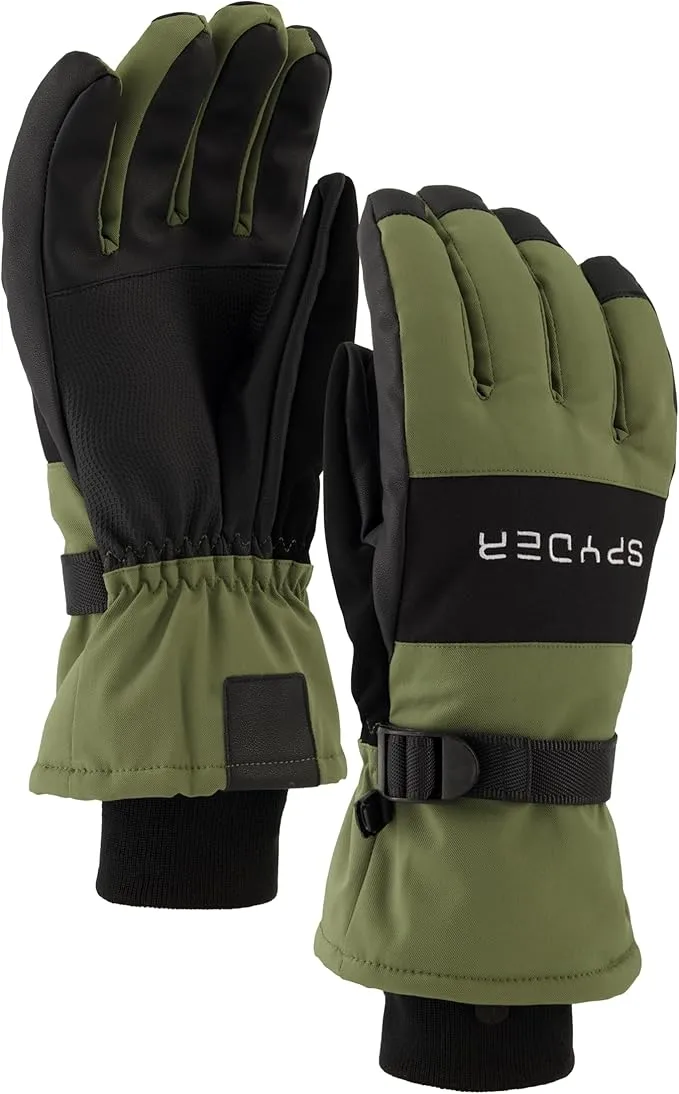
Spyder has made ski race apparel since 1978 and sponsors US Ski Team athletes — a real ski-specific brand history, not a generic winter-goods label with a ski glove bolted on. At $28 with an Amazon Overall Pick badge, this is the best-priced glove on this list from a brand with actual on-slope pedigree.
The construction leans into flexibility over stiffness: a stretchy main body and an adjustable wrist closure built for comfortable all-day movement rather than maximum insulation. Compared to the Kinco, it’s lighter and easier to move in, but it gives up the leather palm’s long-term durability to get there.
Who should buy this: Skiers who prioritize dexterity and comfortable movement over maximum warmth or toughness, doing resort days in the -5°C to -10°C range.
Honest limitation: Not built for sustained cold below -10°C, and the DWR-only construction means it saturates faster than a membrane glove in wet snow.
Trifabricy Wool Fleece Gloves — Best Liner or Light-Use Option
Trifabricy Wool Fleece Gloves
– Double-layer wool knit outer + fleece lining inside
– Touchscreen thumb & index finger, silicone anti-slip palm
– Best used as liner inside another glove or for lodge & backup use
~$6
★★★★☆ (4.3/5 — 844 Amazon reviews)
Check Price on Amazon →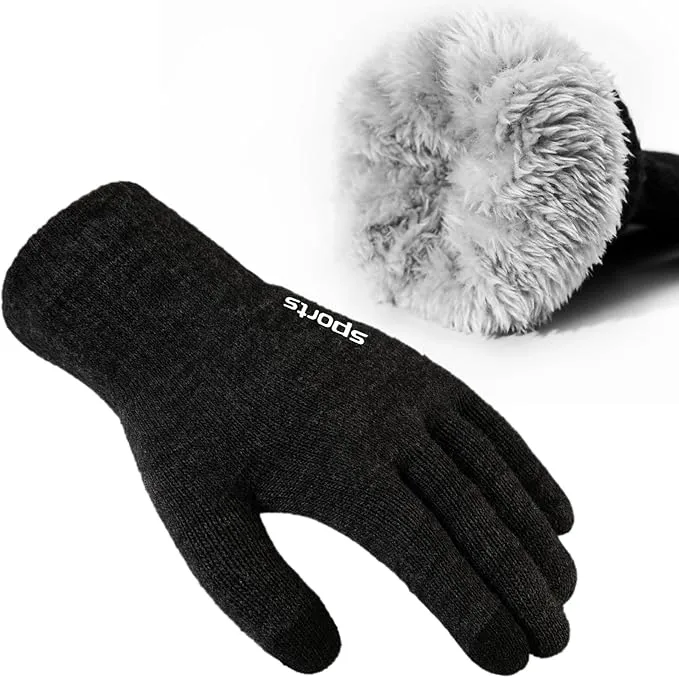
At $6, this is the only single-digit-priced item on this list, and 844 reviews at 4.3 stars is genuinely strong confidence for that price point. It’s important to be clear about what this actually is, though: it has no waterproof membrane and no DWR coating. Snow passes straight through the knit fabric.
The honest use cases are: a liner worn inside one of the other gloves on this list for extra warmth, a lodge or boot-fitting glove, or a cheap backup pair that’s financially painless to lose. Worn as a liner inside the Kinco or Spyder, it adds a couple of degrees of warmth for a fraction of what a dedicated ski liner costs.
Who should buy this: Anyone who wants a cheap liner, parents who want a disposable spare for a kid, or skiers who want a backup pair that doesn’t matter if it’s lost.
Honest limitation: Not a standalone ski glove — it will soak through immediately in any real snow contact. If someone’s expecting it to function like the other four on this list, it will disappoint.
Columbia Youth Whirlibird Gloves — Best Kids Pick Under $50
Columbia Youth Whirlibird Gloves
– Omni-Tech membrane waterproofing (physical layer, not DWR only)
– Omni-Heat reflective lining, 85% recycled polyester insulation
– Pre-curved 3-point fit, thumb nose wipe — only membrane glove under $50
~$34
★★★★★ (4.9/5 — 21 Amazon reviews)
Check Price on Amazon →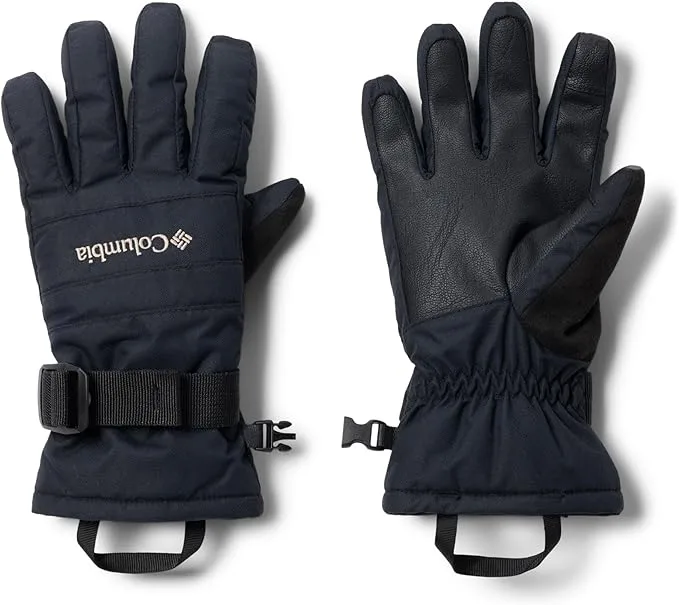
This is the one genuinely different glove on the list: Omni-Tech is a physical waterproof membrane, not a surface coating, which means it keeps blocking water even after the outer shell is fully wet. For a child who falls constantly and spends real time with hands buried in snow, that’s a meaningfully different level of protection than anything else in this price range — prolonged wet, cold exposure on skin is exactly the scenario cold-weather safety guidance warns about, which is precisely the situation a membrane glove is built to prevent.
The Omni-Heat lining adds reflective dots that bounce body heat back toward the hand — a real thermal feature, not just marketing language. The pre-curved finger cut matches a child’s natural resting hand position, which reduces resistance during grip.
Who should buy this: Parents of kids who ski 5–15 days a season in variable conditions, especially kids who fall often and need the wrist seal a membrane provides.
Honest limitation: Only 21 reviews — a strong rating, but a small sample. Columbia’s brand track record and the genuine Omni-Tech construction add confidence beyond the review count alone, but it’s not the deep review base the Kinco or MOREOK have.

MOREOK 3M Thinsulate Gloves — Best High-Volume Budget Buy
MOREOK 3M Thinsulate Ski Gloves
– Genuine 3M Thinsulate insulation, windproof outer layer
– Touchscreen thumb & index finger, anti-slip silicone palm
– ⚠️ Runs small — order one size up from your normal glove size
~$17
★★★★☆ (4.4/5 — 6,964 Amazon reviews)
Check Price on Amazon →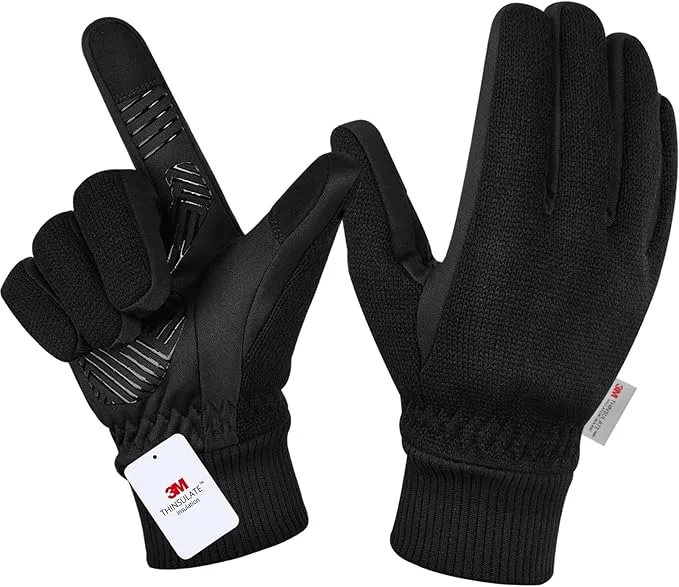
6,964 reviews is by far the largest sample on this list, which makes the 4.4-star average the most statistically solid number here — enough data that it isn’t skewed by an early wave of enthusiastic buyers. The insulation is genuine 3M Thinsulate, the same material used in gloves that cost three to four times as much. Thinsulate’s ultra-fine fibers trap still air more efficiently per gram than standard polyester fill, which is why a thin layer of it can outperform a thicker layer of generic insulation.
Who should buy this: Occasional skiers who want the lowest possible spend with real insulation quality behind it, and anyone who wants a reliable backup pair without spending much.
Honest limitation: Windproof and snow-resistant, not fully waterproof — it will saturate in sustained wet snow. It also runs small based on consistent buyer feedback; order one size up.

What Nobody Tells You About Budget Ski Gloves
Review volume changes what a rating actually means. A 4.9-star rating from 21 reviews (Columbia) and a 4.4-star rating from 6,964 reviews (MOREOK) are both trustworthy, but they’re not the same kind of claim. The MOREOK’s number is backed by enough data that it’s close to a settled result. The Columbia’s is a strong early signal from real buyers, not yet a large-sample guarantee.
“Runs small” and “not fully waterproof” show up in the reviews before they show up in the listing. The MOREOK’s sizing note and the general DWR-only limitation across most of this list aren’t things the product photos tell you — they surface in the reviews. Reading a handful of recent ones before buying tells you more than the bullet points do.
A DWR glove isn’t a worse glove — it’s a glove for a specific job. None of the four DWR-only gloves here are cutting corners. They’re built for dry-to-moderate conditions and occasional use, and they do that job well. The mistake is expecting DWR to behave like a membrane in sustained wet snow — that’s a mismatch between the glove and the conditions, not a flaw in the glove.
Why These Five Gloves Were Picked
Each pick fills a distinct, real need rather than five variations on the same product: Kinco for overall durability and value, Spyder for a genuine ski-brand option with better dexterity, Trifabricy as an honest liner/backup at a near-zero price, Columbia as the only membrane-waterproof option for kids under $50, and MOREOK as the highest-review-volume, lowest-price option with real insulation quality. If a sixth or seventh glove would just repeat one of these categories at a similar price, it isn’t included — the goal is five clearly different use cases, not five products.

Decision Checklist — Pick in 60 Seconds
- Want the most review-backed, durable option? Kinco 1927KW (~$32)
- Want a real ski brand and better dexterity? Spyder (~$28)
- Need a $6 liner or disposable backup? Trifabricy (~$6)
- Buying for a kid who skis regularly? Columbia Youth Whirlibird (~$34) — the only membrane glove here
- Want the largest review base and genuine insulation at the lowest price? MOREOK (~$17), order one size up
- Skiing in wet Pacific Northwest or spring slush conditions? None of these — go to Best Ski Gloves Under $100, where Gore-Tex starts showing up
Are Your Current Gloves Actually Failing, or Are They Just the Wrong Glove for Your Conditions?
Before buying a replacement, it’s worth diagnosing what actually went wrong with the last pair. If your hands got cold within the first hour on a dry, cold day, that’s an insulation problem — look at gloves with named insulation (Thinsulate, PrimaLoft) rather than unlabeled “warm lining.” If your hands stayed warm at first but went cold and clammy by afternoon, that’s usually DWR wearing through in wet snow — the fix is a membrane glove, not a warmer DWR one. If the glove itself is fine but snow keeps getting in at the wrist, that’s a cuff-length problem, not a waterproofing one — a longer gauntlet cuff solves it regardless of price.
When a Budget Glove Under $50 Is Not the Right Choice
If you’re skiing more than 15–20 days a season, skiing regularly in wet coastal snow, or you’ve already gone through the “my hands are cold and wet by lunch” cycle with a DWR glove once, spending more on a genuine waterproof membrane glove is the correct move rather than trying another budget pair hoping for a different result. The $53–$75 range is where Gore-Tex and similar membranes become standard, and that jump matters more for wet-condition skiers than any other upgrade on this list.
Honest Pros and Cons
| What Works Well Across These Five | What Genuinely Doesn’t |
| A high-review-volume durability pick (Kinco) that’s validated by tough daily-work use, not just casual skiing | No gauntlet cuff on the Kinco — snow can enter at the wrist in deep powder falls |
| A real membrane option for kids (Columbia) — unusual under $50 | The Columbia’s review sample is small (21) despite the strong rating |
| The largest review base on the list backing a genuinely good insulation choice (MOREOK) | The MOREOK runs small and isn’t fully waterproof in sustained wet snow |
| An honestly-labeled $6 liner (Trifabricy) that doesn’t oversell itself as a standalone ski glove | None of the five hold up in sustained wet, heavy snow — that’s true across the whole bracket, not a flaw in one product |
Frequently Asked Questions
Can you get good ski gloves under $50?
Yes, for the right conditions. Every glove on this list performs well for occasional-to-moderate skiing in dry-to-mild conditions. What you don’t get under $50 is genuine membrane waterproofing (with the one exception of the Columbia kids’ glove) or the durability of premium leather construction.
Are $50 ski gloves warm enough for a real ski day?
For most resort conditions above -10°C, yes. Below that, or in sustained wet snow, budget insulation and DWR coatings both start to fall short, and stepping up to a $70+ Gore-Tex glove becomes the better call.
What’s the warmest glove on this list?
The MOREOK’s genuine 3M Thinsulate is the strongest cold-weather insulation here for the price, though it’s windproof and snow-resistant rather than fully waterproof, so it’s best suited to dry cold rather than wet conditions.
How long do budget ski gloves actually last?
The DWR coating on any of these typically holds up for 8 to 12 ski days before it needs reapplying or starts to wear through. The Kinco’s leather construction tends to outlast the fully synthetic options under regular use, based on its review pattern from buyers using it for both work and skiing.
Should a beginner buy a cheap ski glove first?
Generally yes. A first-time or occasional skier doesn’t yet know their preferred insulation weight, fit, or dexterity needs, and a $17–$34 glove is a reasonable way to figure that out before spending more on a glove matched to specific conditions.
Final Thoughts
If you only take one thing from this list: match the glove to your actual conditions, not just your budget. The Kinco covers the widest range of “normal” dry-to-moderate ski days at the best overall value here. Columbia is worth the extra few dollars for a kid who falls often in wet snow. And if you’re regularly skiing wet coastal conditions no matter which of these five you pick, none of them is really the right glove — that’s a Gore-Tex-tier purchase, not a budget one. Whatever you land on, understanding how cold actually affects exposed hands is worth a few minutes before deciding how much insulation margin you actually need.
Affiliate Disclosure: This post contains affiliate links. If you buy through them, we may earn a commission at no extra cost to you. It never changes which gloves we recommend. Prices correct as of April 2026, subject to change. Last updated June 2026.