Quick Answer: For most skiers, the Dakine Titan Gore-Tex (~$55) is the pick — it’s the cheapest glove on this list with a genuine Gore-Tex membrane instead of just a DWR coating, and 536 reviews at 4.6 stars back that up. If you want a lifetime warranty and a removable liner too, the Burton Gore-Tex (~$90) is worth the extra $35. If you’re on a tight budget and still want real membrane waterproofing, the MOREOK (~$23) with its dual TPU layer and 3M Thinsulate is the honest budget answer — not the $14–$20 gloves that only resist water on the surface.
“Waterproof” printed on a glove tag means almost nothing on its own. Two gloves can both carry that word and behave completely differently in wet snow — one because it has a real membrane doing the work, the other because it has a surface coating that lasts a handful of ski days before it stops working. The tag isn’t lying, exactly. It’s just not telling you how it’s waterproof, which turns out to be the only question that matters.
That gap between “waterproof” and “waterproof enough for your conditions” is what this guide is actually about. Not a spec-sheet list — a breakdown, based on manufacturer specs and verified buyer reviews, of which of these five gloves have a real membrane doing the work, which are coasting on a surface coating, and which situation each one is honestly built for.
What you’ll get here: → Why two gloves that both say “waterproof” can behave completely differently on a wet day → The exact five gloves worth considering, with the review data and honest limitations for each → A straight answer for which one fits your specific skiing, not just “the best overall”
Not sure which of these actually fits your situation? The Ski Glove Finder asks seven quick questions about your conditions, hand temperature, and budget, then matches you against the full glove database instead of making you read five reviews to figure it out yourself.
- What Actually Makes a Ski Glove Waterproof?
- All 5 Gloves — At a Glance
- Dakine Titan Gore-Tex — Best Waterproof Value Under $60
- Burton Gore-Tex Gloves — Best Premium All-Conditions Pick
- MOREOK 3M Thinsulate — Best Budget Glove With Real Insulation
- ihuan Winter Waterproof Gloves — Best High-Volume Budget Pick
- SIMARI Winter Gloves — Best Liner or Backup, Not a Standalone Ski Glove
- Real Scenario: Picking Between the Dakine and the Burton for a Wet Coast Ski Trip
- What Comparing These Five Waterproofing Claims Actually Shows
- Honest Verdict
- Decision Table — Choose in 60 Seconds
- People Also Ask
- What To Do Right Now
What Actually Makes a Ski Glove Waterproof?
There are two different systems hiding behind the word “waterproof,” and almost no product listing tells you which one you’re buying.
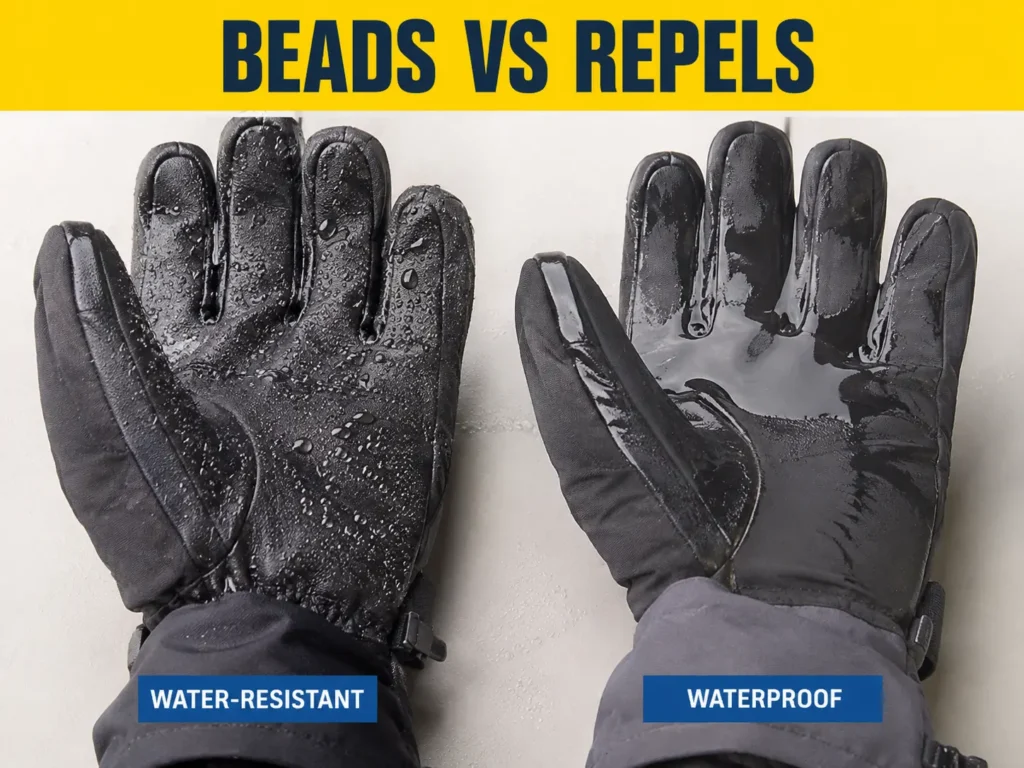
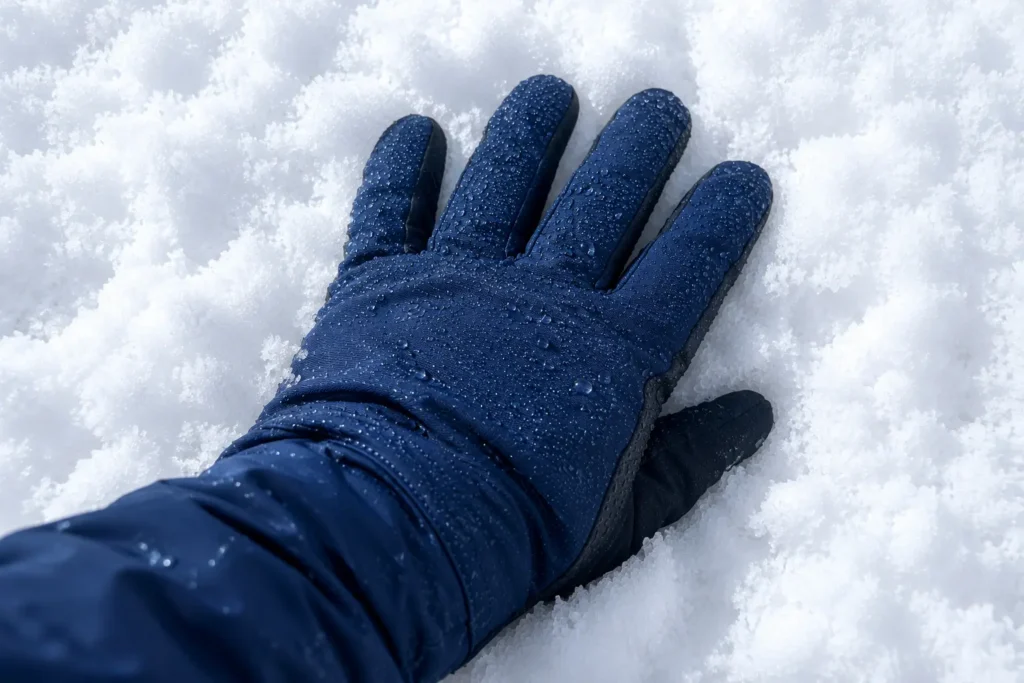
DWR (Durable Water Repellent) is a chemical coating sprayed onto the outer fabric. Fresh DWR makes water bead up and roll off, which looks impressive in a five-second demo video. The problem is that DWR wears off with use — typically somewhere between 8 and 12 days of skiing — and once it’s gone, the fabric underneath just soaks up water like any other fabric would.
A waterproof membrane — Gore-Tex, TPU film, or a brand’s proprietary version — is a separate physical layer sewn inside the glove. It blocks liquid water at that layer regardless of what’s happening to the outer shell. Even once the outer fabric is fully saturated in heavy wet snow, the membrane keeps your hand dry underneath. For a deeper breakdown of exactly how these two systems differ at the material level, see Waterproof vs Water-Resistant Ski Gloves.
WHY THIS MATTERS: A glove with a membrane and a glove with only DWR can look identical on the shelf and cost the same $20. One of them fails by lunchtime on a wet day. The other doesn’t.
TRAP: Amazon listings almost never state this directly. “Waterproof” and “100% waterproof” get used for both types. The only reliable way to tell is checking whether the description mentions a named membrane (Gore-Tex, TPU, BDry) versus just “water-resistant coating” or nothing at all.
Two of the five gloves below use genuine membranes (Gore-Tex). One uses a dual-layer TPU system. Two rely on DWR alone — which isn’t automatically a bad glove, but it does mean a specific, narrower use case.
All 5 Gloves — At a Glance
| Glove | Waterproofing System | Rating | Price |
| Dakine Titan Gore-Tex | Gore-Tex ePE membrane | 536 reviews, 4.6★ | ~$55 |
| Burton Men’s Gore-Tex Gloves | Gore-Tex Plus Warm | 153 reviews, 4.6★ | ~$90 |
| MOREOK 3M Thinsulate | Dual TPU membrane | 9,001 reviews, 4.3★ | ~$23 |
| ihuan Winter Waterproof | TPU membrane | 11,399 reviews, 4.4★ | ~$20 |
| SIMARI Winter Gloves | DWR surface only | 44,662 reviews, 4.3★ | ~$14 |
Dakine Titan Gore-Tex — Best Waterproof Value Under $60
Dakine Men’s Titan Gore-Tex Gloves
– Gore-Tex ePE membrane — blocks water even when outer shell saturates
– Mapped insulation: 110g palm / 230g back of hand + 280g removable liner
– Rubbertec palm, PFC-free DWR · Amazon’s Choice · 536 reviews at 4.6★
~$55 (35% off)
★★★★½ (4.6/5 — 536 Amazon reviews)
Check Price on Amazon →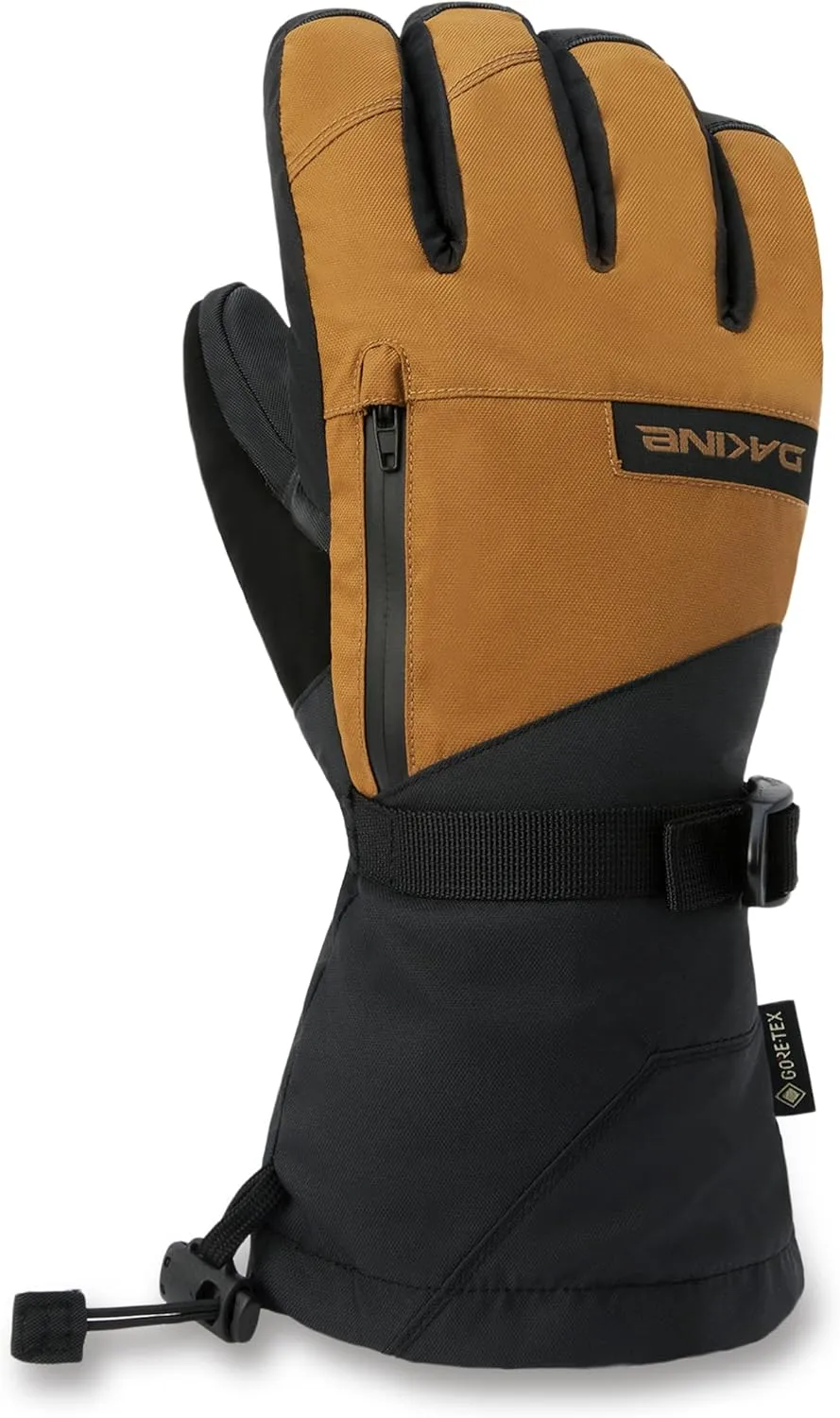
536 reviews at 4.6 stars is a real signal, not a small sample you can wave away. At $55, this is the cheapest glove on this list that uses a genuine Gore-Tex membrane instead of surface treatment — that’s the whole reason it’s the top recommendation for most skiers.
The mapped insulation is a detail that’s easy to miss on a spec sheet but matters on the hill. Less fill at the palm means your grip stays sensitive on the pole; more fill on the back of the hand means the wind-exposed side stays warm. A lot of gloves at this price just use even insulation everywhere because it’s cheaper to manufacture.
The 280g liner pulls out completely, which matters more than it sounds — a glove that dries as one piece takes two days to fully dry out after a wet session. Split it into shell and liner and both are dry by morning.
Who should buy this: Anyone who wants real membrane waterproofing without paying premium prices. Skiers dealing with wet snow — Pacific Northwest, spring corn, or just an unlucky storm cycle. Anyone doing 10+ days a season where a DWR-only glove would already be failing.
Honest limitation: The Rubbertec palm doesn’t feel like leather — less tactile grip, though it works fine functionally. Heavy sweaters may notice some interior moisture buildup on hard-charging days, since 230g of insulation on the back of the hand traps some heat in.
Burton Gore-Tex Gloves — Best Premium All-Conditions Pick
Burton Men’s Gore-Tex Gloves
– Gore-Tex Plus Warm membrane, ThermacoreECO insulation (95% recycled)
– Removable liner dries separately, Screen Grab touchscreen, heater pocket
– Amazon Overall Pick · Lifetime warranty · 153 reviews at 4.6★
~$90
★★★★½ (4.6/5 — 153 Amazon reviews)
Check Price on Amazon →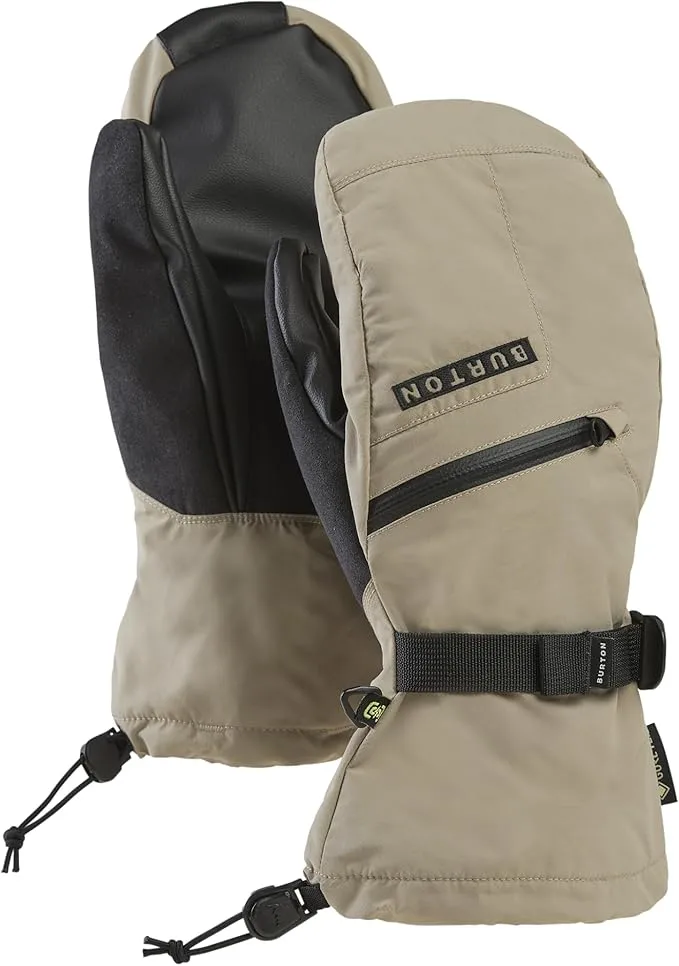
Burton’s been making snow gear since 1977, and it shows in the small decisions here rather than the marketing copy. Gore-Tex Plus Warm is the membrane variant built specifically for cold-weather use, where you need waterproofing and warmth retention working together rather than trading off against each other.
TRAP: It’s tempting to assume $90 buys you “more waterproof” than the $55 Dakine. It doesn’t — both use current-generation Gore-Tex. What the extra $35 actually buys is the removable liner system, the Screen Grab touchscreen palm, the heater pocket, and a lifetime warranty against manufacturing defects.
WHY THIS MATTERS: If you ski back-to-back days, a glove that separates into shell and liner dries overnight. A sealed one-piece glove often doesn’t — you start day two with a damp glove, which is a bad way to start a cold morning.
Who should buy this: Frequent skiers who want the most complete waterproof glove under $100. Snowboarders who actually use touchscreen gloves and want the heater pocket for lift-line days. Anyone who’s already gone through two or three pairs of cheaper gloves and is done replacing them every season.
Honest limitation: At $90 it’s the priciest pick here, and the waterproofing itself isn’t meaningfully better than the $55 Dakine — you’re paying for the extras, not for drier hands.
MOREOK 3M Thinsulate — Best Budget Glove With Real Insulation
MOREOK 3M Thinsulate Waterproof Gloves
– Dual TPU membrane (2 physical barriers, not just DWR coating)
– 200g genuine 3M Thinsulate insulation · rated to -30°F
– Runs small — order one size up · 9,001 reviews at 4.3★
~$23
★★★★☆ (4.3/5 — 9,001 Amazon reviews)
Check Price on Amazon →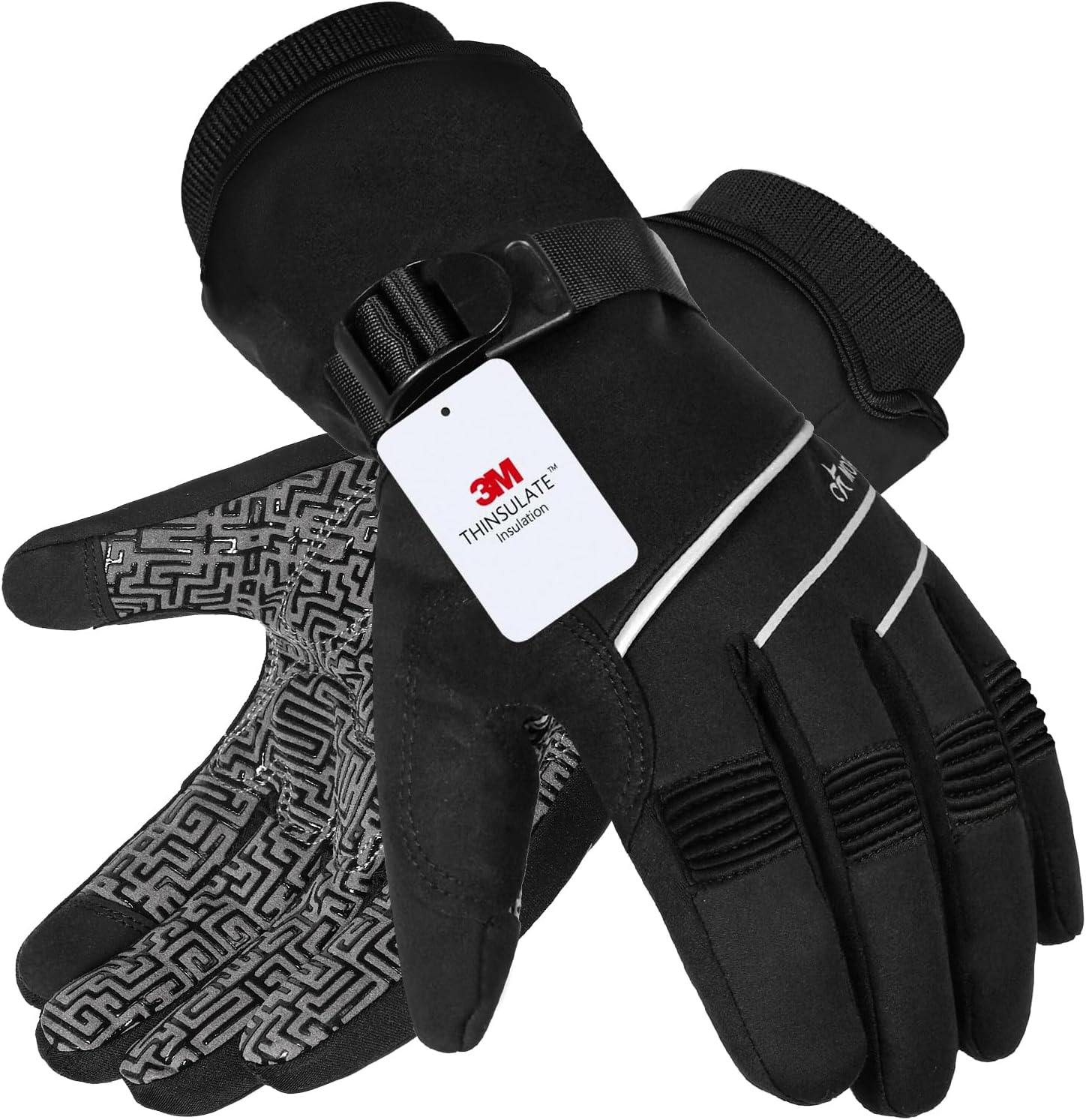
9,001 reviews at 4.3 stars on a $23 glove is a lot of people confirming this actually works, across a wide enough range of conditions that a handful of unlucky reviews wouldn’t move the average much.
The dual-TPU construction means one membrane layer is bonded to the outer shell and a second sits in the insulation layer. Most gloves in this price bracket have exactly one line of defense — DWR coating, nothing behind it. This one has two, which is why it holds up even after the outer shell gets wet.
3M Thinsulate is genuine brand-name insulation, the same material used in gloves that cost three or four times as much. It uses very fine synthetic fibers that trap still air more efficiently than standard polyester fill, which is where the -30°F rating comes from when paired with 200g of it plus the windproof TPU shell — the kind of margin that actually matters once you’re in the temperature range where exposed skin is at real risk of frostbite.
Who should buy this: Anyone who wants real waterproofing and real cold-weather insulation without spending $50+. Skiers who’ve been burned by DWR-only gloves soaking through by midday. Anyone actually skiing in genuinely cold conditions where a -30°F rating isn’t just a marketing number.
Honest limitation: TPU doesn’t breathe as well as Gore-Tex, so active skiers with high sweat rates may notice more interior dampness by end of day. Fit runs snug across almost every review — order one size up from what you’d normally wear.
ihuan Winter Waterproof Gloves — Best High-Volume Budget Pick
ihuan Winter Waterproof Gloves
– TPU waterproof membrane inside waterproof outer fabric
– Dense fleece lining · adjustable windproof cuff · touchscreen fingertips
– Amazon’s Choice · 700+ sold/month · Best for 20°F–32°F conditions only
~$20
★★★★☆ (4.4/5 — 11,399 Amazon reviews)
Check Price on Amazon →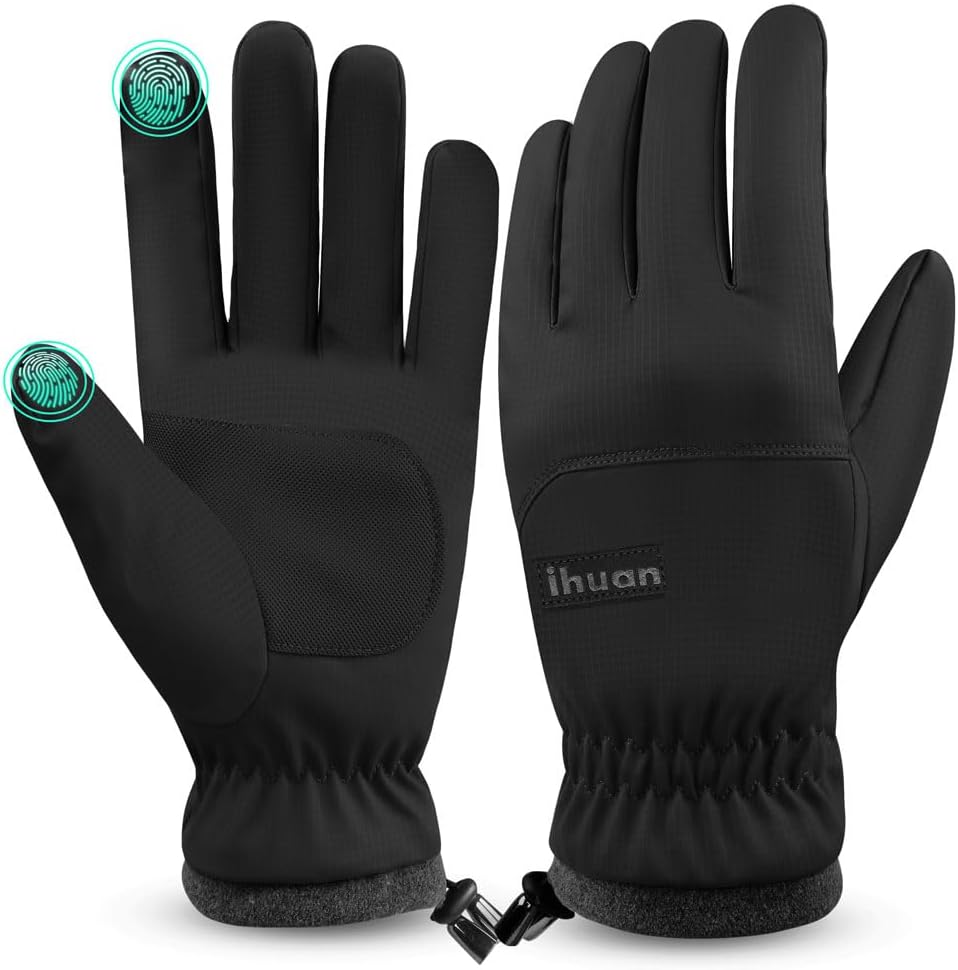
11,399 reviews at 4.4 stars is the largest sample on this entire list. That kind of volume, combined with an Amazon’s Choice badge, tells you this is genuinely what a large number of casual skiers are buying and are satisfied with — not just what’s cheapest.
WHY THIS MATTERS: The brand is upfront that the wrist section uses non-waterproof flexible material — an honest disclosure that a lot of competitors at this price just leave out. For resort skiing where your jacket sleeve covers the glove cuff, this rarely comes up in practice.
The 20°F to 32°F range is stated plainly rather than inflated, which is worth respecting rather than working around. This is a glove built for mild resort days and shoulder-season skiing, not for sub-zero powder mornings — and it does that specific job well.
Who should buy this: Occasional or mild-weather skiers — 3 to 6 days a season, temperatures mostly above freezing. Anyone who wants a genuine membrane glove (not just DWR) at the lowest possible price. A solid first pair for a kid or a new skier still deciding if the sport sticks.
Honest limitation: Skip this if you’re regularly below 20°F or falling often in deep powder — the non-waterproof wrist section becomes a real entry point for snow in those situations.

SIMARI Winter Gloves — Best Liner or Backup, Not a Standalone Ski Glove
SIMARI Winter Gloves
– Flannel fleece lining, silicone grip palm, touchscreen thumb & index
– No membrane — surface moisture resistance only (not for wet snow contact)
– #1 Best Seller · 44,662 reviews · Best used as liner inside waterproof outer glove
~$14
★★★★☆ (4.3/5 — 44,662 Amazon reviews)
Check Price on Amazon →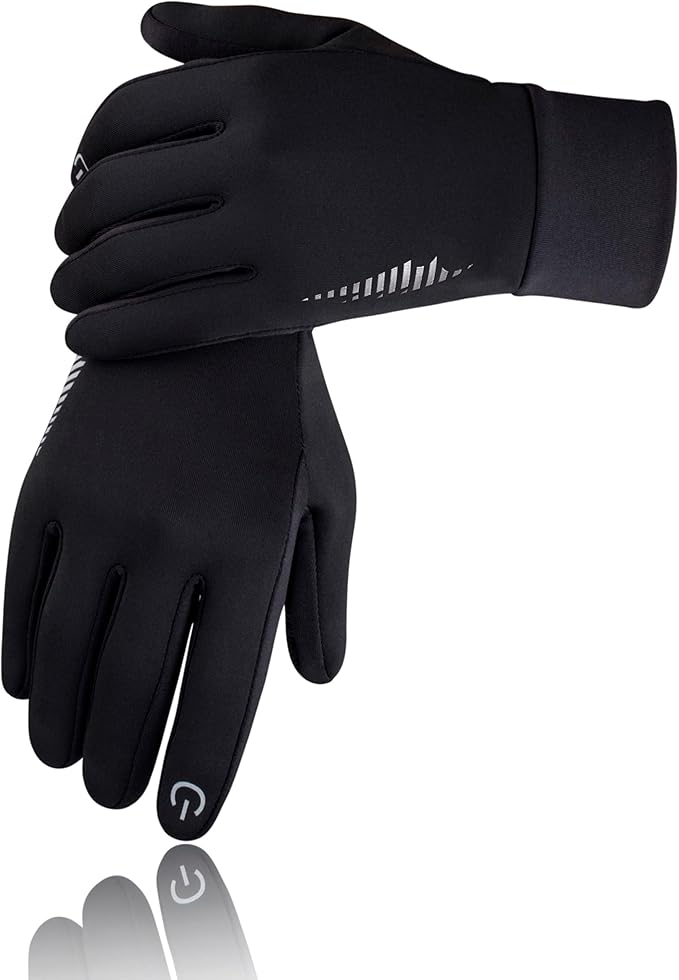
44,662 reviews is more than four times the next-highest count on this list. At that scale, it’s a genuine signal — but it’s a signal about value for what this glove actually is, not proof it belongs on snow all day.
TRAP: It’s easy to read “waterproof” on a $14 glove’s listing and assume it’s in the same category as the others here. It isn’t. There’s no membrane — just a polyester shell with DWR-style surface resistance, which means sustained contact with wet snow will beat it in short order.
Where it earns its 44,000+ reviews is everywhere else: as a liner worn inside a bigger waterproof shell, as a lodge glove for boot buckles and lift lines, or as a $14 backup that doesn’t hurt to lose on the mountain.
Who should buy this: Anyone who wants a warm inner layer to wear under a proper waterproof glove. Lodge and lift-line use where full waterproofing isn’t the point. A cheap backup pair worth keeping in a jacket pocket.
Honest limitation: Don’t buy this expecting standalone waterproof ski glove performance — it will soak through in real snow contact and shouldn’t be your primary pick.
Real Scenario: Picking Between the Dakine and the Burton for a Wet Coast Ski Trip
Say you’ve got a week at a wet-snow resort — Whistler, Mt. Baker, anywhere the Pacific pushes in heavy, warm snow rather than dry powder. You’re skiing every day, and you don’t want to think about your gloves again after packing. It’s worth checking the wind chill forecast for the week before you decide — it’s the wind, not just the air temperature, that usually decides whether a “wet but mild” day turns into a genuinely cold one.
Here’s the actual decision: both the Dakine and the Burton will keep your hands dry the entire week, because both run genuine current-generation Gore-Tex. The question isn’t waterproofing — it’s whether you value the $35 you’d save with the Dakine, or the touchscreen palm, heater pocket, and lifetime warranty you’d get with the Burton. If you’re not on your phone on the chairlift and don’t run cold, save the money and take the Dakine. If either of those things matters to you, Burton earns its price.
What Comparing These Five Waterproofing Claims Actually Shows
Review count matters more than star rating alone
A 4.6-star rating from 40 reviews and a 4.6-star rating from 500 reviews are not the same claim. The SIMARI’s 44,662 reviews and the ihuan’s 11,399 are what make those ratings trustworthy for their specific use case — not proof they work as an all-conditions glove.
“Runs small” shows up in the reviews before it shows up in the size chart
The MOREOK’s snug fit isn’t in the product description — it’s something that only turns up by reading the reviews. That’s a pattern worth checking on any glove before buying: search the reviews for “sizing” before trusting the size chart.
Honest temperature ranges are a good sign, not a limitation
The ihuan stating 20°F–32°F plainly, instead of claiming “extreme cold ready” like a lot of competitors do, is actually a point in its favor. A brand willing to say what its product can’t do is more trustworthy about what it says it can.
A membrane is either there or it isn’t — there’s no in-between
DWR-only gloves aren’t bad products. They’re gloves built for a specific job (short exposure, mild conditions, backup use), and the SIMARI does that job about as well as $14 gloves get, based on what its buyers consistently report. The mistake is expecting DWR to behave like a membrane in sustained wet snow.
Honest Verdict
| What Works Well Across These Five | What Genuinely Doesn’t |
| Two genuine Gore-Tex options under $100 (Dakine, Burton) | No mid-tier option between $23 and $55 — a gap in this lineup |
| A real budget membrane pick (MOREOK) instead of DWR-only at every low price point | Sizing runs small on the MOREOK — order up or risk a tight fit |
| Honest, stated temperature ranges rather than inflated claims | The ihuan’s wrist material is a real weak point for powder skiers who fall often |
| A legitimately useful $14 liner/backup option | The SIMARI is easy to mistake for a standalone waterproof glove if you don’t read the listing closely |
Best for: Skiers who want to match the glove to the actual conditions they ski in, rather than assuming “waterproof” on the label means the same thing across every price point.
Skip the whole membrane conversation if: You only ski a handful of mild, dry days a season — in that case, the SIMARI or a basic pair honestly does the job, and spending more buys you protection you won’t use. If you want to see how these five stack up against gloves outside the waterproof-specific lineup, Best Ski Gloves for Every Budget covers the full $18–$220 range including the gap between $23 and $55 that this list doesn’t fill.
Decision Table — Choose in 60 Seconds
| Your Situation | Best Pick and Why |
| Wet Pacific Northwest, spring slush, or heavy snowfall | Dakine (~$55) or Burton (~$90) — only real membranes hold up all day in sustained wet conditions |
| Want Gore-Tex plus a removable liner and lifetime warranty | Burton (~$90) — most complete option on this list |
| Genuine waterproofing and real 3M insulation under $25 | MOREOK (~$23) — order one size up |
| Mild resort days, 20°F–32°F, most-reviewed budget option | ihuan (~$20) — honest about its temperature range |
| Need a liner, lodge glove, or cheap backup | SIMARI (~$14) — not a standalone waterproof ski glove |
| Skiing consistently below 14°F (-10°C) | MOREOK (-30°F rated) or Burton (Gore-Tex Plus Warm) |
People Also Ask
What’s the difference between Gore-Tex and TPU waterproofing in ski gloves?
Gore-Tex is a branded membrane that blocks liquid water while letting sweat vapor pass through at a high rate, and it’s been tested against water pressures well beyond normal ski conditions. TPU film also blocks water and breathes, but generally at a lower vapor transmission rate than Gore-Tex. For normal resort skiing, a dual-layer TPU membrane like the MOREOK’s holds up fine. For sustained heavy wet snow over a full day, Gore-Tex’s higher breathability keeps interior moisture from building up as much.
Are waterproof ski gloves for men and women’s gloves built differently?
The waterproofing systems themselves — Gore-Tex, TPU, DWR — don’t change between men’s and women’s versions. What changes is the fit: women’s-specific gloves are typically cut narrower with shorter fingers, which matters for warmth, since a glove with dead air space at the fingertips loses heat faster than a properly fitted one.
How long does the waterproofing on ski gloves actually last?
DWR coatings hold up for roughly 8 to 12 days of skiing before they start to degrade, based on direct comparison across several glove pairs. A membrane glove keeps protecting your hand even once the outer DWR is gone, because the membrane is a separate layer doing the actual water-blocking. A DWR-only glove has nothing left to fall back on once the coating wears out.
Do I need a Gore-Tex glove, or is a cheaper membrane good enough?
For occasional skiing in typical resort conditions, a quality TPU membrane like the MOREOK’s is genuinely adequate. Gore-Tex earns its higher price in sustained wet conditions — spring slush, Pacific Northwest storms, all-day exposure — where its higher breathability keeps your hands from getting clammy on top of wet.
Q: Can waterproof ski gloves be re-waterproofed once the coating wears off?
Yes, for the DWR layer specifically. Reapplying a DWR spray to a clean, dry glove restores beading performance for another several days of skiing. This only refreshes the surface coating — it doesn’t add a membrane to a glove that never had one.
Q: Are waterproof ski mittens warmer than waterproof ski gloves?
Generally yes, for the same insulation weight. Mittens let fingers share body heat in one cavity rather than losing it individually through separate finger channels, which is why mittens tend to run warmer than gloves at a comparable price and insulation level — the tradeoff is reduced dexterity. If cold hands are a recurring problem regardless of which glove you try, Best Ski Mittens covers the mitten-specific picks worth considering instead.
Q: Do breathable waterproof gloves actually keep sweat from building up inside?
They reduce it meaningfully but don’t eliminate it entirely. Gore-Tex and quality TPU membranes let water vapor escape at different rates — Gore-Tex generally faster — so on high-output days some interior dampness is still normal, just less than you’d get with a fully sealed, non-breathable glove.
Q: Is a $20 waterproof glove ever a legitimate choice over a $55–$90 one?
Yes, for the right use case. If you ski occasionally in mild, moderate conditions, a properly reviewed budget membrane glove like the ihuan does the job without overpaying for capability you won’t use. The mismatch only happens when a mild-weather glove gets pushed into extreme-cold or sustained-wet-snow use it wasn’t built for.
What To Do Right Now
If you’re skiing wet coastal snow more than a handful of days a season, don’t shop by price first — shop by whether the glove has a named membrane in the description, and only compare price after that. If you’re an occasional, mild-weather skier, the ihuan or MOREOK will outperform their price tag.
And if you already own a decent shell glove but keep reaching for something to layer inside it, the SIMARI is the $14 answer, not a $90 one. Whatever you pick, layering and glove selection are part of the standard cold-weather protection guidance that applies just as much on a chairlift as it does outdoors anywhere else — a good glove is one piece of that, not the whole system.
Affiliate Disclosure: This post contains affiliate links — if you buy through them, we may earn a commission at no extra cost to you. It never changes which gloves we recommend. Prices correct as of July 2026. Last updated July 2026.