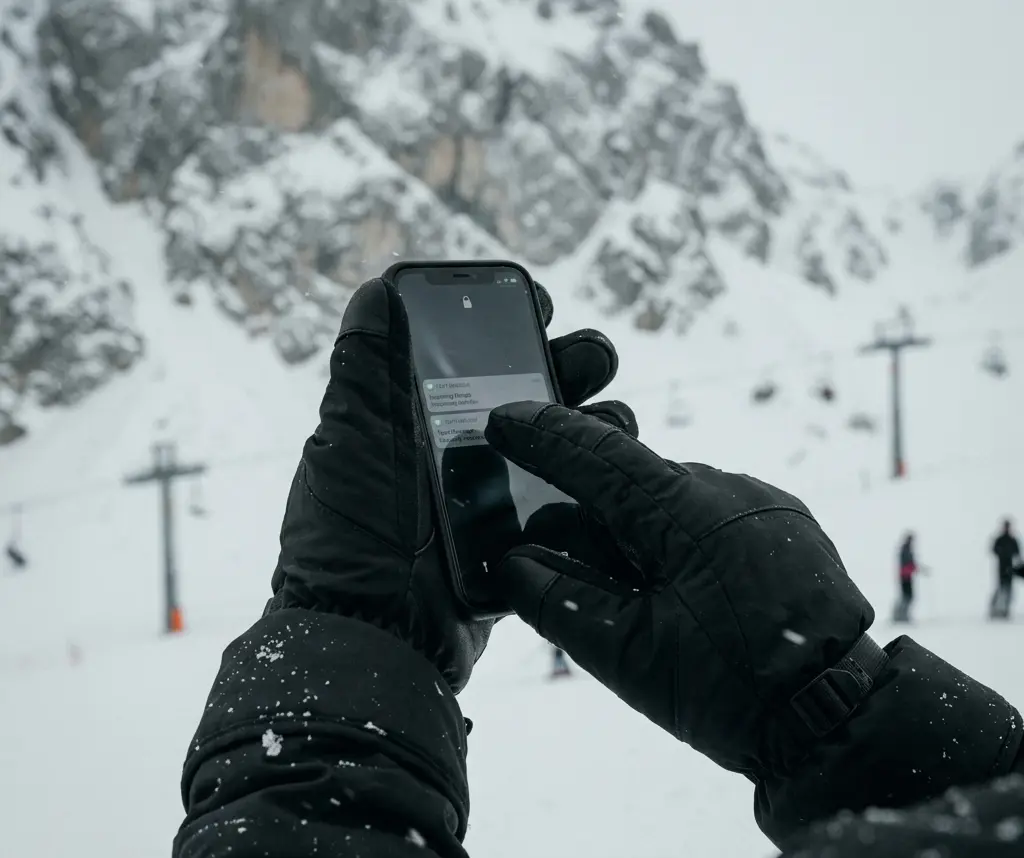
Quick answer: Cold hands on the mountain often have nothing to do with your gloves. Six things outside the glove itself usually decide whether your hands stay warm: your core temperature, whether your hands started cold, the seal at your wrist, how tight you grip your poles, your hydration, and how much wind actually hits your hands. Fix those, and even a mid-range glove performs well. Ignore them, and even a great glove won’t save you.
If you’re not sure your gloves are even the right ones to start with, the ski glove finder can help sort that out first.
A skier in a well-fitted, correctly-rated glove can still end up with painfully cold hands. That’s not a contradiction. The glove is only one part of a bigger system, and the rest of that system often matters more.
This post covers the parts of that system that have nothing to do with glove choice. Insulation type, membrane quality, and liner material are covered elsewhere on this site. This is about everything else — the body-level stuff most skiers never think to check.
- Core Temperature Decides How Much Warmth Reaches Your Hands
- Cold Hands at the Start Rarely Fix Themselves
- The Wrist Gap Cools Blood Before It Reaches Your Fingers
- Grip Pressure Cuts Off the Blood Flow That Warms Fingers
- Hydration and Blood Sugar Affect Hand Warmth More Than People Think
- A Neck Gaiter Does More for Your Hands Than You'd Guess
- A Few Things That Sound Like Fixes But Aren't
- Where You Hold Your Hands Changes How Much Wind They Take
- Common Mistakes That Undo Good Gloves
- Warning Signs Your Warming Strategy Isn't Working
- Matching Fixes to Your Situation
- Self-Check Before Your Next Ski Day
- When These Fixes Aren't Enough
- Decision Checklist
- Frequently Asked Questions
Core Temperature Decides How Much Warmth Reaches Your Hands
When your body gets cold, it protects your core first. It does this by narrowing the blood vessels in your hands, feet, and other extremities — a response called vasoconstriction. Less blood reaches your hands, so less warmth reaches them too.
This is why a glove alone can’t fully fix cold hands. A glove slows heat loss from the outside. It can’t force more warm blood into your fingers if your body has already decided to send that blood somewhere else. As the AHA explains, this vessel-narrowing response is the body’s main defense against losing heat in cold air, and it happens automatically, regardless of what’s on your hands.
If your torso is cold, your hands will be cold too, no matter how good your gloves are. That’s the part worth checking first.
What to actually do about it
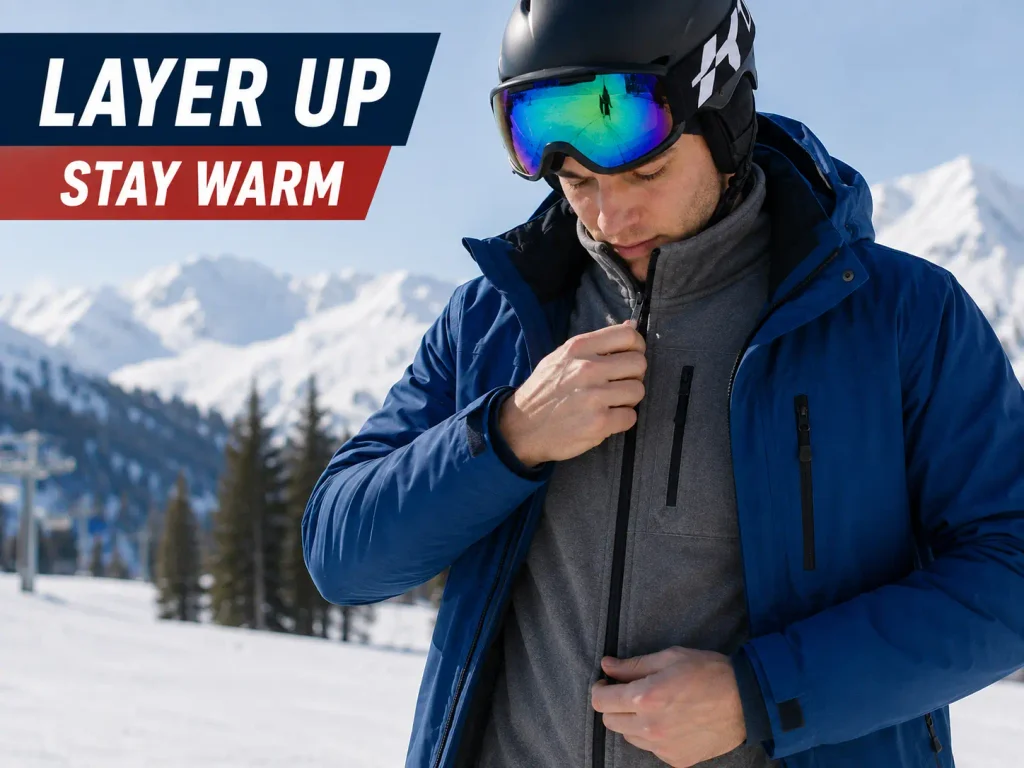
Before buying warmer gloves, check your mid-layer. Stand outside in your full ski outfit for ten minutes without moving. If your torso feels cold before your hands do, your mid-layer isn’t warm enough, and that’s the real fix — not a heavier glove.
Adding a warmer base or mid-layer is often cheaper than upgrading gloves, and it addresses the actual cause instead of trying to compensate for it at the hands.
Cold Hands at the Start Rarely Fix Themselves
If your hands are already cold before you put your gloves on — from the parking lot, the boot fitting, or standing around at the lift line — they usually don’t warm up on their own during the first few runs. Sometimes they get colder.
Once vasoconstriction has already narrowed the blood vessels in your hands, cold hands don’t generate enough heat locally to reverse it. Your body needs to sense that the bigger picture — your core — is stable again before it opens that blood flow back up.
A simple pre-warming routine
Keep your gloves on from the moment you leave a warm space, even in the parking lot. If your hands do get cold before gloves go on, warm them under your arms or against your chest for a couple of minutes first.
Start your first run at a steady, moderate pace instead of standing around or taking it easy. Movement generates body heat quickly, and that heat is what eventually tells your body it’s safe to send blood back to your hands.
The Wrist Gap Cools Blood Before It Reaches Your Fingers
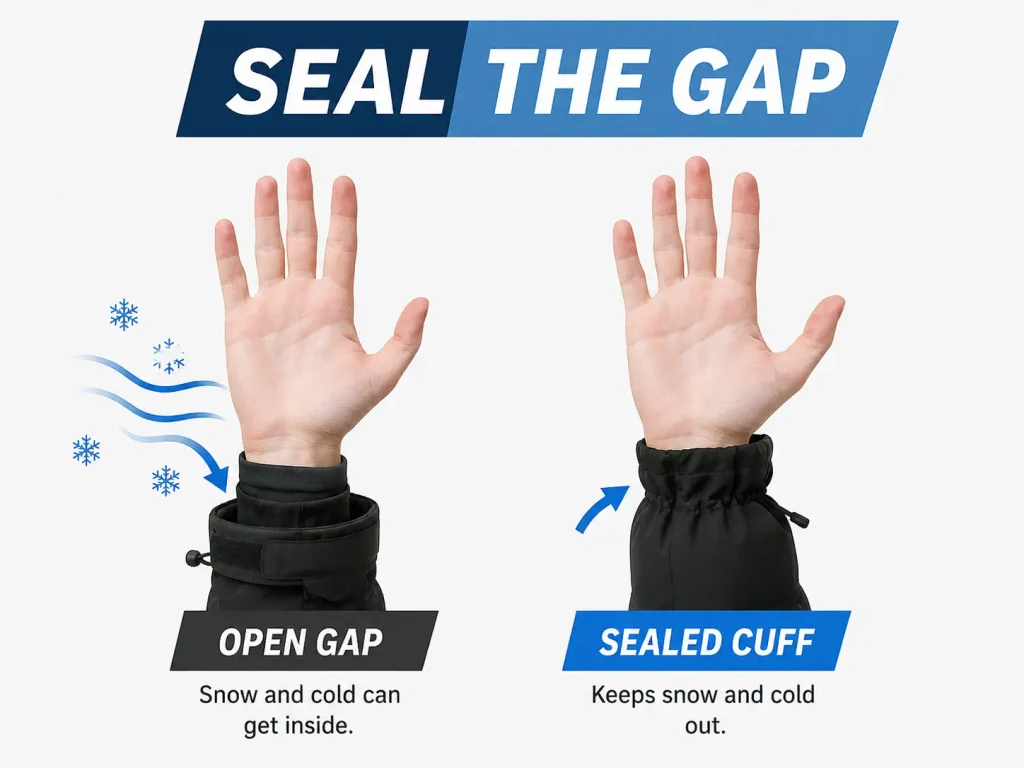
There’s a gap that often opens between your glove cuff and jacket sleeve when you extend your arm — which happens every time you plant a pole. Your wrist has major blood vessels running close to the surface there, and cold air hitting that spot cools the blood before it even reaches your fingers.
This is different from snow getting into your glove. Even with zero snow entry, cold air at the wrist alone measurably cools your hands over a ski day. And the gap doesn’t need to be big to matter — even a couple of centimeters is enough during arm extension.
How to check and fix it
Extend your arm like you’re planting a pole and look for a gap at the wrist. If there is one, tighten your jacket cuff and pull your glove’s gauntlet cuff over the sleeve, not under it. Cinch it down and check again with your arm extended.
If your jacket sleeve is too short to seal properly, a wrist gaiter — a thin stretchy tube that covers the gap — works as a simple fix. Skiers who switch to a gauntlet glove and suddenly feel warmer are often just fixing this seal, not gaining extra insulation.
Grip Pressure Cuts Off the Blood Flow That Warms Fingers
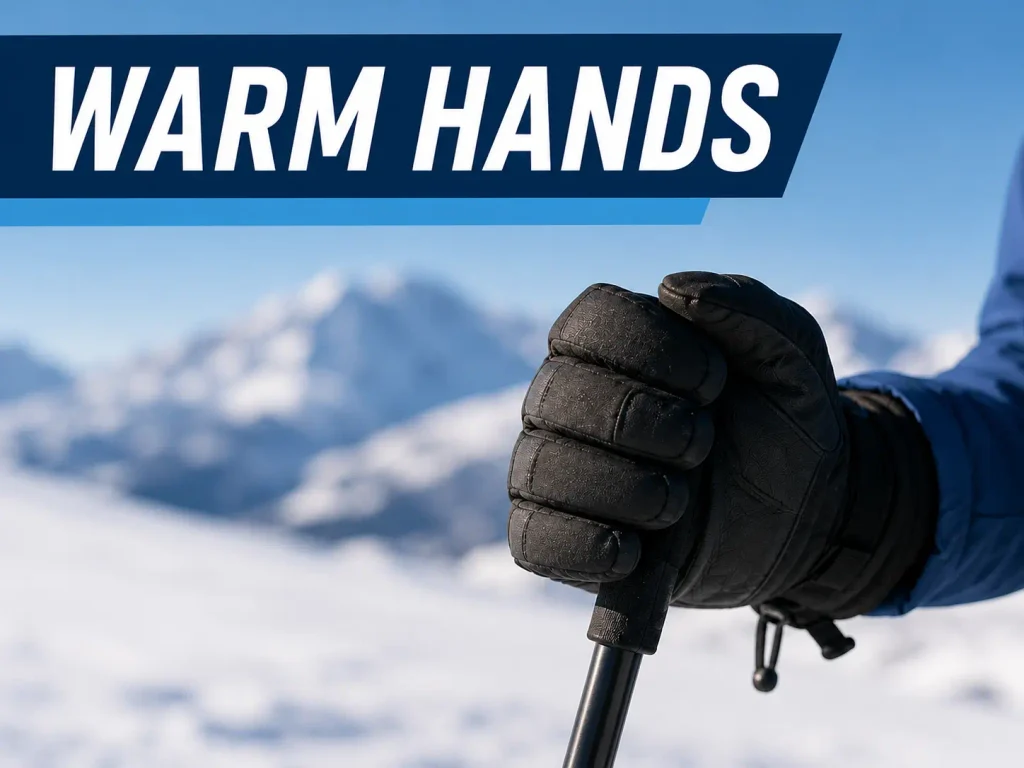
Holding your poles in a tight, constant grip keeps the muscles in your hand and forearm contracted the whole time. That kind of sustained muscle contraction — without any movement — physically compresses the blood vessels running through it.
That means less blood reaches your fingers for as long as you’re gripping tightly, on top of whatever cold air is already doing. A handgrip study measuring real forearm blood flow during sustained grip confirms this directly: blood flow to the working muscle drops measurably during a tight, sustained grip, even at moderate effort.
The fix costs nothing
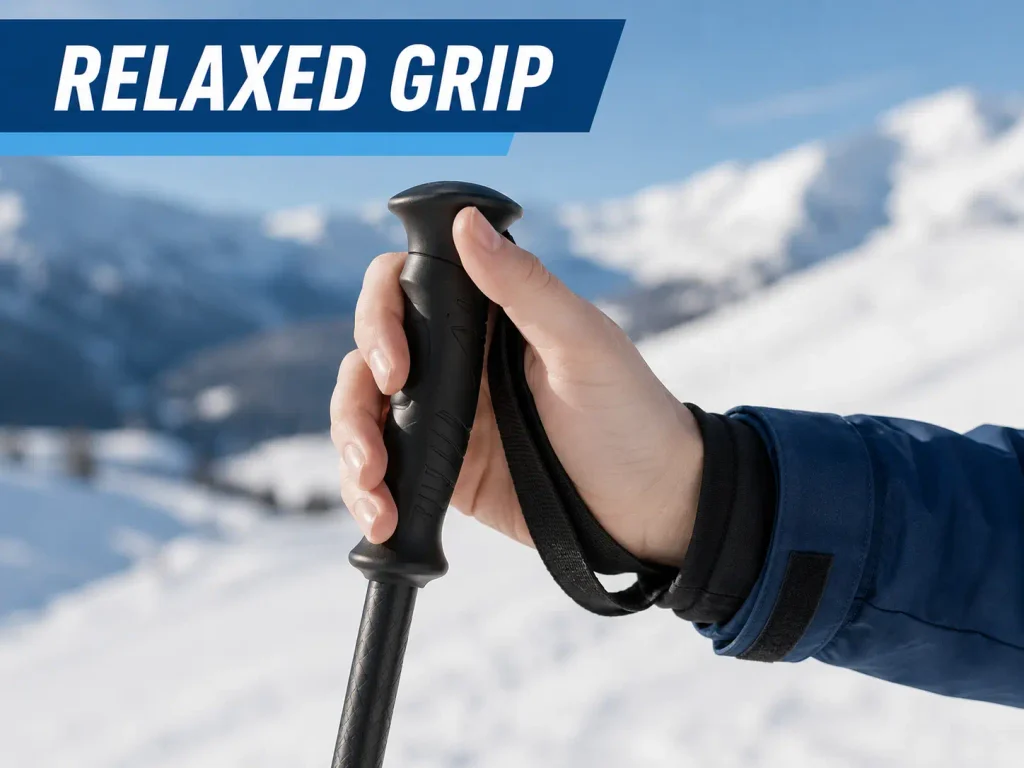
On your next run, loosen your grip to just three fingers instead of a full tight fist. Let the pole strap take the load between plants instead of your hand.
Every few minutes, open and close your hand fully five times to force fresh blood back into your fingers. On chairlifts, let go of your poles completely and rest your hands instead of gripping the safety bar the whole ride.
This is very likely the cause if your fingertips are cold but your palm feels fine. The palm gets blood from bigger vessels that grip pressure affects less, which is why the cold shows up at the fingertips first and most noticeably.
Hydration and Blood Sugar Affect Hand Warmth More Than People Think
Dehydration reduces your total blood volume, and less blood volume means less blood available to send to your hands. Your body prioritizes your core organs when blood volume drops, which extends that same vasoconstriction response even further into your hands and feet.
Cold, dry mountain air makes this worse than most people realize. You lose more water through breathing at altitude, in cold dry air, than you do at sea level — and this kind of fluid loss doesn’t come with the usual sweating or thirst cues, so most skiers never notice it happening. Research from the NAP research on cold and high-altitude environments confirms respiratory water loss rises significantly in exactly these conditions.
Low blood sugar plays a role too. Staying warm in cold air burns through glucose faster than normal, even without visible shivering. Go three or four hours without eating on the mountain, and you’re running low on the fuel your body needs to keep producing heat.
A simple routine
Drink before you’re thirsty — about 500ml before your first run, and small sips every hour after that. Keep your water bottle inside your jacket so it doesn’t freeze.
Eat something with carbs every couple of hours, not just at lunch. A piece of fruit or a granola bar is enough. If your hands are fine in the morning but consistently cold by afternoon, this is usually why.
A Neck Gaiter Does More for Your Hands Than You’d Guess
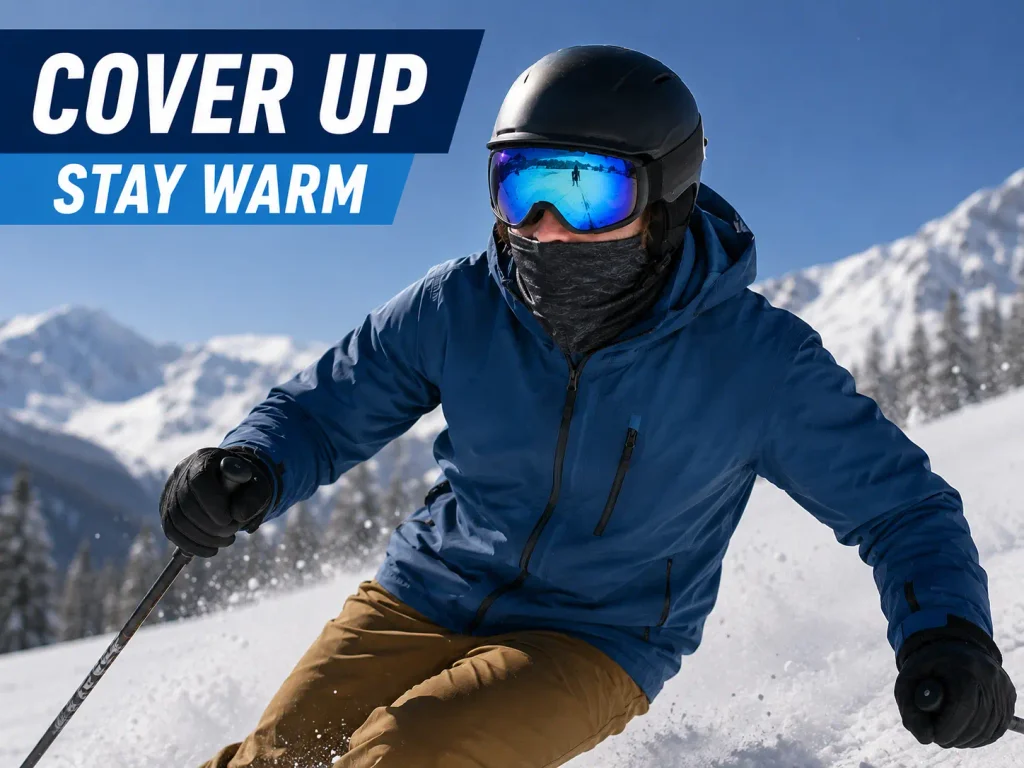
Your neck carries a large volume of blood close to the surface, including the vessels supplying your upper body and arms. Losing heat there cools blood that’s on its way to your hands, the same way an open wrist gap does.
Wearing a neck gaiter or buff consistently — not just pulling it up when you already feel cold — keeps that blood warmer on its way out to your extremities. This matters most for skiers who wear a helmet without any neck coverage, since the gap between helmet and jacket collar is a real cold-air entry point.
Kids benefit from this more than adults do, since they lose proportionally more heat through the neck relative to their body size.
A Few Things That Sound Like Fixes But Aren’t
Some habits feel productive but don’t actually solve cold hands. Shaking your hands hard between runs, for example, feels like it should help, but it mostly just tires your arm without meaningfully changing blood flow to your fingers.
Cranking the heat in the car during the drive up doesn’t carry over once you’re outside for more than a few minutes. Your body re-adjusts to the ambient temperature quickly, so a warm car ride isn’t a substitute for actual insulation on the mountain.
Wearing two pairs of gloves stacked on top of each other usually backfires too. It compresses the insulation in both layers, which reduces the trapped air that actually creates warmth, often leaving you colder and less able to grip your poles.
Where You Hold Your Hands Changes How Much Wind They Take
Wind chill affects gloves just like it affects bare skin. A glove rated for a certain temperature in still air performs worse in the same temperature with wind, because moving air pulls warmth off the glove’s surface faster than the insulation can replace it.
Hand position changes how much wind actually reaches your gloves. Hands held out in front, facing directly into the wind, take the full force of it. Hands held lower, angled down and closer to your body, get some natural shelter.
A free adjustment
On downhill runs, keep your hands lower and let your pole tips trail behind instead of reaching forward. On windy chairlift rides, tuck your hands against your thighs or inside your jacket instead of resting them on an exposed pole grip.
Common Mistakes That Undo Good Gloves
Buying warmer gloves before checking your mid-layer. If your core is cold, a better glove helps less than you’d expect. Check your torso insulation first — it’s usually the cheaper and more effective fix.
Expecting cold hands to warm up on their own. They usually don’t, and sometimes get worse. Pre-warm before your first run instead of hoping activity alone will fix it.
Wearing gloves that are too tight. A snug glove is fine. A tight one restricts blood flow on top of compressing your insulation. If you see finger indents after taking gloves off, they’re too tight.
Ignoring hydration because it doesn’t feel hot out. Cold weather dehydration doesn’t come with the usual thirst signals. Drink on a schedule, not based on how thirsty you feel.
Gripping the chairlift bar the whole ride. This keeps the same circulation restriction going during the part of the day your hands most need to recover.
Warning Signs Your Warming Strategy Isn’t Working
| Warning Sign | What It Usually Means |
| Hands warm up skiing hard, cold again at rest | Core isn’t warm enough to keep blood flow open when you’re not moving |
| Fingertips cold, palm feels fine | Grip pressure is restricting blood flow to the fingers specifically |
| Hands fine in the morning, cold by afternoon | Dehydration or low blood sugar building up over the day |
| Cold hands despite a correctly-rated glove | Check the wrist seal and your mid-layer before blaming the glove |
| Finger indents visible after removing gloves | Gloves are too tight and restricting circulation |
Matching Fixes to Your Situation
| Your Symptom | Likely Cause | What to Try First |
| Cold hands, cold torso too | Insufficient mid-layer | Add core insulation before upgrading gloves |
| Cold hands from the very first run | Started the day with cold hands | Pre-warm before gloves go on, ski a steady first run |
| Cold fingertips, warm palm | Tight pole grip | Loosen to three fingers, pump hand every few minutes |
| Cold hands worsen through the afternoon | Dehydration or low blood sugar | Drink on a schedule, snack every couple hours |
| Cold hands despite a good glove and warm core | Wrist gap or wind exposure | Check the wrist seal, adjust hand position in wind |
Self-Check Before Your Next Ski Day
Test your mid-layer honestly. Stand outside in your full kit for ten minutes without skiing. If your torso feels cold first, that’s your priority fix, not your gloves.
Check your wrist seal. Extend your arm like a pole plant and look for a gap. If there’s one, tighten your cuff and reseal the gauntlet over it.
Notice your grip. If your hand feels tense and tightly closed around the pole most of the run, that’s worth loosening deliberately.
When These Fixes Aren’t Enough
These fixes cover normal circulation in otherwise healthy skiers. They won’t fully solve cold hands caused by Raynaud’s or similar circulatory conditions, where blood vessels can spasm shut regardless of temperature or core warmth. If that sounds like your situation, a heated glove is a more direct solution than any of the adjustments above, since it adds warmth independently of your circulation.
These fixes also can’t compensate for a glove that’s genuinely the wrong rating for your conditions. A resort glove isn’t going to work at extreme backcountry temperatures no matter how well you manage everything else. If your symptoms go beyond typical cold hands — numbness that doesn’t resolve, color changes, or pain — the numb fingers guide covers when that crosses into something worth taking more seriously.
Decision Checklist
| Situation | Action |
| Torso feels cold before hands do | Add mid-layer insulation before upgrading gloves |
| Hands cold from the very first run | Start pre-warming routine before gloves go on |
| Hands warm skiing, cold at rest | Improve core insulation to keep circulation open at rest |
| Fingertips cold, palm warm | Loosen pole grip, add hand pump every few minutes |
| Hands worse by afternoon | Start hydration and snack schedule from the morning |
| No neck coverage while skiing | Add a gaiter and wear it consistently, not just when cold |
Cold hands on the mountain are rarely just a glove problem. Core temperature, how your day starts, your wrist seal, your grip, your hydration, and even your neck all play a real part — often a bigger one than the glove itself. Fix those, and most skiers find their existing gloves work a lot better than they expected. If you’re shopping for a new pair anyway, gloves under $50 is a reasonable place to start once the rest of this list is handled.
Frequently Asked Questions
Why do my hands warm up when I ski hard but get cold when I stop?
Hard skiing raises your core temperature, which tells your body it’s safe to send blood to your hands. When you stop, that heat production drops, and your body starts narrowing blood flow to your hands again to protect your core.
Do hand warmers actually help?
Yes, they add real, measurable warmth for several hours. They work best alongside the fixes above, not as a replacement for them — a hand warmer won’t fully compensate for a cold core or a tight grip.
Is it my gloves or something else if my hands are cold?
Check the six factors in this post before assuming it’s the glove. If your torso is cold, your grip is tight, or you’re dehydrated, a better glove alone usually won’t fix it.
How tight should ski gloves fit?
Snug enough to grip comfortably, loose enough to make a full fist without resistance. If you see finger indents after taking them off, they’re too tight and likely restricting circulation.
Does a neck gaiter really make a noticeable difference to hand warmth?
Yes, more than most people expect, since your neck carries a large volume of blood on its way to your arms and hands. Wearing one consistently, not just when you already feel cold, has the biggest effect.