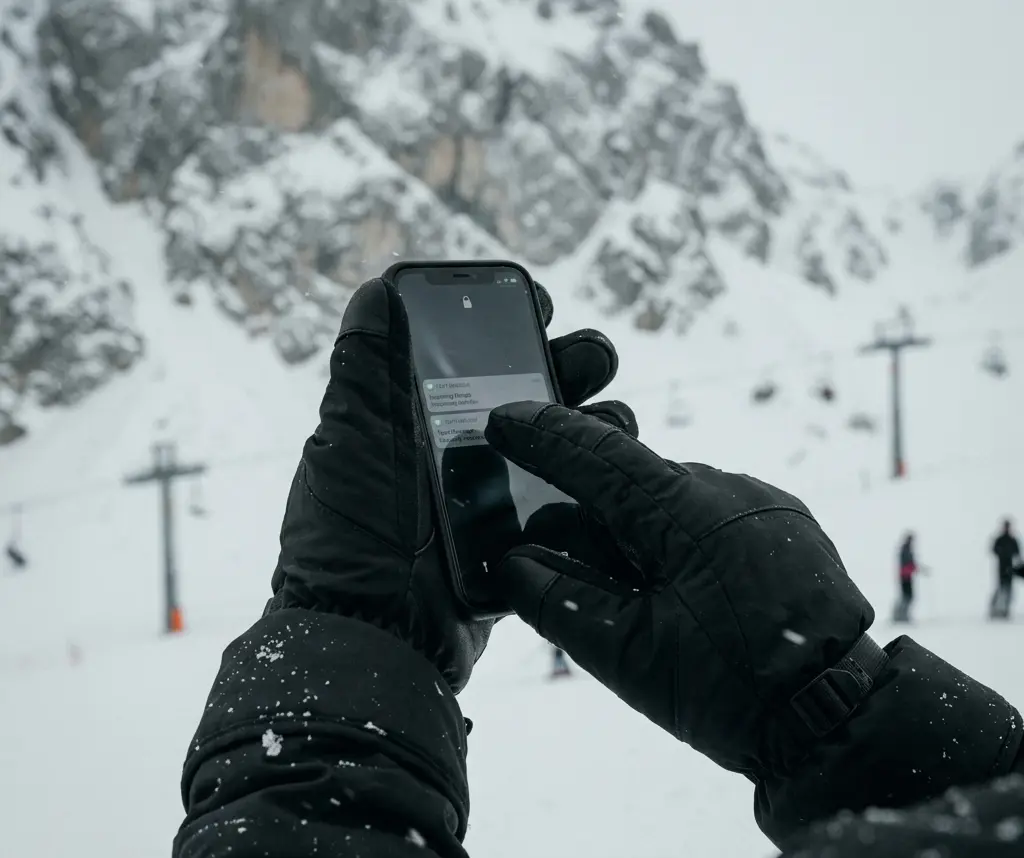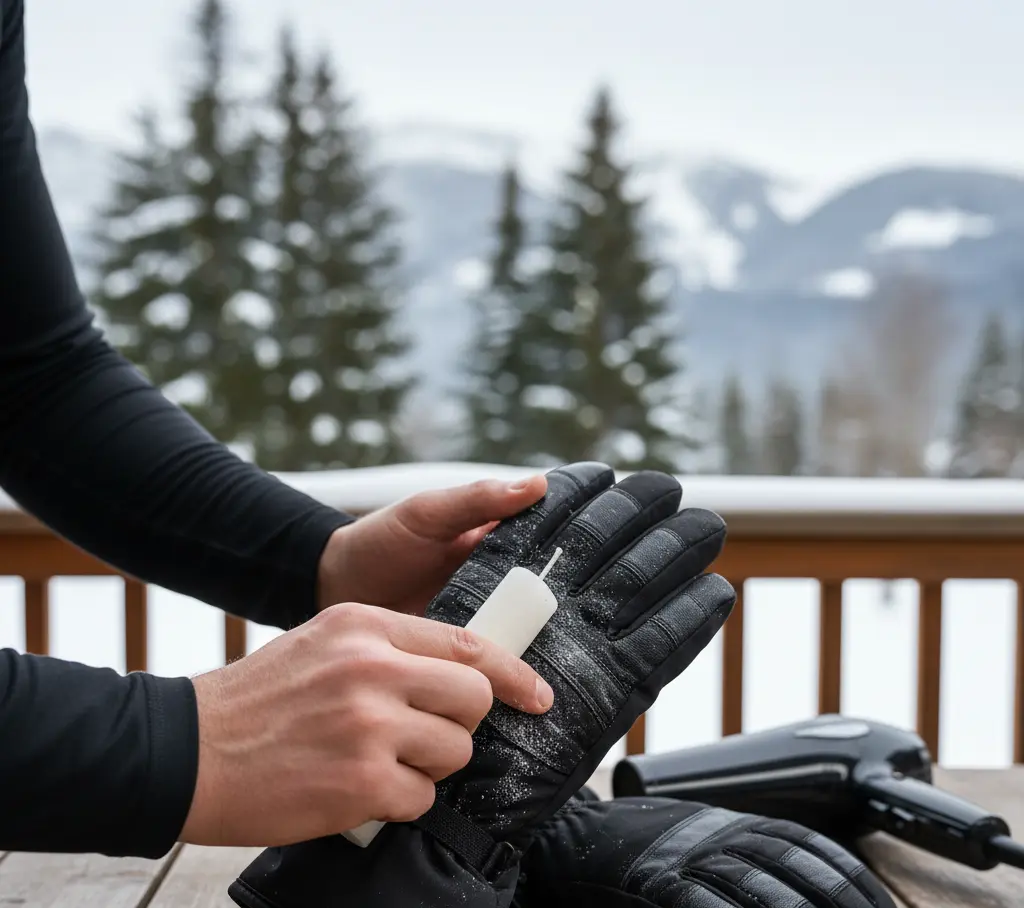
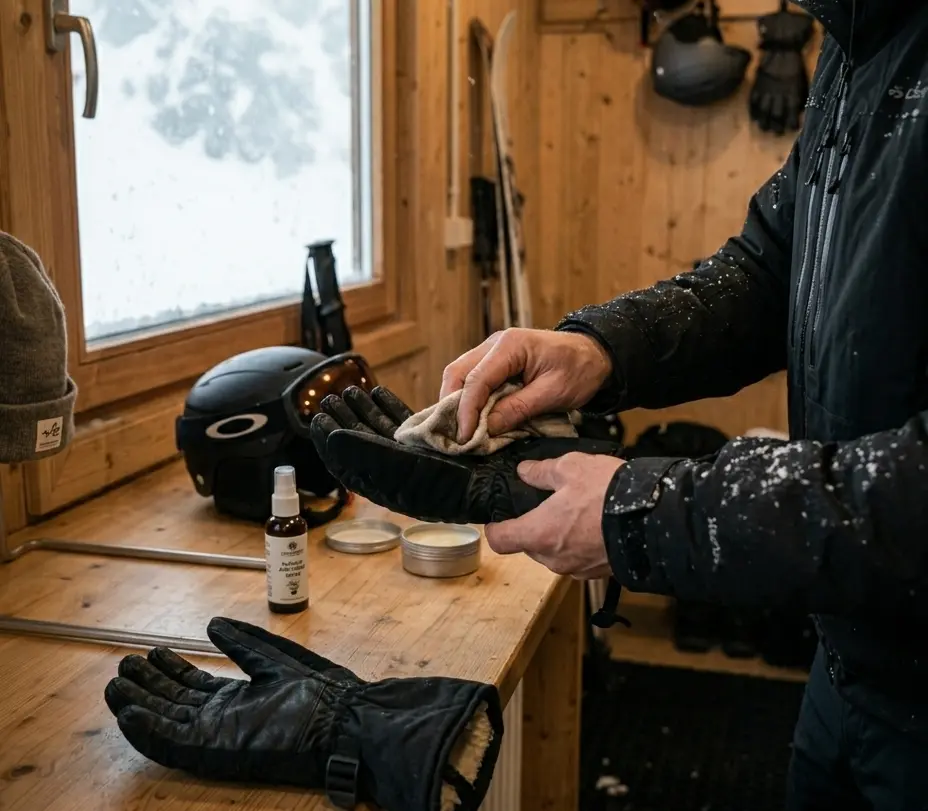
If your ski gloves start smelling after just a few days, you’re not alone. The smell isn’t actually the problem — it’s a sign of bacteria building up inside the glove lining after use. This happens when sweat, heat, and trapped moisture create the perfect environment for odor to develop. To understand how to prevent ski gloves from smelling, you have to understand that the smell itself is not the problem — it is a symptom.
The actual problem is bacterial colony growth in the glove lining, and the three conditions that allow it are warmth, moisture, and organic material. Remove any one of those three and bacterial growth slows significantly. Remove all three and the smell does not develop at all.
Most smell prevention advice focuses on masking the problem — sprays, sachets, deodorizers that cover the odor rather than stopping the cause. These approaches work temporarily but do not interrupt the bacterial cycle. The smell returns within a session or two because the conditions that produce it have not changed. Prevention that actually works targets the cause: reducing the organic material bacteria feed on, reducing the moisture they need to grow, and reducing the warmth of the environment they grow in.
Quick Answer: How to Prevent Ski Gloves from Smelling
- Remove gloves and open cuffs immediately after use
- Wipe the lining to remove sweat and skin residue
- Hang gloves in open air — never seal them while damp
- Use a liner on multi-day trips
- Keep gloves dry during storage and transport
This guide covers the prevention system specifically — what to do before, during, and after each ski session to interrupt bacterial growth before smell develops. The focus here is prevention: stopping the conditions that produce smell in the first place.
The Bacteria Cycle Inside a Ski Glove
The lining of a ski glove is a warm, enclosed, protein-rich environment during use. Hand skin continuously sheds dead cells and produces sweat containing proteins and salts. In a glove worn for four to six hours, the lining accumulates a significant quantity of this organic material. Under normal use, this is not a problem — the bacteria that feed on it are present in very small numbers and the environment is not yet ideal for rapid growth.
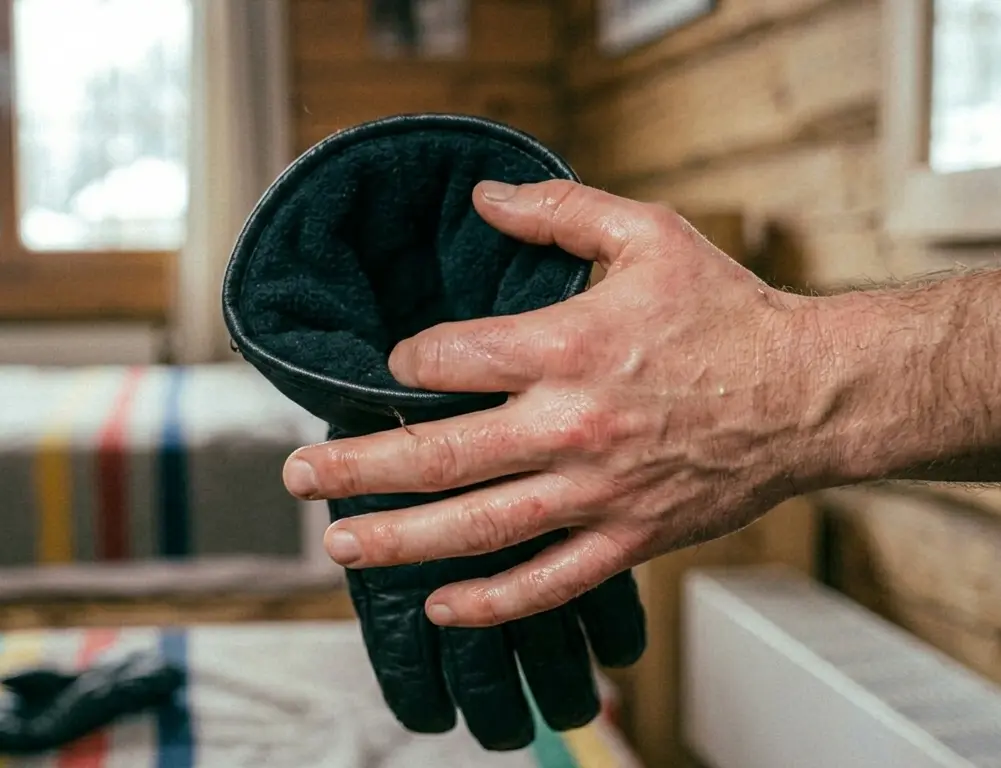
The critical window is the period after skiing ends. When the glove is removed, the lining is warm and moist from the session. If the glove is sealed in a bag, stuffed in a boot, or stored in an enclosed space, three things happen simultaneously: the warmth is retained, the moisture cannot escape, and the organic material is available. Bacteria multiply quickly in warm, damp conditions, which is why odor can develop within hours after use. Within four to six hours in an enclosed warm environment, a glove that had no noticeable smell at the end of the ski day can develop a significant odor.
The smell compounds across consecutive days. Each session adds more organic material to the lining. If that material is not interrupted between sessions, the bacterial colony grows larger with each day. By day three or four of a ski trip with no prevention, the smell is strong enough to be noticeable immediately when the gloves are put on — not just at the end of a session.
The smell does not come from the ski day itself. It develops in the hours after skiing when the glove is warm, moist, and enclosed. This is why prevention habits in the thirty minutes after each session matter more than anything done during the ski day.
What I Learned When My Ski Gloves Started Smelling Bad
The first time I paid serious attention to glove smell was on a five-day trip where I used the same pair of mid-weight synthetic gloves every day with no prevention beyond storing them in my ski bag overnight. By day three, the smell when putting the gloves on in the morning was strong enough that I noticed it before my hands were fully in. By day five, it was strong enough that I could smell it from outside the gloves at close range.
I tested a prevention approach on the following season’s trip using the same glove type, same conditions, and same ski day length. The only changes were: opening the cuff fully and hanging the gloves in the room within thirty minutes of finishing each day, removing the liner and hanging it separately, and rubbing the interior lining briefly with a dry cloth before hanging to remove surface skin cell accumulation. No sprays, no sachets, no products.
After five identical days in the same conditions, the gloves had no detectable odor beyond a faint, neutral textile smell. The lining felt and smelled clean at the start of each morning session. The difference was entirely from interrupting the three conditions bacterial growth requires: the faster drying removed the moisture, the open storage reduced the warmth, and the dry-cloth wipe reduced the organic material load the bacteria had to feed on.
One frustration from this testing: the improvement was only fully consistent when all three actions were done together. On the days during testing where I did two of the three but skipped the cloth wipe, I noticed a slightly stronger smell developing by the end of the fifth day than on days when all three were done. This confirmed that the prevention works as a system — each element removes one of the three conditions, and skipping any one leaves a condition available for bacteria to use.
How to Prevent Ski Gloves from Smelling — The Three-Part System
Part 1 — Interrupt the organic material supply
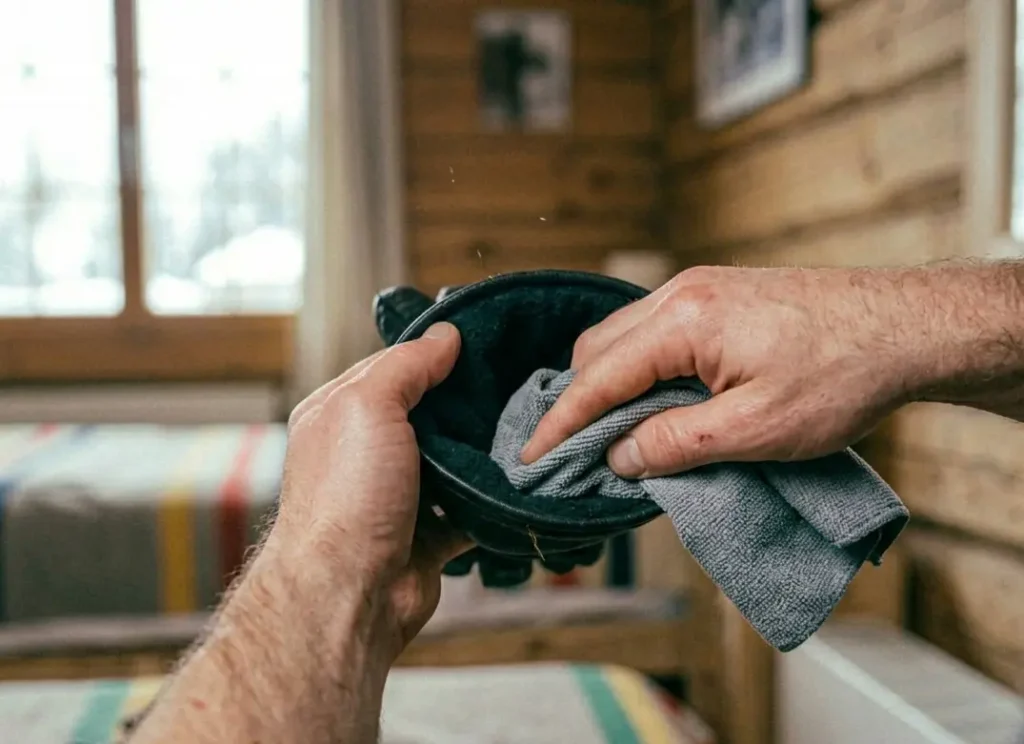
The primary organic material bacteria feed on in a ski glove lining is dead skin cells and proteins from hand sweat. Removing this material from the lining surface before bacteria have time to colonies it is the most direct prevention measure available. The method that works for this is a dry cloth wipe of the interior lining immediately after removing gloves — before the organic material dries and bonds to the lining fibers.
Turn the glove inside out if the lining is removable. For gloves with fixed linings, reach inside with a dry cloth and wipe the palm and finger zones firmly. The cloth pulls surface skin cells and sweat residue out of the lining before bacteria use them as a food source. This takes thirty seconds per glove and removes a meaningful proportion of the available organic material from each session before it can be colonized overnight.
The timing matters. Doing this immediately after removing gloves — while the lining is still warm and the organic material is on the surface — is significantly more effective than doing it the next morning after the material has dried into the fibers. Dried organic material bonds to lining fibers and requires washing to fully remove. Fresh organic material wipes off with a dry cloth.
Part 2 — Remove the moisture environment
Bacteria need moisture to grow. A glove lining that reaches ambient room dryness within two hours of the session ending does not provide adequate moisture for rapid bacterial growth. A glove sealed in a bag or left with the cuff closed retains moisture in the lining for eight to twelve hours — more than enough time for a significant bacterial cycle.
Open the cuff fully within thirty minutes of each session. Hang the glove in open room air rather than placing it flat or sealed. For gloves with removable liners, remove the liner and hang it separately — a liner left inside the shell traps moisture in both pieces and neither dries adequately. The moisture removal step does not require any equipment and produces a measurable reduction in bacterial growth rate by removing the moisture condition.
Part 3 — Reduce the warmth environment
A sealed glove in a bag retains heat from the session for several hours. Open storage at room temperature drops the glove lining to ambient temperature within twenty to thirty minutes, reducing the warmth condition that accelerates bacterial reproduction. This step requires nothing more than not sealing gloves in bags or closed spaces immediately after skiing.
These three steps work together — skip one, and odor can still develop. Testing across multiple ski seasons confirmed that this system, applied consistently after every session, prevents smell from developing across trips of up to eight consecutive days without any washing between sessions.
The Liner Strategy — Keep the Main Glove Clean
A thin liner worn under the outer ski glove is the most effective structural prevention measure available for smell. The liner sits directly against the skin and absorbs the sweat and skin cells that would otherwise deposit into the outer glove lining. Because the liner is a separate, washable piece, it can be washed nightly on a multi-day trip while the outer glove is only exposed to the organic material that passes through the liner.
Merino wool liners have a specific advantage for smell prevention beyond their moisture-wicking properties: wool contains lanolin, a natural antimicrobial substance that inhibits bacterial growth in the fiber. A merino liner washed and dried between sessions is essentially resetting to a near-zero bacterial load each day. Synthetic liners dry faster and wick moisture effectively but do not have the inherent antimicrobial property of wool.
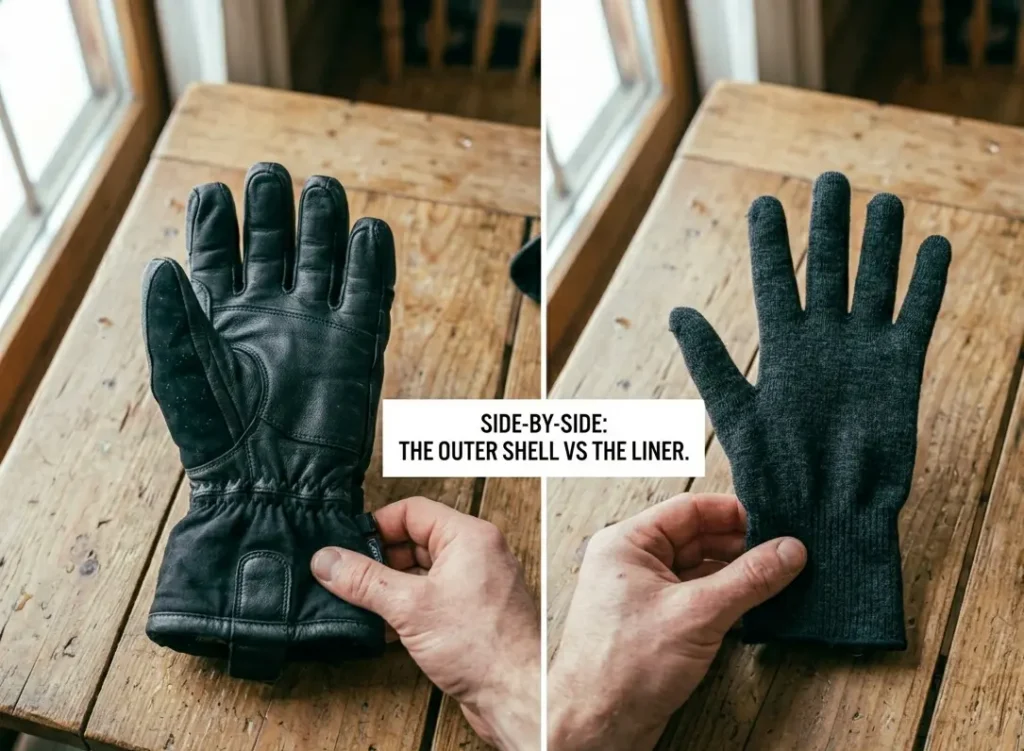
The liner strategy does not eliminate the need for the three-part prevention system on the outer glove — the outer glove still accumulates some organic material through the liner. But it reduces that accumulation significantly. In testing with a liner versus without, the outer glove lining accumulated noticeably less organic material after a full day with a liner in place. Over a five-day trip, the outer glove with a liner used every day showed no smell at the end of day five. Without a liner, smell was detectable by day three using the same prevention system on the outer glove.
A merino wool liner washed nightly resets to near-zero bacterial load every day. For multi-day ski trips, this single change extends how long the outer glove stays fresh more than any other prevention measure.
Storage and Transport — When Smell Develops Most
The most common time smell develops on ski trips is during transport — the period when gloves are packed in a bag, suitcase, or ski pack and cannot ventilate. A glove that had no detectable smell at the end of the ski day can develop strong odour after eight to ten hours in a sealed bag. This is the enclosed warm environment that creates ideal bacterial growth conditions.
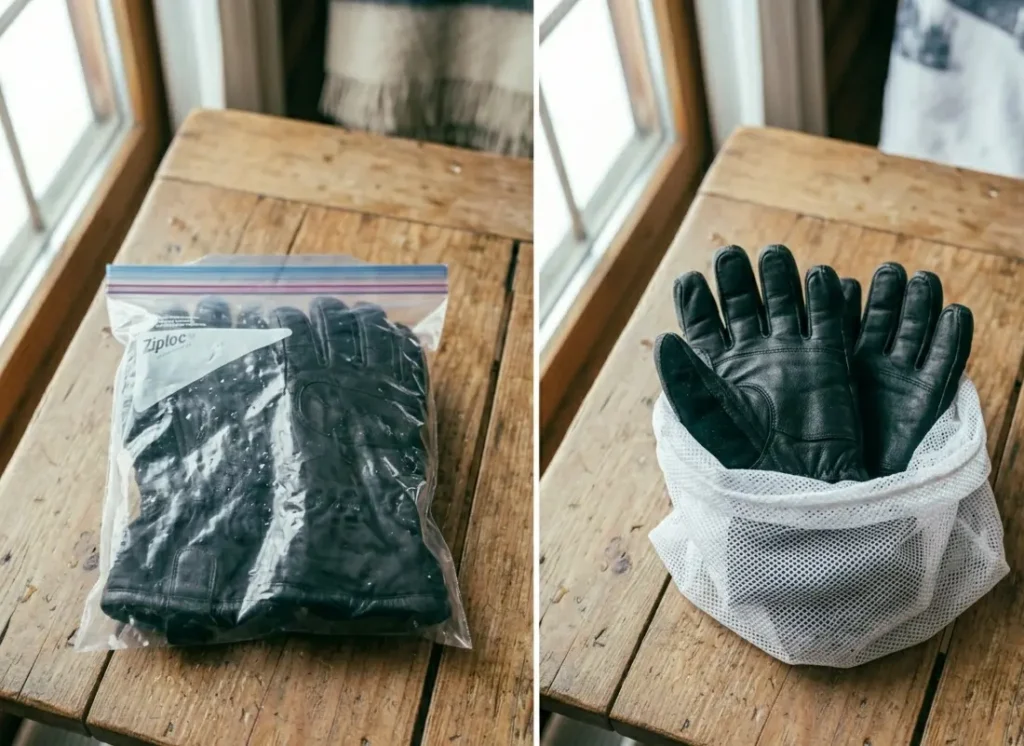
The prevention for this is straightforward: never pack gloves in a sealed container until they have reached ambient temperature and the lining is dry to the touch. A glove that has been open-hung for two to three hours after the session will have reached room temperature and lost most of its moisture. At that point, the bacterial growth conditions have been interrupted and packing for transport does not restart the cycle significantly.
For overnight packing between ski days — storing gloves in a hotel room for an early departure — use a breathable mesh bag or pillowcase rather than a plastic bag or sealed compartment. Mesh allows continued air circulation even in transport. A plastic bag reintroduces the sealed warm environment and restarts the bacterial growth cycle regardless of how well the gloves were dried before packing.
For multi-day car trips between mountains
Gloves stored in the car overnight in winter temperatures are kept cold — bacterial growth essentially stops below 4°C. This is genuinely effective as an incidental prevention measure. However, gloves stored in a sealed bag in a warm car or trunk at moderate temperatures are in near-ideal bacterial growth conditions. If gloves must be stored in a vehicle, an unsealed mesh bag in the coldest part of the vehicle is preferable to a sealed bag in a warm trunk.
Activated Charcoal Inserts — How They Work and When They Help
Activated charcoal is a porous carbon material with an extremely high surface area — a single gram of activated charcoal can have a surface area of over 500 square meters due to its porous structure. That surface area adsorbs odor molecules and some volatile organic compounds produced by bacterial metabolism, reducing the detectable smell in an enclosed space.
Small activated charcoal sachets placed inside gloves during storage work by adsorbing the odor compounds that bacteria produce as they metabolize organic material. They do not kill bacteria, do not remove organic material, and do not dry the lining. What they do is reduce the odor signals produced by bacterial activity that is already occurring. This makes them a supplementary tool rather than a primary prevention measure.
The practical use case for activated charcoal inserts is during transport and storage — periods when the other prevention steps cannot be applied because the gloves are sealed. Placing an insert inside each glove before packing for travel reduces odor accumulation during the transport period without requiring the gloves to remain open. They are reusable — placing the sachets in direct sunlight for two to three hours regenerates their adsorption capacity by driving off the accumulated compounds.
Where charcoal inserts do not help: they cannot address a lining that already has a strong established odor. Adsorption is a surface process that works on new odor molecules. A lining that is already colonized with a significant bacterial population producing odor continuously will outpace the charcoal’s adsorption capacity quickly. Inserts work best as a maintenance tool in gloves that are already being managed with the prevention system, not as a rescue tool for gloves that already smell.
Prevention Methods — What Each One Actually Does
| Prevention Method | What It Does and Its Limits |
| Dry cloth wipe of lining immediately after session | Removes fresh organic material before bacterial colonization; most effective when done immediately; less effective if left until the next day |
| Open-cuff hanging in room air | Removes moisture condition; requires no equipment; must be done within 30 minutes while lining is still warm |
| Liner removed and hung separately | Prevents liner moisture from keeping shell lining damp; liner intercepts most organic material; requires a removable liner |
| Merino wool liner washed nightly | Resets liner to near-zero bacterial load each day; most effective prevention on multi-day trips; requires liner washing routine |
| Activated charcoal inserts during storage | Adsorbs odor molecules during sealed storage; supplements but does not replace the three-part system; reusable |
| Odor-masking sprays on lining | Covers odor temporarily; does not interrupt bacterial growth; smell returns within one to two sessions |
| Cedar or lavender sachets | Mild antimicrobial properties; primarily masks rather than prevents; pleasant but not sufficient alone |
| Storing gloves in cold temperatures | Slows bacterial growth significantly; incidental benefit of cold-weather storage; only practical in specific situations |
| Baking soda inside gloves | Neutralizes acidic odor compounds; does not address bacterial growth; useful as a secondary measure |
Mistakes That Start the Smell Cycle
Sealing gloves in a bag immediately after skiing. This is the single most common cause of smell developing on ski trips. The glove is warm and moist from the session. A sealed bag creates the enclosed warm moist environment that maximizes bacterial growth rate. Even one night in a sealed bag with a fresh organic material load in the lining can produce noticeable smell by the next morning.
Leaving the liner inside the shell overnight. The liner holds moisture against the outer shell lining. Without the liner removed, the shell lining may still be damp twelve hours after the session. That extended moisture exposure significantly increases the bacterial growth window compared to a shell with the liner removed and the cuff open.
Skipping the lining wipe because the glove does not smell yet. Prevention works by removing organic material before it is colonised, not after smell has developed. By the time smell is detectable, the bacterial colony is already established and removal requires washing. The wipe is effective specifically because it happens before the colonization cycle begins.
Using a spray deodorizer as the primary prevention method. Sprays mask odor molecules but do not interrupt bacterial growth. A deodorized glove that has not had the three-part prevention system applied is a glove with a strong smell masked by fragrance. The fragrance fades within hours and the underlying bacterial odor reasserts. Sprays are useful as a short-term measure but produce no lasting prevention if used alone.
Not replacing a liner that has accumulated a season of bacteria. A liner used for a full season without adequate prevention or periodic washing accumulates bacterial colonies that are embedded deep in the fiber. At that stage, the liner itself is a smell source that contributes to outer glove smell regardless of how well the outer glove is maintained. At the end of each season, assess whether liners need replacing based on their smell after thorough drying.
Early Warning Signs Smell Is Starting
| Warning Sign | What It Indicates and What to Do |
| Faint smell when putting gloves on in the morning (not noticeable during wear) | Early bacterial colonization — increase prevention immediately; smell is still addressable without washing |
| Smell noticeable immediately when cuff is opened | Moderate colonization — prevention alone will not clear this; washing is now needed before prevention can maintain the result |
| Smell persists after a full day of open-air drying | Established bacterial colony embedded in lining fibers; washing required; prevention restarts the cycle after washing |
| Liner smells despite nightly hanging | Liner needs washing; wearing a colonized liner against the skin transfers bacteria to the outer glove regardless of outer glove prevention |
| Smell stronger on day two than day one despite prevention | One of the three prevention conditions is being missed; review cloth wipe, cuff opening, and liner removal |
| No smell from gloves but hands smell after wearing them | Bacteria transferring from lining to hands during wear; bacterial load in lining is high enough to warrant washing |
What Your Situation Requires
Single ski day, gloves stored for next season after
After the last session, do the full three-part prevention system and allow the gloves to dry completely — ideally 24 hours — before off-season storage. Store in a breathable bag or pillowcase, not in a plastic bag. A glove stored clean and fully dry will have no smell development during off-season storage because there is no moisture available for bacterial growth.
Multi-day trip, same gloves used every day
All three prevention steps after every session without exception. Add a merino wool liner washed nightly. Consider a single activated charcoal insert in each glove during overnight storage as a supplementary measure. By day five or six, even with consistent prevention, a faint smell may begin developing in the outer glove — this is normal for heavy daily use without washing and does not indicate failure of the prevention system.
High-sweat skier or warm-condition days
High sweat output means more organic material deposited in the lining per session. The lining wipe needs to be more thorough — use a damp cloth rather than a dry one to pull more material off the lining surface. Allow longer drying time before packing. Consider swapping to a fresh liner at midday on heavy sweat days.
Gloves already starting to develop smell mid-trip
Prevention alone will not reverse established odor — it only prevents new odor from developing. At the point where smell is noticeable when the cuff is opened, washing is required to clear the existing colony. After washing, resume the prevention system to keep the gloves clean through the rest of the trip. The washing guide for your glove type is covered in a separate post.
Daily Prevention Checklist — After Every Session
| Action | Why It Matters |
| Wipe interior lining with dry cloth within 30 minutes of removing gloves | Removes fresh organic material before bacteria colonies it — most time-sensitive step |
| Open cuff fully and hang shell in open room air | Removes moisture condition; must happen while glove is still warm for fastest moisture escape |
| Remove liner and hang separately | Prevents liner moisture keeping shell lining damp; doubles shell drying speed |
| If using merino liner — wash it tonight | Resets liner to near-zero bacterial load; critical for multi-day trips |
| Do not seal gloves in a bag until lining is dry to the touch | Sealing while warm and damp creates ideal bacterial growth conditions for overnight |
| If packing for transport — use mesh or breathable bag only | Allows continued air circulation; prevents sealed-bag bacterial growth cycle |
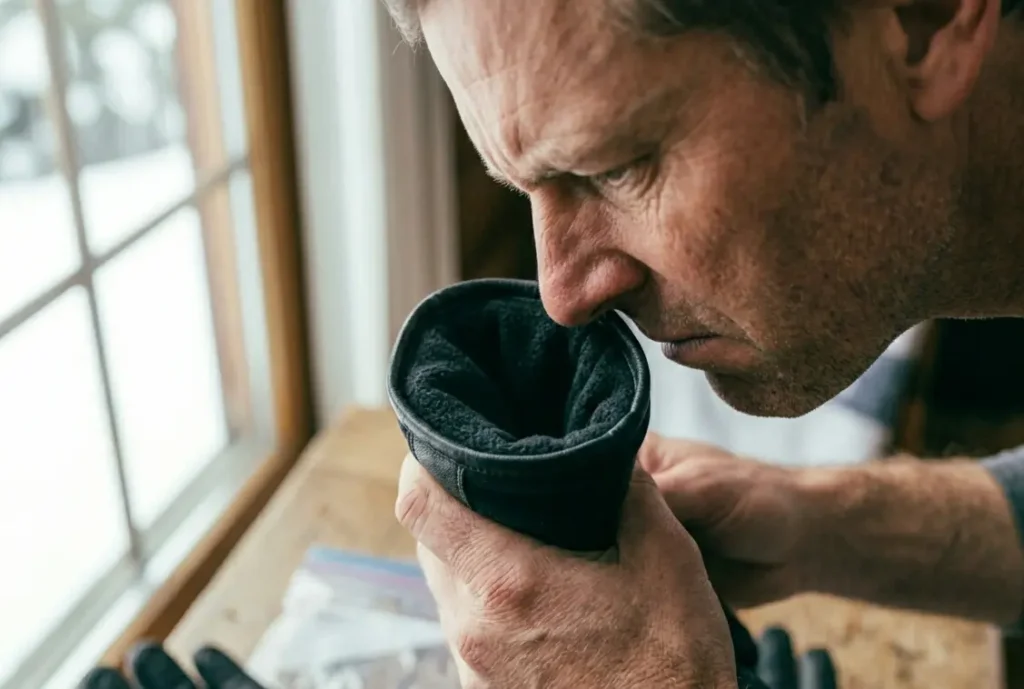
| Check smell by opening cuff and smelling interior before each morning session | Early smell detection allows prevention adjustment before colonization advances |
Problem Diagnosis — Why Prevention Might Not Be Working
Prevention done correctly but smell still developing by day three
The most likely cause is the lining wipe being done too late — after the organic material has dried into the fibers rather than immediately after the session. Move the wipe to within ten minutes of removing gloves. If this does not change the outcome, the outer glove lining may have accumulated background bacteria from previous seasons that requires washing to clear before prevention can maintain the result.
Smell develops overnight despite open hanging
The room itself may be warm and humid. In a hotel room with poor ventilation or high heating, the ambient conditions provide warmth and humidity that allow bacterial growth even without the gloves being sealed. In warm hotel rooms, position gloves near the air intake or window rather than in the main room air. A slightly open window provides drier, cooler air circulation that reduces the growth rate significantly.
No smell from gloves but smell from hands after wearing
The bacterial load in the lining is high enough that bacteria transfer to hands during wear. This indicates the lining needs washing — prevention cannot reduce a colony that is already at this density. After washing, the prevention system maintains the clean state.
Liner smells despite being washed nightly
The liner may not be drying fully between sessions. A liner washed and hung to dry that still has moisture when it is put on the next morning creates a moist warm environment against the skin that immediately restarts bacterial growth. Liner washing must allow full drying time — typically four to six hours for merino, two to three for thin synthetic. If the turnaround time does not allow this, a second liner set that rotates solves the problem.
When Prevention Is No Longer Enough
Prevention stops working when the bacterial colony in the lining is already established at a level that generates continuous odor production. At that point, the bacteria are embedded in the lining fibers rather than sitting on the surface, and the three-part prevention system cannot reach them. The visible indicator is the smell that persists after twenty-four hours of open-air drying. That is the threshold where washing is required before prevention can work again.
Prevention also does not address odor from sources other than bacteria. Some glove lining materials develop a chemical smell from breakdown of synthetic fibers after extended use. Some gloves develop a rubber or adhesive smell from seam tape or construction materials that has nothing to do with bacteria. These smells do not respond to bacterial prevention measures because they are not bacterial in origin.
Off-season gloves that have been stored correctly — clean, dry, in breathable storage — will not develop smell during storage regardless of how long they are stored. Prevention during the season enables this: a glove managed with consistent end-of-session prevention accumulates minimal bacterial load across the season and stores cleanly. A glove that was not managed and developed smell during the season will retain that smell through off-season storage and require washing before the next season begins.
If the prevention system has not kept up with smell that has already developed, or if the gloves need a full reset at the start or end of season, the correct washing process for each glove type — fabric shell, leather shell, and gloves with waterproof membranes — is covered in How to Wash Ski Gloves Without Damaging Them.
About the Author
Awais Rafaqat has spent over 15 years testing ski gear across North America — from the dry sub-zero conditions of the Rockies to the wet, heavy snow of the Pacific Northwest. His focus is real-world performance: what gear actually does in the conditions skiers encounter, not what the spec sheet says it should do.
© SkiGlovesUSA.com — Prevention methods tested across multiple multi-day ski trips. No sponsored product mentions. Last updated March 2026.