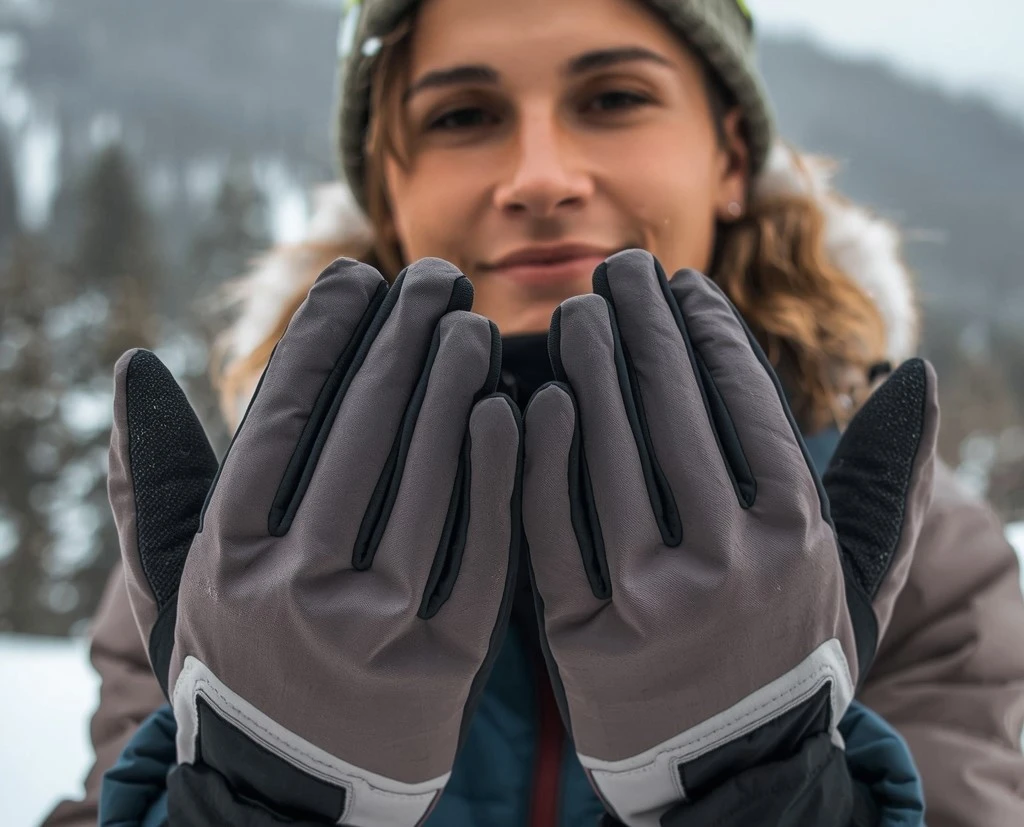
Ski gloves often come with numbers like “10,000 mm” or “IPX7” on the tag, and most skiers have no idea what those figures really tell you. It’s confusing — especially when you’re choosing gloves for wet snow, stormy days, or long laps in mixed weather.
That confusion is real. Many glove buyers fixate on numbers without understanding the test behind them and how that translates to real snow conditions and movement on the mountain. These ratings are not just random specs — they describe how well gloves handle water under pressure and in real use.
In this post we’ll break down ski glove waterproof ratings, what “mm” waterproof ratings mean, how they’re tested, how they compare to IP codes, and — most importantly — what actually matters on the slopes in wet snow, heavy storms, or cold, dry days. You’ll understand why some gloves feel dry longer and why others fail fast when snow gets heavy.
Why Waterproof Ratings Matter on the Mountain
Wet gloves are one of the fastest ways to ruin a ski day. It doesn’t matter if you’re skiing powder at 9 AM or sitting in slush at 2 PM — once water gets into the glove system, heat loss ramps up and fingers get stiff.
From my experience ski instructing on mixed-weather weeks, gloves tend to wet out much earlier than jackets or pants. Jackets have full membranes, taped seams, and large surface areas to shed moisture. Gloves are smaller, see more friction, and rely on liners that are not waterproof. That combination makes them the weak link in the weather system.
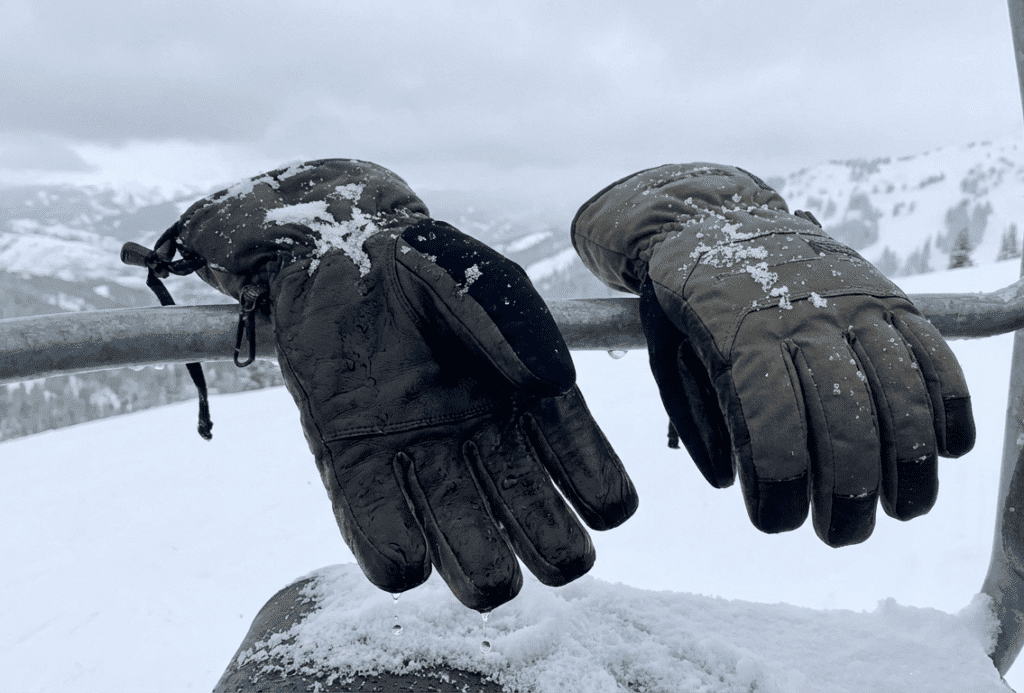
Waterproof ratings matter because they tell you how the glove shell handles external water pressure — melting snow, chairlift seats, wet rope tows, spring storms, and slushy lift lines. You don’t feel the “pressure” part as a skier, but it’s real. Lab testing from membrane brands like Gore-Tex and eVent is based on hydrostatic pressure, which explains why high-mm shells stay dry longer in wet snow.
The other piece skiers notice is sweat. Your hands produce moisture constantly when skiing. Without a membrane or breathable shell, that moisture gets trapped in the insulation, and insulation loses performance fast when damp. That’s why gloves can feel cold even when the outside looks dry.
So ratings help you estimate how long a glove can resist water before that chain reaction starts. On storm days, a 5,000 mm glove can feel fine for the first hour and then suddenly hit a wall. A 15,000–20,000 mm shell buys you more time in chairlift saturation environments, especially in wet coastal snowpacks.
Most skiers don’t think about it until halfway up a lift when they wipe the seat, grab the safety bar, and feel that cold seep at the fingertips. That’s when waterproof ratings stop being a spec sheet detail and start being the difference between skiing till the last chair or heading inside to “warm up” for 40 minutes.
What “mm” Waterproof Ratings Mean
Many skiers see numbers like 5,000 mm, 10,000 mm, or 20,000 mm on glove tags and wonder what they actually tell you. The short answer is: these numbers describe how much water pressure the glove shell can handle before it starts to leak. It’s one of the most common ways the outdoor industry measures waterproof performance for gloves and boots.
The Basics — Millimeters of Water Column
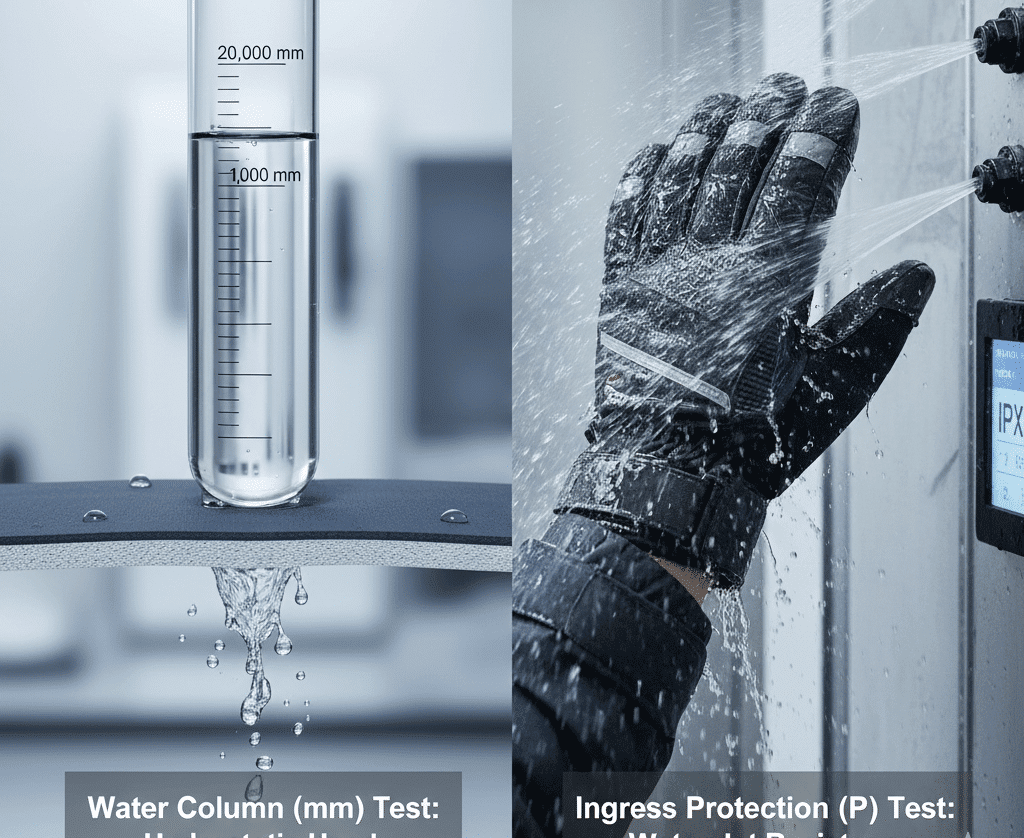
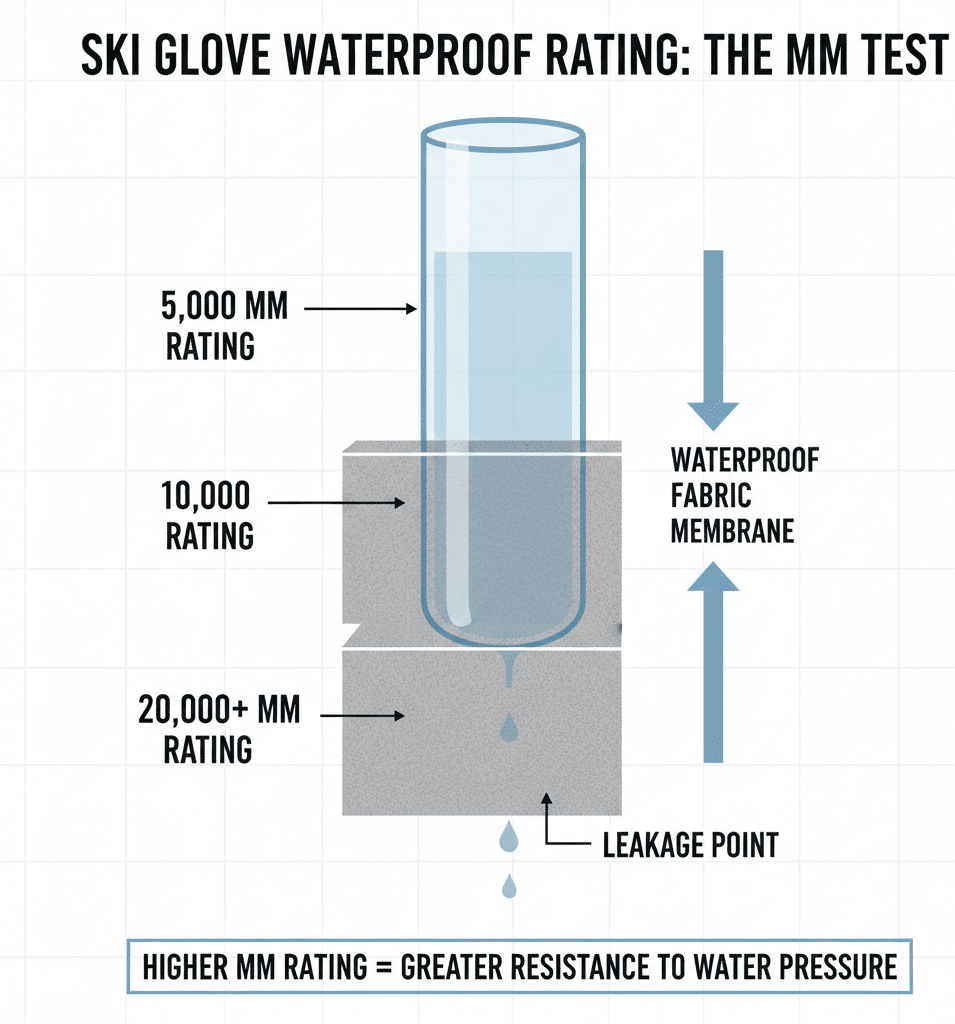
A waterproof rating in millimeters comes from a test called hydrostatic head. The test applies a vertical column of water to the glove material and measures how tall that column can get before water pushes through.
So when you see 10,000 mm, it means the fabric held back a 10-meter water column before leaking in the lab. A higher number means more resistance to water pressure.
This rating doesn’t tell you everything about a glove, but it does give you a baseline idea of how well the outer shell can handle wet snow and direct contact with moisture.
Real Ski Context
On the mountain, water doesn’t sit politely in a tube. It comes from melt, slush, chairlift seats, storm snow, and the occasional faceplant. That’s where the mm ratings start to make sense for real skiers.
Here’s a simple way to think about it:
- 5,000 mm:
Fine for cold powder and dry climates where snow doesn’t melt much. I’ve used gloves around this range on dry mid-winter days and stayed comfortable as long as I wasn’t grabbing every rail and lift tower in sight. - 10,000 mm:
Handles mixed weather better, including wetter snow and kids spraying slush on you in the lift line. Good for most resort days where temperatures hover around freezing. - 20,000 mm+:
Built for wet coastal snowpacks, spring storms, and long chairlift sessions where your hands stay in contact with snow and wet surfaces for hours.
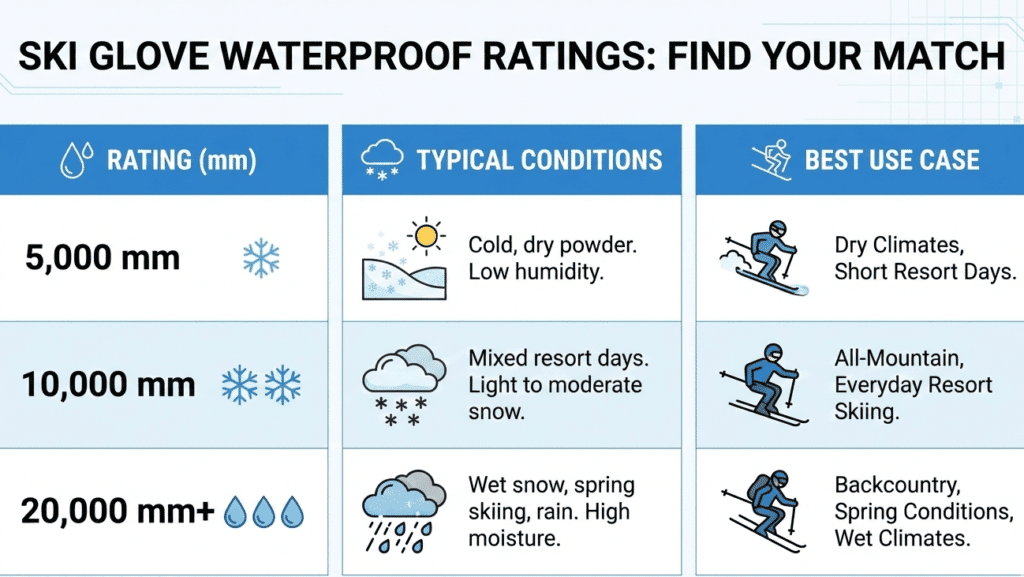
These aren’t marketing numbers — this matches how membranes and shells behave under pressure. In coastal mountains, spring skiing, or storm days, higher ratings delay that moment when the glove “wets out” and the insulation starts losing heat.
Limitations of “mm” Ratings
The mm number doesn’t tell the full story. It only describes outward waterproof resistance in a lab. It doesn’t tell you:
- how breathable the glove is
- how fast sweat can escape
- what membrane sits behind the shell
- whether seams are sealed or stitched through
- how insulation behaves when damp
The seams matter more than people think. Even a high mm shell can leak at the fingertips if the stitch line isn’t protected.
Breathability is also huge for hands. Your palm is one of the warmest zones on your body, so sweat builds quickly in gloves. If sweat can’t escape, it soaks the insulation from the inside out. That’s the main reason gloves can feel cold even when the exterior seems dry.
From my own teaching weeks with wet kids’ lessons, I noticed gloves without a real membrane would soak through in a couple hours, even if the mm rating looked good on paper. That taught me the mm number is a useful spec, but not the whole equation when it comes to actual skiing.
What “IP” Ratings Mean
IP ratings show up in outdoor gear more often now, and they use a different system than millimeter waterproof ratings. Instead of measuring water pressure, they describe how well an item keeps out dust and water under controlled testing.
This matters because skiing isn’t just about snow falling from the sky — gloves deal with splash, meltwater, chairlift spray, and the pressure of wet snow packed against the fabric.
Ingress Protection (IP) Basics
An IP rating uses two digits.
The first digit measures dust protection.
The second digit measures water protection.
Sometimes you’ll see an X in place of the dust rating, which just means it wasn’t tested for that part. For skiing, the second digit is the one that matters because it tells you how resistant the glove is to water exposure.
The idea behind IP ratings comes from standardized testing used in outdoor electronics and field equipment, where waterproof reliability can be life-critical.
Common IP Levels You Might See
Here are a few examples to make the system less abstract:
- IPX4:
Protects against splashing water from any direction. Think of wet snow hitting your gloves on the lift or while skating across a flat. - IPX7:
Handles temporary immersion up to a certain depth. This level goes far beyond splashes and suggests the material can resist water pushing against it for a short time.
As the second digit increases, the testing conditions get harsher. Higher numbers mean stronger sealing against direct water exposure.
In skiing terms, a glove with splash-only resistance can survive light snow contact, while immersion-level protection survives slush pressing into the seams or brushing wet chairlift seats.
How IP Ratings Relate to Skiing
On storm days, the mountain acts more like a wet environment than a dry snowy one. Chairlift snow melts, wind drives sleet sideways, and hands rest on soaked safety bars. All of that puts water pressure on gloves even without dipping them into a stream.
IP ratings give you a way to judge how much of that exposure a material can handle before it starts absorbing moisture.
There’s a catch though: gloves are soft, flexible, and stitched. They stretch, bend, and crease constantly. Strict laboratory IP testing is done on rigid or semi-rigid housings, not fabrics that flex around your fingers all day.
Instructors I’ve worked with often point out that even high-rated waterproof gear eventually loses the battle once wet snow is packed into seams for long periods. That’s not a failure of the rating — it’s just how snow, pressure, and heat behave together.
If glove makers used IP testing more often, it would tell skiers how their gloves resist splashes, meltwater, and wet chairlift contact. But since gloves need to breathe and flex, the outdoor industry leans on mm waterproof ratings instead of IP systems because they better reflect flexible membrane performance.
mm vs IP — Which Tells You More?
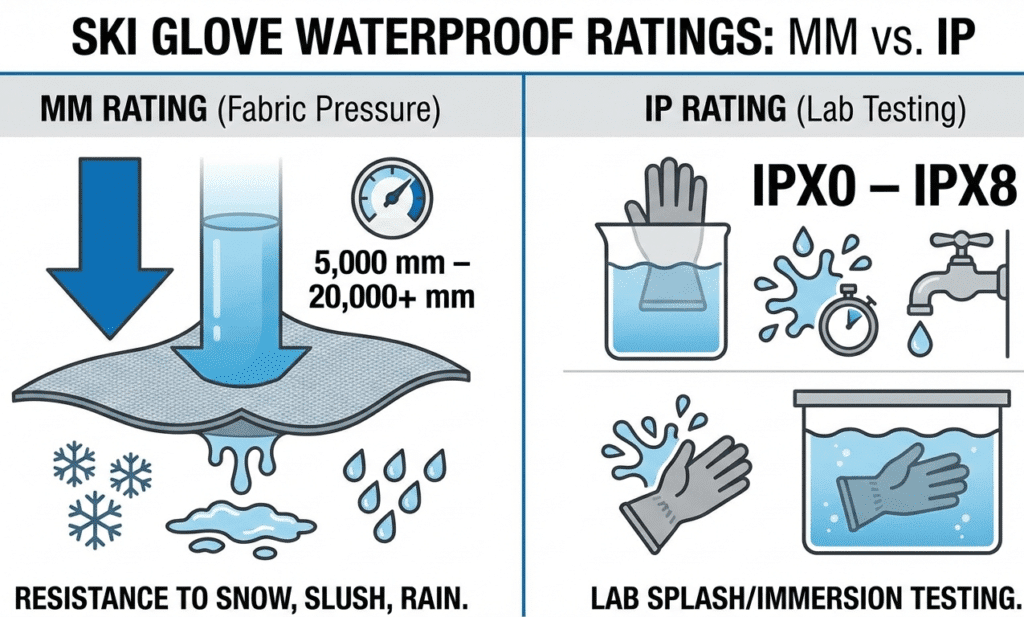
Both rating systems talk about water protection, but they measure it in completely different ways. On snow, one system ends up being more useful for skiers choosing gloves for real conditions.
What mm Ratings Reveal
Millimeter testing measures how much water pressure a fabric can hold back before it leaks. That means it shows how well the glove shell can handle wet snow pressing into it, melted chairlift snow, and long exposure to slushy terrain.
Because skiing puts more pressure on gloves than most people think, mm ratings do a better job describing how long the shell will resist moisture under load. That’s why outdoor gear brands use millimeter ratings for jackets, pants, and gloves — the testing matches how snow behaves on fabric.
What IP Ratings Reveal
IP ratings come from electrical and industrial standards. They tell you exactly what kind of water exposure an item can survive, from splashes to full immersion. It’s very precise and very controlled.
The downside for skiers is that gloves don’t sit still in a lab. They flex, crease, get sweat-warm on the inside, and are constantly pushed into wet snow. All of that makes pure IP data less helpful for soft gear like gloves, which explains why you rarely see IP numbers printed on ski gloves.
When IP ratings do show up, they can still tell you if a fabric can handle more than just light spray — but it’s not the main industry language for glove shells.
What Matters Most in Real Use
On the mountain, waterproof theory only matters until snow melts and tries to work into the seams. That’s where construction starts to matter more than numbers on a tag:
1. Seam sealing
Unsealed seams are one of the fastest ways gloves start to wet out. Snow packs into seams on the lift, and warm hands melt it from the inside. Once seams saturate, insulation follows quickly.
2. Membrane quality
A true waterproof-breathable membrane is what keeps meltwater out while letting sweat escape. Without that membrane, even high mm shells can feel clammy during spring laps or storm days. Ski instructors talk about this all the time because sweat is often the first thing that makes hands cold, not snow.
3. DWR (Durable Water Repellent)
The outer fabric needs a water-repellent finish to shed snow. When that finish wears off with use, the shell becomes soaked even if the membrane underneath is still intact. That’s usually when people say their gloves “aren’t waterproof anymore” even though the membrane hasn’t actually failed.
From my experience, a glove with a solid membrane and sealed seams will outperform a higher-rated shell with poor construction almost every single time. Numbers help shoppers compare products, but construction decides how long the protection lasts in real snow.
Practical Tips for Skiers
These tips bridge the gap between lab ratings and real mountain conditions.
Most skiers I’ve taught or ridden with just want to know “what should I wear today?” without overthinking millimeters or IP charts.
From my experience, that’s where gloves fail or shine.
Match Ratings to Conditions
Dry cold powder days don’t demand much from waterproof ski gloves.
You can ride all morning and the shell barely gets wet because the snow behaves more like dust than water.
But on warm spring afternoons or wet coastal snow, gloves get hammered by moisture and chairlift drips.
Higher waterproof ratings matter more in those conditions, especially if you’re waiting in lines or sitting on lifts for long stretches.
I’ve noticed new skiers underestimate how much slower they move.
More time standing still = more water sitting on the glove = more chance of penetration.
Don’t Forget Breathability
A glove can have a monster 30,000 mm rating and still feel like a swamp inside.
When sweat can’t escape, the liner wets out from the inside and the insulation collapses.
Once that happens, your hands chill fast.
Outdoor instructors call this the “cold hand paradox” — the glove is technically waterproof, but moisture from your own body makes you cold.
Membranes like Gore-Tex, eVent, and Dermizax were originally developed for mountaineering for this exact reason: keep water out while letting vapor out.
That’s why most credible outerwear testing focuses on both waterproof and breathability performance, not one alone.
Other Signs of Waterproof Failure
Some failures are obvious, others sneak up on you mid-day.
Common signs I’ve seen on the hill:
• Water pooling at the cuff after chair rides
• Damp liner by lunch even in light snow
• Thumb seams feeling cold and squishy
• Fingers losing insulation loft after a few hours
• Gloves heavy at the end of the day
Those symptoms usually point to membrane stress, seam breakdown, or DWR burnout — all normal with age and heavy use, especially on wetter mountains.
From years of coastal skiing, I’ve learned cuffs and seams give up first, not the fabric itself.
It’s why racers and coaches often re-treat their gloves mid-season.
Mistakes Skiers Make
Even experienced riders misread waterproof ratings.
Most of these mistakes come from assuming lab numbers translate perfectly to a wet chairlift day.
From what I’ve seen over the years, the mountain always exposes the weak point.
Thinking Higher mm = Warmer Gloves
A big waterproof number doesn’t create warmth.
Warmth comes from insulation loft and moisture control, not the membrane alone.
On colder days, I’ve worn mid-rating waterproof ski gloves with good insulation and stayed comfortable for hours.
On wet spring days, I’ve had high-mm shells let me down because the liner collapsed once it got damp.
Ignoring the Membrane and Seam Work
The membrane is the actual barrier inside the glove.
If it fails, the shell rating won’t save you.
Outdoor gear testers put a lot of weight on seam construction for this reason.
Thumb seams and index finger seams take the most abuse from poles and buckles, so that’s where breakdown usually starts.
Choosing Based Only on Rating Numbers
Shoppers love comparing mm charts, but numbers without context don’t tell the whole story.
Fit, insulation type, and cuff design all determine how well waterproof ski gloves perform in real snow.
If a glove is too tight, insulation compresses and moisture can pool.
If the cuff doesn’t seal, water runs straight to the liner.
These things don’t show up on spec sheets, but they matter more than most skiers expect.
Treating DWR Wear-Off as Total Failure
When water beads stop forming on the shell, most people assume the glove is no longer waterproof.
What’s really happening is the DWR layer has worn down from abrasion and moisture now lingers on the surface.
That wet surface transfers cold faster and makes the membrane work harder, but the membrane is often still intact.
Instructors and patrollers regularly re-treat DWR mid-season for this exact reason.
It’s a maintenance issue, not a “throw these out” moment.
When It Becomes a Problem
Wet gloves are more than an inconvenience—they can become a safety issue.
When cold wind hits soaked gloves, your hands lose heat fast. Even brief chairlift rides can leave fingers numb if your gloves fail.
Long Lifts and Stormy Days
On extended lifts or during heavy snowfall, gloves with low waterproof ratings soak through quickly.
From my experience skiing in a mid-winter blizzard, gloves that felt fine at the base station became soggy halfway up, making the rest of the run miserable.
Insulation Loses Its Effect
Once wet, insulation stops trapping heat.
Even high-end gloves can’t keep fingers warm if water saturates the liner.
Ski instructors often warn: wet insulation increases frostnip risk, especially on windy summits.
Watch for Early Warning Signs
Cold, damp fingers before the run ends are a signal.
Water pooling at cuffs, damp liners, or icy fingertips mean the gloves aren’t handling snow exposure.
Address these issues immediately—either by drying gloves or swapping them for a dry pair.
Practical Takeaway
Gloves with proper waterproof ratings and breathable membranes make a noticeable difference on wet, stormy days.
Even a technically “warm” glove fails if it can’t keep water out and sweat managed.
Think of waterproofing as insurance for warmth and safety on the mountain.
FAQs – Ski Glove Waterproof Ratings
Getting a handle on waterproof ratings can save your hands from soggy, freezing misery. These quick answers clear up the confusion so you know what to look for on the mountain.
Q: Is a higher mm rating always better for ski gloves?
Higher mm ratings mean stronger water resistance, but warmth and comfort also depend on insulation, fit, and breathability. Ratings alone don’t tell the full story.
Q: Do all ski gloves use mm ratings?
Not all. Many brands use mm ratings, but some report IP ratings or general waterproof descriptors. Always check which standard is being used.
Q: How does mm relate to snow vs rain?
Millimeters simulate water pressure, like standing water. Snow exposure behaves differently, but a higher mm rating usually handles wet snow better than a low rating.
Q: Do waterproof ratings tell me about breathability?
No. Breathability is separate and crucial on the mountain. Gloves can be waterproof but still trap sweat, leaving hands damp and cold.
Q: Can I rely on IP ratings for wet snow?
IP ratings show lab-tested resistance to water. They give a reference, but snow, slush, and long lifts create conditions that are more demanding than standard IP tests.
Final Verdict
Both mm and IP ratings aim to show how waterproof your gloves are, but they tell slightly different stories. mm ratings reflect real-world water pressure resistance, while IP ratings come from lab tests and can be less intuitive for snowy conditions. The real key? Combine solid ratings with high-quality membranes and well-sealed seams to keep your hands warm and dry on the mountain.
Take Action: Don’t just rely on numbers—check your gloves before hitting the slopes. Make sure seams are tight, membranes intact, and the rating matches the conditions you ski in. For more on staying comfortable in cold weather, you can check our post on ski gloves temperature ratings explaining how to pair warmth and waterproofing perfectly.
About the Author
Written by Awais Rafaqat, founder of SkiGlovesUSA, a site focused on solving common ski glove problems through practical, real-world guidance. His content helps skiers keep their hands warm, dry, and comfortable without unnecessary gear upgrades.