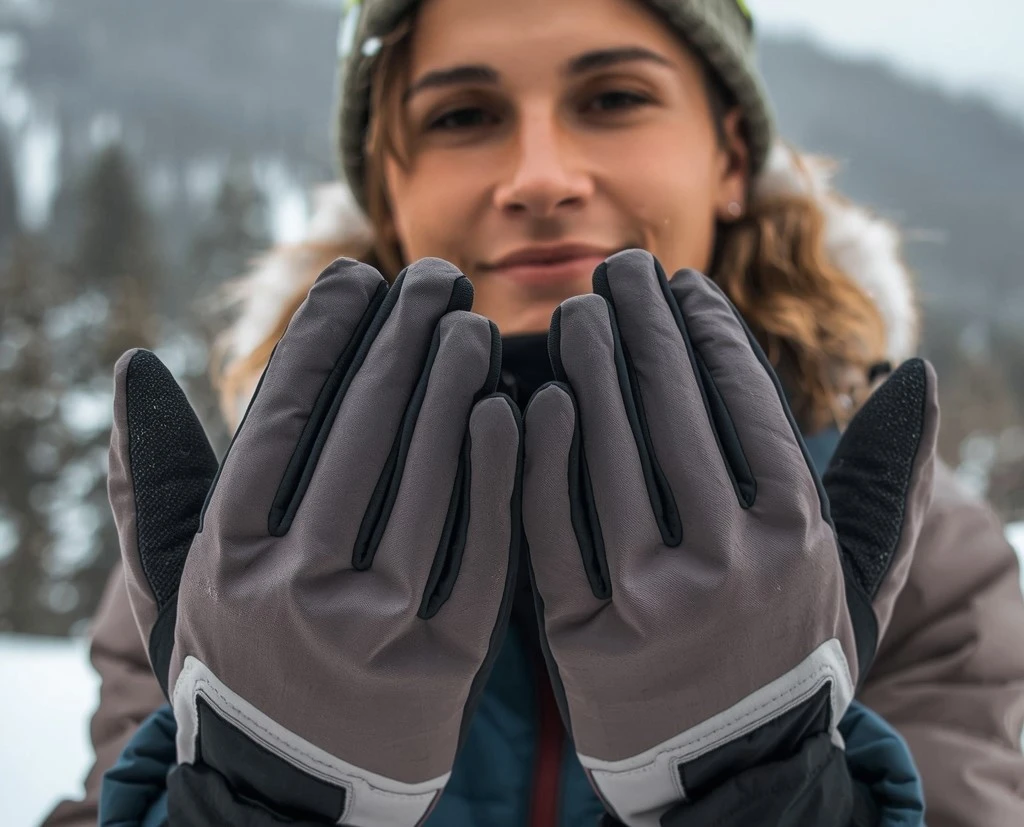
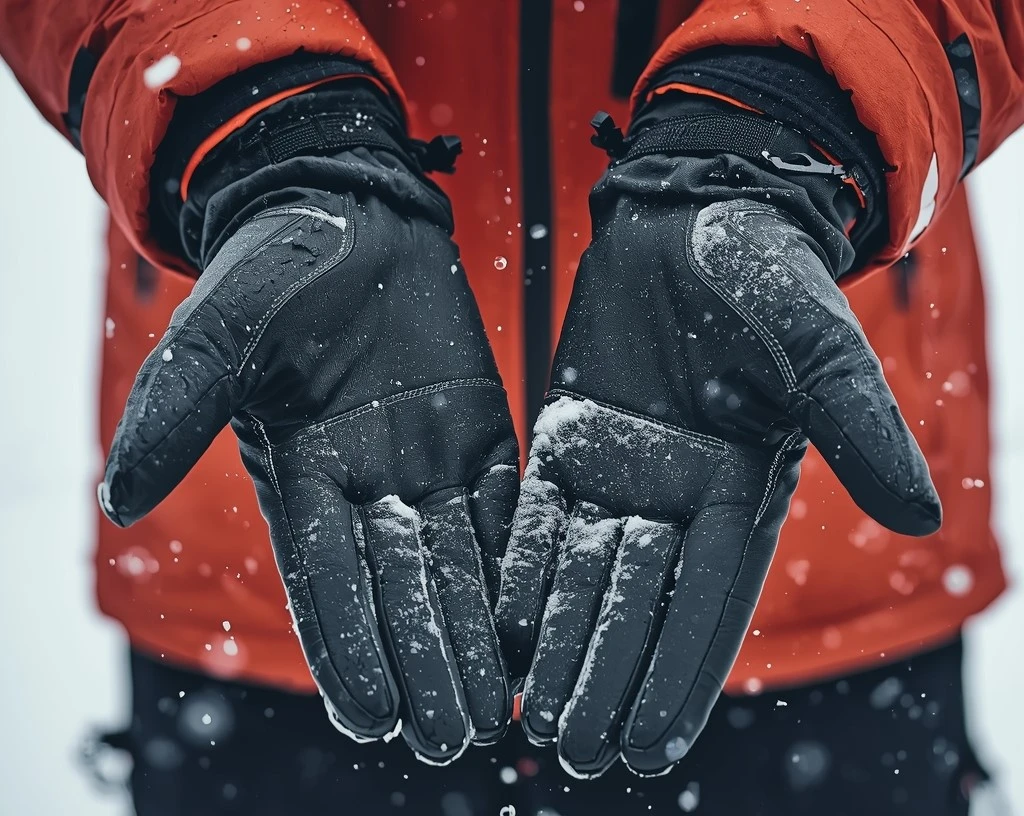
I have spent fifteen winters skiing everything from the heavy, wet coastal slush of the Pacific Northwest to the bone-dry powder of the Rockies. If there is one lesson I have learned the hard way, it is that the word “waterproof” is the most abused term in the outdoor gear industry.
I have stood at the top of a windy ridge in a localized sleet storm, watching an expensive pair of gloves soak through like a kitchen sponge. I have also sat on dripping wet chairlifts wearing mid-range gloves that managed to keep my fingers perfectly dry.
When your hands get wet on the mountain, your ski day is effectively over. Water conducts heat away from your body 25 times faster than air. Once moisture breaches your glove, your body heat plummets, your fingers stiffen, and your grip on your poles becomes a painful chore. Finding a pair of truly waterproof ski gloves is not about picking the thickest option on the shelf; it is about understanding how moisture behaves, both from the falling snow outside and the sweat inside.
Here is exactly how waterproof handwear actually works, how gear fails, and how you can choose a pair that will not betray you mid-run.
The Big Lie: Water-Resistant vs. Waterproof
The biggest mistake I see skiers make is buying a “water-resistant” glove and expecting it to handle a storm.
Water-resistant means the fabric has a chemical coating on the outside that makes light snow bounce off. If you fall a few times or ski in light, dry powder, water-resistant gloves are fine. But if you grab a wet chairlift bar, carry snow-covered skis, or ski in temperatures above 28°F where the snow melts on contact, that coating will quickly surrender. The water will push through the fabric, soak into the insulation, and freeze your hands.
True waterproofing requires a physical barrier—a membrane—hidden inside the glove. This membrane is the only thing standing between you and frostnip on a wet day.
How I Test for Waterproofing
I never trust a manufacturer’s tag. Over the years, I have developed my own tests to separate the real gear from the marketing hype.
The Home Test: The Bucket Submersion
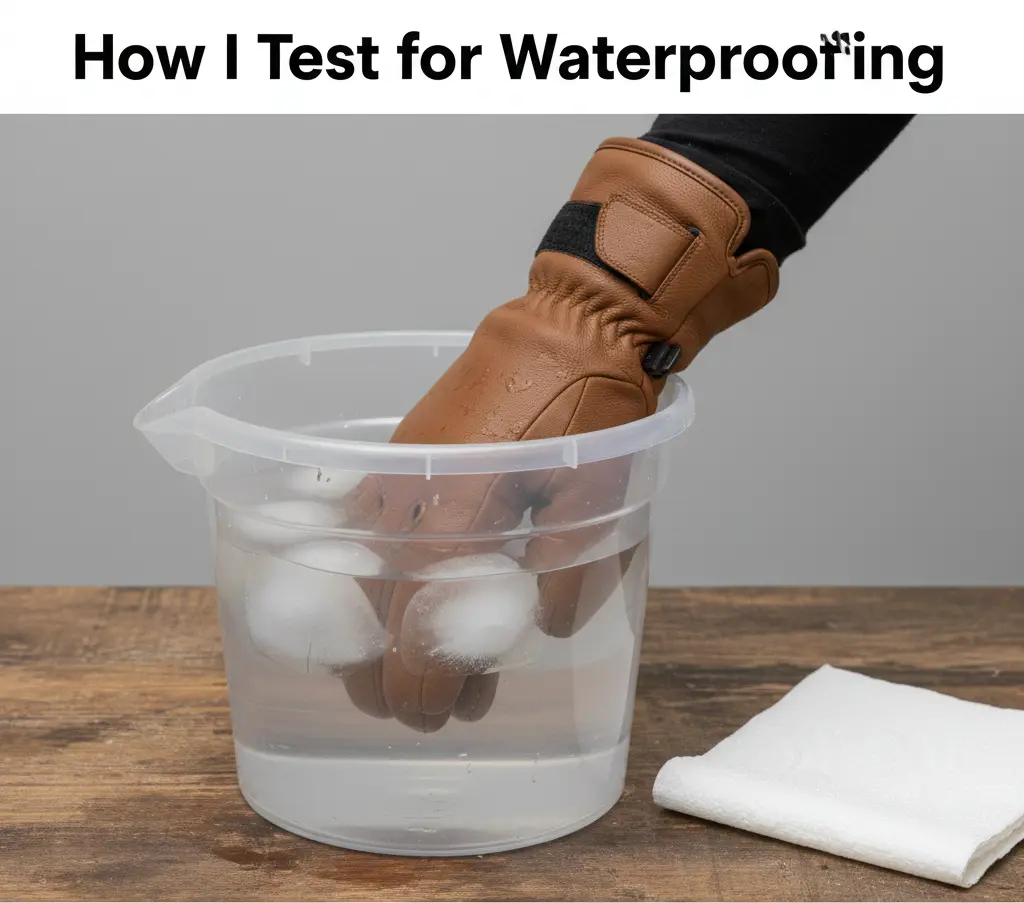
When I buy a new pair of gloves, I test them in my kitchen before I ever cut the tags off. I fill a bucket with ice water. I put a dry paper towel inside the glove, put my hand inside, and submerge it past the wrist for exactly five minutes.
I do not just hold my hand still. I open and close my fist repeatedly. This mimics the mechanical pressure your hands exert when gripping a ski pole. Pressure forces water through weak fabrics. If I pull my hand out and the paper towel has even a single damp spot, the glove goes back to the store.
The Mountain Test: The Snowball Squeeze
If I am testing gear on the mountain, I find the wettest, heaviest patch of snow I can. I pack a dense snowball and squeeze it as hard as I can for two straight minutes. The heat from my hand melts the snow, creating a layer of cold water pressed directly against the glove’s exterior. If the glove has a cheap polyurethane coating instead of a real membrane, I will feel the cold dampness seep through to my palm within sixty seconds.
The Anatomy of a Dry Glove: 4 Secrets to Look For
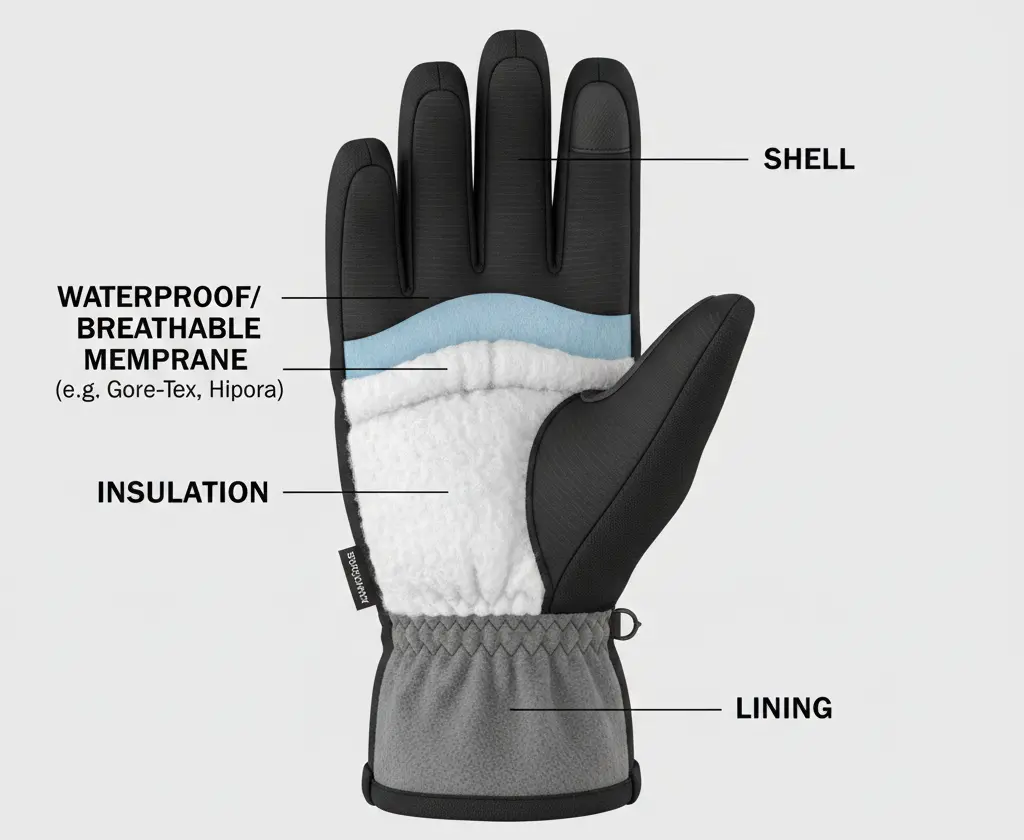
If you cut a high-quality ski glove in half, you will find distinct layers, each with a specific job. If any of these layers fail, you get wet.
1. The Internal Membrane (The Real Shield)
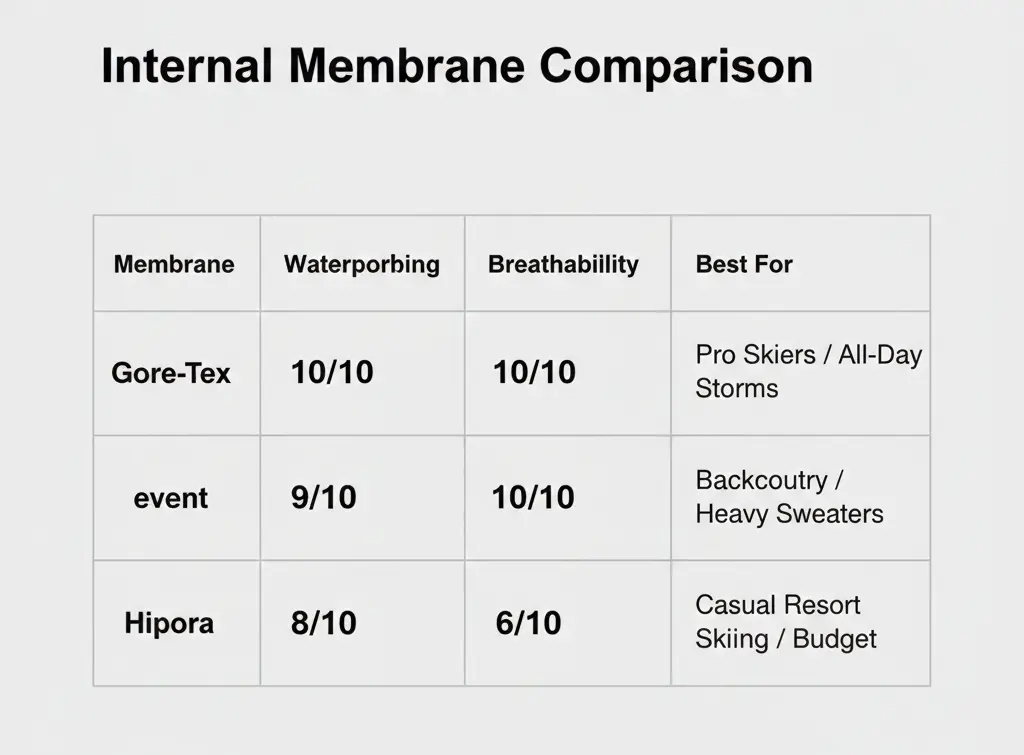
The membrane is a microscopic sieve hidden between the outer shell and the inner insulation. The holes in this membrane are small enough to block a liquid water droplet from the outside, but large enough to let sweat vapor from your hands escape from the inside.
- Gore-Tex: This is the gold standard for a reason. It breathes exceptionally well while blocking water. If you ski long days or sweat heavily, Gore-Tex is usually worth the premium price.
- eVent: Similar to Gore-Tex, highly breathable, great for high-output skiers who hike for their turns.
- Hipora / Proprietary Brands: Many brands make their own membranes (like Marmot’s MemBrain or generic Hipora). These are absolutely fine for the average resort skier and cost significantly less, though they may not breathe quite as well as the top-tier options.
2. Seam Sealing (The Weakest Link)
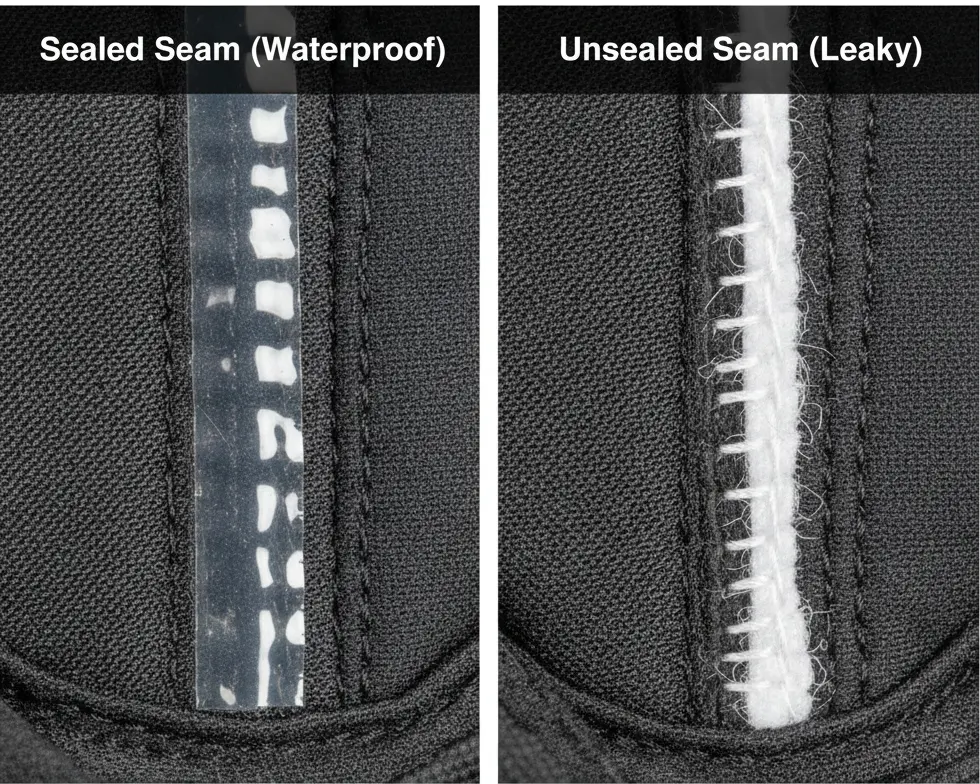
Every glove is made of fabric panels sewn together. Every stitch is a needle hole. If a manufacturer uses a great waterproof membrane but fails to seal the needle holes, water will simply leak through the seams.
Inside the best gloves, manufacturers apply waterproof tape over every single seam. You can actually check this yourself in a gear shop. Fold the cuff of the glove inside out and look at the inner lining. If you can feel smooth strips of tape running along the stitches, the glove is fully sealed. If you just see bare thread, put it back on the shelf.
3. The Outer Shell Material
The membrane does the waterproofing, but the outer shell protects the membrane. If the outer shell tears, water rushes in and overwhelms the glove.
- Nylon/Synthetic: Great for wet climates. Nylon does not naturally absorb water, making it a reliable first line of defense. Look for “Ripstop” nylon, which has a reinforced grid pattern to stop small tears from expanding.
- Leather: Goat leather is incredibly durable and provides the best grip on ski poles. However, leather is skin; it will absorb water if you do not treat it with waterproofing wax. A leather glove with a Gore-Tex membrane inside is the most durable combination you can buy, provided you maintain the leather.
4. DWR (Durable Water Repellent)
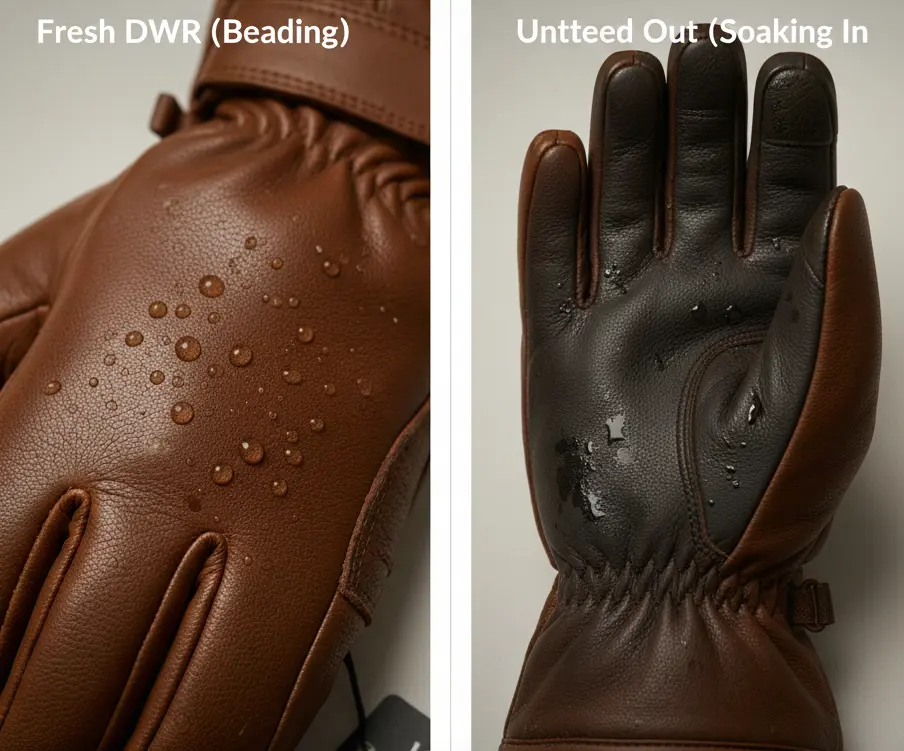
This is the chemical treatment applied to the very outside of the glove. When your gloves are new, water beads up and rolls off the fabric like mercury. That is the DWR working.
When the DWR wears off—usually from dirt, chairlift grease, and friction—the outer fabric absorbs water. It will look dark and soaked. This is called “wetting out.” Even if your internal membrane is still keeping the water away from your skin, a wetted-out outer shell creates a heavy, freezing layer of ice water directly outside your insulation. Your hands will feel cold, and the glove will lose its ability to breathe, trapping your sweat inside.
The Sweat Factor: When Waterproofing Works Against You
I once hiked up a steep bowl wearing a pair of heavily insulated, fully waterproof gloves. By the time I reached the top, my hands were freezing. I hadn’t touched the snow. The moisture came from my own body.
Your hands sweat constantly. If your gloves are heavily insulated and feature a cheap membrane that does not breathe well, that sweat has nowhere to go. It soaks into the inner lining. Once you stop moving and get on a chairlift, that trapped sweat turns ice cold.
If you frequently experience hands that are warm at the bottom of the run but freezing at the top of the lift, your gloves are likely trapping sweat. To fix this, you need a glove with lighter insulation and a higher-quality, breathable membrane. You can also wear a thin Merino wool liner glove inside your main glove; Merino wool pulls moisture away from your skin so it can evaporate.
Gauntlet Cuffs vs. Under-Cuff Styles
Waterproofing is useless if snow simply falls in through the wrist opening.
- Gauntlet Cuffs: These are long cuffs that pull over your jacket sleeves and cinch down with a drawcord. I strongly recommend gauntlets if you ski deep powder or if you fall frequently. They create an impenetrable fortress against snow.
- Under-Cuff: These are shorter gloves designed to tuck neatly underneath your jacket sleeve. They are less bulky and offer better wrist mobility. I use under-cuff gloves on dry, groomed-run days, but they are riskier in heavy, wet snow because the seal relies entirely on your jacket’s velcro strap.
How I Pick My Gloves
When I walk into a ski shop to replace my gear, I ignore the marketing tags and follow a strict, practical criteria.
- The Dexterity Check: I put the glove on and try to zip up my jacket or adjust my helmet strap. If the glove is so thick and stiff that I have to take it off to perform basic tasks, I will not buy it. Taking your glove off on a windy chairlift is the fastest way to lose body heat.
- The Liner Pull: I pinch the fingertip of the glove from the outside and try to pull the inner lining out. A poorly constructed glove will have a loose liner that pulls out like a sock. A high-quality glove will have the liner bonded securely to the outer shell.
- The Palm Material: I look strictly for leather or reinforced synthetic grip on the palm. I carry my skis by resting the sharp steel edges against my palm. Cheap polyester palms will slice open on day one, destroying the waterproof barrier.
- The One-Hand Adjust: I test the wrist cinch. I must be able to tighten and loosen the cuff using only my other gloved hand.
Condition-Based Recommendations
Match your gear to your environment. Do not buy an Arctic expedition glove for a mild spring day.
- If you ski in the Pacific Northwest or coastal regions (wet, heavy snow, 25°F – 35°F): Choose a glove with a Gore-Tex membrane, a synthetic nylon shell, and moderate insulation. You need maximum waterproofing above all else because the snow melts rapidly on contact.
- If you ski in the Rockies or dry climates (dry powder, 0°F – 20°F): Choose a full leather glove with heavy PrimaLoft insulation and a basic waterproof membrane. The air is dry, so external moisture is less of a threat than the biting wind and extreme cold.
- If you primarily ski in the spring or run very hot: Choose a softshell, water-resistant glove without a heavy waterproof membrane. You will prioritize breathability to prevent sweat buildup.
When This is NOT the Right Choice
You should actively avoid thick, fully waterproof ski gloves if you are backcountry touring or cross-country skiing. The physical exertion of skinning up a mountain will cause your hands to sweat profusely. A waterproof membrane will trap that heat, soaking your hands. For uphill travel, use a thin, highly breathable wind-stopper glove, and keep a warm, waterproof pair in your backpack for the descent.
Common Mistakes People Make
The Radiator Death:
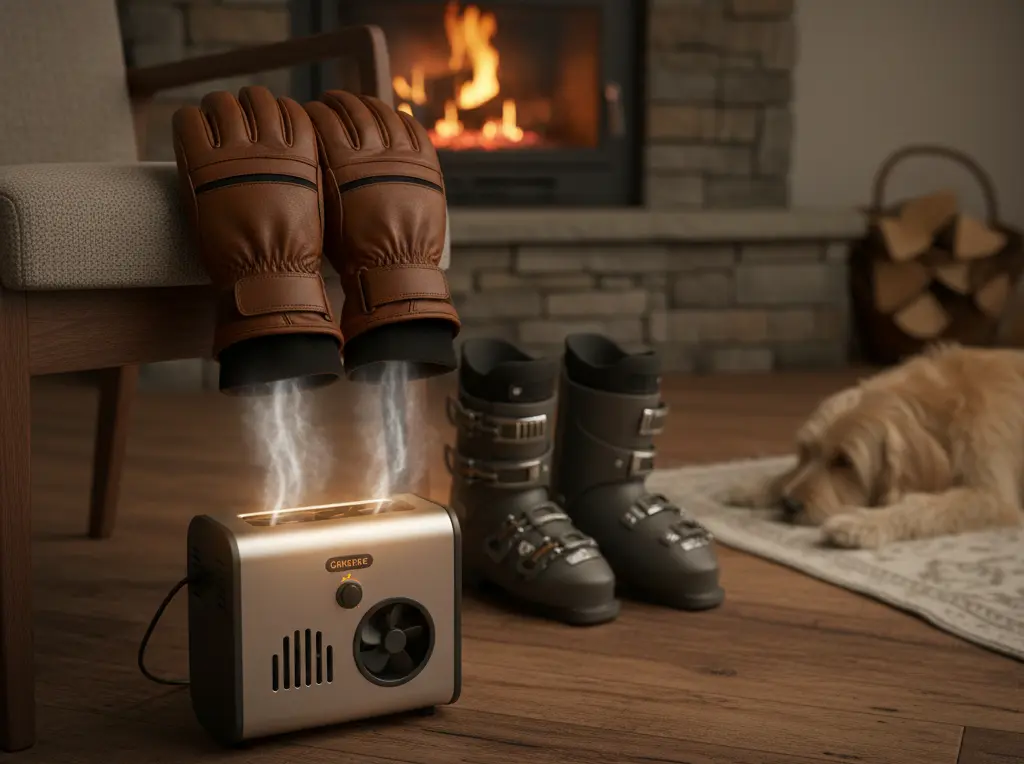
At the end of a wet ski day, people often throw their soaking gloves directly onto a hot baseboard heater, a roaring radiator, or into a clothes dryer on high heat. This is a fatal mistake. High heat literally melts the internal waterproof membrane, turning it brittle. It will crack the next time you put it on. Always air-dry your gloves at room temperature, ideally standing upright on a boot-dryer rack.
Washing with Normal Detergent:
If your gloves start to smell and you throw them in the washing machine with standard laundry soap, you will destroy the DWR coating. Standard detergents leave residues that attract water. If you must wash them, wash them gently by hand in a sink using a specialized technical cleaner like Nikwax Tech Wash.
Buying a Size Too Small:
Skiers often buy tight gloves because they want better grip. A tight glove stretches the seams, widening the needle holes and allowing water to enter. More importantly, it compresses the insulation and restricts blood flow, guaranteeing cold hands. You should always have a quarter-inch of empty space at the tips of your fingers.
Quick Problem-Diagnosis
If you are currently suffering from cold or wet hands, use this breakdown to figure out why your gear is failing.
- Symptom: Hands are wet, but only at the fingertips or thumb webbing.
- Diagnosis: You have a physical puncture. Ski edges or rough rope tows have micro-sliced the fabric, or the seam tape has failed at a high-stress flex point. The gloves need replacing.
- Symptom: The inside of the glove is completely damp, but the outside looks dry.
- Diagnosis: Sweat accumulation. Your gloves are too warm for the conditions, or the membrane lacks breathability. Try wearing a thinner liner or switching to a lighter glove.
- Symptom: The outside fabric looks dark, heavy, and soaked, and your hands are freezing (but dry).
- Diagnosis: Dead DWR coating. The fabric has wetted out, creating a wall of cold water outside the membrane. You need to reapply a DWR spray.
- Symptom: Your hands are cold, but completely dry inside and out.
- Diagnosis: The gloves are too tight, cutting off circulation, or the insulation has permanently compressed from age and heavy use.
Maintenance and Prevention Tips
To keep a waterproof glove functioning for multiple seasons, you have to maintain the DWR coating.
When you notice water no longer beads up on the nylon shell, clean the glove with a damp cloth to remove dirt. Once dry, spray the exterior with a technical waterproofing spray (like TX.Direct). To activate the spray, hit the glove with a hairdryer on a low, warm setting for a few minutes. The gentle heat helps the chemical bond to the fabric, restoring its ability to shed snow.
If you have leather palms, you must rub waterproofing wax (like Sno-Seal) into the leather a few times a season. If leather dries out, it cracks, and cracked leather is no longer waterproof.
Decision Checklist
Before you hand your credit card to the cashier at the ski shop, run through this final checklist:
- [ ] Does the tag explicitly state it has a waterproof membrane (Gore-Tex, Hipora, etc.), rather than just saying “weather-resistant”?
- [ ] Does the palm have a reinforced material (leather or heavy-duty synthetic) to survive carrying skis?
- [ ] Can you easily adjust the wrist cuff using only one hand?
- [ ] When you pinch the fingertips, does the inner liner stay firmly in place without pulling out?
- [ ] Is there a slight pocket of air at the end of your fingers to allow for blood circulation?
- [ ] If you ski deep powder, did you select a gauntlet cuff rather than an under-cuff style?
Choosing the right gear is not about spending the most money; it is about buying the right tool for the environment you ski in. Keep the water out, let the sweat escape, and protect your seams, and your hands will stay warm from the first chair to the last run.
The Final Verdict: Do Not Compromise on the Membrane
After destroying dozens of pairs of gloves over the last fifteen winters, my direct advice is simple: Your hands dictate how long you stay on the mountain. Do not try to save twenty bucks by buying a basic “water-resistant” shell if you actually ski in active storms or wet snow. You will end up sitting in the lodge by 11:00 AM with frozen fingers, forced to buy an overpriced replacement pair from the resort gift shop just to finish the day.
If you ski in wet, heavy snow, buy a synthetic gauntlet glove with a proven Gore-Tex or eVent membrane. If you ski in dry, sub-zero powder, buy a high-quality treated goat leather glove and commit to waxing the palms. In either case, make sure the internal seams are taped and you have a quarter-inch of dead space at the fingertips so your blood can actually circulate.
Waterproofing is the most critical feature to get right, but it is still only one piece of the puzzle. If you buy a great membrane but choose the wrong insulation weight or a terrible fit, your hands will still suffer. To make sure you get the exact right pair for your specific climate, budget, and skiing style, run through my complete breakdown on How to Choose Ski Gloves: The Practical Sizing and Material Guide.
About the Author
Awais Rafaqat has over 15 years of experience testing ski gear in some of the harshest conditions across North America, from the dry sub-zero peaks of the Rockies to the wet, freezing slopes of the Pacific Northwest. He specializes in real-world gear testing to help skiers find equipment that keeps them warm, dry, and performing at their best on every run.