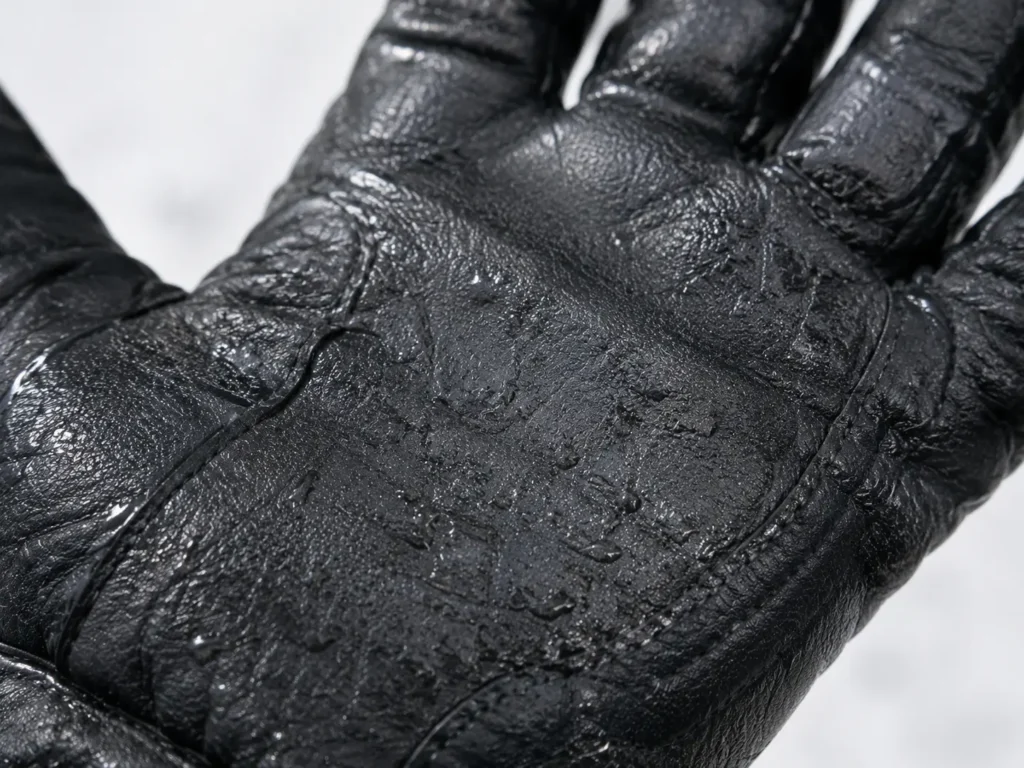
Quick answer: It’s not the water itself causing the problem — it’s what water does to the glove’s surface texture. Dry palm material has a microscopic texture that creates friction. Once that surface gets wet, the texture flattens, fills, or turns glassy, and friction drops fast, whether the glove is leather, synthetic, or rubberized.
If you’d rather get matched to a glove built to hold grip in wet conditions, the Ski Glove Finder does that in under a minute.
- What's Actually Happening to the Material
- Where This Actually Shows Up on the Mountain
- Which Materials Actually Hold Up Best
- A Few Things Actually Worth Doing Right Now
- Check What's Actually Causing It
- Why This Feels Worse in Some Climates Than Others
- What to Check Before Buying With This in Mind
- Common Mistakes That Make Wet-Weather Grip Worse
- Who Should Actually Worry About This
- This Isn't Unique to Skiing
- A Couple of Things That Don't Actually Matter Here
- Frequently Asked Questions
- The Bottom Line
What’s Actually Happening to the Material
Every palm material handles moisture differently, and understanding the mechanism matters more than just knowing “wet equals slippery.” The specific way each material fails tells you what will actually fix it.
Smooth Synthetic Palms Flatten Out
Many synthetic gloves use PU or nylon blends with a naturally smooth surface. When these fibers absorb water, they compress and lose the tiny surface irregularities that create friction against a pole handle or a metal bar. The material isn’t damaged — it’s just temporarily behaving differently.
Leather’s Pores Fill and Seal Over
Dry leather has a grain structure with countless tiny pores that create natural tackiness against your skin and against gear. Water fills those pores, and the surface that was tacky when dry becomes smooth and slick when saturated. This is more pronounced on older leather that hasn’t been conditioned recently, since dried-out leather tends to soak up water faster than well-conditioned leather does.
Waterproof Membranes Don’t Solve This
This is the part most people get wrong. A glove with a waterproof-breathable membrane keeps water from reaching your skin, but the membrane sits underneath the outer shell fabric. That outer layer can still get wet and turn slick on the surface, even while the interior stays completely dry. Staying dry inside and maintaining grip outside are two different jobs, handled by two different layers.
Sweat Causes the Same Problem From the Inside
Not all the moisture working against your grip comes from snow. On warmer days or during high-output skiing, sweat moves outward through the glove’s liner and reaches the palm material from the inside. The result is the same thin, friction-killing film, even on a bluebird day with dry snow.
Ice Is the Most Extreme Version
When surface moisture on a glove freezes — usually during a long chairlift ride in cold wind — it creates a genuinely low-friction layer. Even a thin coat of ice on a palm noticeably changes how a pole handle or safety bar feels in your hand.
Where This Actually Shows Up on the Mountain
This isn’t an abstract material-science problem — it shows up in specific, recognizable moments most skiers can picture immediately.
Ski poles rotating in your hand
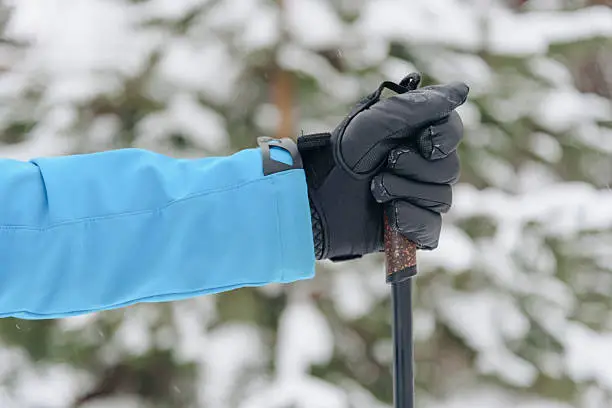
This is usually the first sign. A wet palm lets the pole handle twist slightly with each plant, especially noticeable on flatter terrain or during lift-line shuffling.
Carrying skis on your shoulder
Wet ski bases and edges meeting wet glove palms is a low-friction combination, and skis feel noticeably harder to balance carrying them from the lift to the car.
Gripping chairlift safety bars
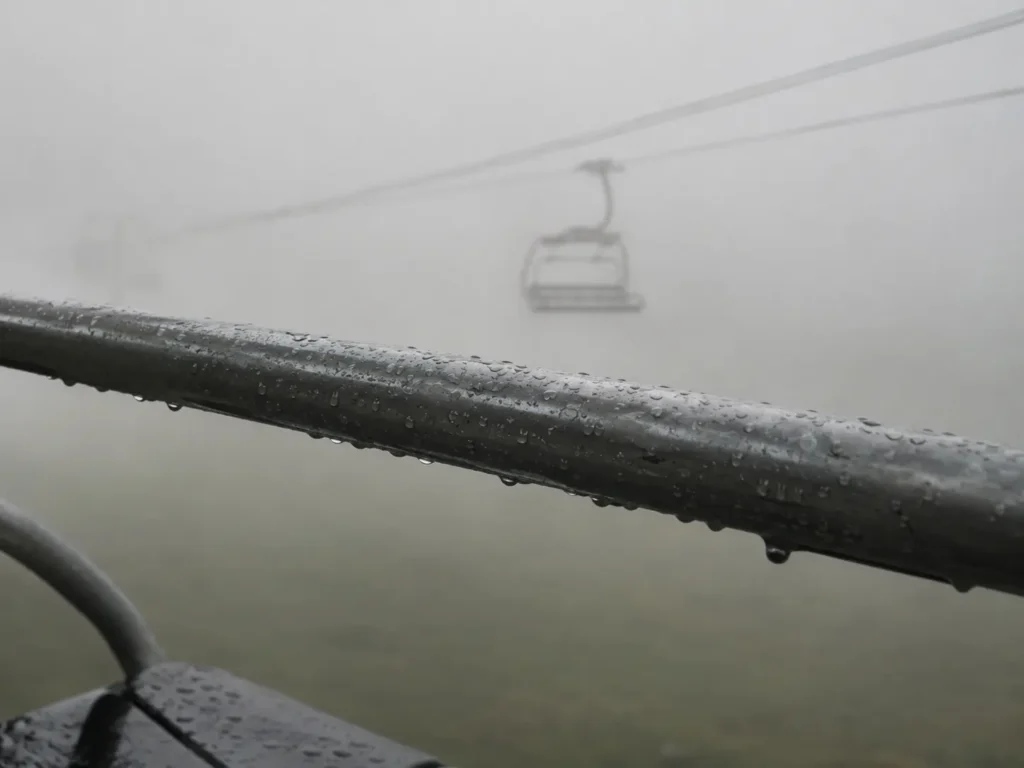
Metal bars are often wet or icy, and a wet glove against wet or frozen metal is close to a worst-case grip scenario.
Working buckles and bindings
Fine motor tasks — adjusting a binding, working a boot buckle — get noticeably harder once fingertip grip drops, since these tasks depend on small, precise contact points rather than a full-palm grip.
Handling a snowboard
Smooth board topsheets combined with wet gloves is a common complaint from snowboarders moving gear around the lodge or lift line.
If a glove’s Durable Water Repellent coating has broken down, the shell soaks up water faster and stays wet longer through a session — REI covers the general signs of DWR failure as part of choosing gear that performs across different conditions, and the same principle applies directly to how long a glove’s grip holds up once it’s wet.

Which Materials Actually Hold Up Best
This isn’t a universal ranking — it depends on what you’re gripping and how wet things actually get, but there are consistent patterns.
Leather has real advantages when dry — it molds to your hand and grips well from the start. Once saturated, though, it depends heavily on maintenance. Leather that’s been recently conditioned resists water absorption longer and keeps more of its tackiness even when damp, while dried-out, unconditioned leather soaks and slicks over fast.
Rubber and rubberized synthetic palms generally hold grip better in wet conditions than either leather or plain nylon, simply because rubber doesn’t absorb water the way porous materials do — moisture beads on the surface rather than soaking in and changing the material’s texture.
Plain synthetic palms without any rubberized texture tend to be the most affordable option, and also the most vulnerable to slipping once wet, since a smooth, non-textured surface loses most of what little grip it had the moment moisture gets between your hand and the material.
For anyone shopping specifically with wet-weather grip in mind rather than just insulation, our guide to the best waterproof ski gloves breaks down which models balance both waterproofing and palm durability well.
A Few Things Actually Worth Doing Right Now
There’s a longer list of fixes for restoring grip once it’s already compromised, but these address the underlying moisture problem directly and are worth prioritizing before anything else.
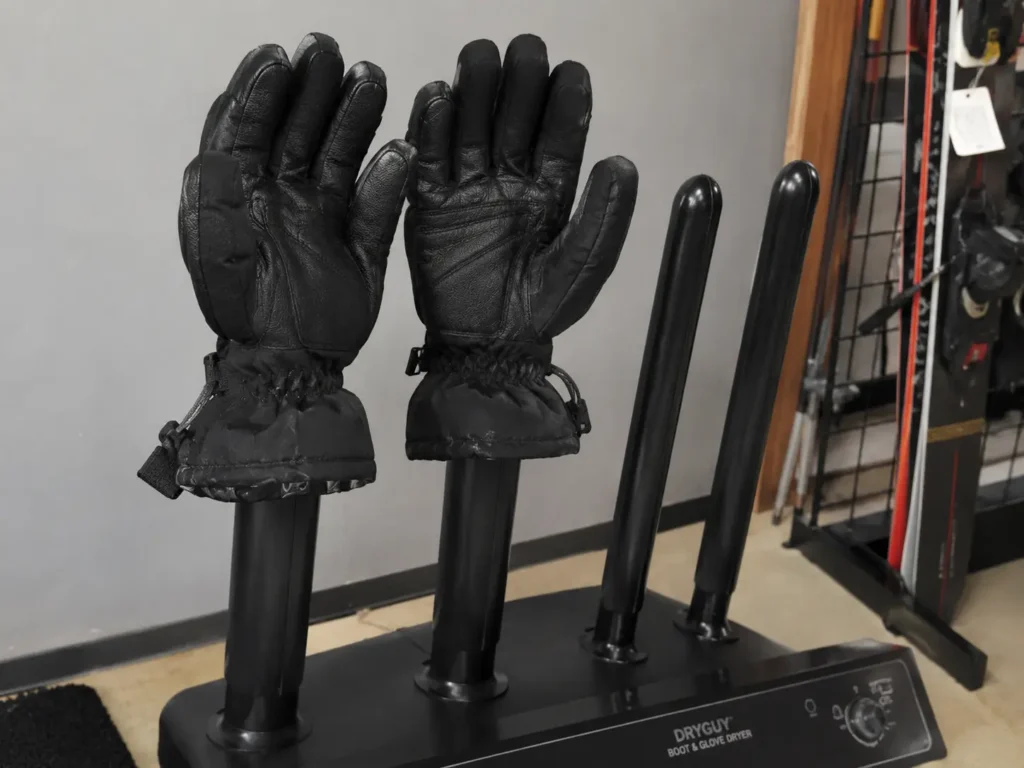
Dry gloves completely between sessions, away from direct heat. Gloves that go back on the hill still damp inside start the next session already behind. Air-drying at room temperature, or on a low boot-dryer setting, preserves the material’s texture far better than blasting them with a heater vent, which can actually harden leather and make the surface worse, not better.
Keep the outer shell’s water repellency intact. A shell that beads water instead of absorbing it stays functional longer through a wet day, which directly protects the grip surface underneath from getting saturated in the first place. Nikwax’s waterproofing wax for leather is a widely used option specifically for restoring this on leather palms.
Brush off surface moisture and loose snow before gripping anything. A few seconds spent wiping a glove palm against your jacket before grabbing a pole or a chairlift bar removes surface water that hasn’t yet soaked in, which meaningfully reduces the moment-to-moment slip even on an already-damp glove.
Beyond these, there’s a full range of grip-restoration methods — from quick emergency fixes to permanent palm treatments — that go well beyond the scope of what’s causing the problem here. Our complete guide to adding grip to ski gloves walks through six different methods, how to diagnose which one actually fits your situation, and which ones to avoid for your specific palm material.
Check What’s Actually Causing It
Before assuming a glove is failing, this quick check separates the moisture problem from other possible causes.
Run water over the palm
If it beads and rolls off, the water-repellent coating is intact and slipperiness is likely just the normal wet-material effect covered above. If it soaks in within a few seconds, the coating has broken down, and the material is absorbing far more water than it should — which compounds the grip problem well beyond what’s typical.
Feel the texture dry, then wet
Dry palm material should have some perceptible grain or texture under a fingertip. If it already feels smooth and glassy even when dry, the surface texture has likely worn away from use, and wetness is making an existing problem worse rather than causing a new one.
Note whether it’s worse on poles specifically, or everywhere
If grip loss shows up gripping poles but feels fine on chairlift bars or zippers, the issue may be specific to how your palm material interacts with your particular pole grip surface, not a general moisture problem at all.
This takes under a minute and tells you whether you’re dealing with normal wet-material behavior, a failed water-repellent treatment, or worn-out surface texture — three different problems that look identical at the moment but call for different responses.
Why This Feels Worse in Some Climates Than Others
Skiers who split time between climate types often notice this problem is inconsistent, and the reason isn’t random.
In dry, cold interior climates, snow tends to stay powdery rather than turning to slush, so gloves spend less total time genuinely saturated. Grip loss from moisture still happens, but usually only during active handling of snow itself, not from ambient wetness throughout the day.
In wet, coastal, or maritime climates, and during spring conditions anywhere, snow carries far more liquid water content. Gloves pick up moisture constantly through contact with snow, slush, and wet gear, which means the palm material spends much more of the day in a partially saturated state. This is part of why the same glove can feel completely fine on a cold, dry powder day and noticeably slippery on a wet spring day, even with identical care and maintenance.
Skiers who ski primarily in wetter climates benefit more from prioritizing rubber or well-maintained, treated leather palms specifically for this reason — the material spends more time in the failure condition, so its wet-weather behavior matters more than it would for someone skiing mostly dry powder.
Applying lotion before skiing
Lotion leaves an oily film on your palms that mixes with sweat or melted snow to create an even slicker surface than moisture alone would. Save the lotion after you’re done for the day.
Drying gloves on direct heat
High heat can harden leather and flatten synthetic texture, which permanently reduces the surface grip those materials depended on. It solves the “wet right now” problem while creating a longer-term one.
Skipping water-repellent treatment entirely
Untreated leather and worn-out DWR coatings both mean the outer material saturates faster and stays wet longer through a normal ski day, extending exactly the window where grip is compromised.
Assuming all slipperiness means the gloves are ruined
Most wet-grip issues are temporary and material-dependent, not a sign the gloves need replacing. Drying properly and maintaining treatment solves the majority of cases without buying anything new.
What to Check Before Buying With This in Mind
If wet-weather grip is a recurring frustration rather than an occasional annoyance, a few specific product details matter more than general marketing claims.
Look for described palm texture, not just palm material. “Leather palm” alone doesn’t tell you whether it’s smooth or textured, treated or untreated. Product photos or descriptions mentioning textured, embossed, or reinforced palm zones are a better signal than material name alone.
Check whether the palm has any rubberized or silicone-printed sections. Many gloves built with wet-condition use in mind add small rubberized print patterns directly onto the palm surface, specifically because printed rubber holds grip better wet than the base fabric alone would.
Read reviews specifically mentioning wet or spring conditions. General reviews often focus on warmth, which tells you little about wet-weather grip performance. Reviews that specifically mention slush, rain, or spring skiing are far more useful for this particular concern.
Consider your actual conditions over marketing temperature ratings. A glove rated for extreme cold says nothing about how it performs when wet — those are two separate performance dimensions that get conflated in most product marketing.
Common Mistakes That Make Wet-Weather Grip Worse
Applying lotion before skiing
Lotion leaves an oily film on your palms that mixes with sweat or melted snow to create an even slicker surface than moisture alone would. Save the lotion after you’re done for the day.
Drying gloves on direct heat
High heat can harden leather and flatten synthetic texture, which permanently reduces the surface grip those materials depended on. It solves the “wet right now” problem while creating a longer-term one.
Skipping water-repellent treatment entirely
Untreated leather and worn-out DWR coatings both mean the outer material saturates faster and stays wet longer through a normal ski day, extending exactly the window where grip is compromised.
Assuming all slipperiness means the gloves are ruined
Most wet-grip issues are temporary and material-dependent, not a sign the gloves need replacing. Drying properly and maintaining treatment solves the majority of cases without buying anything new.
Who Should Actually Worry About This
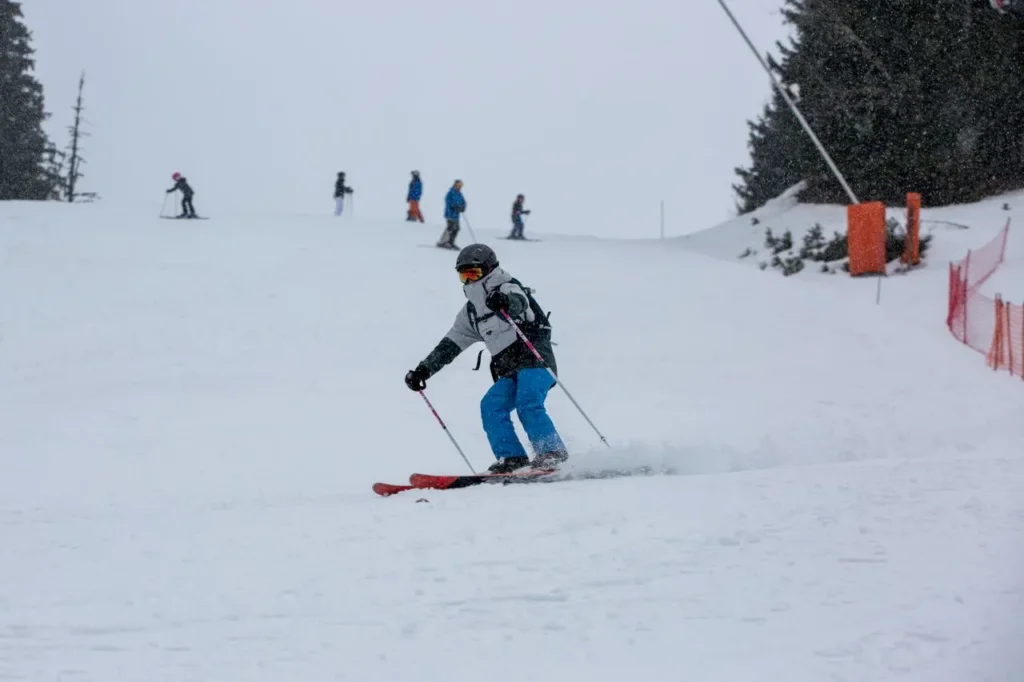
Skiers in consistently wet, coastal, or spring-slush conditions deal with this far more than skiers in dry, cold interior climates, simply because their gloves spend more total time saturated. Beginners also feel this more acutely, since they rely more heavily on pole plants for balance and are more likely to notice control loss immediately.
Skiers in dry, cold climates with infrequent wet-snow exposure can reasonably deprioritize this — the mechanism still applies, but it shows up rarely enough that it’s not worth restructuring gear choices around.
This Isn’t Unique to Skiing
Wet-grip loss is a well-known problem in other equipment-heavy sports, and the parallels are useful for understanding why certain fixes work.
Rock climbers deal with the same fundamental issue on wet holds, which is why chalk exists — it’s specifically there to manage moisture at the point of contact and restore friction. Baseball and golf both have entire product categories built around maintaining grip in humid or wet conditions, using tackifying sprays and textured grip tape for exactly the same underlying reason ski glove palms lose grip: moisture changing surface friction at the contact point.
The common thread across all of these is that the fix generally isn’t fighting the moisture directly — it’s managing the surface texture at the contact point so it performs consistently whether or not moisture is present. That’s the same logic behind rubberized ski glove palms and treated leather: neither eliminates moisture, both manage how the surface behaves once moisture is there.
A Couple of Things That Don’t Actually Matter Here
Glove color
Darker gloves don’t hide wetness better in a way that affects grip — the underlying friction change happens regardless of what the surface looks like. Color is purely cosmetic in this context.
Brand reputation alone
A premium brand name doesn’t guarantee better wet-weather grip performance if the actual palm construction doesn’t include any wet-specific treatment or texture. Construction details matter more than brand prestige for this particular issue.
Insulation level
How warm a glove is has no bearing on how its palm handles moisture. These are separate design considerations, and a heavily insulated glove can have excellent or poor wet grip depending entirely on palm material choice, independent of warmth rating.
Frequently Asked Questions
Do all glove materials lose the same amount of grip when wet?
No. Rubber and textured rubberized surfaces resist this the most since they don’t absorb water. Leather and plain synthetic palms lose more grip proportionally, though well-conditioned leather holds up noticeably better than dried-out leather.
Does a waterproof rating mean a glove won’t get slippery?
Not directly. Waterproofing protects your skin from getting wet, but the outer shell surface can still get wet and lose surface friction, even on a genuinely waterproof glove.
Why do my gloves feel slippery even on a dry, cold day?
Sweat is the likely cause. Physical exertion produces moisture that moves outward through the glove even when there’s no external wetness at all, creating the same friction-reducing film from the inside.
Is this worse for beginners specifically?
Somewhat — beginners tend to rely more heavily on pole grip for balance and control, so a small amount of slip feels like a bigger problem than it would for a more experienced skier who’s less pole-dependent.
Does glove age make this worse?
Yes, generally. Palm surfaces wear smoother over repeated use regardless of material, and a worn-smooth surface has less texture to begin with, so moisture has a bigger relative effect on an older glove than a newer one.
Can two gloves made from the same material perform differently when wet?
Yes, significantly. Treatment history matters as much as the base material — a well-conditioned leather palm and a dried-out, neglected leather palm from the same original glove model can behave completely differently once wet, even though the underlying material is identical.
Is there a way to test this before buying a glove, not after?
Not perfectly, but checking whether the product description mentions any wet-grip-specific features (rubberized print, textured palm, DWR treatment) is a reasonable proxy. Absent any mention of wet performance, assume the glove was designed primarily around warmth and dryness, not grip retention.
The Bottom Line
Wet gloves losing grip isn’t random or a sign of a defective pair — it’s a predictable material response, and which material you’re using determines how bad it gets and how fast it recovers. Understanding the actual mechanism, rather than just accepting “wet gloves are slippery gloves,” is what makes the difference between guessing at a fix and choosing one that actually addresses what’s happening.
The self-check above takes under a minute and separates three genuinely different problems — normal wet-material behavior, failed water-repellent treatment, and worn-out surface texture — that all feel identical in the moment but call for different responses. Running that check before assuming the worst saves both money and the frustration of applying the wrong fix to the right symptom.
If the grip problem is already affecting your skiing and you want the full range of restoration options — from same-day fixes to permanent solutions — the guide linked above covers that in depth. This one’s meant to answer the question underneath it: why it happens in the first place, and why understanding that matters more than any single product recommendation.