You pull your gloves out mid-season and something feels off. The palm looks shiny and thin. The thumb seam is starting to open. The cuff edge looks fuzzy and worn, even though the insulation still feels fine. In the shop, these gloves looked solid. On snow, they didn’t last.
This is exactly why skiers search why ski gloves wear out so fast. The failure feels sudden, unfair, and confusing.
Here’s the honest answer, up front:
Ski gloves wear out faster than jackets or pants because they take nonstop friction, pressure, and abuse that no other piece of ski gear does.
Some wear is completely normal. Some damage is predictable. But a few failure points usually trace back to design or material choices — not just usage.
This guide breaks down where gloves fail first, why those areas take the hit, and how to tell normal wear from a real problem. If you ski regularly, read this all the way through. It’ll save you money and frustration.
Why Ski Gloves Take More Abuse Than Any Other Ski Gear
Ski gloves don’t just sit there and block wind like a jacket does. They’re working every single minute you’re on the mountain. That constant use is the real reason gloves wear out faster than almost any other piece of ski gear.
Jackets and pants mainly deal with snow, wind, and cold air. Gloves deal with force, friction, and pressure — over and over again. That difference matters more than people realize.
Hands Do the Work — Not Just Stay Warm
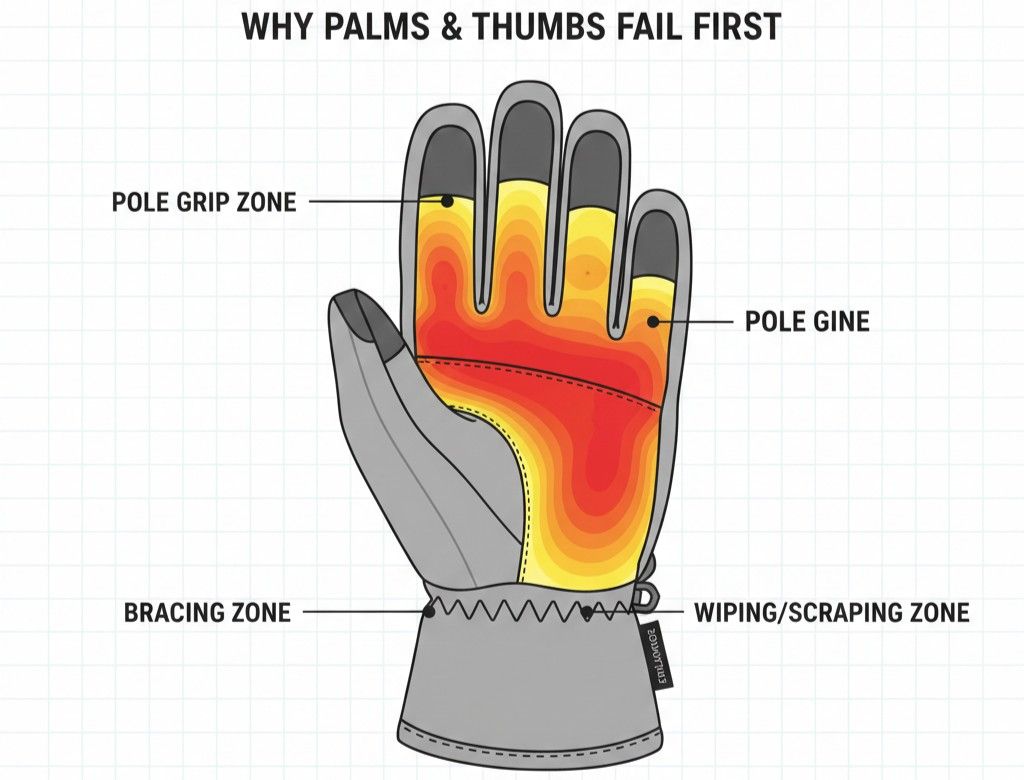
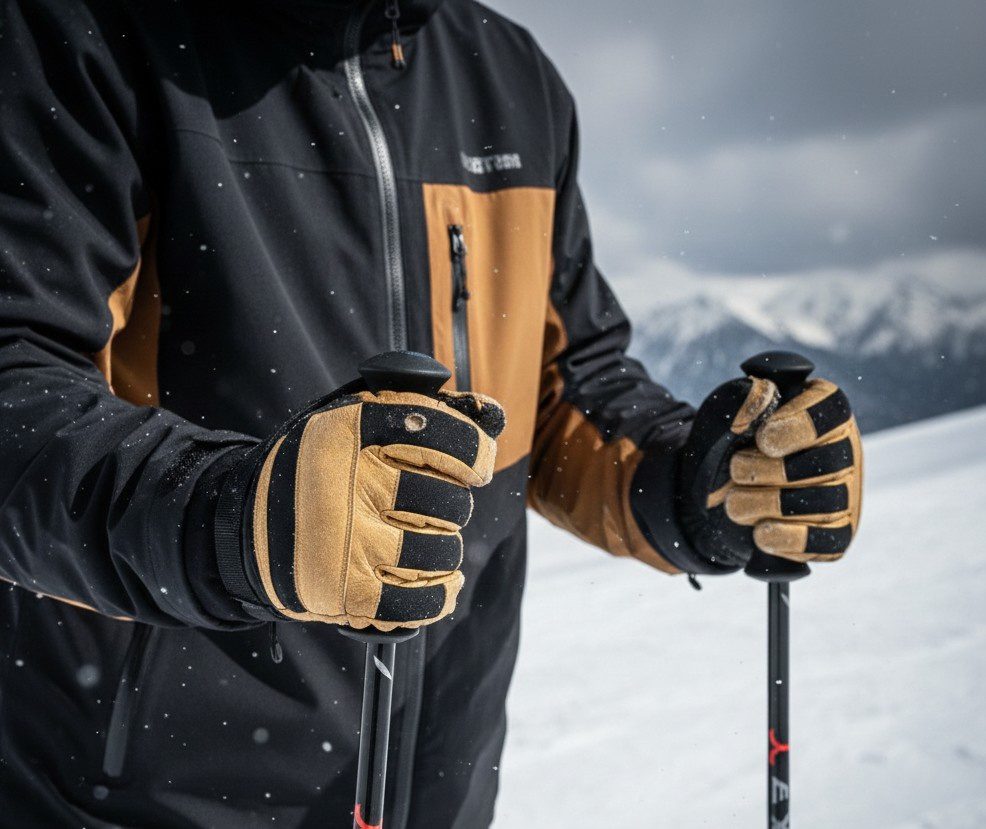
Think about what your hands actually do during a ski day. You grip poles for hours, often with the same pressure in the same spots. That pole friction slowly grinds down palms and thumbs, especially where the pole strap sits.
When you brace with your hands, the glove palm takes the hit against snow, ice, or hardpack.
Even small slides add wear that jackets never see.
Then there’s everything in between runs.
Buckling boots, pulling zippers, scraping snow off bindings, pushing lift gates, grabbing cold metal bars on chairlifts. All of that rubs, pinches, and flexes the glove in the same areas again and again.
From my experience, this is why gloves fail while the rest of your kit still looks fine. I’ve had skis, boots, and shells last year longer than gloves from the same season. That doesn’t mean the gloves were bad — it means they did more work, every single day.
Palm Wear: The Friction Zone That Kills Gloves First
If ski gloves fail early, the palm is almost always the reason. That area takes nonstop contact, pressure, and rubbing from morning to last chair. No insulation or membrane can protect fabric from that kind of daily abuse.
Pole Grip Friction (The Biggest Culprit)
Every turn creates small movements between your palm and the pole grip. It doesn’t feel like much, but it happens thousands of times a day. Over a season, that slow grinding thins material right where your hand wraps the pole.
The cold makes this worse. When gloves are damp and temperatures drop, fabrics stiffen instead of flexing. Stiff material wears faster because it can’t move with your grip.
Why Palms Wear Faster in Cold Weather
In sub-freezing temps, glove materials lose flexibility. Instead of bending, they crease, thin, and slowly crack under pressure. This is why palms often fail mid-winter, not at the end of spring.
Spring skiing can extend glove life. Warmer temps keep materials softer, even when they’re wet. That flexibility reduces stress on the palm with every pole plant.
Leather vs Synthetic Palms
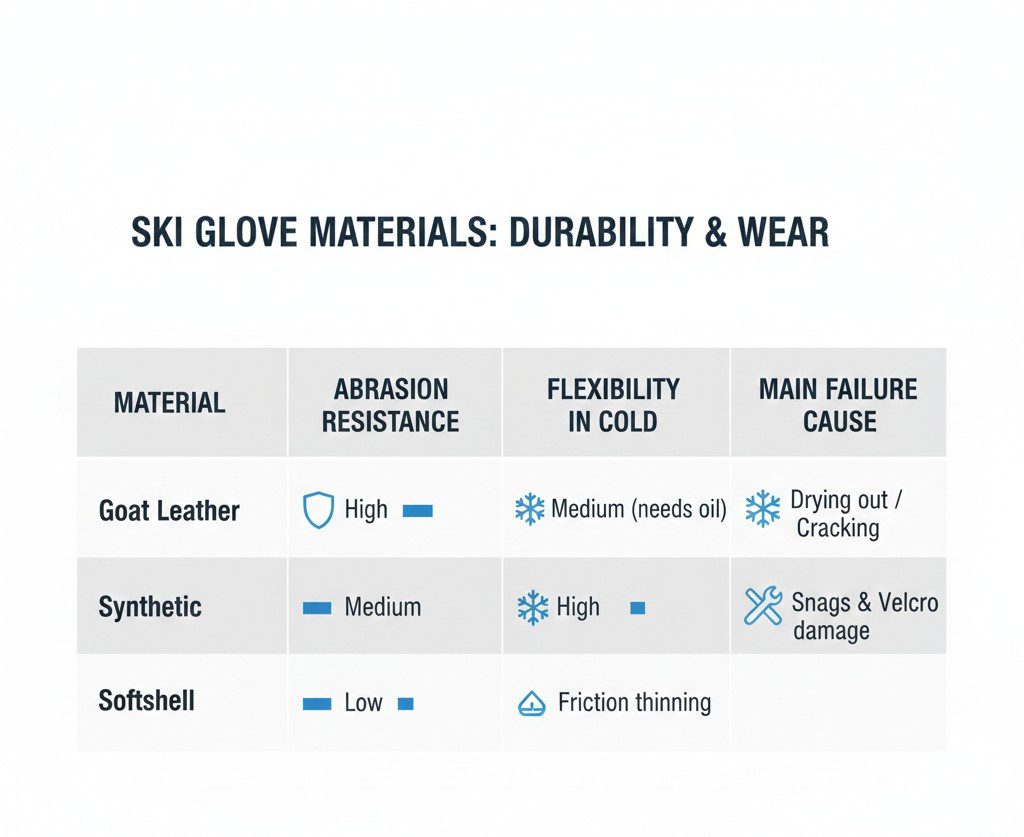
Leather palms last longer against abrasion. They handle pole friction better but need care to avoid drying and cracking. Neglect them, and they fail just as fast.
Synthetic palms feel lighter and break in quicker. But under constant pressure, they wear through sooner. That’s not a defect — it’s the trade-off for weight and feel.
From what I’ve seen on the hill, palm wear is normal up to a point. Slow thinning is expected. Early holes or seam blowouts usually aren’t.
Thumb Wear: The Most Ignored Failure Point
If palms are the first thing people notice, thumbs are where gloves quietly die. Most skiers don’t look there until the seam opens or the fabric thins through. By then, the glove is already on borrowed time.
Why the Thumb Always Goes First
Your thumb does more work than any other part of the glove. It twists, pinches, and pulls all day, often at odd angles. That constant motion puts stress on seams, not just fabric.
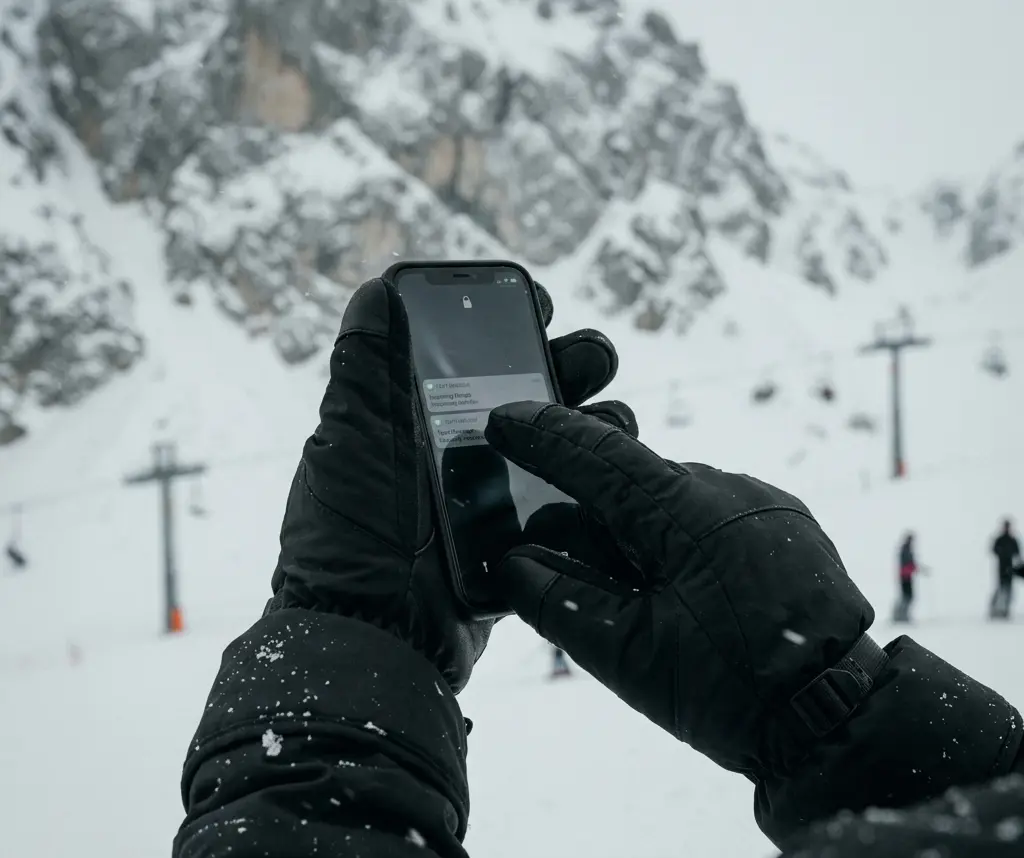
Think about a normal ski day. You use your thumb for jacket zippers, phone screens, goggle straps, and helmet buckles. Each move bends the thumb joint in ways the rest of the glove never sees.
From my own use, this is where gloves start to feel “off” before they look damaged. The thumb feels softer, thinner, or slightly loose. That’s usually the first warning sign.
Snow Scraping and Ice Chipping
Your thumb doubles as a tool. You use it to clear packed snow from bindings or scrape ice off boots in the parking lot. Most people do this without thinking, but that sharp ice acts like sandpaper on the stitching.
Most people use their thumb without thinking. It’s quicker than using the palm, and it gives more control. Over time, that scraping grinds down the thumb pad and weakens stitching.
I’ve compared gloves after similar seasons, and this pattern repeats. Palms show even wear. Thumbs show sharp damage in one small zone.
What I See Fail First
In real use, glove failures rarely start in the middle of the palm. They start at thumb seams or right where the thumb meets the palm. That joint moves constantly and takes direct pressure.
I’ve seen this across leather gloves, synthetic gloves, and hybrids. Price doesn’t change the pattern much. Design and stitching matter more than insulation or branding. This kind of wear is common and predictable. Slow thinning is normal.
If your gloves fail at the thumb first, you’re not doing anything wrong. You’re just seeing the most stressed part give up before the rest.
Cuff Wear: The Hidden Weak Point Most Skiers Miss
Cuff damage sneaks up on you because it doesn’t affect warmth right away. The glove still feels fine, so most skiers ignore it. By the time you notice fraying or thinning, the structure is already weakened.
From years of skiing and inspecting worn gloves, cuffs fail quietly but consistently. They don’t tear in one day. They break down ride after ride, contact after contact.
Lift Bars and Chair Edges
Every lift ride puts your cuffs against metal. The bar rests on the same spot, vibrating as the chair moves. That pressure plus constant rubbing slowly eats away the fabric.
I’ve seen gloves that looked new everywhere else, yet the cuff lining was worn thin. This happens more on busy lift days with lots of laps. It’s not a defect — it’s repeated metal contact doing its job.
Jacket Cuffs, Velcro, and Zippers
Your gloves don’t just fight the mountain. They fight your jacket too. Velcro tabs, sleeve zippers, and stiff cuff edges rub the glove every turn and pole plant. Velcro is especially harsh. It doesn’t cut fabric fast, but it never stops grabbing. Once it roughs up the cuff surface, the damage keeps spreading.
I’ve compared gloves used with clean cuffs versus aggressive jacket Velcro. The difference in wear after one season is obvious. Same skier, same snow, different outcome.
Short Cuffs vs Gauntlets: Different Wear, Same Ending
Short cuffs sit closer to jacket hardware. They see more friction from sleeves and wrist movement. That usually leads to thinning and edge fray.
Gauntlet cuffs avoid some jacket contact but take more abuse from lift bars. The extra length folds and creases under pressure. Over time, that creates weak points in the outer fabric.
In both designs, cuff wear is normal. What matters is how fast it shows up. Early breakdown after light use points to poor reinforcement, not skiing style.
This is one of those areas brands rarely talk about. But once you know where to look, cuff wear becomes easy to predict.
Design Choices That Speed Up Wear (Even in Expensive Gloves)
Not all glove wear comes from how you ski. Some of it is baked into the design before the glove ever hits snow. Price doesn’t protect you from this, and I’ve seen it happen across brands and seasons.
Over the years, I’ve cut open worn gloves, compared old and new pairs, and talked with ski techs who repair gear for a living. The same weak choices show up again and again. They feel great in the shop, then fall apart on the mountain.
Thin Materials in High-Stress Zones
Many gloves use thin fabrics in the palm, thumb, and fingertips to improve feel. You get better pole control and easier phone use. The trade-off is faster wear where pressure never stops.
Many high-end gloves use durable membranes like Gore-Tex to protect against water and wind. These materials help slow down wear by keeping the fabric from getting soaked and stiff, but they can’t stop friction, pressure, and stitching stress in high-use areas like palms, thumbs, and cuffs. Even with Gore-Tex, proper construction and reinforced stitching make the biggest difference in how long gloves last.
From my experience, these areas fail first even when the rest of the glove looks fine. After 30–40 ski days, thinning shows up exactly where your grip stays tight all day. This isn’t misuse — it’s thin material doing what thin material does.
In short gear demos, dexterity feels great — but after 30+ ski days, durability tells the real story. Long seasons tell a different story. Comfort early on can mean replacement sooner than expected.
Stitching Placement That Works Against the Glove
Seams matter more than most skiers realize. When stitching sits right on a bend point, it flexes every single movement. Cold makes fabric stiff, but thread tightens instead of stretching.
I’ve seen seam splits on thumbs and finger joints long before insulation failed. Same skier, same habits, different seam placement — totally different lifespan. That pattern repeats too often to ignore.
This isn’t about bad stitching quality. It’s about where the stitch is placed. Good design hides seams away from stress instead of running them straight through it.
These design choices don’t mean a glove is “bad.” They explain why wear can show up fast even with careful use. Knowing this helps you judge what’s normal — and what’s not.
Common Mistakes Skiers Make
This is the part that hurts a little, because most glove damage isn’t bad luck. Its small habits repeated all season. I’ve made every one of these mistakes myself before figuring out why my gloves kept dying early.
Using Gloves to Scrape Ice Instead of Tools
When bindings ice up, the glove becomes the scraper. Thumbs and palms take sharp, grinding contact with frozen plastic and metal.That damage adds up fast, even if it looks harmless at the time.
I stopped doing this after ruining two pairs in one winter. A cheap plastic scraper or pole handle does the job without killing your gloves. Ski techs see this damage constantly, especially on thumb pads.
Letting Gloves Dry Crumpled or Frozen
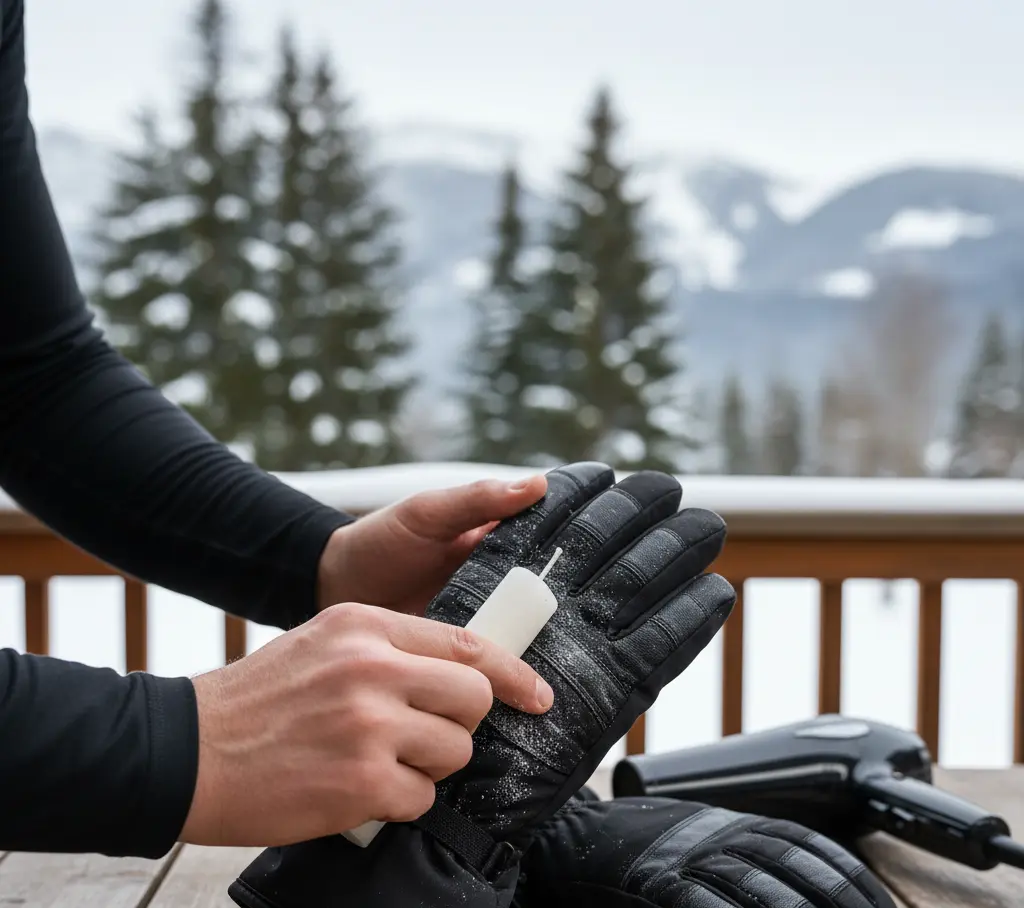
Wet gloves tossed in a bag don’t really dry. They stiffen, trap moisture, and weaken the materials overnight. The next day, cold fabric cracks instead of flexing.
From experience, gloves dried flat and open last noticeably longer. This matches what bootfitters and rental shops recommend for all soft gear. Drying habits matter more than most people think.
Ignoring Early Thinning and Seam Stress
Small thin spots are warnings, not cosmetic issues. Once the outer layer weakens, moisture and friction finish the job quickly. Waiting usually turns a fixable problem into a dead glove.
I’ve extended glove life by months just by rotating pairs once wear shows up. Repair techs say the same thing: early action saves gear. Late action just confirms the loss.
Expecting Gloves to Last Like Jackets
Jackets block weather. Gloves take constant pressure, twisting, and abrasion. They live very different lives on the mountain.
I had jackets that lasted five seasons while gloves died in one. That gap is normal, not a defect. Expecting the same lifespan leads to frustration.
Using One Pair for Every Condition All Season
Cold midwinter days and wet spring laps punish gloves differently. One pair doing everything never gets a break. Materials stay wet longer and wear faster.
Since rotating gloves, I’ve noticed less palm thinning and fewer seam failures. Many instructors do the same for this reason. It’s not about owning more gear — it’s about spreading the stress.
These mistakes don’t mean you’re careless. They mean no one explained what gloves really go through. Fixing just one or two of these habits makes a real difference.
Normal Wear vs Actual Defects (This Matters)
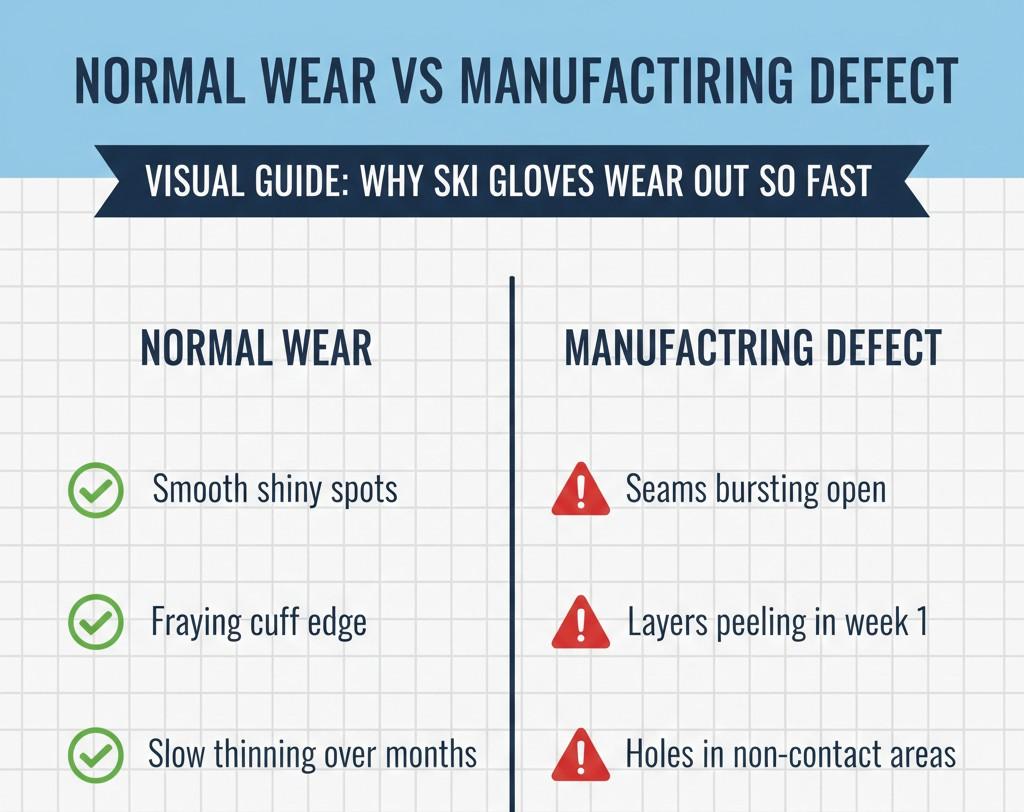
Understanding the difference between normal wear and real defects can save you money, frustration, and unnecessary gear replacements. Gloves take a beating every day on the mountain, so some wear is expected — but other signs mean the glove isn’t performing as it should.
| Feature | Normal Wear (Keep using it) | Defect (Warranty/Replace) |
| Palm | Smooth, shiny spots, gradual thinning | Peeling layers or holes in <10 days |
| Seams | Fuzzy threads on cuffs | Split open, exposing insulation |
| Thumb | Worn patch on the pad | Stitching unraveling at the joint |
| Warmth | Gradual loss over 2-3 seasons | Sudden cold spots in specific fingers |
Lifespan Expectations (Honest, No Marketing)
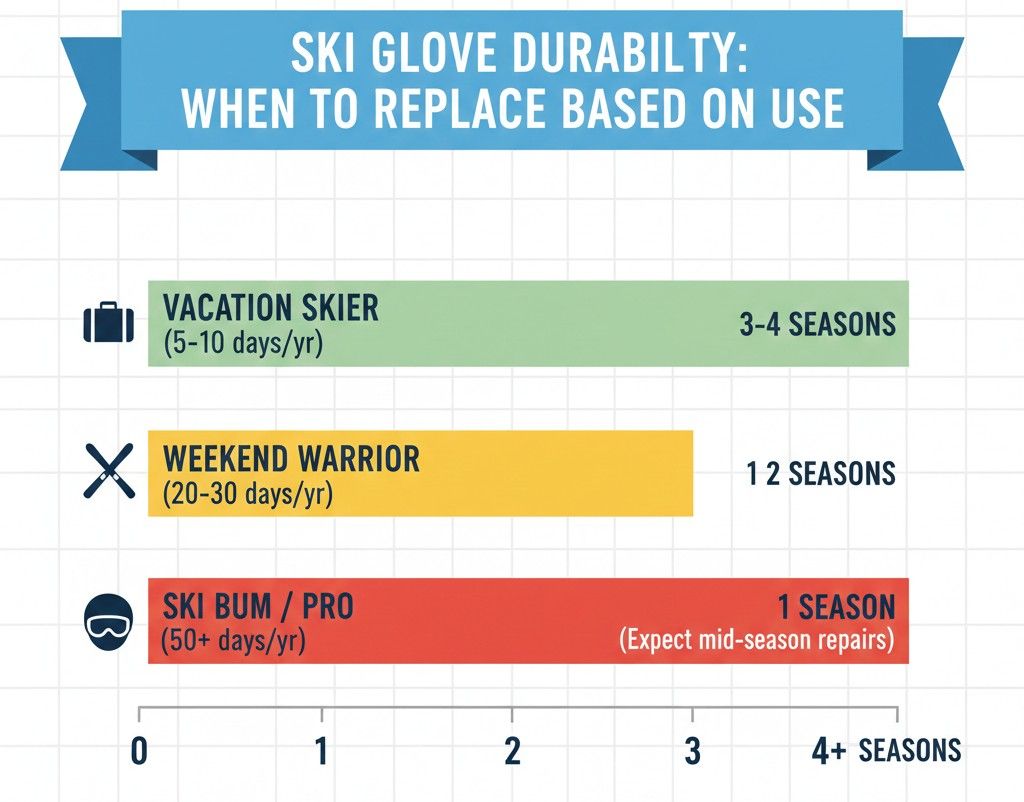
Knowing how long your ski gloves should last helps you plan and avoid frustration. Gloves aren’t meant to last forever — they’re high-use gear that takes constant pressure, cold, and abrasion. Treat them like consumables, not heirlooms.
Light Skier
If you ski just a few days each season, your gloves can last multiple seasons. Normal wear like slight palm thinning or cuff fraying is expected, but the glove will still perform well.
Frequent Skier
For skiers hitting the mountain regularly, one hard season can be enough to show noticeable wear. Palms, thumbs, and seams may thin or loosen by the end of winter — this is completely normal.
Instructors / Patrollers
For pros or instructors on the mountain daily, gloves wear out even faster. Expect heavy use to reduce lifespan significantly. Even top-quality gloves will see stress points wear after weeks of constant skiing.
The key takeaway: gloves are consumables, not a lifetime investment. Understanding this sets realistic expectations, helps you care for them properly, and prevents disappointment when the palm thins or a seam gives out mid-season.
When Fast Wear Becomes a Real Problem
Not all glove wear is just cosmetic — sometimes it starts affecting performance and safety. Knowing the signs early can save your hands from cold, fatigue, and potential injury.
Exposed Insulation
Once the outer material wears through, insulation is left unprotected. Even a small tear or thin spot lets snow and cold air reach your hands, reducing warmth quickly.
Cold Air Penetrating Palms
Thinned palms or worn seams allow cold air to seep in. You may notice fingers getting chilly faster, even during short runs. This isn’t just uncomfortable — prolonged exposure can increase the risk of frostnip.
Loss of Grip and Safety
Gloves that wear too fast can reduce grip on poles, zippers, or bindings. A compromised grip increases fatigue and can make controlling your skis more difficult, raising the chance of slips or accidents.
Increased Hand Fatigue and Injury Risk
When gloves fail in high-stress areas like palms, thumbs, or cuffs, your hands work harder to compensate. This extra effort accelerates fatigue and, combined with cold exposure, raises the risk of injury.
Key Takeaway: Fast wear isn’t just cosmetic — it’s a safety issue. Monitoring gloves for thinning, exposed insulation, or weakened seams ensures your hands stay warm, protected, and in control on every run.
FAQs – Why Ski Gloves Wear Out So Fast
Ski gloves take a lot of abuse. These quick answers help skiers understand why gloves fail and what to do to make them last longer.
Q1: Why do my ski glove palms wear out faster than the rest of the glove?
The palms take constant friction from gripping poles, handling bindings, and bracing on snow or ice. Even small repeated movements wear fabric faster than other areas.
Q2: Why does the thumb always show damage first?
Your thumb moves more than any other part of the glove — twisting, pulling, and scraping against zippers, straps, or snow. That repeated stress weakens seams and fabric faster than other zones.
Q3: Are worn cuffs just cosmetic, or a real problem?
Cuff wear may seem minor, but thinning or fraying can let snow or cold air in. Over time, this reduces warmth and can make your gloves fail sooner than expected.
Q4: Does the material type affect how fast gloves wear out?
Yes. Leather palms resist abrasion better but need care to avoid cracking. Synthetic palms are lighter and flexible but wear faster under constant pressure. Stitching and seam placement matter even more than material.
Q5: Can I extend glove life with simple habits?
Absolutely. Rotating gloves, drying them flat, avoiding scraping ice with palms or thumbs, and addressing thin spots early can all add months to a glove’s lifespan.
Final Takeaway (Grounded, Honest, Calm)
Ski gloves wear out faster than other gear because they do real work every run. Palms, thumbs, and cuffs take the most stress, and some wear is just part of normal use.
Understanding the difference between normal wear and actual failure helps you replace gloves at the right time, avoid frustration, and keep your hands warm on the mountain.
For tips on extending the life of your gloves and protecting them from early wear, you should check our post on how to make ski gloves last longer.
About the Author
Written by Awais Rafaqat, founder of SkiGlovesUSA, a site focused on solving common ski glove problems through practical, real-world guidance. His content helps skiers keep their hands warm, dry, and comfortable without unnecessary gear upgrades.