Quick answer: Your best bet is the interior chest pocket of your jacket, with the spare pair compressed palm-to-palm and sealed in a small zip bag. That spot keeps a spare warm from body heat, protected from snow, and reachable in under fifteen seconds without taking off a pack or fighting a stiff zipper with cold hands. A pack pocket, a thigh cargo pocket, and a lodge rotation system all work too, each with a real trade-off worth knowing before you commit to one. If glove fit or sizing is a separate issue on top of this, ski glove finder can help sort that out too.
- Why a Spare Pair Changes Your Ski Day
- Method 1: The Interior Chest Pocket
- Method 2: The Lower Inside Pocket
- Method 3: The Ski Pack Pocket
- Method 4: The Thigh Cargo Pocket
- Method 5: Lodge Rotation
- Carrying Method Comparison
- Keeping the Spare Pair Actually Dry
- Mistakes That Make a Spare Useless When You Need It
- Signs Your System Isn't Working
- Matching the Method to Your Conditions
- FAQ
Why a Spare Pair Changes Your Ski Day
A glove soaked through — from a fall in wet snow, snow packed into the cuff, or heavy moisture on a storm day — loses most of its insulating ability well before it looks obviously wet. Insulation works by trapping still air, and once that air is replaced with water, the numbers get dramatic fast: water’s thermal conductivity runs roughly twenty times higher than most insulation materials, which is exactly why a soaked glove stops keeping your hands warm long before it’s actually saturated all the way through.
Most ski days don’t end because of an injury — they end because gloves got soaked too early and the rest of the day became uncomfortable enough to cut short. A spare pair in the right spot solves this directly: swap at the chairlift, let the wet pair dry in your pack, and keep skiing.
Carrying location is what makes the difference between a fast swap and a frustrating one. A spare buried at the bottom of a backpack under a water bottle can take two or three minutes to reach with cold hands — by the time it’s found, both hands have been exposed to cold air during the search, which defeats a good chunk of the point. And speed matters for a real reason: frostbite risk on exposed skin in cold, windy conditions can set in within thirty minutes depending on temperature, so a search that leaves hands bare for several minutes isn’t a trivial delay.
It’s worth being clear about what a spare pair actually solves and what it doesn’t. It doesn’t prevent gloves from getting wet in the first place — nothing does, on a genuinely wet day. What it does is remove the choice between skiing with cold, wet hands and ending the day early. That’s a small logistics problem with a straightforward fix, once the carrying location is dialed in.
Method 1: The Interior Chest Pocket
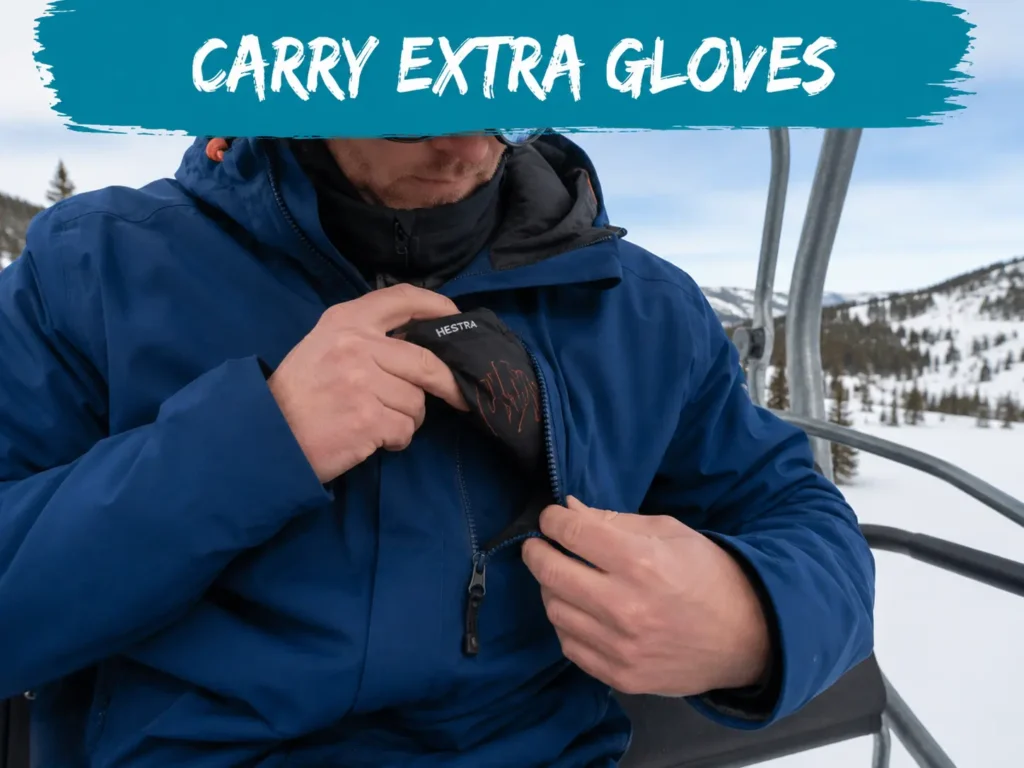
This is the best location for most skiers. The chest pocket sits against your body, keeping the spare pair close to body temperature — you put on a warm dry glove instead of a cold dry one — and it’s fully protected from falling snow and from snow that works into outer pockets during a fall.
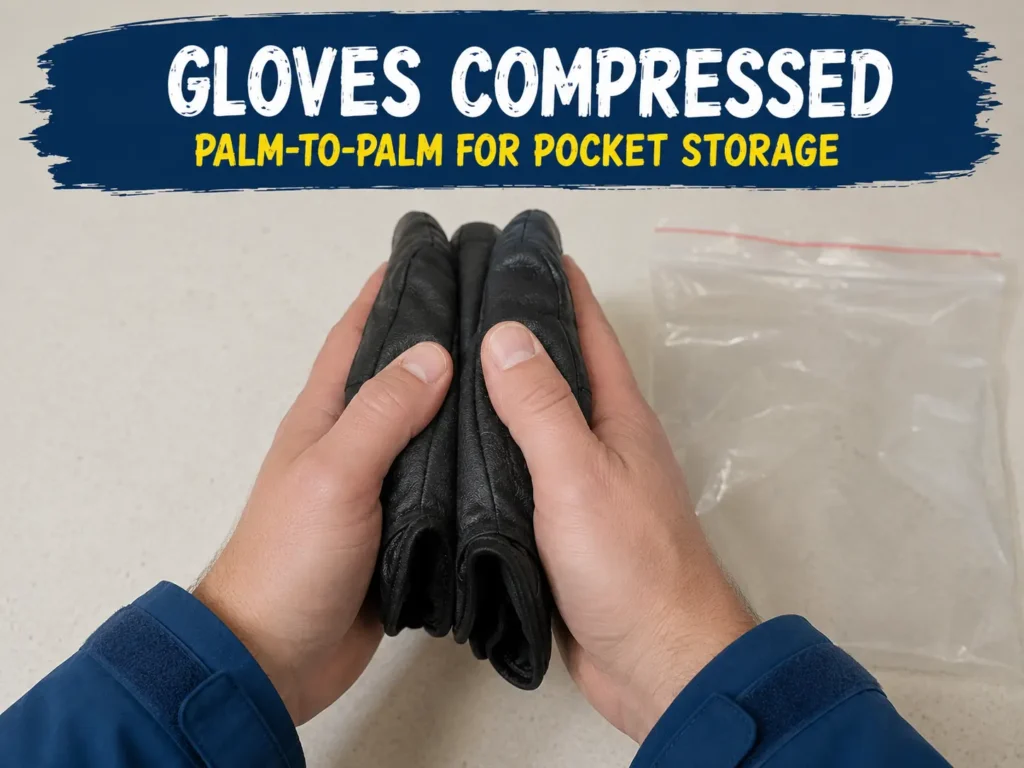
Press the two spare gloves palm-to-palm, fingers aligned, to make them compact enough to sit flat in a chest pocket. Slide that flat unit into a small zip bag or dry bag before it goes in the pocket — interior pockets aren’t fully sealed from moisture, and body sweat over a long day can add some dampness even to an interior spot, so the bag protects the spare regardless of what happens around it.
Before your ski day, do one practice run: jacket fully zipped, reach across your body to the chest pocket, and pull the zip bag out with one gloved hand. If the zip doesn’t move smoothly with a glove on, either the bag is slightly too large for the pocket opening or the pocket zip itself needs a tug tab. Better to find that out at home than mid-mountain.
Fit matters more than people expect here too. Not every jacket’s chest pocket is sized the same — some are built for a phone and a lift pass, not a compressed pair of gloves plus a bag. If the fit is genuinely tight, err toward a smaller zip bag rather than skipping the bag entirely, since a snug fit with protection still beats a loose fit without it.
Method 2: The Lower Inside Pocket
Many jackets have a secondary interior pocket lower on the torso, sometimes marketed as a goggle or media pocket. It’s slightly less convenient to reach than the chest pocket but still fully protected from snow, and for bulkier spares — a full-weight waterproof pair rather than a thin liner — it sometimes has more room to work with.
The trade-off is distance from body heat. A spare sitting in a lower pocket for several hours will be noticeably cooler to the touch than one riding in the chest pocket the whole time. In moderate conditions that barely matters. In genuinely cold conditions where hands are already struggling, a cold spare adds a moment of discomfort before it starts helping — the chest pocket avoids that entirely.
This pocket is worth defaulting to specifically when the chest pocket is already occupied — a phone, a lift pass, a snack — rather than trying to force everything into one spot. Splitting storage across two interior pockets is a completely reasonable solution, and it beats compressing everything into a single pocket so tightly that the zip becomes hard to operate with gloves on.
Method 3: The Ski Pack Pocket
For anyone skiing with a backpack — backcountry, hydration, extra layers — the pack itself offers pockets that can hold a spare. The side pocket is generally the most accessible since it doesn’t require taking the pack off, and a top-lid pocket is a close second for the same reason.
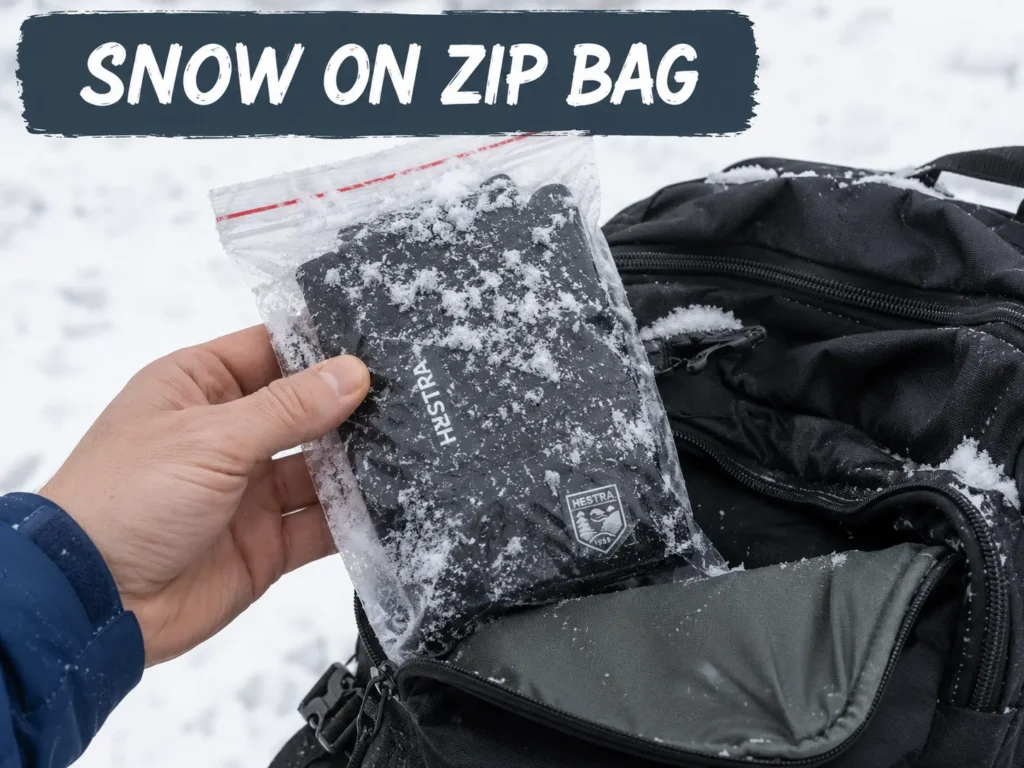
The real limitation is exposure. Pack pockets sit outside the jacket entirely, so they’re exposed to falling snow and get no benefit from body heat. The same zip-bag or dry-bag technique protects the spare from moisture getting in, but the temperature issue remains — a spare in a pack pocket on a heavy snow day will simply be colder when you reach it than one that spent the day against your torso. This works fine for moderate conditions and for skiers who already know their pack layout well; it’s a compromise rather than the ideal choice specifically for cold, wet days.
Pack pocket choice also changes based on how the pack itself is loaded that day. A side pocket that’s easy to reach empty can become awkward once a jacket layer or extra water bottle is stuffed next to it. Doing the same one-handed access test described for the chest pocket, but with the pack loaded the way it actually will be for the day, catches this before it becomes a problem on the mountain.
Method 4: The Thigh Cargo Pocket
Some ski pants have thigh cargo pockets big enough for a compressed spare pair, positioned where a little leg warmth reaches the contents during skiing. The same access check applies — can you reach the zip and open it with one gloved hand while standing on skis?
The limitation shows up during falls specifically. A thigh pocket takes direct impact in a fall, and its contents can shift or compress out of shape if falls happen often. It also sits further from the torso than a jacket pocket, so the warmth benefit is smaller. This works as a reasonable secondary spot — a thin liner pair, or conditions where falls are infrequent — but it’s not the strongest choice for a primary spare.
It works well as a secondary location specifically — carrying a thin liner pair here as a backup to a heavier spare in the chest pocket gives two fallback options instead of one, without meaningfully adding bulk to either pocket.
Method 5: Lodge Rotation
On heavy powder days with frequent falls, some skiers run a rotation instead: one pair on the hands, one drying in the lodge. At each break — typically every ninety minutes to two hours — the pairs swap, with the wet pair hanging near a heat source while the dry one goes back on.
This needs a break genuinely long enough to matter — a five-minute snack stop won’t produce a meaningfully dry glove, but twenty to thirty minutes near real heat will. The upside is real: a lodge-dried spare comes back warmer and drier than anything carried on-body all day. The downside is equally real — it’s not with you on the mountain, so a mid-run problem means getting to the lodge first. This system suits skiers who already take regular breaks and ride in conditions wet enough to soak gloves within a couple of hours; for casual groomed days where gloves rarely get properly wet, it’s more effort than the situation calls for.
Lodge rotation also works well as a complement to on-body carrying rather than a replacement for it. Someone already carrying a spare in a chest pocket can still use lodge breaks to dry out whichever pair isn’t currently in use, effectively running two systems at once without extra effort — the on-body spare covers mid-run emergencies, and the lodge handles longer-term drying between sessions.
Carrying Method Comparison
| Location | Warmth | Dryness | Access Speed | Best For |
| Chest pocket | Best — body heat | Best with a sealed bag | Fastest | Most skiers, most conditions |
| Lower inside pocket | Good | Good with a sealed bag | Fast | Bulkier spares that don’t fit the chest pocket |
| Pack side/top pocket | Fair — no body heat | Good with a sealed bag | Fast if pack layout is practiced | Skiers already carrying a pack |
| Thigh cargo pocket | Weakest | Fair — exposed to fall impact | Fast | Thin liner spare, secondary backup |
| Lodge rotation | Best — actively dried | Best | Slowest — requires a break | Wet powder days with regular breaks |
Keeping the Spare Pair Actually Dry
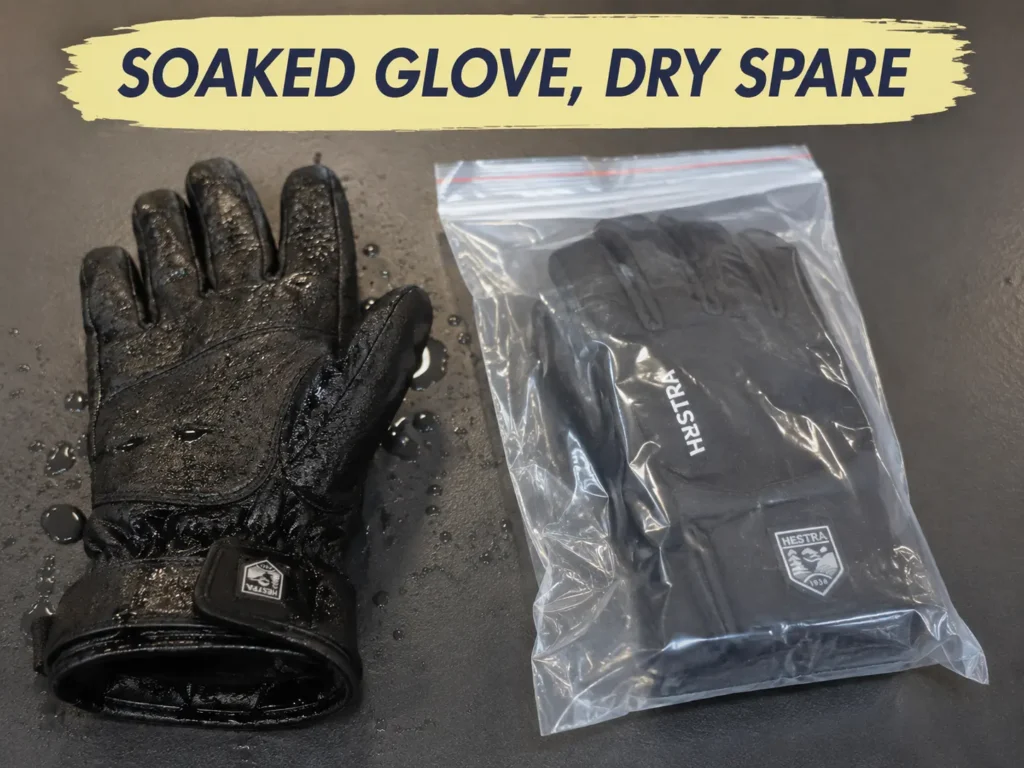
A spare that’s wet when you need it isn’t really a spare — it’s just a second wet pair. The most common reason this happens: no zip bag or dry bag, so pocket moisture from body sweat or a snowy fall reaches it over the course of the day. The underlying principle is the same one behind vapor-barrier gear used in genuinely extreme cold — a fully non-breathable barrier blocks moisture transfer in either direction, which is exactly what a sealed zip bag is doing on a smaller, simpler scale for a pair of spare gloves.
A basic zip-seal bag works fine and costs nothing extra if you’ve got one at home — compress the spare, squeeze out excess air, and seal it. A small silnylon dry bag with a roll-top closure is the more durable option for anyone regularly skiing with a pack, since it holds up better than a zip bag in conditions where a pack gets buried briefly during a fall in deep powder.
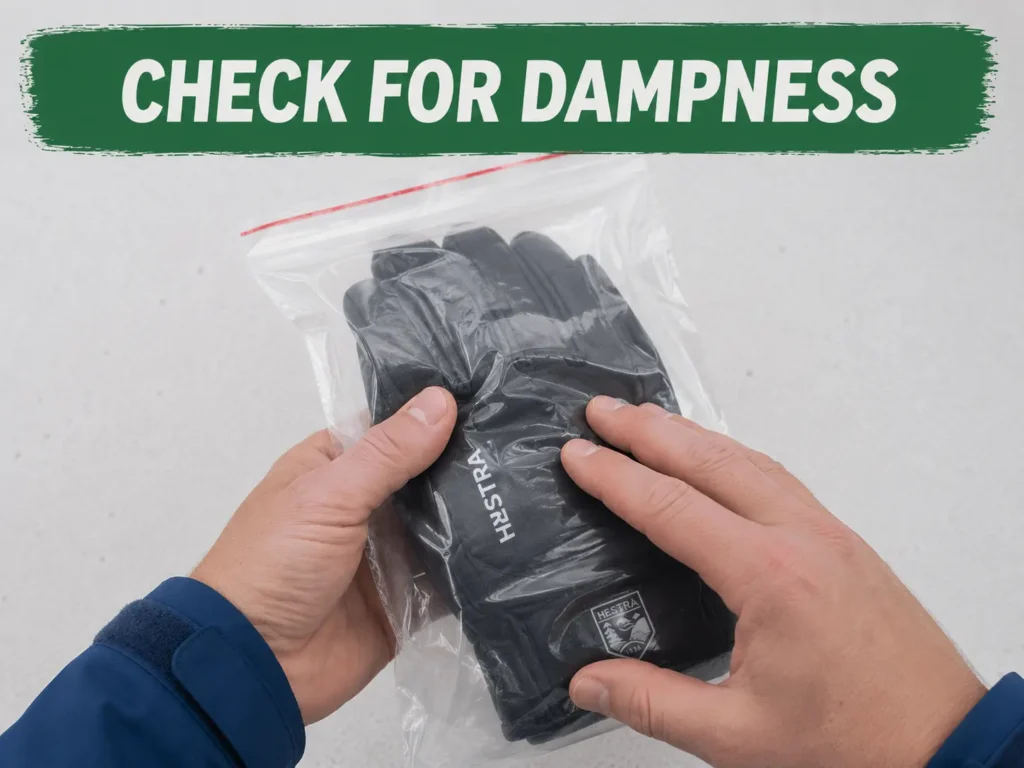
One failure mode is easy to miss: sealing a spare that’s already slightly damp — from the previous day’s use, or handled with wet hands — traps that moisture inside instead of keeping it out. The bag then does the opposite of its job, and the spare comes out cold and clammy because it’s spent the day sealed with its own moisture. Always confirm the spare is genuinely dry before sealing it away.
Cold also plays a role in bag choice that’s easy to overlook. A standard zip-seal bag can become stiff and slightly harder to open in genuinely cold conditions, which matters if speed is the whole point of carrying a spare in the first place. A silicone or fabric-backed dry bag stays more flexible across a wider temperature range, which is one more reason it’s worth the extra cost for anyone skiing regularly in seriously cold conditions rather than just occasional mild days.
Mistakes That Make a Spare Useless When You Need It
Carrying a spare in an outer jacket pocket without a bag is the most common one. Outer pockets are exposed to snow, and a fall packs snow straight into that opening — without a sealed bag, the spare gets wet directly, and with one, it stays protected even if the bag itself gets covered in snow. This single mistake accounts for most “I had a spare, but it was wet too” situations.
Burying the spare at the bottom of a full pack is a close second. Reaching it means removing the pack, opening the main compartment, and digging past other gear — in cold conditions with gloves already on, that easily takes a couple of minutes, by which point the swap provides a lot less benefit than it should.
Skipping compression is a smaller but real mistake. An uncompressed spare pair takes up roughly the space of two softballs side by side; pressed palm-to-palm in a zip bag, that drops to less than half. The compressed version fits a chest pocket comfortably. The uncompressed version often doesn’t.
Carrying a spare that matches the primary pair in bulk is worth reconsidering too. A spare doesn’t need to match the main glove’s warmth — it needs to bridge the gap until the next lodge break. A lighter, thinner pair reduces bulk in a pocket while still doing that job.
A less obvious mistake: never actually testing the whole system before the ski day it matters most. A spare that’s never been reached for with gloves on, timed, and checked for dampness is an assumption, not a plan. The couple of minutes it takes to run through the whole sequence at home — compress, bag, place, retrieve one-handed — is what turns “I should be fine” into something actually verified.
Signs Your System Isn’t Working
| Warning Sign | Likely Cause |
| Spare is wet when you reach for it | No sealed bag, or the spare was already damp when packed |
| Takes more than 15 seconds to access | Wrong location — move to chest or inside jacket pocket |
| Spare feels cold to the touch | Stored too far from body heat — try the chest pocket or lodge rotation |
| Can’t open the pocket with gloves on | Zip too small or stiff — practice at home, or switch pockets |
| Spare has lost its compressed shape | Not sealed in a bag — loose gloves shift and expand in a pocket |
Matching the Method to Your Conditions
Short groomed sessions in dry, cold conditions rarely need a spare at all — most gloves handle two to three hours without saturating unless conditions are unusually wet or falls are frequent.
Powder days with frequent falls are a different story. Each fall means wrist and palm contact with snow, and by midday even a genuinely waterproof glove may be letting some moisture through if fall frequency has been high. A full spare in the chest pocket, or a lodge rotation if breaks are already part of the plan, covers this well.
Storm days with heavy, ongoing snowfall are where the sealed-bag chest-pocket combination matters most, since moisture is coming from everywhere — snow builds up on outer surfaces constantly, and outer pockets in particular will have snow in them for most of the day.
Spring conditions near freezing saturate gloves faster than dry winter powder does, since the snow itself is wetter to begin with. A spare still matters here, but it can be a lighter pair, since the air temperature itself is less of an immediate threat to bare hands.
Family ski days with mixed ability levels are worth a separate note. A parent skiing with kids of different skill levels often spends more time stationary — helping with boots, waiting at the bottom of a run, standing at a meeting point — than they would skiing alone, and that extra stationary time increases cold exposure even without falling or getting wet. Carrying a spare in this scenario is less about wet gloves specifically and more about the cumulative effect of reduced movement, which argues for the warmest available carrying spot — the chest pocket — over convenience-focused alternatives.
If you’re also thinking about how to pack gloves before you even get to the mountain — for a flight or a long drive — that’s a related but separate question covered in the travel packing guide on this site.
FAQ
Do I need a spare pair for a half-day of skiing?
Usually not, unless conditions are unusually wet or you’re falling often. Most gloves handle two to three hours of normal use without fully saturating.
Should the spare pair match my primary gloves in warmth?
Not necessarily. A lighter, thinner spare takes up less space and still does its job as a bridge until you can dry the primary pair or reach a break.
What if my jacket doesn’t have an interior chest pocket?
The lower inside pocket or a pack pocket are the next-best options, in that order — both still protect the spare from snow, just with somewhat less body warmth than a true chest pocket provides.
How many spare pairs should I actually carry?
One is enough for the overwhelming majority of ski days. A second spare only makes sense for full-day backcountry trips or genuinely extreme conditions where drying time between uses is limited and the consequences of both the primary and spare getting wet are serious.
Does the spare need to be the exact same size as my primary gloves?
No — a spare that’s a size larger still works fine and is actually easier to get on quickly with cold, slightly swollen hands than a snug pair would be.