Quick answer: The smell itself isn’t the problem — it’s a sign that bacteria have been feeding on sweat and skin cells trapped in the glove lining. Bacteria need three things to multiply: warmth, moisture, and organic material. Remove any one of those after every ski session — wipe the lining, open the cuff and let it air out, don’t seal a warm damp glove in a bag — and odor mostly stops developing in the first place. Sprays and sachets only cover the smell temporarily, because they don’t touch any of the three actual conditions. If you’re also comparing gloves generally, ski glove finder can help with that separately.
- The Three Conditions Bacteria Actually Need
- Interrupt the Organic Material
- Remove the Moisture
- Reduce the Warmth
- The Liner Strategy
- Storage and Transport Is Where Smell Actually Develops
- Activated Charcoal Inserts — What They Actually Do
- Prevention Methods Compared
- Daily Prevention Checklist
- Mistakes That Start the Smell Cycle
- When Prevention Stops Being Enough
- FAQ
The Three Conditions Bacteria Actually Need
A ski glove lining during a normal ski day is warm, slightly damp from sweat, and picking up dead skin cells and sweat proteins the whole time you’re wearing it. None of that is a problem by itself — the small number of bacteria naturally present don’t have time to multiply meaningfully during a few hours of active skiing.
The real risk window opens the moment the glove comes off. If it goes straight into a sealed bag or a closed boot bag, all three conditions bacteria need stay in place at once: the warmth doesn’t escape, the moisture has nowhere to go, and the organic material is sitting right there. Sealed and warm for eight to twelve hours is more than enough time for a noticeable bacterial colony to establish itself, which is why gloves that smelled fine at the end of the ski day can smell distinctly bad by the next morning.
This is also why smell compounds across a multi-day trip in a way that surprises people who expect it to stay constant. Each session adds a fresh layer of organic material to whatever bacteria are already established from the day before. Without something interrupting that cycle between sessions, day three of a trip carries forward everything from days one and two, plus whatever the current day adds — which is why gloves that were merely a little musty by day two can be genuinely unpleasant by day four or five with no prevention in place at all.
Interrupt the Organic Material
Skin bacteria that cause odor — mainly species in the Corynebacterium and Staphylococcus groups — work by metabolizing compounds in sweat and producing the actual smelly byproducts themselves. Research on the microbial origins of body odor has identified specific volatile fatty acids these bacteria produce, which is why the smell develops progressively rather than existing from the start — it’s a byproduct of ongoing bacterial activity, not something inherent to sweat itself.
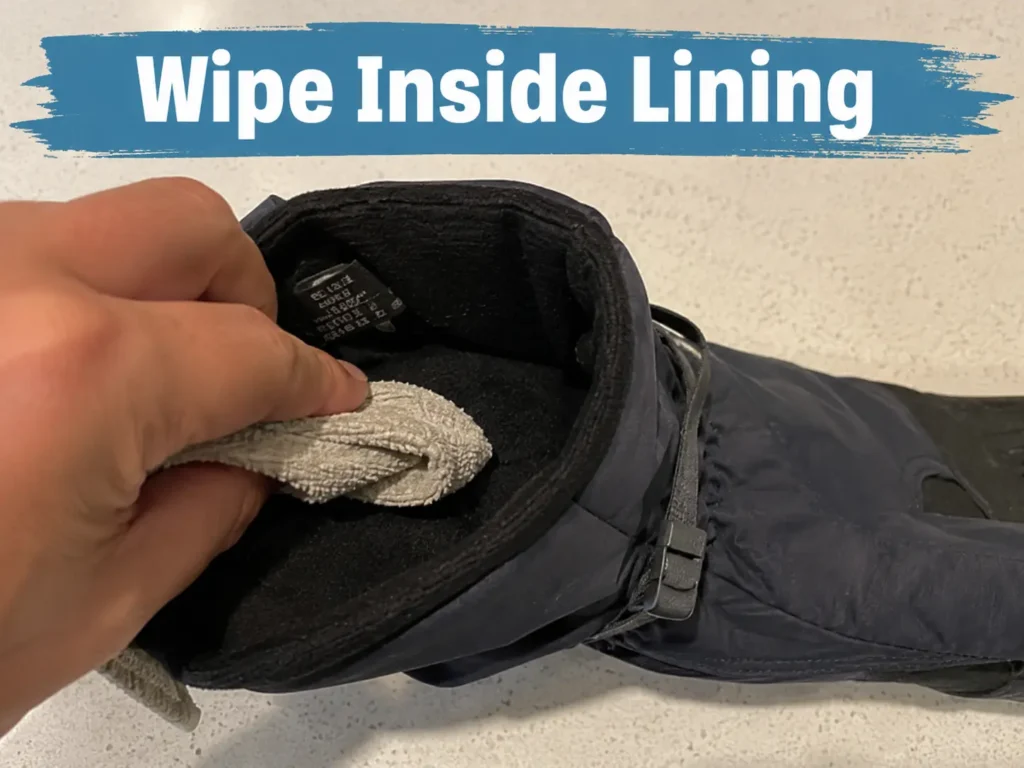
A dry cloth wipe of the interior lining, done within minutes of removing the gloves, physically removes a meaningful amount of that organic material before bacteria have had time to use it. Reach inside with a dry cloth and wipe the palm and finger zones firmly — thirty seconds per glove is enough. Timing matters more than most people expect: fresh residue wipes off easily, but residue left overnight bonds to the lining fibers and needs actual washing to remove.
The wipe also matters more for some finger zones than others, worth knowing so the thirty seconds gets spent where it counts. The palm and the pads of the fingers accumulate the most sweat and skin cell residue, since that’s where the glove is in most direct, sustained contact with skin. The back-of-hand lining picks up comparatively little by contrast, so a quick, thorough pass across the palm and fingers matters more than trying to wipe every square inch evenly.
Remove the Moisture
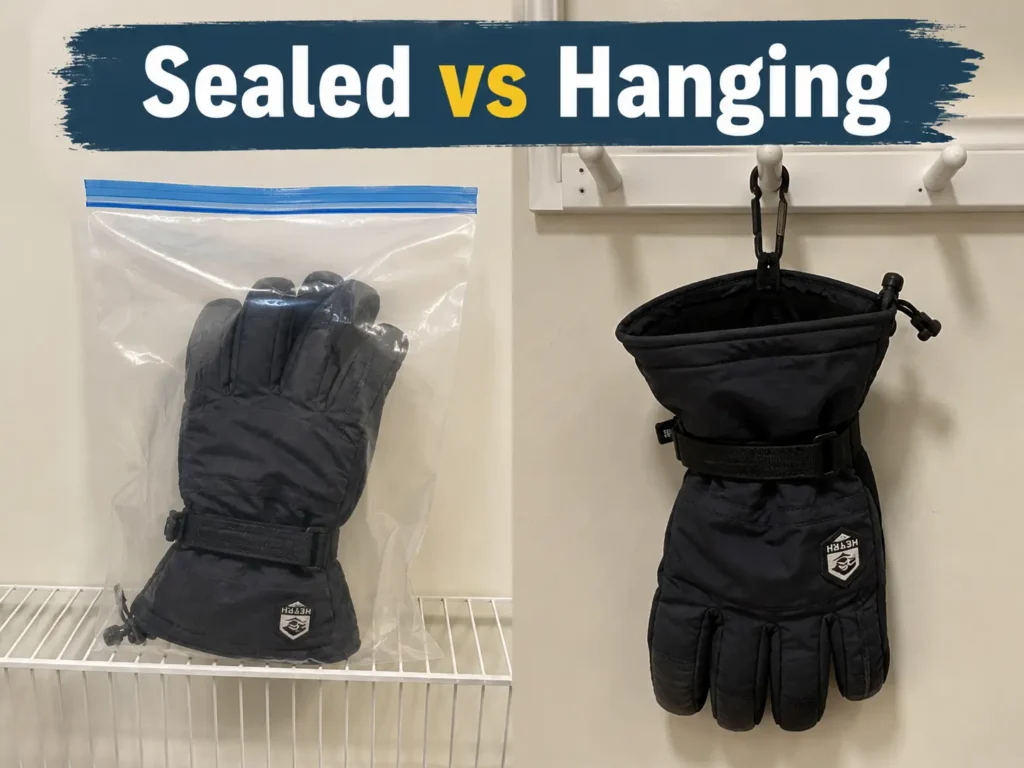
Bacteria can’t multiply quickly without moisture, and a glove lining that reaches ambient room dryness within a couple of hours simply doesn’t provide the wet environment rapid bacterial growth needs. Open the cuff fully within thirty minutes of finishing a session and hang the glove in open room air rather than leaving it flat or sealed.
For gloves with a removable liner, take the liner out and hang it separately. A liner left inside the shell traps moisture against both pieces, and neither dries properly — the shell stays effectively sealed even with the cuff open, because the damp liner inside keeps feeding moisture back into it. The full drying process, including why a heater vent actually works against you here, is covered in more depth in the drying guide on this site.
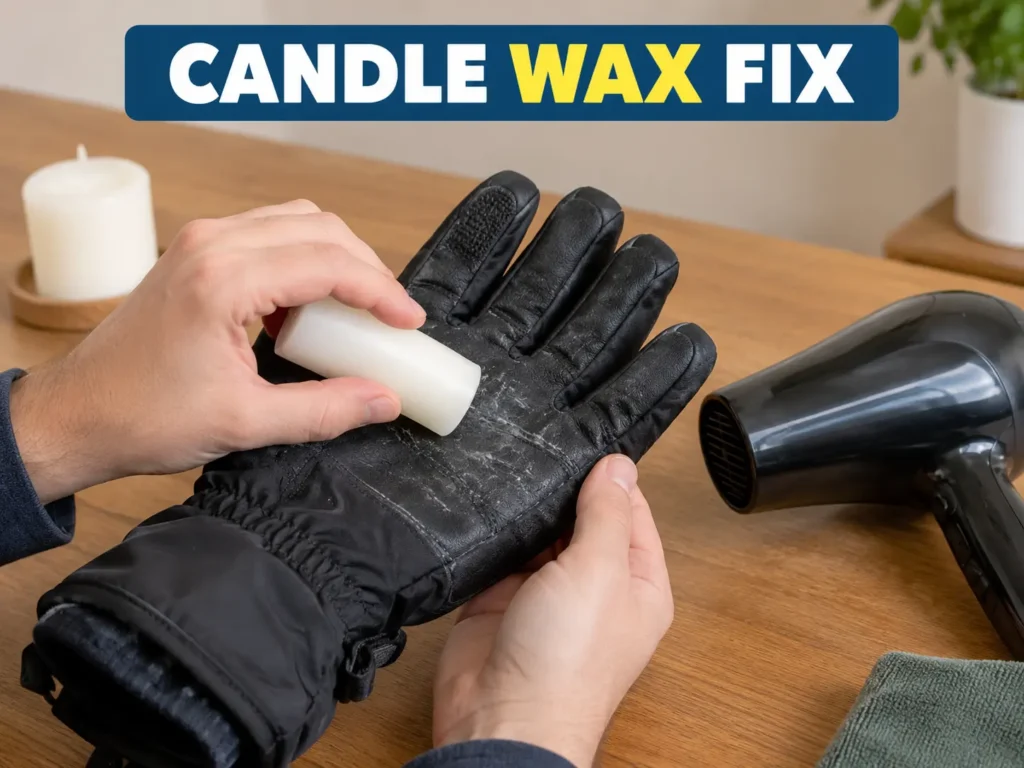
There’s a reason room-temperature air drying beats every faster-feeling alternative for this specific purpose. A heater vent or hairdryer might feel like it’s solving the problem faster, but concentrated heat can actually push moisture deeper into thick insulation rather than out of it, and it does nothing for the underlying bacterial issue regardless of how dry the outer lining feels afterward. Slow, steady airflow at room temperature is what actually lets moisture escape the whole structure rather than just the surface.
Reduce the Warmth
A glove sealed in a bag holds onto the body heat and session warmth it picked up for hours. Left open in a normal room, that same glove drops to ambient temperature within twenty to thirty minutes — and cooler temperatures slow bacterial reproduction on their own, independent of moisture. This step costs nothing and takes no extra time; it just means not sealing a warm glove away immediately.
These three actions work as a system, not as options to pick from. Skipping the lining wipe but doing everything else still leaves organic material available. Drying the shell but leaving the liner in still leaves a moisture source. All three together is what actually interrupts the cycle before it starts.
It’s worth treating this as a genuine routine rather than something to remember only when a glove already smells. The full sequence — wipe, remove liner, open cuff, hang — takes under two minutes per pair once it’s a habit, and it’s dramatically easier to do consistently than to reverse an established smell later with washing.
The Liner Strategy
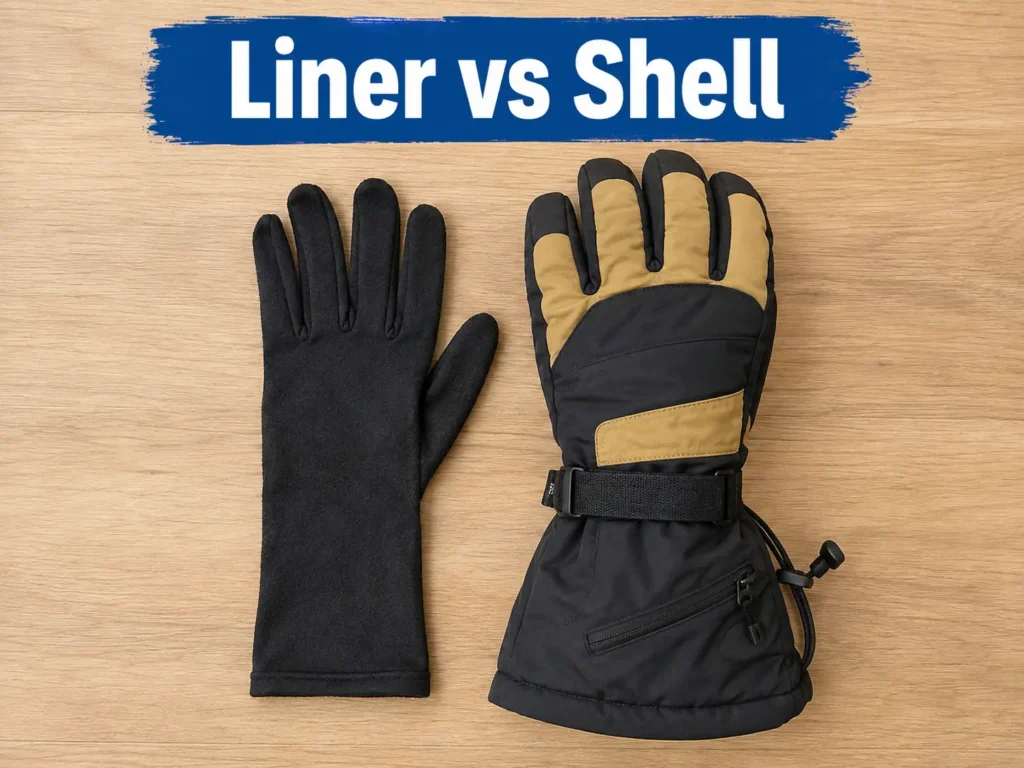
A thin liner worn underneath the outer glove intercepts most of the sweat and skin cells before they ever reach the outer glove’s lining, since the liner sits directly against skin. Because it’s a separate, washable piece, it can go through a full wash cycle nightly on a multi-day trip while the outer shell only deals with whatever passes through the liner.
Wool liners specifically have a real, measurable edge here, though it’s worth being precise about what the evidence actually shows. Rather than “lanolin kills bacteria” — a claim that’s repeated often but not conclusively proven — the more careful research finding, reviewed elsewhere, is that wool garments measurably produce less noticeable odor after wear than matched cotton or polyester garments in direct comparison studies. The mechanism isn’t fully settled, but the real-world outcome — less smell per day worn — is genuinely documented.
Synthetic liners dry faster and wick moisture effectively, which matters too, just through a different mechanism than wool’s. Either liner type used and washed regularly outperforms no liner at all by a wide margin.
Washing frequency matters here as much as the liner material itself. A liner washed nightly on a multi-day trip resets to a near-zero bacterial load every single morning, regardless of which material it’s made from. A liner worn for several days straight without washing accumulates the same organic material problem the outer glove would have without prevention — the liner just delays where that buildup happens, rather than eliminating it.
Storage and Transport Is Where Smell Actually Develops
The most common point smell actually develops isn’t during the ski day — it’s during transport, when gloves sit packed in a bag with no ventilation for hours. A glove with no detectable smell at the end of a ski day can develop real odor after eight to ten hours sealed in a suitcase, for exactly the same reason overnight storage causes it: warmth, moisture, and organic material, all trapped together.
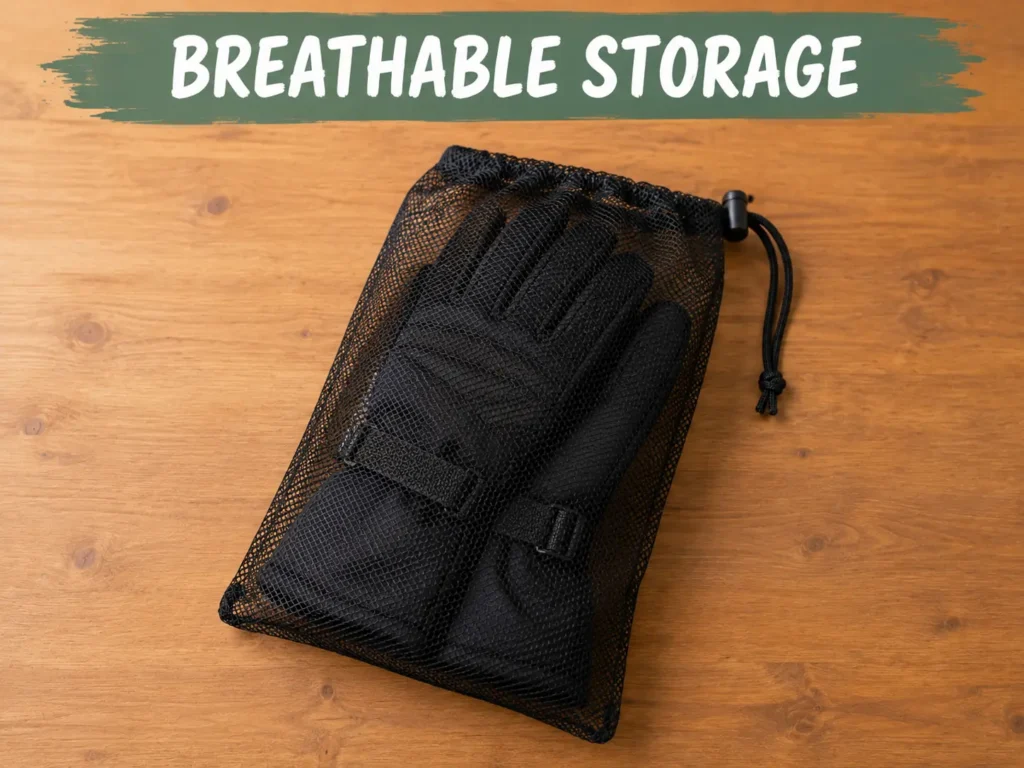
The fix is the same principle applied to travel specifically: don’t pack gloves in a sealed container until they’ve reached room temperature and the lining is dry to the touch. For overnight packing between ski days, use a breathable mesh bag or pillowcase rather than a sealed plastic bag — mesh keeps air moving even while packed, where plastic recreates the exact enclosed environment that starts the cycle over again regardless of how dry the gloves were when they went in.
Gloves left in a genuinely cold car overnight are actually fine, since bacterial growth slows dramatically near freezing. The problem case is a sealed bag in a warm car or trunk, which is close to ideal bacterial growth conditions rather than a passive storage spot.
Hotel room storage between ski days deserves its own note, since it’s easy to assume a hotel room is automatically a safe drying environment. A warm, poorly ventilated room with the heat cranked up isn’t meaningfully different from a sealed bag in terms of humidity if the gloves are hung in a closed closet rather than open room air. Positioning gloves near a window or the room’s air conditioning vent, rather than in a warm, still corner, gives them a genuine chance to dry rather than just sit in ambient warmth.
Activated Charcoal Inserts — What They Actually Do
Activated charcoal works through sheer surface area rather than any chemical reaction with bacteria. A single gram can have enormous surface area — 500 to 1,500 square meters — enough that it physically adsorbs a large volume of odor molecules onto that surface as air passes through it.
That’s a genuinely useful mechanism, but it’s worth being clear about its limits. Charcoal adsorbs the smell molecules bacteria have already produced — it doesn’t kill the bacteria, remove the organic material, or dry anything out. It’s a supplementary tool for periods when the other steps can’t be applied, like sealed travel, not a substitute for the underlying prevention system. A small sachet placed inside each glove before packing reduces odor buildup specifically during that sealed period, and most inserts can be recharged by leaving them in direct sunlight for a couple of hours, which drives off the compounds they’ve adsorbed.
Charcoal doesn’t help once a lining already has an established, strong odor — at that point bacteria are producing smell faster than a sachet can adsorb it, and washing is the only real fix.
Placement inside the glove matters more than quantity. A single small sachet positioned in the palm area, where organic material concentrates most, does more work than the same amount of charcoal spread loosely around the fingers. And since the adsorption capacity is finite, a sachet used every single day without ever being recharged in sunlight will gradually lose effectiveness — the surface area doesn’t change, but the pores fill up with previously adsorbed compounds over time.
Prevention Methods Compared
| Method | What It Actually Does | Limitation |
| Dry cloth wipe after each session | Removes organic material before bacteria use it | Less effective if delayed until the next day |
| Open-cuff air drying | Removes the moisture bacteria need | Requires being done within about 30 minutes |
| Liner removed and dried separately | Stops liner moisture from keeping the shell damp | Only applies to gloves with a removable liner |
| Wool or synthetic liner, washed regularly | Intercepts most organic material before it reaches the shell | Adds a washing routine to manage |
| Activated charcoal insert | Adsorbs odor molecules during sealed storage | Doesn’t address bacteria or moisture directly |
| Odor-masking spray | Covers smell temporarily | Doesn’t interrupt bacterial growth at all |
Daily Prevention Checklist
| After Every Session | Why |
| Wipe interior lining within a few minutes | Removes organic material before bacteria colonize it |
| Remove liner, hang separately | Prevents trapped liner moisture from keeping the shell damp |
| Open cuff fully, hang in open air | Removes the moisture condition |
| Wash liner if it’s wool or synthetic and trip continues tomorrow | Resets bacterial load to near zero |
| Never seal into a bag until dry to the touch | Sealing warm and damp restarts the whole cycle |
Mistakes That Start the Smell Cycle
Sealing gloves in a bag right after skiing is the single most common cause of odor developing. The glove is warm and damp exactly when it goes into the bag, which creates ideal bacterial growth conditions overnight.
Leaving the liner inside the shell overnight is a close second — it keeps the shell effectively damp for hours after the cuff has been opened, undoing most of the benefit of airing it out.
Relying on a spray as the primary prevention method rounds out the list. A sprayed glove that hasn’t had the actual prevention steps applied is a smelly glove with fragrance layered over it, and the fragrance fades within hours while the underlying bacterial odor doesn’t.
Not replacing a liner that’s carried a full season of buildup rounds out the list. Even with good habits, a liner used constantly for an entire season without occasional deep washing accumulates bacteria embedded deep enough in the fiber that surface prevention can’t reach it anymore. At that point, the liner itself becomes the odor source no matter how well the outer glove is managed — worth checking liners specifically at the start of each new season, not just the outer shell.
When Prevention Stops Being Enough
Prevention interrupts bacterial growth before it establishes — it can’t reverse a colony that’s already there. Once smell is noticeable the moment you open the cuff, rather than only after wearing the gloves a while, the bacterial population has likely grown past the point prevention alone can manage. At that stage, washing is what actually clears it; prevention picks back up afterward to keep the gloves clean going forward.
The full process for washing different glove materials without damaging waterproofing or leather — since the wrong method can undo either — is covered in the washing guide on this site.
FAQ
Does freezing gloves overnight kill the bacteria causing the smell?
It slows bacterial growth significantly rather than killing it outright. Cold storage is a genuinely useful incidental prevention measure, but it’s not a substitute for drying and cleaning once a smell has actually developed.
Can I use both a liner and activated charcoal at the same time?
Yes, and they address different parts of the problem — the liner reduces how much organic material reaches the outer glove, while charcoal handles odor molecules specifically during sealed storage or travel. Using both is reasonable for anyone managing gloves across a long, demanding trip.
Do synthetic gloves smell worse than leather ones?
Synthetic linings tend to hold onto moisture near the surface, which can make bacterial growth conditions develop slightly faster than in leather, which absorbs some moisture into the material itself. Neither material is immune — the same three-step prevention system matters regardless of which one you’re managing.
Why do my gloves smell worse on day two than day one, even with prevention?
That usually means one of the three steps is being skipped or done late — most often the lining wipe happening the next morning instead of right after the session, by which point the organic material has already dried into the fibers.