Quick answer: Glove discomfort almost always traces back to one of five causes: incorrect fit, seam placement, moisture buildup, an unfinished break-in period, or restricted circulation from tightness. Most skiers assume it’s just “cheap gloves” and replace them without ever identifying which one actually applies, which means the next pair often has the exact same problem.
If a quick self-check below doesn’t resolve it, the Ski Glove Finder can help match your hand shape and conditions to a glove built around them, rather than repeating a guess that didn’t work last time.
This post is built to help you identify which of the five is actually happening to you, not just list generic tips. Work through the sections in order — most people find their answer in the first two or three.
- Cause 1: Fit — The Most Common Root Cause by Far
- Cause 2: Seam Placement — The One Most Skiers Never Check
- Why the Same Diagnosis Can Point to a Buying Problem, Not Just a Habit Fix
- Cause 3: Moisture — A Slower, Cumulative Cause
- Cause 4: Skipping the Break-In Period
- Cause 5: Circulation Restriction from Overtightening
- A Two-Minute Self-Check to Find Your Actual Cause
- Common Mistakes That Delay an Actual Fix
- Who Experiences This More Than Average
- When the Fix Isn't Any of the Five
- Frequently Asked Questions
- The Takeaway
Cause 1: Fit — The Most Common Root Cause by Far
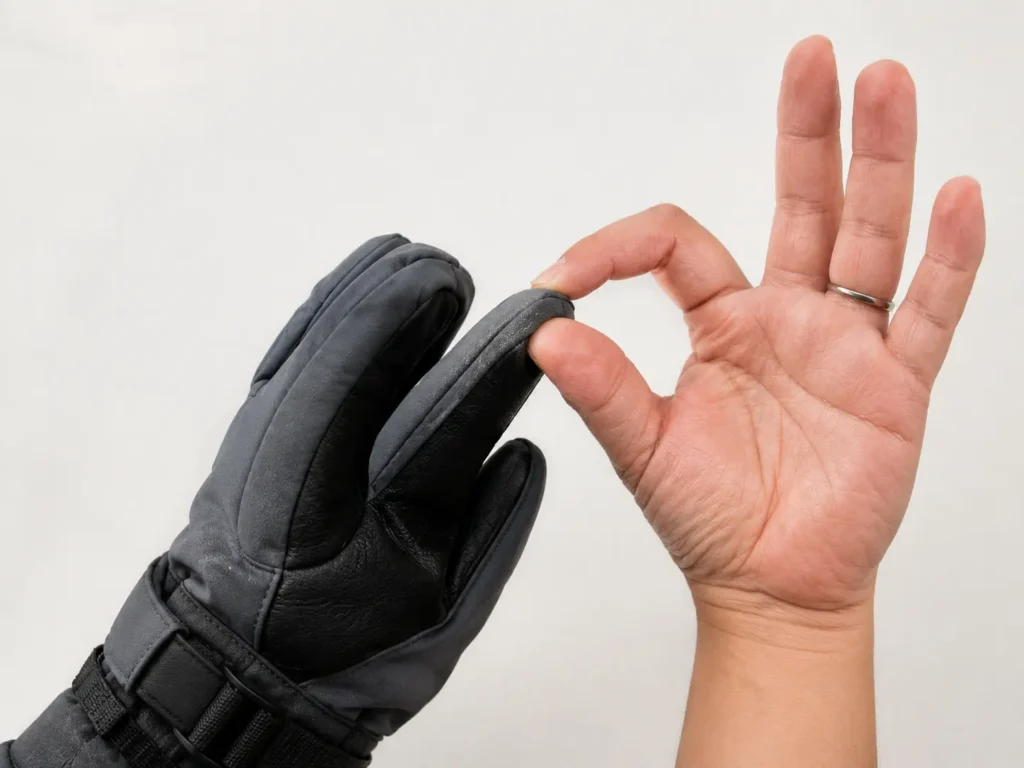
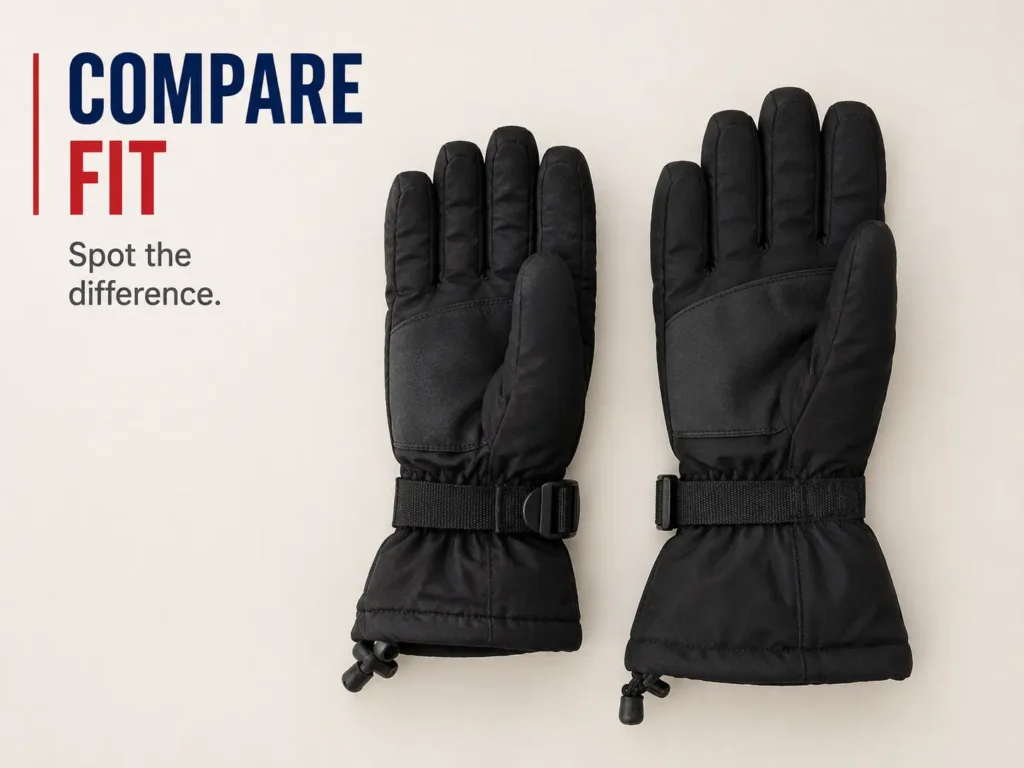
Fit problems create discomfort through two opposite mechanisms, which is part of why they’re easy to misdiagnose. A glove that’s too tight compresses tissue and restricts blood flow at consistent points, usually across the knuckles or along the sides of the fingers. A glove that’s too loose lets the hand shift with every grip, which creates its own friction and pressure pattern as the hand and glove interior move independently of each other.
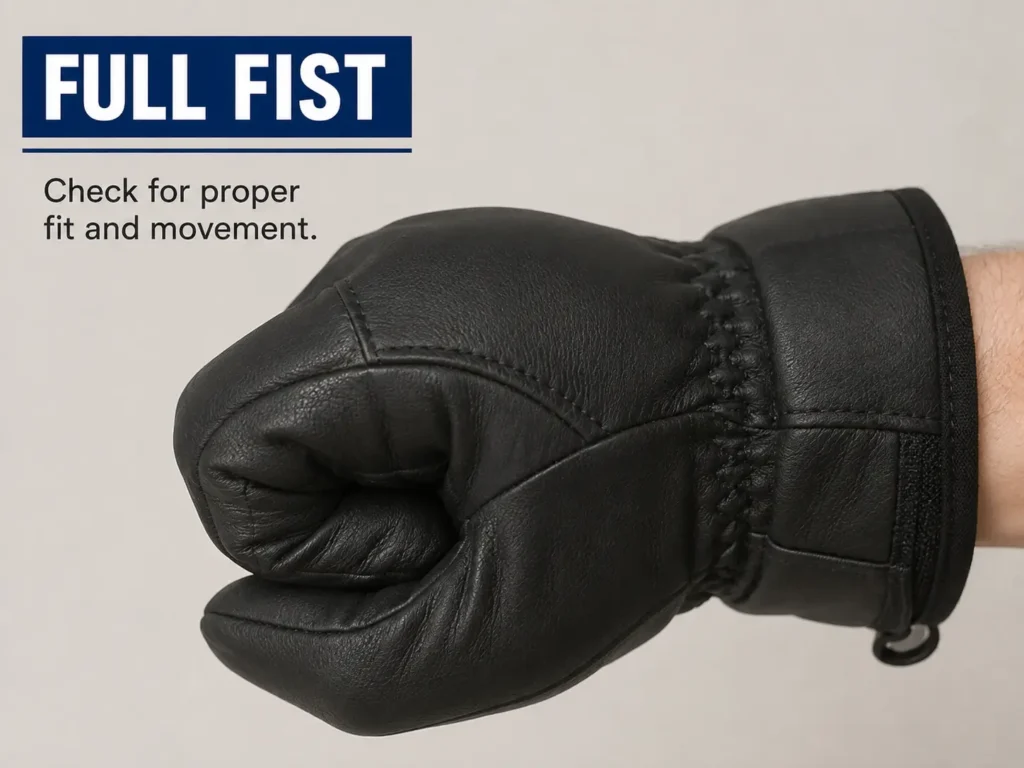
The fastest way to tell which applies is a load test rather than a static try-on: make a full, firm fist as though gripping a pole and hold it for ten seconds. Restriction, pinching, or fabric bunching under that load points to tightness. If the hand instead slides noticeably inside the shell during the same test, looseness is the more likely cause.
Hand swelling adds a wrinkle here. Hands can swell mildly during exertion, especially on longer or more aggressive runs, which means a glove that fits correctly at the start of a ski day can start creating pressure-related discomfort by the afternoon even though nothing about the glove has changed.
Cause 2: Seam Placement — The One Most Skiers Never Check
A seam that sits fine against a relaxed, open hand can land somewhere entirely different once that hand closes into a grip. This is why seam-related discomfort often goes undiagnosed — it doesn’t show up during a store try-on, only hours into an actual ski day after hundreds of repeated grip cycles have pressed the same seam into the same strip of skin.
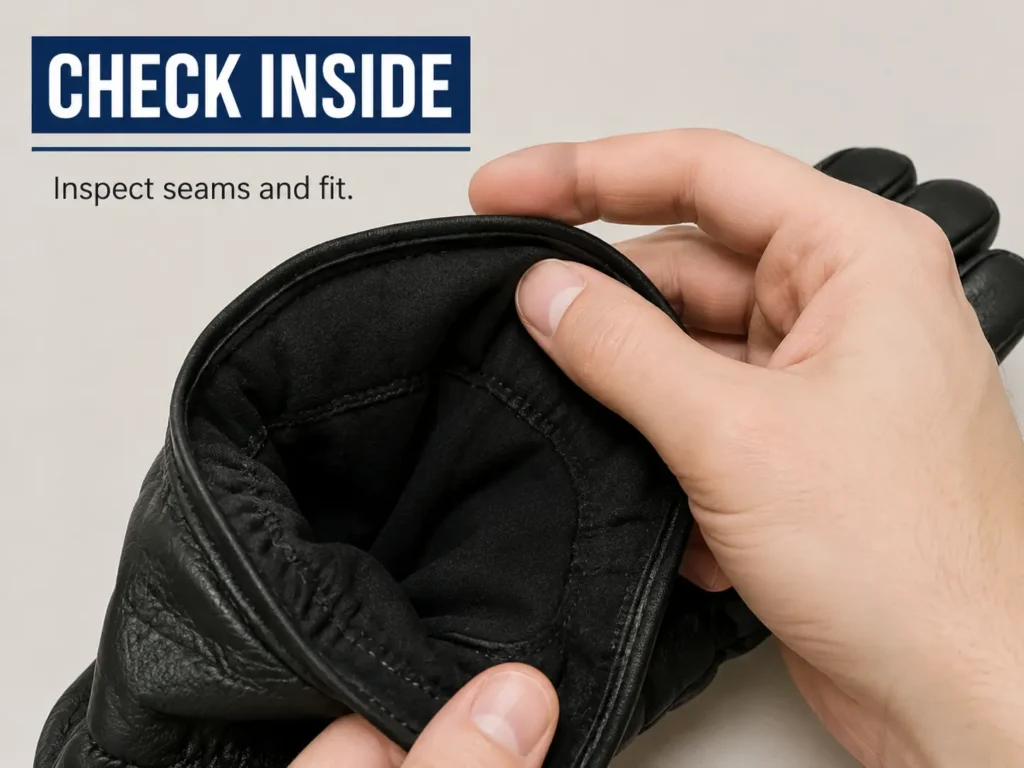
Checking for this takes under a minute: run a finger along the interior of the glove, focusing on the palm and the sides of each finger, feeling for raised or hard stitching in a high-contact zone. External seam construction — where the stitching sits outside the glove rather than inside against the hand — avoids this problem structurally, and it’s worth specifically looking for in a next purchase if seam irritation turns out to be your issue.
Why the Same Diagnosis Can Point to a Buying Problem, Not Just a Habit Fix
Sometimes the self-check above confirms a cause, but the honest fix isn’t a habit change — it’s that the specific glove was never going to work well for your hand. Fit issues that persist across careful sizing, seam irritation in a spot that shows up regardless of brand, or a break-in period that never actually resolves are all signs pointing toward construction quality rather than anything you’re doing wrong.
Construction quality shows up in details that don’t appear on a spec sheet: how many panels make up the glove (more panels generally flex more naturally with hand movement, concentrating less stress on any single seam), where exactly the seams are routed relative to high-pressure zones, and how consistent the sizing actually runs compared to the size chart. Two gloves listing identical materials and insulation weight can feel completely different once you’re gripping a pole, purely because of these construction choices.
If your self-check keeps landing on the same cause no matter what pair you try, it’s worth shopping with that specific cause in mind rather than by price or insulation rating alone. Our buying guide across ski glove budget tiers breaks down construction quality and typical fit differences between models, which matters more for solving a recurring discomfort pattern than most spec sheets suggest.
Cause 3: Moisture — A Slower, Cumulative Cause
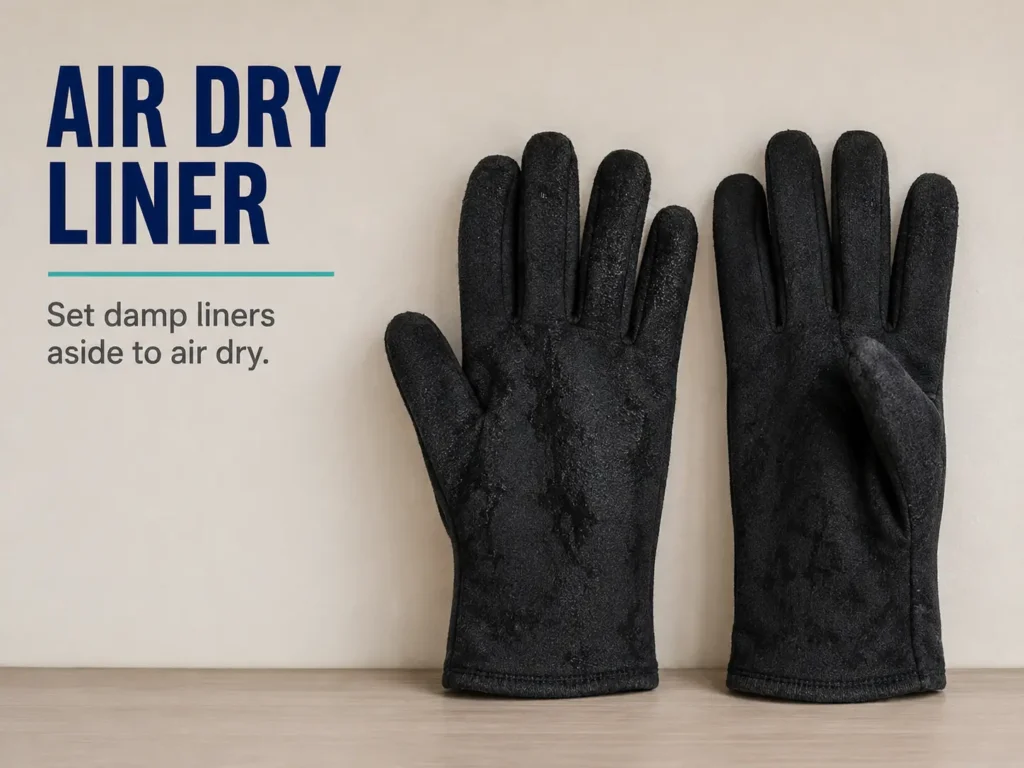
Hands sweat during skiing regardless of the temperature outside, and that moisture doesn’t just make hands feel damp — it measurably changes how the skin responds to friction and pressure inside the glove. Research on skin-material friction shows that increased moisture at the skin surface changes the mechanical friction response, which is part of why gloves that felt fine in the morning often feel noticeably worse by early afternoon, even with identical fit and identical terrain.
This cause is easy to misdiagnose as a fit or seam problem because the discomfort pattern can look similar — pressure and irritation at consistent points — but the underlying driver is accumulated dampness rather than the glove’s shape or construction. A liner that’s still slightly damp from the previous ski day compounds this further, since it starts the next session already behind rather than beginning dry.
Cause 4: Skipping the Break-In Period
New gloves are stiffer than they’ll ever be again, and that stiffness concentrates pressure at the same flex points — usually the base of the fingers and across the palm — before the material has had a chance to soften with normal use. Wearing brand-new gloves straight into a full day is one of the more avoidable causes of early discomfort.
A short at-home routine addresses most of this: wearing the gloves for fifteen to thirty minutes while making repeated fists and gripping something roughly pole-width. Most synthetic-shell gloves show a noticeable improvement within a couple of short sessions. Heavier leather-paneled gloves can take a few evenings longer to soften into their eventual shape.
The distinction worth making here is between initial stiffness, which resolves with normal wear, and genuine ongoing discomfort, which doesn’t improve no matter how many times the glove has been worn. If discomfort hasn’t eased at all after several full sessions, break-in isn’t the actual cause — one of the other four likely is.
Cause 5: Circulation Restriction from Overtightening
This overlaps with fit but deserves its own explanation because the mechanism is specifically about blood flow rather than general pressure. A glove — or a wrist strap cinched too tight — can restrict circulation enough that fingers feel cold, tingly, or numb well before the temperature alone would explain it.
Tingling that fades into numbness is worth paying attention to specifically because numbness can feel like relief rather than a warning — the sensation fading doesn’t mean the problem improved, it usually means circulation has dropped further. Loosening a wrist strap or moving to a slightly roomier glove typically resolves this quickly once identified, which is part of why it’s worth ruling in or out early rather than assuming it’s just “cold hands.”
A Two-Minute Self-Check to Find Your Actual Cause
Work through these in order — the first one that produces a clear result is usually your answer.
The fist test
Full, firm fist held for ten seconds. Restriction or pinching points to fit being too tight. Noticeable sliding or shifting points to fit being too loose.
The seam check
Run a finger along the interior palm and finger sides, feeling for raised stitching in a spot that lines up with where discomfort actually occurs.
The time pattern
Discomfort present from the first few minutes points toward fit or seams. Discomfort that builds specifically over hours points toward moisture. Discomfort that’s improving session over session points toward an unfinished break-in period.
The sensation check
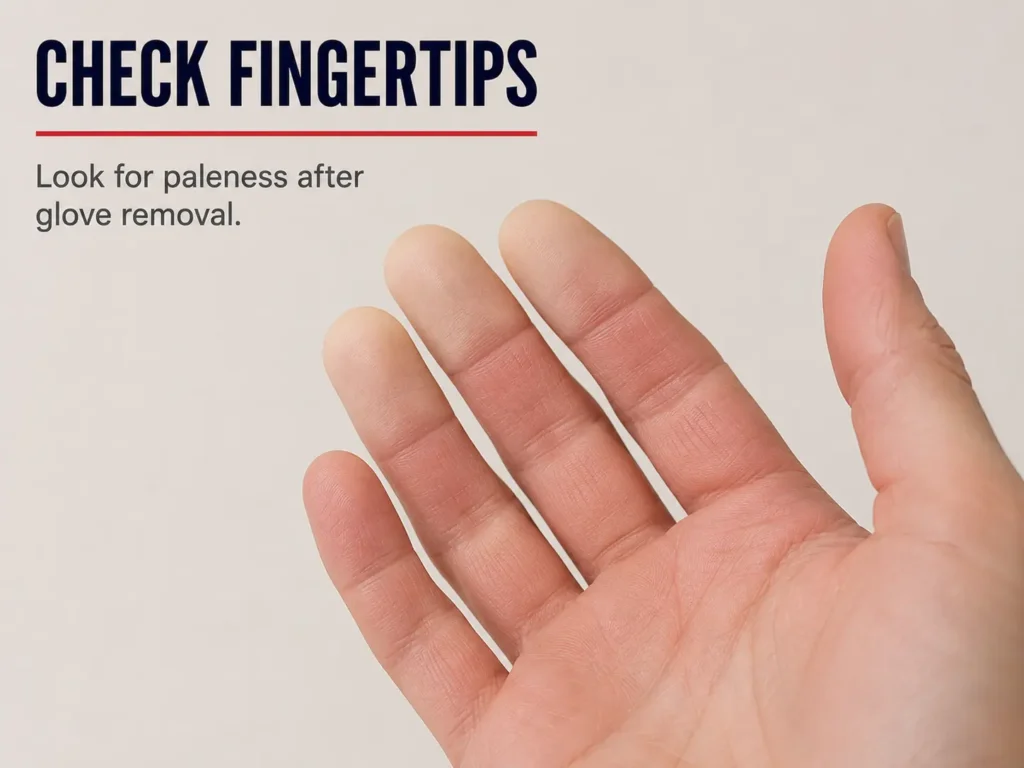
Tingling or numbness, rather than pressure or friction discomfort, points toward circulation restriction rather than any of the other four causes.
Common Mistakes That Delay an Actual Fix
Replacing gloves without diagnosing the cause first. A new pair bought to solve tightness-related discomfort does nothing if the actual cause was a seam or moisture pattern — the same problem often just reappears in the new gloves, sometimes in a different location.
Assuming discomfort will “wear off” indefinitely. Break-in genuinely resolves initial stiffness, but only for a limited window. If several full sessions haven’t changed anything, continuing to wait is treating the wrong cause.
Ignoring numbness because it’s “just cold.” Numbness from restricted circulation and numbness from ambient cold feel similar but come from different mechanisms, and treating a circulation issue as a temperature issue means the actual fix — loosening the strap or fit — never gets applied.
Overcompensating with a much looser glove after a too-tight experience. Swinging from one extreme to the other often just trades one discomfort mechanism for the other rather than landing on a genuinely correct fit.
Who Experiences This More Than Average
Skiers with hands that fall between standard glove sizes deal with fit-related discomfort more often, simply because manufacturer sizing tends to cluster around average proportions and edge cases get less consideration in most cutting patterns. Beginners also report more discomfort on average, partly from less efficient grip technique that concentrates more force than necessary, and partly from being new enough to the sport that they haven’t yet learned to distinguish normal break-in stiffness from an actual fit problem.
People with naturally higher hand-sweat output feel the moisture-related cause more acutely and more often than others, and benefit disproportionately from liner material choice and active drying habits between sessions. Hand-specific circulation sensitivity, including conditions like Raynaud’s phenomenon, also means some skiers need to treat fit tightness as a higher-priority check than the average person would, since their margin before numbness sets in is naturally smaller.
When the Fix Isn’t Any of the Five
Occasionally, discomfort persists after all five causes have been genuinely ruled out — fit checked under load, seams inspected, moisture managed, break-in completed, circulation confirmed adequate. At that point, material degradation from age is the remaining explanation: insulation and liner materials lose some of their original structure and moisture-wicking performance over repeated use, and a glove that performed comfortably for several seasons can start creating discomfort through none of the five mechanisms above, simply because the materials themselves have worn past the point where they behave the way they did when new.
If that’s where you’ve landed, replacement is the honest answer rather than another round of troubleshooting. It’s worth choosing the next pair with the specific cause you identified in mind — checking seam construction directly if seams were the issue, or paying closer attention to sizing charts and return policies if fit was.
Frequently Asked Questions
Can more than one of these five causes apply at the same time?
Yes, and it’s fairly common — a glove that’s slightly too tight often also traps more moisture, since restricted airflow inside a snug glove has less chance to let sweat evaporate. Working through the self-check in order still helps, since fixing the dominant cause often reduces the secondary one as well.
Is some discomfort just normal with any ski glove?
Mild stiffness during break-in is normal and expected. Persistent pressure, numbness, or irritation that doesn’t improve with wear isn’t — that’s one of the five causes above, not something to just accept as how ski gloves feel.
How do I know if it’s time to size up or size down?
The fist test is the clearest signal — pinching or restriction under a firm grip means sizing up is worth trying, while noticeable sliding during the same test means sizing down. A static, relaxed try-on often misses both.
Does discomfort mean the skin has actually been damaged?
Not necessarily — this post covers general discomfort, which is usually a pressure or friction sensation without tissue damage. If skin has actually become raw or broken down, that’s a different situation with a different response, worth addressing directly rather than through general comfort troubleshooting.
The Takeaway
Discomfort has a cause, and it’s almost always identifiable in a couple of minutes once you know what to check for. Fit, seams, moisture, break-in, and circulation cover the large majority of cases, and working through them in order — rather than guessing and buying a new pair — usually gets to the actual answer faster than trial and error ever does.
Once you’ve identified which one applies, the fix is usually straightforward and doesn’t always require new gear. If prevention going forward is what you’re after, our full breakdown of habits that stop blisters and irritation before they start picks up from here with the specific routines worth building into every ski day.