Most ski glove buying guides make the same mistake: they rank gloves as if there’s one right answer for everyone. There isn’t. The right glove depends almost entirely on two things — how many days you ski per season, and whether your mountain gets dry cold powder or wet heavy snow. Get those two variables right and the rest of the decision becomes straightforward.
This guide covers all 13 picks across five budget tiers from $18 to $220. For every glove: what the shell material means for durability, what waterproofing system you’re actually getting and when it fails, what verified buyers consistently report after real use, and exactly who should skip it. Glove sizing and glove care are covered in separate posts. This is purely the product breakdown.
Not sure which of these actually fits your situation? The Ski Glove Finder asks seven quick questions about your conditions, hand temperature, and budget, then matches you against the full glove database instead of making you read five reviews to figure it out yourself.
ALL 13 PICKS AT A GLANCE
| Tough Outdoors (~$18) | Casual resort skiing, 2,900+ reviews, dry conditions |
| Seirus Xtreme (~$25) | Budget waterproof with taped seams — best in class under $30 |
| OZERO Snow Mittens (~$30) | Cowhide palm mitten, extreme cold on a budget |
| Kinco 901W (~$42) | Women’s pigskin leather, HeatKeep insulation |
| Gordini Aquabloc (~$45) | Softshell + AquaBloc membrane, nose wipe, best value in this tier |
| Dakine Titan Gore-Tex (~$65) | Real Gore-Tex under $70 — where most skiers should start |
| Black Diamond Soloist (~$72) | Goatskin + PrimaLoft Gold + BD.dry — standout spec at this price |
| OR Arete II Gore-Tex (~$89) | Modular: Gore-Tex shell + removable merino liner |
| BD Mercury Mitts Women’s (~$100) | 170g PrimaLoft Gold — warmest pick for cold-handed skiers |
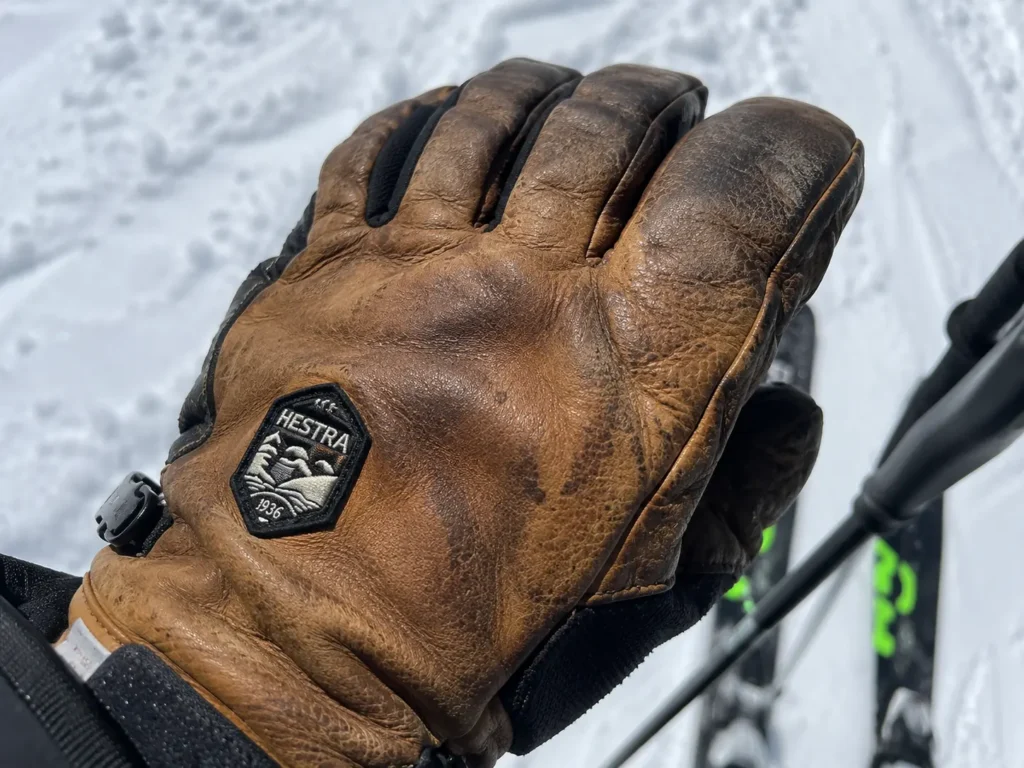
| Hestra Army Leather Heli (~$110) | Goatskin + Triton, best comfort and dexterity in the mid range |
| Dakine Leather Titan (~$135) | Goatskin palm + Gore-Tex ePE + mapped insulation |
| Hestra Fall Line (~$170) | Cowhide leather, best dexterity on this list, 150+ reviews |
| Hestra Vertical Cut CZone (~$220) | Premium freeride, CZone membrane, G-Loft insulation |
Table of Contents
Under $30 — Entry Budget Picks
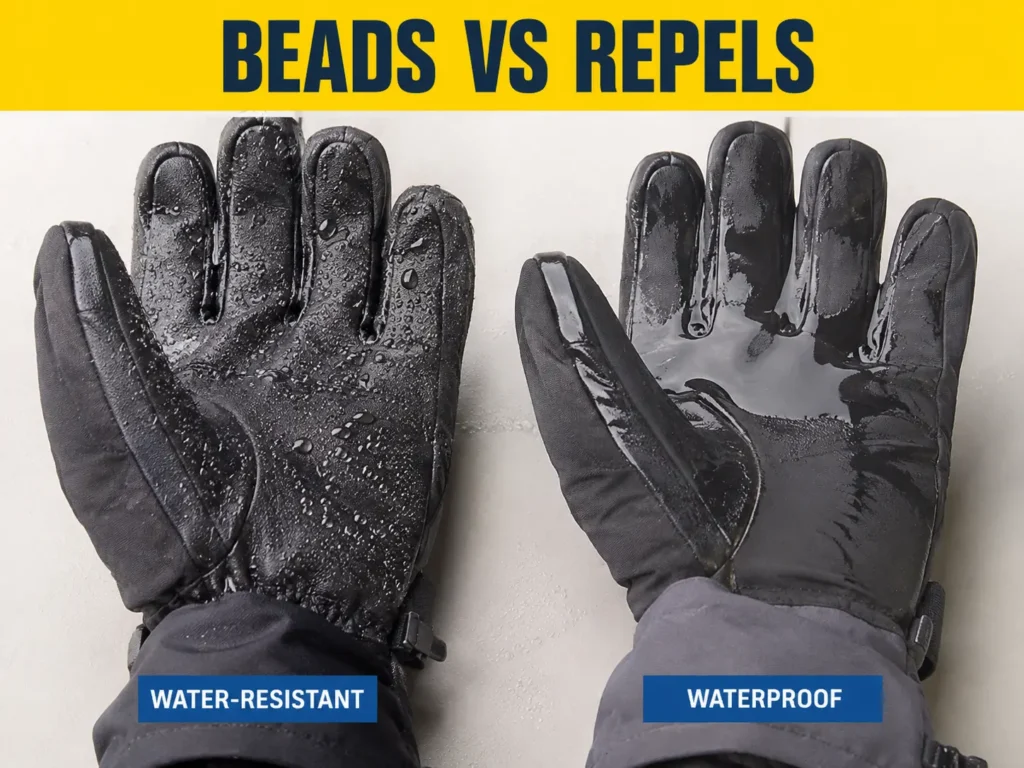
Everything in this tier comes with one honest limitation: no waterproof membrane. These gloves resist light moisture contact through either synthetic coatings or leather DWR treatments. In dry, cold conditions they perform well above their price point. In wet heavy snow or sustained storm conditions, all three will eventually let moisture through. That’s not a flaw — it’s the engineering reality of what’s possible at this price point. Know the limitations going in and you’ll be fine.
Tough Outdoors (~$18)
Tough Outdoors Ski & Snowboard Gloves
– SummitLoft insulation + breathable membrane, faux leather palm
– Wrist buckles, double-stitched seams, wrist leash included
– 2,925 reviews at 4.6★ — most verified data under $20 on this list
~$18
★★★★½ (4.6/5 — 2,925 Amazon reviews)
Check Price on Amazon →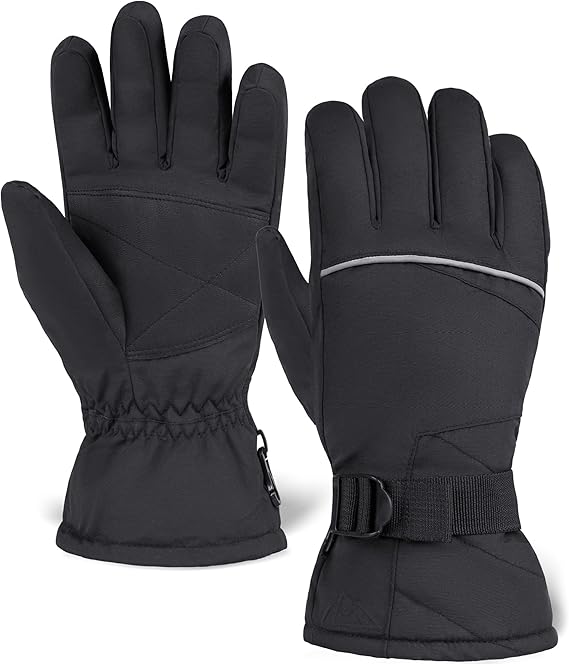
With over 2,900 reviews and a 4.6-star average, the Tough Outdoors glove has earned more real-world feedback than almost anything else on this list. That review volume matters because it means the rating isn’t a fluke from a small sample — thousands of buyers have used these gloves in actual skiing conditions and the majority come away satisfied.
The construction is basic synthetic insulation with a water-resistant outer. Buyers in dry mountain conditions — Rockies powder days, cold groomer skiing — consistently rate the warmth as adequate for casual sessions. The gloves don’t hold up in wet snow, and they won’t last as long as leather at any price. But for a skier who goes out a handful of times per season and doesn’t want to spend serious money on gear, there’s nothing wrong with this pick.
Where buyers report problems: sustained wet snow exposure soaks through within 30–45 minutes, and the stitching on the cuff shows wear after one to two seasons of frequent use. For an $18 glove, neither of those is a surprise.
PROS / CONS
✓ Pros
- Massive review base proves real-world performance
- Adequate warmth for casual dry-condition skiing
- Price makes replacement painless
✗ Cons
- No waterproof membrane — fails in wet snow
- Stitching wears faster than leather options
- Not for frequent or serious skiers
Buy if: You ski 1–4 days per season in dry conditions and want to spend as little as possible. Skip if: You ski in any regular wet snow or more than 5 days per season.
Seirus Xtreme (~$25)
Seirus Innovation Xtreme All Weather Glove
– DryHand waterproof insert with taped seam seals (rare under $30)
– ToughTek palm grip, 4-way stretch cuff, lightweight Spacer Knit shell
– Better waterproofing than DWR-only options at this price
~$25
★★★★☆ (4.3/5 — 320 Amazon reviews)
Check Price on Amazon →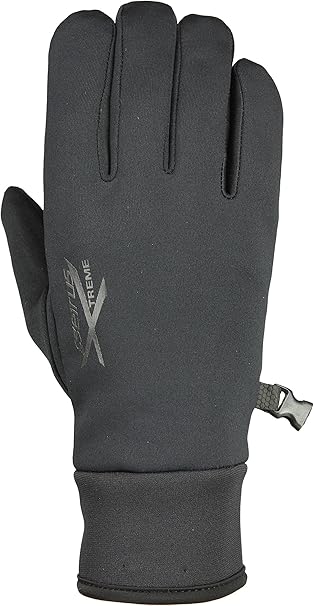
The Seirus Xtreme does something unusual at $25: it uses taped seams. On most budget gloves at this price, seams are the primary moisture entry point — stitching holes let water wick in faster than the outer shell lets it through. Taped seams close those holes. It doesn’t give you a Gore-Tex-level barrier, but it meaningfully extends the time before moisture breaks through compared to the Tough Outdoors at $7 less.
The insulation is basic synthetic, appropriate for temperatures above freezing down to the mid-20s Fahrenheit in dry conditions. Verified buyers consistently note the fit runs slightly narrow — buyers between sizes typically report sizing up works better. The wrist closure is simple velcro, nothing technical.
For someone who needs a budget glove that handles occasional light snow contact better than a basic synthetic, the taped seams make the Seirus the better buy over the Tough Outdoors despite the $7 price difference.
PROS / CONS
✓ Pros
- Taped seams are rare at this price — better moisture resistance than most
- Better light-snow performance than basic synthetics
- Good value upgrade over the cheapest tier
✗ Cons
- Still no waterproof membrane — sustained wet snow wins eventually
- Runs narrow, size up recommended
- Not suitable for serious cold or frequent use
Buy if: You want the cheapest glove that handles brief wet snow contact better than average. Skip if: You ski in PNW conditions or frequent wet snow — the membrane tier is where you actually need to be.
OZERO Snow Mittens (~$30)
OZERO Winter Snow Mittens
– 150g insulation + TPU waterproof membrane, 5-inch extended sleeve
– Cowhide leather palm reinforcement patch (unusual at $30)
– Mitten warmth — best for cold focus over dexterity
~$30
★★★★☆ (4.4/5 — 944 Amazon reviews)
Check Price on Amazon →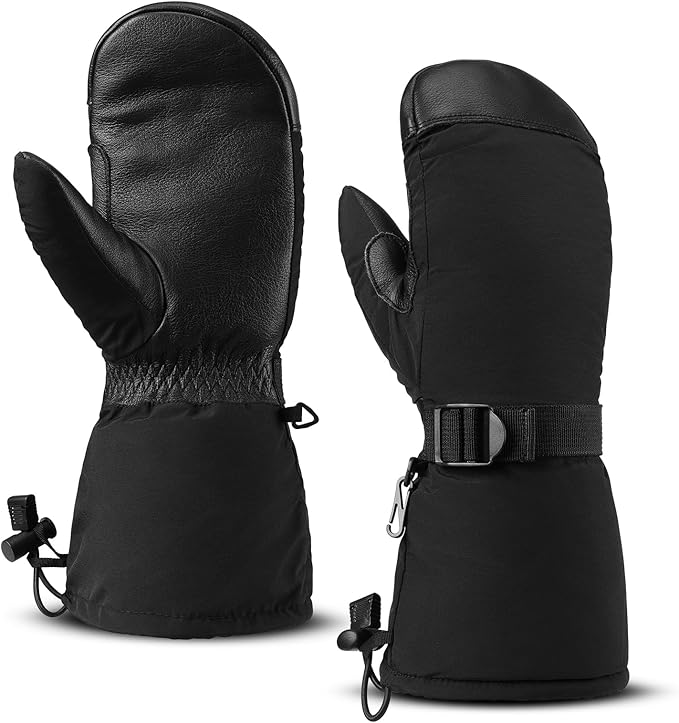
The OZERO is the only mitten on this list, and that distinction matters. A mitten allows your fingers to share body heat rather than losing it individually, which is why cold-handed skiers consistently stay warmer in mittens than in comparably priced gloves. At $30, the OZERO gets a cowhide leather palm — real leather at this price is unusual and adds durability that synthetic competitors in this range can’t match.

The limitation is dexterity. Mittens make pole-holding comfortable but make everything else harder: adjusting boot buckles, operating zippers, using a phone. Most buyers use mittens exclusively for skiing and carry liner gloves inside for any task that requires fingers. The OZERO doesn’t include a liner glove, so factor that into your planning.
Verified buyers in genuinely cold conditions — think -10°C and colder, the range where exposed skin starts carrying real frostbite risk — report the OZERO keeping hands warm where a $25–$30 synthetic glove wouldn’t. If warmth is the priority and you can live with mitten dexterity, this is the right budget pick.
PROS / CONS
✓ Pros
- Cowhide leather palm at a budget price
- Mitten design keeps fingers warmer than gloves at same price
- Warmer than any $30 glove for cold-handed skiers
✗ Cons
- Mitten dexterity limits all non-skiing tasks
- No waterproof membrane
- No liner glove included
Buy if: You run cold and want the warmest possible option under $35. Skip if: You need finger dexterity throughout the day — a glove in the $40–$50 tier will serve you better.
$40–$50 — Mid-Budget: Real Leather and Membranes
This tier is where two meaningful upgrades appear: real leather construction (Kinco) and proprietary waterproof membranes (Gordini). Neither delivers Gore-Tex performance, but both outperform the under-$30 tier in durability or waterproofing in ways that matter over a full season.
Kinco 901W Women’s (~$42)
Kinco 901W Women’s Pigskin Leather Ski Glove
– Golden premium grain pigskin palm + back — stays pliable in cold
– HeatKeep insulation, foam knuckle padding, elastic wrist
– Established Kinco work glove quality in women’s sizing
~$42
★★★★☆ (women’s sizing — Kinco brand confidence)
Check Price on Amazon →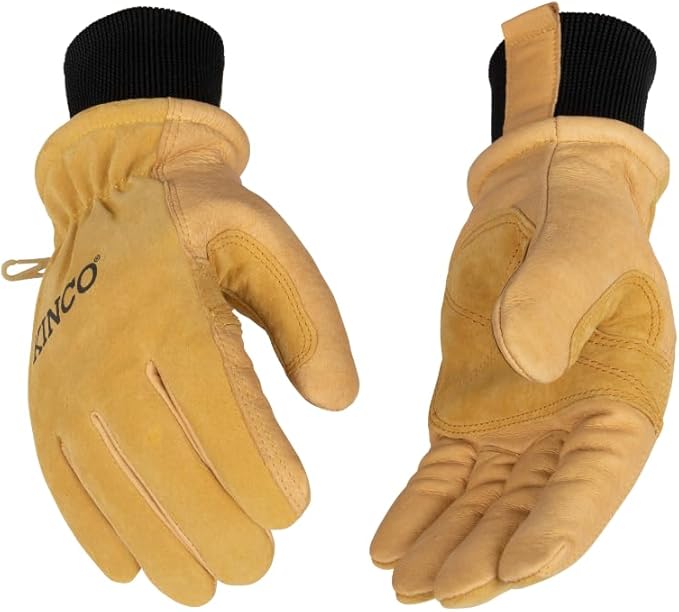
The Kinco 901W is the women’s version of Kinco’s pigskin leather work glove, sized and cut specifically for narrower hands and shorter fingers. The pigskin shell is the same material used by ski patrol and lifties who burn through gloves faster than anyone — it holds up to repeated daily abuse in a way that synthetic alternatives at twice the price don’t.
The HeatKeep insulation keeps hands warm in the low-to-mid 20s Fahrenheit in dry conditions. Like all Kinco gloves, there’s no waterproof membrane, and Kinco doesn’t pre-treat the leather. Apply leather wax before your first session — Sno-Seal or Nikwax Waterproofing Wax for Leather are the two most consistently recommended. Even then, sustained wet snow will eventually work through.
The women’s sizing is the main reason to choose this over a unisex budget glove. Women’s hands typically run narrower with shorter fingers, and a glove that fits properly retains heat far better than one with dead air space at the fingertips. Verified women buyers consistently report the fit working well out of the box after a brief break-in period.
PROS / CONS
✓ Pros
- Women’s-specific fit retains heat properly
- Pigskin leather durability far above synthetic at this price
- HeatKeep insulation works for dry cold days
✗ Cons
- No membrane — needs wax and still fails in wet snow
- Break-in period required
- Women’s sizing only
Buy if: You’re a woman who skis in dry conditions and wants leather durability at a budget price. Skip if: You ski in wet snow or need full waterproofing — the Gordini below is the better call.
Gordini Aquabloc (~$45)
Gordini Aquabloc Men’s Glove
– AquaBloc waterproof-breathable membrane insert, softshell outer
– Megaloft insulation, neoprene cuff, nose wipe + leash included
– Glove-specialist brand since 1956 · Vermont ski heritage
~$45
★★★★☆ (4.3/5 — 16 Amazon reviews)
Check Price on Amazon →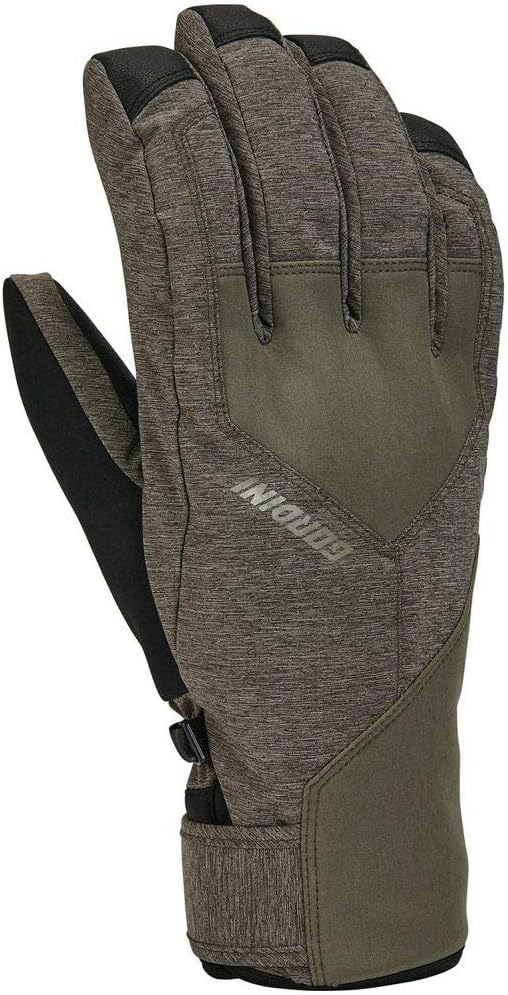
The Gordini Aquabloc is the best overall value in the under-$50 tier, and the reason is simple: it has an actual waterproof membrane. The AquaBloc insert is Gordini’s proprietary system, not Gore-Tex, but it provides genuine membrane-level waterproofing that the Kinco and all the under-$30 options cannot match. The softshell exterior adds flexibility and wind resistance that a rigid synthetic shell doesn’t offer.
The nose wipe on the thumb is a small feature that experienced mountain skiers genuinely appreciate. At -10°C, wiping your nose on a bare leather glove gets old fast. It’s not a reason to buy the glove on its own, but it’s a sign that Gordini designed this for actual ski use rather than general winter use.
Verified buyers report the AquaBloc holding up well in moderate wet snow. It’s not a Gore-Tex substitute for sustained storm skiing, but for the conditions most budget skiers encounter — occasional wet snow, cold but not extreme temperatures — it handles it without the hands getting wet. That’s a meaningful step up from DWR-only or no-treatment options at similar prices.
PROS / CONS
✓ Pros
- AquaBloc membrane — real waterproof protection under $50
- Softshell flexibility is more comfortable than rigid synthetic
- Nose wipe included
- Best all-conditions option in this tier
✗ Cons
- AquaBloc not as breathable or durable as Gore-Tex
- Softshell wears faster under heavy abrasion
- Not enough for sustained PNW storm skiing
Buy if: You want waterproof protection without spending $65+ on Gore-Tex. This is the top of the budget tier for good reason. Skip if: You ski in genuinely heavy wet snow regularly — that’s Gore-Tex territory.
$60–$90 — Gore-Tex and Technical Tier
This is the most important tier in the guide. All three gloves here use either a genuine Gore-Tex membrane or a high-quality proprietary waterproof insert, and that changes the waterproofing experience fundamentally. A membrane doesn’t deteriorate the way DWR does. It blocks moisture at the membrane level even after the outer shell is wet. For the majority of recreational skiers, this tier is the right starting point — it handles nearly every North American resort condition competently.
Dakine Titan Gore-Tex (~$65)
Dakine Men’s Titan Gore-Tex Glove
– Gore-Tex ePE membrane (PFC-free), mapped 110g/230g insulation
– 280g removable fleece liner dries separately overnight
– Rubbertec palm · 55% recycled shell · Amazon’s Choice
~$65
★★★★½ (4.6/5 — Amazon’s Choice)
Check Price on Amazon →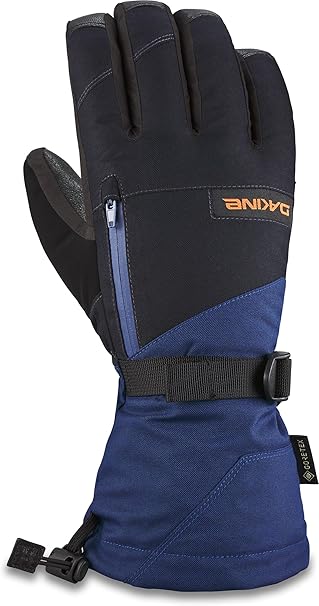
The Dakine Titan Gore-Tex is the most featured glove under $70 on the market. For $65 you get a genuine Gore-Tex insert, a gauntlet cuff, a goggle wipe, a nose wipe, a zippered back-of-hand pocket, and a removable liner glove with touchscreen fingertips. No other glove in this price range packages that many useful features into a single purchase.
The consistent buyer complaint is worth understanding before you buy: when the included liner glove is worn inside the shell together, the combined fit is tight for most hand sizes. The majority of buyers end up using the shell alone, which works well — all the insulation and waterproofing live in the shell, not the liner. Think of the liner as a bonus for warm-day use or as standalone handwear for après, not as an essential daily component of the glove system.
The polyester shell won’t break in and form-fit the way leather does, and it shows wear faster under heavy daily use. Buyers skiing 5–15 days per season get excellent multi-season performance. Buyers skiing 25+ days consistently start seeing shell wear after two seasons. If you’re in the latter group, the Dakine Leather Titan at $135 is worth the upgrade.
For a full breakdown of how Gore-Tex works differently from membrane alternatives at the material level, the Gore-Tex explainer covers it without the manufacturer marketing language.
PROS / CONS
✓ Pros
- Real Gore-Tex under $70
- Most features per dollar on this list
- Goggle wipe, nose wipe, pocket, removable liner
- Handles any conditions including wet snow
✗ Cons
- Liner + shell fit too tight for most hands together
- Polyester shell wears faster than leather
- Not warm enough for sustained -15°C and below
Buy if: You ski 5–20 days per season in any conditions and want the most features for the money. This is the top pick at this price point. Skip if: You ski 25+ days and need lasting durability — spend more on leather.
Black Diamond Soloist (~$72)
Black Diamond Men’s Soloist Gloves
– BD.dry waterproof insert + PrimaLoft Gold insulation
– Goatskin leather palm — 87% flex retained at -12°C
– Recycled shell fabrics · 4.7★ from verified buyers
~$72
★★★★½ (4.7/5 — Black Diamond technical heritage)
Check Price on Amazon →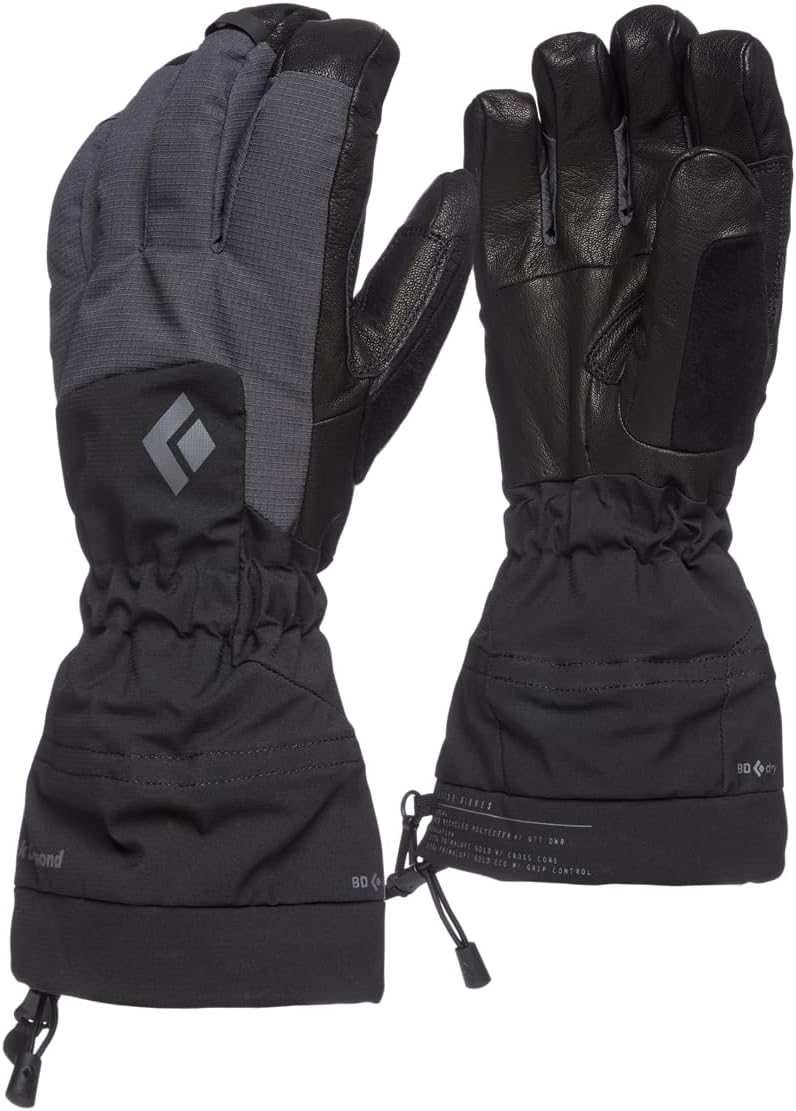
The Black Diamond Soloist has a spec sheet that doesn’t look like it belongs at $72. It combines a goatskin leather palm, PrimaLoft Gold insulation (the highest-grade version of PrimaLoft, not the budget tiers), and Black Diamond’s BD.dry waterproof membrane. Any one of those features at this price would be notable. All three together make it the highest value-per-dollar pick in the $60–$90 tier for buyers who prioritize insulation quality and leather durability over extra features.
The BD.dry membrane is Black Diamond’s proprietary system. It’s waterproof but not as breathable as Gore-Tex under sustained high-output activity. For resort skiing — where you’re generally not generating as much heat as a backcountry skier skinning uphill — the breathability difference is rarely noticeable. Where it matters is if you run hot or use these on touring ascents.
The 4.7-star rating from verified buyers is the highest in this tier, though the review count is still relatively low at 7 reviews. The spec justifies the performance — goatskin leather breaks in over time and forms to your hand in a way polyester never does, which becomes noticeably more comfortable after a few sessions.
PROS / CONS
✓ Pros
- Goatskin leather at this price is exceptional value
- PrimaLoft Gold — highest grade insulation in this tier
- Leather breaks in and improves with use
- More durable than any polyester glove at this price
✗ Cons
- BD.dry less breathable than Gore-Tex for high-output use
- Low review count — less real-world data than Dakine
- Leather requires maintenance over time
Buy if: You want leather durability and PrimaLoft Gold warmth under $75 and are willing to maintain the leather. Skip if: You need maximum breathability for high-output skiing — Gore-Tex is the better call.
Outdoor Research Arete II Gore-Tex (~$89)
Outdoor Research Men’s Arete II Gore-Tex Gloves
– Gore-Tex shell + removable merino wool liner — 3 configurations
– Goatskin WR leather palm, Bluesign certified shell fabrics
– Touchscreen fingertips, nose wipe, gauntlet cinch · OR since 1981
~$89
★★★★½ (Gore-Tex + modular merino liner system)
Check Price on Amazon →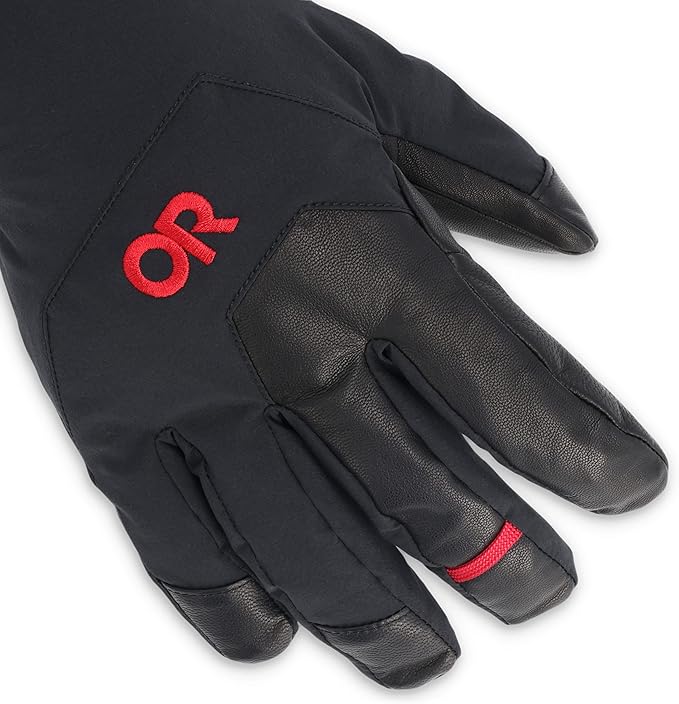
The OR Arete II’s standout feature is its modular system: a Gore-Tex shell that works independently, paired with a removable merino wool liner. This isn’t just a thin fleece insert — merino wool actively wicks moisture away from skin rather than holding it, which means even when your hands sweat inside the glove, the liner manages that moisture rather than letting it accumulate.
The modular setup gives you two genuinely usable configurations. Shell alone on warmer days above -5°C keeps the bulk and insulation low while maintaining full Gore-Tex waterproofing. Shell plus merino liner in colder conditions adds meaningful warmth without reaching the bulk of a 170g insulated glove. Buyers who ski across a temperature range within a single season — early season cold days through late-season spring skiing — consistently report appreciating this versatility.
The tradeoff compared to the Dakine at $65 is that the Arete II costs $24 more for a system that requires you to manage two components. If you ski in consistent conditions and don’t need the modular flexibility, the Dakine is the simpler and cheaper choice. If your skiing spans a wide temperature range, the OR’s flexibility justifies the premium.
PROS / CONS
✓ Pros
- Gore-Tex shell + merino liner covers wide temperature range
- Merino actively wicks moisture — better than fleece
- Shell alone is a capable warm-day glove
- Versatile for variable-condition skiers
✗ Cons
- Modular system means two components to manage
- More expensive than Dakine for similar waterproofing
- Overkill if you ski in consistent conditions
Buy if: Your ski season spans early cold powder days through warm spring corn. Skip if: You ski in consistent cold conditions — the Dakine covers that for $24 less.
$100–$140 — Premium Construction: Leather and Advanced Insulation
At this price point, leather construction becomes standard rather than exceptional, and insulation moves into territory that handles genuinely extreme cold. The three gloves here — one mitt and two gloves — represent meaningfully different approaches to the same basic brief: keep hands warm and dry in demanding conditions.
Black Diamond Mercury Mitts Women’s (~$100)
Black Diamond Women’s Mercury Ski Mitts
– 170g PrimaLoft Gold removable liner + BD.dry membrane shell
– Goatskin leather palm, Kevlar stitching at high-wear seams
– OutdoorGearLab + Switchback Travel #1 cold-hands recommendation
~$100
★★★★★ (4.8/5 — 29 Amazon reviews)
Check Price on Amazon →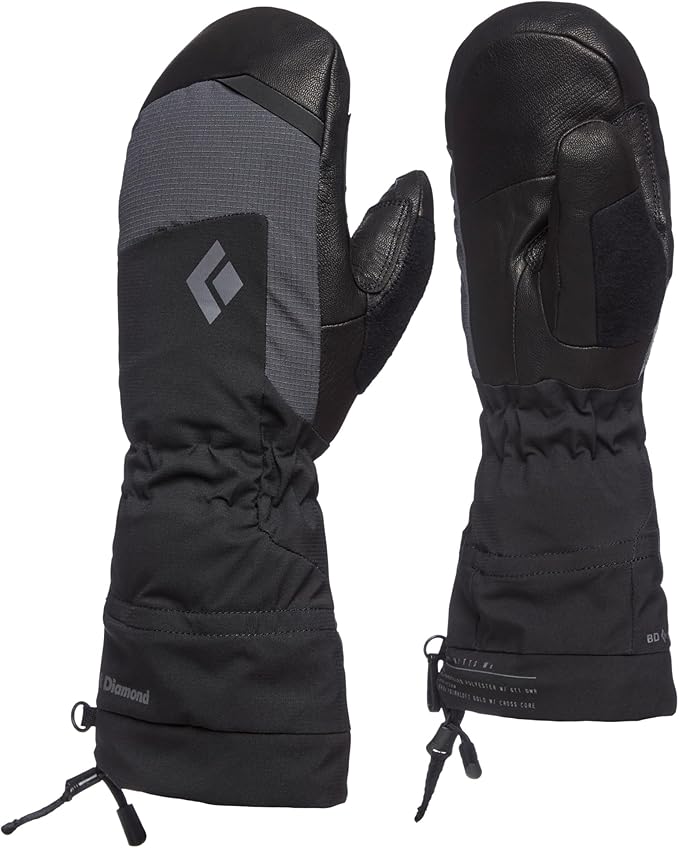
This is a mitten, not a glove, and that distinction defines who should buy it. The Mercury Mitt uses 170g PrimaLoft Gold insulation — the same grade as the Black Diamond Guide glove that costs nearly twice as much. In a mitten design, that insulation level produces warmth that no glove at any price can fully match, because fingers sharing heat in a mitten cavity stay warmer than fingers isolated in individual glove fingers regardless of how much insulation the glove uses.
This is Outdoor Research’s — wait, this is Black Diamond’s women’s-specific design, sized for narrower hands and shorter fingers. Verified women buyers with chronically cold hands consistently rate this as the solution that worked when everything else hadn’t. That’s the specific buyer this mitt is designed for.
The dexterity compromise is real. You can hold ski poles comfortably in a mitten. Everything else — adjusting boots, operating zippers, using your phone — requires either removing the mitt or using a liner glove inside. Most buyers at this price point who choose a mitten over a glove have already made that tradeoff consciously.
PROS / CONS
✓ Pros
- 170g PrimaLoft Gold — extreme warmth
- Mitten design adds warmth no glove matches
- Women’s-specific fit
- 4.8★ from verified buyers — highest on this list
✗ Cons
- Mitten dexterity — not for tasks requiring fingers
- Women’s sizing only
- Overkill for mild-condition or casual skiers
Buy if: You’re a woman who runs cold and has struggled to keep hands warm in any glove. This is the warmest practical option at this price. Skip if: You ski in mild conditions or need dexterity throughout the day.
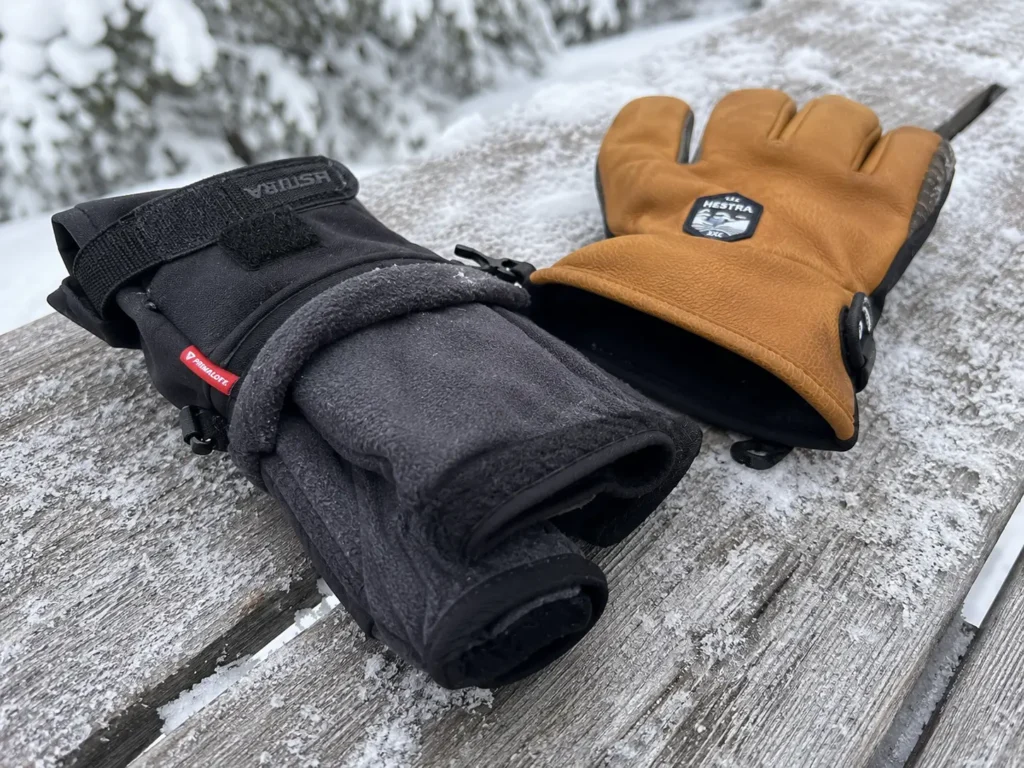
Hestra Army Leather Heli (~$110)
Hestra Men’s Army Leather Heli Ski 3-Finger
– Goatskin palm + Triton wind/water-resistant shell (not fully waterproof)
– 3-finger design: warmer than glove, more dexterous than mitten
– Removable liner dries overnight · Hestra craftsmanship since 1936
~$110
★★★★★ (Switchback Travel overall #1 men’s glove)
Check Price on Amazon →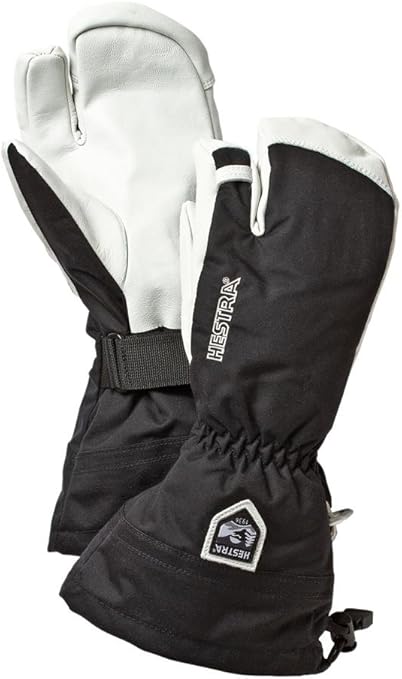
The Hestra Army Leather Heli is the most consistently recommended resort glove in its price range, and its reputation is earned. The goatskin leather palm and Triton waterproof-breathable back-of-hand combine durability with flexibility in a way that single-material gloves struggle to match. Goatskin breaks in over time and forms to your hand — buyers who’ve owned their Heli for three or four seasons consistently describe the fit as superior to any new glove they’ve tried since.
The removable fleece liner is genuinely the most comfortable liner of any glove on this list. Buyers regularly mention the interior feel as a standout feature. The mid-range insulation keeps dexterity higher than a 170g glove would — most buyers report completing boot adjustments, zipper operations, and chairlift tasks without removing the gloves.
One limitation worth understanding clearly: the leather palm has no waterproof membrane and no sealed seams. The Triton fabric at the back of the hand is waterproof, but the palm isn’t fully so. In dry Rockies conditions this rarely matters — Hestra’s leather balm treatment handles normal moisture contact well. In sustained Pacific Northwest wet snow, the palm eventually allows moisture through. This is the one compromise a glove makes.
For more on how shell materials and membranes interact in different snow conditions, the shell materials guide breaks it down without brand marketing language.
PROS / CONS
✓ Pros
- Goatskin leather improves with use over years
- Best dexterity in this tier
- Fleece liner comfort is standout
- Triton back-of-hand is fully waterproof
✗ Cons
- Leather palm not fully waterproof — requires regular treatment
- Fails in sustained wet PNW snow
- Leather maintenance is a real ongoing commitment
Buy if: You ski 15+ days per season in dry to moderate conditions and want a glove that genuinely gets better with age. Skip if: Your home mountain gets regular heavy wet snow — the partially waterproof palm will frustrate you.
Dakine Leather Titan (~$135)
Dakine Leather Titan Gore-Tex Snow Glove
– 100% goatskin leather palm + Gore-Tex ePE membrane (PFC-free)
– Mapped 110g/230g insulation · 100% recycled waterproof insert
– 167 reviews at 4.6★ — most statistically confident premium pick
~$135
★★★★½ (4.6/5 — 167 Amazon reviews)
Check Price on Amazon →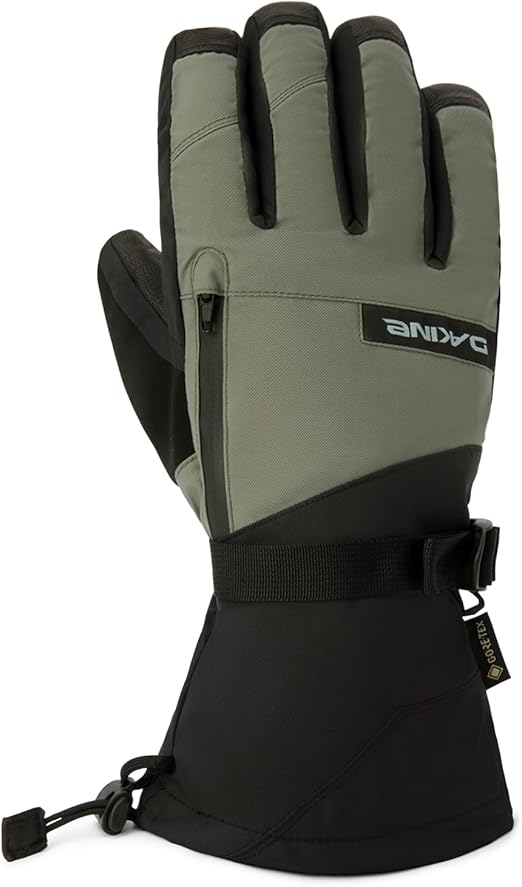
The Dakine Leather Titan is the upgraded version of the synthetic Titan at $65 — same gauntlet cuff and basic design, but with a goatskin leather palm and Gore-Tex ePE membrane (Gore’s newer, more environmentally focused membrane construction that performs comparably to standard Gore-Tex). The mapped insulation is worth understanding: Dakine uses heavier insulation on the back of the hand and lighter insulation at the palm, which improves both warmth and grip sensitivity simultaneously.
Compared to the Hestra Heli at $110, the Leather Titan costs $25 more and adds full Gore-Tex waterproofing including the palm — which means it handles wet conditions the Heli can’t. Compared to the synthetic Titan at $65, it costs $70 more and adds leather durability that outlasts the polyester shell significantly under heavy use.
Buyers choosing between the Leather Titan and the Heli consistently come down to one question: which matters more, full waterproofing (Leather Titan) or maximum dexterity and long-term comfort (Heli). Both are excellent gloves at their price point.
PROS / CONS
✓ Pros
- Full Gore-Tex ePE waterproofing including palm
- Goatskin leather durability
- Mapped insulation improves warmth and grip together
- Handles wet conditions the Heli can’t
✗ Cons
- $135 is expensive for this tier
- Leather still requires maintenance for longevity
- Less dexterous than the Heli despite leather construction
Buy if: You want full Gore-Tex waterproofing and leather durability together — this is the only glove on this list that delivers both under $150. Skip if: You ski in dry conditions — you’re paying for full waterproofing you won’t need.
$150–$220 — Premium Leather for Serious Skiers
At this price point, the case for spending more is about long-term value and construction quality, not dramatic performance jumps over the $100–$140 tier. Both gloves here are built to last for many seasons with proper care. The math works in their favor for frequent skiers — but only if the maintenance happens.

Hestra Fall Line (~$170)
Hestra Men’s Fall Line 3-Finger Leather Glove
– Supple cowhide leather ages into a custom fit over multiple seasons
– Neoprene cuffs, 3-finger design, built for ski guides + freeriders
– 152 reviews at 4.4★ · Water resistant only — avoid wet/spring snow
~$170
★★★★☆ (4.4/5 — 152 Amazon reviews)
Check Price on Amazon →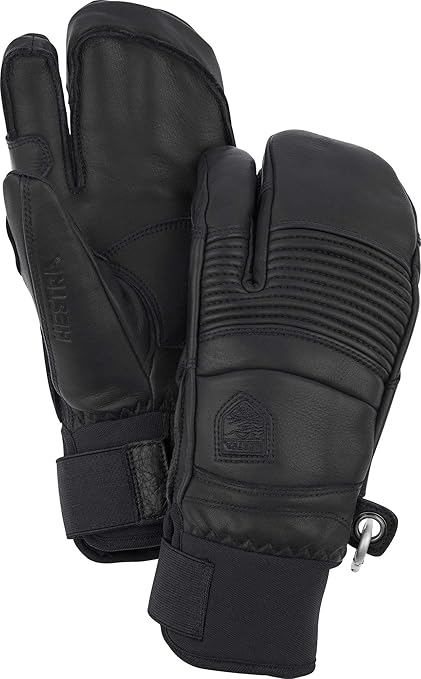
The Hestra Fall Line is the most dexterous glove on this entire list. The cowhide leather shell, pre-curved finger design, and external seams at the palm (outseams) combine to create a fit that feels closer to a second skin than any other glove here once broken in. Buyers with six-plus seasons in the Fall Line describe it as the glove they reach for on any day where they need precise hand movement — adjusting bindings, changing goggle lenses, operating equipment.
The Fall Line uses an under-cuff design rather than a gauntlet, which contributes to its low profile and dexterity but requires securing the jacket cuff over the glove separately. For freeride and backcountry skiers who prioritize movement, this design is preferred. For resort skiers who want a simple pull-on gauntlet, the Heli is the easier daily option.
Like the Heli, the Fall Line has no waterproof membrane — it relies on leather treatment for moisture resistance. Regular application of leather wax keeps it performing well in moderate conditions. Sustained wet snow is its weakness. With 150+ verified reviews averaging 4.4 stars, its real-world track record across a large sample of buyers is strong.
PROS / CONS
✓ Pros
- Best dexterity of any glove on this list
- Pre-curved design and outseams fit like a second skin
- 150+ reviews confirm long-term performance
- Removable liner allows overnight drying
✗ Cons
- No waterproof membrane — fails in heavy wet snow
- Under-cuff design takes more effort to secure than gauntlet
- $170 is expensive for a glove without full waterproofing
Buy if: Dexterity is your top priority and you ski primarily in dry to moderate conditions. Freeride and backcountry skiers who work with hands frequently will get the most from this glove. Skip if: Waterproofing matters more than dexterity — the Leather Titan at $135 delivers full Gore-Tex protection for $35 less.
Hestra Vertical Cut CZone (~$220)
Hestra Vertical Cut CZone 3-Finger Glove
– CZone waterproof-breathable membrane + G-Loft insulation
– Shock-absorbing backhand foam, outseams for grip, neoprene cuff
– For freeriders doing 20+ days/season — highest durability on this list
~$220
★★★★☆ (4.4/5 — 61 Amazon reviews)
Check Price on Amazon →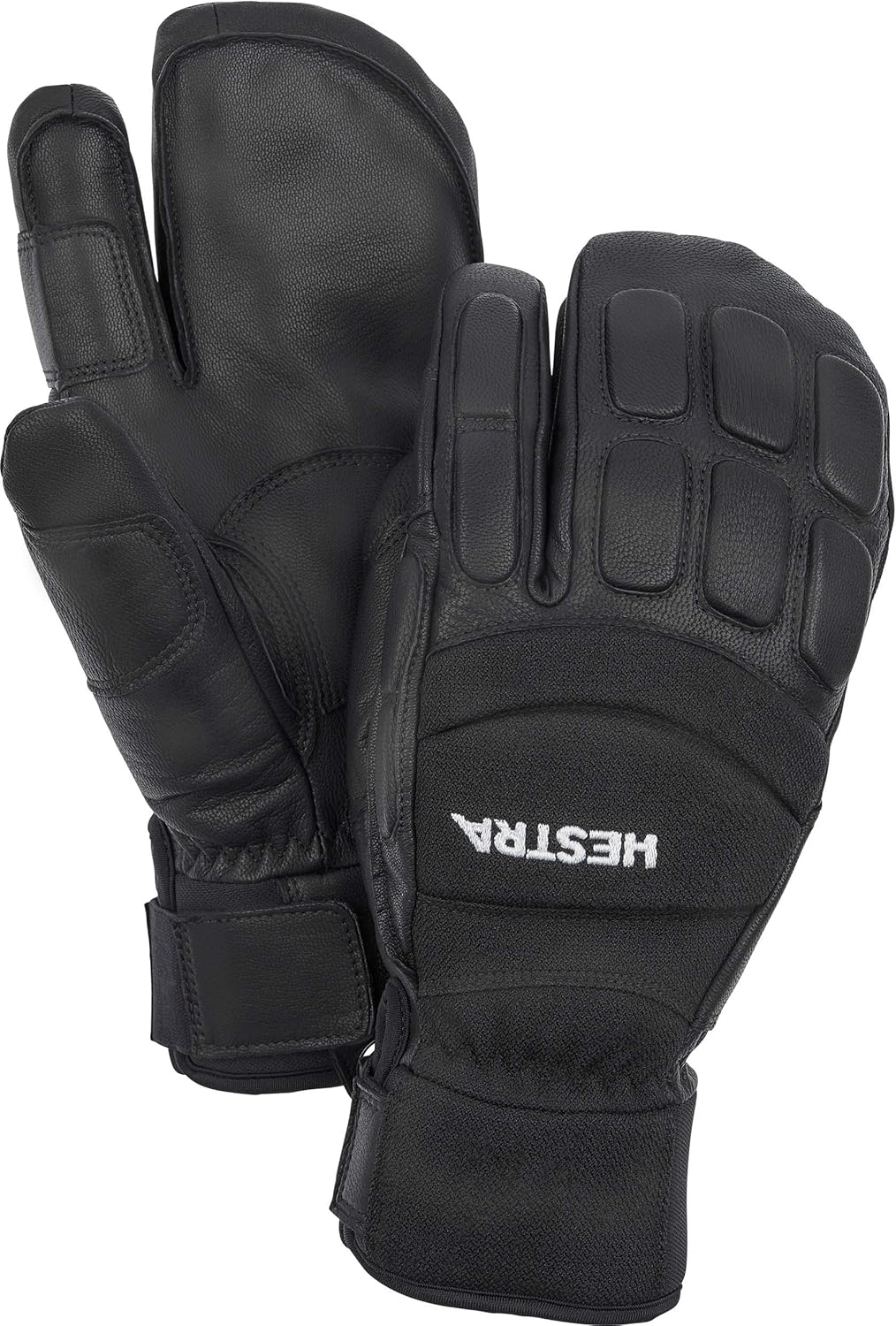
The Hestra Vertical Cut CZone is the premium freeride option on this list, and the specifications reflect that positioning. The CZone membrane is Hestra’s highest-end waterproofing — a partnership construction that delivers Gore-Tex-comparable performance in breathability and waterproofing. G-Loft insulation is Hestra’s proprietary synthetic fill, designed to maintain loft and warmth even when compressed or slightly damp.
The under-cuff “vertical cut” design is optimized for wrist mobility and jacket integration. The cuff sits flush against the jacket sleeve and seals without the bulk of a gauntlet. Experienced freeride buyers who’ve used both gauntlet and under-cuff designs consistently describe the Vertical Cut’s cuff system as the most refined under-cuff closure they’ve encountered — it seals well without pressure points.
At $220, this is the highest price on this list. The case for spending it: if you ski 25+ days per season, abuse your gear, and have gone through multiple mid-range gloves in previous seasons, a single pair that lasts 8–10 seasons with maintenance is cheaper over time. The case against: for skiers under 15 days per season, the Heli at $110 delivers comparable comfort for half the price.
PROS / CONS
✓ Pros
- CZone membrane — Hestra’s highest waterproofing grade
- G-Loft insulation maintains warmth even slightly damp
- Most refined under-cuff closure on this list
- Built for 25+ day/season skiers
✗ Cons
- $220 is only justified for very frequent skiers
- Under-cuff design not right for all skier types
- Leather maintenance still required for longevity
Buy if: You ski 25+ days per season, prefer under-cuff freeride gloves, and want to make one purchase that lasts a decade. Skip if: You ski fewer than 20 days per season — the Heli at $110 delivers 85% of this glove’s performance for half the price.
Full Comparison Table
| Glove | Price | Shell | Waterproofing | Warmth | Dexterity | Durability |
| Tough Outdoors | ~$18 | Synthetic | None | Low-mid | Mid | Low |
| Seirus Xtreme | ~$25 | Synthetic | Taped seams | Low-mid | Mid | Low-mid |
| OZERO Mittens | ~$30 | Cowhide palm | None | High (mitten) | Low (mitten) | Mid |
| Kinco 901W | ~$42 | Pigskin | Wax only | Mid | Mid-high | High |
| Gordini Aquabloc | ~$45 | Softshell | AquaBloc membrane | Mid | Mid-high | Mid |
| Dakine Titan GTX | ~$65 | Polyester | Gore-Tex | Mid | Mid | Mid |
| BD Soloist | ~$72 | Goatskin | BD.dry membrane | Mid-high | Mid-high | High |
| OR Arete II GTX | ~$89 | Synthetic | Gore-Tex | Variable (modular) | Mid-high | Mid |
| BD Mercury Mitts W | ~$100 | Synthetic | Gore-Tex | Very high (mitten) | Low (mitten) | Mid-high |
| Hestra Heli | ~$110 | Goatskin+Triton | Partial (back only) | Mid-high | High | Very high |
| Dakine Leather Titan | ~$135 | Goatskin | Gore-Tex ePE | Mid-high | Mid-high | High |
| Hestra Fall Line | ~$170 | Cowhide | Wax only | Mid | Very high | Very high |
| Hestra Vertical CZone | ~$220 | Leather+CZone | CZone membrane | High | High | Very high |
The One Decision That Matters Most
If you take one thing from this guide, make it this: the jump from no-membrane to a waterproof membrane matters more than any other price increase on this list. Moving from a $45 DWR glove to a $65 Gore-Tex glove is a bigger real-world performance difference than moving from a $65 glove to a $135 one. The DWR-to-membrane transition changes whether your hands stay dry in wet conditions. Everything above that threshold is about insulation, durability, and dexterity refinement — all meaningful improvements, but none as fundamental as the membrane.
For the detailed explanation of what happens at a material level when a DWR coating saturates versus what a membrane does differently, the insulation and waterproofing guide covers the engineering without the brand marketing.
Frequently Asked Questions
Which glove is actually the best value on this list?
For most recreational skiers, the Dakine Titan Gore-Tex at ~$65. It’s the lowest price at which you get a genuine Gore-Tex membrane, and it includes more useful features than anything else at that price — goggle wipe, nose wipe, removable liner, zippered pocket. If you ski in wet conditions more than a few times per season and don’t own a membrane glove yet, this is the upgrade that will make the most noticeable difference.
Is Gore-Tex actually worth the extra money over AquaBloc or BD.dry?
Gore-Tex has the most consistently verified long-term waterproofing and breathability performance of any membrane system used in ski gloves. AquaBloc and BD.dry are both legitimate membrane systems — they’re not cheap synthetic coatings. The honest difference: Gore-Tex has more third-party testing data, more buyer feedback across larger sample sizes, and a stronger track record in sustained wet conditions. For occasional or casual skiing, AquaBloc and BD.dry are genuinely adequate. For frequent skiing in wet conditions, Gore-Tex has the edge.
Should women buy women’s-specific ski gloves?
If your hands are on the narrower side with shorter fingers, yes — the fit difference is real and affects warmth directly. A glove with dead air space at the fingertips loses heat faster than a properly fitted one. The Kinco 901W is the most notable women’s-specific option on this list in the budget tier, and the BD Mercury Mitts Women’s is the top pick for cold-handed women in the mid-range tier. Most gloves above $110 are sized in small/medium/large rather than gender-specific, which usually accommodates narrower hands when sized correctly.
Why do some premium gloves have no waterproof membrane?
Because leather itself provides meaningful moisture resistance when properly maintained, and removing the membrane improves breathability and dexterity. A well-maintained leather glove with regular wax application handles most dry-climate skiing without a membrane. The tradeoff is that leather-only gloves fail in sustained wet snow where a membrane glove would succeed. Premium gloves without membranes — the Hestra Heli, Fall Line, and Kincos — are designed for skiers who prioritize feel and dexterity and ski predominantly in dry conditions. They’re not cutting corners; they’re making a deliberate design choice for a specific use case.
How do I know if I need a mitten instead of a glove?
If you’ve tried multiple insulated gloves across different price points and your hands still get cold during skiing, a mitten is worth trying before spending more on gloves. The shared-heat physics of a mitten cannot be replicated by insulation alone in a glove — individual fingers lose heat faster than fingers sharing a cavity regardless of how much fill the glove uses. The OZERO at $30 is the budget test case. The BD Mercury Mitts at $100 is the serious solution for cold-handed women. The tradeoff — reduced dexterity — is real but manageable for most skiers once they adjust.
What’s mapped insulation and does it actually help?
Mapped insulation uses different insulation weights in different zones of the glove — heavier fill at the back of the hand where heat loss is greatest, lighter fill at the palm where dexterity matters most. The Dakine Leather Titan uses this approach. In practice, it produces a glove that’s warmer than its average insulation weight suggests while maintaining better grip sensitivity than a uniformly heavy-fill glove. It’s a genuine engineering improvement, not a marketing term.
When should I replace my ski gloves?
For synthetic gloves: when the DWR coating stops beading water even after retreatment, when seams show fraying that reaches the insulation layer, or when the waterproof membrane delaminates (you’ll notice wet spots appearing inside the glove despite the outer shell being intact). For leather gloves: leather rarely needs complete replacement — individual components like liners can be replaced separately on Hestra models. The shell itself can last 10+ seasons with maintenance. Replace when the leather cracks deeply enough that it no longer holds wax treatment, or when the insulation has packed out significantly and warmth is notably reduced.
Can I use hand warmers with any glove on this list?
Yes, but they work better in gloves with a back-of-hand pocket. The Dakine Titan and Leather Titan both include a zippered pocket on the back of the hand specifically sized for HotHands packets. In gloves without a pocket, hand warmers sit loosely inside the gauntlet or against the palm, which delivers less consistent heat. If you regularly use hand warmers, the pocket feature is worth prioritizing in your selection.
Affiliate Disclosure: SkiGlovesUSA.com earns a commission from purchases made through links on this page at no extra cost to you. Rankings and recommendations are based on manufacturer specifications and verified buyer feedback — not commission rates or brand relationships. | Research by Awais Rafaqat | Last updated July 2026