As an Amazon Associate, I earn from qualifying purchases.
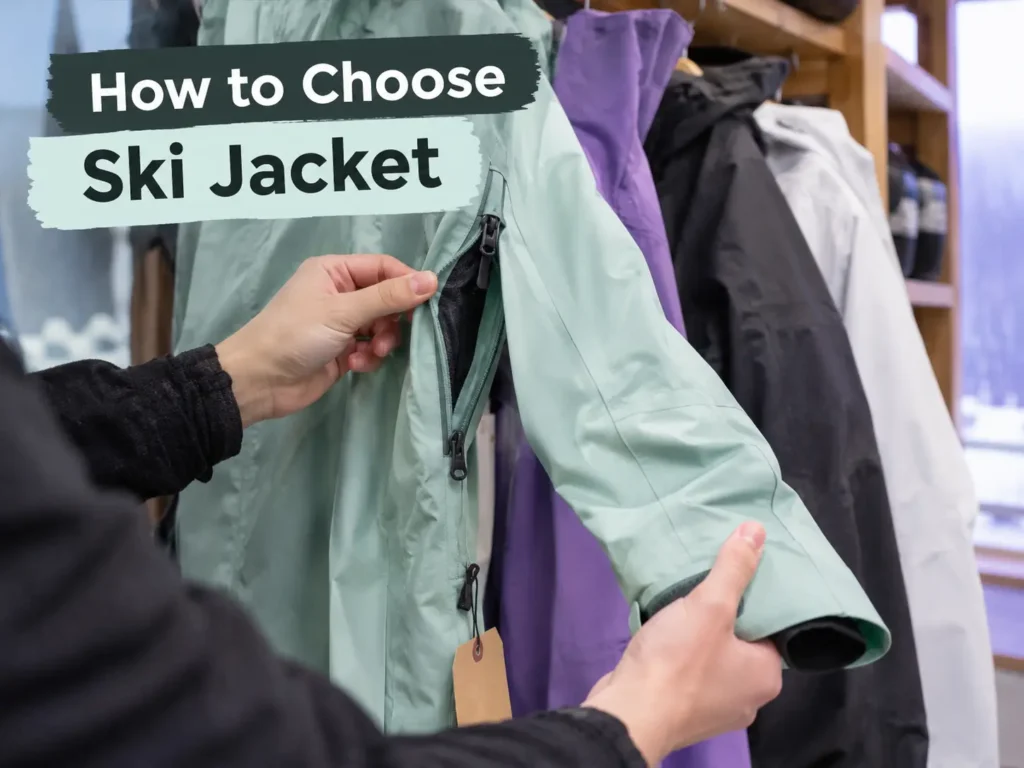
Quick Answer: Choose a ski jacket in this order: your weather first, how hard you ski second, then the fabric numbers, then fit, then extras. Price comes last, because once you know what you need, the field shrinks to a handful of jackets. Skipping that order is how people end up with a jacket that looks great and leaves them cold, soaked or sweaty by lunch.
Let’s go through it one question at a time. If you also need gloves, the Ski Glove Finder works the same way, with a few quick questions and a short list at the end.
- Q1: What does a normal ski day feel like where you ski?
- Q2: Do you run hot or cold?
- Q3: What do the waterproof numbers on the tag mean?
- Q4: Where will water get in?
- Q5: How much warmth do you need built in?
- Fit: The Part Photos Cannot Show
- The Features That Earn Their Place
- Men's, Women's and Unisex Cuts
- Color: Pick Something You Can Be Seen In
- What Goes Under the Jacket
- A Word on PFAS and Water-Repellent Coatings
- Used, Last-Season and Sale Jackets
- Looking After Your Jacket
- Storing and Packing It
- What a Fair Price Looks Like
- A Ten-Minute Try-On Routine
- Common Snags and How to Fix Them
- Making the Decision
Q1: What does a normal ski day feel like where you ski?
A jacket that is perfect in dry Colorado cold can be wrong for wet Pacific Northwest snow. So start with the weather you actually get, not the weather in the catalog photos. Think about the usual temperature, the wind on the lifts and whether the snow is dry or wet.
Wind matters more than most people expect. Cold air pushing through a thin shell steals heat fast, and you sit still on a chairlift while it happens. The National Weather Service says 0°F with a 15 mph wind feels like -19°F, so judge a jacket for the colder number.
| Where and when you ski | What you usually face | What to prioritize |
| Rockies, dry cold, 10°F to 25°F | Cold wind, dry powder | Warmth and a good collar and hood |
| Pacific Northwest, near 32°F | Wet, heavy snow, rain | Waterproof shell and taped seams |
| Northeast, icy and windy | Cold, wind, hard-packed snow | Wind protection and durable fabric |
| Spring skiing, 40s | Sun, slush, sweat | Breathability, vents and a lighter jacket |
| Night skiing | Dropping temperatures | Warmth and reflective details |
If you ski in more than one kind of weather, choose the wettest day. You can always add or remove layers under a waterproof jacket. You cannot make a leaky jacket dry.
Q2: Do you run hot or cold?
Two skiers in the same jacket can have very different days. One gets chilly on the lift and wants built-in warmth. The other overheats on the first run and wants room to adjust. Be honest about which one you are.
That answer points you to a style. An insulated jacket has warmth built in, so you put it on and go. A shell has little or no insulation and relies on what you wear under it. A 3-in-1 jacket pairs a waterproof outer with a removable warm inner, which gives you options in one purchase.
| Style | Good for | Watch out for |
| Insulated jacket | Cold hands-off days, beginners, skiers who run cold | Can feel hot on hard runs or in spring |
| Shell jacket | Variable weather, hard skiers, people who like to layer | You must own and pack the right layers |
| 3-in-1 jacket | People who want one jacket for many conditions | Can feel bulky, and the parts may be basic |
| Fleece-lined jacket | Cold, slow days at a low price | Less breathable on active days |
If you want to see how this plays out with real products, our ski jacket picks show an insulated, fleece-lined and a shell jacket side by side, with listed prices.
Q3: What do the waterproof numbers on the tag mean?
Most jackets show two numbers. The first is the waterproof number, in millimeters. It comes from a test where a column of water is built on the fabric until it leaks. The higher the number, the more water pressure the fabric can take. The second is the breathability number, which tells you how much sweat vapor can pass out.
Brands use different test methods, so treat the figures as a guide, not a promise. A common rule of thumb is that 10,000 mm handles most resort days and 20,000 mm suits wet, heavy snow. Many budget jackets list only the words “waterproof” and “breathable” without a number. In that case, look for other proof like sealed seams.
| Number on the tag | Rough meaning | Good for |
| 5,000 mm or less | Light snow protection | Dry, cold days and short outings |
| 10,000 mm | Solid for typical resort snow | Most skiers most days |
| 15,000 to 20,000 mm | Heavy wet-snow protection | Wet climates and long stormy days |
| Breathability 10,000 g or more | Lets sweat out well | Hard skiing and spring days |
Remember that waterproof and breathable pull against each other. A very waterproof fabric can trap sweat. A very breathable one can let in more water. The best choice is the balance that fits your weather and your effort.
Q4: Where will water get in?
Fabric is only part of the story. Water usually sneaks in through seams and zippers. Look at how the jacket is stitched. Every needle hole is a tiny leak, so makers cover the stitching with tape. A jacket with fully taped seams keeps water out better than one with taped seams only at the shoulders.
Zippers matter too. Water-resistant zippers or storm flaps over the main zipper keep snow from creeping in. Check the pocket zippers, since wet snow often finds its way into a pocket you forgot to close.
The surface finish helps as well. A coating called durable water repellent, or DWR, makes water bead up on the outside. It wears off over time, but you can restore it with washing and a proofing treatment. A jacket that has lost its coating will feel wet on the outside even if it is not leaking.
Q5: How much warmth do you need built in?
If you pick an insulated jacket, the fill matters. Synthetic fill keeps much of its warmth when damp, which suits wet snow. Down gives great warmth for its weight, but it loses much of its warmth when it gets soaked. Fleece lining is soft and cheap but breathes less.
Synthetic insulation is often listed in grams, like 40 g, 60 g or 120 g. More grams means more warmth, and also more bulk. A lighter fill suits active skiers and mild days, and a heavier one suits slow, cold days.
| Insulation | Strength | Weak spot |
| Synthetic fill | Warm even when damp | A bit bulkier for the same warmth |
| Down | Very warm for its weight | Loses warmth when soaked |
| Fleece lining | Soft, low cost | Less breathable on active days |
| No insulation (shell) | Most flexible; breathes well | Needs layers under it |
If you cannot decide, pick a lighter insulation and add a fleece on cold days. It is easier to add warmth than to remove it.
Fit: The Part Photos Cannot Show
A ski jacket should let you move. Raise both arms over your head. The hem should stay near your hips. Reach forward as if you were holding poles. The sleeves should not pull back past your wrists. If either test fails, the jacket is too small or too short.
Leave room for layers, but not a lot. A jacket that is too tight squeezes your layers flat and cuts warmth, and one that is too loose lets in drafts and snow. Try the jacket on with the base layer and mid-layer you will actually wear.
Check the hood and collar. The hood should fit over your helmet and still let you turn your head. The collar should rise high enough to meet your goggles and gaiter without rubbing your chin. A jacket whose hood only fits over a bare head will frustrate you on the first windy lift ride.
The Features That Earn Their Place
Many features are nice, but a few matter most. Rank them by how often you will use them.
| Feature | Why it helps | How much it matters |
| Powder skirt | Keeps snow out when you fall | High for beginners and powder skiers |
| Underarm vents | Dump heat on hard runs | High if you run hot |
| Helmet-ready hood | Blocks wind on the lift | High for most skiers |
| Chest pocket for a pass | Quick lift scans | High at resorts |
| Cuffs with straps | Seal out wind and snow | High, especially with gloves |
| Inner goggle pocket | Keeps lenses dry and warm | Medium |
| Reflective details | Helps at night and dusk | Medium for night skiers |
Cuffs deserve a second look. They are where your jacket meets your gloves, and a gap there lets in snow and cold air. Try on gloves with the jacket if you can. A cuff that closes over a glove or tucks under it keeps your wrists warm.
Men’s, Women’s and Unisex Cuts
Jackets are cut differently for different bodies. Women’s cuts usually have narrower shoulders, more room at the hips and a shorter sleeve. Men’s cuts are broader through the chest and shoulders. Unisex cuts try to fit both, and they often feel boxy.
Do not buy by label alone. Try both if you can, and choose the one that passes the arm-lift and pole-reach tests. Many skiers find that the other cut fits better, and nobody checks the tag on the hill.
Sizes also run differently between brands. A medium from one maker can feel like a small from another. Always check each brand’s size chart, and measure your chest and arm length instead of guessing.
Color: Pick Something You Can Be Seen In
Color is not only a style. On a crowded slope, a bright jacket helps other skiers and patrol spot you from far away. White and pale grey blend into snow, especially in flat light. A saturated orange, red or teal stands out against snow, sky and trees.
If you like dark colors, add a bright helmet, hat or gloves so you still stand out. This matters most for kids, beginners and anyone who skis alone. A small choice in color can make a big difference in how easily people see you.
What Goes Under the Jacket
A jacket is one layer of three. The base layer wicks sweat. The middle layer holds heat. The outer layer, which is your jacket, blocks wind and snow. The National Park Service teaches that outer layers should repel water and stop wind while still allowing ventilation, and that middle layers should insulate and breathe.
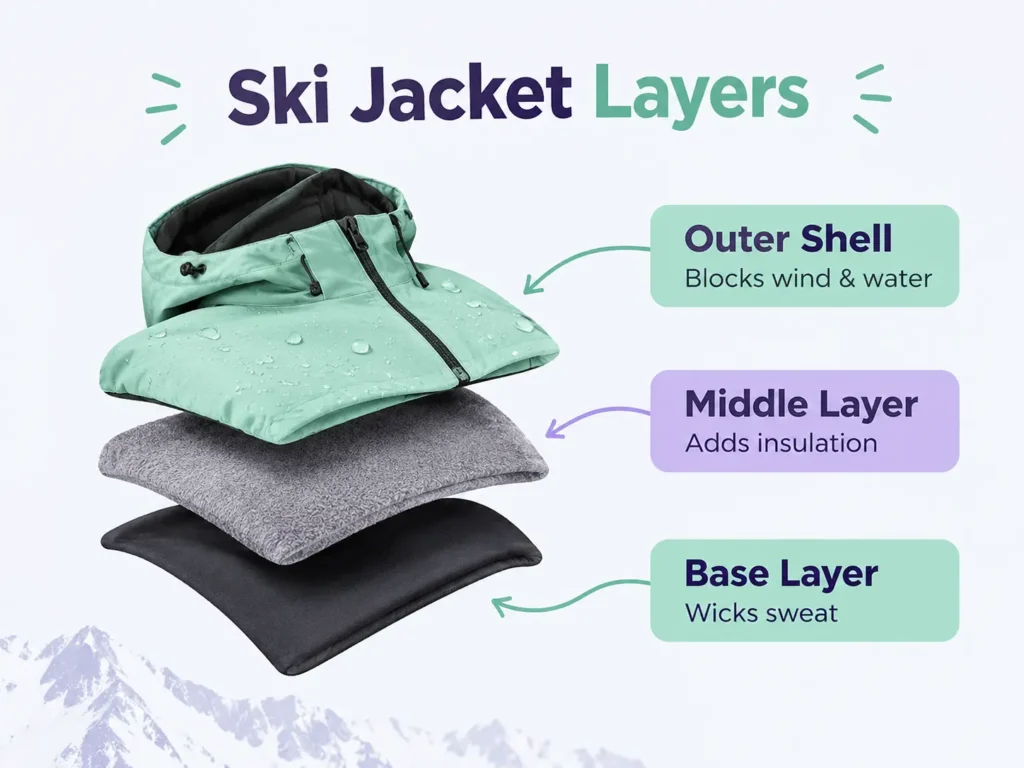
If your base layer is wrong, the best jacket will not save you. Cotton soaks up sweat and stays wet. Our guide to ski base layers shows which fabrics keep your skin dry, so your jacket has a fair chance.
For the middle layer, a thin fleece or a light puffy jacket does the job on most days. Choose something you can pack small, since you will take it off on warm runs and put it back on at lunch. On very cold days, a slightly thicker middle layer under a roomy shell works better than a heavy jacket on its own.
Mix and match with the weather. In spring, you might wear only a base layer under a shell. In January, you might add a fleece. The jacket stays the same, and the layers change. That is why a roomy, breathable shell often gives you more days of use than a heavy insulated parka.
Read the NPS lesson on dressing for winter if you want a clear picture of how the three layers work together. Think of the jacket as the last step in a system, not a stand-alone fix.
A Word on PFAS and Water-Repellent Coatings
You may see “PFAS-free” or “PFC-free” on a jacket tag. These chemicals have been used in the water-repellent coating and in some waterproof membranes. Outdoor Life reports that California banned PFAS in textiles and New York banned them in apparel starting in 2025, so makers are moving to other coatings. Its article on PFAS in gear explains the change in plain language.
The same article says that if you already own a jacket made with these chemicals, you do not need to throw it out. For new buying, a PFAS-free label is a reasonable plus, but it is not a reason to pick a jacket that does not fit or suit your weather.
Care is a bigger deal than most people think. A regional waste management group, NEWMOA, notes that waterproof, water-resistant or water-repellent claims often mean PFAS, and that washing wears down water repellency. Its short factsheet on outdoor products suggests limiting how often you wash coated gear.
Used, Last-Season and Sale Jackets
You can save a lot by buying last year’s model. Ski jackets change slowly, and a color change rarely means a real upgrade. End-of-season sales and outlet stores often cut prices by a third or more. Pick last year’s jacket in a good fit over this year’s jacket in a poor one.
Secondhand jackets can be a bargain too, but check them closely. Look at the seams for peeling tape, the zippers for sticking and the fabric for worn spots. Spray a little water on a sleeve to see if it beads. A jacket that soaks through may need a new coating, and the tape inside may be failing.
Be careful with very cheap jackets that list no details. If a page gives no fabric, no seam info and no size chart, you cannot judge it. A clear return policy is the best protection when you buy online.
Looking After Your Jacket
A jacket lasts longer when you clean it the right way. Dirt, sweat and body oils clog the fabric and cut breathability. Check the care label, since makers differ. Most waterproof jackets prefer a gentle wash with a mild, fragrance-free cleaner, with no fabric softener or bleach.
Dry the jacket fully before you store it. A damp jacket in a closet can smell and break down. Many makers say a low-heat tumble dry helps revive the water-repellent coating, but follow your own label. If water stops beading on the surface, wash the jacket and apply a proofing treatment.
Fix small problems early. A loose seam tape, a stiff zipper or a torn pocket gets worse with use. A dab of zipper wax and a patch can add seasons to a good jacket.
Storing and Packing It
At the end of the season, wash the jacket, dry it fully and hang it up. Do not store it compressed in a bag for months, since that can flatten insulation. Hang it in a cool, dry closet away from the sun.
When you travel, roll or fold it loosely and wear it on the plane if you can. A ski jacket takes up a lot of room in a bag, and wearing it saves space and weight. Keep your pass and phone in an inside pocket, and check every pocket before you leave.
What a Fair Price Looks Like
Skiing does not require a $700 jacket. It does require a jacket that stays dry, blocks wind and fits well. Prices rise with fabric technology, sealed seams, vents and brand name. Decide which features you will use, and pay for those.
| Price range | What you usually get | Who it suits |
| $40 to $80 | Basic waterproof jacket, fleece or light fill, simple features | New skiers and a few days a year |
| $100 to $200 | Better fabric, taped seams, vents, a helmet hood | Regular skiers who want comfort |
| $250 to $400 | Strong waterproofing, better breathability, durable build | Skiers on the hill many days a year |
| $500 and up | Premium membranes, fine fit and details | Frequent skiers in tough weather |
The mid-range is often the sweet spot. You get sealed seams, vents and a good hood without paying for the top-end fabric. Sales near the end of the season can drop prices on last year’s models, which is a smart way to buy better for less.
A Ten-Minute Try-On Routine
If you can try the jacket on in a store, do it properly. Wear the layers you ski in. Bring your helmet, goggles and gloves if you can. Then run through these checks.
| Check | What to do | Good sign |
| Arm lift | Raise both arms overhead | Hem stays near your hips |
| Pole reach | Reach forward as if holding poles | Sleeves cover your wrists |
| Helmet hood | Put your helmet on, then the hood | Hood fits and you can still turn your head |
| Collar and goggles | Zip up with goggles on | No rubbing at your chin or cheeks |
| Cuffs and gloves | Put on gloves and close the cuffs | No gap at the wrist |
| Squat and twist | Squat down and twist your torso | No pulling across your back or shoulders |
| Pockets | Load a phone, pass and lip balm | Easy to reach, no bulge |
Buying online? Check the size chart, measure your chest and arm length, and read the return policy before you order. A jacket you can return is much less risky.
Common Snags and How to Fix Them
| Problem | Likely cause | Fix |
| Cold even in a thick jacket | Wind getting in, or damp layers underneath | Check cuffs and hem; wear a wicking base layer |
| Wet inside but not leaking | Sweat with nowhere to go | Use vents; pick a more breathable jacket |
| Water soaking the outside | Worn-off water-repellent coating | Wash and apply a proofing treatment |
| Hood blocks your view | Hood not sized for a helmet | Cinch the hood or try another cut |
| Sleeves ride up | Jacket too small or too short | Size up or try a longer cut |
| Snow up your back after a fall | No powder skirt or loose hem | Choose a jacket with a powder skirt |
Making the Decision
You now have five answers: your weather, your body heat, the waterproof and breathable numbers, the seams, and the fit. Put them side by side and a short list should appear. Pick the jacket that meets your needs on those five, and then compare prices.
If two jackets tie, choose the one that fits better. A jacket you can move in, with a hood that works over your helmet, will get worn more and last longer. That is the one that earns its place in your closet.