As an Amazon Associate, I earn from qualifying purchases.
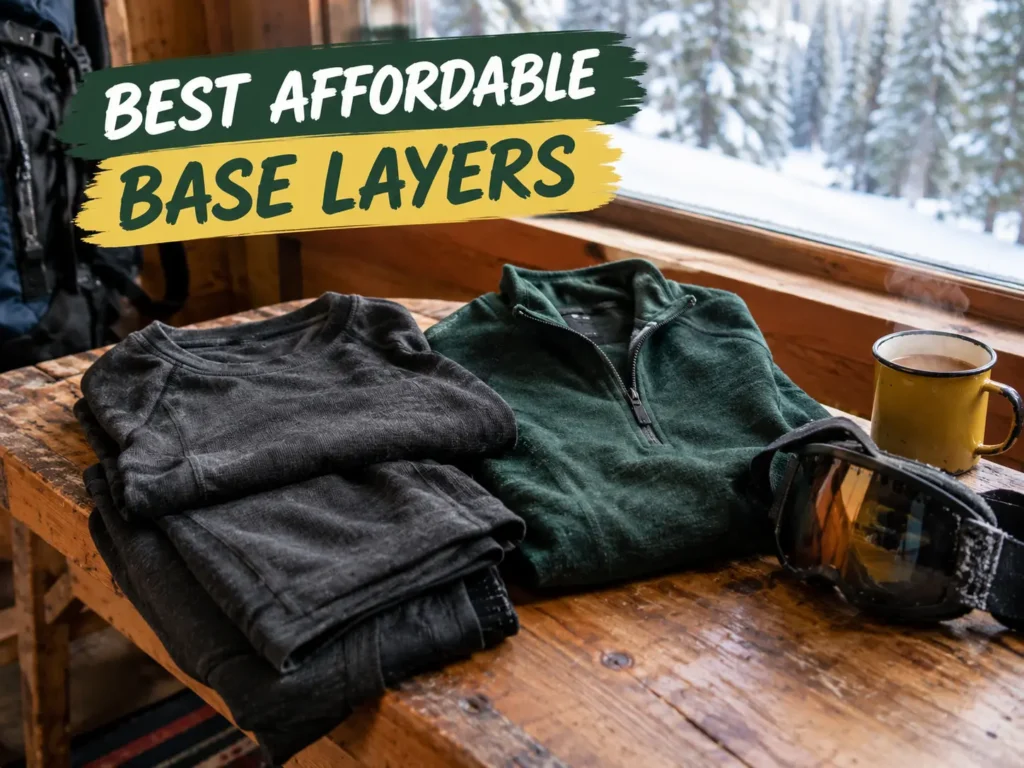
Quick Answer: Pick a base layer by its fabric and fit, not its brand name. A fleece-lined polyester set or a polypropylene shirt covers most resort days for $25 to $50. A merino blend costs about $95 and is worth it if you sweat a lot and hate a smelly shirt. HEROBIKER is good for cold, slow days. TSLA is a snug top that you wear with your own bottoms. The Fleece-Lined Long Johns Set is the cheapest full outfit. Helly Hansen Lifa Stripe is a light shirt for active skiers. Minus33 is the stretchy merino pick.
Planning the rest of your gear? The Ski Glove Finder helps you match gloves to your budget and weather in about a minute.
| Layer | Fabric | Style | Listed price | Good for |
| HEROBIKER thermal set | 90% polyester, 10% spandex | Top and bottom | About $24 to $26 | Cold, slow resort days |
| TSLA thermal top | 90% polyester, 10% elastane, soft fleece inside | Top only | $25.98 (2-pack $36.98) | Snug fit under a jacket |
| Fleece-Lined Long Johns Set | 88% polyester, 12% spandex | Top and bottom | $26.99 | Cheapest full outfit |
| Helly Hansen Lifa Stripe Crew | 100% polypropylene | Top only | $50 | Active skiing, mild to cold days |
| Minus33 Microweight Quarter Zip | 84% merino, 12% nylon, 4% spandex | Top only | $94.99 | Less smell, wide temperature range |
Prices and fabric details come from each product page when this was written. Check them again before you buy, since sellers change prices often.
- Sweat Ruins More Ski Days Than Cold
- Cheap Versus Affordable
- HEROBIKER Thermal Set: Warm for the Money
- TSLA Thermal Top: Snug With a Soft Fleece Inside
- Fleece-Lined Long Johns Set: The Cheapest Full Outfit
- Helly Hansen Lifa Stripe Crew: Light, Dry and Easy to Move In
- Minus33 Microweight Quarter Zip: The One Worth Saving For
- Price at a Glance
- Fabric Cheat Sheet
- Match the Layer to the Ski Day
- Try It at Home First
- Fit, Washing and Drying
- What to Wear Over Each Layer
- How Many Sets to Pack
- Mistakes That Waste Money
- Questions Skiers Ask
- Which One to Buy
Sweat Ruins More Ski Days Than Cold
Here is how a bad ski morning goes. You hike to the lift in your jacket. You ski hard for ten minutes and your back gets damp. Then you sit on a chairlift in the wind, and the damp shirt turns cold and sticks to your skin.
Most people blame the jacket. But the shirt against your skin is the real problem. It held the sweat instead of letting it dry.
A base layer has one job: keep your skin dry so your other layers can work. A thin shirt that dries fast often feels warmer than a thick cotton one. That is why the fabric on the tag matters more than the price.
Cheap Versus Affordable
A $15 set and a $27 set can look the same in photos. The difference is in the small things. How are the seams sewn? Does the fabric spring back after you stretch it? Does the tag name real fabrics? A low price is fine. Poor sewing is not, and it is the same reason cheap gloves fail so often.
Good news: all five layers here have flat seams, and all five stretch. You no longer need to pay extra for those. Spend your money on the fabric type and the fit.
The price gap is big. A full top and bottom costs under $30. One merino top costs $94.99. The sections below show what each one gives you for the money.
HEROBIKER Thermal Set: Warm for the Money
HEROBIKER Thermal Underwear Long Johns Base Layer Set
– Premium silky soft lining for comfort and warmth in cold weather
– Four-way stretch compression with flatlock stitching for a flat seam
– Thin enough to layer under a shirt, warm enough to wear alone
~$24.08
★★★★★ (4.6/5 — 15,606 Amazon reviews)
Check Price on Amazon →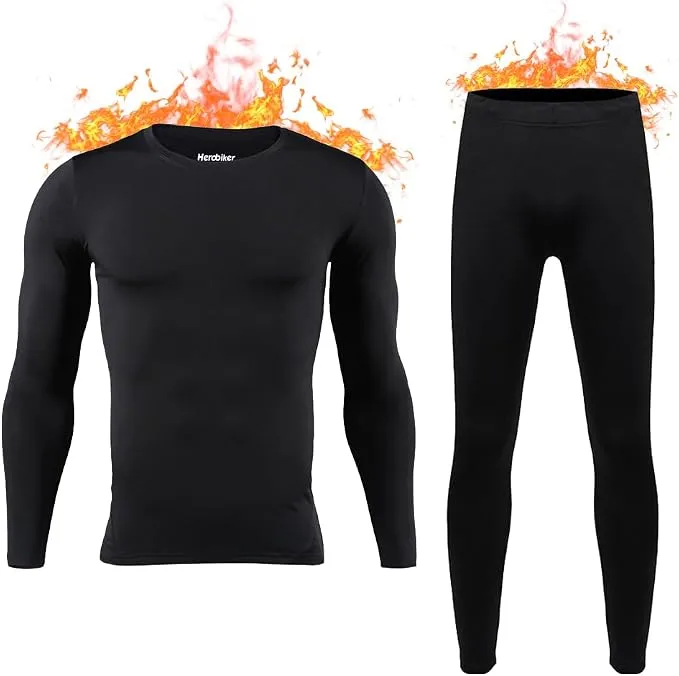
This is a two-piece set made from 90% polyester and 10% spandex, with a soft lining inside. The product page says it stretches four ways, has flat seams, and is thin enough to wear under a shirt. It also says it pulls sweat away and lets air through. Sizes run from Small to 3X-Large, and the price is about $24 to $26.
The page names snowboarding, so ski days are a normal use. It is also sold as a lounge and sleepwear set, which tells you the weight. Think of it as a light to medium layer. On a calm day in the mid 20s, it should be fine under a good jacket.
The weak spot is thickness. On a windy ridge, or on a day below 10°F, this set alone is not enough. Add a fleece on top. You can wash it in a machine, so it is easy to keep clean between trips.
Buy it if you are new to skiing, ski a few days a year, or want a full outfit for little money. Skip it if you ski hard and sweat a lot, because a fleece lining can hold both warmth and wetness.
TSLA Thermal Top: Snug With a Soft Fleece Inside
TSLA Men’s Thermal Long Sleeve Compression Shirt
– Micro-fleece lining for warmth plus moisture-sensing quick-dry performance
– Two-way air circulation keeps the fabric breathable during activity
– Flatlock seams for smooth, chafe-free comfort
~$25.98
★★★★★ (4.6/5 — 758 Amazon reviews)
Check Price on Amazon →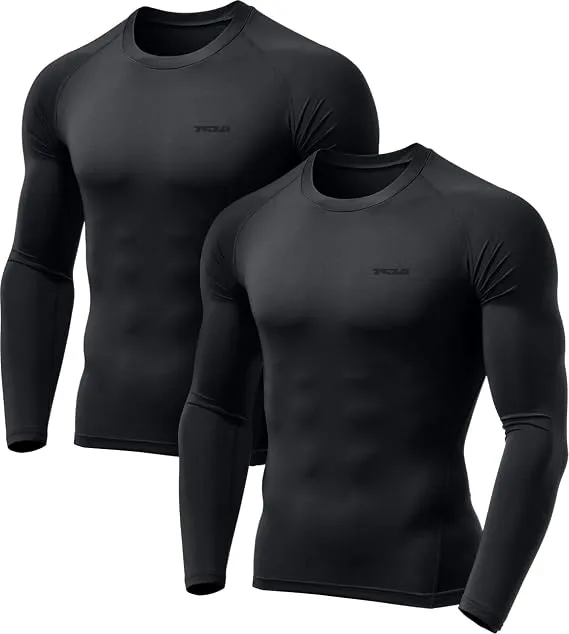
This is a tight-fitting long sleeve shirt made from 90% polyester and 10% elastane. The inside has a thin fleece lining. The page also mentions fast drying, flat seams and fabric that does not rub. One shirt is $25.98, and a two-pack is $36.98, so each shirt costs less in the pack.
The snug fit is the main reason to pick it. A close fit keeps the fabric on your skin, where it can pull sweat away. It also will not bunch up under a jacket sleeve. Sizes go from X-Small to 3X-Large.
Three things to check. The page says cold-weather activities and lists several sports, but it does not say skiing, so judge it for what it is: a snug, fleece-lined top. It is a top only, so you need bottoms. And the care label says hand wash and lay flat to dry, which takes more effort than a machine.
If you ski a few days in a row, the two-pack is smart. You switch shirts each day and let one dry out. Wash a new one once before you wear it, as the page advises.
Fleece-Lined Long Johns Set: The Cheapest Full Outfit
Men’s Thermal Underwear Set Fleece Lined Long Johns
– Soft fleece lining locks in warmth during cold-weather activity
– 4-way stretch fabric for maximum mobility and comfort
– Tagless collar, flat seams, and convenient fly front on pants
~$26.99
★★★★★ (4.7/5 — 315 Amazon reviews)
Check Price on Amazon →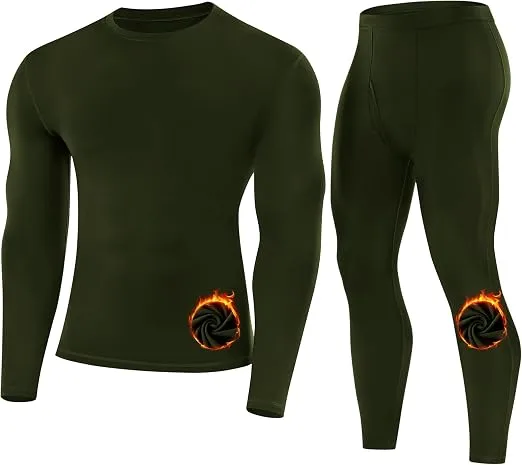
At $26.99, this is the lowest-cost way to cover your chest and legs. It is made from 88% polyester and 12% spandex, with a fleece lining. The page lists four-way stretch, a collar with no tag, flat seams, and a fly on the pants. It comes in many colors, from Small to 3X-Large, and you can machine wash it.
The page lists skiing along with hunting, running, cycling and hiking. So it is a general cold-weather set, not a ski-only one. That is fine. A base layer does the same job in most winter sports: hold warmth and keep your skin from getting wet.
The 12% spandex gives it a stretchy feel, and the tagless collar helps if tags bother your neck all day. The trade-off is the same as with other fleece sets. It is warm and soft, but it lets less air through when you ski fast and sweat. It works best on resort days with lots of lift time.
Spending under $30 here leaves money for the rest of your gear. If gloves are next, gloves under $50 covers that part of the budget.
Helly Hansen Lifa Stripe Crew: Light, Dry and Easy to Move In
Helly Hansen Men’s Lifa Stripe Crew Baselayer
– 100% Lifa fibers naturally pull moisture away from skin
– Lightweight insulation with flatlock seams for max comfort
– Trusted technical base layer for backcountry and alpine touring
~$50
★★★★☆ (4.5/5 — 2,943 Amazon reviews)
Check Price on Amazon →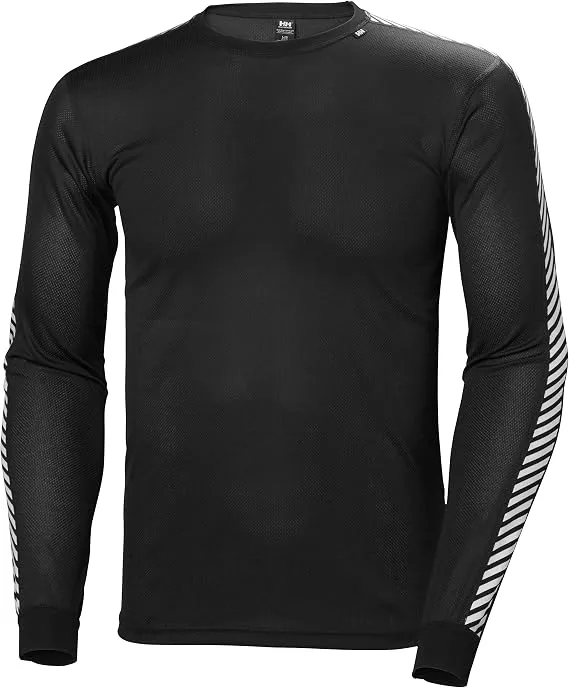
This one works differently from the fleece sets. It is 100% polypropylene, a fiber Helly Hansen calls Lifa. The page says it pulls sweat away from your skin to the outside of the shirt. It has flat seams, natural stretch and light insulation. It costs $50, comes in black or navy, and goes from X-Small to 3X-Large.
The page names resort skiing, on-piste skiing, backcountry and ski touring, so this is the one with the clearest ski use. Polypropylene soaks up very little water, so it feels dry soon after you stop moving. That makes it a strong pick if you ski hard or hike between runs.
Two things to respect. First, it is light, so in deep cold you need a warm layer over it. Second, the care rules are strict: wash in lukewarm water around 104°F, no bleach, no dryer, no iron. If you always use a dryer, hang this one up instead.
It costs about double the fleece sets. Is it worth it? If you are hot and sweaty by the bottom of every run, yes. If you mostly cruise and ride the lift, a fleece set will feel cozier.
Minus33 Microweight Quarter Zip: The One Worth Saving For
Men’s Microweight 1/4 Zip Merino Wool Thermal Top
– 100% Merino Wool “first-on-last-off” extreme comfort baselayer
– Mock neck for maximum warmth with 1/4 zip for adjustable venting
– 170 g/m2 jersey knit with flatlock seams, machine washable
~$94.99
★★★★☆ (4.2/5 — 50 Amazon reviews)
Check Price on Amazon →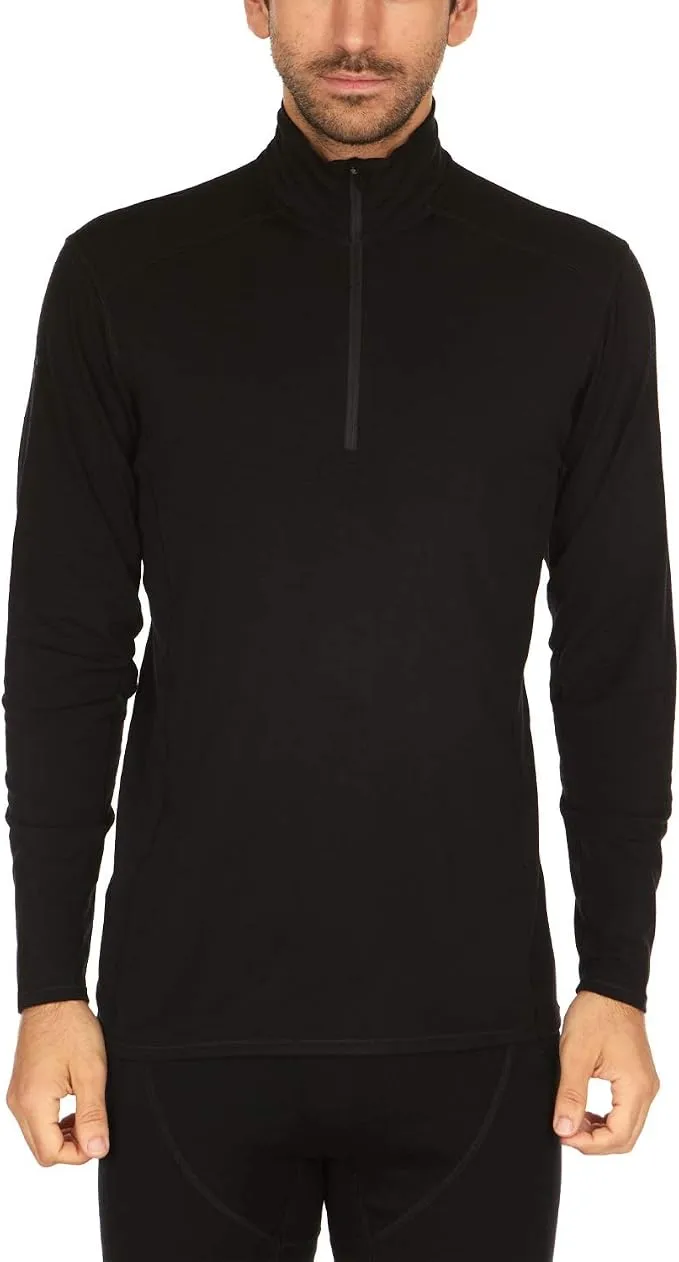
This is the splurge, and it should be called that. It is 84% merino wool, 12% nylon and 4% spandex, in a thin knit that weighs 170 grams per square meter. A size Large weighs 8.8 oz. The page lists flat seams and UPF 25 sun protection. It costs $94.99, comes in black or navy, and goes from X-Small to 3X-Large.
The quarter zip and high collar are useful. Unzip it on a warm lift ride and zip it up for the cold run down. The page also says you can machine wash and dry it, which removes the usual worry about wool. Merino is known for staying comfortable across many temperatures and for not getting smelly fast.
Now do the math. Over 20 ski days, $94.99 is about $4.75 a day. A $25 layer is about $1.25 a day. The gap only closes if the layer lasts and you like wearing it. So buy it if you ski often, or if you hate how synthetic shirts smell by day two.
It is called microweight, which means thin. When it gets properly cold, wear a warm layer over it. On a multi-day trip where you cannot wash between days, this is the one most likely to still smell fine on day three.
Price at a Glance
The chart shows the price of each layer. Four of the five cost between $24 and $50. Only the merino costs more than $60, so it is a separate decision.
Fabric Cheat Sheet
If you remember one thing from this guide, make it the fabric on the tag. This table shows the three types you will see and what to watch for.
| Fabric | What it does | Watch for | Care from the product pages |
| Polyester and spandex, fleece lined | Soft, warm, stretchy, low cost | Can feel clammy if you sweat hard | Machine wash for the two sets; hand wash for TSLA |
| Polypropylene | Very light; soaks up little water, so it dries fast | Needs a warm layer over it in deep cold | Lukewarm wash, no dryer, no iron |
| Merino blend | Works across many temperatures; slow to get smelly | Higher price; thin in microweight | Machine wash and dry, per the product page |
Cotton is missing on purpose. A cotton shirt soaks up sweat and stays wet, so it is a poor choice against your skin on a ski day. If you are not sure what an undershirt is made of, read the tag before you ski in it.
Match the Layer to the Ski Day
The same layer can feel perfect one morning and wrong the next. Use this table as a starting point, then adjust for how warm you run.
| Ski day | What it feels like | Layer to wear |
| Mild spring day, mid 30s to 40s | Warm on the lift, sweaty on the climb | Helly Hansen Lifa, or Minus33 with the zip open |
| Cold and calm, 15°F to 25°F | Cold on the lift, fine on the run | HEROBIKER or the Long Johns Set |
| Windy ridge, below 10°F | Cold even while skiing | A fleece-lined layer plus a warm mid-layer |
| First day on skis, lots of standing | Slow, cold, many stops | A fleece-lined full set |
| Hiking between runs | Hot while climbing, cold at the top | Polypropylene or merino |
This matters for your safety, not just comfort. The CDC says you can get hypothermia even above 40°F if rain, sweat or water chills you. Read the CDC guidance once before a cold trip so you know the warning signs.
Wind makes the same temperature feel much colder on a lift. The National Weather Service says 0°F with a 15 mph wind feels like -19°F, and bare skin can freeze in about 30 minutes. Check the wind chill chart before you go up, and dress for the colder number.
Try It at Home First
A two-minute test saves you from a bad ski day. Put the layer on and do some jumping jacks. Raise both arms over your head. Bend down like you are tying a boot. If the hem rides up, the sleeves slide back, or the fabric pinches, it is the wrong size.
Then put your ski jacket over it. Check that the sleeves do not bunch at the wrist and the collar does not rub your neck. A base layer that feels fine alone can feel different under a jacket.
Wash it once, following the tag, and try it again. Some fabrics shrink or feel different after the first wash. It is better to find that out at home than on the mountain.
Fit, Washing and Drying
A base layer should sit close to your skin without pinching. If it hangs loose, it cannot pull sweat away and it bunches under your jacket. If it squeezes, it limits your turns. Aim for snug, with sleeves that reach your wrist bone.
The care rules differ, so read the tag. TSLA says hand wash and lay flat. Helly Hansen says no dryer. Minus33 allows the dryer. A hot dryer can shrink or damage some synthetic fabrics. Many makers also say to skip fabric softener, since it can coat the fibers and slow how fast they dry.
The Canadian Centre for Occupational Health and Safety says to wear inner layers that pull sweat away and outer layers that are easy to open or take off when you work hard. Those CCOHS tips are written for workers, but they fit skiing too. Open your jacket vents before you sweat, not after.
What to Wear Over Each Layer
A base layer works best as part of a simple stack. On a cold day, wear the base layer, then a fleece or light puffy jacket, then your ski shell. The base layer keeps your skin dry, the middle layer holds heat, and the shell blocks wind and snow.
On a mild day, skip the middle layer. A base layer under your shell is often enough, and it is easier to cool off. Unzip your jacket vents on the lift, and zip them up before they run down.
Light shirts like the Helly Hansen and Minus33 want a warm layer on top when it drops below 20°F. The fleece-lined sets already hold more heat, so you can often skip the middle layer on calm days in the 20s. When in doubt, bring the extra layer in your bag. Taking it off is easy. Wishing you had it is not.
Your legs follow the same rule. Thin base layer bottoms under ski pants are enough for most days. Add a second pair of warm bottoms only if you run cold or ski in strong wind. Cold feet often start with cold legs, so a bottom layer also helps your boots stay comfortable.
How Many Sets to Pack
For a weekend trip, bring two tops and one pair of bottoms. Wear one top, and let the other dry. For a week, three tops and two bottoms is plenty if you can wash once. Merino can go longer between washes, which helps if you travel light.
Keep one dry top in the car or your locker. If you get soaked on a slush day, changing at lunch fixes your whole afternoon. It takes two minutes and costs nothing if you already own a spare.
Mistakes That Waste Money
The first is buying the thickest layer you can find. A thick layer is warm when you stand still and soaked once you move. A thinner layer that dries fast works better with a winter jacket, and you can always add a warm layer on top.
The second is buying a size too big. A baggy set looks relaxed, but it cannot do its job. If you are between sizes, pick the smaller one and check how it feels with your arms raised.
The third is buying only a top. Your legs lose heat on a chairlift too, and a fleece-lined bottom helps a lot on a windy day. If you buy the TSLA top, add bottoms from one of the sets.
The fourth is ignoring the care tag. A layer you can machine wash will last a season of ski days. One that needs hand washing needs a routine, and if you will not follow it, pick a different layer.
Questions Skiers Ask
Do I need a base layer for resort skiing?
Yes. Even on warm days, a layer that pulls sweat away keeps you more comfortable than a cotton shirt. On cold days it can decide whether you ski until closing or quit early.
Is fleece-lined or merino better?
They suit different skiers. Fleece-lined sets cost less and feel cozy on cold, slow days. Merino costs more, works across more temperatures, and smells less. If you ski only a few days a year, start with fleece-lined.
Can I wear long johns sold as sleepwear?
Yes, if the fabric is polyester or something similar, not cotton. Check the thickness and stretch, and make sure it fits close to your skin. Lounge sets run light, so plan on a warm layer over them on cold days.
Do I need base layer bottoms too?
On cold or windy days, yes. Your legs lose heat fast on a lift, and a thin bottom under ski pants adds real warmth. On mild spring days you can often skip them.
How many sets should I buy?
Two is a good start for a multi-day trip. You wear one while the other dries. The TSLA two-pack is an easy way to do this for tops.
Should I wash a new layer before skiing?
Yes. TSLA’s page says to wash it separately before you wear it, and it is a good habit for any new layer. Follow the care tag for water temperature and drying.
Which One to Buy
Want one full outfit on a small budget? Pick the Fleece-Lined Long Johns Set or the HEROBIKER set. Ski hard and sweat a lot? Pick the Helly Hansen Lifa Stripe. Want less smell over several days and can spend more? Pick Minus33. Already own bottoms? The TSLA two-pack is the easiest way to add tops.
Whatever you pick, try it on at home, read the care tag, and plan a warm layer for the coldest days. A base layer will not fix a bad jacket, but it will help a good ski day last longer.
Affiliate disclosure: Some links on this page may be affiliate links. If you buy through them, skiglovesusa.com may earn a small commission at no extra cost to you. Prices, fabric details and care instructions come from the manufacturers’ product pages and can change.