
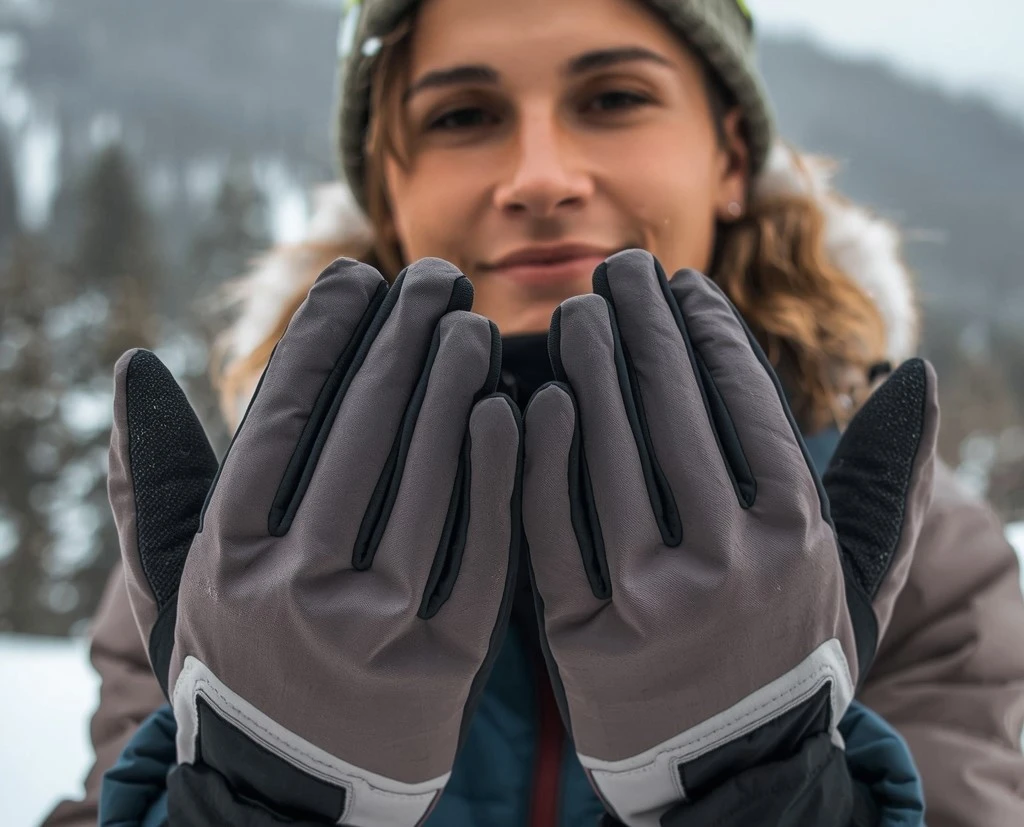
Getting cold hands on the mountain is not just annoying; it is the fastest way to ruin a ski day. Once your fingers go numb, you lose the ability to properly grip your poles, adjust your goggles, or even unzip your jacket. I have spent the last 15 years skiing everywhere from the heavy, wet slush of the Pacific Northwest to the bone-dry, sub-zero powder of the Rocky Mountains. Through trial, error, and plenty of frozen fingers, I have learned that the outer shell of a glove only does half the job.
The material stuffed inside is what actually keeps your body heat from escaping. Finding the Best Insulation for Ski Gloves comes down to understanding how different materials react to sweat, snow, and freezing temperatures.
If you are tired of cutting your ski days short to sit in the lodge and warm your hands under a hand dryer, this guide will show you exactly how to choose the right insulation for your specific climate and body type.
How Insulation Actually Works (The “Dead Air” Rule)
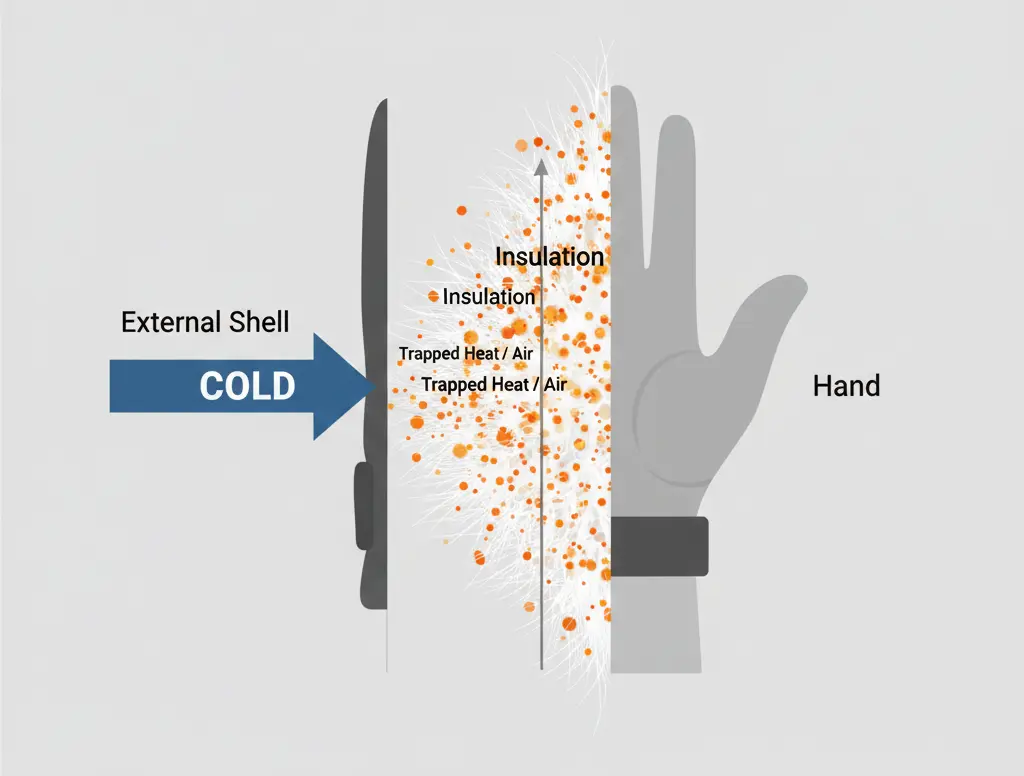
Before comparing materials, you need to understand what insulation actually does. Your gloves do not generate heat. Your body does.
Insulation works by trapping tiny pockets of “dead air” between your skin and the cold outside environment. Your body heat warms up these trapped air pockets, creating a protective thermal barrier. If the insulation material gets crushed (from gripping a ski pole too hard or wearing gloves that are too small), those air pockets disappear, and the cold transfers straight to your skin.
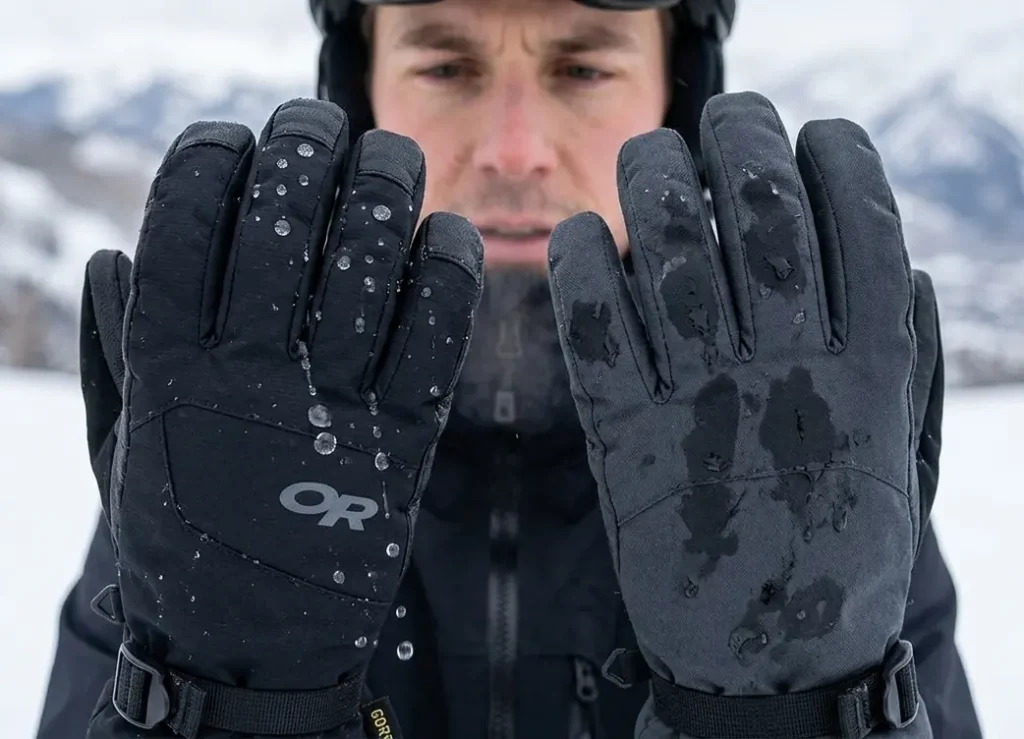
If the insulation gets wet from sweat or melted snow, the water fills those air pockets. Water conducts heat away from your body 25 times faster than air. That is why wet hands freeze almost instantly.
How I Test Ski Glove Insulation
I never trust a manufacturer’s temperature rating. A glove rated for “-10°F” in a dry laboratory will fail at 25°F on a wet ski slope. Here is how I actually test insulation to see if it holds up.
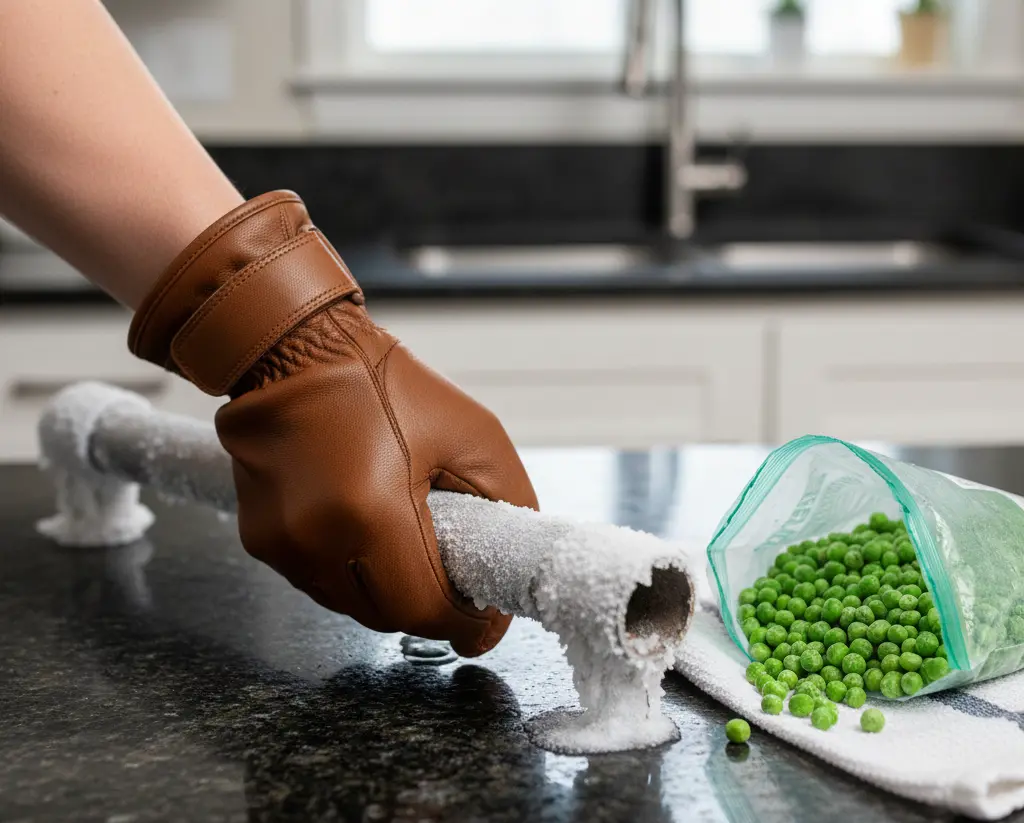
The Home Test: The Frozen Pipe Grip
To test conductive heat loss (how fast cold transfers through the palm when gripping a ski pole), I put the gloves in my chest freezer for three hours. Then, I put them on and grip a solid steel pipe that has also been in the freezer. I time how long it takes before the cold bites into the webbing of my thumb and fingers. High-quality synthetic insulation usually buys me about four solid minutes of zero sensation, while cheap polyester batting fails in under 60 seconds.
The Mountain Test: The Wet Snow Squeeze
To test how insulation handles moisture, I find wet, heavy spring snow. I pack a dense snowball and squeeze it as hard as I can for two straight minutes. The heat from my hand melts the snow against the glove’s shell. I want to see if the internal insulation collapses under the moisture and pressure. If the glove immediately feels thin and my hand gets cold, the insulation has failed to hold its structure.
Synthetic Insulation: The Reliable Workhorse
Synthetic insulation is made of microscopic polyester fibers woven together to mimic the air-trapping properties of down feathers, such as PrimaLoft synthetic insulation. The most common insulation technologies you will see include PrimaLoft, Thinsulate, and Polartec insulation technology.
I use synthetic gloves for 80% of my ski days.
Why It Works
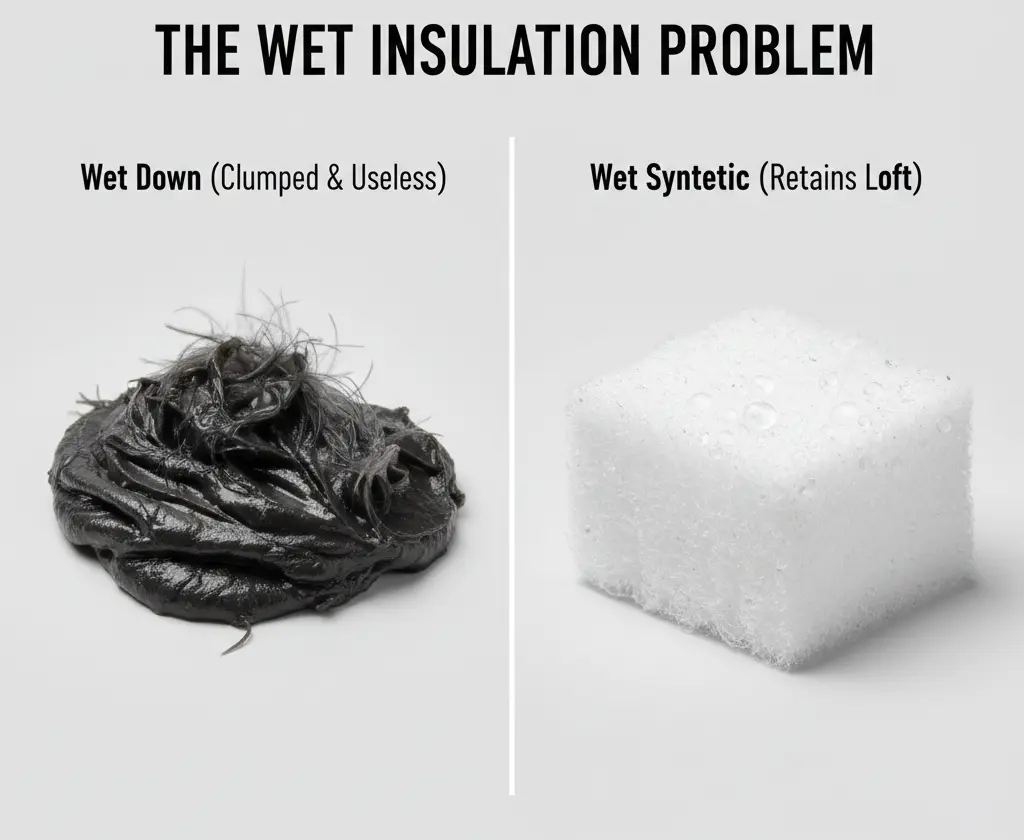
The primary advantage of synthetic insulation is moisture management. Polyester fibers do not absorb water into their core. If water or sweat penetrates the glove, the synthetic fibers will not collapse. They maintain their loft (puffiness), which means they continue to trap warm air even when they are damp.
Real-World Testing: PrimaLoft vs. Generic Polyester
I took a pair of high-end PrimaLoft gloves and a pair of $30 generic poly-fill gloves to a wet, 32°F day at Mount Snow. By 1:00 PM, both gloves had absorbed some moisture from the heavy sleet. The generic gloves flattened out completely; my hands were freezing because the dead air space was gone. The PrimaLoft gloves stayed puffy. They felt slightly damp inside, but my hands remained comfortably warm.
Advantages of Synthetic
- Keeps insulating even if you sweat heavily or ski in the rain.
- Dries incredibly fast overnight.
- More affordable than high-grade down.
- Resists compression better over the long term (especially high-density options like Thinsulate).
Disadvantages of Synthetic
- To get extreme warmth, the glove has to be thicker and bulkier.
- Heavier than down.
Who Should Choose Synthetic: You should buy synthetic insulation if you ski in wet climates (like the Pacific Northwest or East Coast), if you are a beginner who falls in the snow frequently, or if your hands sweat a lot.
Down Insulation: The Extreme Cold Specialist
Down insulation comes from the soft under-plumage of geese or ducks and is often certified under the Responsible Down Standard (RDS). It is nature’s most efficient insulator. When people talk about down, they talk about “Fill Power” (e.g., 600-fill, 800-fill). This number measures how much space one ounce of down occupies. Higher fill power means larger down clusters, which trap more air with less weight.
Why It Works
Nothing beats the warmth-to-weight ratio of high-quality down. You can put on a 900-fill goose-down mitten, and it will feel as light as a cloud while keeping your hands warm in -20°F weather.
The Fatal Flaw
Down has one massive weakness: water. When down gets wet, the feathers clump together into hard little balls. All the air pockets vanish, and the insulation value drops to zero.
I learned this on a late March ski trip. I wore a premium pair of Hestra down mitts on a warm, slushy day. My hands started sweating profusely. The sweat soaked into the down from the inside out. By the afternoon, the gloves were flat, heavy, and completely useless. I had to finish the day wearing cheap fleece liners I bought at the lodge.
Advantages of Down
- Unbeatable warmth for freezing, sub-zero days.
- Incredibly lightweight and easy to pack.
- Highly breathable as long as it stays dry.
Disadvantages of Down
- Completely loses insulating power if it gets wet.
- Takes a very long time to dry.
- Expensive.
Who Should Choose Down: You should buy down insulation if you ski in very dry, frigid climates (like the high-altitude Rockies or interior Canada), if you run extremely cold, and if you rarely fall in the snow.
Comparison: Down vs. Synthetic
| Feature | Down Insulation | Synthetic Insulation |
| Warmth-to-Weight Ratio | Excellent (very warm, very light) | Good (requires more bulk for same warmth) |
| Wet Weather Performance | Fails completely; feathers clump | Stays warm; fibers hold their shape |
| Drying Time | Very slow (requires a dryer with tennis balls) | Very fast (air dries overnight) |
| Dexterity/Grip | Can feel puffy and loose | Options like Thinsulate offer tight, firm grip |
| Price | High | Moderate to High |
How I Pick My Gloves (Decision Framework)
When I am standing in a gear shop or looking online, I do not just grab the thickest glove. I follow a specific mental checklist based on where I am skiing and what the weather is doing.
1. I check the climate first.
If the temperature is hovering anywhere near freezing (28°F to 35°F), the snow will be wet. I immediately rule out down. I look for PrimaLoft or a similar high-loft synthetic.
2. I match the insulation to the palm material.
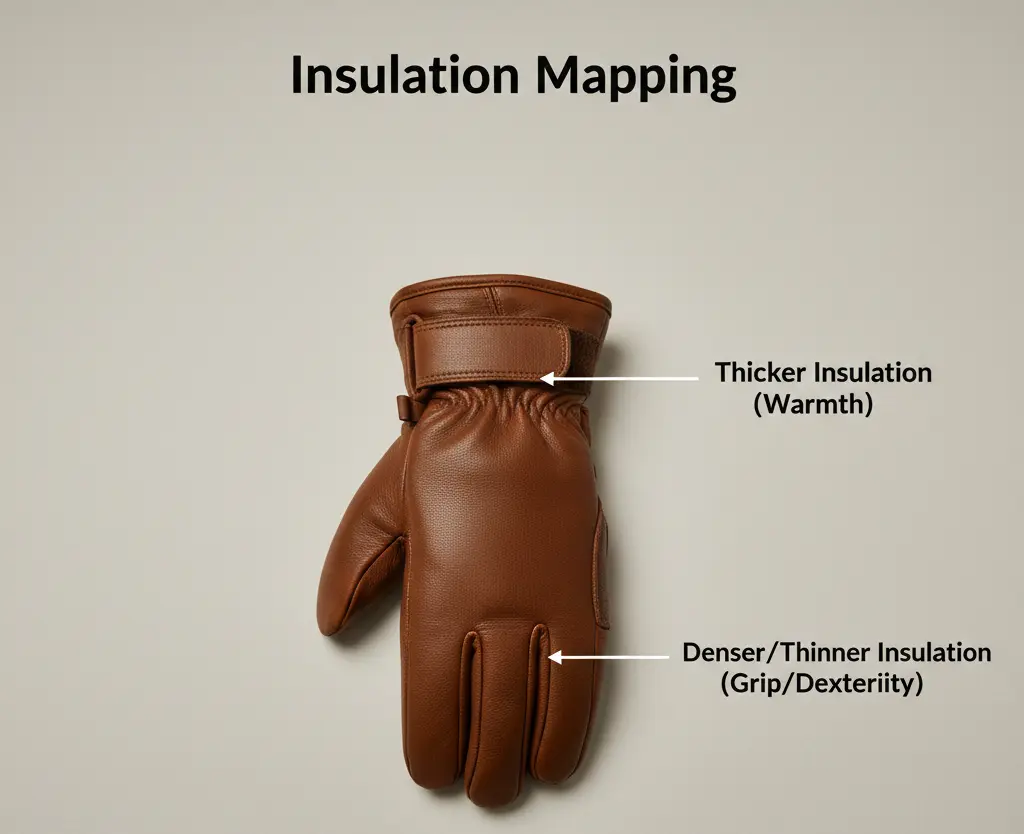
Insulation on the palm of the hand gets crushed every time you hold a ski pole. Over time, heavy insulation on the palm wears out and makes gripping difficult. I look for gloves that use dense, thin insulation (like 100g Thinsulate) on the palm for dexterity, and thicker, puffier insulation (like PrimaLoft Gold) on the back of the hand where the cold wind hits.
3. I buy based on my sweat levels.
I run hot. If I am skiing aggressive mogul runs, my hands will sweat. If I buy a glove that is too warm, my sweat will eventually make my hands cold. I usually buy a mid-weight synthetic glove and carry a thin Merino wool liner in my pocket. If the wind picks up, I slide the liner on inside the glove.
Condition-Based Recommendations
- If you ski in wet, heavy coastal snow: Choose a glove with PrimaLoft insulation and a highly rated waterproof membrane (like Gore-Tex).
- If you ski in dry powder below 10°F: Choose a high fill-power down mitten with a leather shell.
- If you are a beginner who spends a lot of time adjusting boots and picking up dropped skis: Choose a glove with Thinsulate. It is thinner and gives you the finger dexterity you need to handle your gear without taking the gloves off.
- If you suffer from poor circulation or Raynaud’s: Do not rely on insulation alone. Buy a synthetic-insulated mitten and pair it with chemical hand warmers or upgrade to a battery-heated glove.
When This is NOT the Right Choice
Do not buy heavily insulated gloves (down or thick synthetic) if you are backcountry skiing, ski touring, or cross-country skiing. Uphill travel generates a massive amount of body heat. If you wear resort-style insulated gloves while hiking up a mountain, your hands will sweat so much that the gloves will be soaked by the time you reach the top. For these activities, use an uninsulated wind-stopper glove for the climb, and keep a warm, synthetic insulated glove in your backpack to wear for the downhill ride.
Common Mistakes Skiers Make with Insulation
- Buying gloves that fit too tight: This is the number one reason skiers get cold hands. If your gloves are tight, you compress the insulation and squeeze out all the dead air. You also restrict blood flow to your fingers. Always leave a quarter-inch of empty space at your fingertips.
- Drying gloves on a hot radiator: High heat melts synthetic fibers and destroys the waterproof membrane of the glove. Once the fibers melt, the insulation is permanently ruined.
- Assuming thicker means warmer: A poorly constructed, massive polyester glove will not be as warm as a well-designed, moderately thick PrimaLoft glove. Quality of fibers matters more than sheer volume.
Quick Problem-Diagnosis
If your hands are cold right now, figure out why before you buy new gear:
- Your fingertips are freezing, but your palms are warm: Your gloves are too short. Your fingers are pressing hard against the end of the glove, crushing the insulation. Solution: Size up.
- Your hands are warm at the bottom of the lift, but freezing at the top: Your hands are sweating while you ski, and that sweat is turning cold while you sit still. Solution: You need a lighter insulation weight and a better-ventilated glove.
- The gloves feel heavy and cold all over: The outer waterproof shell has failed, and water has soaked the insulation. Solution: You need a glove with a better waterproof membrane, or you need to reapply a waterproofing wax/spray to your current gloves.
Decision Checklist
Before purchasing your next pair of ski gloves, run through this list:
- [ ] Do I know whether the insulation is down or synthetic?
- [ ] Does this insulation match the typical wet/dry conditions of my home mountain?
- [ ] Is the insulation mapped properly? (Thinner on the palm for grip, thicker on the back for warmth).
- [ ] Does the glove leave enough room at the fingertips so I don’t crush the loft?
- [ ] Have I considered buying a slightly lighter glove and using a removable liner for temperature control?
Maintenance Tips to Protect Your Insulation
To keep your gloves warm season after season, you have to protect the loft. Never stuff your gloves tight into the bottom of your ski bag during the off-season; this permanently flattens the fibers. Store them loosely in a dry closet. When drying them after a ski day, pull the liners out (if they are removable) and let them air dry at room temperature. If they start to smell, hand wash them with a technical gear cleaner (never standard laundry detergent, which leaves a residue that attracts water) and let them dry naturally.
Choosing between down and synthetic is not about finding the “best” material; it is about finding the right tool for the job. Protect your dead air space, manage your sweat, and buy for the weather you actually ski in, and your hands will stay warm all day.
The Next Step: Don’t Ruin Your New Gloves
Knowing whether to buy down or synthetic is only half the battle. If you wear your gloves wrong, layer incorrectly, or grip your poles too hard, even the most expensive insulation on the market will fail you.
If you want to understand the exact mechanics of trapping “dead air” and how to stop your own body sweat from freezing your fingers from the inside out, read my complete breakdown on How Insulation Works in Ski Gloves.
About the Author
Awais Rafaqat has over 15 years of experience testing ski gear in some of the harshest conditions across North America, from the dry sub-zero peaks of the Rockies to the wet, freezing slopes of the Pacific Northwest. He specializes in real-world gear testing to help skiers find equipment that keeps them warm, dry, and performing at their best on every run.


Pingback: Ski Glove Insulation Explained: What PrimaLoft, Down, and Thinsulate Actually Do in Cold Weather – Ski Gloves USA