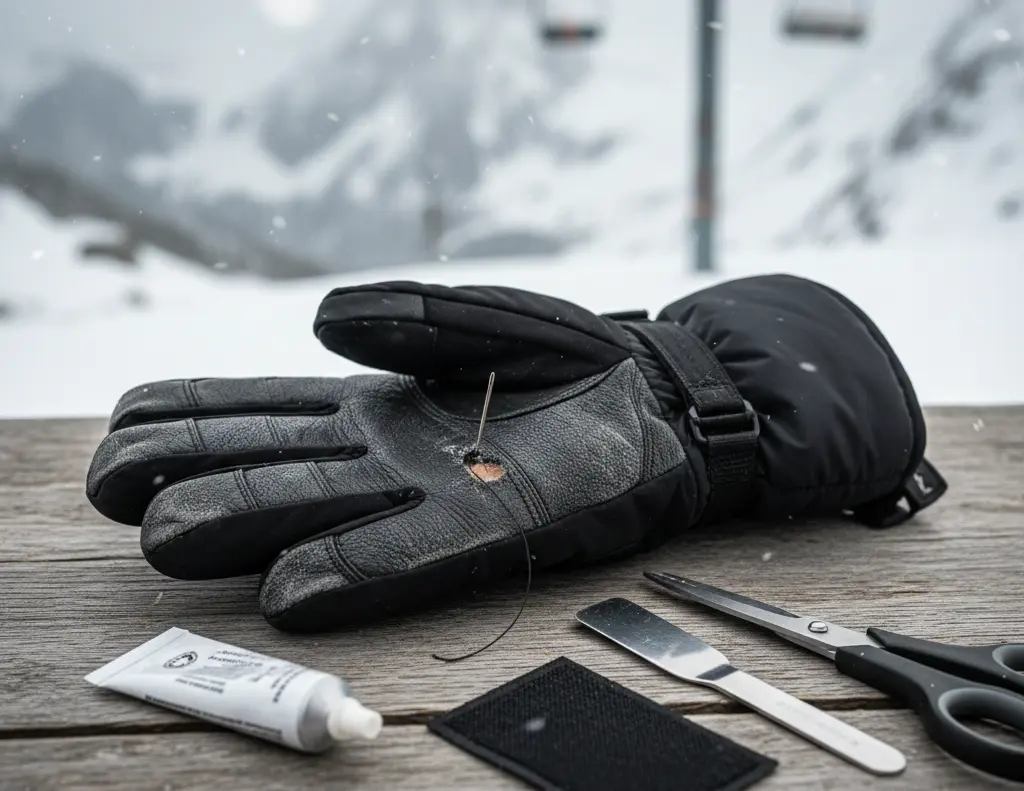
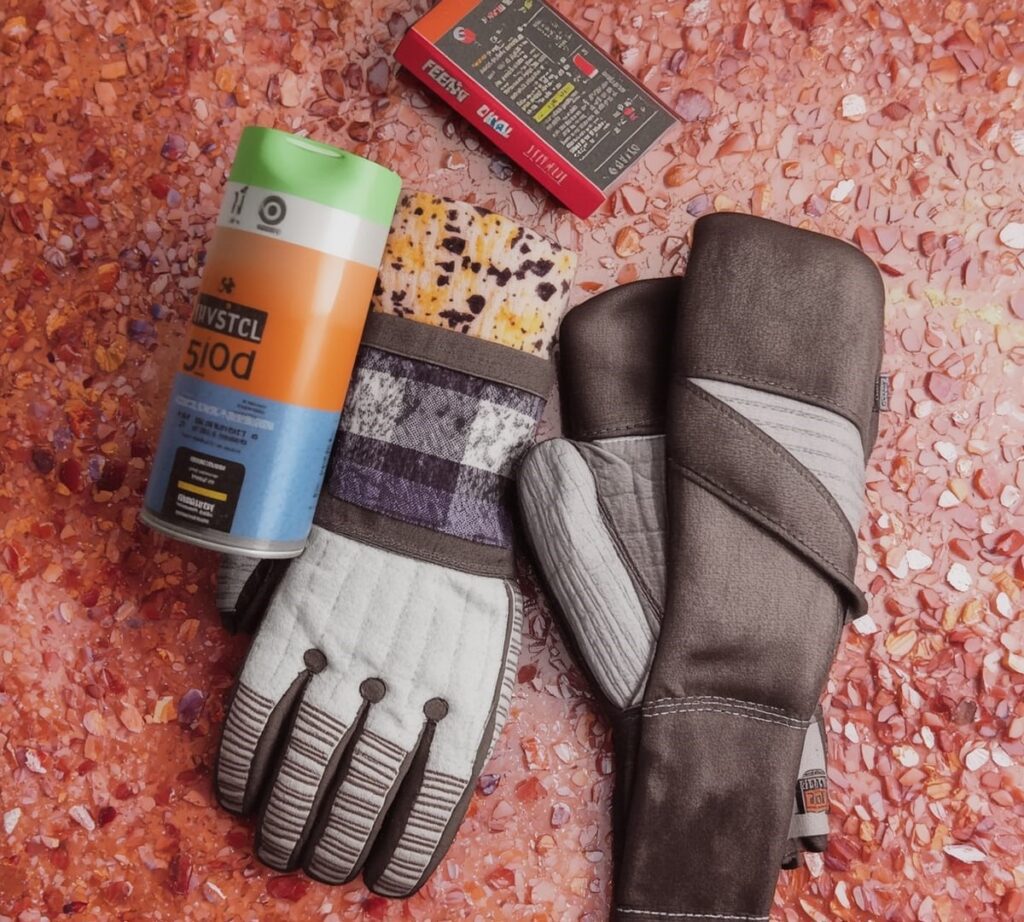
Wet gloves are one of the fastest ways to ruin a ski day. They start warm, then soak through, then suddenly your hands are freezing halfway up the lift.
It happens a lot in wet snow, spring conditions, or anytime you’re grabbing ski edges, carrying kids’ gear, or brushing snow off chairs and rails. The warmth drop is quick because once the insulation is wet, it loses most of its heat.
From my experience, it surprises new skiers how fast it happens — you can go from comfortable to miserable in an hour.
This is where the best waterproofing treatments for ski gloves comes in. Leather and synthetic gloves don’t absorb and repel water the same way, and the treatments that actually work are different for each material.
In this post, we’ll break down why that is and what to actually put on your gloves so they stay dry longer and hold warmth through the whole day — not just the first few runs.
Why Ski Gloves Lose Waterproofing Over Time
Ski gloves don’t stay waterproof forever. They slowly lose the ability to shed water, and once that happens they get cold fast.
Leather slowly dries out over winter, especially in cold air and forced heat. When leather loses its natural oils, it stops repelling water and starts soaking it instead. That’s when you see dark wet patches around the fingers and palms.
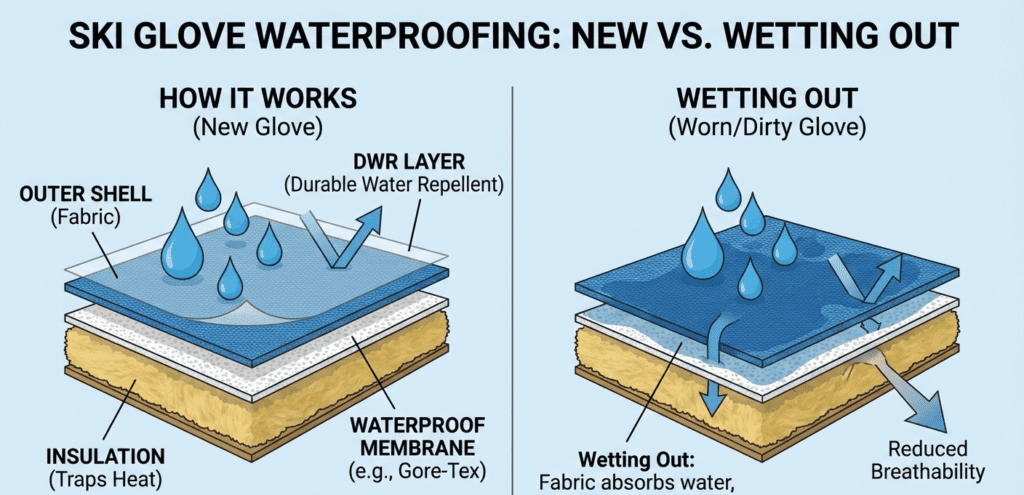
Synthetic shells don’t absorb water the same way, but they pick up oils, dirt, sunscreen, and lift grease. This clogs the surface coating that makes water bead off. When that coating stops beading, the outer fabric gets wet and heavy.
A lot of skiers think the “waterproof membrane” is failing at this point. In reality, the membrane usually still works — the problem is the fabric above it is soaked and pushing cold water against the insulation.
Once the outer shell is saturated, warmth drops quickly because insulation can’t work when compressed or wet.
This is why re-treating gloves makes such a big difference. You’re rebuilding the barrier on the outside so the insulation and membrane can actually do their job again.
Leather Gloves — Best Waterproofing Treatments
Leather ski gloves don’t stay waterproof forever. The material needs oils and waxes to hold out melted snow and stay flexible in the cold.
From my experience, untreated leather starts absorbing moisture after a few wet laps or a slushy spring day. That’s when palms get heavy and fingers chill fast.
Treatments solve that by filling the leather fibers with oils and waxes. This slows water absorption and keeps the leather from drying out and cracking.
Common treatment types include beeswax-based waxes and lanolin-based oils. Both work, and both are used by gear techs in wet mountain climates.
Best Waterproofing Type for Leather Gloves
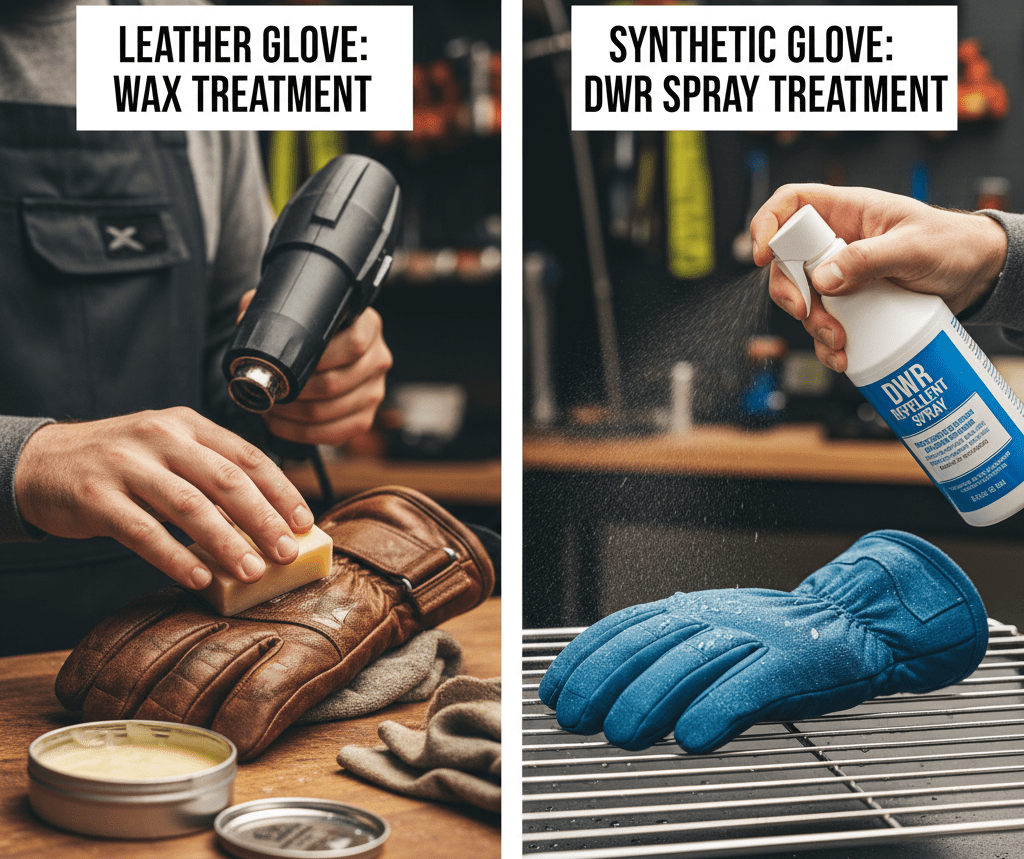
Wax-based treatments
- Penetrates leather well
- Boosts waterproofing noticeably
- Holds up in wet snow and chairlift drips
Oil-based conditioners
- Restores suppleness after cold days
- Reduces cracking on knuckles and seams
- Helps leather flex better with ski poles
On cold storm days, wax tends to outperform oil because it creates a more water-resistant surface film. Oils shine when gloves are drying out and losing flexibility.
How to Apply (Realistic Steps)
Clean glove
Warm leather slightly (hair dryer or sun)
Rub treatment into surface
Let leather absorb
Buff off excess
This process takes a few minutes, and it’s worth doing before a storm cycle or a ski trip. I do it the night before so the treatment has time to settle.
When Wax/Oil Doesn’t Work Well
If you over-apply, the glove can feel greasy for a day. That’s normal and goes away after a few runs.
Treatments can darken light leather. Most skiers don’t mind, but it’s expected.
Heavy wax isn’t ideal in warm spring skiing because it holds heat. That’s when breathable leather or hybrid materials with Gore-Tex inserts feel better.
Synthetic Gloves — Best Waterproofing Treatments
Synthetic ski gloves handle moisture differently than leather. The outer fabric relies on a DWR coating to shed melted snow, while the waterproof membrane inside does the real blocking.
Without that DWR, the fabric wets out and gets heavy. The membrane still keeps water out, but breathability drops fast and fingers feel clammy.
This is why skiers often notice their gloves getting soaked on the outside during storms even though the inside stays dry. It’s normal, but it’s fixable with re-coating.
Best Waterproofing Type for Synthetic Gloves
Spray-on DWR re-coat
- Ideal for multi-layer shells
- Doesn’t clog fabric weave
- Works well with membranes like Gore-Tex
Wash-in treatments
- Useful for outer shells
- Adds uniform coverage
- Can reduce breathability inside glove if overused
In gear labs and ski school settings, spray-on coatings are preferred because they keep vapor moving out of the glove. That keeps hands drier when you’re gripping poles or unloading off chairs.
How to Apply (Realistic Steps)
Clean outer shell
Dry completely
Apply spray evenly
Heat activate (tumble low or hair dryer)
Heat activation matters because it bonds the treatment to the fibers. Without that step, the coating washes off quickly in wet snow or during spring slush days.
When Synthetic DWR Doesn’t Help
A re-coat won’t fix everything. If the membrane is damaged from years of flexing, water can slip through seams and fingertips.
If insulation is soaked, no treatment will save the day — the glove needs drying and probably replacement.
And if the gloves have worn through at the palm or index finger (common spot from pole grip), the fabric stops holding DWR entirely. At that point, upgrading makes more sense than re-treating.
Mistakes Skiers Make With Waterproofing
Waterproofing ski gloves sounds straightforward until you actually do it. A lot of skiers make small errors that either ruin performance or shorten glove life. These mistakes usually come from mixing up materials or expecting coatings to do more than they realistically can.
Below are the most common errors seen in rental shops, ski school lockers, and home garages in mountain towns.
Treating Leather With DWR Spray
DWR spray works on woven synthetic shells, not leather. On leather, it sits on the surface and flakes off once the glove flexes and warms up. Leather stays waterproof by absorbing oils and wax into its fibers, not by coating the surface.
This is also why outdoor gear techs categorize leather differently than Gore-Tex shells. The material breathes differently and ages differently, so it needs a separate treatment system.
Using Oils on Synthetic Shells
Flipping the mistake is just as common. Rubbing oils into synthetic gloves clogs the fabric weave and kills vapor transfer. Once breathability drops, sweat builds inside and fingers feel damp even when it’s not raining or snowing.
In cold weather, trapped sweat is almost worse than melted snow because it cools fast once you get on the lift or stop moving.
Skipping the Cleaning Step
Waterproofing works best when fibers are clean. Dirt and ski wax dust fill the tiny gaps in synthetic fabrics and make coatings bead unevenly. Leather also holds onto grime in creases around the palm.
A simple wash unlocks better waterproofing. Most gear labs recommend cleaning before re-proofing for this reason — it’s not marketing, it’s just physics.
Expecting DWR to Fix Insulation Soak-Through
DWR keeps the outer layer from wetting out. It does nothing for insulation that’s already soaked on the inside. Once insulation holds water, the glove loses warmth fast and takes forever to dry.
This is why ski patrol gloves get swapped out mid-shift during storms. At a certain point, drying and rotating is smarter than re-coating.
Overheating Gloves During Drying
One of the easiest ways to ruin a good pair of gloves is with a heater vent. Leather stiffens and cracks when over-dried. Synthetic shells can delaminate and damage the membrane underneath.
Warm airflow and patience always beats high heat. Ski instructors figured this out long ago because they dry gloves every day all season.
When Wet Gloves Become a Bigger Problem
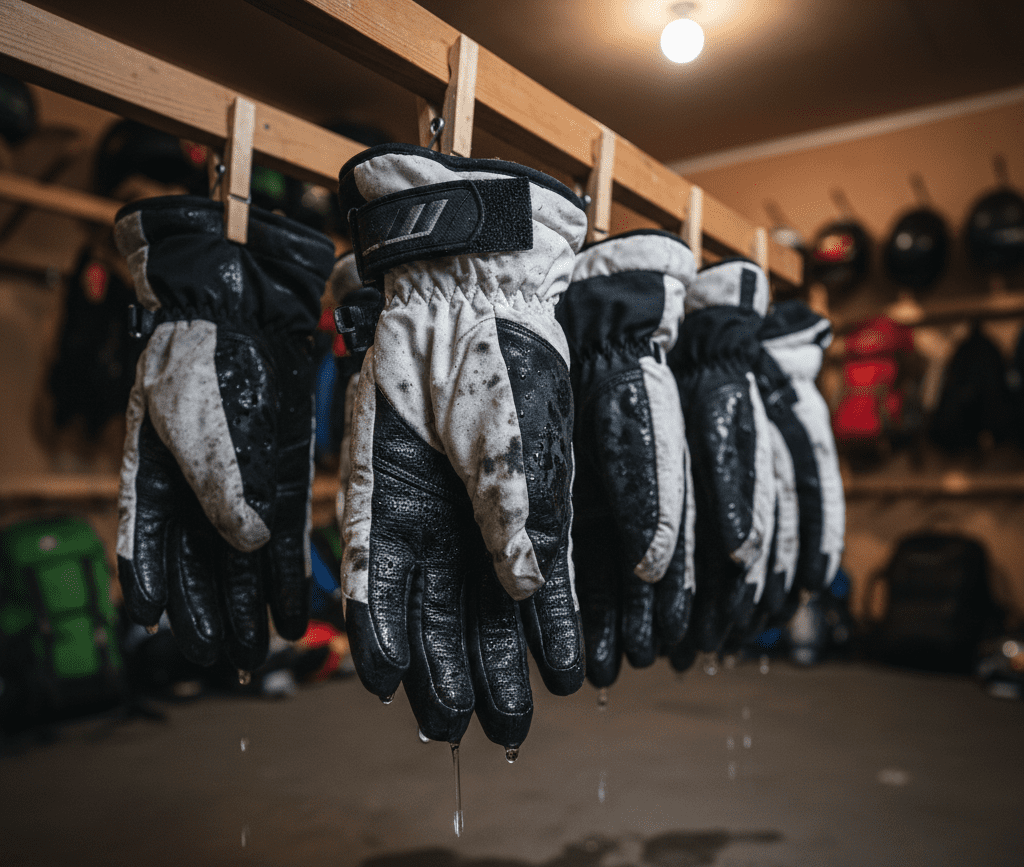
Wet gloves aren’t just uncomfortable. Once the insulation holds moisture, heat loss accelerates and cold fingers stop working efficiently. On windy chairlifts, moisture plus wind chill can slide toward frostnip territory much faster than most skiers expect.
The issue compounds because gloves are one of the few pieces of ski gear that stay exposed and move constantly. Even good membranes can’t stop evaporative cooling completely when the inside of the glove is damp.
Cold fingers also lose dexterity. Simple tasks like clipping a boot buckle or helping a kid with their poles feel harder. Some ski schools quietly teach kids that “cold hands = slow hands” for this exact reason.
A second warning sign is drying time. When gloves need more than 24 hours to dry in a warm room, it usually means the insulation is saturated, not just damp at the shell. Synthetic insulation is especially prone to holding water deep in the loft, and once that happens the glove stops insulating as designed.
Odor shows up next. It isn’t just the smell that matters — it’s the bacteria and skin oils binding to wet insulation. Rental fleets monitor this because smell correlates with performance loss and shorter glove lifespan.
At that point, waterproofing pastes or DWR sprays won’t fix the root problem. Coatings protect the shell. They don’t reverse insulation that has already soaked and compressed.
Ski patrol and instructors handle this by rotating gloves during storms. On cold days with blowing snow, swapping to a dry pair halfway through a long shift keeps hands warm and avoids the need to “fight through” wet insulation the rest of the afternoon.
If gloves repeatedly wet out and fail to dry in a reasonable window, it’s a sign of worn membranes, compressed fill, or seam fatigue. Every manufacturer that uses membranes like Gore-Tex warns about this in their care documentation, and it aligns with what mountain shops see in returned gear.
The safety piece here is subtle but real: cold hands don’t just hurt, they slow reaction time and reduce grip strength. For most recreational skiers that means less control over poles and buckles. For backcountry users it becomes a systems issue — relying on hands for skins, bindings, and beacon work.
Simple rule of thumb: if gloves smell, take forever to dry, or stop keeping heat during lift rides, you’re no longer dealing with waterproofing — you’re dealing with performance loss.
How Often to Re-Treat Ski Gloves
Most skiers don’t realize waterproofing wears off slowly, not all at once.
You usually don’t notice until the outer fabric starts wetting out and your fingers get cold faster on lifts.
The right maintenance schedule depends almost entirely on material, not the brand or marketing label.
From my experience teaching in a wet coastal climate, leather and synthetics age very differently once they see real snow, chairlifts, and spring slop.
Leather Gloves Need the Most Frequent Care
Leather is amazing for durability and grip, but it absorbs moisture if it’s not conditioned.
Once the oils dry out, it loses natural water resistance and stiffens in the cold.
Most working ski staff I’ve ridden chairs with treat leather every 10–20 ski days.
In wet climates like the Pacific Northwest, it’s closer to every 7–10 days because warm snow and sleet hammer the material.
What you’re doing when you re-treat leather is replacing oils and sealing the pores.
Products like wax-based treatments (e.g., Hestra balm) make a noticeable difference in both warmth and feel.
Field tip:
If leather feels dry, looks chalky, or stops beading water, don’t wait — condition it. That’s when stiffness and cracking begin.
Synthetic Gloves Have a Different Wear Pattern
Synthetic shells rely on DWR coatings and often a membrane like Gore-Tex® or eVent® for waterproofing.
The membrane doesn’t “wear off,” but the DWR definitely does, especially after abrasive chairlift grips or spring skiing.
Most recreational skiers only need to re-treat synthetics once per season, sometimes twice if they ski a lot of wet snow.
For light users, it may even stretch to every other season.
The real indicator isn’t time — it’s when water stops beading on the surface.
Once the shell wets out, you lose insulation efficiency because the glove starts conducting cold more aggressively.
This is something glove testers and gear labs have pointed out for years: insulation doesn’t work when saturated with cold surface water.
From experience: spring corn + slushy lifts will kill DWR faster than mid-winter powder days.
Signs You Should Re-Treat Sooner
One thing that helps skiers is knowing when performance is actually declining.
Look for these:
- Water no longer beads off the back of the glove
- Palm material gets soggy on chair bars
- Gloves feel colder even though insulation is fine
- Takes longer to dry overnight
- Leather looks pale or rough
Those are real-world cues, not marketing rules.
FAQs – Best Waterproofing Treatments for Ski Gloves
Skiers often have the same questions about keeping gloves dry, warm, and performing on wet snow. These five are the ones I hear on chairlifts and during ski clinics almost every season.
1. How do I know when my gloves need re-treatment?
You don’t need to wait until your hands are freezing.
For leather, look for dryness, stiffness, or chalky surfaces. For synthetics, check if water stops beading on the shell.
If gloves feel cold faster than normal, that’s a clear sign the outer layer isn’t repelling moisture effectively.
2. Can I use the same waterproofing on leather and synthetic gloves?
No — leather and synthetics require different approaches.
Leather needs oils or waxes to stay supple and water-resistant.
Synthetic shells rely on DWR coatings to prevent wetting out.
Using the wrong treatment can ruin performance: oils on synthetics reduce breathability, and DWR sprays won’t penetrate leather properly.
3. Will waterproofing restore gloves if the insulation is soaked?
Waterproofing treatments only protect the outer shell.
If the insulation is wet, your gloves will still feel cold because water conducts heat away from your hands.
I’ve seen skiers try multiple DWR sprays on soggy gloves — the outside repels water, but hands remain cold.
Drying fully and treating the shell is key.
4. How long does a waterproofing treatment last?
It depends on the glove type and conditions.
Leather usually needs re-treating every 10–20 ski days, more in wet climates.
Synthetic gloves often last a full season for light users but wear faster on wet, slushy days.
Keep an eye on water beading rather than strictly counting days — real snow conditions dictate the timing.
5. Can I over-apply waterproofing?
Yes — too much wax or oil on leather can make gloves greasy and reduce grip.
For synthetics, excessive spray can clog fabric pores and reduce breathability.
A thin, even layer is enough; follow the product instructions and always test on a small area first.
I’ve personally re-coated gloves too aggressively in the past — the hands got warmer initially but grip and comfort suffered.
These FAQs address the most common skier pain points: when to treat, what to use, and what works on snow.
Keeping gloves maintained is simple once you understand material-specific care and watch real-world signs, not just rely on a calendar.
Final Verdict
Leather and synthetic gloves are not interchangeable when it comes to waterproofing. Leather thrives on wax or oil treatments to stay supple and water-resistant. Synthetic shells perform best with DWR sprays to prevent wetting out while preserving breathability.
Both types of gloves can be restored with the right care. Knowing your material and following proper treatment steps keeps your hands warm, dry, and safe on every run — from cold morning lifts to wet spring conditions.
If you want a more hands-on method, check out our detailed guide on how to waterproof ski gloves with a wax candle for hands-on tips and tricks that really work on the mountain. Protect your gloves, protect your fingers, and enjoy every run without cold surprises.
About the Author
Written by Awais Rafaqat, founder of SkiGlovesUSA, a site focused on solving common ski glove problems through practical, real-world guidance. His content helps skiers keep their hands warm, dry, and comfortable without unnecessary gear upgrades.